分类: politics

  • Leader of secretive South Korean church arrested in election influence investigation

    Leader of secretive South Korean church arrested in election influence investigation

    In a major development tied to sweeping political investigations launched by South Korea’s new liberal government, 95-year-old Lee Man-hee, the controversial founder of the secretive Shincheonji Church of Jesus, has been taken into custody on allegations that he orchestrated a mass illegal recruitment of thousands of followers to tilt election outcomes in favor of the former conservative ruling People Power Party (PPP).

    The arrest warrant was issued late Wednesday by Seoul Central District Court, which ruled that Lee posed a significant risk of destroying key evidence related to the investigation. Lee, who relies on a cane and required assistance from a church aide to enter the court for a pre-arrest hearing Wednesday afternoon, offered no response to questions from waiting reporters. Shincheonji, which has previously raised public concerns about Lee’s advanced age and fragile health, had not issued an official statement on the arrest as of Thursday morning. The church has repeatedly denied all allegations of wrongdoing against Lee and the organization.

    Founded by Lee in 1984, Shincheonji — whose name translates to “new heaven and new earth” — claims a global membership of roughly 200,000 adherents. Lee, who frames himself as a divinely appointed messenger of Jesus tasked with fulfilling end-time prophecies from the Book of Revelation, has long been labeled a false prophet and cult leader by mainstream South Korean Christian denominations. Shincheonji describes him as the “Promised Pastor” called to deliver the final truth of Christian scripture.

    Prosecutors allege that between 2021 and 2024, Lee leveraged Shincheonji’s nationwide network of regional branches to coerce more than 50,000 church followers to illegally join the PPP. The scheme, investigators say, was designed to manipulate the outcomes of the conservative party’s presidential and legislative primary elections, including boosting the 2022 presidential bid of former conservative head of state Yoon Suk Yeol. In exchange for the electoral support, Lee reportedly sought favorable regulatory treatment for the church, including accelerated approvals to expand its religious facilities across the country.

    Lee’s arrest is the latest milestone in a broad probe launched in January by a joint special investigation team of South Korean prosecutors and police, which is probing improper ties between major conservative religious organizations — including Shincheonji and the Unification Church, officially known as the Family Federation for World Peace and Unification — and senior conservative politicians. The investigation is one of multiple inquiries ordered by the current liberal administration of President Lee Jae Myung, who won an early presidential election in 2024 after Yoon was removed from office.

    Yoon’s ousting followed a turbulent political crisis that began in December 2024, when he imposed a brief, unexpected martial law against the opposition liberal-controlled legislature, accusing lawmakers of being pro-North Korean subversives. The move triggered an immediate impeachment process, and Yoon was ultimately removed from office in April 2025 after the Constitutional Court upheld the impeachment vote. Convicted of rebellion over the martial law declaration, Yoon received a life sentence, and was separately sentenced to 30 additional years in prison on charges of ordering unauthorized drone flights over Pyongyang to stoke inter-Korean tensions and create a pretext for imposing martial law domestically. He remains in custody as he appeals both convictions.

    The investigation into religious-political ties has already ensnared other high-profile figures. Months before Lee Man-hee’s arrest, Hak Ja Han, the 77-year-old top leader of the Unification Church and widow of church founder Sun Myung Moon, was arrested and indicted on charges that she ordered church officials to bribe Yoon’s wife, Kim Keon Hee, and a senior PPP lawmaker close to Yoon to secure lucrative business benefits for the church. Han has denied all accusations against her. In April, an appeals court sentenced Kim Keon Hee to four years in prison after convicting her on multiple corruption charges, including accepting millions of dollars worth of luxury gifts from a senior Unification Church official.

    Founded by Sun Myung Moon in 1954, the Unification Church grew into a global movement with millions of followers and vast cross-sector business interests. Moon, who also claimed to be a messiah sent to complete Jesus’ unfinished work, built the church’s international reputation around its signature mass wedding events, where thousands of couples from different countries are matched and married collectively in large ceremonies. Since Moon’s death in 2012, Han has led the organization.

  • Progressive candidate concedes Colombian presidential election to Trump-endorsed outsider

    Progressive candidate concedes Colombian presidential election to Trump-endorsed outsider

    After days of post-election uncertainty following Sunday’s vote, progressive Colombian presidential candidate Iván Cepeda officially conceded defeat Wednesday to conservative political newcomer Abelardo de la Espriella, closing out a tightly contested race that shifts the South American nation sharply to the right. Endorsed by former U.S. President Donald Trump, the 47-year-old businessman and lawyer — who had never sought public office before this campaign — edged out Cepeda, a sitting progressive lawmaker, by a razor-thin 1 percentage point margin, equal to roughly 251,000 votes, according to official election tallies.

    In a televised address to the Colombian people, Cepeda struck a measured but firm tone as he accepted the outcome. “We assume with serenity, responsibility, and absolute resolve — and let there be no doubt about it — the role that circumstances demand of us,” he said, confirming his bloc would operate as a “democratic, vigilant and constructive opposition” during de la Espriella’s incoming administration.

    The election result marks a clear rejection of outgoing progressive President Gustavo Petro’s four-year term, a government whose policy agenda Cepeda had pledged to continue. That agenda’s centerpiece, Petro’s signature “total peace” initiative that sought to negotiate ceasefires and reconciliation with the country’s dozens of active armed groups, has struggled to deliver tangible gains in reducing violence, failing to meet core policy goals ahead of the election.

    Electoral officials released nearly all vote tallies within hours of polls closing Sunday, but Cepeda and Petro refused to immediately accept the preliminary count, with the progressive candidate saying he would wait for a full official recount before conceding. That concession finally came this Wednesday, clearing the way for de la Espriella to take office on August 7 for a four-year presidential term. The president-elect’s campaign has not yet issued an official public response to Cepeda’s concession.

    De la Espriella’s victory puts Colombia alongside a growing bloc of nations around the world that have turned to first-time political outsiders to address persistent gridlock around deep-rooted social, economic, and public safety challenges. Self-styling as a representative of “the never-before-seen” in Colombian politics, de la Espriella campaigned heavily to win over voters anxious about rising violence and the risk of renewed internal conflict. He pledged to adopt a hardline approach to combating violent organized crime, modeling his policy blueprint on the controversial strategy implemented by Salvadoran President Nayib Bukele. That plan, which includes the construction of massive mega-prisons to incarcerate tens of thousands of suspected gang members, has cut homicide rates dramatically in El Salvador but has drawn widespread international condemnation for documented human rights abuses.

    Nicknamed “The Tiger,” de la Espriella holds dual Colombian-U.S. citizenship, is an open Trump ally, and holds official membership in the U.S. Republican Party, a connection that signals a likely major shift in Colombian foreign policy and bilateral relations with the United States moving forward.

  • Here’s how Rubio’s Mideast trip could affect the Iran deal

    Here’s how Rubio’s Mideast trip could affect the Iran deal

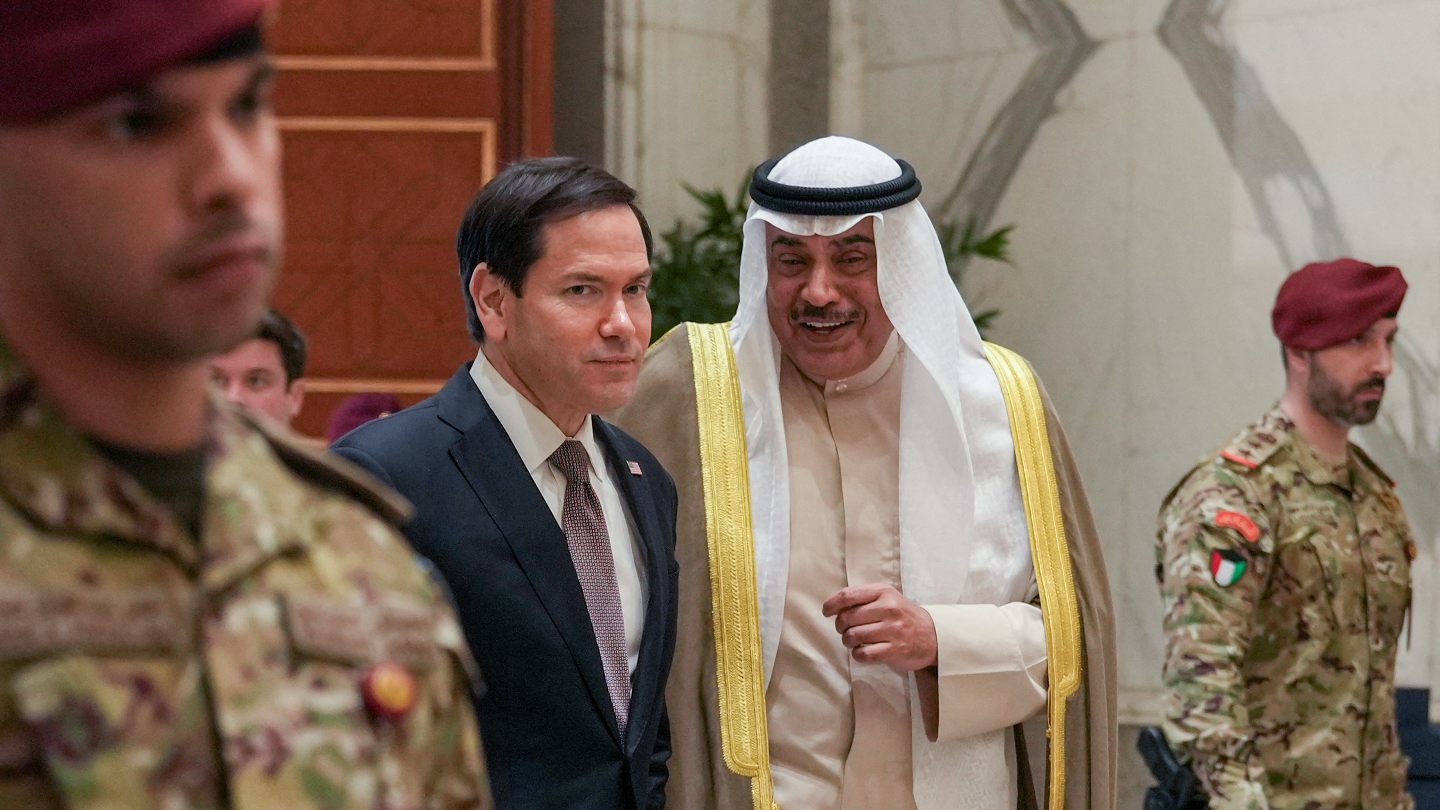
    As the Biden administration pushes forward with a new diplomatic agreement designed to end years of open conflict with Iran, Secretary of State Marco Rubio has embarked on a high-stakes regional tour of Gulf Arab allies, with the BBC’s senior state department correspondent Daniel Bush embedded with the traveling delegation. Longstanding partners in the Gulf Cooperation Council have emerged as some of the most vocal skeptics of a U.S.-brokered peace deal with Iran, raising urgent concerns about provisions that could ease economic sanctions on Tehran and allow it to resume limited nuclear enrichment activities. These allies fear the deal would strengthen Iran’s regional influence, enable its support for proxy armed groups across the Middle East, and leave them at a strategic disadvantage against a resurgent Iranian state. The core goal of Rubio’s trip is to address these fears head-on, offering security guarantees and diplomatic concessions to shore up confidence among U.S. partners, while making the case that ending the long-running standoff with Iran serves the long-term interests of the entire region. Many diplomatic analysts are closely watching the outcome of the tour, as Rubio’s ability to unify U.S. allies around the proposed deal will play a critical role in determining whether the agreement can be finalized and implemented successfully. The tour comes at a moment of heightened regional tension, with recent exchanges of fire between Iranian proxies and Israeli forces adding new urgency to diplomatic efforts to de-escalate the broader conflict.

  • UK, Germany and France express concern over Chinese actions east of Taiwan

    UK, Germany and France express concern over Chinese actions east of Taiwan

    In an uncommon show of unified diplomatic concern, Great Britain, France, and Germany released a joint public statement on Wednesday sounding the alarm over recent Chinese maritime operations east of Taiwan, the self-governed island that has long been a flashpoint for cross-strait and global geopolitical tension.

    The joint statement was released through the three European powers’ de facto diplomatic missions based in Taipei, Taiwan’s capital. While the statement did not outline specific details of what it labeled “novel Chinese activity”, it emphasized that the unorthodox deployments posed a clear threat to long-standing stability across the Indo-Pacific region.

    China, which claims the democratically governed Taiwan as an inalienable part of its territory that it has pledged to reunify, even by force if necessary, framed its early-month coast guard deployments as routine “maritime traffic enforcement and hydrographic survey operations”. According to Chinese state media reports, the deployments also carried an explicit messaging purpose: they were crafted to send a sharp warning to Japan and the Philippines, after the two nations announced plans to hold negotiations over their shared maritime boundaries in waters Beijing claims as its sovereign territory.

    The joint statement from the three European nations noted: “These actions threaten regional stability and the freedom of navigation and safety of international shipping. We reiterate our opposition to any unilateral change to the status quo, particularly by threat or use of force or coercion.” The missions also called for universal upholding of navigational rights and freedoms, and unwavering respect for the personal safety of all seafarers operating in the region. As of Wednesday evening, China’s Ministry of Foreign Affairs had not issued any immediate response to media requests for comment on the joint statement.

    Tensions in the region have spiked sharply in recent days, following a sequence of consecutive military moves by both Beijing and Taipei. On Tuesday, just hours after Taiwan launched a five-day nationwide military exercise designed to test its defensive readiness against potential Chinese incursion, China sailed its newest and most technologically advanced aircraft carrier through the Taiwan Strait, the narrow body of water that separates mainland China from the island.

    Taiwan’s Ministry of National Defense clarified that the ongoing drills are intended to strengthen the island’s ability to respond to a full-scale Chinese attack, with a specific focus on testing rapid deployment capabilities for military units. This preparation is targeted specifically at countering potential sudden escalations of Chinese grey-zone tactics — a broad category of coercive aggressive actions that range from routine naval patrols to unannounced drone flights, all of which stop short of open, full-scale combat. Earlier this month, Taipei also confirmed that Chinese coast guard vessels had been harassing commercial shipping near the island, ordering transiting civilian ships to disclose their intended routes before passing through the area.

    Cross-strait pressure has grown steadily in recent years, with Beijing ramping up its coercive campaign against Taiwan: Chinese military aircraft and naval vessels now conduct near-daily patrols around the island, with large-scale live-fire drills held periodically to demonstrate Beijing’s military capabilities. Regional tensions have also grown between China and Japan over the Taiwan issue, after Japanese Prime Minister Sanae Takaichi suggested last year that the Japanese Self-Defense Forces could intervene militarily if Beijing launched an attack on Taiwan.

  • Germany carries out raids in sabotage investigation related to former Gazprom unit

    Germany carries out raids in sabotage investigation related to former Gazprom unit

    BERLIN — German federal law enforcement authorities have launched a new wave of targeted raids this week as part of an ongoing investigation into an alleged plot to disrupt the country’s critical natural gas infrastructure, a scheme prosecutors link to a murky 2022 corporate transaction involving the former German subsidiary of Russian energy giant Gazprom.

    On Wednesday, police carried out coordinated search operations across two major German cities: they examined a Berlin property tied to the primary suspect, a second site belonging to an individual not facing any allegations in the case, and the office of an unnamed commercial entity based in Frankfurt. Officials confirmed that no arrests were made during the execution of the search warrants.

    In an official statement released following the operations, prosecutors outlined the charges under investigation: the unnamed suspect, a Russian national, faces accusations of acting as an accessory to two offenses — violation of foreign trade investment regulations, and attempted anti-constitutional sabotage against the German state.

    The controversy dates back to 2022, just weeks after Russia launched its full-scale military invasion of Ukraine. At that time, Gazprom’s Moscow headquarters announced it would divest from its German subsidiary, Gazprom Germania. The unapproved buyer immediately moved to liquidate the subsidiary, a step that violates German law, which prohibits liquidation before a cross-border business purchase receives official regulatory approval.

    Acting quickly to protect national energy security, German authorities placed Gazprom Germania under the control of a state-run oversight agency, blocking the attempted liquidation. The federal government emphasized at the time that the subsidiary played a critical role in Germany’s natural gas trade, transmission, and storage networks. Shortly after the intervention, Berlin fully nationalized the entity, which now operates under the name Securing Energy for Europe.

    Prosecutors now lay out a clear allegation: the sale of Gazprom Germania to a little-known Moscow-based firm with no prior experience in the energy sector, followed by the immediate push for liquidation, was a deliberate attempt to destabilize Germany’s natural gas supply. Germany has been one of the most prominent international backers of Ukraine amid the ongoing invasion, making its energy infrastructure a potential target. The suspect is accused of intentionally facilitating the liquidation effort to advance this disruptive goal.

    This investigation unfolds against a backdrop of sweeping shifts in Germany’s energy policy in the wake of the Ukraine war. In the months following the invasion, Berlin rushed to cut its longstanding reliance on Russian natural gas imports. By late 2022, Russia had completely halted all remaining gas shipments to Germany. Just weeks after that cut-off, mysterious undersea explosions caused massive damage to the Nord Stream dual pipelines, the undersea infrastructure built explicitly to carry Russian natural gas to Germany under the Baltic Sea.

  • Iranian agents lived in Australia before directing attacks on Sydney and Melbourne, spy chief says

    Iranian agents lived in Australia before directing attacks on Sydney and Melbourne, spy chief says

    In an annual national security threat briefing on Wednesday, the top official of Australia’s primary domestic intelligence agency has publicly laid out detailed allegations that Iran’s Islamic Revolutionary Guard Corps (IRGC) orchestrated two separate arson attacks against Jewish community sites in Australia’s largest cities, Sydney and Melbourne, using agents with past ties to the country.

    Mike Burgess, director-general of the Australian Security Intelligence Organisation (ASIO), confirmed that Iran has long regarded Australia as a valid target for covert, state-sponsored violent operations. The two attacks, which took place two months apart in early 2024, targeted a kosher restaurant, Lewis’ Continental Kitchen, in Sydney, and Melbourne’s Adass Israel Synagogue, leaving both properties damaged by fire. Last year, Australian authorities formally held Iran responsible for the incidents, triggering a major diplomatic rupture that saw Tehran’s ambassador to Australia expelled. Iranian officials have repeatedly denied all involvement in the attacks.

    Burgess outlined the structure of the IRGC’s plot in the briefing: the firebombing of the Sydney kosher eatery was directed by an Australian citizen who is currently based in Iran and holds a senior position as an IRGC agent, overseeing the force’s global covert networks. The second attack, on the Melbourne synagogue, was directed by a former Australian resident who now lives in Iraq, recruited to the IRGC’s cause via Iraqi militia groups. Burgess noted the IRGC specifically sought out this operative for his established local criminal connections, and even provided backing for his other ongoing illegal activities before the attacks were exposed.

    To protect the integrity of ongoing investigations and upcoming criminal prosecutions, Burgess declined to release the names of any of the suspects involved. He did, however, share new details about shifts in the case after ASIO publicly named Iran as the party responsible for the arsons. Once the operation was exposed, the operative’s Iranian backers withdrew their support, and following coordinated pressure from Australian law enforcement and local security officials in the region where the operative was based, the IRGC itself detained and imprisoned the former Australian resident.

    Burgess characterized the sprawling investigation into the two coordinated attacks as one of the most complex and extensive probes conducted by ASIO in recent decades. He also reiterated earlier warnings that the IRGC is suspected of involvement in multiple other antisemitic attacks targeting Australian Jewish communities, a trend that emerged after the start of the Israel-Hamas war in October 2023.

    To date, multiple individuals have already been charged with criminal offenses linked to the arson plots, though authorities have not yet confirmed whether these low-level actors knew they were acting on behalf of Iranian state actors when they carried out the attacks.

  • US Senate passes War Powers Resolution rebuking Trump’s Iran war

    US Senate passes War Powers Resolution rebuking Trump’s Iran war

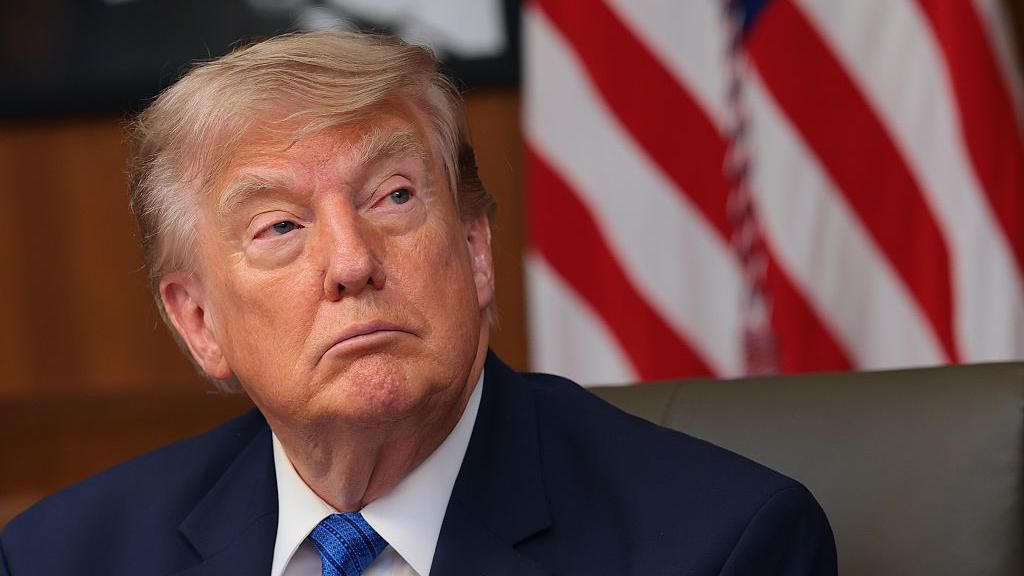
    In a historic bipartisan rebuke of former President Donald Trump’s unauthorized military campaign against Iran, the United States Senate voted 50-48 on Tuesday to approve a war powers resolution ordering the immediate withdrawal of all American forces from hostilities against the Middle Eastern nation.

    The outcome marked a rare moment of cross-party opposition to the administration’s foreign policy, with four Senate Republicans breaking ranks to side with the overwhelming majority of Democrats in backing the measure. The resolution had already secured approval from the U.S. House of Representatives earlier this month, clearing both chambers of Congress for the first time since the 1973 War Powers Resolution was enacted to check presidential war-making authority.

    Democratic Representative Pramila Jayapal of Washington celebrated the vote in a social media post immediately after the results were finalized, writing, “The House and the Senate have both stood up. It’s time to stop this deadly and costly conflict.”

    Breaking down the final vote count, the four Republicans who supported the resolution were Rand Paul of Kentucky, Susan Collins of Maine, Lisa Murkowski of Alaska, and Bill Cassidy of Louisiana. The only Democrat to break with his party was Pennsylvania Senator John Fetterman, who voted against the measure.

    Attorney Aaron Parnas framed the outcome as a definitive rejection of the White House’s approach to the region, writing on social media: “This is a major bipartisan rebuke of Trump’s foreign policy chaos.”

    Anti-war advocacy group CodePink echoed that sentiment, emphasizing broad public support for ending the conflict. “The will of the people is undeniable: It’s time to permanently end this war of aggression,” the organization wrote in a public statement confirming the vote results.

    Senate Minority Leader Chuck Schumer noted that the successful vote marked 10 years of Democratic efforts to rein in Trump’s authority to wage undeclared war, which began when the president unilaterally drew the U.S. into a joint military attack on Iran alongside Israel on February 28. Schumer slammed the majority of Senate Republicans for repeatedly blocking prior attempts to limit the conflict, telling reporters the Iran campaign “will go down in the history books as one of the worst foreign policy forays America has ever made,” according to reporting from The Associated Press.

    Maryland Democratic Senator Chris Van Hollen echoed that criticism in his own social media remarks, writing: “Congress finally passed a war powers resolution to stop Trump’s illegal war in Iran. It has been a disaster from the start. End it now.”

    As The New York Times reported, the vote makes history as the first time since the 1973 War Powers Resolution was passed that both chambers of Congress have approved a concurrent resolution calling for a full end to an ongoing military conflict. While concurrent resolutions do not require presidential signature and rarely carry the full force of law, Democratic lawmakers and foreign policy experts argue that the Constitution’s grant of war-declaring authority to Congress means the resolution still carries binding weight to restrict the president’s military actions.

    New York Democratic Representative Gregory Meeks, who sponsored the original House version of the resolution, reaffirmed that commitment to enforcing Congress’s will after the Senate vote. “With the Senate passage of my Iran War Powers Resolution, both chambers have now made clear that the president cannot continue this war of choice and must cease all hostilities against Iran,” Meeks said in a statement. “Regardless of what President Trump says, this measure is binding under the War Powers Resolution, and I will explore all legal avenues to ensure the executive complies with the will of Congress. Congress never authorized this failed war, and the president certainly has no authority to continue it indefinitely without our consent as the Constitution demands.”

    The Senate vote comes roughly one week after U.S. and Iranian negotiators signed a memorandum of understanding outlining a path toward ending the conflict, which has killed at least 3,400 people in Iran and thousands more across the broader region. However, recent ceasefire efforts and ongoing negotiations have remained unstable, rocked by continued Israeli attacks on Lebanon and repeated threats from the Trump administration to escalate military operations.

  • Ukraine’s latest long-range strikes on Russia hit a major natural gas plant and satellite centers

    Ukraine’s latest long-range strikes on Russia hit a major natural gas plant and satellite centers

    KYIV, Ukraine — In a significant escalation of Kyiv’s cross-border aerial campaign targeting Russian strategic assets, Ukraine’s General Staff announced Wednesday that Ukrainian forces carried out a large-scale overnight attack that struck a major natural gas processing facility and two critical military satellite communications centers deep inside Russian territory.

    This latest operation comes as Ukraine ramps up its long-range strike efforts against Russian energy and defense-linked infrastructure, leveraging a growing arsenal of longer-range weaponry developed and acquired to counter Russia’s full-scale invasion, which is now entering its third year. The target farthest from Ukrainian front lines was the Orenburg Gas Processing Plant, located more than 1,200 kilometers, or approximately 750 miles, behind the active front that stretches across eastern and southern Ukraine. According to the General Staff’s statement published on the Telegram messaging platform, the strike sparked a large fire across the plant complex, which also hosts Russia’s only operational helium production facility.

    Ukrainian military officials emphasized that the Orenburg complex ranks among the world’s largest gas processing hubs. Beyond natural gas, the facility produces two materials critical to Russian military production: helium, a core component for liquid-fuel rocket engines and precision missile guidance systems, and ethane, a key input for manufacturing solid rocket fuel and military-grade gunpowder.

    As of Wednesday afternoon, the Ukrainian military’s claims could not be independently verified by third-party outlets, and Russian federal and regional officials had not issued an immediate public response to the attack. While the General Staff did not disclose what type of weaponry was used in the strike, long-range drone attacks have become the primary tool for Ukraine to strike deep into Russian territory in recent months, with repeated assaults targeting sites in Moscow and St. Petersburg.

    In addition to the Orenburg plant, the overnight strikes hit two satellite communications facilities used exclusively by the Russian military, per Ukraine’s General Staff. One of the sites is the Dubna Space Communications Center located near Moscow, which Ukrainian officials describe as Russia’s largest ground-based satellite communications complex. The second targeted facility is located in the Vladimir region, roughly 190 kilometers east of Moscow.

    The overnight attacks on Russian territory coincided with an intensification of Ukrainian strikes on Russian-held Crimea, a strategically critical Black Sea peninsula that Russia annexed in 2014 and uses as a key supply and logistics hub for its forces operating in southern Ukraine. Overnight drone strikes on Crimea cut power supplies to parts of Sevastopol, the home of Russia’s Black Sea Fleet, Mikhail Razvozhayev, the Moscow-appointed governor of the city, confirmed Wednesday.

    Western analysts note that Ukraine’s current campaign targeting Crimea is designed to achieve multiple military and political goals. Militarily, Kyiv aims to disrupt Russian supply lines and disable the peninsula’s critical energy infrastructure during the peak summer tourist season. Politically, the campaign seeks to create public discomfort that increases pressure on Russian President Vladimir Putin to negotiate an end to the full-scale invasion.

    The escalation of strikes on Crimea was further confirmed Wednesday by Ukraine’s Security Service, which announced it had carried out separate strikes on two Russian military airfields in the peninsula, destroying multiple Russian missile systems in the process.

    The widespread overnight exchanges of fire between the two sides underscored the expanding scale of long-range attacks across the conflict. Russia’s Defense Ministry announced Wednesday that its air defense forces had intercepted and destroyed 323 Ukrainian drones launched across multiple regions overnight. In a matching statement, Ukraine’s Air Force reported that Russia had launched 101 long-range attack drones against Ukrainian targets in the same 24-hour period.

    Elise Morton contributed reporting from London. Additional coverage of the Russia-Ukraine conflict is available at AP’s dedicated conflict hub.

  • Decriminalise all personal use drug possession, Irish committee says

    Decriminalise all personal use drug possession, Irish committee says

    After months of stakeholder interviews, public hearings and careful deliberation, an all-party parliamentary committee in Ireland has tabled a landmark final report calling for the full decriminalization of all drugs held for personal use, marking a radical shift from the country’s decades-old criminal justice-focused approach to drug policy.

    The Oireachtas Committee on Drugs, established by the Irish parliament to review the findings of the 2024 Citizens Assembly on Drug Use, formally released its recommendations on Wednesday. The 14-member body, made up of nine TDs from the lower house of parliament and five senators from the upper chamber, voted to endorse the Citizens Assembly’s core proposal to decriminalize personal drug possession, backing a holistic, health-centered framework instead of punitive legal measures.

    In its findings, the committee pushed back against widespread concerns that removing criminal penalties for personal possession would drive up overall drug use. Committee members concluded that decriminalization is “not likely” to trigger a meaningful increase in national drug consumption. They did, however, acknowledge data from a small number of international jurisdictions that have implemented similar reforms, which recorded minor upticks in public drug use following decriminalization. To address this concern, the report recommends that local governments be empowered to introduce local byelaws modeled after existing regulations that restrict public alcohol consumption, to discourage and reduce open drug use in shared public spaces.

    The proposal also includes major new harm reduction provisions, calling for updated national legislation to authorize mobile drug consumption facilities and fixed supervised consumption sites. The committee frames these sites as a dual-purpose reform: they will reduce the public health risks faced by people who use drugs, while also lowering the prevalence of open street drug use across Irish communities. Additionally, the committee has urged the national government to launch large-scale public education campaigns focused on sensible, harm-aware drug use that prioritizes reducing overdose deaths and preventable health harms.

    One of the report’s most significant social policy recommendations calls for ending short prison sentences for non-violent drug possession offenses, particularly for primary caregivers who use drugs. The committee argues that a health-led approach to supporting these individuals, rather than incarceration, will enable sustainable recovery and allow parents and guardians to continue providing stable care for their dependent children.

    The committee emphasized that both unregulated drug use and failed punitive drug policies create distinct public health and social harms, both of which require urgent, coordinated action from the state. It calls for a whole-of-government response that integrates public health, education and justice strategies, and urges the government to dramatically increase funding for community-based addiction support services and residential treatment programs.

    The current national government, formed last year by a coalition of Fianna Fáil, Fine Gael and independent TDs, has not yet committed to full decriminalization. The existing government program only pledges to divert people caught with small amounts of drugs for personal use toward health services, rather than moving to full decriminalization. Now that the committee has formally submitted its recommendations, the national government will begin the process of reviewing and considering the proposals.

    Speaking after the report’s publication, committee chair Gary Gannon, a Social Democrats TD, described the recommendations as a fundamental policy correction, not a minor incremental change. “This is not a marginal adjustment. It is a recognition that criminalising people for their own drug use has not reduced harm, and that a different approach is both possible and overdue,” Gannon said.

    Deputy chair Mary Fitzpatrick, a Fianna Fáil senator, noted the widespread reach of controlled substances across Ireland, stating that “cocaine, cannabis, prescription drugs and new substances are now present in every county – in villages, towns and cities alike.” Fitzpatrick’s comments underscore the broad need for a coordinated national response to drug use that addresses the issue across all parts of the country, rather than only focusing on urban centers.

  • Premier says China’s tech advancements an ‘opportunity’ for the world, not a threat

    Premier says China’s tech advancements an ‘opportunity’ for the world, not a threat

    DALIAN, China — Addressing global business and policy leaders at the opening of the World Economic Forum’s Annual Meeting of the New Champions, widely known as the “Summer Davos,” Chinese Premier Li Qiang pushed back against rising Western criticism of China’s rapid high-tech expansion on Wednesday, reframing the nation’s technological progress as a shared global benefit rather than a disruptive threat.

    In recent months, policymakers across the United States and Europe have grown increasingly vocal about what they frame as unfair competitive advantages held by Chinese high-tech sectors, from artificial intelligence and semiconductors to electric vehicles and renewable energy equipment. Many Western officials have pinned this advantage on large-scale Chinese state subsidies, arguing that the government financial support distorts global markets and undercuts foreign competitors. Even the 38-nation Organization for Economic Cooperation and Development echoed this concern in a June report, noting that expansive state subsidies, including those provided by China, risk skewing global industry dynamics.

    Li directly refuted these claims during his plenary address. “There are some people who say that Chinese products are competitive mainly because the Chinese government’s subsidies. That’s not true. The Chinese government is not that wealthy,” he stated. Instead, the premier attributed China’s tech success to two core domestic strengths: the nation’s vast 1.4 billion-person consumer market, which allows companies to rapidly roll out and scale new technologies at mass volume, and the heavy, sustained private investment poured into research and development by Chinese enterprises.

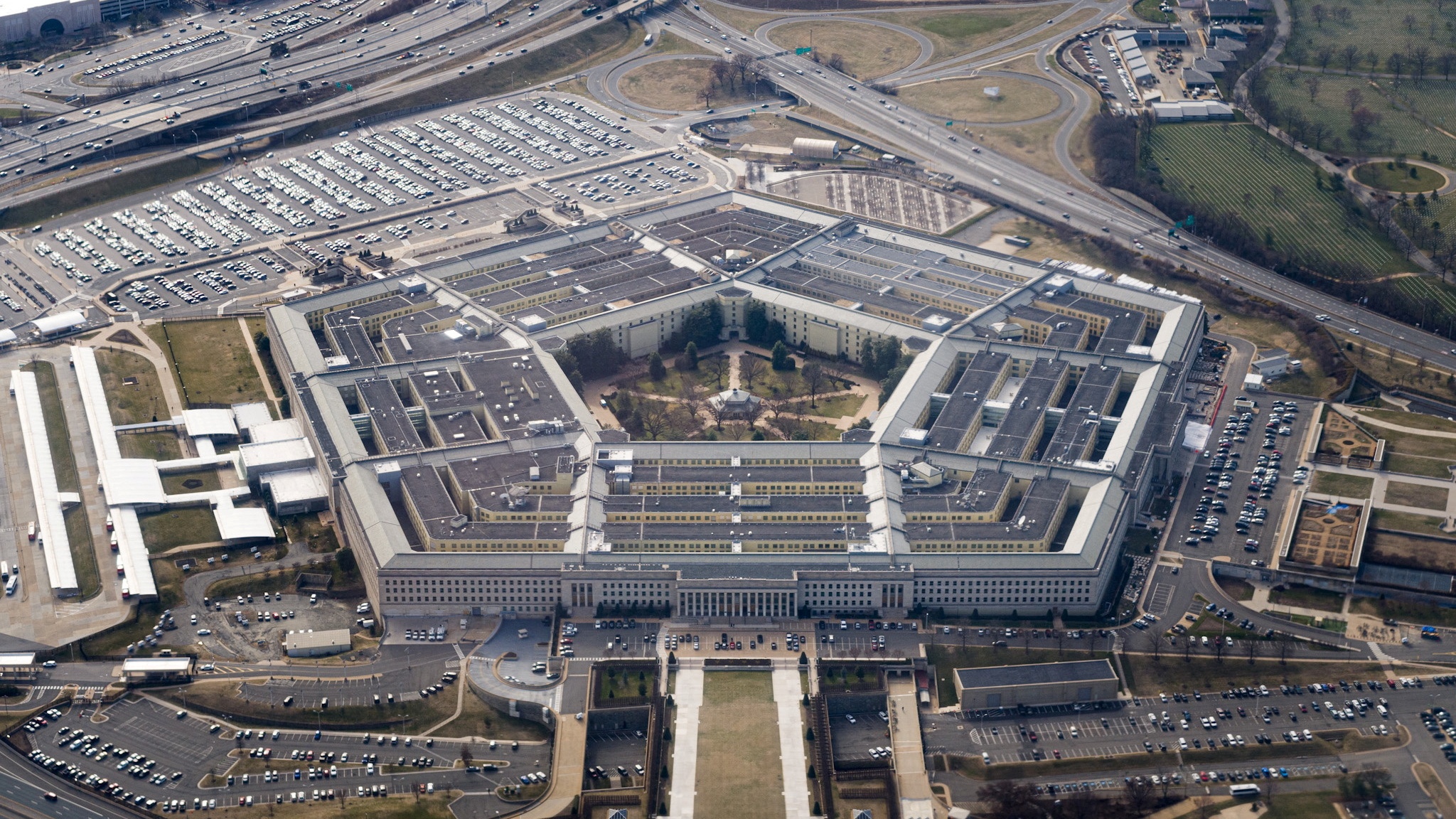
    To illustrate his point, Li highlighted two major Chinese tech firms that have faced increasing Western restrictions: telecom giant Huawei and robotics manufacturer Unitree Robotics. Both companies have seen rapid growth in global market share despite facing punitive barriers from Western governments, including their placement on the U.S. Pentagon’s list of alleged military-linked Chinese companies that are barred from securing American defense contracts. Beijing has already issued formal opposition to the latest expansion of this blacklist, which added Unitree and other tech firms earlier this month.

    Beyond the subsidy debate, Li addressed growing global anxiety over what some analysts have dubbed “China Shock 2.0” — a narrative that frames China’s booming high-tech exports as a major threat to established advanced economies in North America and Europe. In a direct rebranding, Li argued the current era should instead be recognized as “China Opportunity 2.0.”

    “From the global development perspective, ‘China Opportunity 2.0’ means there’ll be broader access to advanced technologies and more widely shared benefits,” Li told the audience. He emphasized that China’s emerging technologies and competitively priced products, from EVs and solar panels to AI systems and industrial robots, do not deliver disruptive shocks to the global economy, but rather expand access and drive growth for partners worldwide. “China’s emerging technologies and products are bringing to the world not shocks, but opportunities,” he added. “Not threats, but empowerment.”

    The debate over China’s high-tech expansion comes as multiple Western governments have moved to implement protectionist trade measures targeting Chinese tech and clean energy exports, citing concerns over oversupply and unfair competition. The Summer Davos gathering in Dalian, which draws global business leaders and policymakers each year, provided a high-profile platform for China’s top economic official to lay out the country’s position amid rising geopolitical and trade tensions.

    Associated Press video producer Wayne Zhang in Beijing contributed reporting to this article.