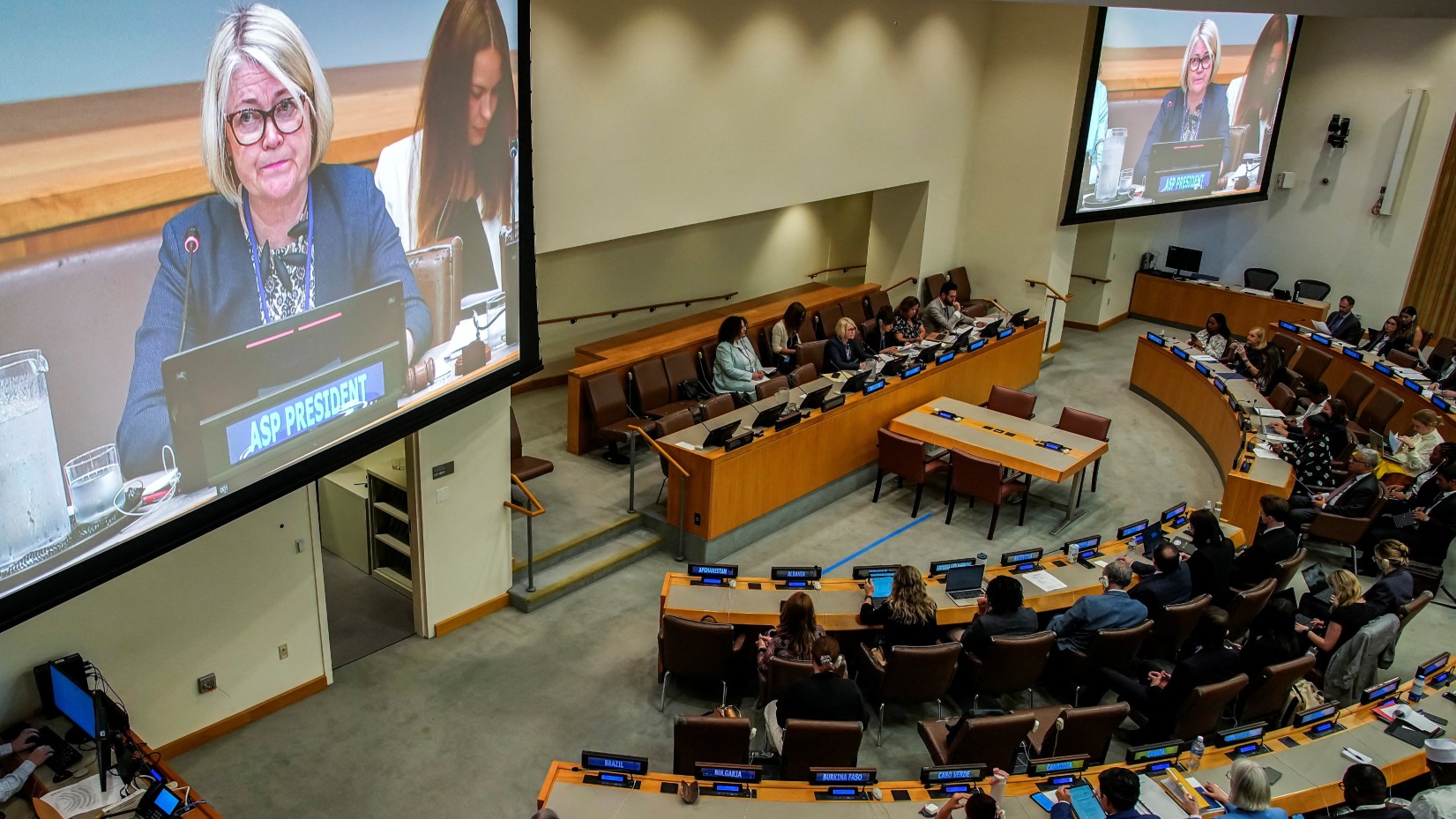
The unexpected dismissal of International Criminal Court (ICC) Chief Prosecutor Karim Khan by the court’s governing body, the Assembly of States Parties (ASP), has ignited fierce debate across the global legal community, with leading international law experts warning that the move poses a profound threat to the long-held principle of prosecutorial independence at the world’s highest permanent criminal tribunal. On July 24, ASP delegates voted to remove Khan from office after upholding a finding that he had engaged in “serious misconduct and a serious breach of duty” through inappropriate behavior toward a subordinate staff member. Khan has repeatedly and vehemently denied all allegations of wrongdoing against him.
This outcome directly contradicted the earlier findings of an independent judicial panel convened specifically to evaluate evidence gathered through a United Nations-led fact-finding probe. In March, three impartial judges appointed by the ASP’s executive bureau unanimously ruled that the evidence presented failed to prove any violation of the ICC’s governing legal framework. A month before the full ASP vote, however, the 21-member ASP bureau disregarded the judicial panel’s conclusion and issued its own recommendation that Khan be removed, citing an alleged sexual relationship with a subordinate as the core violation. Adding further controversy to the process, the bureau also modified voting procedures to lower the threshold for removal, replacing the original requirement of two separate votes—one on whether misconduct occurred, and a second on whether removal was warranted—with a single up-or-down vote on dismissal.
William Schabas, a preeminent international law professor at Middlesex University and one of the world’s leading authorities on the ICC, has emerged as a prominent critic of the process, warning that the dismissal has inflicted lasting damage on the court’s integrity and the independence of the prosecutorial office. Schabas argues that the ASP, as a fundamentally political body whose delegates vote according to directives from their national governments, is not suited to deliver impartial, judicial findings of misconduct. He points out multiple critical flaws in the ASP’s final decision: it does not qualify as a formal judicial judgment, it fails to outline which evidence the body accepted or rejected, and it never explicitly identifies the specific actions that are deemed to constitute “serious misconduct”.
Schabas notes that while some delegates likely voted for dismissal based on a genuine belief that Khan had violated rules, particularly after a high-profile CNN interview with the complainant, many other votes were almost certainly driven by political motivations. He specifically highlights that widespread anger among certain ICC member states over Khan’s decision to pursue war crime prosecutions against Israeli leaders was a major contributing factor to the dismissal. He added that other states may have voted to remove Khan in exchange for concessions from either Israel or the United States, which has openly opposed the ICC’s probe into Israeli actions in Gaza.
Khan made history during his tenure as the first ICC prosecutor to seek arrest warrants for sitting leaders of non-African states. The targets of his warrants included Russian President Vladimir Putin for actions in Ukraine, Myanmar’s military leader Min Aung Hlaing, senior Taliban leaders in Afghanistan, former Philippine President Rodrigo Duterte, and most controversially, Israeli Prime Minister Benjamin Netanyahu and former Israeli Defense Minister Yoav Gallant. Khan’s May 2024 request for warrants against Netanyahu and Gallant over alleged war crimes in the Gaza Strip marked the first time the ICC has pursued criminal charges against leaders of a Western-aligned state. The move immediately triggered harsh retaliation from the United States, which imposed sanctions on Khan, his two deputy prosecutors, and eight ICC judges. In the weeks leading up to the dismissal vote, senior U.S. officials openly vowed to “dismantle the ICC, brick by brick” over the prosecution, with former President Donald Trump explicitly stating that the U.S. campaign against the court is intended to protect Netanyahu. The ICC is currently hearing Israeli appeals to invalidate the arrest warrants.
Looking ahead to the future of the court, Schabas warns that Khan’s dismissal has already created a chilling effect that will shape the work of the next ICC prosecutor. He explained that the next person to hold the role will constantly operate under the threat that independent investigations or arrest warrants targeting powerful leaders or high-priority state interests could provoke retaliation through disciplinary proceedings. Beyond the immediate threat to the next prosecutor, Schabas argues that the entire disciplinary process in this case was improvised and violated the formal procedures outlined in the Rome Statute, the ICC’s founding treaty, and the court’s existing rules of evidence and procedure. He emphasized that current ICC rules do not provide adequate protection for prosecutorial independence, noting that due process is critical not only to protect the personal rights of the sitting prosecutor but also to safeguard the institutional independence of the office itself.
To address these fundamental flaws, Schabas is calling for a full revision of the ICC’s governing rules to require that any future effort to remove an elected prosecutor be decided through a formal judicial process, rather than a political vote by the ASP. He argues that for prosecutorial independence to be meaningful, a prosecutor must be secure in the knowledge that they can only be removed from office after a properly constituted tribunal of independent, impartial judges has made a formal finding of misconduct, and that if such a tribunal clears the prosecutor, the ASP should have no authority to overrule that decision and order removal. Schabas’ concerns echo broader criticism from human rights groups and other legal experts, who have widely scrutinized the bureau’s handling of the investigation and raised repeated alarms that the entire process was politicized and failed to meet basic standards of due process.