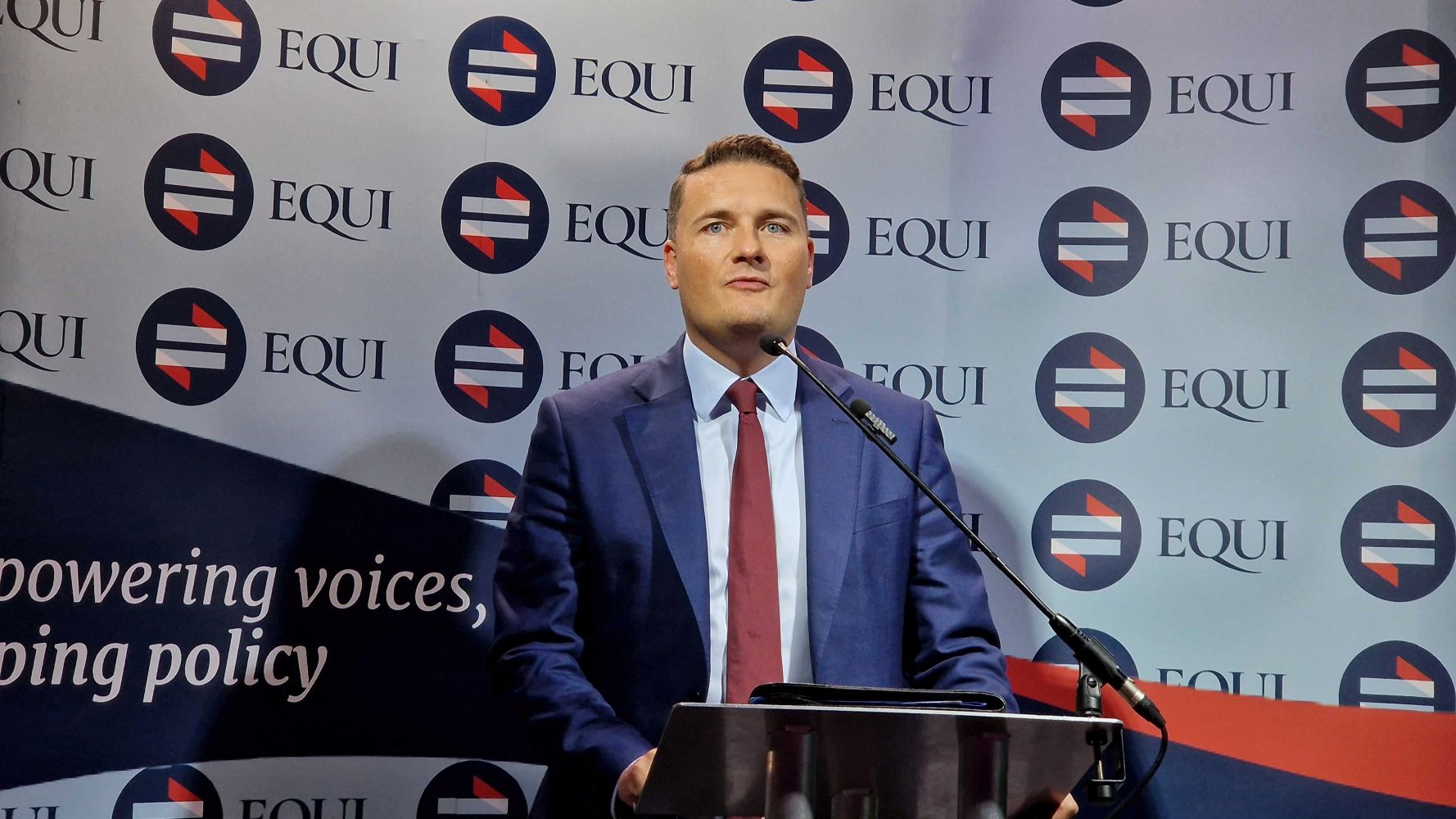
On Monday night, a vibrant gathering of Muslims formed a lengthy queue outside Liverpool’s Hilton hotel, an event that could easily have been mistaken for a nightclub. Inside, a room bathed in pink and purple fluorescent lights hosted conference attendees enjoying a buffet. Among the guests were several Labour backbenchers and imams, marking a significant moment for Equi, a Muslim think tank founded just a year ago. The event, held on the sidelines of the Labour conference, showcased Equi’s new report highlighting how Muslim-led youth initiatives save the UK £30 million annually. Despite the historical challenges Muslim civil society groups face in engaging with British governments, Equi has garnered substantial support from MPs and peers, including Afzal Khan and Baroness Sayeeda Warsi. The evening’s highlight was the rumored attendance of Wes Streeting, the Health Secretary, who arrived late but was warmly received by Equi’s director, Dr. Javed Khan. Streeting delivered a passionate speech addressing the marginalization of British Muslims and the threat from the far right, resonating deeply with the audience. The event also featured a surprise appearance by Shabana Mahmood, the newly appointed Home Secretary, who outlined her controversial immigration policy requiring migrants to demonstrate societal contributions and English proficiency for indefinite leave to remain. Mahmood’s vision for multiculturalism and controlled immigration aims to counter the insurgent right wing and restore national harmony. The gathering concluded with celebrations of Equi’s first anniversary, symbolizing a significant step forward for Muslim representation in British politics.
分类: politics
-
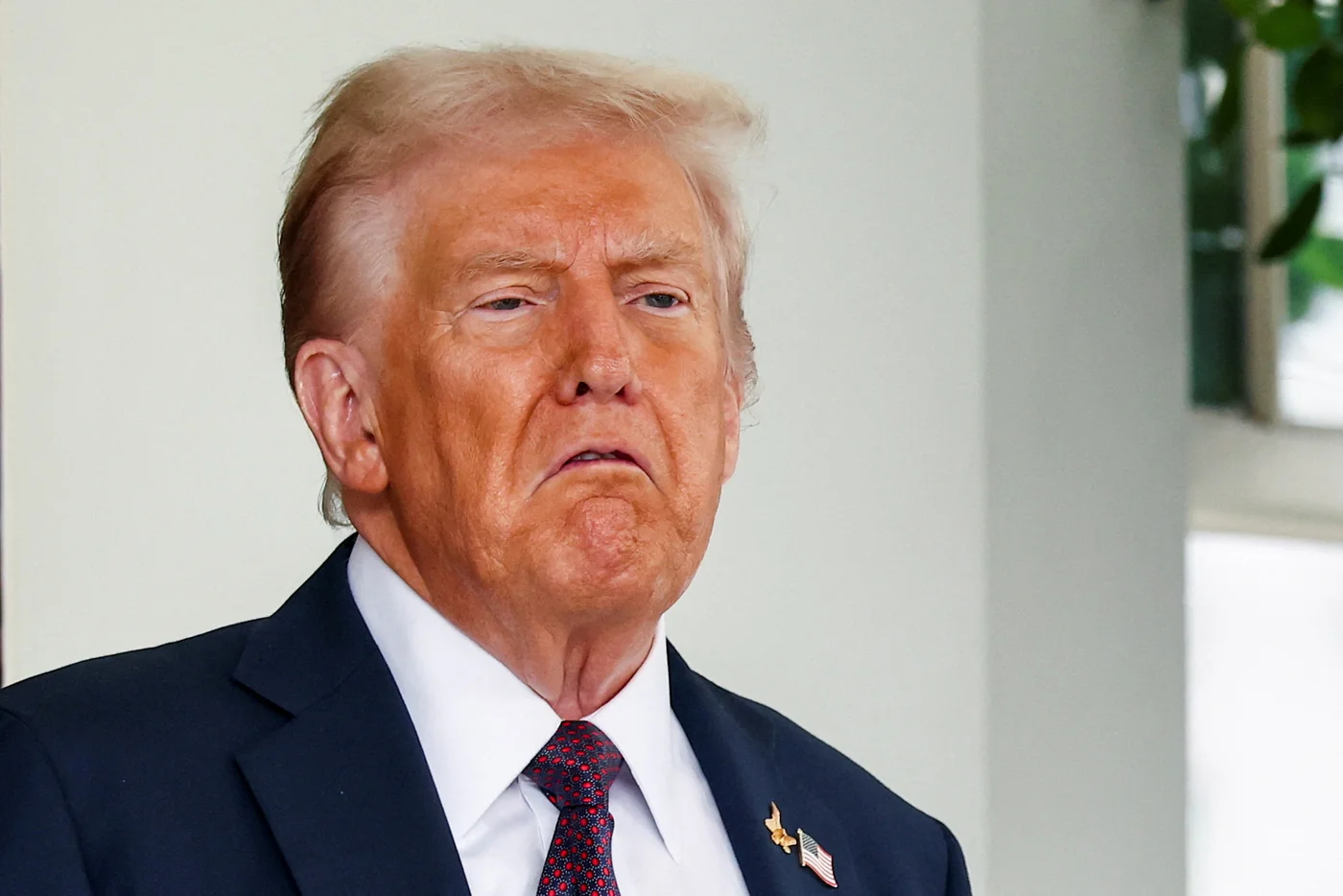
‘Blueprint for permanent occupation’: Outrage online over Trump’s plan to end Gaza war
Donald Trump’s 20-point proposal to address the conflict in Gaza has ignited widespread criticism, with many accusing the former US president of masking a plan for Israel’s permanent occupation of the Palestinian enclave as a peace initiative. Announced alongside Israeli Prime Minister Benjamin Netanyahu at the White House, the plan conditions a halt to Israel’s military campaign on Hamas’s acceptance of its terms. Trump hailed the proposal as a historic achievement, claiming support from Arab, Muslim, and European leaders. However, reactions outside the White House were far from celebratory. Palestinian journalist Motasem Dalloul described the plan as a ‘dirty trick’ to reinforce Israeli occupation under international cover. Critics highlighted the plan’s lack of Palestinian self-determination, Israel’s continued control over borders, and the involvement of figures like Tony Blair, whom many view as emblematic of colonial overreach. Human rights scholars and activists condemned the proposal as an ultimatum rather than a genuine peace effort, emphasizing the exclusion of Palestinians from the decision-making process. Netanyahu’s subsequent announcement that Israel would not withdraw from Gaza further fueled accusations of bad faith. The plan’s deeper flaws, including its focus on ‘de-radicalization’ of victims rather than perpetrators and its failure to address accountability for alleged genocide, drew sharp criticism. Despite Qatar and Egypt forwarding the proposal to Hamas, many view it as a blueprint for permanent occupation rather than a pathway to peace.
-
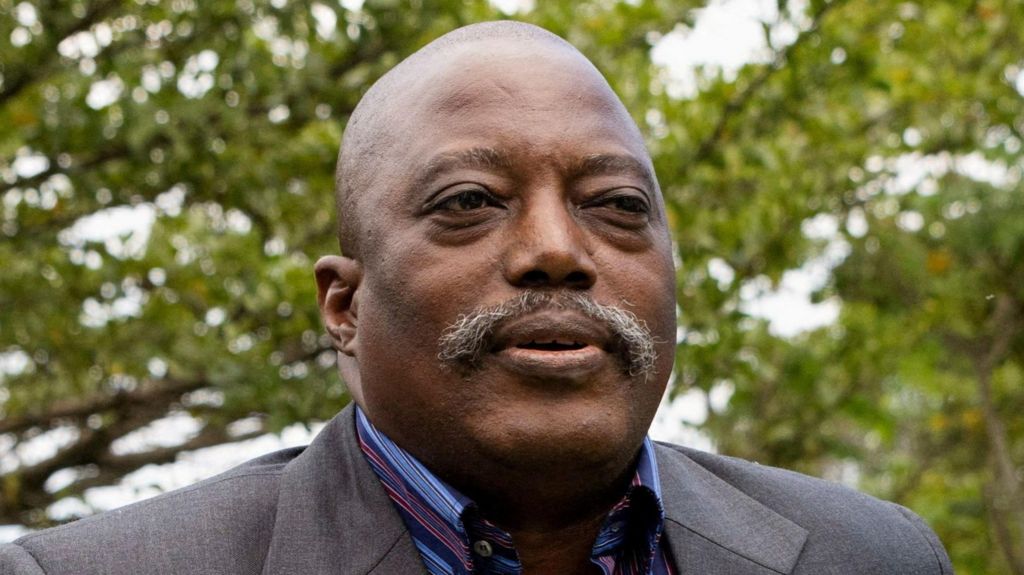
Former Congolese president sentenced to death for war crimes
In a landmark ruling, former Democratic Republic of Congo (DRC) President Joseph Kabila has been sentenced to death in absentia for war crimes, treason, and crimes against humanity. The charges stem from allegations that Kabila supported the M23 rebel group, which has caused widespread devastation in the country’s eastern region. The verdict, delivered on Friday, includes accusations of murder, sexual assault, torture, and insurrection. Kabila, who has dismissed the case as “arbitrary,” claims the judiciary is being used as an “instrument of oppression.” His current location remains unknown. Kabila, 54, led the DRC for 18 years after succeeding his father, Laurent Kabila, who was assassinated in 2001. He handed power to current President Félix Tshisekedi in 2019 but later fell out with him, leading to his self-imposed exile in 2023. In May 2024, Kabila returned to the M23-held city of Goma, stating his intention to help resolve the ongoing conflict in the east. However, Tshisekedi accused him of orchestrating the M23 rebellion, and senators revoked his legal immunity, enabling his prosecution. The conflict escalated earlier this year when M23 seized control of key areas in the mineral-rich east, including Goma and Bukavu. The UN and several Western nations have accused Rwanda of backing M23, a claim Kigali denies. Despite a July ceasefire agreement, violence persists in the region.
-
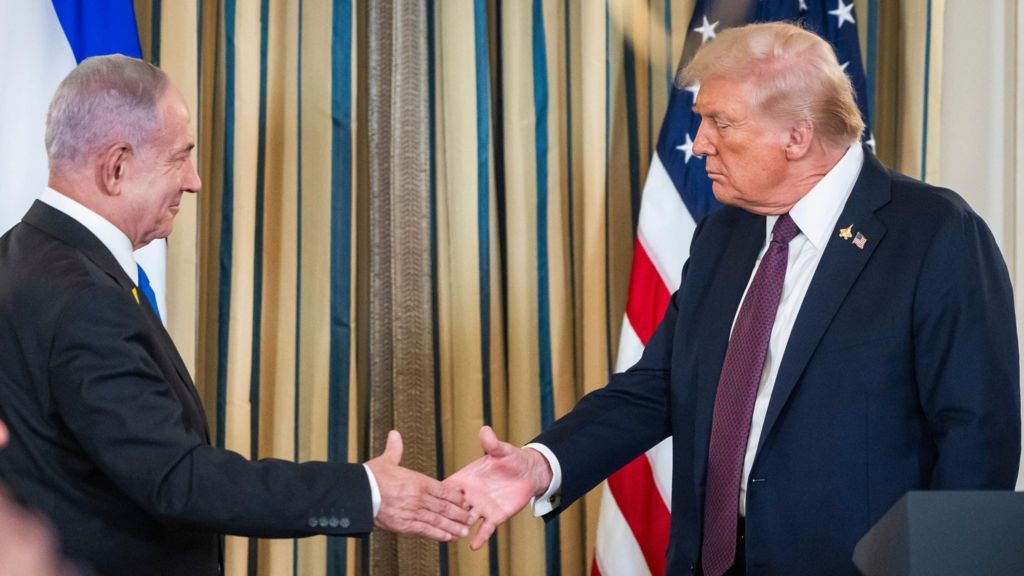
Bowen: Momentum is the strength of Trump’s Gaza plan, but lack of detail is its weakness
A framework agreement proposed by former U.S. President Donald Trump to end the Gaza war and reconstruct the devastated territory has garnered significant momentum, driven by Trump’s personal influence and support from key Arab and Islamic nations, including Jordan, Egypt, Qatar, Saudi Arabia, the UAE, Pakistan, Indonesia, and Turkey. Israeli Prime Minister Benjamin Netanyahu, standing alongside Trump, has also accepted the plan, despite its implicit nod to a potential pathway to Palestinian statehood—a concept he has vehemently opposed. Trump has set a tight deadline, giving Hamas ‘three to four days’ to decide on the proposal, warning that a rejection would result in the continuation of hostilities. The plan bears resemblance to an earlier initiative by President Joe Biden, which faltered due to Netanyahu’s shifting demands under pressure from his hard-right cabinet. However, Trump’s framework marks a pivotal moment, as it represents the first instance of him exerting pressure on Israel to cease the conflict. The document, endorsed by the UK and other European countries, outlines a rough roadmap for an IDF pullback but lacks detailed specifics, a hallmark of Trumpian diplomacy. While mainstream Israeli opposition parties have backed the plan, it has drawn condemnation from ultra-nationalist factions within Netanyahu’s coalition, who previously supported the controversial ‘Trump Riviera’ proposal advocating for the displacement of Gaza’s Palestinian population. The new plan explicitly states that no Palestinian will be forced to leave, a stance that has angered hardliners like Finance Minister Bezalel Smotrich, who likened it to the 1938 Munich Agreement. The agreement’s ambiguity allows for divergent interpretations, with Netanyahu viewing it as a step toward Israel’s victory over Hamas, while Arab and Islamic nations see it as a pathway to a two-state solution and the rebuilding of Gaza. The plan’s success hinges on intricate negotiations, with numerous opportunities for breakdowns, particularly given the structural flexibility it affords Israel to veto unfavorable moves. Ultimately, the framework’s lack of clarity and detail raises questions about its viability in resolving a century-old conflict.
-
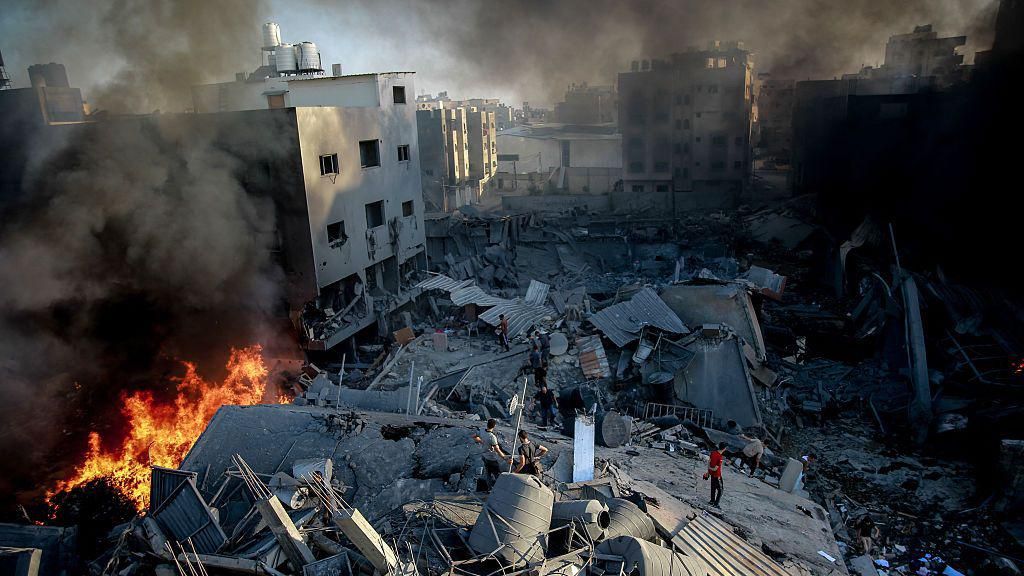
Trump peace plan ‘ignores interests of Palestinian people’, Hamas official tells BBC
A senior Hamas official has indicated to the BBC that the group is poised to reject former U.S. President Donald Trump’s proposed peace plan for Gaza, labeling it as heavily skewed in favor of Israel while neglecting Palestinian interests. The official emphasized that Hamas is unlikely to comply with the plan’s key condition of disarming and surrendering their weapons. Additionally, the group opposes the deployment of an International Stabilisation Force (ISF) in Gaza, viewing it as a potential new form of occupation. Israeli Prime Minister Benjamin Netanyahu has already endorsed Trump’s plan following White House discussions on Monday, but Hamas has yet to issue an official response. Qatar’s foreign ministry has noted that Hamas is currently reviewing the proposal ‘responsibly.’
Hamas’s military commander in Gaza, Ez al-Din al-Haddad, is reportedly determined to continue fighting rather than accept the plan. Meanwhile, Hamas leaders outside Gaza have found themselves increasingly marginalized in negotiations due to their lack of direct control over hostages. The ongoing discussions, expected to last several days, also involve other Palestinian factions, including the Palestinian Islamic Jihad (PIJ), which has already rejected the plan. A major sticking point for Hamas is the requirement to release all hostages at once, effectively eliminating their primary bargaining chip.
Despite Trump’s backing, there is widespread skepticism that Israel will halt military operations post-hostage release, especially following a recent assassination attempt on Hamas leadership in Doha. Further complicating matters, a map shared by the Trump administration suggests a planned buffer zone along Gaza’s southern border with Egypt, raising concerns about Israeli involvement. Netanyahu’s recent statements, including a video on X, have also contradicted the plan’s terms by insisting on continued Israeli military presence in Gaza and opposing Palestinian statehood.
Within Gaza, many Palestinians support the plan solely for its potential to end the war, despite its perceived flaws. Resident Khadar Abu Kweik expressed this sentiment, stating, ‘The American plan has bad clauses, but I support it because it will stop the war and get rid of Hamas.’ Palestinian journalist Fathi Sabah warned that a Hamas rejection could embolden Netanyahu to continue the conflict with Western backing, further devastating Gaza. The Israeli military’s campaign in Gaza, launched in response to the October 7, 2023, Hamas-led attack, has resulted in significant casualties and widespread destruction, with recent UN reports confirming famine and allegations of genocide.
-

US deporting 120 Iranians after deal struck with Tehran, Iran says
In a significant move under President Donald Trump’s stringent immigration policies, the United States has initiated the deportation of 120 Iranian nationals. Hossein Noushabadi, an official from Iran’s foreign ministry, confirmed the development in a statement to the Tasnim state news agency. He revealed that the individuals, many of whom entered the US illegally via Mexico, are set to return to Iran within the next one to two days, with their repatriation facilitated through Qatar. Notably, some of the deportees held valid US residency permits, and US authorities reportedly sought their consent for the process. Noushabadi emphasized the need for the US to respect the rights of Iranian migrants under international law. This deportation marks the first phase of a broader agreement between Iran and the US, which aims to repatriate approximately 400 Iranian nationals. The collaboration is particularly noteworthy given the absence of formal diplomatic ties between the two nations, with negotiations conducted through the US Interests Section at the Pakistani embassy in Tehran. The Trump administration has been actively pursuing deportation agreements with various countries, including recent deals with Panama and Costa Rica to accept hundreds of African and Asian migrants. President Trump has consistently vowed to curb immigration and deport individuals residing in the US without legal status, including those from countries with contentious human rights records. However, the deportation of Iranian nationals has sparked criticism from human rights organizations, which argue that migrants face potential harm upon return. Iran’s human rights record has also come under scrutiny, with UN experts highlighting a sharp increase in the use of the death penalty this year. While the Iranian government defends its practices as targeting only severe crimes, human rights groups dispute this claim, further complicating the ethical implications of the deportation program.
-
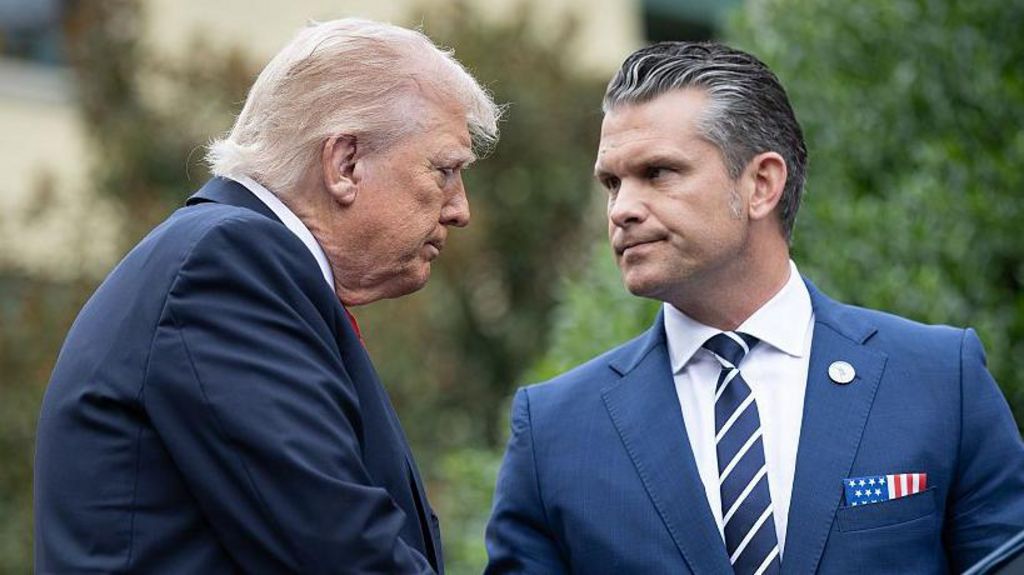
Trump and Hegseth to address top US generals in unusual military gathering
In an unprecedented gathering, U.S. President Donald Trump and Defense Secretary Pete Hegseth are set to address hundreds of top military officials at Marine Corps Base Quantico near Washington, D.C. The event, scheduled for Tuesday, has drawn significant attention due to its unusual scale and the sudden summoning of military leaders from across the globe. While no official reason has been disclosed, Vice-President JD Vance has dismissed the event as routine, despite widespread speculation. Security measures at the 55,000-acre base are exceptionally stringent, reflecting the high-profile nature of the summit. The stage for the address is adorned with a large American flag and banners emblazoned with the words ‘strength, service, America,’ alongside the flags of various armed services. In a statement on Sunday, Trump described the meeting as an opportunity to discuss the military’s achievements and foster a sense of unity among the troops. He emphasized the positive nature of the discussions, aiming to boost morale and reinforce the military’s readiness. However, some experts, including Mark Cancian of the Center for Strategic and International Studies, questioned the necessity of an in-person gathering, suggesting virtual alternatives could have been more efficient. Hegseth, known for advocating a ‘warrior ethos’ and rebranding the Department of Defense as the Department of War, likely views the event as a critical moment to strengthen his message. The summit is expected to draw over 800 attendees, including senior officers from Europe, South Korea, and the Middle East, many of whom have served in key conflicts such as Afghanistan and Iraq. The audience also includes senior enlisted officers, who play a pivotal role as advisers to commanding officers. This rare assembly underscores the administration’s focus on military strength and unity, even as it raises questions about its broader implications.
-
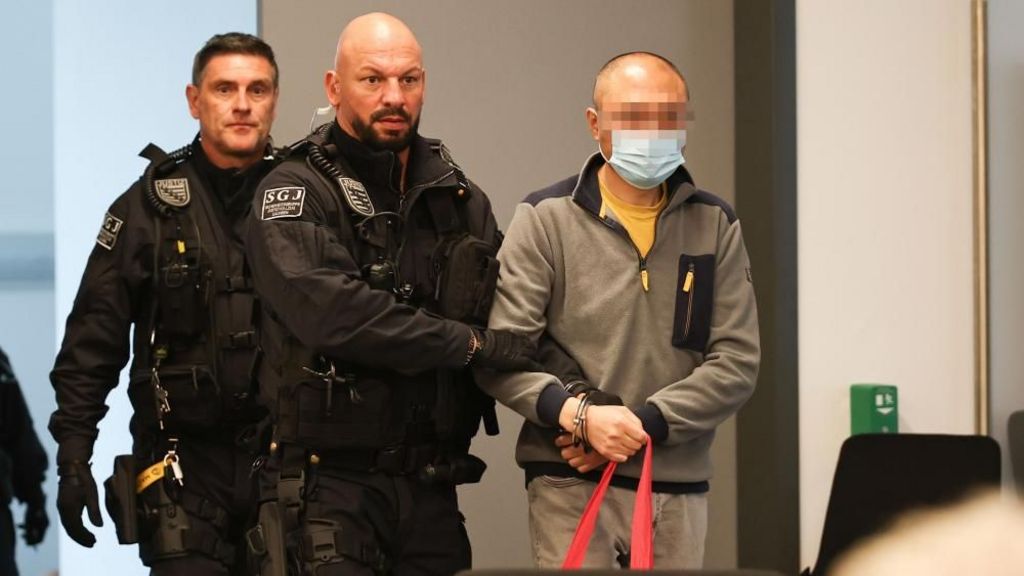
Former aide to far-right German politician jailed for spying for China
A former aide to a prominent member of Germany’s far-right Alternative for Germany (AfD) party has been sentenced to four years and nine months in prison for espionage activities on behalf of China. Jian Guo, who worked in Brussels for Maximilian Krah, a member of the European Parliament, was convicted by a court in Dresden for gathering and transmitting confidential information to Chinese authorities. Krah, now a member of the German parliament, claimed he only became aware of the allegations against Guo through media reports. Prosecutors alleged that Guo had been working for Chinese intelligence since 2002, raising concerns about China’s espionage activities within the European Union. Guo, a German national, was also accused of monitoring Chinese dissidents and opposition figures in Germany. Despite maintaining his innocence throughout the trial, the court deemed the case particularly severe. In a related case, a Chinese national working at Leipzig airport was given a suspended sentence for providing data on cargo, flights, and passengers. Krah stated that he had enhanced security measures in his office following Guo’s arrest.
-
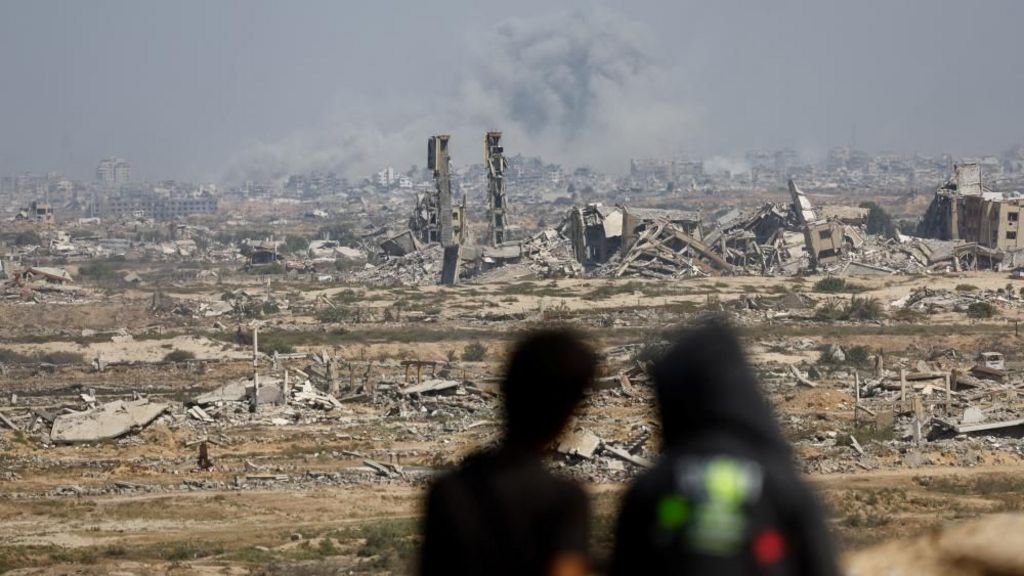
Trump’s Gaza plan is a significant step – but faces fundamental obstacles
In a high-profile announcement at the White House, U.S. President Donald Trump and Israeli Prime Minister Benjamin Netanyahu unveiled a 20-point peace plan aimed at ending the protracted war in Gaza. Trump hailed the proposal as a historic milestone, potentially ushering in “eternal peace in the Middle East.” However, the plan, while ambitious, remains a framework for further negotiations rather than a detailed roadmap to resolution. The proposal marks a significant shift in the Trump administration’s stance on Gaza’s post-war future and increases pressure on Netanyahu to accept a deal. Key elements include a ceasefire, limited Israeli withdrawal, the release of hostages and Palestinian prisoners, and the establishment of a technocratic administration in Gaza overseen by a U.S.-led “Board of Peace.” The plan also vaguely references Palestinian statehood, contingent on reforms within the Palestinian Authority. While Arab nations view the proposal as a breakthrough, Hamas remains skeptical, with one figure criticizing its failure to safeguard Palestinian interests. Netanyahu’s domestic opponents also question his commitment, citing his history of derailing deals for political gain. The plan’s success hinges on overcoming longstanding obstacles, including Hamas’s demands for Israeli withdrawal and Netanyahu’s coalition’s resistance to concessions. The proposal, crafted by Trump’s envoy Steve Witkoff and Jared Kushner, draws on previous diplomatic efforts, including the Saudi-French plan and Tony Blair’s involvement. Despite its lofty goals, the plan’s ambiguity leaves room for both sides to exploit negotiations, potentially stalling progress. As the world watches, the path to peace remains fraught with challenges, with the response from Hamas and Netanyahu’s government likely to determine the plan’s fate.
-
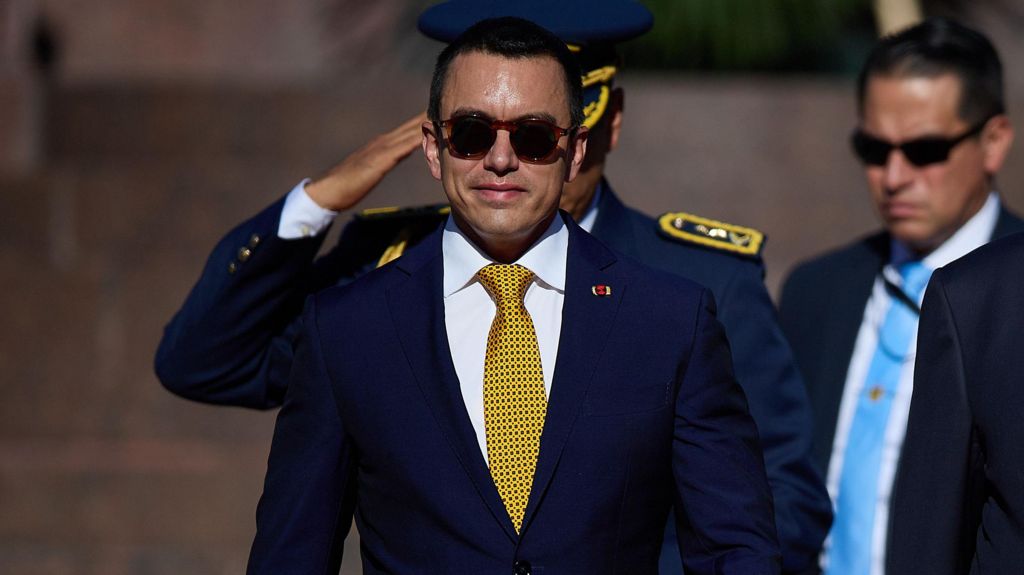
Ecuador president’s aid convoy attacked, officials say
A humanitarian convoy led by Ecuadorian President Daniel Noboa was violently ambushed on Sunday night, resulting in 17 soldiers being taken hostage, according to government spokeswoman Carolina Jaramillo. The convoy, which included UN and European diplomats, was attacked by approximately 350 individuals armed with Molotov cocktails in Cotacachi, Imbabura province. The incident occurred during a national strike organized by Conaie, Ecuador’s largest Indigenous rights organization, in protest against the government’s decision to cut fuel subsidies. President Noboa, who was accompanied by the Italian ambassador and Vatican diplomats, condemned the attack, stating, ‘They resist Ecuador’s progress and chose violence. Ecuador cannot go backward.’ He shared images of the damaged vehicles on social media, emphasizing the severity of the assault. The Ecuadorian armed forces accused the attackers of being ‘terrorist groups’ and reported that 12 soldiers were injured in the clash. Meanwhile, Conaie claimed that one of its members, Efrain Fuerez, was shot three times and died in hospital, describing his death as a ‘state crime’ ordered by President Noboa. The organization denied any involvement in terrorism, asserting that ‘the true terror is imposed by the government with its repression.’ The UN Human Rights Council’s regional representative, Jan Jarab, called for an ‘urgent dialogue’ and a thorough investigation into the violence. Ecuador’s prosecutors’ office has announced it will probe the alleged death of Fuerez. In response to the escalating unrest, a state of emergency has been declared in eight provinces, with a nighttime curfew imposed in five. President Noboa has accused the Venezuelan cartel Tren de Aragua of orchestrating the demonstrations and warned that protesters breaking the law could face 30-year prison sentences for terrorism. This incident marks a significant escalation in the ongoing protests, which have already led to violent clashes across the country.