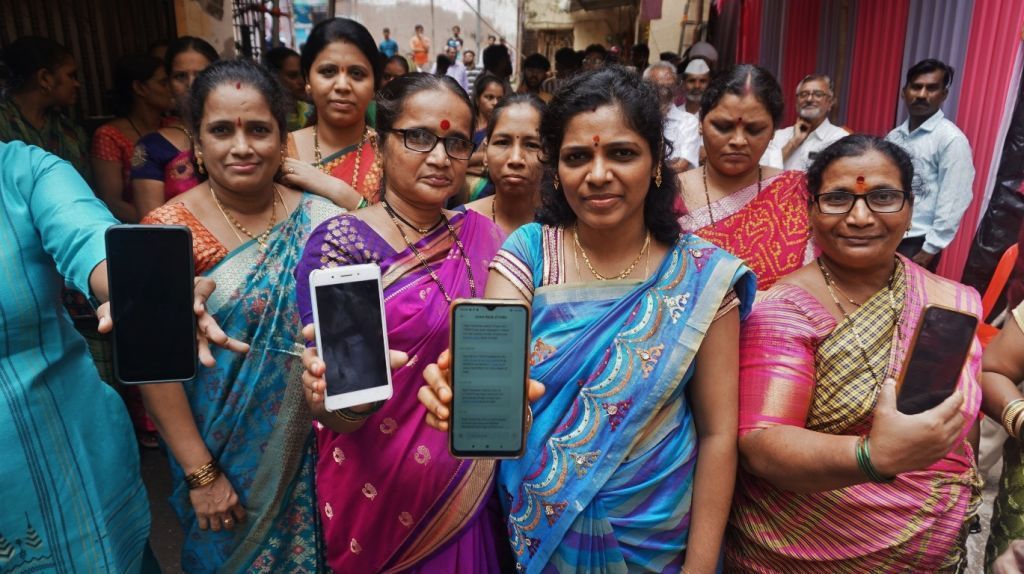
A decades-old foundational principle of U.S. citizenship law remained intact after the U.S. Supreme Court issued a ruling upholding birthright citizenship, prompting the BBC to reach out to ordinary Americans across the country to capture their reactions to the high court’s decision. Birthright citizenship, which grants automatic U.S. citizenship to nearly all people born on American soil, is enshrined in the 14th Amendment of the U.S. Constitution, and the Supreme Court’s ruling reaffirmed this long-standing interpretation of the nation’s founding document. The BBC’s outreach captured a wide spectrum of opinions that mirror the deep partisan and cultural divides that shape contemporary debates over immigration and national identity in the United States. Many respondents who backed the ruling emphasized that birthright citizenship is a core part of America’s identity as a nation of immigrants, arguing that it upholds the country’s long-standing promise of opportunity to people born within its borders regardless of their parents’ immigration status. These respondents framed the Supreme Court’s decision as a victory for constitutional originalism and equal treatment under the law, noting that the 14th Amendment was explicitly written after the Civil War to grant citizenship to formerly enslaved people and establish a clear standard for birthright nationality. On the other side of the debate, critics of the ruling expressed disappointment that the Supreme Court did not revisit the issue, arguing that the current policy incentivizes illegal immigration and puts unfair strain on local government resources. These respondents contended that the 14th Amendment’s wording was never intended to grant automatic citizenship to children of non-citizens, and called for future legislative or constitutional action to revise the policy. Between these two polarizing views, some respondents shared more nuanced perspectives, acknowledging the historical importance of the principle while calling for broader comprehensive immigration reform to address unresolved challenges in the U.S. immigration system. For many Americans, the ruling has reignited conversations about what it means to be American, and how the nation should balance its commitment to inclusive principles with the need to enforce immigration laws. Legal experts note that the Supreme Court’s ruling sets a firm precedent that will likely keep birthright citizenship unchanged for the foreseeable future, even as the political debate over the issue continues to play out in statehouses and national election campaigns across the country.
分类: politics
-

UK journalists and NGOs risk terrorism prosecutions under new security bill
As the United Kingdom’s controversial National Security (State Threats) Bill races toward final parliamentary approval this week, independent security and legal experts have issued stark warnings that the sweeping legislation could inadvertently criminalize foreign correspondents and non-governmental organization (NGO) workers who interact with state-backed groups designated as threats under the new law.
The bill grants UK Home Secretary Shabana Mahmood broad authority to label any state-backed organization that is judged to harm the UK’s national safety and core interests as an official threat. Under its provisions, anyone found to “support, assist, or obtain material benefits” — including information — from a designated proscribed group commits a criminal offense, carrying a maximum penalty of 14 years in prison. Most notably, the legislation explicitly rules out a “reasonable excuse” defense for these offenses, a provision that critics say creates dangerous gaps in protection for legitimate public-facing work.
Former independent reviewer of UK terrorism legislation David Anderson has emerged as one of the most prominent critics of the bill, arguing that the proposed legislation contains effectively no safeguards for reporters working in conflict zones and sensitive international beats. Writing for The Guardian, Anderson noted that promised protections for both journalists and NGO workers are largely missing from the final draft of the bill. He added: “Foreign correspondents could also be affected. Indeed on the face of it, they would be at risk of prosecution if they were to have contact of any kind with sources within designated bodies or their agents.”
In an attempt to address growing criticism, cabinet ministers have argued that only information “which possesses an inherent value that enriches the recipient” is banned under the legislation. But Anderson pushed back against this claim, pointing out that the bill’s formal definition of “material benefit” explicitly categorizes information as a separate category from financial gain, meaning even routine reporting that relies on sourcing from designated groups could fall afoul of the law. The UK government also rejected a formal recommendation from current independent terrorism legislation reviewer Jonathan Hall, who called for the “reasonable excuse” defense to be expanded to cover cases involving information gathering for journalistic work.
UK Home Office officials have pushed back against critics, insisting that the bill does not target the work of professional journalists. A spokesperson for the department said: “This bill does nothing to undermine the vital work journalists do, and any suggestion otherwise is absolutely false. Legitimate activity including journalistic freedoms are protected under the bill, as well as diplomatic and humanitarian engagement. We have a proud tradition in this country of upholding the freedom of the press. Indeed, it is our obligation to ensure journalists are empowered to carry out their work.”
But beyond the risks to press freedom, critics warn that the bill’s vague language around key terms including “foreign power threat activity” and “expressing support” creates the opening for authorities to weaponize the legislation to restrict peaceful protest rights. Many critics have also highlighted the unusually fast pace of the bill’s passage through parliament as a major red flag, arguing that the rushed process prevents robust scrutiny of its far-reaching implications.
Former Labour Party leader Jeremy Corbyn amplified these concerns in a formal statement released on June 17, describing the bill as “an alarming expansion of state power, and an escalation of the government’s chilling assault on the right to protest.” Corbyn argued that the legislation’s deliberately vague and open-ended wording allows the home secretary to unilaterally criminalize political campaigns that the government of the day opposes. He pointed to recent mass arrests of activists under existing terrorism legislation as evidence of the risk of overreach: more than 3,000 people have been arrested under the Terrorism Act for expressing support for proscribed Palestinian advocacy group Palestine Action, after the group was banned in July 2025. Earlier this month, five senior judges overturned an earlier February High Court ruling that had found the proscription of Palestine Action to be unlawful, a decision that has added to fears of expanded crackdowns on protest under the new national security law.
-

US Supreme Court upholds birthright citizenship in blow to Trump
In a landmark decision that has reshaped the trajectory of U.S. immigration policy and dealt a critical setback to former President Donald Trump’s long-held policy goals, the U.S. Supreme Court has voted 6-3 to reaffirm that all children born on U.S. soil hold a constitutional right to birthright citizenship, directly rejecting Trump’s bid to overturn the 150-year-old established practice.
Writing for the court’s majority, Chief Justice John Roberts anchored the ruling in the text and intent of the 14th Amendment, clarifying that even children born to parents who are in the United States either unlawfully or on a temporary status qualify as full U.S. citizens from birth. “Citizenship, then and now, was the right to have rights – to freely participate in our political community,” Roberts wrote in his opinion. “The Framers of the Fourteenth Amendment extended that promise to ‘every free-born person in this land’, and we keep that promise today.” This longstanding policy has been a cornerstone of U.S. immigration and citizenship law since the 14th Amendment was ratified in 1868, following the U.S. Civil War, and has been repeatedly upheld by previous Supreme Court rulings over the decades.
Trump had pushed to curtail birthright citizenship via executive action, arguing that the children of undocumented immigrants and temporary visa holders do not meet the 14th Amendment’s requirement of being “subject to the jurisdiction thereof” and thus are not eligible for automatic citizenship. The case carried such high stakes for the president that he made a rare public appearance at the Supreme Court in April to observe the oral arguments.
Following the ruling’s release, Trump reacted on his social platform Truth Social, calling the outcome “too bad” and pledging to continue his campaign to end birthright citizenship through congressional legislation. Arguing that a full constitutional amendment is not required to enact the change, Trump urged Congress: “Congress should today start work on ending expensive, and unfair to our country, birthright citizenship.”
The ruling split the nine-member court sharply along ideological lines. Three justices – Clarence Thomas, Neil Gorsuch, and Samuel Alito – issued dissenting opinions. Thomas argued that the 14th Amendment, originally drafted to guarantee citizenship for formerly enslaved people, was being misappropriated for modern political goals, noting that the freed slaves the amendment was intended to protect were already Americans with no conflicting foreign allegiance. Alito called the ruling a “serious mistake,” claiming it grants citizenship to nearly anyone born in the U.S. even if their parents traveled to the country specifically to give birth before returning to their home country.
Senior White House advisor Stephen Miller, a leading architect of the Trump administration’s restrictive immigration policies, echoed the dissent’s frustration in a post on X, labeling the ruling “one of the most destructive and outrageous decisions” in the Supreme Court’s history. “American citizenship is not the birthright of the world,” Miller wrote. “No provision of the Constitution can be read to require our national self-obliteration.”
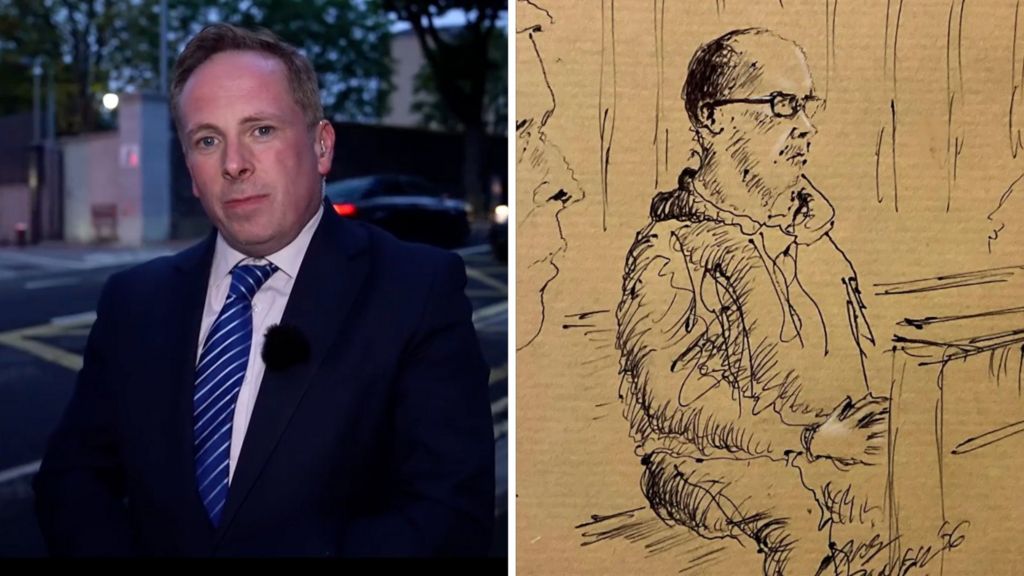
Meanwhile, civil rights groups and immigration advocates across the country have celebrated the decision as a major victory for equal rights and longstanding constitutional principle. Dariely Rodriguez, chief counsel at the Lawyers’ Committee for Civil Rights Under Law, noted that the ruling “solidifies what we have known to be true for over a hundred years. Anyone born on American soil, regardless of the legal status of their parents, is born an American citizen. We have endured an incredible test of our collective will as a nation and have prevailed.” BBC senior political correspondent Gary O’Donoghue has characterized the decision as a defining legal and political defeat for Trump’s immigration agenda.
-

Missing US congressman explains mysterious four-month absence
After four months away from Capitol Hill on a previously unexplained medical leave, New Jersey Republican Congressman Tom Kean Jr. made his public return to the House of Representatives on Tuesday, opening up about his private struggle with depression in an emotional address to fellow lawmakers. The 57-year-old lawmaker, who is gearing up to defend his competitive swing district seat in November’s upcoming midterm elections, confirmed what had not been shared publicly during his absence: he was admitted to a hospital to receive treatment for a newly confirmed diagnosis of depression, a stay that stretched far longer than he initially anticipated.
Kean told the chamber that he entered the medical facility several months ago for routine health testing, never expecting the situation would lead to a months-long stay. When his depression diagnosis was finalized, his care team advised him to remain in the hospital to prioritize his recovery, noting that an extended focused treatment period would speed up his return to full health. In a speech that challenges common misconceptions about mental illness, Kean pushed back on the widespread misunderstanding that depression is just persistent sadness. “It is physical, it is emotional and, until you’ve experienced it yourself, it is difficult to fully understand how powerful this illness can be,” he said. “When people hear the word depression, many people think it simply means feeling sad. But depression is so much more than that.”
During his 142-day absence, Kean missed more than 140 congressional votes, sparking growing speculation and pressure from within his own party to be transparent about the reason for his leave. Prior to Tuesday’s address, Kean had only described his time away as a “personal medical issue” on social media, and even some of his own aides told U.S. media outlets they were unaware of the specific cause of his absence, only confirming that he was under the supervision of medical professionals. Earlier this June, Kean secured the Republican nomination for his district unopposed, clearing the first hurdle on his path to a third term in Congress.
Political analysts and party leaders have flagged Kean’s congressional district as one of the most competitive competitive seats up for grabs this cycle. A classic swing district with a history of shifting between Republican and Democratic control, the seat is viewed as critical to Republicans’ efforts to maintain their majority in Congress. Democrats have identified the district as a top pickup opportunity: unseating Kean would not only shift the balance of power toward Democrats but also mark a high-profile defeat for the movement aligned with former President Donald Trump.
-

Almost 60,000 far-right extremists in Germany, intelligence agency says
Germany’s domestic intelligence agency, the Federal Office for the Protection of the Constitution (BfV), has issued a stark warning in its 2025 annual report: right-wing extremism remains the single most severe threat to the country’s democratic foundations, and the number of identified right-wing extremists jumped dramatically year-over-year to 58,700.
This marks an increase of more than 8,000 extremists compared to 2024, a shift BfV leadership attributes largely to the rapid expansion of the Alternative für Deutschland (AfD), the country’s leading far-right political party. Of the total right-wing extremist population tracked by the agency, an estimated 5,600 are assessed to have an active propensity for violence.
BfV President Sinan Selen emphasized that German democracy faces near-constant assault from both domestic and foreign actors. The report notes that hostile foreign intelligence operations targeting German interests originate primarily from three key states: Russia, China, and Iran.
The AfD, which secured a historic second-place finish in 2025 federal elections, captured 20.8% of the national vote and 152 seats in the 630-seat Bundestag. Its total membership swelled to 70,000 by the end of last year, and the party is currently polling at approximately 40% ahead of September state elections in Saxony-Anhalt — a result that would give it an outright majority and allow it to form Germany’s first far-right state-level government. As the party prepares to host its national conference this weekend in the eastern city of Erfurt, German Interior Minister Alexander Dobrindt has publicly warned of potential violence linked to planned protests against the gathering, stressing that all demonstrations must remain strictly peaceful.
Last year, the BfV formally designated the AfD as a confirmed right-wing extremist group. However, that classification was put on hold in February after the party filed a legal challenge to the ruling, and a final court decision is still pending. The agency currently retains the AfD on its list of suspected extremist organizations. In its latest report, the BfV concluded that “given the rising membership figures, it can be assumed that the pool of individuals with extremist leanings within the AfD has also expanded accordingly.” It added that the party and other right-wing groups regularly amplify well-known extremist and conspiracy narratives, including the racist “Great Replacement” theory, also referred to as “population exchange,” which has become a core talking point for far-right movements globally.
Beyond the AfD, the report identifies roughly 26,000 extremists belonging to two separate far-right factions: the Reichsbürger (Reich Citizens) and Selbstverwalter (Self-Administrator) movements. Both groups reject the legitimacy of the modern Federal Republic of Germany, refuse to recognize the country’s constitution, legal system, and governing institutions, and routinely spread anti-Semitic rhetoric and conspiracy ideology, per the BfV’s analysis.
The report also highlights growing extremism across other ideological factions. The number of tracked left-wing extremists rose by 4,200 year-over-year to hit 42,200, with a notable increase in violent attacks targeting suspected right-wing figures and German law enforcement officers. Additionally, the number of individuals linked to Islamist extremism and terrorism saw a small uptick, reaching 28,645.
Far-right groups are also increasingly targeting vulnerable young people for recruitment, the BfV found, turning out large audiences at far-right music events — a recruitment channel that hit a record high attendance last year. The expansion of this youth outreach has contributed directly to the overall growth in extremist numbers, the agency noted.
The 2024 classification of the AfD drew sharp international criticism from top U.S. officials at the time: U.S. Secretary of State Marco Rubio labeled the move “tyranny in disguise,” while Vice President JD Vance claimed Germany was “rebuilding the Berlin Wall” to exclude right-wing voices. German officials pushed back against the criticism at the time, defending the BfV’s intelligence assessment as a necessary step to protect democratic order.
-

Denmark urges IOC to recognize Greenland and Faroe Islands as independent Olympic teams
Nearly two decades after Denmark first floated the idea, a fresh push to grant the semi-autonomous territories of Greenland and the Faroe Islands the right to compete at the Olympic Games under their own national flags is gaining new political momentum. Denmark’s national parliament announced Tuesday that it has formally sent a letter to the International Olympic Committee (IOC) urging the global governing body to grant full recognition to independent national Olympic committees for both Arctic territories, a move that would allow their athletes to compete separately from Denmark at future Games.
This revived request comes just weeks after Danish Prime Minister Mette Frederiksen formed a new left-leaning coalition government, which has made supporting the political autonomy of Greenland and the Faroe Islands a core policy priority. Notably, Frederiksen has previously stood firm against former U.S. President Donald Trump’s controversial 2019 proposal to purchase Greenland from Denmark, framing the island’s right to self-determination as a non-negotiable principle. The June 18 letter from parliament’s presidium, which was made public this week, is intended to codify the current Danish government’s clear political commitment to advancing more equal and expanded international participation for both territories, according to a statement from the Danish parliament.
The proposal already has a precedent in other international sports: the Faroe Islands has been eligible to compete in FIFA qualifying tournaments for the European Championship and men’s World Cup since 1992, building a decades-long track record of independent international competition. Even within the Olympic movement, a small number of Greenlandic athletes have already competed at the Games, albeit under the Danish flag. Most recently, two Greenlandic biathletes represented Denmark at the 2026 Milan Cortina Winter Olympics in February.
Despite this new push, the odds of the IOC approving Denmark’s request appear extremely low. Currently, the IOC recognizes 206 national Olympic committees around the world — 13 more than the number of member states recognized by the United Nations. However, the organization’s formal policy, established in 1996, restricts new recognition exclusively to fully independent sovereign states recognized by the broader international community. This rule is written directly into the Olympic Charter, which defines an eligible competing “country” as an independent state acknowledged by the global community. The IOC has followed this policy consistently in recent decades: it accepted Kosovo as a new member in 2014, and added South Sudan the following year, both of which are recognized independent UN member states. The policy shift in 1996 closed the door to recognition for non-sovereign territories, putting the current request on a direct collision course with the IOC’s longstanding rules.
-

Supreme Court’s birthright ruling is major blow to Trump
A recent landmark ruling on birthright citizenship issued by the U.S. Supreme Court has delivered a major political and legal setback to former President Donald Trump, according to analysis from BBC senior White House correspondent Gary O’Donoghue. For years, Trump has pushed for controversial changes to the long-standing interpretation of the 14th Amendment of the U.S. Constitution, which has granted automatic citizenship to nearly all people born on U.S. soil since the Reconstruction era. Trump and his supporters have repeatedly argued that the clause does not extend automatic citizenship to children of non-citizens and undocumented immigrants, a position that became a core part of his restrictive immigration policy agenda during his presidency and remained a key policy priority in post-presidency political activity. The Supreme Court’s ruling explicitly upheld the traditional interpretation of the 14th Amendment’s Citizenship Clause, rejecting the legal challenge that aligned with Trump’s long-held policy stance. O’Donoghue breaks down the far-reaching implications of this decision for American immigration policy, the future of Trump’s political agenda, and the broader national debate over citizenship and immigration. The ruling not only blocks one of Trump’s most high-profile policy goals but also sets a firm legal precedent that will make it far harder to enact changes to birthright citizenship through the courts for years to come. It also reshapes the ongoing political conversation around immigration, a defining issue for American national politics heading into upcoming election cycles, strengthening the position of advocates who support inclusive citizenship policies while dealing a blow to hardline immigration reform efforts long championed by Trump and his allies.
-

Senegalese MPs move to clip presidential powers as tensions mount
A bitter power struggle between Senegal’s top two political leaders boiled over this week as lawmakers approved a controversial package of constitutional changes that shift executive authority to the legislative branch, triggering street clashes outside the National Assembly and throwing the West African nation into renewed political uncertainty.
The amendments, which passed by an overwhelming majority following hours of heated, tense debate in the chamber, mark the latest escalation in a public feud between President Bassirou Diomaye Faye and parliamentary Speaker Ousmane Sonko — once close allies who swept to power together in 2024 on a platform of transformative systemic change, before their alliance collapsed into open rivalry earlier this year. Tensions between the pair had been simmering for months over disagreements about how to manage Senegal’s mounting debt crisis, with Sonko, who previously served as Faye’s prime minister, openly lambasting the president’s policy approach. The split reached a breaking point in May, when Faye dismissed Sonko from his cabinet. Sonko, however, retained overwhelming support from his Pastef party, which holds a supermajority of 130 out of 165 seats in the National Assembly, and was quickly elected speaker by legislative allies just weeks later.
The reform package, put forward by Pastef lawmakers, includes multiple key changes designed to expand parliamentary authority at the expense of the presidency. Provisions include broadening lawmakers’ investigative powers to strengthen legislative oversight of the executive branch, requiring full public disclosure of all natural resource contracts to parliament, and expanding the scope of authority held by permanent parliamentary committees. The reforms would also restructure the country’s top constitutional body, replacing the existing Constitutional Council with a new nine-member Constitutional Court, up from the current seven members. Another contested provision bars a sitting president from holding leadership position within a political party — a change widely viewed as targeted at Faye, who remains a dues-paying Pastef member despite stepping back from official party roles. If enacted, analysts say the rule could block Faye from launching his own independent political party ahead of the next national election. A final provision prohibits a sitting president from signing new legislation into law during the transition period between a presidential election and the inauguration of the president-elect.
Even as debate unfolded inside parliament on Monday, unrest broke out outside, where security forces were forced to deploy tear gas to disperse crowds of demonstrators who had gathered to oppose the reforms. Inside the chamber, opposition lawmakers walked out of the vote en masse to protest what they decried as an undemocratic power grab. Pastef leaders have defended the changes, framing them as a critical step to reinforce the separation of powers between Senegal’s executive, legislative, and judicial branches, and deliver on the 2024 campaign promise of deeper democratic reform. But critics across the political spectrum and civil society say the initiative is nothing more than a naked power grab by Sonko, who retains near-total control over the legislative majority and is seeking to weaken his former ally ahead of upcoming political contests.
In a surprise announcement during Monday’s debate, Justice Minister Moussa Sarr confirmed that President Faye intends to put the constitutional amendments to a national referendum, a step required for constitutional changes under current law, though no timeline for the public vote has yet been announced. The announcement immediately sparked pushback from Sonko, who questioned whether the president had the legal authority to call a public referendum after the reforms had already been approved by a legislative majority. Opposition parties and dozens of civil society organizations have already called for the full bill to be withdrawn immediately, warning that the power shift will erode democratic checks and balances and deepen political gridlock in the country. Protesters have repeatedly accused the ruling Pastef party of using the reforms to redirect executive authority away from the presidency and into the hands of the legislative branch controlled by Sonko.
The ongoing rift within what was once a united reform movement has plunged Senegal into a period of heightened political uncertainty just two years after the coalition won power on a pledge to clean up corruption and revitalize the country’s economy. With both sides digging in on their positions, the upcoming referendum process is expected to further polarize the West African nation.
-

US Supreme Court upholds bans on transgender women in female school and college sports
In a landmark decision that has reshaped the landscape of youth and collegiate athletics policy in the United States, the US Supreme Court has upheld the right of individual states to implement bans barring transgender women from competing on female sports teams at public K-12 schools and colleges. The ruling stems from two separate legal challenges brought against participation bans passed in the states of Idaho and West Virginia, both of which require athlete eligibility for public school and college sports to be determined based on an individual’s sex assigned at birth. The challengers argued that the restrictions violate core US legal protections: one claimed the ban runs afoul of equal rights guarantees enshrined in the US Constitution, while the other asserted it conflicts with federal civil rights legislation. Idaho pioneered this policy shift when it passed the first such ban in 2020, and in the years since, more than 25 other states have followed suit with similar legislation. Under these rules, transgender women – individuals who were assigned male at birth but identify as women – are completely excluded from competing in women’s and girls’ athletic programs at public educational institutions. Long-distance runner Lindsay Hecox was one of the first to mount a legal challenge to Idaho’s law, filing suit almost immediately after the legislation was signed into action. Lower courts sided with Hecox, granting her a preliminary injunction that blocked enforcement of the ban while the case worked its way through the judicial system. A three-judge panel on the appeals court even went a step further, ruling that the Idaho law violated constitutional equal protection rights. The panel noted that state officials had failed to present concrete evidence proving the ban was necessary to preserve competitive fairness and athletic opportunity for cisgender female athletes. Barbara Ehardt, the Idaho state lawmaker who originally sponsored the legislation, defended the ban at the time of its passage, arguing that excluding transgender women from female sports was necessary to prevent cisgender girls and women from being displaced from competition and to maintain a level playing field. The issue of transgender athlete eligibility has become a flashpoint in partisan US politics over the past several years, and it featured prominently in former President Donald Trump’s 2024 presidential election campaign. After taking office earlier this year, Trump signed an executive order mandating a federal ban on transgender women competing in female sports. In the wake of that executive action, the National Collegiate Athletic Association (NCAA), the governing body that oversees intercollegiate athletics across the United States, updated its own policies to implement a nationwide ban on transgender women’s participation in women’s college sports. The Supreme Court’s latest decision clears the way for existing state bans to go into full effect, and is expected to encourage more states to adopt similar restrictions in the coming months, deepening the national debate over transgender rights, athletic equity, and state versus federal authority over education policy.
-

Congo bans gatherings in areas far from Ebola outbreak. Some say it limits dissent
KINSHASA, DRC – A new government ban on public demonstrations and large-scale gatherings across four provinces of the Democratic Republic of Congo – none of which have recorded confirmed Ebola cases – has triggered fierce backlash from opposition politicians and civil society groups, who claim the public health measure is a thinly veiled attempt to stifle political dissent ahead of a planned anti-government protest.