分类: health

  • Brain-computer interface gives hope to paralyzed people

    Brain-computer interface gives hope to paralyzed people

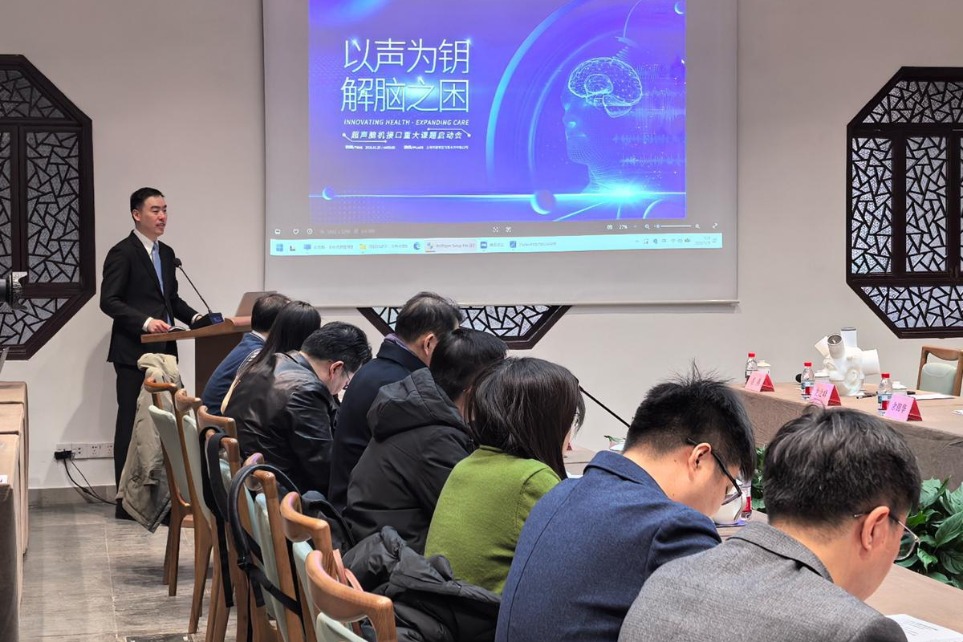
    In a remarkable demonstration of medical innovation, brain-computer interface (BCI) technology is offering new hope to individuals suffering from paralysis and neurodegenerative conditions. At the forefront of this revolution, Chinese medical researchers are achieving significant milestones in clinical applications that restore movement and communication capabilities.

    At a Langfang nursing home in Hebei province, ALS patient Wang Ming represents thousands awaiting transformative BCI treatments. With minimal muscle control after six years of battling amyotrophic lateral sclerosis, Wang’s simple aspiration to operate his phone independently exemplifies the life-changing potential of this technology. He is among over 500 patients registered for ongoing clinical trials across China.

    Professor Qu Yan, Director of Neurosurgery at Tangdu Hospital in Xi’an, explains the technology’s mechanism: “BCI functions as a digital bridge for the nervous system. When conditions like ALS or spinal cord injuries disrupt neural pathways, our systems bypass damaged areas by capturing brain signals directly, decoding them, and converting them into commands for external devices or muscle stimulation.”

    The technology translates cognitive intentions into physical actions. As Professor Qu illustrates: “When a patient sees a flame and wishes to move away, that intention is captured by implanted chips and transformed into movement commands.”

    While Western nations pioneered early BCI research, China has emerged as a formidable innovator in the field. A July 2025 Nature report highlighted China’s rapid ascendance, noting that certain Chinese-developed devices now surpass even Elon Musk’s Neuralink project in specific performance metrics. Professor Qu attributes this accelerated progress to China’s extensive medical infrastructure and substantial population base, which provides unparalleled opportunities for clinical testing and refinement.

    This convergence of neurological science and digital technology represents one of the most promising frontiers in medical rehabilitation, potentially restoring independence to those with severe motor impairments.

  • A free childbirth program ends in eastern Congo at the worst of times

    A free childbirth program ends in eastern Congo at the worst of times

    GOMA, Democratic Republic of Congo — A severe maternal health emergency is unfolding in eastern Congo as expectant mothers face impossible choices amid ongoing conflict and the sudden termination of a vital government healthcare initiative. The situation has created a perfect storm of humanitarian suffering in a region already grappling with one of the world’s highest maternal mortality rates.

    The crisis stems from the confluence of multiple devastating factors: the collapse of a free maternity care program that previously provided essential services, continued rebel control of the city of Goma, and the complete breakdown of medical infrastructure. The program, initiated in 2023 to address Congo’s alarming maternal death statistics, offered free consultations and treatment for at-risk pregnancies at selected facilities nationwide before mysteriously ending in June without official explanation.

    Irene Nabudeba, a mother of five expecting her sixth child, embodies the human cost of this healthcare collapse. “At the hospital, they ask us for money that we don’t have,” she explained at the Afia Himbi health center, her hands resting on her pregnant abdomen. “I’m pushing myself to come to the consultations, but for the delivery… I don’t know where I’ll find the money.”

    The economic devastation accompanying the conflict has rendered even minimal medical fees prohibitive. Childbirth at a local clinic now costs $5-10, an impossible sum in a region where over 70% of the population survives on less than $2.15 daily. Franck Ndachetere Kandonyi, chief nurse at Afia Himbi, reported that monthly births under the free program had surged from approximately five to more than twenty before the initiative’s termination. That number has now plummeted to just nine monthly births as women retreat from formal healthcare.

    The M23 rebel group, which seized control of Goma in January amid escalating violence, has offered contradictory explanations for the program’s collapse. Freddy Kaniki, deputy coordinator of M23, asserted to AP that the initiative “was not renewed because it was a failure,” without providing supporting evidence. Congolese officials remained unresponsive to inquiries.

    Medical infrastructure has deteriorated catastrophically throughout the conflict. An International Committee of the Red Cross assessment in September revealed that 85% of health facilities face critical medicine shortages, while nearly 40% have experienced significant staff departures. Doctors Without Borders has documented attacks on hospitals, blocked ambulances, and threats against medical personnel.

    The human impact extends beyond statistics. Ernestine Baleke, pregnant with her ninth child, walks over half a mile to the Rehema Health Center because she cannot afford transportation. “I don’t even have 100 francs (45 cents) in my pocket,” she revealed, explaining that her husband lost his factory job when the facility was looted early in the conflict. Their house subsequently burned, leaving the family destitute.

    With three months remaining until her delivery, Baleke voiced the desperate plea of countless mothers: “The authorities must restore free health care. We risk dying in our homes while giving birth.” As fighting recently escalated despite U.S.- and Qatar-led peace efforts, the prospects for immediate resolution appear dim, leaving Congo’s most vulnerable citizens caught between conflict and catastrophic healthcare access.

  • Chinese doctor carries out eye surgery in C909 aircraft

    Chinese doctor carries out eye surgery in C909 aircraft

    In a groundbreaking medical achievement, Chinese ophthalmologists have successfully performed the world’s first eye surgery aboard a domestically developed C909 aircraft, marking the operational launch of China’s inaugural self-developed “flying eye hospital.

    The historic procedure took place on Wednesday at Zhengzhou Xinzheng Airport, where Dr. Liang Lingyi, Deputy Director of Zhongshan Ophthalmic Center, demonstrated remarkable surgical precision while operating inside the aircraft cabin. Using specialized microsurgical equipment, Dr. Liang completed an ocular surface surgery on a patient from rural Henan province in mere minutes.

    The patient, identified as Ms. Zhang, had previously faced significant barriers to specialized eye care due to her remote location. “I never imagined I could receive such advanced medical treatment so close to home,” Zhang expressed after regaining clear vision. “The doctors’ expertise is extraordinary, and I’m profoundly grateful to see the world clearly again.”

    This innovative airborne medical facility represents a major advancement in China’s healthcare accessibility initiatives. The converted C909 aircraft features state-of-the-art medical equipment and sterile environments meeting clinical standards, enabling specialists to deliver high-quality ophthalmological services to underserved regions.

    The flying hospital initiative addresses critical healthcare disparities by bringing sophisticated medical resources directly to remote communities. This approach eliminates the need for patients in isolated areas to undertake arduous journeys to urban medical centers, potentially revolutionizing how specialized care reaches China’s rural population.

    Medical authorities highlight that this achievement demonstrates China’s growing capabilities in both aviation technology and medical innovation. The successful surgery aboard a moving aircraft required overcoming unique challenges including vibration dampening, sterile maintenance, and precision instrument stabilization.

    The Zhongshan Ophthalmic Center confirmed that this milestone inaugurates regular clinical services through the flying hospital program, with plans to expand surgical specialties and reach additional remote communities across China.

  • Sperm from donor with cancer-causing gene was used to conceive almost 200 children

    Sperm from donor with cancer-causing gene was used to conceive almost 200 children

    A comprehensive multinational investigation has uncovered a critical public health situation involving a European sperm donor carrying a dangerous genetic mutation that significantly elevates cancer risk. The anonymous donor, who began contributing sperm as a student in 2005, has biologically fathered at least 197 children across multiple European countries, with some offspring already developing cancer and several having died at young ages.

    The investigation, conducted by 14 public service broadcasters including the BBC through the European Broadcasting Union’s Investigative Journalism Network, revealed that approximately 20% of the donor’s sperm contains a mutated TP53 gene. This genetic defect severely compromises the body’s natural cancer prevention mechanisms, resulting in Li Fraumeni syndrome—a condition associated with up to 90% lifetime cancer risk, particularly during childhood and for breast cancer in later life.

    Despite passing standard donor screening protocols, the donor carried this mutation in a portion of his reproductive cells. Children conceived using affected sperm inherit the mutation in every cell of their body, creating a lifelong health vulnerability. Medical experts describe the situation as particularly devastating because affected individuals require annual MRI scans of the body and brain plus abdominal ultrasounds for early tumor detection, with many women opting for preventive mastectomies.

    The European Sperm Bank, which distributed the genetic material, expressed sympathy for affected families while noting that neither the donor nor his biological relatives exhibit illness. The organization acknowledged that current genetic screening practices cannot proactively detect such mutations and stated they immediately blocked further use of the donor’s sperm upon discovery of the problem.

    Distribution records indicate the sperm was utilized by 67 fertility clinics across 14 nations, with significant regulatory breaches occurring in several countries. Belgium, which limits donors to six families per donor, recorded 38 women producing 53 children from this single source. While the sperm was not directly sold to UK clinics, British authorities confirmed a “very small number” of families who sought treatment in Denmark have been notified.

    This case has reignited debates about international sperm bank regulations and donor usage limits. Currently, no global standards govern how frequently a single donor’s sperm may be used internationally, with individual countries setting their own restrictions. The UK maintains a 10-family limit per donor, while the European Society of Human Reproduction and Embryology recently proposed a 50-family maximum—though experts note this wouldn’t prevent rare genetic disease transmission.

    Reproductive health specialists emphasize that while such cases remain extremely rare compared to the overall number of donor-conceived children, they highlight systemic vulnerabilities in the global fertility industry. With approximately half of the UK’s sperm supply now imported from international banks, experts recommend prospective parents inquire about donor origins and usage history when considering fertility treatments.

  • New mpox strain identified in England

    New mpox strain identified in England

    Health authorities in the United Kingdom have confirmed the detection of a previously unidentified recombinant mpox strain in an individual who recently returned from travel in Asia. The UK Health Security Agency (UKHSA) identified this novel viral variant as a genetic amalgamation of two distinct mpox clades—Ib and IIb—marking a significant development in the virus’s evolution.

    The emergence of this hybrid strain occurs amidst ongoing global mpox transmission, with nearly 48,000 confirmed cases worldwide in 2025 alone, including approximately 2,500 reported in the past month, predominantly concentrated in central Africa. Health officials emphasize that viral evolution remains a natural phenomenon, though the specific implications of this recombinant strain require further assessment.

    Vaccination continues to be the primary defense strategy against severe mpox manifestations, with current vaccines demonstrating 75-80% efficacy against known strains. While no specific studies have evaluated vaccine effectiveness against this new variant, health experts anticipate a substantial degree of cross-protection.

    Dr. Katy Sinka, UKHSA’s head of sexually transmitted infections, highlighted the role of advanced genomic surveillance in detecting the strain: ‘Genomic testing has enabled this detection. While viral evolution is expected, comprehensive analysis will provide deeper insights into mpox’s transformation patterns.’

    Professor Trudie Lang, Director of the Global Health Network at the University of Oxford, noted that this development underscores mpox’s continuous global circulation and adaptive evolution. She acknowledged the UK’s robust systems for case identification and infection control while expressing concern about vulnerable populations in regions with limited vaccine access and surveillance capabilities.

    Health authorities maintain their recommendation for high-risk groups—including gay, bisexual, men who have sex with men, individuals with multiple sexual partners, and those attending sex-on-premises venues—to ensure vaccination status is current. The NHS advises anyone suspecting mpox infection to contact NHS 111 for immediate guidance.

    Mpox transmission occurs through close physical contact, respiratory droplets, and contact with contaminated materials. Symptoms typically include skin lesions, rash, fever, and muscle aches, persisting for two to four weeks.

  • Screen ban urged to protect kids’ eyesight

    Screen ban urged to protect kids’ eyesight

    Chinese health and education authorities have unveiled comprehensive guidelines implementing a total prohibition of electronic screen exposure for children aged 0-3 years. This decisive measure forms part of an ambitious national initiative to safeguard children’s physiological ‘far-sight reserve’ and combat the escalating myopia epidemic at its developmental origins.

    The joint policy directive, issued by the Ministry of Education, National Health Commission, and National Disease Control and Prevention Administration, highlights the critical importance of preserving natural hyperopic conditions in early childhood. Normally present at birth (approximately 250-300 degrees), this far-sight reserve gradually diminishes through adolescence, typically stabilizing into normal vision between ages 12-15. Premature depletion serves as a primary indicator for myopia development.

    Alarming statistics reveal myopia incidence among Chinese schoolchildren reached 51.9% in 2022, with high school students exceeding 80% prevalence. This follows the ministry’s 2021 classroom smartphone prohibition, now expanded to encompass earlier developmental stages.

    Age-specific interventions include:
    • 0-3 years: Complete screen avoidance, minimum 10 hours daily sleep, and maximized outdoor sunlight exposure
    • 3-6 years: Outdoor activity prioritization with minimal screen contact, replacing academic preparation with visual-tracking games
    • School-aged children: Mandatory two-hour daily outdoor activities and development-appropriate exercise plans

    Healthcare institutions must conduct regular refractive screenings at ages 2-6, while schools perform biannual vision assessments with standardized monitoring of far-sight reserve trends. Children identified with deficient reserve will receive targeted interventions and specialist referrals.

    The guidelines emphasize parental responsibility through role modeling—reducing personal screen usage during family time—and creating vision-healthy environments with ergonomic furniture and enforced 20-20-20 rules (20-second distance-viewing breaks every 20 minutes). Educational institutions will assign physical education homework and utilize parent-teacher meetings to disseminate scientific eye care knowledge, supported by enhanced training for school medical staff.

    This multi-faceted approach establishes collaborative protection mechanisms engaging families, educational institutions, medical facilities, and communities in preserving juvenile ocular health from infancy through adolescence.

  • Warning against mushroom foraging in California after fatal poisoning

    Warning against mushroom foraging in California after fatal poisoning

    California health authorities have issued a critical public health advisory urging residents to strictly avoid foraging for wild mushrooms following a concerning cluster of severe poisonings across the state. The California Department of Public Health (CDPH) confirmed at least 21 cases of amatoxin poisoning linked to death cap mushroom consumption, resulting in multiple hospitalizations with severe liver damage and at least one fatality.

    The poisoning incidents, concentrated in Northern California’s Monterey and San Francisco Bay areas between mid-November and early December, have affected both adults and children. Several victims suffered acute liver failure, with at least one patient potentially requiring emergency liver transplantation. Health officials emphasize that the current rainy season creates ideal growing conditions for these toxic fungi, particularly around oak and pine trees.

    Death cap mushrooms (Amanita phalloides) pose exceptional danger due to their deceptive resemblance to edible varieties in appearance, scent, and taste. CDPH Director Dr. Erica Pan warned that these mushrooms ‘contain potentially deadly toxins that can lead to liver failure’ and stressed that no cooking method—including boiling, drying, freezing, or conventional preparation—can neutralize their toxicity.

    Initial symptoms typically manifest within 6-24 hours of consumption and include violent gastrointestinal distress: watery diarrhea, persistent vomiting, abdominal cramping, nausea, and dehydration. While these symptoms may temporarily subside, potentially fatal liver damage can develop silently over the following week.

    Monterey County Health Officer Dr. Edward Moreno emphasized that ‘only people with extensive training and experience should eat wild mushrooms that they have picked themselves.’ The CDPH maintains that the risk extends statewide despite current cluster locations, advising complete avoidance of wild mushroom consumption during this high-risk period.

  • Carving out dreams

    Carving out dreams

    In the operating theaters of Shenzhen, Dr. Guo Shuzhong practices what can only be described as medical artistry. The 62-year-old chief plastic surgeon at Shenzhen United Family Hospital has dedicated three decades to perfecting the complex craft of ear reconstruction, bringing hope to thousands affected by microtia—a congenital condition affecting approximately 1 in 2,500 Chinese newborns that results in malformed or absent external ears.

    Dr. Guo’s approach blends surgical precision with artistic sensibility. Using carefully carved rib cartilage harvested from patients, he sculpts intricate ear frameworks during procedures that demand both technical mastery and aesthetic judgment. ‘The ear is one of the most complex organs in the human body in terms of shape,’ explains Guo. ‘It demands careful observation and a deep understanding of the material.’

    His innovative two-phase technique involves initially inserting a tissue expander under the skin to create space for the future ear framework. After several months of expansion, the second stage sees Guo removing the expander and implanting the meticulously crafted cartilage structure. His refinements have streamlined the process, reducing the overall surgical cycle to just three to four months while introducing new devices that allow patients to manage expander maintenance at home.

    Beyond technical innovations, Guo emphasizes psychological healing. His team organizes communication workshops, language classes, and creative activities to support children through their transformation. ‘Doctors need to understand how to heal both the body and the heart,’ he notes.

    Having established his career across multiple Chinese cities and international exchanges, Guo now sees Shenzhen as the ideal platform for global outreach. The Greater Bay Area’s unique advantages—including Shenzhen’s medical equipment manufacturing prowess and Hong Kong’s international connectivity—position the region to become a world-class center for ear reconstruction.

    International interest is growing, with surgeons from New Zealand, India, and South America seeking training opportunities. Guo’s patients already include expatriates from Hong Kong, Mongolia, and Latin America, validating his vision of China becoming a destination for medical innovation rather than just a source of patients seeking treatment abroad.

    As he trains the next generation of surgeons—still insisting they practice with vegetables and pork ribs as he once did—Guo remains driven by the profound satisfaction of restoring both form and confidence. His office filled with paintings from grateful young patients stands testament to the life-changing impact of his work, with dreams of eventually establishing a museum to preserve these precious tokens of transformation.

  • Nordic people know how to beat the winter blues. Here’s how to find light in the darkest months

    Nordic people know how to beat the winter blues. Here’s how to find light in the darkest months

    As the Northern Hemisphere approaches the winter solstice on December 21—the year’s shortest day and longest night—residents of Nordic regions demonstrate remarkable resilience against seasonal affective challenges. Despite enduring months of frigid temperatures and minimal daylight, populations across Scandinavia have developed effective coping mechanisms for the annual winter blues that can persist from October through April.

    Medical researchers throughout the Nordic countries emphasize the critical importance of maintaining consistent sleep and social patterns during darker months. Dr. Timo Partonen, a research professor at the Finnish Institute for Health and Welfare, explains that limited daylight disrupts circadian rhythms, causing prolonged but unrefreshing sleep and daytime fatigue. He recommends dawn simulator devices that gradually illuminate bedrooms to facilitate natural waking processes.

    Beyond sleep management, experts identify social withdrawal and irritability as common winter challenges. Dr. Partonen stresses that maintaining relationships provides essential protection against seasonal mood disorders, suggesting combined social and physical activities to combat both isolation and the typical 2-5 kilogram winter weight gain driven by carbohydrate cravings.

    The scientific understanding of Seasonal Affective Disorder (SAD) continues to evolve. Researchers now recognize that specialized eye cells convert blue light wavelengths into neural signals affecting alertness and mood. University of Pittsburgh researcher Kathryn Roecklein has demonstrated that SAD patients exhibit reduced sensitivity to blue light during winter months, suggesting a physiological basis for seasonal depression.

    Professor Christian Benedict of Uppsala University advocates light therapy as an effective intervention, noting that devices emitting light 20 times brighter than standard indoor lighting can significantly benefit both clinical and subclinical cases. The recommended protocol involves 30 minutes of 10,000 lux exposure each morning, which helps regulate circadian rhythms and boost serotonin production.

    Psychological adaptation proves equally crucial. University of Tromsø psychologist Ida Solhaug emphasizes embracing winter through positive mindset development—a characteristically Norwegian approach to seasonal challenges. She recommends balancing indoor hygge practices with outdoor activities, including traditional Swedish fika coffee breaks and Nordic cold-water immersion, which many practitioners find revitalizing.

    Finland’s President Alexander Stubb concurs with this balanced approach, specifically endorsing the ice bath-sauna cycle as an effective strategy for winter resilience. As Nordic wisdom holds: there exists no bad weather, only inadequate clothing and preparation for the seasonal darkness that ultimately yields to returning light.

  • UAE: Delayed learning, poor communication; signs your child may have vision impairment

    UAE: Delayed learning, poor communication; signs your child may have vision impairment

    Medical specialists in the UAE are raising urgent concerns about the profound psychological and developmental consequences of undiagnosed vision impairments in children. According to ophthalmologists and psychologists, common conditions like myopia, astigmatism, and strabismus extend far beyond visual limitations, significantly impacting emotional well-being, social development, and academic performance.

    Dr. Alina Mugnani Deza, Specialist Ophthalmologist at Barraquer Eye Hospital, emphasizes that early childhood represents the most vulnerable period for visual development. Limited visual cues during infancy (0-2 years) can affect bonding, motor skills, and exploration, while preschool years (3-6) bring increased awareness of differences with peers. The early school age (6-12) often introduces academic frustrations and social anxiety.

    The psychological ramifications are extensive, with children frequently developing anxiety, social withdrawal, irritability, and communication delays. Dr. Deza notes that visual impairment significantly increases emotional and behavioral difficulties because vision drives exploration, communication, and social learning. These challenges often lead to misinterpretations as behavioral or learning problems rather than vision-related issues.

    Clinical Psychologist Gayatri Govind Gajjam of Aster DYU Child Development Centre explains how different vision conditions create distinct psychological responses. Children with low vision often experience frustration and decreased academic confidence, while complete blindness can delay mobility and communication skills. Peripheral vision loss increases anxiety due to collision fears, and central vision loss affects literacy tasks, making children perceive themselves as slow. Progressive visual loss proves particularly taxing as children experience repeated grief with each decline.

    Experts identify family support as a critical protective factor. A balanced home environment that encourages independence while providing emotional reassurance can significantly reduce psychological risks. Conversely, parental overprotection, denial of problems, or delayed corrective measures often intensify stress.

    Early detection through screening from age 2.5 allows problems to be identified before impacting development. Multidisciplinary approaches including vision rehabilitation, occupational therapy, psychological counseling, and assistive technologies such as screen magnifiers, smart devices, and text-to-speech tools can dramatically improve outcomes. Schools play an equally crucial role by providing accessible materials, teacher training, and counseling support.

    Despite these challenges, well-supported children often develop remarkable resilience, advanced problem-solving skills, and heightened auditory and tactile abilities. With early detection, supportive environments, and appropriate tools, children with visual impairments can thrive academically, socially, and emotionally.