分类: environment

  • Activists ring alarm bells about halt in Poland’s air pollution progress

    Activists ring alarm bells about halt in Poland’s air pollution progress

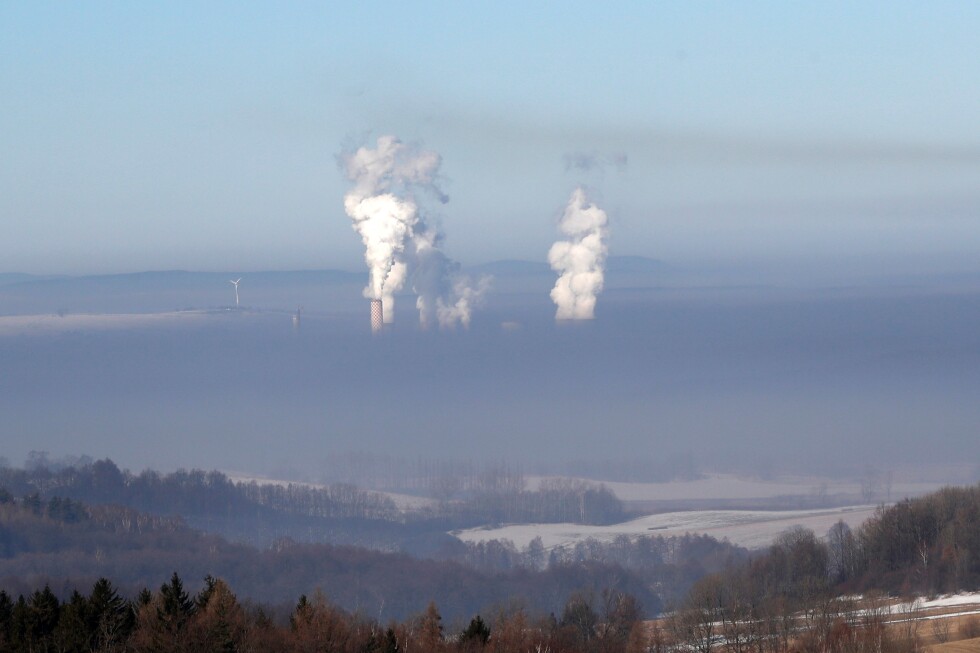
    Nestled in Central Europe, Poland has long struggled with one of the continent’s worst air pollution crises, driven overwhelmingly by a reliance on coal-fired domestic heating. The threat this poses to both public health and national energy independence has grown starker in recent years, as ongoing geopolitical instability including the Iran war has sent global fuel markets into chaos. Now, environmental advocates are sounding the alarm that Poland’s signature program to tackle this dual crisis is grinding to a halt, putting years of hard-won progress at risk.

    Before the Polish government launched its ambitious nationwide Clean Air program in 2018, persistent violations of strict European Union air quality standards were common across large swathes of the country. Launched to address the root of the problem – coal-powered home heating, which accounts for the majority of Poland’s harmful smog emissions – the initiative provides direct grants to households and small businesses to swap out old coal boilers for cleaner systems running on natural gas, electricity, or wood pellets, as well as fund upgrades to thermal insulation that cut overall domestic energy demand. The ultimate goal of the program is to replace all 3.5 million existing coal-fired heating units in the country.

    Since the program’s 2018 launch, approximately one million out of Poland’s nearly 38 million residents have taken advantage of the grants to upgrade their heating systems, leaving 2.5 million outdated units still in need of modernization. Early results have already demonstrated the policy’s tangible impact: Andrzej Guła, a representative of leading environmental non-governmental organization Polish Smog Alert, notes that the southern city of Krakow, once infamous for chronic severe smog, has seen the number of high-pollution days drop annually from 150 to just 30. While 30 days of dangerous smog remains far too many for public health, the sharp decline proves the program delivers meaningful change when supported.

    That progress, however, has come to an abrupt standstill. In 2024, the initiative hit its peak, with more than 250,000 applications for financing submitted across the country. By the end of that year, the Polish government moved to reform the program to crack down on alleged misuse of public funds, implementing a temporary pause on all new application approvals. That pause, environmental activists argue, triggered a sharp collapse in public trust that has persisted long after the reforms were implemented. Data published by Polish Smog Alert during a Warsaw press conference on March 31 showed that total application numbers in 2025 were just one-fifth of the 2024 peak, and the downward spiral has continued into 2026. The organization warns that progress on cutting air pollution and reducing domestic energy use has now plateaued entirely, with no signs of a rebound.

    Krzysztof Bolesta, Secretary of State at Poland’s Ministry of Climate and Environment, defended the government’s reforms, framing the changes as a necessary step to ensure public funding only goes to eligible, high-impact projects and prevent waste of taxpayer resources. He acknowledged the unique challenge Poland faces in the EU, noting no other member state has such a high share of coal in residential heating. While Bolesta reaffirmed the government’s commitment to improving national air quality, he admitted that the work will remain extraordinarily difficult, and Poland will likely continue to lag behind other EU nations on pollution reduction for the foreseeable future.

    Environmental leaders say the current global energy instability caused by the Iran war should act as a critical wake-up call for the Polish government to revitalize the stalled program. Piotr Siergiej, another activist with Polish Smog Alert, explained that cutting domestic energy demand through the Clean Air initiative directly strengthens Poland’s energy security by reducing the country’s reliance on volatile imported fossil fuels and biomass, even for lower-carbon alternatives like wood pellets. “This program can become an epochal chance to energetically transform our buildings and homes, to make us more independent from those energy crises which we are facing now and whose future we can’t predict,” Siergiej said.


  • Wild way island is tackling invasive birds

    Wild way island is tackling invasive birds

    Kangaroo Island, a major natural habitat off the coast of South Australia, has achieved a breakthrough in its long-running battle against invasive non-native species, with an innovative night culling strategy using infrared thermal imaging technology and trained marksmen successfully reducing populations of destructive little corellas. This newly tested method comes as the island continues its broader campaign to eliminate harmful introduced species, following ongoing efforts to eradicate feral cats across the region.

    For more than a century, little corellas, a species of cockatoo not native to the island, have thrived alongside human settlement, growing into an overabundant population that disrupts the local ecosystem and damages key local industries. Unlike native wildlife that fits into Kangaroo Island’s balanced natural food web, these introduced birds have left a wide trail of harm: they cause irreversible damage to mature native trees, erode critical infrastructure, threaten the profitability of the island’s grain-growing sector, and push the vulnerable endemic glossy black cockatoo closer to risk by destroying their eggs and killing hatchlings. Beyond ecological harm, the growing corella population creates persistent noise pollution and spreads pathogens through their accumulated droppings, posing tangible public health risks to local communities.

    For years, Kangaroo Island’s environmental managers tested a range of conventional control strategies to curb the corella population, including trapping, gassing, and daytime shooting. However, the adaptable, quick-witted birds soon learned to avoid these methods, delivering only limited success that left managers searching for a more effective solution.

    In a two-year trial run across the 2022-2023 and 2023-2024 summer seasons, the Kangaroo Island Landscape Board rolled out an unconventional approach: deploying skilled marksmen equipped with infrared thermal imaging gear to target roosting corellas while they sleep at night. What initially sounds like a plot device from a James Bond spy thriller has turned out to be far more effective than any prior method, according to final trial results released this week.

    Over the course of the two-year trial, a total of 2,640 little corellas were humanely culled. The 2023-2024 summer season removed 1,467 birds, and the most recent 2024-2025 season culled 1,173 corellas in just five nights of operations. Will Durack, general manager of the Kangaroo Island Landscape Board, explained that targeting roosting flocks at night removes the corellas’ ability to avoid control efforts, delivering far higher removal rates per operation than conventional approaches. “Targeting birds at night while they are roosting allowed several hundred birds to be removed in a single operation and achieved a much higher catch per unit effort,” Durack said. “The trial now shows a proven method for effective and humane control of little corellas.”

    The successful trial comes as Kangaroo Island pursues an ambitious agenda to eliminate all feral invasive species from the island, following a public proposal for a strict “last cat policy” to eradicate feral cats, another major threat to the island’s native wildlife. Under the proposed cat policy, existing domestic cats would be allowed to stay with their owners, but no new cats would be permitted to be brought onto the island to prevent future feral populations from establishing. Durack added that the board is ready to share its successful night culling method with other environmental agencies across South Australia that are grappling with overabundant corella populations, to support more effective invasive species control across the state.

  • Report shows improving ecology in China’s Qinling Mountains

    Report shows improving ecology in China’s Qinling Mountains

    A comprehensive environmental assessment released by China’s Ministry of Ecology and Environment indicates significant ecological restoration within the critical Qinling Mountains region. The official report, published Monday, documents substantial improvements across multiple environmental metrics following years of concentrated conservation efforts.

    The ecological blue paper reveals that over 60% of the Qinling region has demonstrated measurable enhancement in environmental quality, with more than half of key ecological zones showing clear signs of recovery. The data indicates forest and wetland coverage has expanded steadily, while areas with improved water conservation capabilities now constitute approximately 60% of the territory. Additionally, nearly half (47%) of the region exhibits strengthened soil retention functions.

    As China’s fundamental north-south dividing line and the watershed between the Yellow and Yangtze River basins, the Qinling range serves as a vital ecological barrier and biodiversity reservoir. The mountains have historically suffered severe environmental degradation but have experienced marked recovery following stringent remediation initiatives implemented in recent years.

    Ministry spokesperson Pei Xiaofei characterized the report as both a diagnostic assessment and strategic roadmap, describing it as simultaneously providing an ecological ‘health check’ while proposing a comprehensive ‘wellness plan’ for the region. The document aims to strengthen interregional coordination, refine the balance between natural regeneration and human intervention, and guide continued ecological improvement throughout the mountain ecosystem.

    Despite measurable progress, the assessment acknowledges persistent challenges including occasional environmental damage incidents and the need for enhanced precision in zoned oversight. The report emphasizes that while overall stability has improved, certain areas require further ecological reinforcement to ensure long-term sustainability.

  • Blue Circle model offers China’s solution for ocean governance

    Blue Circle model offers China’s solution for ocean governance

    A groundbreaking marine conservation model emerging from China’s eastern coast is demonstrating transformative potential in addressing the global crisis of ocean plastic pollution. The Blue Circle initiative, launched in Taizhou, Zhejiang province in 2020, has developed an integrated circular economy system that effectively converts marine waste into valuable resources while engaging coastal communities in conservation efforts.

    This innovative approach arrives amid alarming projections from the United Nations Environment Programme, whose recent report reveals between 75-199 million metric tons of plastic currently contaminating marine environments worldwide. Without immediate intervention, annual plastic influx into oceans could nearly double to 23-37 million tons by 2040, representing what experts describe as an environmental emergency of unprecedented scale.

    The Blue Circle framework establishes a comprehensive governance structure encompassing four interconnected phases: systematic marine debris collection, land-based recycling infrastructure, international carbon credit trading mechanisms, and equitable public benefit distribution. This holistic methodology represents a paradigm shift from conventional pollution control toward resource recovery and value creation.

    By transforming retrieved plastic materials into marketable commodities and linking cleanup activities to carbon emission reduction credits, the model creates sustainable economic incentives for continued environmental protection. Local fishing communities participate actively in collection efforts, creating a virtuous cycle where environmental stewardship generates tangible economic returns.

    This Chinese-developed solution offers developing nations particularly relevant insights, demonstrating how emerging economies can implement scalable waste management systems without compromising economic development objectives. The program’s success in Zhejiang has attracted international attention as governments worldwide seek practical solutions to the mounting marine plastic crisis.

  • About 550,000 Chinese sturgeon released into wild

    About 550,000 Chinese sturgeon released into wild

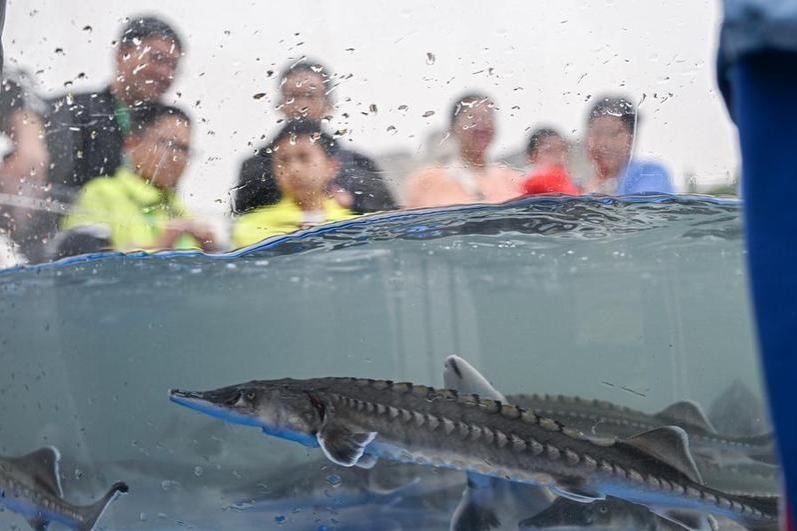
    In a landmark conservation initiative, Chinese authorities released approximately 550,000 artificially-bred Chinese sturgeon into national waterways on Saturday. The massive restocking operation was coordinated by the Ministry of Agriculture and Rural Affairs across multiple locations including Jingzhou and Yichang in Hubei province, along with Chongming district in Shanghai.

    The release ceremony facilitated comprehensive technical discussions among conservation experts and breeding institutions regarding advanced protection methodologies and artificial propagation technologies for the endangered species. The Chinese sturgeon, recognized as a national first-class protected aquatic species and considered a flagship organism of the Yangtze River ecosystem, represents a critical focus of China’s biodiversity restoration agenda.

    Often described as ‘aquatic pandas’ due to their ancient lineage dating back 140 million years, Chinese sturgeon populations experienced catastrophic declines during the late twentieth century primarily due to anthropogenic pressures. In response, China has implemented extensive conservation measures including sophisticated captive breeding programs and targeted habitat restoration projects.

    The Ministry confirmed enhanced future strategies focusing on both quantitative and qualitative improvements in sturgeon breeding, sustained large-scale release initiatives, and comprehensive efforts toward reestablishing self-sustaining wild populations through natural reproduction mechanisms.

  • Gabon battles for baby sea turtles’ survival

    Gabon battles for baby sea turtles’ survival

    On the white sandy beaches of Gabon’s Pongara National Park, a critical conservation drama unfolds daily as tiny sea turtle hatchlings undertake their perilous first journey to the ocean. These palm-sized creatures face overwhelming odds—with an estimated survival rate of just one in a thousand—as they navigate natural predators and human-induced threats along Gabon’s 900 kilometers of coastline.

    Four species of sea turtles—green, olive ridley, hawksbill, and the critically endangered leatherback—return annually to Gabon’s shores from October to April, making the country Africa’s most significant nesting ground and the world’s premier leatherback nesting site. The nation’s wild coastline, favorable equatorial climate, and gently sloping beaches create optimal nesting conditions, but survival challenges abound.

    Conservationists from NGOs and the national parks agency conduct daily patrols during nesting season, relocating threatened nests to protected hatcheries where eggs can safely incubate for 60 days. “They need to build up their muscles so they can swim in the ocean,” explains volunteer Clémence, emphasizing why hatchlings must complete their treacherous sand crossing rather than being placed directly in water.

    The conservation effort faces a multidimensional crisis. Coastal erosion from rising sea levels, natural predators including crabs and birds, plastic pollution, industrial fishing, and poaching all threaten turtle survival. However, the most immediate threat emerges from funding shortages that have crippled monitoring operations.

    Since the suspension of U.S. grants during the Trump administration, turtle monitoring activities have “stopped or slowed down drastically,” according to Edouard Moussavou, Pongara Park’s deputy director. The financial crisis extends to Gabon’s eco-rangers—approximately 580 conservation professionals who regularly go unpaid. Sosthene Ndong Engonga, secretary-general of the National Union of Gabonese Ecoguards, reports that rangers frequently must “make a big fuss to get our salaries,” with some waiting months for payment.

    Despite these challenges, dedicated rangers like Alain Banguiya, who hasn’t been paid for two months, continue night patrols. “We have a duty to fight to the end,” Banguiya asserts. “Despite the obstacles, we stay the course: conservation.” Their perseverance highlights both the fragility of conservation systems and the unwavering commitment required to protect Earth’s most vulnerable species.

  • Boao Zero-Carbon Zone achieves 99.9% CO2 emissions reduction

    Boao Zero-Carbon Zone achieves 99.9% CO2 emissions reduction

    The Boao Zero-Carbon Demonstration Zone in China’s tropical Hainan province has reached a historic milestone in sustainable urban development, achieving near-total elimination of carbon emissions through comprehensive green infrastructure transformation. Official data reveals that carbon dioxide emissions from buildings and municipal infrastructure have plummeted from approximately 11,350 metric tons in 2019 to merely 14.6 tons by the end of 2025—representing a staggering 99.9% reduction in greenhouse gas output.

    This environmental breakthrough results from a multi-faceted approach to sustainable development implemented since the zone’s establishment in 2022. The project, jointly initiated by China’s Ministry of Housing and Urban-Rural Development and the Hainan provincial government, encompasses 18 renovation projects across eight critical categories including green architecture, renewable energy integration, and sustainable transportation systems.

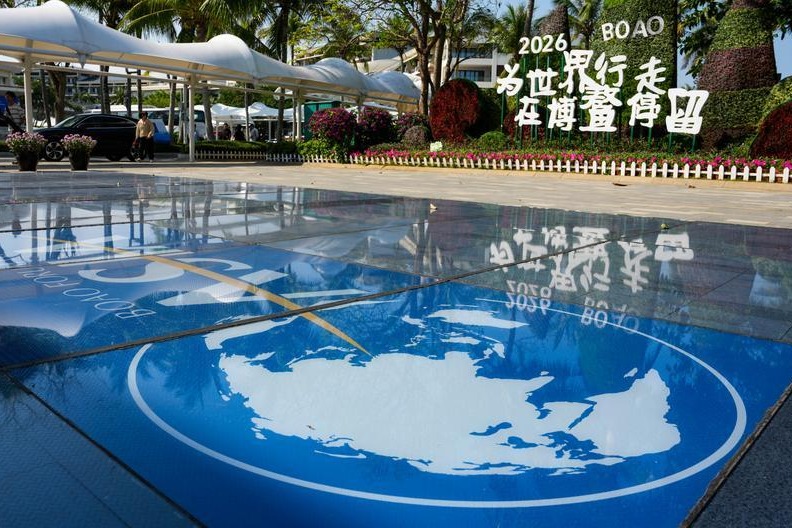
    The zone’s energy infrastructure now generates 29 million kilowatt-hours of clean electricity annually—substantially exceeding its own consumption needs of approximately 19.4 million kWh. The surplus 9.6 million kWh is fed back into the regional power grid, generating 4,965 tons of carbon credits that contribute to broader emissions reduction efforts. This achievement was highlighted during the ongoing Boao Forum for Asia, which serves as a platform for showcasing regional innovation in sustainable development.

    The demonstration zone, originally designated as the ‘Boao Near-Zero Carbon Demonstration Zone,’ received its current designation in March 2025 following the remarkable progress in emissions reduction. The project stands as a working model of large-scale carbon neutrality implementation, demonstrating practical approaches to balancing urban development with environmental sustainability through integrated green technology solutions.

  • Zero-carbon zone in Hainan shows China’s green practices

    Zero-carbon zone in Hainan shows China’s green practices

    The Boao Zero-Carbon Demonstration Zone in China’s Hainan province has emerged as a global benchmark for sustainable urban development, achieving a remarkable 99.9% reduction in energy-related carbon emissions since its inception. Originally designated as a “near-zero” carbon zone, the project attained full “zero-carbon” status in March 2025 and has since maintained normalized operations at this exceptional environmental standard.

    According to official measurements, carbon dioxide emissions from buildings and municipal infrastructure within the zone plummeted from 11,350.1 tonnes in 2019 to approximately 14.6 tonnes in 2025. This transformative achievement represents one of the most dramatic carbon reduction successes recorded worldwide.

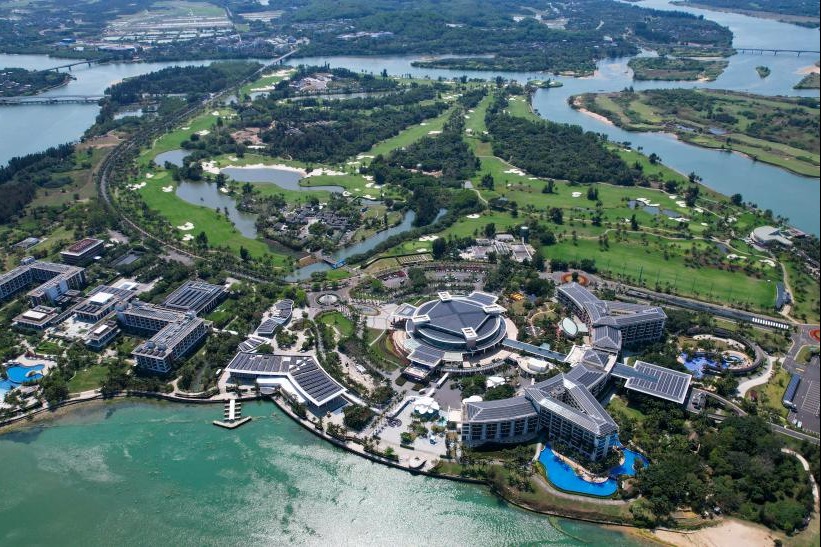
    The zone’s energy ecosystem now operates on a surplus model, generating 29 million kWh of clean electricity annually through extensive photovoltaic installations. This output substantially exceeds the zone’s internal consumption needs of 19.4 million kWh, allowing 9.6 million kWh of surplus green energy to be fed back into the regional power grid.

    Visual documentation from March 2026 reveals comprehensive solar panel deployments across key facilities, including the Boao Forum for Asia International Conference Center and adjacent hotel properties. These installations form the technological backbone of the zone’s renewable energy infrastructure.

    The project’s success provides a scalable model for regional decarbonization efforts and demonstrates China’s growing leadership in practical climate solutions. As international attention focuses on effective carbon reduction strategies, the Boao zone offers tangible evidence that ambitious environmental targets can be achieved through integrated planning and renewable technology implementation.

  • China targets recycling overhaul with ambitious industrial plan

    China targets recycling overhaul with ambitious industrial plan

    China has unveiled a comprehensive national strategy to address its mounting solid waste crisis, targeting a fundamental restructuring of industrial waste management practices across key sectors. The ambitious action plan, formally issued by the State Council earlier this year, establishes concrete targets for achieving equilibrium between waste generation and processing capabilities by 2030.

    The initiative prioritizes treatment of solid waste categories with direct implications for public health and workplace safety while accelerating development of an integrated, long-term governance framework. Central to this effort is implementing decisive measures to suppress solid waste expansion, with particular emphasis on industrial operations.

    According to implementation benchmarks, China aims to achieve annual utilization of approximately 4.5 billion metric tons of bulk solid waste alongside recycling of 510 million tons of major renewable resources by the target year. These objectives address a pressing environmental challenge: official data indicates the nation generates over 11 billion metric tons of solid waste annually across industrial, construction, household, agricultural, and hazardous categories.

    Li Gao, Vice-Minister of Ecology and Environment, highlighted the exceptional difficulties presented by industrial solid waste management during a State Council Information Office briefing. Mining, smelting, and power generation sectors continue producing substantial waste volumes, exacerbating existing historical stockpiles estimated at approximately 33 billion tons occupying 3,500 square kilometers nationwide.

    The ministry’s Solid Waste and Chemicals Management Center reported significant progress, with comprehensive utilization of non-hazardous industrial solid waste reaching 2.65 billion tons in 2024—representing a 740 million ton increase from 2012 levels. However, officials acknowledge that current recovery rates remain insufficient relative to the escalating generation of non-hazardous industrial waste, necessitating more robust intervention strategies.

    Compounding these challenges, traditional utilization channels including infrastructure construction have contracted in recent years, diminishing reuse opportunities and accelerating new waste accumulation. This dynamic necessitates dual-focused governance addressing both historical stockpiles and continuously mounting fresh waste volumes.

  • Ecological restoration lures spotted seals, cormorants to Shandong island

    Ecological restoration lures spotted seals, cormorants to Shandong island

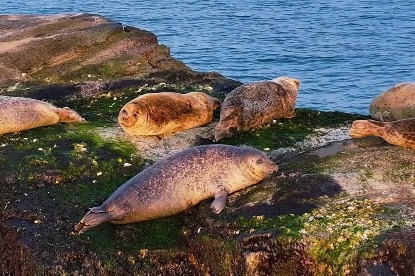
    Changdao Island in Shandong Province is experiencing a remarkable marine wildlife resurgence, with unprecedented numbers of spotted seals and migratory sea cormorants returning to its shores—a direct result of successful ecological restoration initiatives.

    According to the Marine Ecological Civilization Comprehensive Experimental Zone in Changdao, forty-one spotted seals have already been documented this season, representing both an earlier arrival and sustained population growth compared to previous years. Simultaneously, substantial flocks of migratory sea cormorants are utilizing the island’s ecosystem as a critical feeding and resting stop during their northward journey in March.

    The return of these species signals a significant environmental recovery. After years of absence, eelgrass beds and various algae species are now thriving in the surrounding marine environment. This vegetative comeback has supported the return of larger marine mammals, with frequent sightings of white dolphins and whales in adjacent waters becoming increasingly common.

    The comprehensive ecological restoration measures implemented on Changdao Island have effectively reversed previous environmental degradation, creating a revitalized habitat that attracts and sustains diverse marine life. This transformation demonstrates how targeted conservation efforts can successfully restore balanced ecosystems and promote biodiversity recovery in previously compromised environments.