分类: environment

  • Eleven dead, 19 missing as wildfire roars through southern Spain

    Eleven dead, 19 missing as wildfire roars through southern Spain

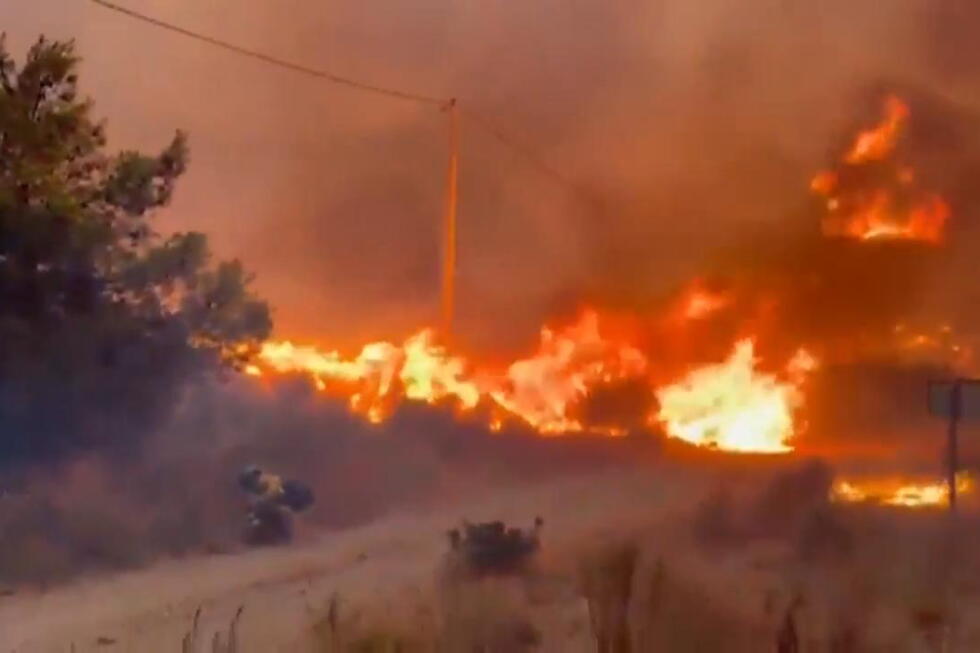
    A devastating out-of-control wildfire ripping through rugged, forested terrain in Spain’s southern Andalusia region has left 11 people dead and 19 others unaccounted for, regional authorities confirmed Friday. Among the fatalities, four are suspected to be British nationals, in what is already one of the deadliest wildfire events to hit Spain in recent years.

    Most of the victims are believed to be foreign nationals visiting or residing in Bédar, a quiet whitewashed village located just 15 kilometers inland from Spain’s popular Mediterranean coast. A favorite getaway for travelers seeking a more low-key alternative to crowded nearby beach resorts, Bédar also draws a large community of foreign permanent residents. Many victims died while attempting to outrun the rapidly advancing blaze across the region’s steep, uneven landscape, emergency officials confirmed.

    Juan Manuel Moreno Bonilla, president of the Andalusia regional government, told Spanish broadcasters that four of the deceased were found inside a right-hand drive vehicle, burned to death as the fire overtook their escape route. Local mayor Angel Francisco Collado shared that while emergency teams urged all at-risk residents to evacuate immediately — even those reluctant to leave their homes — seven people lost their lives trying to flee on foot, and two more were transported to local hospitals for treatment.

    Antonio Sanz, Andalusia’s emergency management minister, released an official update via the social platform X confirming the rising death toll and the scope of the disaster. “At the moment, we have confirmed that 11 people have lost their lives in the Los Gallardos fire; there are no words for such grief,” he said. “Everything indicates that the deceased are, mostly or entirely, foreign nationals,”,”.”
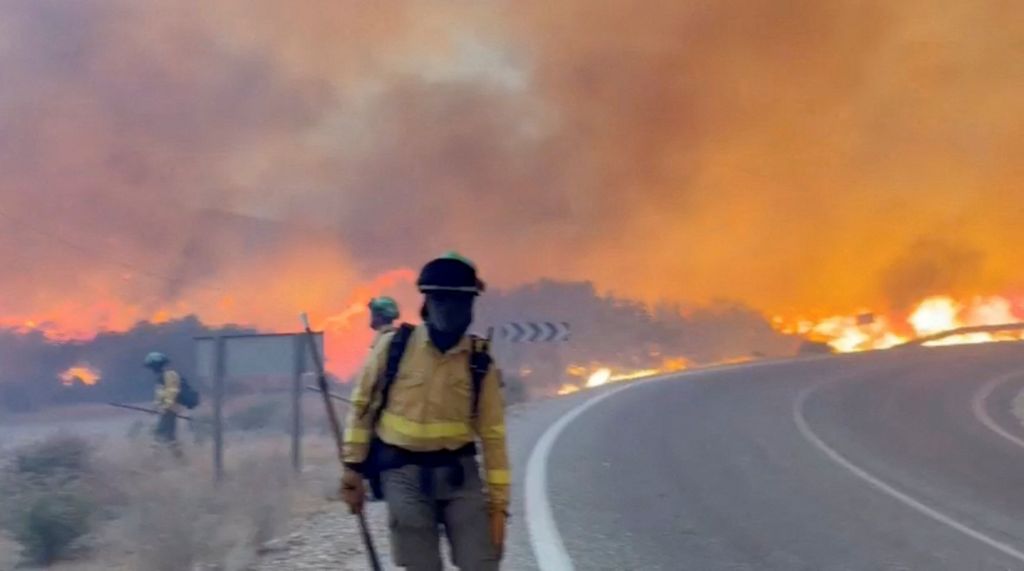
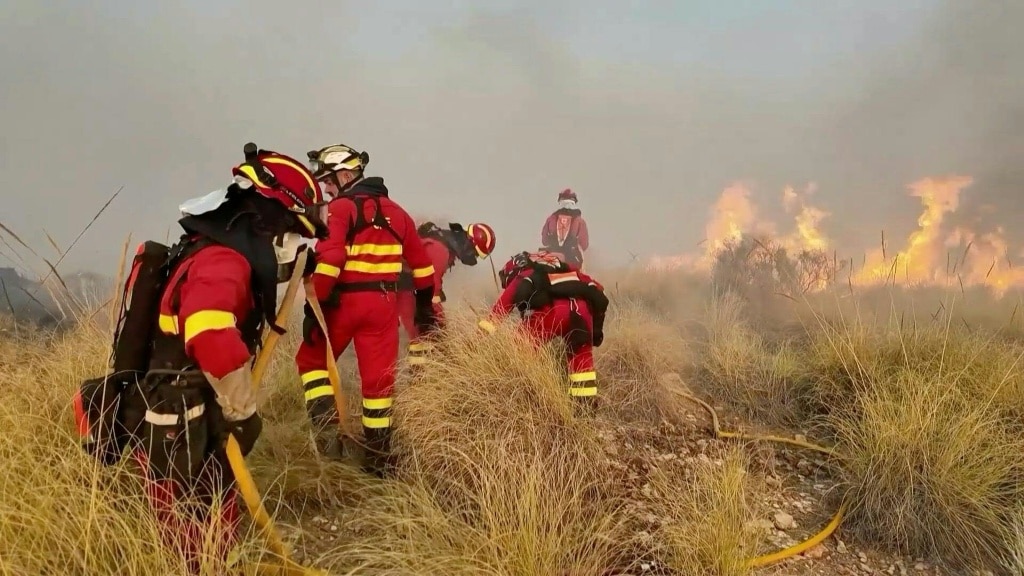
    Emergency responders have described the fire as uniquely challenging to contain. The blaze is burning across a landscape crisscrossed by deep ravines, which prevents the use of heavy firefighting equipment to clear fire breaks, and many residential properties are scattered across isolated forested plots. Approximately 500 firefighters and military troops have been deployed to battle the inferno, with Spain’s Military Emergency Unit (UME) called in to support ground and air operations.

    Strong overnight winds fanned the fire’s rapid spread across more than 3,150 hectares of forest and agricultural land, though winds had calmed by Friday morning. Forecasters warn that wind speeds are expected to pick up and shift direction later in the day, potentially creating new challenges for containment crews. Eight people have been injured in the fire, four of them seriously, and roughly 800 local residents and visitors have been evacuated. Around 200 of those displaced are being housed in emergency shelters, with 150 more accommodated at a local cultural center. Emergency services received more than 150 distress calls in the first hours of the blaze, and flames were visible from a major highway running near Bédar, prompting immediate road closures.

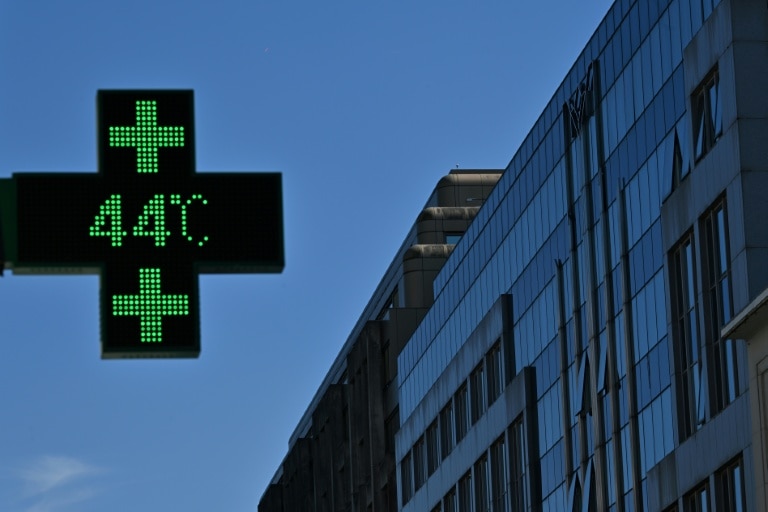
    Witnesses have told investigators the fire likely started when a falling power line ignited dry scrub vegetation, though regional authorities have not yet officially confirmed the cause. The outbreak coincided with an extreme heatwave baking both Spain and Southern France, with forecasted temperatures hitting 40 degrees Celsius across wide swathes of both countries on Friday. Southern Spain has been under an orange heat warning — the country’s second-highest alert level — for several days amid the sustained extreme heat.

    Spanish Prime Minister Pedro Sánchez posted his reaction to the disaster on X, writing that he was “deeply saddened and devastated by the terrible consequences of the wildfire.” Sánchez previously announced in May that Spain would deploy its largest ever summer wildfire response for 2024, in a bid to prepare for what climate scientists warn will be an increasingly severe fire season.

    Climate scientists have repeatedly warned that human-caused fossil fuel emissions are driving global warming that makes extreme weather events like heatwaves more frequent and more intense. In recent years, Spain has seen a sharp rise in the length and severity of seasonal heatwaves, with regular temperatures exceeding 40C creating tinder-dry conditions that are ideal for large wildfire outbreaks. Last year alone, deadly wildfires burned almost 400,000 hectares of land across Spain — the highest annual total recorded by the European Forest Fire Information System in the country’s history.

  • Firefighters battle flames as deadly wildfire rages in Spain

    Firefighters battle flames as deadly wildfire rages in Spain

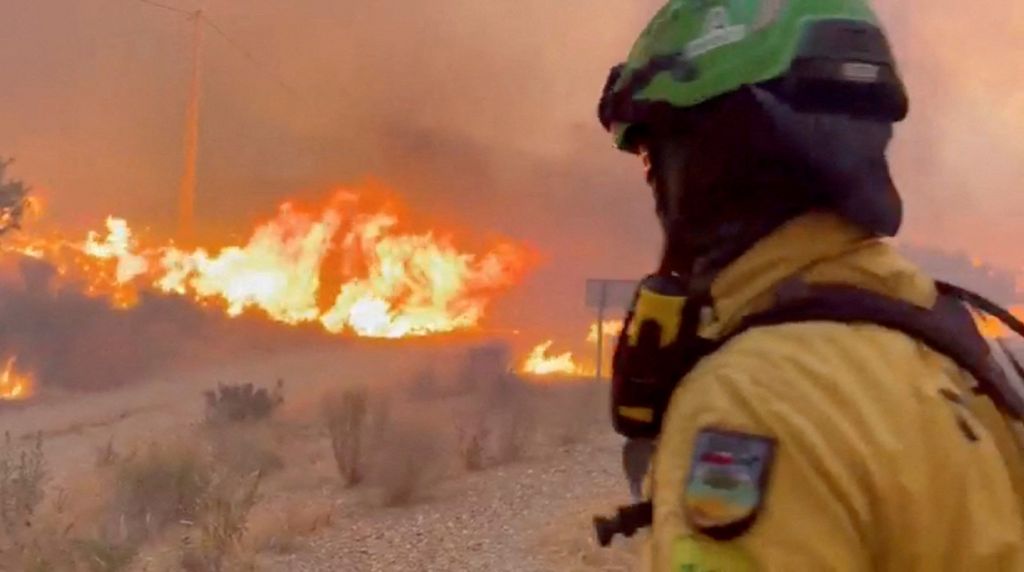
    A catastrophic wildfire has torn through Spain’s southern province of Almería, leaving a trail of death and destruction that has gripped the region. Emergency responders have been working around the clock to contain the out-of-control blaze, which has already claimed the lives of at least 11 people, according to preliminary official reports.

    The inferno, fanned by unseasonably high temperatures and strong dry winds, has spread rapidly across vast swathes of forest and rural land in Almería, threatening residential communities and forcing hundreds of residents to evacuate their homes. Firefighting teams from neighboring provinces have been deployed to reinforce local crews, who have struggled to keep up with the fire’s unpredictable advance. Aircraft carrying water and fire retardant have also been mobilized to attack the blaze from the air, though difficult terrain and smoky conditions have hampered their efforts.

    This deadly wildfire is the latest in a growing string of severe wildfire events impacting southern Europe, a region that has become increasingly vulnerable to extreme wildfire risk due to rising global temperatures and prolonged drought conditions linked to climate change. Local authorities have issued urgent warnings to residents in at-risk areas, advising them to follow evacuation orders immediately and avoid travel through affected regions. Search and recovery teams are still working through burned areas to confirm the final death toll and locate any people who may still be missing.

  • Eleven dead, 19 missing as Spain wildfire roars through village

    Eleven dead, 19 missing as Spain wildfire roars through village

    A catastrophic fast-moving wildfire that swept through a small mountain village in southern Spain has claimed 11 lives and left 19 people unaccounted for, with emergency officials confirming most of the fatalities are believed to be foreign tourists visiting the popular region. The blaze, which broke out Thursday near the village of Bedar in the Los Gallardos district of Andalusia, northeast of the coastal city of Almeria, has already scorched more than 3,150 hectares of forest and agricultural land, injured eight people (four critically), and forced mass evacuations of local residents.

    Authorities preliminary findings point to a fallen power line that ignited dry scrubland as the likely source of the fire, which spread at an alarming speed across the region’s rugged, ravine-cut forested terrain dotted with scattered residential properties. Multiple victims were found attempting to outrun the advancing flames on foot through steep woodland, while four fatalities were recovered from a burned-out right-hand drive vehicle – a detail that leads investigators to suspect they were British citizens, though formal identification is still ongoing.

    Nearly 400 firefighters and military personnel from Spain’s elite Military Emergency Unit (UME) have been deployed to contain the inferno, which overwhelmed emergency response lines with more than 150 distress calls flooding emergency services within hours of the outbreak. Visible flames from the fire reached a major highway near the village, forcing immediate road closures and the evacuation of around 150 local residents, who have been temporarily sheltered in a nearby community cultural center.

    The disaster unfolded as an intense summer heatwave grips the Iberian Peninsula, with forecasters predicting temperatures would surge past 40 degrees Celsius across large swathes of both Spain and France on Friday. Andalusia has been under orange-level heat warnings – the country’s second-highest alert tier – for several days, creating tinder-dry conditions that are ideal for explosive wildfire growth.

    Spanish Prime Minister Pedro Sánchez posted his reaction to the tragedy on social media platform X, saying he was “deeply saddened and devastated by the terrible consequences of the wildfire”. This blaze comes just months after Sánchez announced that Spain would roll out its largest ever summer wildfire response operation for 2025, designed to counter the growing risk of extreme fire events driven by climate change.

    Andalusia’s regional emergency minister Antonio Sanz echoed the national mood of shock in a separate video statement, saying “At the moment, we have confirmed that 11 people have lost their lives in the Los Gallardos fire; there are no words for such grief. Everything indicates that the deceased are, mostly or entirely, foreign nationals.” He described the fire as uniquely challenging to contain, noting the region’s complex topography and scattered housing made it difficult for fire crews to access and control advancing flames.

    Regional president Juan Manuel Moreno Bonilla later confirmed the updated number of missing persons, as search and rescue operations continue through burned terrain to locate unaccounted residents and visitors.

    This disaster is part of a growing trend of more frequent and more destructive wildfires across Spain, linked to rising average temperatures and longer, more intense heatwaves driven by global climate change. In 2024, deadly wildfires burned nearly 400,000 hectares of land across the country – the highest annual total recorded by the European Forest Fire Information System. National weather agency AEMET recently confirmed 2025 is already on track to be the third-warmest year in Spain’s recorded history, with 25 new single-day national heat records broken in the first half of the year.

    Just two weeks prior, another major wildfire near the popular tourist destination of Costa Brava forced thousands of residents and visitors to shelter indoors, as strong winds fanned flames across 10 local municipalities including the busy beach resort of Platja d’Aro. The current heatwave is also fueling wildfire risk across the border in France, where a blaze that has burned for 10 days in the southeast Drome region has already destroyed 3,700 hectares of land.

  • One of Spain’s deadliest wildfires has killed at least 11 people

    One of Spain’s deadliest wildfires has killed at least 11 people

    MADRID – In a devastating disaster that has underscored Europe’s growing wildfire risk amid accelerating climate change, a fast-spreading wildfire in southern Spain’s Almeria province has claimed at least 11 lives, making it one of the deadliest wildfires recorded in the country’s recent history. The blaze ignited as record-breaking high temperatures blanket most of the Iberian Peninsula, Spanish emergency authorities confirmed early Friday.

    Local media reports indicate multiple victims were discovered trapped inside charred vehicles after the fire overran the area. Eight additional people have been treated for burn and smoke inhalation injuries, as a joint response team of 150 career firefighters and 220 military emergency unit personnel has been deployed to contain the blaze, which has spread across thousands of hectares of semi-arid brush and forest.

    Regional emergency officials confirmed that four of the deceased are British nationals. Earlier reports had placed the death toll at 12, but officials issued a revised count Friday morning. Andalusia regional president Juan Manuel Moreno told Cadena Ser radio Friday that 19 people remain unaccounted for as search and rescue teams continue to comb through the burned area.

    The fire started in a small hamlet in the semi-arid foothills of the Sierra de Los Filabres mountain range. While authorities have not yet officially confirmed the ignition cause, initial witness reports shared with emergency services point to a fallen power line that sparked the fire. The blaze quickly spread to a nearby forest, fanned by high winds and parched vegetation that allowed it to grow out of control in hours.

    Emergency management officials have ordered the evacuation of roughly 1,000 local residents from at-risk communities, and multiple regional highways and local roads have been closed to prevent civilian exposure to the fire and smoke. The disaster prompted an immediate statement of condolence from Spanish Prime Minister Pedro Sánchez, who posted on the social platform X that he felt “Immense sadness and desolation in the face of the terrible consequences of the fire affecting the province of Almeria.”

    This latest disaster comes as Spain confronts a growing pattern of extreme heat and wildfire activity, driven by long-term climate shifts. Over the past decade, the country has faced increasingly frequent and severe heatwaves, with peak temperatures regularly climbing above 40°C (104°F). The combination of persistent high heat, low rainfall, and strong gusty winds creates ideal conditions for small ignitions to expand into large, unmanageable blazes. Just two months prior, in June, a multi-day record heat event across Spain was linked to more than 1,000 excess heat-related deaths.

    The current heatwave affecting Almeria is part of a broader pattern of extreme heat across Western Europe, which has now endured three major heat events in just six weeks. According to the European Union’s Copernicus Climate Change Service, Europe is warming faster than any other continent on Earth: since the 1980s, average temperatures here have risen twice as quickly as the global average. Data confirms 2025 was the third hottest year ever recorded globally, bringing a string of intense, long-lasting heatwaves across multiple European regions.

    Climate scientists have repeatedly warned that human-caused climate change, driven by the burning of fossil fuels including gasoline, oil, and coal, is directly increasing the frequency and severity of extreme heat and drought across the Mediterranean basin. This shift has left many southern European countries far more vulnerable to large, deadly wildfires than in decades past, creating an urgent need for improved adaptation and fire management infrastructure.

  • China braces for a powerful typhoon after a week of deadly storms

    China braces for a powerful typhoon after a week of deadly storms

    As East Asia braced for a new round of severe weather on Friday, powerful Typhoon Bavi was tracking steadily toward China’s eastern coastline, arriving on the heels of a catastrophic week that has already claimed dozens of lives across multiple regions of the country.

    The storm, which currently boasts maximum sustained winds of 162 kilometers per hour (101 miles per hour), was initially projected to pass north of Taiwan, bringing intense, prolonged rainfall to the island’s 23 million residents starting Friday evening and continuing through Saturday. In preparation for the incoming bad weather, Taipei, Taiwan’s capital, suspended all classes for Friday, while hundreds of fishing vessels have been secured and berthed closely together in northern Taiwanese ports. According to Taiwan’s Central News Agency, dozens of commercial flights bound for Japan, Hong Kong and other regional destinations have been canceled through Saturday, though a small number of services remain operational as of Friday.

    Following Bavi’s current northwest trajectory, the storm will first pass over remote Japanese islands before skirting the northern edge of Taiwan on Saturday. Forecasters predict the typhoon will make landfall Saturday night south of Shanghai, near the provincial boundary between Fujian and Zhejiang, two populous eastern Chinese provinces.

    Local officials have already enacted sweeping emergency preparedness measures to mitigate potential damage. Official state news outlet Xinhua News Agency reported that more than 17,000 residents have already been evacuated from high-risk coastal and low-lying areas in Zhejiang, while 170,000 professional rescue workers have been placed on high standby to respond to emergencies. In Fujian, authorities have suspended multiple inter-island and cross-strait ferry routes due to dangerous wind speeds and choppy seas, and issued an urgent order for all ocean-going fishing vessels to return to sheltered ports before the storm arrives.

    Bavi has weakened significantly since earlier this week, when it raged as a category 5 supertyphoon that brought destructive, life-threatening winds to Saipan and other U.S. Pacific territories.

    The approaching storm marks the third major weather-related disaster to hit China in seven days, after two separate deadly events that have already claimed 50 lives. On Thursday, southern Chinese authorities confirmed 39 people had been killed in widespread flooding triggered by Tropical Storm Maysak, which dumped record-breaking rainfall across large swathes of the Guangxi Zhuang Autonomous Region over several days. The torrential rainfall overwhelmed local water infrastructure, causing multiple reservoir breaches and the dramatic partial collapse of a dam in Hengzhou. The failure sent fast-moving muddy floodwater surging through surrounding communities, trapping hundreds of residents on the second floors and higher levels of buildings for days, many cut off from electricity, before search and rescue teams could reach them.

    A further 11 people lost their lives in central China’s Hubei province after severe thunderstorms and tornadoes swept through the region on Monday night, leaving widespread destruction in their wake. In a separate, non-storm-related tragedy, a sudden landslide killed 21 forestry workers working in the mountainous terrain of northwestern China’s Gansu province on Tuesday.

  • Twelve die in Spain wildfire as heatwave continues in southern Europe

    Twelve die in Spain wildfire as heatwave continues in southern Europe

    A devastating wildfire in the southern Spanish municipality of Los Gallardos, Almeria, has claimed 12 lives and left six people injured, regional Andalusian authorities confirmed this week, marking one of the deadliest European wildfire events of the 2026 summer season.

    Initial witness accounts point to a downed power line as the likely ignition source, which sparked the blaze before it spread rapidly into nearby wooded terrain. However, regional officials have not yet formally verified the cause. Some victims were found trapped in their vehicles, overcome by flames as they attempted to flee the fast-moving fire overnight. Of the six injured, one was hospitalized for severe smoke inhalation, while another received care for burn injuries; four additional people were treated at the scene for minor burns and respiratory distress linked to toxic smoke.

    Roughly 150 local firefighters have been deployed to contain the inferno, with Spain’s elite Military Emergency Unit (UME) also activated to support suppression efforts. The fire has forced the evacuation of 1,000 local residents and triggered widespread road closures across the affected area.

    The Los Gallardos tragedy comes amid a months-long record heatwave baking Southern Europe, with persistent temperatures hovering around 40°C (104°F) creating tinder-dry conditions that have spawned hundreds of large wildfires across France, Portugal, and Spain. Thousands of people across the region have already been displaced from their homes by overlapping fire events this summer.

    Juanma Moreno, president of the Andalusian regional government, described the rising death toll as an unfathomable tragedy. “Our hearts are heavy and we are devastated by grief,” Moreno wrote on social media platform X after the final fatality count was released.

    Long-term climate data links the growing frequency and severity of Mediterranean wildfires directly to human-caused climate change. The Copernicus Climate Change Service confirms Europe is warming twice as fast as the global average, making it the world’s fastest-warming continent. Rising temperatures have amplified the intensity of summer heatwaves, strained regional water supplies, and extended high-risk wildfire seasons across the continent.

    Last year, Spain recorded its worst wildfire season in modern history, with 393,000 hectares (971,000 acres) of land burned — more than six times the 2006-2024 national average. Across the European Union, 2025 marked the worst wildfire season on record dating back to 2006, with more than one million hectares burned, an area roughly half the size of Wales. A 2025 analysis from the World Weather Attribution group at Imperial College London found that climate change has directly increased the risk of severe, large-scale wildfires across the Mediterranean basin.

    In preparedness moves ahead of this high-risk season, Spanish Prime Minister Pedro Sanchez announced in May that the country would roll out its largest-ever summer wildfire response deployment. Still, climatology and wildfire experts warn that more frequent and deadly fire events will continue to impact Europe as global temperatures rise. This June, Spain logged its highest average monthly temperatures since national record-keeping began in 1950, with forecasts calling for peak temperatures as high as 42°C (107.6°F) across parts of the country in the coming weeks.

  • Pressure builds on Europe’s biggest port to be greener

    Pressure builds on Europe’s biggest port to be greener

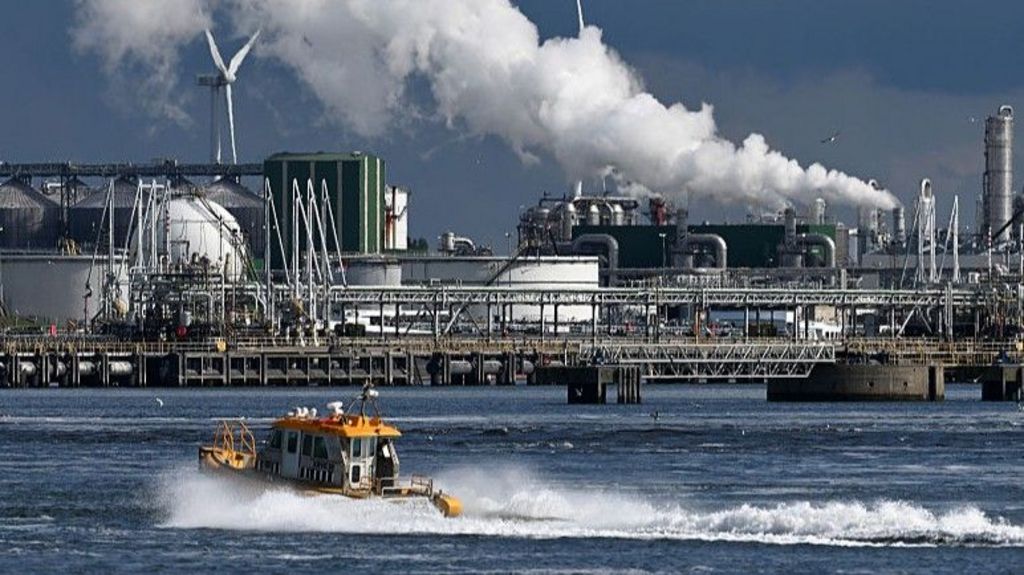
    Nestled on reclaimed North Sea land at the delta of the Rhine and Meuse rivers, the Port of Rotterdam stands as Europe’s undisputed freight powerhouse. By volume, this massive logistics hub handles nearly as much annual cargo as all United Kingdom ports combined. Its skyline is defined by towering container cranes, stacked shipping boxes, and massive bulk carriers – the front-facing infrastructure of one of the world’s largest integrated energy and chemical complexes.

    Five major oil refineries, anchored by Shell’s largest European processing facility, collectively process hundreds of thousands of barrels of crude oil every day, while a dense network of chemical plants supplies manufacturing operations across the European continent. Research from independent environmental research firm CE Delft links the full lifecycle carbon emissions of fossil fuels passing through Rotterdam to roughly 600 megatonnes of carbon dioxide annually – a figure multiple times higher than the annual emissions of the Netherlands’ busiest airport, Schiphol.

    This outsized carbon footprint has positioned Rotterdam as a global test case for one of the energy transition’s most pressing questions: Can a port built entirely around the fossil fuel economy ever make a full, authentic shift to sustainable operations? Growing pressure from climate activists is pushing port leadership to confront this challenge head-on, culminating in a high-profile lawsuit filed by Dutch environmental group Advocates for the Future. The suit argues the Port of Rotterdam Authority has failed to take sufficient action to phase out fossil-based energy flows, and demands a legally binding, concrete roadmap to wind down coal, oil and gas throughput – emissions from which already outpace the total national emissions of most of the world’s countries.

    Port officials acknowledge the scale of the problem. Mark van Dijk, head of external relations for the Port of Rotterdam Authority, confirms the port’s industrial cluster currently emits roughly 29 million tonnes of CO2 annually, accounting for half of the Netherlands’ entire domestic emissions. “It’s not good,” van Dijk admits, putting the figure in perspective: the annual emissions equal that of tens of thousands of round-trip passenger flights between Amsterdam and Los Angeles.

    Port leadership has already laid out a formal decarbonization plan targeting its own operations and aiming to encourage lower-emission practices among on-site businesses. The authority has set a target to cut its direct and purchased energy emissions by 90% between 2019 and 2030. Key initiatives include developing a dedicated hydrogen hub to allow companies to test and scale low-carbon fuel technologies, investing in onshore shore power infrastructure that lets docked ships turn off their polluting auxiliary engines and connect to the local electrical grid, and supporting the adoption of alternative bunker fuels including liquefied natural gas, biofuels and methanol.

    To address existing industrial emissions in the near term, the port is prioritizing Carbon Capture and Storage (CCS), which involves capturing carbon emissions from industrial facilities and storing them permanently in depleted offshore gas fields via the port’s Porthos project.

    But activists reject the port’s incremental approach. Maikel van Wissen, director of Advocates for the Future, argues a port of Rotterdam’s scale and influence carries a unique responsibility to accelerate the clean energy transition, rather than simply continuing to manage ongoing fossil fuel flows. “A state-owned enterprise should take on the same legal obligations that governments have to reduce emissions,” van Wissen says. “We are asking in the lawsuit to phase out that dependency, to create alternatives. It takes time, but if you don’t have a plan, you always choose cheap short-term solutions. This is an important hub, if you do it in a controlled way, you offer an alternative, that will stop industry from moving elsewhere.”

    Port officials counter that they are already actively reshaping the port’s business model to prioritize decarbonization. “We try to work together with the polluters, and slowly phase them out,” says Oscar van Veen, the port’s director of innovation, before correcting himself: “As fast as possible, of course.”

    Still, the transition faces steep structural and geopolitical barriers. Many of the port’s largest emitting facilities are owned by multinational corporations headquartered in the United States, China and other countries, whose primary loyalties lie with their global boardrooms. If regulations become too stringent in Rotterdam, companies can simply relocate operations – a precedent already set when Shell moved its global headquarters to the United Kingdom and consumer goods giant Unilever left Rotterdam entirely.

    Bettina Kampman, a senior analyst at CE Delft, notes that the Port of Rotterdam Authority’s influence over independent on-site operators is inherently limited. Even expanding the port’s own low-emission infrastructure faces significant bottlenecks. “New developments need physical space. They can speed up the energy infrastructure developments – the electricity needed to electrify the processes. That’s all limited at the moment due to the lack of power cables,” Kampman explains.

    Harry Geerlings, emeritus professor of sustainable transport and ports at Erasmus University Rotterdam who has studied the sector for more than 30 years, argues no single port authority can deliver a full energy transition on its own. What is required, he says, is a global level playing field, similar to the regulatory frameworks the European Union has already established through the EU Emissions Trading System and international marine fuel sulphur standards.

    Geerlings points to the EU’s sulphur regulations as a proof of concept: when new rules required all ships calling at European ports to switch to lower-sulphur fuels or install pollution-control scrubbers, major shipping nations including China eventually complied after initially resisting, once their vessels were barred from major global ports without meeting the standards. “If you have the right incentives, you change the behaviour of these companies,” he says.

    Even with effective regional regulation, loopholes remain: many shipping lines now use dual-fuel engine setups, switching to cleaner low-sulphur fuel only when entering EU territorial waters, then reverting to cheaper high-sulphur heavy fuel oil once they reach the unregulated high seas.

    Geerlings says he believes Rotterdam’s port leadership is genuinely committed to decarbonization and is already investing in the infrastructure needed to support a smoother transition. Still, he notes a core, unresolved dilemma: “But their biggest income is still tied to fossil fuel industries. It’s not simply a switch you turn on or off. A port needs activity as a logistics node – otherwise it’s no longer a port. It’s a real dilemma.”

    Geopolitical tensions have further complicated the transition. Former U.S. President Donald Trump’s skepticism of aggressive climate policy and financial incentives favoring fossil fuels over renewables have amplified Rotterdam’s fears that energy-intensive industries will relocate to regions with weaker environmental regulations and lower energy costs.

    Activists argue that as a publicly owned entity, the Port of Rotterdam Authority should be held to a higher environmental standard than private operators. They are not asking for an immediate full shutdown of all fossil fuel operations, but rather a detailed, time-bound phase-out plan – not just a long-term promise to reach climate neutrality by 2050. “We are not asking for anything extraordinary,” van Wissen says. “We’re asking for a plan that really contributes to a sustainable future for the port.”

    For their part, port officials say they share the same end goal. Speaking during an electric taxi ride back to Rotterdam from the port’s outer edge, van Dijk stresses that both the port authority and its critics are aiming for the same destination: net-zero emissions by mid-century. The core disagreement, he acknowledges, is over how quickly the transition needs to happen, and how radical the changes to the port’s existing business model need to be.

  • Africa secures $900 million in new clean cooking commitments

    Africa secures $900 million in new clean cooking commitments

    NAIROBI, KENYA – Global and continental leaders have announced an additional $900 million in fresh funding commitments to expand access to low-emission clean cooking technologies across Africa, the International Energy Agency (IEA) confirmed Thursday.

    This new pledge builds on the $2.2 billion in financing mobilized at the inaugural Africa Clean Cooking Summit held in Paris in 2024, pushing the total amount of committed funding for the continent’s clean cooking transition to more than $3.1 billion. All allocated funds will go toward scaling up access to cleaner alternative fuels, modern low-emission stoves, and supporting infrastructure across African nations.

    The funding announcement came during a virtual high-level meeting on African clean cooking co-convened by the IEA and the Kenyan government. Attendees gathered to review progress delivered since the 2024 Paris summit and outline key priorities ahead of the second summit scheduled for later this year.

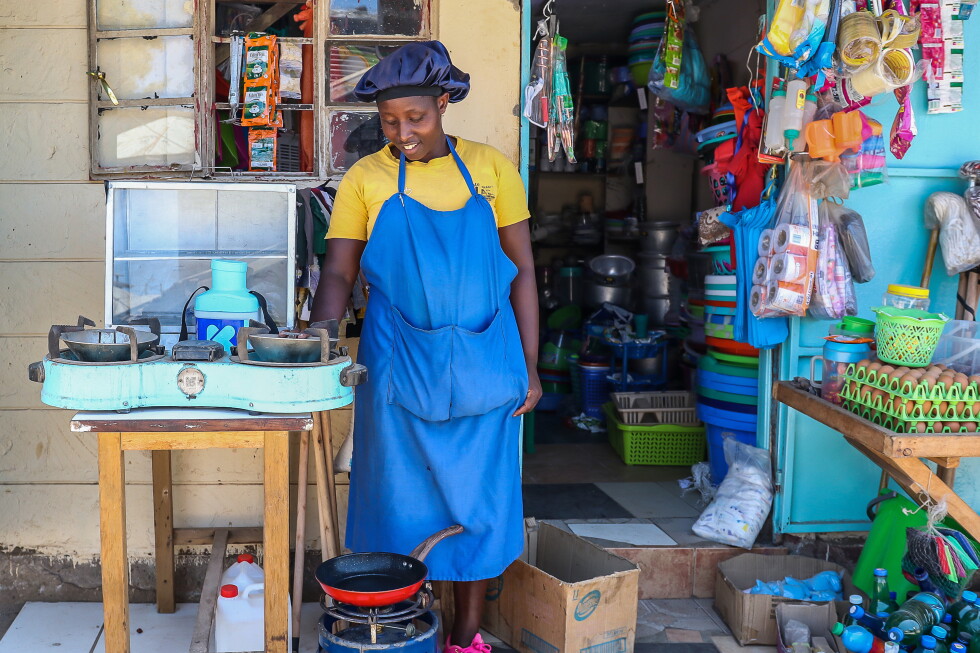
    The urgent need for this investment remains clear: nearly 1 billion people across Africa still lack access to clean cooking solutions, forcing them to rely on charcoal, firewood and other high-polluting traditional fuels. According to IEA data, household air pollution from these dirty fuels contributes to roughly 850,000 premature deaths across the continent every year. The transition to clean cooking – which encompasses low-emission alternatives such as ethanol, biogas and electric stoves – cuts dangerous indoor air pollution and delivers transformative public health benefits for millions of vulnerable households, particularly for women and children who typically bear the burden of collecting fuel and managing household cooking.

    Friday’s meeting brought together a cross-section of global leaders, including Kenyan President William Ruto, Norwegian Prime Minister Jonas Gahr Store, U.S. Energy Secretary Chris Wright, African Union Commissioner for Infrastructure and Energy Lerato Mataboge, and IEA Executive Director Fatih Birol, among other stakeholders.

    “Access to clean cooking is one of the most impactful yet overlooked challenges of our time,” U.S. Energy Secretary Wright noted during the meeting, emphasizing that the issue directly shapes daily life for billions of people, with disproportionate impacts on vulnerable groups.

    President Ruto echoed the call for greater investment, stressing that financing remains the single largest barrier to achieving universal clean cooking access across the continent. “Ambition alone is not enough. It must be backed by investment,” Ruto said.

    IEA data shared during the meeting shows that progress is already underway: approximately one-third of the commitments announced at the 2024 Paris summit, equal to $740 million, has already been deployed for clean cooking projects across 22 African countries. Birol noted that the new $900 million pledge signals growing global momentum for the transition, with additional commitments expected ahead of the upcoming second summit.

    Alongside the funding announcement, the IEA released new data showing that 30+ African countries have introduced 121 new national clean cooking policies since the 2024 Paris summit. These countries represent roughly 80% of the African population currently without access to clean cooking solutions. The agency is now working alongside the African Union to support governments in strengthening national policy frameworks under a continent-wide strategy and action plan, in preparation for the next summit.

    In a related move to address emerging supply chain risks, the IEA launched a new public-private Clean Cooking Security Programme designed to strengthen global supply chains for clean cooking fuels, with a specific focus on liquefied petroleum gas (LPG). The initiative was developed in response to shipping disruptions through the Strait of Hormuz earlier this year, which disrupted roughly 30% of globally traded LPG – a fuel that more than 3.4 billion people worldwide rely on for their primary cooking energy needs. The new program will provide technical assistance to countries working to improve their fuel security, while also facilitating greater international cooperation to build more resilient clean cooking supply chains.

    This reporting on climate and the environment from The Associated Press receives financial support from a network of private foundations, with AP retaining full editorial control over all content.

  • Two thirds of EU faced harmful ozone levels during heatwave: report

    Two thirds of EU faced harmful ozone levels during heatwave: report

    Last month’s historic heatwave that baked Western Europe left an alarming hidden public health crisis in its wake: a new report from environmental non-governmental organization Global Witness has found that two-thirds of the European Union’s population were exposed to dangerous, above-guideline levels of ground-level ozone pollution between June 21 and 28.

    The analysis, which combines data from 162 cross-continental air quality monitoring stations, atmospheric modelling from the EU’s Copernicus Atmosphere Monitoring Service (CAMS) and regional census data, estimates that nearly 298 million EU residents — including 100 million children and elderly people, groups that are disproportionately vulnerable to air pollutant harm — faced ozone concentrations exceeding the EU’s recommended maximum daily eight-hour average of 120 micrograms per cubic meter. Even more starkly, around 87 percent of the EU’s 450 million total population were exposed to levels above the World Health Organization’s stricter safety guideline of 100 micrograms per cubic meter, with 72 million people hit by concentrations crossing the 150 micrograms per cubic meter threshold, classified as the most dangerous range. Two-thirds of all monitoring stations recorded ozone readings in the top 1 percentile of all June measurements dating back to 2013, with a peak reading of 233.7 micrograms per cubic meter recorded in Germany’s North Rhine-Westphalia on June 27.

    This widespread exposure event comes just hours after the EU’s Copernicus Climate Change Service confirmed June 2024 was the hottest June ever recorded in Western Europe, amplifying longstanding concerns about how climate change is worsening dangerous air quality events. Unlike the stratospheric ozone layer that shields Earth from harmful solar radiation — which is slowly recovering from decades of damage caused by chlorofluorocarbon refrigerants — ground-level ozone is a toxic primary component of smog that poses severe risks to human health. Exposure can trigger acute breathing issues, permanent lung tissue damage, asthma attacks, and a range of other chronic respiratory and cardiovascular complications. Data from the European Environment Agency shows that ozone pollution was linked to more than 63,000 premature deaths across Europe in 2023 alone, alongside billions of euros in damaged agricultural crops.

    Ground-level ozone forms when nitrogen oxides (most often released from vehicle traffic) and volatile organic compounds (largely tied to human-caused methane emissions) react under high temperatures and intense sunlight — conditions that were widespread across the continent during last month’s heatwave. “If these chemicals are not emitted in the first place, then ground-level ozone does not form,” explained CAMS director Laurence Rouil, whose agency provided modelling data for the Global Witness report. Rouil noted that the scale of this ozone event, occurring so early in the summer season, is particularly concerning when compared to the devastating 2003 European heatwave, calling it “really remarkable and worrying.” She added that coordinated international action is essential to address the root causes of rising ozone pollution.

    While the EU has made significant progress cutting nitrogen dioxide emissions over the past several decades, the report highlights a critical policy gap: methane, which contributes one-third of all ground-level ozone formation, currently has no binding reduction targets for agricultural sources in the bloc. Global Witness senior campaigner Flossie Boyd framed the widespread exposure as an “invisible threat” driven by fossil fuel dependence. “People are being forced to live through very dangerous conditions as a result of our dependence on fossil fuels,” Boyd told AFP, calling for immediate policy action to cut precursor emissions that drive both rising global temperatures and toxic ozone pollution. “We need to stop these initial emissions driving up dangerous temperatures and driving the ozone and other forms of pollutants that are making our cities and beyond dangerous places to live,” she added.

    Independent climate scientists not involved in the report have echoed its findings, noting that the pattern matches on-the-ground data across the continent. James Weber, a climate scientist at the University of Reading in the UK, told AFP that his own independent research found more than half of UK air monitoring stations exceeded the WHO’s ozone safety guideline during the heatwave’s peak. Weber warned that ozone pollution creates an extra layer of health risk during heat events, when human bodies are already strained by high temperatures and humidity. “Ozone is a problem when there are already pressures on people’s health from humidity and temperature,” he said, noting that ongoing climate change will only increase the frequency and severity of these overlapping extreme heat and ozone events. For the general public, he recommends avoiding strenuous outdoor activity during the hottest hours of days when high ozone levels are forecast.

  • Western Europe records its hottest June as heatwaves surge: EU monitor

    Western Europe records its hottest June as heatwaves surge: EU monitor

    The European Union’s official climate monitoring body confirmed Thursday that 2025 has brought Western Europe its hottest June ever recorded, capping off a month of unprecedented extreme heat that has underscored the accelerating impacts of human-caused climate change across the continent. The announcement comes as a second intense heatwave already bears down on Europe this summer, following the June record-breaking event and an unseasonably early spring heatwave that struck in May.

    Data from the EU’s Copernicus Climate Change Service shows the average June temperature across Western Europe hit 20.74°C this year – more than 3°C higher than the 1991-2020 baseline average for the month. The figure shatters the previous regional June record set just two years prior in 2025. For the globe as a whole and Europe as an entire continent, this June ranked as the second hottest ever recorded, Copernicus confirmed, as decades of greenhouse gas emissions continue to drive global average temperatures steadily upward.

    Global average June temperatures this year hit 1.39°C above the pre-industrial baseline (1850-1900), the service reported. The world’s oceans also logged their warmest June on record, compounded by a developing El Niño weather pattern in the tropical Pacific that forecasters project will strengthen in the coming months.

    The record-breaking June heat was driven by a stubborn “heat dome” – a persistent high-pressure system that traps hot air like a lid over a boiling pot – that settled over much of Western Europe, pushing multiple countries to break both monthly and all-time high temperature records. An analysis by Agence France-Presse found that more than 410 million Europeans – over two-thirds of the region’s population – faced temperatures above 35°C between June 15 and 30. Thousands of heat-related deaths were recorded across the continent, concentrated primarily in France, Spain and Belgium, with high humidity amplifying the danger by preventing cooling overnight.

    “It was extremely humid, which then meant people didn’t get relief at night. So we had a number of tropical nights in a row,” explained Samantha Burgess, strategic climate lead at the European Centre for Medium-Range Weather Forecasts (ECMWF), which manages the Copernicus program. Warm ocean waters along Europe’s Mediterranean and Atlantic coasts compounded the issue, eliminating cooling sea breezes that typically bring overnight relief. The Mediterranean also saw a record-breaking marine heatwave that put coastal and marine ecosystems at severe risk.

    Dry conditions from the heat also exacerbated drought risks in Eastern Europe and amplified wildfire activity across the Iberian Peninsula and Southern France, Copernicus noted.

    Climate scientists from World Weather Attribution, an international research network, previously classified the June 2025 heatwave as the most severe ever recorded in Europe based on three-day peak average temperature forecasts across the affected region. The group concluded the event would have been virtually impossible to occur without the influence of human-caused climate change; a similar heat event in June 2003 would have been roughly 2°C cooler, they found.

    Burgess warned that heat extremes will only become more common, intense and widespread as global temperatures continue to rise. “We will see more heatwaves in a warmer world. They will be more intense and they will last longer, and they will impact more geographical areas,” she told AFP. She added that climate change is no longer a distant future threat, but a disruptive force already reshaping daily life: “We’re at a transition point where climate change is shifting from being an abstract statistical future problem that you read about in reports, to a concrete present and disruptive feature of daily life.”

    Europe, which is already the fastest-warming continent on Earth, faces unique challenges as it adapts to this new climate reality, Burgess noted. Many of the region’s most iconic historic buildings were constructed centuries ago for a cooler climate that no longer exists, requiring urgent updates to built infrastructure to protect residents from extreme heat. To slow the progression of worsening heat extremes, Burgess emphasized that the world must reach net-zero greenhouse gas emissions from fossil fuel combustion as quickly as possible. “Heatwaves will only get worse the more (emissions from) fossil fuel we pump into the atmosphere,” she said.