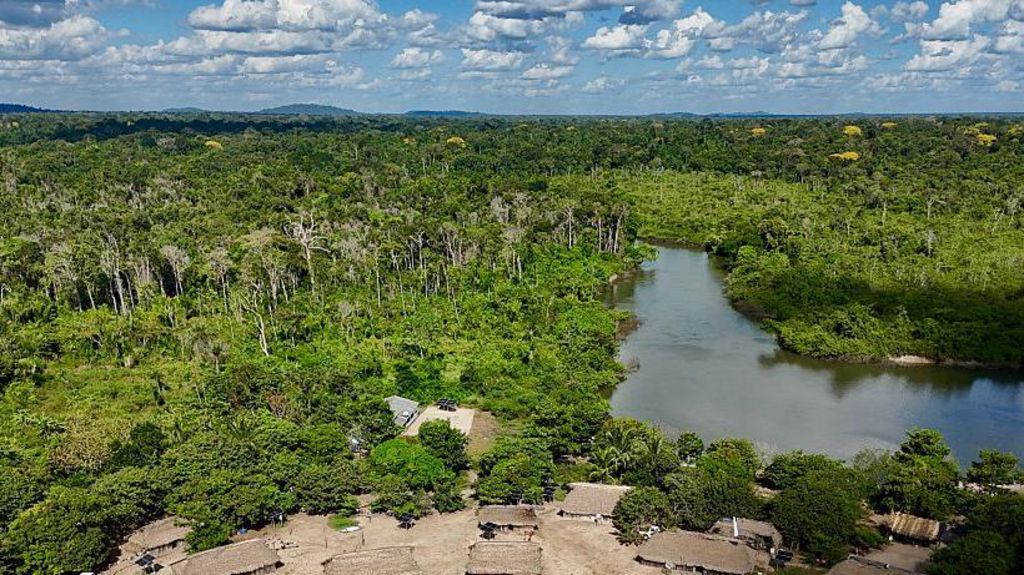
Following a catastrophic 2024 fire season that scorched a record-breaking expanse of Brazil’s Amazon rainforest, newly released data from leading deforestation monitoring network MapBiomas reveals a dramatic and historic drop in burned land across the biome for 2025.
MapBiomas’ latest annual report puts the total burned area of the Brazilian Amazon at just 3.1 million hectares in 2025, a stark plunge from the 15.8 million hectares consumed by fires in 2024. This figure marks the smallest area burned in the world’s largest tropical rainforest since the organization began consistent tracking in 1985.
The sharp decline aligns with a core campaign pledge made by President Luiz Inácio Lula da Silva during his 2022 election run, and the positive data is widely expected to strengthen his position ahead of Brazil’s October 2026 re-election vote. The 2024 fire season, by contrast, was the most severe the Amazon had seen in more than 40 years, with the European Union’s Copernicus Climate Change Service attributing the disaster to a dangerous combination of extreme climate conditions and unregulated human activity.
Vera Arruda, a lead researcher at the Amazon Environmental Research Institute (IPAM) and MapBiomas project coordinator, shared that the 2025 results carry major significance for rainforest conservation efforts. “The 31% drop compared to the historical average — driven primarily by the lowest number of fires recorded in the Amazon in 41 years — is positive news, but it does not yet allow us to conclude that this is an established trend or to scale back prevention efforts,” Arruda told the BBC.
The downward trend in burned area extends far beyond the Amazon basin, covering the entirety of Brazil. Nationwide, total burned land fell from 30 million hectares in 2024 to 12.7 million hectares in 2025. The previous national record for burned area, set back in 2007, stands at 30.7 million hectares.
Researchers attribute part of the 2025 improvement to a shift in global weather patterns: the cooling influence of La Niña replaced the heat-driving El Niño conditions that amplified 2024’s extreme drought and fire risk. Even with this year’s positive results, MapBiomas has issued a warning that El Niño’s return in 2026 could extend the Amazon’s dry season and push fire risk back up to dangerous levels.
The Amazon rainforest plays an irreplaceable role in global climate regulation: as a healthy ecosystem, it absorbs billions of tons of planet-warming carbon dioxide each year and supports millions of unique plant and animal species. For decades, however, the biome has faced growing pressure from intentional land clearing for industrial agriculture and illegal logging, paired with rising global temperatures that create ideal conditions for large, uncontrolled fires to spread.
When Lula took office in January 2023, he made a public promise to reverse the surge in deforestation that occurred during the presidency of his predecessor, Jair Bolsonaro. Bolsonaro had advocated for expanded agricultural development and mining operations in the Amazon, arguing that increased economic activity would reduce regional poverty, but environmental activists widely condemned his policies for enabling accelerated forest clearing. During the third year of Bolsonaro’s term, Amazon deforestation rates rose 75% compared to pre-Bolsonaro levels.
On his first day in office, Lula reaffirmed his administration’s commitment to ending Amazon deforestation entirely, a pledge that earned widespread praise from the global environmental community. Despite this progress on reducing burned area and deforestation, Lula has faced significant backlash from climate activists for his recent approval of offshore oil exploration at the mouth of the Amazon River, a decision critics say directly contradicts his promise to protect the rainforest ecosystem.