As a much-anticipated burst of joy for global audiences weary from geopolitical and social uncertainty, the 2026 Eurovision Song Contest is gearing up to kick off its semi-final round in Vienna this Tuesday. This year’s competition brings a smaller lineup than recent editions, with just 35 participating nations – the most compact field since 2003 – a shift driven by a widespread partial boycott over Israel’s inclusion in the contest. While the political controversy remains impossible for many fans to separate from the spectacle, the 2026 iteration still delivers the chaotic, larger-than-life pageantry that has made the annual event a cultural staple, with everything from a silver-painted AI-themed performance and a fake gorilla cameo to pop legend Boy George and the longest sustained high note in contest history.
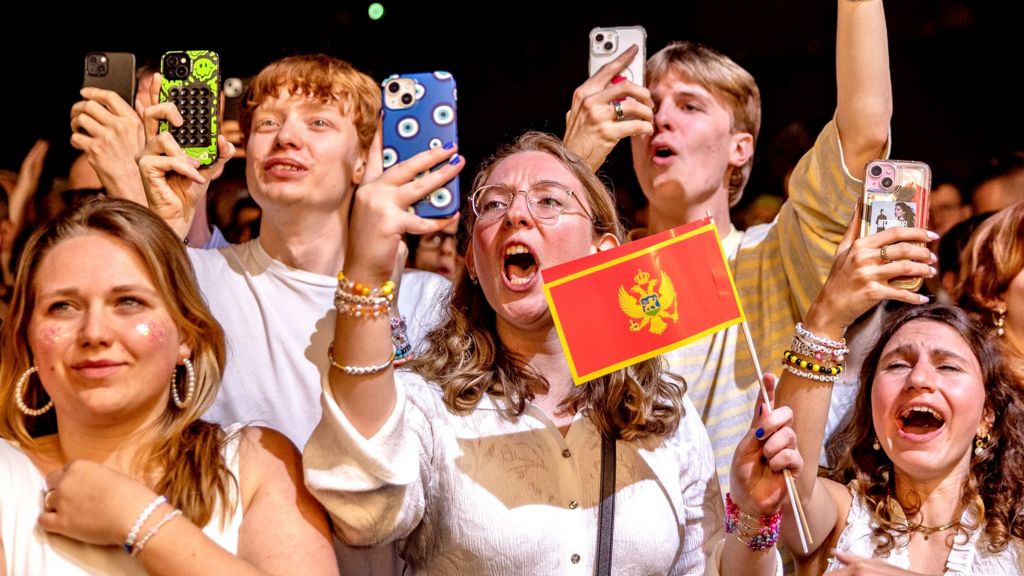
Following the trend of back-to-back winners Nemo of Switzerland and JJ of Austria, who integrated operatic vocal techniques into their winning tracks, 2026 sees a wave of contestants drawing from classical and operatic inspiration. Leading this pack is 17-year-old French prodigy Monroe, the youngest competitor this year, whose entry *Regarde!* blends frenetic string arrangements, glitched drum beats and powerhouse “Queen of the Night” style vocals. Billed as a celebration of the diverse musical heritage of France, the track builds to a showstopping climax, and industry analysts predict a top 10 finish with thoughtful stage staging. Montenegro’s Tamara Živković takes a maximalist approach on *Nova Zora*, pairing a thunderous techno beat with a Greek chorus to deliver a message about women breaking gender barriers. Co-written by professional opera singer Vesna Aćimović, the track comes as Montenegro aims to end a decade-long semi-final qualification drought that stretches back to 2015. Closing out the operatic category is Latvia’s Liene Atvara, whose haunting ballad *Ēnā* explores the lifelong trauma of growing up with a parent struggling with alcoholism. The soft, muffled opening verses build to a cathartic operatic finale that is guaranteed to leave not a single dry eye in the venue.
Controversy has already erupted around Romania’s return entry *Choke Me*, performed by Bucharest physics master’s student Alexandra Căpitănescu. Critics have labelled the track dangerous and reckless, claiming its lyrics reference unsafe sexual choking, a practice linked to permanent brain injury and death. But Căpitănescu pushes back against this interpretation, explaining the song is a metaphor for the emotional suffocation caused by self-imposed pressure and self-doubt. Regardless of the lyrical debate, the track itself is widely praised for its gritty, urgent energy, built on churning demonic guitar riffs and Căpitănescu’s distinctive raspy vocals. Equally layered is Switzerland’s entry *Alice* from Veronica Fusaro: on the surface a gentle waltz-time ballad about love, the track actually tells a chilling story of abusive stalking from the perspective of the perpetrator, adding a dark twist that elevates the already solid composition.
For fans craving upbeat dance tracks to cut loose to, the 2026 contest delivers no shortage of high-energy options. Bulgaria’s entry *Bangaranga*, performed by established pop star Dara, is a delightfully unapologetic, sass-filled bop packed with a speaker-shattering drum beat and an gratuitous, crowd-pleasing dance break. Germany’s Sarah Engels offers a more conventional Euro-dance anthem *Fire*, which draws clear inspiration from Dua Lipa’s pop-dance sound and relies on the familiar rhyme of “fire” and “desire”, but the track remains stubbornly catchy enough to perform well in public televoting. Belgium’s brooding pop entry *Dancing On the Ice* from Essyla is a sleek, hypnotic track that lacks the knockout chorus needed to take the top prize, while Cyprus’s Antigoni – a former *Love Island* contestant – invites audiences to the dance floor for sun-soaked Mediterranean escapism with *Jalla*. Blending traditional Tsifteteli belly dance rhythms with the Latin-infused sensuality associated with Shakira, the track already made headlines when a group of conservative Cypriot public figures condemned its music video as offensive to local history and traditions – a controversy that has only boosted the track’s popularity.
Many 2026 contestants have embraced the challenge of packing multiple distinct sonic ideas into Eurovision’s strict three-minute time limit, resulting in some of the most surprising genre-bending entries in recent memory. Current pre-contest favorites Finland’s Linda Lampenius & Pete Parkkonen deliver *Liekinheitin* (Flamethrower), which opens as a brooding passionate ballad before abruptly shifting into high-energy demonic electro-pop, anchored by a frantic violin solo. Already a number one hit in Finland, the track uses the metaphor of third-degree burns from intimate contact to describe all-consuming red-hot love, building to a climax as tense as a bomb countdown. Close behind Finland in the rankings is Greece, whose entry *Ferto* from Akylas blends traditional Greek instrumentation with retro Super Mario video game sound effects and a pulsing house beat. While the track initially reads as a brash anthem chasing fame and fortune, it shifts to a heartfelt tribute to Akylas’s single mother, who raised him through Greece’s devastating financial crisis, with a promise to end their lifelong struggle. Poland’s Alicja *Pray* also uses clever misdirection, opening with a gospel-style organ and mass chorus before shifting into sharp-edged rap, though the overall composition feels disjointed. Lithuania’s Lion Ceccah makes a dramatic visual statement, performing *Sólo Quiero Más* fully covered in silver paint. Sung in six languages, the track explores the rise of artificial intelligence and growing human detachment from reality, with a stage performance reenacting the struggle to break free from machine dependence – a concept that comes off as overly dramatic for many critics.
This year’s contest features two tracks centered on the universal frustration of corporate burnout and workplace dissatisfaction. Armenia’s Simón Hovhannisyan leads this theme with the gritty rock track *Paloma Rumba*, whose lyrics mock unproductive corporate meetings and empty workplace perks, with the line “This meeting could have been an email / Free coffee won’t keep me here, man.” His stage performance sees him flinging stacks of paper across the stage while backflipping toward the exit, backed by traditional Armenian folk instruments the duduk and dohl, though critics note the high-energy track becomes exhausting over its three-minute run time. The United Kingdom’s entry from the uniquely named Look Mum No Computer echoes this frustration. Over a rambunctious synth-driven sound that blends Kraftwerk’s electronic experimentation with Kaiser Chiefs’ Britpop energy, he laments being trapped in an office cubicle before escaping on a road trip across Europe, delivering the catchy chorus “Ein, Zwei, Drei” in German – a playful move clearly designed to appeal to EU voters, which the UK has struggled to win over in recent years. The entry has already divided audiences: some praise the UK for taking a creative risk, while others find the track irritating, meaning its final result will likely hinge on the quality of its live performance.
The slow, dramatic ballad category is packed with powerhouse vocal performances this year. Australia is sending one of its biggest pop stars, Delta Goodrem, to Vienna with *Eclipse*, a sweeping romantic ballad in the tradition of Celine Dion that describes a passion so intense it blocks out the sun. While the premise is scientifically unlikely, Goodrem’s conviction and vocal control make the track a credible contender for the grand prize. Denmark’s Søren Torpegaard Lund delivers a torrid tale of toxic romance on *Før Vi Går Hjem* (Before We Go Home), anchored by a simmering intensity that captivates audiences even if the simple chorus feels unremarkable. Azerbaijan’s Jiva delivers a cinematic break-up ballad *Just Go*, with cold, cutting lyrics about erasing a former lover from one’s soul, though the track blends into the crowd of similar overblown ballads that have failed to qualify for the final in recent years. Malta’s Aidan, one of the country’s biggest stars, brings a tender, wounded sincerity to the sentimental ballad *Bella*, in which he pines for the title character, whose name is repeated 20 times across the track. Israel’s Noam Bettan offers another heartbreak ballad *Michelle*, which tells the story of being trapped in emotional pain after a devastating relationship, with flourishes of Spanish guitar, but fails to connect emotionally with listeners. Ukraine’s band Leléka delivers one of the most resonant entries of the contest with *Ridnym*, a delicate, understated track that explores the feeling of hopelessness during war and the quiet drive to keep going despite everything. The song closes with a stunning 30-second-long high note – the longest in Eurovision history – that leaves audiences breathless just thinking about it.
Several entries this year center deeply emotional, personal storytelling rooted in national history. Albania’s Alis delivers the devastating ballad *Nân*, which tells the story of a mother waiting for her child to return home, a theme that resonates deeply in Albania, where 40% of the population has emigrated since the fall of communism in 1991. A former X Factor winner, Alis delivers the track with a raw sincerity that is hard to match. Croatia’s ethno-pop quintet Lelek shares a harrowing historical story on *Andromeda*, which explores the suppression, abduction and forced marriage of Christian women during the Ottoman Empire, and the secret cross tattoos they used to protect their identity. Portugal’s entry *Rosa* from Bandidos do Cante stands out from the crowded field with its simple, stunning a capella arrangement drawn from the traditional cante Alentejano musical tradition, born from bull-herders who sang to coordinate their work. Turning the energy back up, Moldova’s Satramos delivers *Viva, Moldova!*, a raucous celebration of the first generation of Moldovans born after independence, blending the upbeat energy of hits like Chumbawamba’s *Tubthumping* with traditional pan flute. Satramos performs in a football jersey printed with the number 373 – Moldova’s international dialing code – and the track even opens with a playful nod to the arrival jingle played at Chișinău International Airport, making it a joyful love letter to Moldovan culture.
For fans craving nostalgic disco vibes, 2026 offers several throwback entries. San Marino brings a high-profile collaboration with three-time contestant Senhit teaming up with 80s pop icon Boy George for the transcontinental disco track *Superstar*, though critics note the track lacks the fizz of past memorable entries, falling flat despite its star power. Georgia’s entry *On Replay* from junior Eurovision 2008 winners Bzikebi is a generic club track that fails to stand out, despite the band’s energetic live performance. Italian veteran Sal Da Vinci’s throwback disco track *Per Sempre Sì*, dedicated to his long-time wife and childhood sweetheart, leaves audiences with a warm, nostalgic glow, though its dated sound makes a win unlikely. Luxembourg’s Eva Marija, a songwriting student at a London music school, rounds out this group with *Mother Nature*, an uplifting eco-themed pop track that draws comparisons to young indie-pop stars Griff and Sigrid, which her classmates immediately identified as a potential hit when she first performed it.
Several 2026 entries play with language and unexpected conceptual narratives, resulting in some of the contest’s most quirky entries. Host nation Austria pins its hopes on 19-year-old Cosmó, whose track *Tanzschein* – literally translated as “dance license” – opens with the deadpan declaration “You need a dance licence, I have to be strict about that” over a slinking bass line. The track compares clubgoers to jungle animals, and features a stage performance with costumed gorillas and lions, leading to widespread confusion over whether it’s a commentary on toxic nightlife culture or just a chaotic bit of fun. Sweden’s Felicia performs *My System* wearing a diamond-studded face mask, which she reveals represents her struggles with mental health and self-image, while the lyrics tell the story of a destructive relationship she experienced early in her music industry career, paired with a thunderous techno drop sure to shock older audiences. Czechia’s Daniel Žižka embraces mixed metaphors on *Crossroads*, placing himself simultaneously in open waters, foreign fields, a golden cage and a vicious spider web to explore the difficulty of making decisions in an age of information overload. The brooding ballad builds to a stunning vocal climax, but it remains to be seen whether voters will be turned off by its convoluted lyrical concept.
Rock makes a strong return to the 2026 contest, five years after Måneskin’s iconic victory. Norway’s Jonas Lovv delivers *Ya Ya Ya*, a catchy, charisma-filled stomp-rock track with a riff echoing The Hives’ *Hate To Say I Told You So*, built for group singing. Estonia’s Vanilla Ninja, who previously represented Switzerland in 2005, offers the perky pop-rock anthem *Too Epic To Be True*, which carries the playful energy of early 2000s *Josie & The Pussycats*, though it currently sits near the bottom of pre-contest betting odds. For fans who prefer their rock dark and menacing, Serbia’s nu-metal band Lavina delivers *Kraj Mene* (Next To You), a smouldering track about suffocating infatuation that builds to a genuinely terrifying final scream from frontman Luka Aranđelović – a chilling note to end our preview on.
With semi-finals set to kick off in just a few days, the 2026 Eurovision Song Contest delivers something for every taste, from dance bops to emotional ballads, conceptual oddities to crowd-pleasing rock. All that remains is to see which entries will win over the global audience and claim a spot in the grand final, and hopefully end the UK’s recent streak of low-point finishes.