分类: entertainment

  • Watch: Pope Leo XIV spins basketball on his finger, with help from Harlem Globetrotters

    Watch: Pope Leo XIV spins basketball on his finger, with help from Harlem Globetrotters

    A lighthearted and memorable moment unfolded at the Vatican this week, when the world-famous American exhibition basketball team the Harlem Globetrotters welcomed a surprising new student: Pope Leo XIV. Known globally for their jaw-dropping trick shots, comedic basketball performances, and decades of entertaining audiences across every continent, the squad traveled to the Holy See for a special audience that quickly went viral for its unexpected playful twist.

    During the meeting, team members guided the pontiff through one of the Globetrotters’ most recognizable signature skills: spinning a basketball smoothly on the tip of a finger. Video footage of the interaction captured the warm, good-natured energy of the encounter, showing players leaning in to offer steady guidance as Pope Leo XIV successfully balanced the spinning ball.

    The meeting marks a rare intersection of global religious leadership and pop culture entertainment, highlighting the approachable demeanor of the new pontiff and the Harlem Globetrotters’ long history of connecting with diverse audiences across all walks of life. Fans around the world have already shared the clip widely across social media, praising the light moment that bridges different worlds in a simple, joyful display.

  • BTS to kick off world tour after landmark Seoul comeback

    BTS to kick off world tour after landmark Seoul comeback

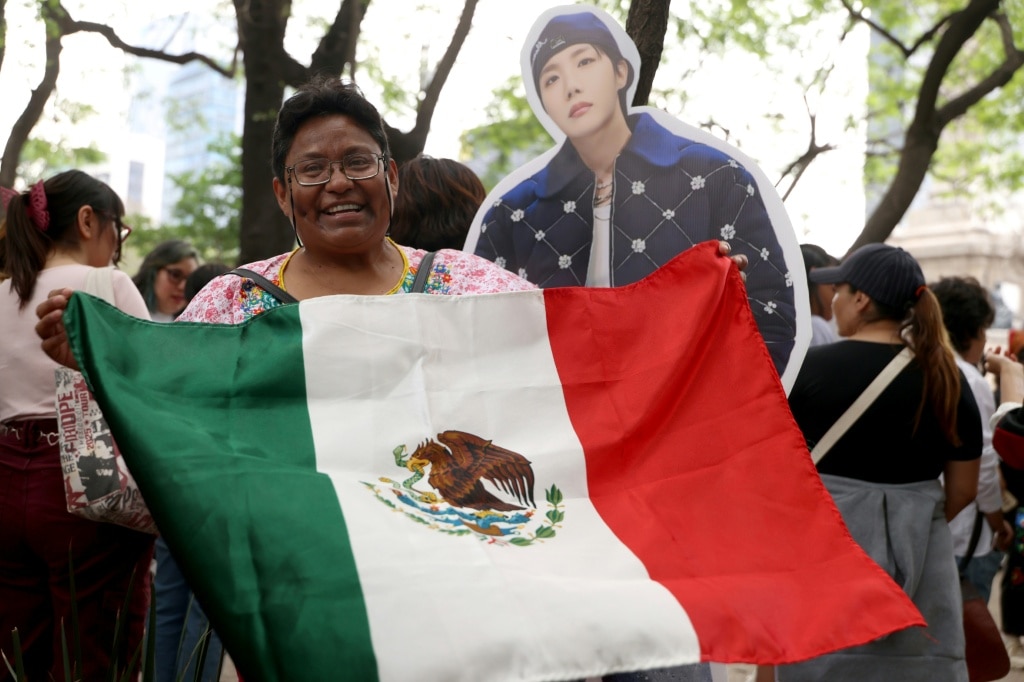
    Global K-pop phenomenon BTS is set to launch its sprawling ‘ARIRANG’ World Tour this Thursday, marking the next historic chapter of the group’s career after a blockbuster group comeback ending a multi-year hiatus for mandatory South Korean military service.

    The seven-member ensemble, universally recognized as the most successful boy band in modern music history, released their latest full-length studio album *ARIRANG* last month before staging their first joint public performance in years at a landmark show adjacent to Seoul’s historic Gyeongbokgung Palace. According to the group’s label, the free Seoul concert drew more than 100,000 in-person fans to the city center, while streaming giant Netflix confirmed a global audience of 18.4 million viewers tuned in for the event’s live broadcast.

    The tour will open with three opening shows at Goyang Stadium in Goyang, the hometown of BTS leader RM, located roughly 10 miles northwest of Seoul. Local authorities have already transformed the city into a purple-hued celebration hub, with iconic locations including Ilsan Lake Park lit up nightly in honor of the group and their global fanbase, dubbed ARMY. The three opening shows are projected to welcome a total of 120,000 attendees, with 40,000 fans expected each night from April 9 to 12. In a message to fans ahead of the opening dates, member Jimin reminded attendees to prepare for cool, potentially wet weather, urging, “To all the ARMYs coming to watch, please make sure to dress warmly!!”

    Across the entire run, the tour will include 85 shows across 34 cities worldwide. Industry analysts project the tour will become one of the highest-grossing concert runs in history, with the potential to out-earn Taylor Swift’s record-breaking Eras Tour.

    The album and tour take their name from *Arirang*, the iconic traditional Korean folk song centered on themes of longing and separation that is widely considered South Korea’s unofficial national anthem. The project is framed as a reflection of the group’s deepening connection to their Korean identity as they mature beyond their early career. Where BTS’s early discography centered on adolescent struggle and internal conflict, the group now enters a new phase of deeper self-reflection, according to Kim Jeong-seob, author of *The Universe of BTS*. Kim described the tour as the opening of a “new chapter” for the group, noting that contemporary global challenges including armed conflict and ethnic and religious division may be woven into their work through subtle, indirect messaging.

    Long before their comeback, BTS has cemented a legacy of global social advocacy, leading UNICEF anti-violence campaigns, speaking out in support of the Black Lives Matter movement, and pushing back against rising anti-Asian racism across the globe.

    To date, *ARIRANG* has already made history as the first album by a K-pop act to top the U.S. Billboard 200 chart for two consecutive weeks, with all album tracks securing top positions on major global streaming charts including Spotify’s Top Songs Global and Top 50 Global. This early success defies a common trend in the highly competitive K-pop industry, where many groups see their career momentum fade after completing mandatory military service. Pennsylvania State University sociologist Sam Richards notes that BTS’s post-hiatus success upends this pattern, carrying major implications for South Korea’s global soft power. “This is extremely significant for the future of K-culture and the nation of Korea because it means that unprecedented growth in soft power will continue,” Richards told Agence France-Presse.

    Industry observers attribute BTS’s enduring global dominance to the unprecedented loyalty and organization of their ARMY fanbase. The group counts more than 80 million followers on Instagram alone, with over 34 million members registered in their official Weverse fan community. Billboard K-pop columnist Jeff Benjamin explains that BTS built their global following by prioritizing direct, authentic engagement with fans on social media platforms including Twitter and SoundCloud years before the wider music industry embraced this strategy. “ARMY were never made to feel like consumers, but like they were friends and participants in BTS’ story, making the group’s rise feel personal to millions of people in a way that superstardom doesn’t typically resonate,” Benjamin explained.

  • Everything you need to know about BTS’s comeback tour

    Everything you need to know about BTS’s comeback tour

    After nearly four years away from the global concert stage, the globally beloved K-pop supergroup BTS is officially making their long-awaited return with a groundbreaking comeback tour that is already being hailed as the largest tour in the history of K-pop. The opening show of this highly anticipated grand tour is scheduled to kick off this Thursday in the group’s home base of Seoul, South Korea, marking a monumental moment for both the band and their legions of dedicated fans around the world. For years, followers of the seven-member group have waited patiently for the opportunity to see BTS perform live in person again, after widespread global event shutdowns and individual career pursuits put collective touring activities on hold. This tour not only represents BTS’s official return to full-group group performances but also sets a new scale benchmark for K-pop concert tours, highlighting the group’s enduring global influence and the unwavering loyalty of their fan community, known collectively as ARMY. Industry observers note that the tour is expected to draw hundreds of thousands of attendees across its scheduled stops, generate massive economic impact for host cities, and solidify BTS’s position as one of the biggest musical acts in the world. This launch comes as global live music continues to fully rebound from the impacts of the global pandemic, with BTS’s comeback emerging as one of the most high-profile live music events of the year.

  • ‘Ketamine Queen’ jailed for 15 years over Matthew Perry drugs

    ‘Ketamine Queen’ jailed for 15 years over Matthew Perry drugs

    In a high-profile sentencing that closed one major chapter of the investigation into the 2023 death of beloved *Friends* star Matthew Perry, a British-American drug trafficker known publicly as the “Ketamine Queen” has been sentenced to 15 years in federal prison for her role in supplying the ketamine that caused the actor’s fatal overdose.

    Forty-two-year-old Jasveen Sangha, a dual U.K.-U.S. citizen, was one of five people charged in connection with Perry’s death, the 54-year-old actor who was found unresponsive in the hot tub of his luxury Los Angeles home in October 2023. Court documents detail that Sangha operated a large-scale illicit drug distribution ring out of her upscale Los Angeles apartment, intentionally targeting wealthy, high-profile clients in the heart of Hollywood’s entertainment industry.

    Prosecutors emphasized in sentencing filings that Sangha deliberately built her brand as an exclusive supplier for A-list clientele, boasting to customers of her tight-knit VIP network of celebrity buyers. In a 2020 message to one customer, she wrote, “I’m really select with people, it’s a very VIP circle of celebs.”

    The conspiracy that led to Perry’s death saw Sangha partner with middleman Erik Fleming to sell 50+ vials of ketamine to Kenneth Iwamasa, Perry’s live-in personal assistant. Court records confirm Iwamasa administered repeated injections of Sangha’s ketamine to Perry, including at least three separate doses on October 28, 2023—the same day the actor died of an overdose. Within hours of learning of Perry’s death from breaking news reports, Sangha attempted to cover up her involvement, ordering Fleming to “delete all our messages” to destroy evidence of their arrangement.

    Prosecutors argued that Sangha’s actions reflected a deliberate disregard for human life, prioritizing illegal profits over the well-being of her customers. “She chose profits over people, and her actions have caused immense pain to the victims’ families and loved ones,” prosecutors wrote in their sentencing recommendation. When law enforcement raided Sangha’s home following Perry’s death, they seized a large cache of controlled substances including methamphetamine, ketamine, ecstasy, cocaine, and counterfeit Xanax, alongside drug trafficking equipment: a money counting machine, a digital scale, and electronic devices designed to detect hidden surveillance cameras and wireless bugs.

    The investigation into Perry’s death uncovered a broader network of enablers who profited off the actor’s long-public struggle with addiction, including two medical professionals who violated their oaths to traffic drugs to Perry. Dr. Salvador Plasencia, who pleaded guilty to four counts of ketamine distribution connected to the case, was sentenced to 30 months in prison last year. A second physician, Dr. Mark Chavez, received a sentence of home confinement coupled with hundreds of hours of community service. Court records show Chavez supplied ketamine to Plasencia, who then resold it to Perry at exorbitant markups. In one text message, Plasencia wrote, “I wonder how much this moron will pay,” highlighting the callous exploitation of Perry’s addiction. Prosecutors confirmed Perry paid more than $2,000 per vial of ketamine, while his suppliers paid only a small fraction of that price for the drug.

    Sangha pleaded guilty to a five-charge indictment, including one count of operating a drug-involved premises, three counts of ketamine distribution, and one count of distribution of ketamine resulting in death. Her guilty plea also acknowledged she supplied four vials of ketamine to 33-year-old Cody McLaury in August 2019; McLaury died of an overdose just hours after purchasing the drug from her.

    For decades before his death, Perry spoke openly about his decades-long battle with substance use disorder. The actor, who found global fame and fortune playing sarcastic everyman Chandler Bing on the hit 1990s-2000s sitcom *Friends*, had long struggled with addiction to painkillers and alcohol, even as his role on the show made him a household name worldwide. In 2018, he suffered a life-threatening colon rupture linked to drug use that required multiple emergency surgeries. In his 2022 memoir *Friends, Lovers and the Big Terrible Thing*, Perry documented his experience going through detox more than 60 times, writing, “I have mostly been sober since 2001, save for about sixty or seventy little mishaps.” At the time of his death, colleagues told reporters Perry appeared to be managing his addiction and making progress in his recovery. He had originally been using ketamine as part of a physician-supervised therapy program for depression, but prosecutors confirmed he developed an addiction to the drug, which is used legally as an anesthetic and depression treatment but is also commonly misused as a psychedelic party drug.

    The remaining co-defendants in the case—personal assistant Iwamasa and middleman Fleming—are scheduled to be sentenced later this month. Perry’s death triggered an outpouring of global grief from *Fans* across multiple generations who grew up watching the hit sitcom.

  • ‘Sheep-killing’ in Shanghai

    ‘Sheep-killing’ in Shanghai

    In the bustling metropolis of Shanghai, a quirky new social media trend has turned a small local matcha boutique into an unexpected magnet for international visitors, drawing crowds that wait for hours just to join the viral fun. The phenomenon, dubbed the ‘sheep-killing plan’ by netizens, centers around one signature menu item: a matcha latte topped with an adorable, sheep-shaped dollop of milk foam. Participants complete the trend by taking one deliberate bite to swallow the creamy sheep whole, a simple act that has captured the imagination of social media users across platforms.

    The trend first gained traction after expatriate bloggers based in Shanghai shared clips and photos of their own ‘sheep-killing’ attempts across major international and domestic social media channels. What started as a casual bit of online content quickly snowballed into a must-do activity for foreign tourists exploring the city, with lines stretching around the block at Matcha Wang, the small shop that created the original drink. Visitors are willing to set aside multiple hours of their sightseeing itineraries just to secure a cup and capture their own turn at the viral challenge, turning a humble beverage into one of Shanghai’s most talked-about new tourist attractions.

    The unexpected viral success of the ‘sheep-killing’ latte highlights how social media can transform small local businesses into global destinations overnight, showcasing the unique, lighthearted cultural moments that draw international travelers to explore modern China beyond major historic landmarks.

  • BTS turned millions on to K-pop. But now it’s caught between Korea and the world

    BTS turned millions on to K-pop. But now it’s caught between Korea and the world

    It has been nearly three years since the seven members of BTS stepped away from group activities to complete mandatory military service and pursue individual musical projects. On March 21, the world’s biggest K-pop act made their official return to the Seoul stage, launching what will become the largest K-pop world tour in history with a free teaser show that drew tens of thousands of fans in-person and more than 18 million concurrent live stream viewers. Standing against an LED backdrop framing Seoul’s historic royal palace gate, member J-Hope kicked off the comeback with a bold declaration: “BTS 2.0 is just getting started!”

    What followed the triumphant comeback reveal, however, has been a public reckoning with identity that exposes the competing pressures pulling at the band: between Korean and global audiences, artistic authenticity and commercial success, individual creative instincts and the strategic goals of their industry powerhouse agency Hybe, and their unofficial role as South Korea’s most recognizable face of soft power. At the center of the debate is their new full-length album *Arirang*, named for one of Korea’s most beloved traditional folk songs, which has sparked intense discussion over whether the band has drifted too far from their K-pop roots to chase global mainstream appeal.

    The album opens with *Body to Body*, a hip-hop-driven track that samples the iconic *Arirang* folk melody. For supporters, the heavy focus on rap evokes the raw, early sound that first made BTS famous. But critics at home argue that the record lacks genuine connection to its Korean cultural roots, pointing to its extensive use of English lyrics and a long roster of high-profile international collaborators, from American DJ Diplo to Australian songwriter Kevin Parker and Spanish musician El Guincho. Many Korean long-time fans accuse Hybe and the band of prioritizing the lucrative Western music market at the cost of the distinct Korean storytelling that originally defined their work. Reception outside of South Korea has been far more divided, with many international critics praising the album as a bold experimental return to form. The BBC’s review called the rap-heavy track *Hooligan* audacious and the Jersey club-inspired *FYA* “deliciously dark”, and both the album and its lead single *Swim* have already broken global streaming records and climbed to the top of Billboard charts.

    The tension around the album’s direction was laid bare in a candid behind-the-scenes documentary released ahead of the comeback, which captured open disagreements between the band members and Hybe leadership over the project’s creative vision. Members expressed public uncertainty about the creative choices: Jimin admitted he did not know if the album’s direction was correct, while Suga noted Hybe pushed for a more overt emphasis on the *Arirang* motif, and RM said he had a visceral negative reaction to tying the band to such a culturally monumental track. Those doubts were ultimately set aside after intervention from Hybe chairman Bang Si-hyuk, the founder who originally assembled the seven-member group in 2013, when the band was formed by a then-little-known agency far outside the circle of South Korea’s top entertainment powerhouses. Bang argued that BTS’s status as a once-in-a-generation global icon and their Korean identity are both undeniable, just as their core audience has shifted from primarily domestic to predominantly global.

    For long-time observers of BTS, the current debate over identity is rooted in the band’s unique 13-year trajectory. The group debuted in 2013 with seven young members, three of whom were still teenagers, and cut their first full album *Dark & Wild* in a makeshift Los Angeles studio, leaning into raw, beat-heavy hip-hop with punchy Korean lyrics that spoke directly to young people’s struggles with academic pressure, mental health and ambition. That authenticity, paired with their early, aggressive use of social media to connect directly with fans when they could not secure prime TV appearances, built a fiercely loyal global fandom called ARMY that turned the band into a global phenomenon. Through albums like the *Love Yourself* series, centered on messages of self-acceptance and mental health, they turned their personal journey into a global movement, speaking at the United Nations, performing at the White House, and becoming de facto cultural ambassadors for South Korea. They transformed Hybe from a small startup into a global entertainment powerhouse worth billions, with revenue spanning music, merchandise, endorsements and original content.

    After their three-year hiatus, during which all members completed military service and released successful solo projects that leaned into individual artistic strengths, BTS’s return to group work carries high stakes. Their upcoming 85-date world tour, kicking off this week in Goyang with three opening shows expected to draw 120,000 fans that sold out within minutes, will be the largest K-pop world tour ever staged, spanning five continents over 12 months. Even as the album sparks debate, many fans remain excited for the return of the group they have watched grow up alongside them. Some long-time Korean fans acknowledge the missing narrative throughline that defined earlier albums, but still jump at the chance to see BTS perform live again, while casual fans say they are just thrilled to have the group back together.

    Music critics largely agree that regardless of how the comeback lands, BTS’s legacy is already secured. Before BTS broke through globally, K-pop was a niche regional industry; today, it is a billion-dollar global phenomenon, a shift that industry observers credit directly to BTS’s trailblazing work. What remains to be seen is whether the band can pull off the high-wire balancing act of satisfying competing expectations, and how much further they can push the boundaries of their global success.

  • Matthew Perry’s stepmother says ‘Ketamine Queen’ should get maximum sentence

    Matthew Perry’s stepmother says ‘Ketamine Queen’ should get maximum sentence

    Almost two years after the sudden accidental death of beloved *Friends* star Matthew Perry, the case surrounding his passing is approaching a key milestone, with one of his family members making an impassioned plea for harsh justice against the woman at the center of the drug distribution ring linked to his death.

    Perry, who earned global fame for his decades-long portrayal of quick-witted Chandler Bing on the iconic 1990s sitcom, was found unresponsive in the hot tub of his Los Angeles residence in October 2023. A Los Angeles medical examiner later officially ruled his death an accident triggered by the acute toxic effects of ketamine. The actor had openly discussed his decades-long battle with substance addiction, and was using ketamine as part of a clinically supervised treatment program for depression at the time of his death.

    Jasveen Sangha, a defendant dubbed the “Ketamine Queen” and a dual US-UK citizen who has been held in federal custody since 2024, is scheduled to be sentenced on Wednesday. She previously pleaded guilty to five federal charges, including one count of distributing ketamine that resulted in death or serious bodily injury. If the judge hands down the full penalty supported by prosecutors, she could spend more than 60 years behind bars.

    In a formal victim impact statement submitted to a California federal court on Tuesday, Perry’s stepmother Debbie Perry called for the harshest possible sentence, arguing Sangha’s illegal actions caused irreversible harm that stretches far beyond Perry’s death. “The pain you’ve caused to hundreds maybe thousands is irreversible,” she wrote. “There is no joy… No light in the window. They won’t be back.” She went on to criticize Sangha for leveraging her business acumen to profit from harming vulnerable people instead of building a legitimate career: “You caused this… You who has talent for business enough to make money chose the one way that hurts people.” Closing her statement, she urged the court to impose the maximum penalty to prevent Sangha from destroying more families: “Please give this heartless woman the maximum prison sentence so she won’t be able to hurt other families like ours.”

    Sangha has publicly expressed remorse for her role in Perry’s death. In an interview with *The Sun* conducted from her prison cell, she acknowledged full responsibility for her actions, saying: “There are no excuses for what I did. I am deeply sorry for the pain I caused, especially to Matthew’s family.”

    Sangha is one of five people convicted of felony charges connected to Perry’s death. The first two convictions came last year: Dr. Salvador Plasencia, who admitted to four counts of ketamine distribution in the weeks leading up to Perry’s death, received a 30-month prison sentence. Dr. Mark Chavez, another co-conspirator, was sentenced to eight months of home detention followed by three years of supervised release. Court documents reveal Chavez sold the ketamine to Plasencia, who then resold it to Perry at a markup of hundreds of percent, charging $2,000 per vial. In a text message uncovered by investigators, Plasencia laughed at Perry’s vulnerability, writing, “I wonder how much this moron will pay.”

    Court records outline Sangha’s role in the network: she worked through a middleman named Erik Fleming to supply 51 vials of ketamine to Kenneth Iwamasa, Perry’s personal assistant. On the day of Perry’s death, October 28 2023, Iwamasa administered at least three separate ketamine injections to the star, the combination of which led to his fatal overdose. After the transaction, Sangha instructed Fleming to erase all communication between them to cover up their activity. Iwamasa and Fleming are scheduled to be sentenced for their roles later this month.

  • Wave of nostalgia as 2000s TV makes a comeback

    Wave of nostalgia as 2000s TV makes a comeback

    Twenty-five years after “Malcolm in the Middle” first introduced audiences to a sharp, overstretched teenager navigating his chaotic, dysfunctional household, the beloved 2000s sitcom is returning to Disney+ with nearly its entire original cast, including Emmy Award-winner Bryan Cranston. This reboot is far from an isolated project: it sits at the heart of a fast-growing entertainment trend that is bringing 2000s-era television back to screens across the globe, all fueled by audiences’ intense hunger for warm, familiar nostalgia.

    For media companies and streaming platforms, this revival strategy is as financially savvy as it is popular. Reviving established, beloved intellectual property carries far lower financial risk than launching an entirely new untested series, while already drawing guaranteed, built-in fan interest that guarantees strong viewership numbers. Media experts note that recycling and reimagining popular fictional characters and universes is not a new trend – it has been a core part of storytelling from ancient myths to modern comic book franchises – but the revival movement has exploded in the streaming era.

    “Going back to properties that are already established is one way of avoiding a lot of potential risks,” explained Robert Thompson, professor of media and pop culture at Syracuse University, in an interview with AFP. “All of the millions of dollars that were spent marketing, promoting, establishing the brand of those things way back when they were on in the first place – those bills have already been paid.”

    The roster of upcoming and recent revivals spans nearly every genre of 2000s television. Beyond the new “Malcolm in the Middle: Life’s Still Unfair,” hit medical sitcom “Scrubs” – which originally aired from 2001 to 2010 – made its return to ABC and Hulu earlier this year, bringing back lead stars Zach Braff and Donald Faison alongside most of the original cast. In July, Amazon Prime Video will launch “Elle,” a prequel series that explores the high school years of Elle Woods, the iconic pink-loving heroine first brought to life by Reese Witherspoon in the 2001 “Legally Blonde” film franchise.

    Not every planned revival makes it to screen, however: Hulu recently scrapped a heavily anticipated reboot of the early 2000s supernatural hit “Buffy the Vampire Slayer,” even after completing a pilot episode. Still, other legacy projects are moving forward: Fox is currently preparing a relaunch of “Baywatch,” the sun-soaked 1989-2001 lifeguard drama that turned Pamela Anderson into a global household name. Some 2000s series never even left the air: long-running hits such as “Grey’s Anatomy,” “NCIS” and “Law and Order: SVU” continue to produce new episodes for linear networks, while their older catalog seasons consistently rank among the most-watched content on streaming platforms year after year.

    So why are modern audiences, who have thousands of brand-new shows at their fingertips, flocking back to content produced a quarter-century ago? Experts say the answer boils down to the psychological comfort of nostalgia, a well-documented coping mechanism for people navigating uncertain times.

    “I think this is a pretty common coping mechanism for a lot of people to return to shows they enjoyed in their youth,” said Sohni Kaur, a practicing psychologist who researched nostalgia and media during her studies in psychology and media at Scripps College. Kaur herself turned to rewatches of 2000s “Twilight” franchise and 1990s Bollywood films during the COVID-19 pandemic, and explained that revisiting familiar content eases anxiety and distracts from the constant upheaval of modern life. “It does really provide a lot of comfort to me. Looking back and revisiting something that we already know about kind of relieves that anxiety, or it kind of just distracts us from all of the current changes that are happening,” she said.

    Certain genres of shows naturally spark stronger nostalgic connection, Kaur added. Series centered on family or tight-knit friend groups – such as early 2000s hits “Friends” and “Gilmore Girls” – tend to hold particularly enduring emotional pull for audiences. Even horror franchises from the era continue to draw massive crowds: the latest installment of the 1996-launched “Scream” series, “Scream 7,” has grossed over $200 million worldwide so far in 2024, per data from Box Office Mojo.

    Thompson notes that nostalgic revivals tend to follow a roughly 20-year cycle, a timeline that lines up perfectly with the current wave of 2000s reboots. In that time frame, children and teenagers who loved the original broadcasts grow into working adults with disposable income for streaming subscriptions and movie tickets, and often seek out content that defined their youth, while sharing those favorite stories with their own children.

    Kaur added that the 2000s also represent a unique cultural turning point: it was the final moment before rapid exponential technological change transformed the media landscape, making the era feel like a simpler, more stable time for many viewers. “I think going back to that, again, feels safe,” she said. In the late 1990s and 2000s, appointment viewing of weekly television episodes created shared pop culture watershed moments that nearly all audiences experienced at the exact same time, a collective experience that has become far rarer in the fragmented streaming era.

    Rebooting these iconic series also taps into the unique cultural centrality that mainstream television held in that era, Thompson explained. In fact, the throwback trend extends even to how new content is released: streamers are increasingly returning to the old model of dropping one new episode per week, in a deliberate attempt to recreate the shared excitement of appointment television. HBO Max’s upcoming medical drama “The Pitt,” starring former “ER” lead Noah Wyle, will follow this weekly release model, intentionally nodding to the 1990s heyday of the hit NBC drama that launched Wyle and co-star George Clooney to stardom.

  • Pear Blossom Festival blooms along Yellow River in Ningxia

    Pear Blossom Festival blooms along Yellow River in Ningxia

    Nestled along the fertile banks of the Yellow River in northwest China’s Ningxia Hui Autonomous Region, centuries-old pear trees have burst into full bloom, opening the curtain for one of the region’s most anticipated annual cultural and tourism gatherings.

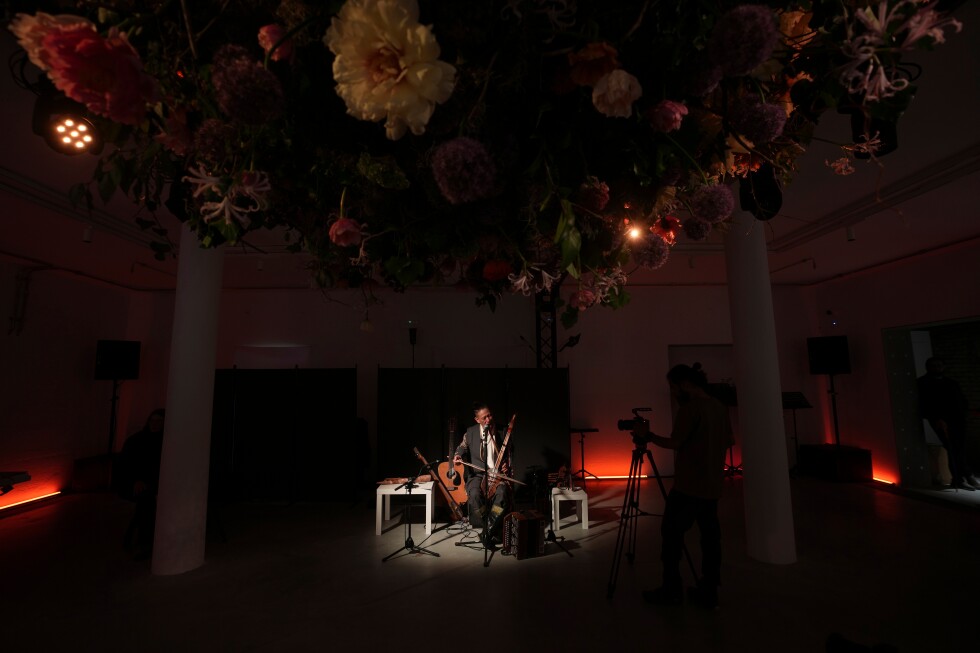
    On April 4, the 20th Nanbei Changtan Yellow River Pear Blossom Festival, paired with a celebrated Northwest Folk Song (Hua’er) Concert, officially launched in the historic village of Nanchangtan, Zhongwei. Stretching across three days, the event weaves together three distinct layers of local identity: the millennia-old cultural legacy of the Yellow River, centuries-old regional folk performance traditions, and immersive rural tourism experiences designed to connect visitors with everyday life in the village.

    Organized to showcase Ningxia’s unique natural and cultural heritage, the festival draws tourists from across the country each year, who come to wander endless rows of snow-white blooming pear blossoms against the backdrop of the mighty Yellow River. Beyond scenic photography and nature walks, the event features a diverse lineup of themed activities tailored to different interests, from folk art workshops and local food markets to the rousing Hua’er folk concert that highlights the region’s distinct musical heritage.

    As a long-running annual event, the Pear Blossom Festival has also become a core driver of rural tourism development in Zhongwei, supporting local small businesses, homestays, and agricultural producers while introducing wider audiences to the hidden cultural gems of the Yellow River valley in Ningxia.

  • Kanye West controversies – how did we get here?

    Kanye West controversies – how did we get here?

    Once hailed as one of the most transformative and groundbreaking hip-hop artists and producers of the 2000s and 2010s, Kanye West — who now goes by the name Ye — has built a decades-long career marked by unparalleled creative innovation and a seemingly endless string of damaging, offensive controversies. Now, that history of bigotry has led to the cancellation of one of the UK’s most anticipated summer music events after the British government barred the rapper from entering the country.

    West launched his career behind the scenes, crafting chart-topping production for A-list stars including Jay-Z and Alicia Keys before stepping into the spotlight as a solo artist. His 2003 debut single *Through the Wire* became an instant classic: written from a hospital bed and recorded with his jaw wired shut after a near-fatal car crash, the track announced West as a bold new voice in rap. Over the next 15 years, he cemented his legacy, pushing creative boundaries with hits like *Stronger*, *Gold Digger*, and *Heartless* that redefined what hip-hop could sound like. But for almost as long as he has been in the public eye, his career has been repeatedly derailed by impulsive behavior, offensive rhetoric, and hateful statements that have alienated fans and destroyed professional partnerships.

    Controversy has followed West since the early days of his fame. In one of the most infamous moments in awards show history, he interrupted Taylor Swift’s 2009 MTV Video Music Awards acceptance speech to insist Beyoncé deserved the honor for Best Female Video. Four years before that, he deviated from his script during a Hurricane Katrina relief telethon, famously stating that then-President George W. Bush “doesn’t care about black people” — a comment that while divisive, resonated with many who shared the sentiment. But as time went on, West’s statements grew more shocking and harmful. In 2016, he drew widespread backlash for a social media post declaring “BILL COSBY INNOCENT !!!!!!!!!!” at a time when the comedian faced dozens of allegations of drugging and sexual assault. Cosby was later convicted of one count of sexual assault (though the conviction was later overturned), and in March 2026, a civil court ordered him to pay $59.25 million in damages to a victim assaulted more than 50 years prior.

    Two years later, West sparked global outrage during an appearance on TMZ when he claimed that centuries of chattel slavery of African Americans “sounds like a choice.” The comment, which ignored the brutal, forced history of chattel slavery in the United States, led to widespread calls for accountability, with many social media users urging the rapper to revisit basic American history. West later attempted to walk back the comment, claiming his words had been misinterpreted and that he was referring to ongoing mental oppression, but the damage was done.

    A 2022 fashion show in Paris marked a turning point in the erosion of West’s professional standing. The artist, who had built a second high-profile career as a fashion designer with his Yeezy brand, walked out at his SZN 9 show wearing a t-shirt emblazoned with the “White Lives Matter” slogan, a phrase widely recognized as a direct rebuke of the Black Lives Matter movement. Anti-racism organizers condemned the display, and a subsequent photo of West alongside conservative commentator Candace Owens, both wearing the shirts, amplified the outrage.

    The controversy quickly escalated when West published a private text exchange with fellow hip-hop icon Sean “Diddy” Combs, in which he claimed Combs was “controlled by Jewish people” — echoing centuries-old harmful antisemitic conspiracy theories. The post got West’s Instagram account suspended, prompting him to move to Twitter (now X) where he declared he would go “death con 3 On Jewish people.” The comment got him banned from the platform as well, with both social media companies citing violations of hate speech policies. By the end of 2022, nearly all of West’s major professional partners had cut ties: fashion house Balenciaga, talent agency Creative Artists Agency, JPMorgan Chase, Gap, and long-time footwear partner Adidas all dropped the rapper. Adidas reported that ending the partnership would cost the company a net loss of £217 million in 2022.

    West’s ex-wife Kim Kardashian addressed the controversy at the time, acknowledging West’s bipolar disorder diagnosis and noting that “those who are close with Kanye know his heart and understand his words sometimes do not align with his intentions.” However, medical experts have pushed back on framing West’s hate speech as a product of his mental illness. “Bipolar disorder is absolutely not synonymous with racism and there’s nothing about mental illness that creates racism or hate,” Amy Elizabeth West, a professor of clinical pediatrics and psychology at USC Keck School of Medicine, explained in 2022. “Those are all entirely separate behaviours that he happens to have in addition to having bipolar disorder.”

    Later in 2022, West announced he would run for U.S. president in 2024, a bid that never materialized after his 2020 presidential run earned him just 60,000 votes nationwide. Months later, he appeared on a podcast hosted by far-right conspiracy theorist Alex Jones, where he declared “I see good things about Hitler” and claimed the Nazi leader had added value to the world. The comment drew universal condemnation, and West was again banned from Twitter. Just months later, he was banned once more after posting a symbol combining a swastika and the Star of David.

    West first issued an apology to the Jewish community in December 2023, posting a statement in Hebrew to Instagram saying he “sincerely apologise[s]” and that it was “not my intention to hurt or demean, and I deeply regret any pain I may have caused.” But the apologies did not end the controversy. In February 2025, West drew new outrage after starting to sell t-shirts printed with swastikas, prompting commerce platform Shopify to shut down his online store. Three months later, he released a track titled *Heil Hitler*, claiming that a child custody battle and frozen assets had pushed him toward Nazism. The track was banned from all major streaming platforms and in Germany under the country’s strict hate speech laws, but it spread widely on social media, and West was subsequently barred from entering Australia over the content.

    In January 2026, West issued a second public apology, taking out a full-page ad in *The Wall Street Journal* stating “I am not a Nazi or an antisemite” and “I love Jewish people.” He attributed his past harmful actions to bipolar disorder, writing that episodes of the condition left him “disconnected” and unable to recall many of his offensive statements, adding “It does not excuse what I did though.”

    Months later, event organizers announced West would headline London’s 2026 Wireless Festival, a three-night headline set scheduled for July that sparked immediate public and political backlash. In response, West updated his *Wall Street Journal* open letter, saying he would “be grateful” to meet with members of the British Jewish community “to listen” and that he would “show change through my actions.” The Board of Deputies of British Jews said it was open to a meeting, but on the condition that West cancel his planned performances.

    The controversy ultimately led to the full cancellation of the 2026 Wireless Festival after the UK government formally blocked West from entering the country over his history of hate speech and offensive behavior.