分类: entertainment

  • Romanian metal, Aussie star through to Eurovision final

    Romanian metal, Aussie star through to Eurovision final

    The world’s most-watched live televised music competition has narrowed its field, as the second semi-final of the 70th Eurovision Song Contest concluded Thursday night at Vienna’s Wiener Stadthalle, locking in the final 10 spots for Saturday’s grand finale. Among the advancing acts are Romania’s boundary-pushing heavy metal entry, Denmark’s love letter to nightclub culture, and Australian pop icon Delta Goodrem, joining 15 other countries already qualified for the 25-act final showdown.

    Fifteen competing artists from across Europe and beyond took the iconic stage Thursday, each vying for a chance to compete for Eurovision’s highest honor in front of a global audience expected to top 150 million viewers. Joining front-runners Australia, Denmark, and Romania in the final line-up are Albania, Bulgaria, Cyprus, the Czech Republic, Malta, Norway and Ukraine. Five nations saw their Eurovision 2025 journeys end on Thursday: Armenia, Azerbaijan, Latvia, Luxembourg and Switzerland failed to earn enough support to advance. Like the final, semi-final results are determined by a combination of public televoting and scores from professional industry juries. As crowds waited for the tense result announcement, they marked the Vienna host city with a mass, audience-wide Viennese waltz, turning the arena into a giant dance floor.

    The semi-final was packed with the over-the-top spectacle and emotional storytelling that Eurovision is famous for. Bulgaria’s pop star Dara kicked off the party energy with her choreography-heavy performance of “Bangaranga”, while Cyprus’ Antigoni delivered a sultry rendition of her track “Jalla”. The Czech Republic’s Daniel Zizka turned in an intimate, visually striking performance of “Crossroads”, filmed in close-up against a swirling hall of mirrors that evoked the effect of a vintage zoetrope. Armenia’s Simon brought high energy to “Paloma Rumba”, a track about working-class frustration, with a staging that saw him trapped inside a lift wearing a jacket plastered with yellow sticky notes. Ukraine’s Leleka earned cheers for her powerful, ear-splitting high notes, while Switzerland’s Veronica Fusaro performed tangled in dramatic red stage webbing, and Latvia’s Atvara delivered a soft, haunting performance of “Ena” against a backdrop evoking broken glass.

    Romania’s entry “Choke Me” sparked minor controversy in the lead-up to the contest over its provocative title and lyrical themes, but the heavy rock act turned in a showstopping performance that won over voters. Singer Alexandra Capitanescu, a master’s student in physics at the University of Bucharest, has defended the track’s artistic meaning, explaining that “Unlike the classic heart, which represents romance or cute love, the anatomical heart suggests vulnerability… and emotions that feel intense, physical and almost painful.”

    Albania’s entry offered one of the night’s most moving quiet moments: Alis performed “Nan”, a heartfelt ballad about grieving a lost mother, with a cameo from 67-year-old veteran Albanian actress Rajmonda Bulku playing the fleeting maternal figure. Alis shared after the performance that he originally planned to have his own mother appear on stage, but scrapped the idea because “I would get so emotional” performing with her.

    Australia, which has competed as an invited guest at Eurovision since 2015, advanced with Goodrem, the 41-year-old singer who rose to global stardom with a string of hits in the early 2000s. Her performance of “Eclipse”, a track inspired by the astronomical alignment of planets, wowed the more than 10,000 fans packed into the Wiener Stadthalle. Goodrem performed atop a glittering grand piano before rising into the air on a hydraulic lift as sparks rained down from the arena ceiling. “It’s higher than it looks! I can see the whole room. I definitely get a great vantage point up there,” she said after her set.

    Denmark’s Soren Torpegaard Lund, a former musical theatre performer, brought the crowd to its feet with “For Vi Gar Hjem” (Before We Go Home), an ode to late-night club nights that has quickly become a fan favorite. “I did a little wave around and just hearing the roar is crazy. I’ve never played for so many people,” Lund said after advancing.

    This year’s contest also included a pre-taped segment addressing common misperceptions about Eurovision’s long ties to the LGBTQ community. Presenter Victoria Swarovski took to a fictional lecture hall to respond to the question: “Why are there only gays at the Eurovision now? Have they taken over?” She walked through the contest’s 70-year history of embracing queer communities and concluded with a joke: “No takeover detected”. Eurovision director Martin Green told reporters the segment was a timely statement of the contest’s values. “It’s timely, and I think it is a message to the world that we, for 70 years, have given a voice to the voiceless and welcomed the disenfranchised,” he explained.

    Going into Saturday’s grand final, Finland remains the bookmakers’ overall favorite to take home the Eurovision trophy, with Romania and Australia ranked among the top contenders. Fans around the world are now gearing up for the glitzy, drama-filled final that has become a cultural staple for more than half a century.

  • UK Eurovision act: The BBC gave me a stress test to check I could cope under pressure

    UK Eurovision act: The BBC gave me a stress test to check I could cope under pressure

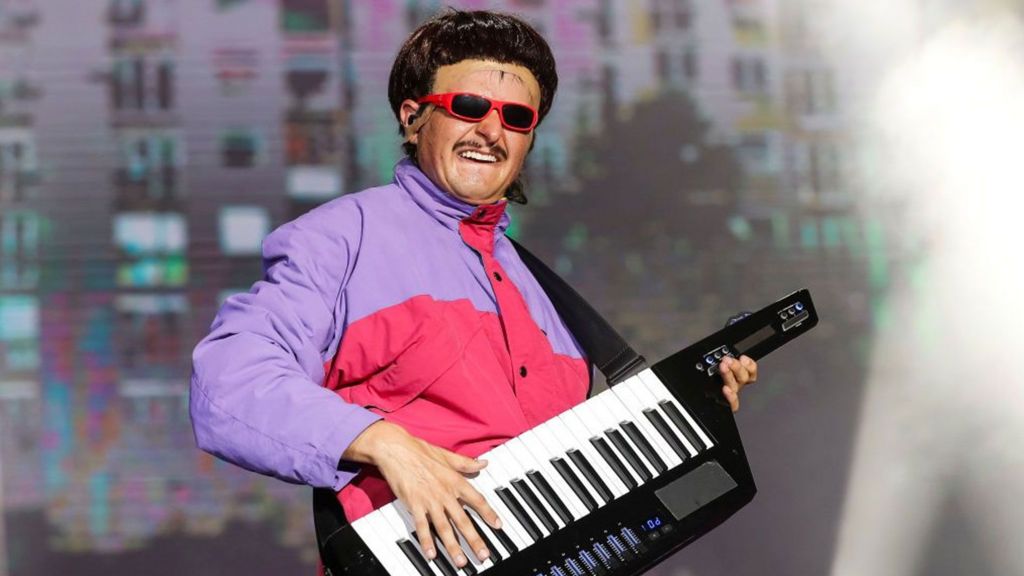
    As the 70th Eurovision Song Contest prepares to crown its 2026 winner in Vienna this Saturday, all eyes are turning to the United Kingdom’s unorthodox representative: inventor and cult musician Sam Battle, better known by his stage name Look Mum No Computer. Where many contestants enter the global competition hungry for a win, Battle brings a laid-back, devil-may-care attitude that defies the typical pressure of Eurovision’s spotlight.

    With bookmakers placing Battle at 150/1 odds of taking home the trophy, the 37-year-old creative says he is fully prepared for any outcome, leaning into the adage that confidence means being comfortable with losing. “It could go well or completely wrong – I’m just here for the ride,” he says. Even in the worst-case scenario of a zero-point finish, he has already leaned into the joke, joking that he’s got a “Look mum, no points” t-shirt ready to go.

    For Battle, Eurovision is far from a make-or-break career milestone. Long before he was tapped to represent the UK, he had built a thriving, eccentric creative career centered on his passion for repurposed audio technology. A cult favorite in experimental electro-pop circles, he is known for building functional synthesisers out of unexpected objects ranging from old bicycles to retro Speak-and-Spell machines. His YouTube channel boasts 700,000 loyal subscribers who tune in to watch his madcap projects: everything from modifying vintage cars to restoring decaying 19th-century church organs, all delivered with the manic, infectious energy that has drawn comparisons to Back to the Future’s eccentric inventor Doc Brown. Off-camera, Battle runs a unique museum in Ramsgate, Kent, dedicated to restoring and exhibiting forgotten vintage audio gear. Just four weeks before the Eurovision grand final, he added a new role to his packed resume: first-time dad to a baby boy named Max.

    What many fans don’t know is that Battle’s Eurovision journey started as a random pub joke with a friend. “We were sitting in a pub saying, wouldn’t it be hilarious if we tried to get into Eurovision?” he recalls. The throwaway joke quickly snowballed: his manager emailed the BBC to ask about the application process, and producers, intrigued by Battle’s one-of-a-kind persona, asked him to submit an original track.

    Battle agreed to join a songwriting writing camp on one non-negotiable condition: he had to be allowed to bring Kosmo, his custom-built synthesiser and drum machine that requires six separate flight cases to transport. It was a casual moment while moving furniture that ultimately gave birth to his entry: a cheeky, 1980s-inspired pop anthem titled *Eins, Zwei, Drei*. As he shifted a sofa to make space for Kosmo, he counted out “Eins, Zwei, Drei” to coordinate the lift – and the team immediately knew they had their song title. Twelve hours later, the track was finished: a playful, high-energy number about quitting a boring office job to take a spontaneous mini-break in Germany. “We all thought it would never get picked,” Battle says. The very next morning, the BBC called to say they loved the track’s zany, unapologetic charm, and after a final audition to confirm he could perform live, Battle was officially named the UK’s 2026 representative.

    During rehearsals in Vienna, Battle’s boundless curiosity for all things mechanical was on full display during a visit to the city’s Museum of Science and Technology, where he wandered through an exhibition of early synthesisers and mechanical instruments like a kid let loose in a candy factory. He impressed museum staff with his deep, encyclopedic knowledge of the obscure gear, pointing out the Mellotron organ that created the iconic texture on The Beatles’ *Strawberry Fields Forever*, and demonstrating the Roland CR-78 drum machine that kicks off Blondie’s *Heart of Glass*. “He’d be a fantastic tour guide – he knows more about these machines than we do,” the museum’s curator said. It took a spontaneous detour to a Eurovision karaoke booth, where Battle ripped through a falsetto version of ABBA’s *Waterloo* and did the full choreography for 2025’s viral hit *Espresso Macchiato*, before the pair could sit down to discuss his upcoming performance.

    Battle is the first to admit he’s no polished Eurovision performer: “I’m literally not a dancer. I’ve got two left feet,” he laughs, but says he’s fully embracing the challenge. His performance, choreographed by Fredrik “Benke” Rydman – the creative mind behind 2024 winner Nemo’s winning staging – leans into Battle’s hyperactive, chaotic energy. The set opens with Battle trapped in the monotony of a soul-crushing office job, before he breaks free and transforms the drab set into a flashing, buzzing electronic carnival, with dancers wearing fur-lined television sets as headgear. Battle built most of the stage props himself, including oversized custom synth panels, drilling hundreds of holes in the process. He had to scrap one idea – adding a real car to the set – when he learned the stage’s glass LED floor had a strict 500kg weight limit for all props.

    Battle is well aware of the UK’s poor recent track record at Eurovision: outside of Sam Ryder’s surprise second-place finish in 2022, the UK has not placed in the top 10 for more than 15 years, and earned exactly zero points in both 2024 and 2025. The BBC, he says, prepared him for the potential public scrutiny that comes with the role, even putting him through a stress test to make sure he could handle the pressure.

    Right now, the only thing keeping him up at night is the fear he’ll trip on stage and embarrass himself. Still, when pressed, he admits there’s a small part of him hoping the audience connects with his unconventional act. “What we’re doing is Marmite – you either love it or hate it – but I think there’s a slot open for our sort of thing,” he says.

    But even if the contest doesn’t go his way, Battle has already lined up his next priority: immediately after the grand final wraps up Saturday night, he’s flying straight home to resume his new favorite job: changing nappies for his newborn son Max. For Sam Battle, no matter what the scoreboard says, Eurovision is already a win.

  • Australia soars into Eurovision final as UK song debuts

    Australia soars into Eurovision final as UK song debuts

    The 2026 Eurovision Song Contest’s second semi-final wrapped up in Vienna Thursday night, with Australian pop superstar Delta Goodrem delivering a show-stopping performance that secured her spot in the grand final and catapulted her to the top of the competition’s odds rankings. Now the second most likely contender to take home the Eurovision trophy, Goodrem is quickly closing the gap on long-standing favorite Finland, raising the prospect of a historic first win for the non-European nation that has become a beloved staple of the annual contest.

    Australia first joined Eurovision in 2015 as a one-off wildcard invite, but the contest’s massive popularity Down Under—where more than one million viewers tune in annually—turned the guest appearance into a permanent spot. A win on Saturday would mark an unprecedented milestone for the country. Goodrem, one of Australia’s best-selling female artists who earned early fame for her role on the long-running soap opera *Neighbours* familiar to UK audiences, signed her first recording contract at 15 and has already notched four number-one studio albums. Reflecting on her Eurovision journey after the semi-final, she told the BBC, “This experience has been surprisingly beautiful. To see people flying flags for music and standing with us has been an absolutely awesome thing to witness.”

    Goodrem’s semi-final staging leaned into understated sophistication rather than the over-the-top gimmicks many Eurovision acts embrace: she performed her power ballad *Eclipse* against a minimalist backdrop centered on a glowing crescent moon, saved only one subtle surprise for the performance’s closing moment. The show-stopping turn has already shifted contest dynamics, with bookmakers now ranking her just behind Finland in win odds.

    Goodrem was one of 10 acts to advance from the second semi-final to the 25-act grand final, which will air live Saturday night. The full list of second semi-final qualifiers joining her are Albania’s Alis with *Nân*, Bulgaria’s Dara with *Bangaranga*, Cyprus’s Antigoni with *Jalla*, Czechia’s Daniel Zizka with *Crossroads*, Denmark’s Søren Torpegaard Lund with *Før Vi Går Hjem*, Malta’s Aidan with *Bella*, Romania’s Alexandra Căpitănescu with *Choke Me*, Ukraine’s Leléka with *Ridnym*, and Norway’s Jonas Lovv with *Ya Ya Ya*. Five nations—Azerbaijan, Luxembourg, Armenia, Switzerland, and Latvia—were eliminated from contention in the 2026 contest, and will return to compete in 2027.

    The semi-final was packed with memorable, and in some cases controversial, performances from across the continent. Opening the night, Bulgarian singer Dara delivered a high-energy set brimming with dynamic chair choreography and fierce performance energy for her track *Bangaranga*. Though the title may read like playful nonsensical Eurovision fare, the 27-year-old artist explained the song explores “being bold” and opening up about her personal battle with anxiety. Her energetic staging has already positioned her as a potential top 10 contender for the grand final.

    Romania’s Căpitănescu entered the semi-final already facing controversy over her brooding rock track *Choke Me*. Campaigners had previously criticized the song for allegedly glorifying sexual violence, but Căpitănescu clarified the lyrics actually address the feeling of suffocating under unforgiving societal expectations. She visualized this struggle in her staging, straining against two oversized neon ropes tied to her bodice. In an unexpected coincidence, rope became a recurring theme of the night: Azerbaijan’s Jiva portrayed escaping a toxic relationship by fighting against physical restraints during her performance, while Switzerland’s Veronica Fusaro was entangled in a web of blood-red rope for *Alice*, her track confronting the trauma of stalking and abuse. Despite strong critical reception for both sets, neither accumulated enough votes to advance to the final. Fusaro did earn widespread praise for a blistering guitar solo that capped off her performance.

    The UK’s 2026 entry, Look Mum No Computer, automatically qualified for the grand final as part of the “Big Five” — the UK, France, Germany, and Italy (the Big Four) plus host nation Austria, all of whom receive automatic final spots due to their largest financial contributions to the European Broadcasting Union, which organizes Eurovision. The UK act delivered a dynamic, high-concept set, opening at an office desk before moving into a surreal, colorful landscape of exposed circuit boards and robotic dancers. The performance split opinion on social media: “UK might actually get some points this year,” Threads user Dan wrote, with commentator Karen Robinson agreeing, “He brought so much energy and real personality to the stage.” But other critics were less impressed, with a Reddit user deriding the staging as a man “huffing and puffing around an exam hall,” and Bluesky user C Grinbergs lamenting, “I don’t think it’s our year.”

    More upbeat, lighter moments came from other contestants: Antigoni, a London-based artist representing Cyprus, brought a danceable party anthem *Jalla* (translated “And More”) that blended belly dancing choreography with traditional Cypriot instrumentation, drawing obvious comparisons to global pop star Shakira. Malta’s Aidan brought warm Mediterranean energy to his tender love ballad *Bella*, while France’s Monroe offered a reflective operatic chanson *Regarde!* that encouraged audiences to pause and appreciate the beauty of the world around them. Closing out the semi-final was Norway’s Lovv with *Ya Ya Ya*, a raucous, foot-stomping rock track that echoes the sound of 2021 Eurovision champions Måneskin. The track has already become a streaming hit, racking up more than four million plays across YouTube and Spotify. Lovv made headlines earlier in the week after contest organizers asked him to tone down what they described as overly sexualized choreography during rehearsals. Laughing off the criticism, he said, “I don’t know what they are talking about! I’m the least sexual person in the whole delegation.” For the semi-final, he compromised by swapping his original hip thrust choreography for a playful cheeky wiggle, much to the audience’s amusement.

    The 10 second semi-final qualifiers will join 10 acts that advanced from the first semi-final earlier this week—Belgium, Croatia, Finland, Greece, Lithuania, Moldova, Poland, Serbia, and Sweden—in the grand final. They will be joined by automatic qualifiers the UK, Italy, Germany, France, and host nation Austria, for a total of 25 competing acts. UK audiences can tune into the grand final live starting at 8pm BST on Saturday via BBC One, BBC iPlayer, Radio 2, and BBC Sounds, with full live coverage and analysis available on the BBC News website. Fans can also download a printable Eurovision score card from the website to track their own rankings of the finalists ahead of the winner announcement.

  • The Eurovision final lineup is confirmed after 5 more countries are sent packing

    The Eurovision final lineup is confirmed after 5 more countries are sent packing

    VIENNA — The final lineup for the 2025 Eurovision Song Contest has been locked in, following the conclusion of the second semi-final that saw five competing nations eliminated from the pan-continental pop competition on Thursday night.

    Fifteen competing acts took the stage in the second semi-final, fighting for 10 remaining spots in the 25-act grand final scheduled for Saturday. Advancement to the final was determined by a combined vote of national juries and public viewers from across participating countries.

    Qualifiers advancing to the grand final include Denmark’s Søren Torpegaard Lund with his soulful, moody entry “Før Vi Går Hjem” (Before We Go Home), Australian global star Delta Goodrem with her soaring power ballad “Eclipse”, and Bulgarian pop artist Dara with the upbeat, infectious track “Bangaranga.” Rounding out the second semi-final’s qualifying acts are Daniel Žižka of Czechia, Leléka of Ukraine, Alis of Albania, Aidan of Malta, Antigoni of Cyprus, Alexandra Căpitănescu of Romania, and Jonas Lovv of Norway. Eliminated acts from the semi-final represent Azerbaijan, Luxembourg, Armenia, Switzerland and Latvia.

    The 10 remaining finalists secured their spots in the competition during the first semi-final held on Tuesday. This group includes Finnish performers Pete Parkkonen and Linda Lampenius, Greek rapper Akylas, Serbian goth metal outfit Lavina, Moldovan folk-rap fusion artist Satoshi, and Israeli singer Noam Bettan. Like all past winners and the largest financial backers of the contest, the 2024 champion Austria automatically claims a spot in the final as this year’s host nation, alongside the so-called “Big Five” funders: the United Kingdom, France, Germany and Italy, who also bypass the semi-final round.

    While the competition’s official 2025 motto is “United by Music”, with a stated mission to bring European nations together through art beyond political divides, the event has once again become the center of heated political tensions that have overshadowed much of the lead-up to Saturday’s final. The contest has a long history of navigating geopolitical friction: Russia was fully expelled from the competition in 2022 following its full-scale invasion of Ukraine, a move that mirrored growing global condemnation of the Kremlin’s military campaign.

    The 2024 contest hosted in Malmo, Sweden and the 2023 event in Basel, Switzerland were both disrupted by large pro-Palestinian protests demanding Israel’s expulsion from the contest over its ongoing military campaign against Hamas in Gaza. Organizers confirm a new demonstration against Israel’s participation is planned to take place ahead of Saturday’s grand final in the Vienna arena.

    This year, five nations — Spain, Ireland, the Netherlands, Slovenia and Iceland — have launched a full boycott of the 2025 contest in direct protest of Israel’s inclusion. This boycott has delivered a tangible financial and audience hit to the iconic event. Last year, Eurovision organizers reported a global viewership of 166 million people, and the absence of five major national broadcasters means both reduced revenue from participation fees and lower overall viewership this year. While Bulgaria, Moldova and Romania have returned to the competition after sitting out recent editions for artistic or financial reasons, 2025 still has the smallest number of participating countries since 2003.

    Beyond the protests, Israel has also faced formal accusations of violating contest rules with an organized off-platform marketing campaign designed to coordinate mass votes for its entrant. In response to the allegations, the European Broadcasting Union (EBU), the governing body that oversees Eurovision, updated and tightened contest voting rules ahead of this year’s event. The new rules cut the maximum number of votes per viewer in half to 10, and added enhanced monitoring systems to flag and disqualify “suspicious or coordinated voting activity.”

    When Israeli entrant Noam Bettan performed during Tuesday’s first semi-final, his set was interrupted by scattered protest chants from audience members. In a break from past event protocols, Austrian host broadcaster ORF has confirmed Palestinian flags will be permitted inside the competition arena, and the network will not mute audience booing for broadcast, a policy designed to preserve the live nature of the event even amid tension.

    Despite the ongoing challenges and boycotts, Eurovision leadership remains focused on long-term growth and reconciliation. The contest is already scheduled to launch its first official Asian spin-off, Eurovision Song Contest Asia, which will hold its inaugural edition in Bangkok this coming November. Contest director Martin Green also shared Thursday that he is optimistic about the return of Hungary, which has not participated in Eurovision since 2019, following the replacement of nationalist-populist former Prime Minister Viktor Orbán by new Prime Minister Péter Magyar.

    Green emphasized that the competition remains open to the five boycotting nations, adding that organizers are eager to welcome them back to future editions of the contest. “We’ve made it very clear to them we can’t wait for them to come back,” Green said.

  • Dior nods to Hollywood’s Golden Age with Cruise collection

    Dior nods to Hollywood’s Golden Age with Cruise collection

    French luxury fashion powerhouse Dior has brought old-school Hollywood glamour back to life with its highly anticipated 2027 Cruise collection, marking the brand’s first Cruise show under newly appointed creative director Jonathan Anderson. The star-studded event unfolded at the Los Angeles County Museum of Art (LACMA), where the iconic house wove together nods to Tinseltown’s golden era, California’s iconic natural beauty, and Dior’s decades-long historic relationship with cinema. A-list attendees from across the entertainment industry packed the venue, including singers Sabrina Carpenter and Miley Cyrus, and screen legends Al Pacino, Jeff Goldblum, Anya Taylor-Joy and Macaulay Culkin, all gathering inside LACMA’s newly opened David Geffen Galleries for the glitzy affair.

    Event designers transformed the museum’s striking concrete architectural curves into a atmospheric set straight out of a mid-century classic detective film, complete with vibrant vintage automobiles and moody, cinematic lighting. When models stepped out from a soft smoky haze to take their turns on the runway, they wore designs awash in warm, vibrant hues of golden yellow, rich purple and tangerine orange. The collection’s concept was rooted in a legendary chapter of Dior and Hollywood history, drawing inspiration from the iconic demand actress Marlene Dietrich made to director Alfred Hitchcock ahead of filming 1940s classic *Stage Fright*: “No Dior, no Dietrich!”

    True to the spirit of Dietrich’s legendary on-screen wardrobe, Wednesday evening’s show balanced unapologetic glamour with a core thread of female empowerment. Floral motifs emerged as a defining design element across the collection: a scattering of bright daffodils burst from the hem of one flowing skirt, while cascading red-orange poppy petals— a nod to California’s beloved state flower— spilled down the silhouette of a structured evening gown. Tailored outerwear also took a prominent turn on the runway, rendered in dramatic tones of jet black, shimmering gold and metallic silver. One standout piece, a tailored gray-striped coat, featured geometric shadow patterns that mirrored the effect of light slanting through vintage Venetian blinds, pulling directly from the visual language of 1940s black-and-white cinema. Even the brand’s iconic accessories joined in the theme: a reimagined version of Dior’s classic saddle bag drew design inspiration from mid-century American automobiles, perfectly complementing the collection’s nostalgic premise.

    Many guests in attendance highlighted the collection’s thoughtful nostalgic tone, praising Anderson’s juxtaposition of design influences that created loose, fluid silhouettes far from the heavily cinched shapes Dior is historically known for, echoing the elegant styles of 1940s Hollywood. Anderson, who previously served as artistic director for Spanish luxury brand Loewe, stepped into his expanded role at Dior in June 2025, making history as the first designer since founder Christian Dior himself to oversee the brand’s three core lines: women’s wear, men’s wear, and haute couture. Since taking the role, he has debuted a critically acclaimed first menswear collection in June 2025, a first women’s wear collection that received more mixed reception that October, an extravagant second menswear collection in Paris this past January, and a punk-inflected, floral-accented debut haute couture collection that stayed true to Anderson’s well-known rebellious creative identity.

    Just as Dior itself has deep ties to the film industry— the brand earned an Oscar nomination in 1955 for its costume work on *Indiscretion of an American Wife*— Anderson has already built strong connections to modern Hollywood, having created custom costumes for the 2024 hit sports drama *Challengers*, directed by Luca Guadagnino and starring Zendaya. Dior’s annual Cruise, or resort, shows are known for being hosted in rotating iconic locations around the globe, bringing the luxury brand’s transitional designs to new audiences each year. Last year’s presentation was held in Rome, following previous shows in Scotland and Mexico, while the brand’s last Cruise show in Los Angeles dated back to 2017, making this week’s event a notable homecoming for the label on the West Coast.

  • Italians praise Catherine as they turn out for final day of trip

    Italians praise Catherine as they turn out for final day of trip

    Princess Catherine, Princess of Wales, marked a landmark moment in her public life with her first overseas trip since completing cancer treatment, a visit to the northern Italian city of Reggio Emilia that laid bare the enormous draw of her star power for the British Royal Family.

    Framed by her team as a “huge moment” and her official comeback to international royal engagements, the trip was originally scheduled as a low-profile fact-finding mission focused on Reggio Emilia’s globally renowned early childhood education approach. Instead, it turned into a massive public celebration of the princess, with crowds of adoring well-wishers turning out at every stop to catch a glimpse of her.

    On Thursday, the second full day of the visit, hundreds of people lined the dusty side streets on Reggio Emilia’s outskirts, gathered behind police barriers long before Catherine’s motorcade arrived. As the black royal BMW pulled up flanked by a police escort, young children in the crowd chanted “Principessa, principessa,” their voices rising over the hum of onlookers. Catherine stepped out with a warm, steady smile, waving to the crowd before working her way along a line of local officials and community leaders to enter an industrial facility hosting a recycled materials education project.

    During her visit, the princess participated in a hands-on pasta-making class, played with young children at a local primary school, and drew on the Italian language skills she developed during her gap year to interact with attendees. The project she was exploring, which repurposes waste materials for creative learning activities, aligns with Catherine’s long-standing public advocacy for early childhood development, a cause she has centered throughout her time as a working royal.

    As crowds grew outside the facility, Italian police Carabinieri and event organizers added extra barriers to manage the flow of attendees. Some well-wishers arrived in formal outfits and decorative hats, others carried handwritten signs and flowers, all waiting for an hour to catch another glimpse of the princess when she emerged. The turnout was even larger on Wednesday, when more than 1,000 people packed the city’s central square for a walkabout, with nearly every attendee eager to shake Catherine’s hand or snap a selfie.

    Interviews with waiting attendees revealed a deep, personal connection many Italians feel to the princess. Maria Theresa, who traveled all the way from Rome to see her, highlighted Catherine’s widely noted sincerity and empathy as the core of her appeal. “Italians like her. We’re people of emotions,” she said, adding that she sees Catherine as “close to the people” and a true humanitarian for her work supporting children and vulnerable communities.

    Georgia, a visitor from nearby Modena who dressed up for the event and wore a royal-themed badge, echoed that affection, noting that Catherine reminds many people of her late mother-in-law, Princess Diana, a figure who remains deeply beloved in Italy. Chiara, also from Modena, expressed relief at seeing Catherine looking well after her cancer treatment, calling her “strong and kind.”

    Many attendees specifically cited the authenticity of Catherine’s public empathy, particularly after her own experience with illness. One anonymous woman noted that unlike the manufactured connection common to many celebrities, Catherine’s care for others feels genuine. A large banner hung in Reggio Emilia’s central square read “Love and Support for Catherine,” a reciprocal gesture for the years of support the princess has extended to people facing illness and hardship.

    Though Catherine gave no public speeches or interviews during the trip, she released a statement reflecting on the warm reception she received. “I have had such a deeply moving and unforgettable time here,” she said. “Thank you to the people of Reggio Emilia for welcoming me into a culture of care with such warmth and generosity.”

    For the British Royal Family, the overwhelming public response to Catherine’s trip underscores just how critical her widespread popular appeal is to the institution’s public standing. A charismatic figure whose face regularly makes front-page news across the globe, she brings a rare, movie-star energy that draws public attention in a way few other working royals can match. The visit is already being framed as a successful comeback, with observers expecting more public and international engagements from the princess in the near future.

  • ‘Door is open’ for Canada to join Eurovision

    ‘Door is open’ for Canada to join Eurovision

    The door to the Eurovision Song Contest remains open for Canada, if the North American nation chooses to formally pursue a spot, according to the event’s senior leadership. In an interview with the BBC this week, Eurovision director Martin Green confirmed on Wednesday that no official application for Canadian entry has yet landed on his desk, but the competition stands ready to welcome a new participant that aligns with the event’s core values. “We will welcome anyone through those doors who wants to share the values of this wonderful occasion and stand on our stage with friends,” Green stated.

    The push for Canadian participation originates from Prime Minister Mark Carney’s government, which has prioritized deepening political and economic integration with Europe since taking office in 2024. The idea of joining Eurovision was first formally introduced in Carney’s 2025 federal budget, with the government’s November fiscal plan noting it is partnering with the Canadian Broadcasting Corporation (CBC), Canada’s national public broadcaster, to explore the feasibility of entering the competition. Green confirmed he is aware of Canada’s growing interest in the contest, noting that the Carney administration is actively seeking stronger ties with European partners.

    Unlike most past and current participants that are geographically located within Europe, Eurovision’s entry rules do not bar non-European nations from joining. Eligibility is instead tied to membership in the European Broadcasting Union (EBU), the organization that produces the annual contest. While the CBC is not a full EBU member, it holds the status of associate member — a qualification that has already been accepted for past non-European entries. Under official contest regulations, associate member broadcasters can be considered for participation on a case-by-case basis, a precedent set by Australia, which has competed as a formal entry since 2015. Australia was approved for entry despite its associate member status, in large part because it has a long history of broadcasting the contest to its highly engaged domestic audience.

    So far, Canada’s exploratory process has led the CBC to deploy three staff members to the 2026 Eurovision Song Contest as observers, senior director of public affairs Leon Mar confirmed in a public statement. “We are talking with the EBU about how we can collaborate more closely and exchange more content,” Mar added, signaling that ongoing discussions are progressing behind the scenes.

    While Canada has never competed as an official entry, Canadian talent has already left a major mark on the contest’s history. In 1988, Quebec-born global superstar Céline Dion won the contest representing Switzerland with her performance of *Ne partez pas sans moi* — a victory that launched her decades-long international career and remains the last win for a French-language song in the competition. Other Canadian artists have also competed for European nations in the years since: Acadian singer Natasha St-Pier represented France in 2001, and Montreal-based performer La Zarra represented France in the 2023 contest. Contest rules do not require singers to hold citizenship of the country they represent, leaving the requirement open to individual participating nations to set their own policies.

  • How has Eurovision voting changed this year?

    How has Eurovision voting changed this year?

    The Eurovision Song Contest, one of the world’s most-watched live music events, is rolling out enhanced voting monitoring for this year’s competition, contest director Martin Österdahl has confirmed. The move comes in direct response to lingering public and stakeholder concerns that emerged following the 2023 contest, when questions were raised about potential unfair influence on the final results linked to Israel’s participation.

    Österdahl emphasized in a recent statement that event organizers have ramped up scrutiny of all voting activity this year, with teams tracking voting patterns “very, very carefully” to safeguard the contest’s long-standing commitment to fair and transparent competition. The changes to voting oversight come amid broader debates around political tensions impacting the pan-European music competition, which has prided itself on uniting countries through musical performance for nearly 70 years.

    Organizers have not announced sweeping changes to the core voting structure— which combines public televoting and jury scores from participating countries— but have added new layers of data analysis to flag any unusual or coordinated voting activity that could skew the final rankings. The goal of the adjusted monitoring process is to maintain public trust in the contest’s outcome, ensuring that results reflect genuine audience and expert appreciation of competing entries rather than external interference.

  • Swapping Love Island for Eurovision: Antigoni’s pride at representing Cyprus

    Swapping Love Island for Eurovision: Antigoni’s pride at representing Cyprus

    The Eurovision Song Contest has increasingly become a stage where familiar faces from across the entertainment world make surprise appearances, with small participating nation San Marino leading the trend in recent years — from a fleeting cameo by 80s pop icon Boy George at this year’s contest to a high-profile guest spot from American rapper Flo Rida that helped the country secure its place in the 2021 grand final. This year, however, it is fans of hit British reality series *Love Island* that are in for a surprise: 2022 series eight contestant Antigoni Buxton is set to take the stage in the contest’s second semi-final, representing Cyprus with her upbeat dance-pop entry *Jalla*.

    For many viewers who only know Buxton from her time as a bombshell on the reality dating show, her leap to Eurovision may come as a shock — but the London-born singer-songwriter says that transition is anything but out of the blue. In an interview with BBC Newsbeat, Buxton explained that singing has been her lifelong passion, long before her *Love Island* appearance. “I’ve been wanting to be a singer, that has been my dream since I was as young as I can remember,” she said. “And I had an obsession with Eurovision ever since I saw Helena Paparizou win for Greece back in 2005.” Buxton frames her 2022 reality TV stint as a happy accident that opened unexpected doors: “If anything doing Love Island was random. It was a great moment because it gave me the chance to introduce myself to a lot of people and now I’m on that path I always wanted to be on.”

    Though raised in the British capital, Buxton has deep Greek-Cypriot roots, and she has woven her cultural heritage into every layer of her Eurovision entry. She spent six to eight weeks every summer on the Mediterranean island growing up, and says she has always felt a strong connection to her Cypriot identity, making representing the country a point of immense pride. *Jalla* blends modern pop production with traditional Greek instrumentation, and draws direct inspiration from Tsifteteli, the beloved Greek belly dance style. The track’s title itself holds special local meaning: it is unique Cypriot-Greek slang that roughly translates to “more” or “again”, a detail Buxton says she is excited to share with a global audience. “Sharing my roots is something I do across all my music, and I am really proud to be able to share that specific part of Cypriot culture here,” she added.

    The music video for *Jalla* leans even further into Buxton’s cultural and entertainment connections, featuring cameos from her own mother and grandparents, as well as iconic UK-based Cypriot dance duo Stavros Flatley. The father-son pair rose to fame after their memorable 2009 run on *Britain’s Got Talent*, and Buxton says they are one of the most famous Cypriot acts to break through in the UK. She reached out directly to Demi, the duo’s lead performer, who jumped at the chance to join the project with open enthusiasm.

    Unlike her experience on reality competition television, Buutton says she has found the Eurovision community to be overwhelmingly warm and supportive, a sharp contrast to the critical culture that often surrounds reality TV appearances. “That’s the thing about Eurovision, it’s almost the opposite of some things I’ve done in the public eye in the past where people want to judge and give bad comments,” she explained. “People still do, but it’s a very loving community. It’s a really warm, happy, loving, supportive community. Everyone sees that it’s a big opportunity to learn about culture, to have fun. So I feel overwhelmed with joy and with gratitude.”

    This year marks the 42nd time Cyprus has competed in the Eurovision Song Contest — a record for the most participation by any country without ever claiming the top prize. After failing to qualify for the 2025 grand final, the country is pulling out all the stops for Buxton’s performance in this year’s host city Vienna. Her live staging takes the track’s lyric about dancing on tables literally, featuring a giant prop table that dancers emerge from underneath, and builds to a explosive climax packed with extensive pyrotechnics. But despite the high stakes for her country, 30-year-old Buxton says she is not solely focused on taking home the win. “In terms of my career and in terms of success, the focus is just doing my very best,” she said. “If I can leave there and feel like I did myself proud, Cyprus is proud of me, my family and my team, that is a win in itself. But I also feel like I have an opportunity to make history for my country and it would just mean so much to the people of Cyprus.”

  • Madonna, Shakira, BTS to headline first World Cup final half-time show

    Madonna, Shakira, BTS to headline first World Cup final half-time show

    Football’s global governing body FIFA made a landmark announcement Thursday, confirming that three of the world’s biggest music acts — pop icon Madonna, Colombian superstar Shakira, and K-pop phenomenon BTS — will top the bill for the first-ever official half-time show at a men’s FIFA World Cup final. The star-studded event will take place on July 19 at New Jersey’s MetLife Stadium, modeled after the iconic Super Bowl half-time spectacle that has become a cultural touchstone. Overseeing curation of the groundbreaking performance is Chris Martin, frontman of British alternative rock band Coldplay, though the announcement has already sparked discussion and some concern over potential delays to match flow from an extended break. The 2026 FIFA World Cup, the first iteration of the expanded 48-team tournament, will be co-hosted across the United States, Canada, and Mexico, kicking off its opening round on June 11. The idea for a dedicated World Cup final half-time show was first teased by FIFA President Gianni Infantino in March 2024, when he pledged an unprecedented entertainment spectacle for the tournament but shared no details about performers or run time. On Thursday, Infantino framed the upcoming show as a historic milestone for the global competition, writing on his Instagram that the event would be “befitting the biggest sporting event in the world.” This step by FIFA follows a pattern established at recent major CONMEBOL and FIFA events: Shakira headlined the half-time show at the 2024 Copa America final held in Miami’s Hard Rock Stadium, and the 2024 FIFA Club World Cup final at MetLife Stadium also featured a half-time performance that pushed the break well past the standard 15-minute regulation length. Beyond the on-field performance, Infantino revealed Thursday that FIFA plans to host a major fan activation that will “take over” New York City’s iconic Times Square during the final weekend of the tournament, bringing the energy of the World Cup to one of the most visited public spaces in the United States. The half-time show will also serve a philanthropic purpose: all proceeds and associated fundraising efforts will support the FIFA Global Citizen Education Fund, an initiative that aims to raise $100 million to expand access to education for children across the globe over the course of the tournament. Shakira, who has the longest and most high-profile ties to the World Cup among the announced performers, has been building hype for her 2026 tournament involvement for weeks. Last week, the Grammy-winning artist dropped a teaser for the official 2026 World Cup song, titled “Dai Dai,” sharing a 67-second clip filmed on the pitch of Rio de Janeiro’s legendary Maracana Stadium — the site of two of the most iconic men’s World Cup finals in tournament history. In the teaser, Shakira holds the 2026 World Cup’s official match ball, the Trionda, while performing snippets of the new track in English alongside backup dancers wearing colors representing the United States, Colombia, and other participating nations. “Dai Dai” was produced in collaboration with award-winning Nigerian afrobeats star Burna Boy, and is scheduled for full official release this Thursday. The teaser has already been shared widely across the official FIFA World Cup social media accounts, closing with a rallying message for fans: “We’re ready!” This will be Shakira’s fifth major World Cup-related appearance: the singer has performed at two prior final matches (2006 and 2014) and recorded the genre-crossing 2010 World Cup anthem “Waka Waka (This Time for Africa),” which remains one of the best-selling World Cup theme songs of all time. Ahead of filming the 2026 teaser, Shakira drew a crowd of more than two million fans to a free open-air concert on Rio’s Copacabana Beach, underscoring her enduring global popularity as the tournament approaches.