分类: entertainment

  • Sister of Eurovision star bursting with pride

    Sister of Eurovision star bursting with pride

    As the 70th Eurovision Song Contest grand final prepares to kick off in Vienna this Saturday, the family of the UK’s representative is overflowing with excitement and pride for the hometown musician set to take the global stage. Performing under the stage name Look Mum No Computer, experimental electronic artist Sam Battle – originally named Sam Bartle and raised in the small Cambridgeshire village of Yaxley near Peterborough – will go head-to-head with 24 other competing acts from across the continent in one of the world’s most watched live music events.

    Battle’s older sister Jodie Bartle shared her overwhelming joy in an interview with BBC, saying she has long believed her brother was born for a massive break in the music industry. “Sam’s always been destined for something massive, and I’m so happy that he’s finally been given the opportunity for the world to see how unbelievably talented he is as an individual,” Bartle said. Even as the family celebrates his Eurovision selection, Bartle admitted that the opportunity to compete on the iconic contest stage came as a happy surprise.

    What sets Battle apart from many other contemporary pop acts is his distinctive artistic niche: he hand-builds one-of-a-kind, unconventional electronic instruments that blend vintage tech with unexpected playful elements. Some of his most famous creations merge the deep, resonant tone of traditional organ pipes with dozens of retired Furby interactive toys and retro handheld Game Boy consoles, creating a signature sound that has earned him a dedicated global fanbase.

    Battle’s journey to Eurovision began decades ago in his home county of Cambridgeshire, where he cut his teeth playing live gigs in the 2000s. Early in his career, he performed both as a solo artist and as a member of local bands Yellow Snow and Zibra, building a reputation for energetic, unpredictable sets that caught the attention of BBC Introducing, the network’s platform for emerging UK talent. That early recognition helped propel his career toward bigger opportunities, culminating in this year’s Eurovision selection.

    In a remarkable twist, Battle takes the Vienna stage just five weeks after welcoming his first child, a son named Max. Bartle says the milestone makes the moment even more special for the whole family: “He’s got a five-week-old baby at the moment that in the future is going to be able to say ‘my dad’s done Eurovision’, which is absolutely epic.”

    Speaking to BBC Radio Cambridgeshire presenter Dotty McLeod, Battle shared that his competing entry, the upbeat electro-pop anthem *Eins, Zwei, Drei*, came together in roughly 12 days of writing and refining. For the artist, the contest is as much about personal joy as it is about competition: “I am just going to try my hardest for the UK, for me and my mates and family,” he said.

    Bartle echoed that sentiment, emphasizing that the family’s support does not depend on Battle’s final score. “All I want for him is to just enjoy it,” she said. “We’re proud of him no matter what, and he should be proud of himself as well. The song I think is good enough to get points, and just hopefully the world also agrees with that.”

  • Bulgaria wins the 70th Eurovision song contest with the party anthem ‘Bangaranga’

    Bulgaria wins the 70th Eurovision song contest with the party anthem ‘Bangaranga’

    VIENNA, May 17 — The 70th edition of the Eurovision Song Contest wrapped up Saturday at Vienna’s Wiener Stadthalle arena, with Bulgaria securing its first-ever victory in the contest’s seven-decade history. Singer Dara’s high-energy party anthem “Bangaranga” outperformed 24 competing acts, winning over both professional national juries and global public viewers with its infectious rhythm and tightly choreographed stage performance.

    Hosted in the Austrian capital, this year’s anniversary competition brought together 25 finalist acts from across Europe and beyond, showcasing a wildly eclectic range of musical styles that has become the event’s signature. From Finnish fiery violin-pop and Moldovan folk-infused rap to Serbian heavy metal and Italian classic crooning, the 2026 contest delivered the over-the-top stage production and diverse talent that has made it a global cultural phenomenon, drawing hundreds of millions of viewers worldwide.

    While the celebration of music took center stage, the 2026 contest was overshadowed for the third consecutive year by growing political controversy over Israel’s participation, amid ongoing conflict in Gaza. Five longstanding participating nations — Spain, the Netherlands, Ireland, Iceland and Slovenia — withdrew in protest of Israel’s inclusion, marking one of the largest coordinated boycotts in the contest’s modern history.

    Israel’s contestant Noam Bettan ultimately finished in second place with his multilingual rock ballad “Michelle,” though his appearance was met with mixed reactions from the audience: loud cheers from supporters were punctuated by scattered boos, and four attendees were ejected earlier in the week after attempting to disrupt his semifinal performance. Street protests unfolded in Vienna in the lead-up to Saturday’s final, with hundreds of demonstrators marching near the arena holding signs reading “Block Eurovision” and organizers hosting an alternative “No stage for genocide” outdoor concert. “Inviting Israel to this beautiful stage is an affront to everyone who believes in humanity, love and togetherness,” said Congolese-Austrian artist Patrick Bongola, one of the protest organizers. Demonstrations were smaller in scale than those seen at the 2024 contest in Malmo, Sweden and the 2025 event in Basel, Switzerland.

    Despite the political tensions, the 2026 final showcased the genre-blending creativity that defines Eurovision. Finnish duo Linda Lampenius and Pete Parkkonen entered the final as pre-show betting favorites with “Liekinheitin” (Flamethrower), a high-octane blend of pop vocals and virtuosic classical violin backed by dramatic pyrotechnics. Other standout acts included Moldova’s Satoshi, whose upbeat party rap “Viva, Moldova” framed as a love letter to Europe from the aspiring EU member; Greek artist Akylas’ playful commentary on post-crisis economic inequality with “Ferto”; and Australian star Delta Goodrem’s showstopping performance of her ballad “Eclipse,” which featured Goodrem lifted above a glittering grand piano for the song’s climax. Female solo artists dominated the 2026 lineup, with standouts including Germany’s empowering power ballad, Poland’s gospel-infused R&B, Ukraine’s ethereal folk-pop, and Sweden’s pulsing techno-pop. The contest also featured strong male solo performances, from Malta’s R&B to Norway’s rock, plus a retro-techno set from Austrian hometown favorite Cosmo.

    For long-time observers of the contest, political friction is far from a new development. “Eurovision has always had its share of political controversy,” said Eurovision historian Dean Vuletic. “The first boycott came back in 1969, ironically by Austria, which refused to participate in the contest hosted by Franco’s fascist Spain. Every politicized edition in recent years has faced similar tension, but Eurovision persists.” Vuletic added that the contest has always been a platform for underdogs: “It’s never been a competition for already established global superstars. Fans love seeing rising artists, and artists from smaller, less wealthy nations, claim the spotlight.”

    As has become tradition, the winner was selected through a combined voting system that weights scores from professional national juries and public viewer votes. Viewers in participating nations can vote up to 10 times for acts outside their home country, while fans in non-participating nations including the U.S. can cast votes online through the official Eurovision website. The winning nation earns the right to host the following year’s contest.

    The boycott has created tangible headwinds for the event, which drew 166 million global viewers last year, with organizers expecting losses to both viewership and advertising revenue. Even so, the Eurovision organization is moving forward with expansion plans: a new spinoff competition, Eurovision Song Contest Asia, is scheduled to launch in Bangkok this November. Contest director Martin Green urged global audiences to set political disagreements aside ahead of the final, framing the 2026 event as a “brilliant, wonderful, heartfelt celebration of music that brings people across the continent together.”

  • From misfit to rap sensation: A ‘Reble’ storms into Indian hip-hop

    From misfit to rap sensation: A ‘Reble’ storms into Indian hip-hop

    At just 24 years old, Reble — born Daiaphi Lamare — has carved out an unprecedented space as one of the most distinct and captivating new voices in India’s rapidly evolving hip-hop scene. Hailing from the mist-shrouded hills of Meghalaya, a northeastern Indian state wedged between Bangladesh, China, and Myanmar, her art draws deeply from the cultural complexity of a region long sidelined as a cultural outsider within mainland India, and infuses that perspective into a sound wholly her own.

    Reble’s journey to mainstream recognition began far from the glitz of Mumbai’s entertainment industry. Growing up feeling like an outsider through years of boarding school, she recalled a childhood spent on the social margins: “Young Reble was always by herself. No friends. Sitting in one corner. Everybody was like, who’s that weird girl?” This early alienation shaped her stubborn, unapologetic artistic identity. She briefly pursued an engineering degree in Bengaluru’s tech hub, but always knew a conventional nine-to-five career would never fit. “I don’t like anybody telling me what to do,” she told the BBC, a mantra that has defined her career from its earliest days.

    Her stage name is more than a performance alias — it is a deliberate, personal rebellion. Rap became the perfect outlet for the tangled emotions of a lifelong misfit, she explains, turning her sense of disconnect into raw, intentional art. Unlike many of India’s high-energy, bombastic hip-hop artists, Reble’s style is defined by deliberate emotional restraint: she weaves verses thematically centered on distance, reinvention, and survival across three languages — English, Khasi, and her native Jaintia, the indigenous tongue that she calls her “emotional anchor.” This duality of being simultaneously local and global, rooted yet detached, sits at the core of her creative identity. A quirky irony defines her process: despite being lauded for her sharp lyricism, she openly admits she dislikes writing, leaving most of her verses as scattered, unfinished scribbles that take shape in performance.

    For years, Reble built her following within Shillong’s tight-knit local music community, a city far better known for its iconic rock bands, church choirs, and folk guitar traditions than hip-hop. Her breakout arrived unexpectedly through the soundtrack of the Bollywood action film *Dhurandhar*, where her cool, clipped verses cut through the movie’s chaotic, high-energy production to win over millions of new fans across the country. Her newly released single *Praying Mantis*, a dark, hypnotic track, has once again sparked widespread discussion, with fans dissecting every line across social media.

    Her rapid rise has not come without backlash. After her Bollywood breakthrough, some long-time fans accused her of “selling out” for pursuing mainstream commercial work. Others in her deeply religious home state, where Christian church culture dominates public life, have attacked her work as anti-Christian or even satanic over lyrical references to demons. Reble dismisses the outrage with characteristic cool: “When you get commercial success, people think you sold your soul.” For her, working on film projects is not compromise, but experimentation — and she remains selective about the work she takes on.

    Reble’s success is more than an individual success story: it reflects a sweeping shift underway in Indian popular culture, where regional artists from once-fringe regions are gaining national and global traction, breaking the long-held monopoly of big mainland cities over cultural relevance. Growing up in Shillong’s rich music ecosystem, where church choirs blend with teenage metal bands and blues bars, she absorbed both local tradition and global hip-hop influences. Early on, she connected deeply with Eminem’s work, particularly his ability to turn alienation into art — a theme that echoes through her own tracks. Yet her work remains unapologetically rooted in her identity: on *Opening Act*, she raps “I’m a Jaintia making moves/ I’m a tribal,” a proud declaration of heritage shaped by the village and the resilient women who raised her.

    Like many Indigenous northeastern Indians who have lived outside the region, Reble has faced systemic racism and concedes that artists from her part of India have never had the same opportunities as their mainland counterparts. But she frames her journey through pride, not resentment: “Coming out from a region like that, I feel very proud.” Back home, even when audiences do not always fully grasp every layer of her hip-hop sound, the reception has been deeply emotional. “They’re happy that someone is doing something. Like — that’s our girl,” she says.

    For those watching from the outside, Reble’s rise can feel sudden, but she frames it as the simple result of deliberate consistency. “The biggest lesson so far is that consistency is key,” she says. “More than talent, I believe in the discipline of getting better over time. If you’re not good at something, you need to get better. Be realistic enough to know how bad you are.” That grounded, unromantic approach to struggle is what makes her story stand out: even as she turns lifelong alienation and marginalization into art, she refuses to sensationalize hardship, letting the quiet power of her work speak for itself. As Indian culture continues to decentralize, with the most exciting creative energy emerging from once-overlooked regions, Reble got there first — and she’s only just getting started.

  • Eurovision final: Sex, violins and seven other things to look out for

    Eurovision final: Sex, violins and seven other things to look out for

    The world’s most iconic live music competition, the Eurovision Song Contest, will crown its 2026 champion in a star-studded grand final this Saturday night, held this year in Vienna. With acts ranging from rags-to-riches underdogs to A-list pop stars, this year’s contest delivers everything Eurovision fans love: unexpected twists, dramatic stagecraft, viral controversies, and genre-defying music from 25 competing nations. For UK viewers, the full event will broadcast live starting at 20:00 BST across BBC One, BBC iPlayer, Radio 2 and BBC Sounds, with continuous live coverage hosted on the BBC News website. Below is an exclusive preview of the most anticipated acts and storylines to watch for on competition night.

    Few underdog stories hit harder this year than that of Greece’s entry Akylas. Just eight months ago, the 27-year-old singer was working as a waiter in Athens before quitting to busk on city streets to make ends meet. Speaking to the BBC, he recalled the constant doubt he faced while chasing his dream: “I had so many people telling me that I was wasting my time. People would bully me in the street [while] I was busking, trying to pay my rent and my bills. I was struggling – so it’s crazy that now I’m representing my country at Eurovision.” His competitive entry *Ferto* is a high-energy dance anthem that blends rave synths, retro video game sound effects, and traditional Greek string instrumentation like the lyra. Lyrically, the track reflects on his childhood growing up amid Greece’s prolonged financial crisis, honoring the sacrifices working parents make to give their children better opportunities. Bookmakers currently predict he will land a top three finish in Saturday’s voting.

    Australia has become a surprising staple of Eurovision ever since the nation fell in love with the contest following ABBA’s iconic 1974 win. Invited for a one-off wildcard entry for the contest’s 60th anniversary in 2015, the country’s overwhelming enthusiasm earned it a permanent invitation back every year. This year, after an unexpected semi-final elimination in 2025, Australia is pulling out all the stops to claim its first ever Eurovision win, sending platinum-selling global pop star Delta Goodrem to compete with her power ballad *Eclipse*. The track features a powerhouse chorus that rivals the iconic vocal delivery of Celine Dion, pairing a baroque piano interlude with a dramatic final key change that has wowed audiences and bookies alike. Following Goodrem’s smooth advance through the semi-finals, bookmakers drastically cut her odds of winning, elevating her to the ranks of top frontrunners. One lingering question hangs over an Australian victory, however: where would the 2027 contest be hosted, given the country’s location outside Europe? Speaking on the *Wanging On* podcast this week, long-time BBC Eurovision commentator Graham Norton shared insider gossip: Australian broadcasters have a prearranged deal to host the contest in a partner European country if Australia claims the win. When approached by the BBC for comment, European Broadcasting Union (EBU) organizers declined to confirm details, saying only that they are focused on the 2026 grand final, and discussions about 2027 hosting will begin after a winner is crowned on May 16.

    Heading into the final, Finland holds the position of overall favorite to win, with its dramatic love song *Liekenheiten*, performed by chart-topping Finnish pop star Pete Parkonnen and world-renowned classical violinist Linda Lampenius. Lampenius describes the unexpected collaboration as the Finnish equivalent of Harry Styles pairing up with elite classical violinist Nicola Benedetti. All pre-event buzz has centered around one death-defying stunt in the performance: Lampenius must sprint the full length of the stage catwalk in high heels while holding a priceless 1781 Gagliano violin, valued at roughly £500,000, before jumping onto a chair set next to a stage fire effect. “I run and jump up and down on a chair, and I’m standing next to a fire. So I’m quite nervous during those three minutes. I’m thinking about the violin all the time,” Lampenius admitted ahead of the final.

    Moldova is celebrating its return to the Eurovision grand final this year, after missing out on qualification for two consecutive years. The country’s entry, *Viva, Moldova!* performed by 27-year-old singer and amateur boxer Satoshi, is a boisterous patriotic party anthem written to mark the 35th anniversary of Moldova’s independence. Satoshi has an unusual pre-performance routine to prepare: 30 seconds before stepping on stage, he simulates jumping rope to boost his energy. The routine has become such a running gag backstage that a venue microphone handler gifted him his own jump rope to practice with. The track name-checks some of Moldova’s most beloved cultural icons, including poet Grigore Vieru, whose alphabet poetry collection taught generations of Moldovan children – including Satoshi – to read.

    This year’s contest has not been without controversy. Five countries have announced a full boycott of the 2026 event over Israel’s participation, amid the ongoing conflict in Gaza and rising civilian death toll. During Israel’s semi-final performance earlier this week, contestant Noam Bettan was met with a mix of cheers and booing from the live arena audience, and four protesters were removed from the venue by security. Bettan told the BBC he was surprised by the intensity of the reaction, though he added he had already practiced performing through boos during rehearsals, after Israeli contestants faced similar demonstrations in 2024 and 2025. Further protests are expected during Saturday’s grand final, but Bettan’s sincere, soulful ballad *Michelle* – which blends electronic production with traditional Middle Eastern instrumentation – is still predicted to earn a high placing in the final rankings.

    One of the most dramatic pre-final moments involved Sweden’s entry Felicia, who wears a custom protective face mask during performances to address body image insecurities, not public health concerns. During her semi-final performance, Felicia suffered a wardrobe malfunction that caused the mask to slip off unexpectedly. Within 24 hours, she lost her voice entirely and was ordered to undergo strict vocal rest to recover. “It’s a catastrophe for me because I hate being silent!” she shared on social media, adding that she was following doctor’s orders to rest and stay hydrated. Fortunately, Felicia’s voice had fully recovered in time for Friday’s final dress rehearsal. Her entry *My System* uses the metaphor of an infection to describe overwhelming emotion, and could make history if it wins: a Swedish victory would break the country’s current seven-way tie with Ireland, making Sweden the most successful nation in Eurovision history. When asked about the historic milestone, Felicia laughed and said simply, “No pressure. That would be crazy.”

    The UK is hoping to break its years-long dry spell at Eurovision this year, after a string of bottom-of-the-leaderboard finishes that have come despite sending major pop stars and accomplished vocal groups in recent competitions. This year’s hopeful is Sam Battle, better known by his stage name Look Mum No Computer – an inventor, popular YouTuber, and museum curator from Ramsgate with a famously quirky persona. His entry *Eins, Zwei, Drei* was composed on a custom synthesizer he built from scratch in his garage, and blends the raucous energy of British football chants with the minimal electronic sound of Kraftwerk. Battle acknowledges the track is divisive: “What we’re doing is Marmite – you either love it or hate it – but I think there’s a slot open for our sort of thing.” If the act fails to climb the leaderboard, Battle says he’s already prepared to lean into the joke with a custom “Look mum, no points” t-shirt.

    Norway’s entry Jonas Lovv was ordered to revise his raucous rock performance of *Ya Ya Ya* by contest organizers, after the singer did too many hip thrusting movements during early rehearsals. Lovv told reporters bluntly: “Without joking: too sexy.” Mads Tørklep, head of the Norwegian Eurovision delegation, confirmed that the team was ordered to tone down the act’s sex appeal to meet the contest’s family-friendly content guidelines, specifically calling for a reduction in overtly sexualized rhythmic movements. The performance has since been adjusted to meet PG content standards, though Lovv still adds a playful wink and small playful waggle to the camera for long-time fans.

    Beyond the frontrunners, this year’s grand final features a host of standout performances. Bulgarian singer Dara’s entry *Bangaranga* – a high-energy tropical pop track named for a Jamaican patois term meaning “joyful chaos” – features the most creative stage design of the competition, with dancers twitching and shaking on plastic chairs to the song’s shifting tempo, in a sequence that evokes a surreal mix of a twelve-step meeting and a psychological horror film. Romania’s Alexandra Căpitănescu has faced criticism from campaigners over her track *Choke Me*, which they argue glamorizes sexual violence; Căpitănescu counters that the song is actually a metaphor for feeling suffocated by unrealistic societal expectations, with a performance that finds her tethered to her guitarists by giant neon ropes. Ukraine’s gentle ballad *Ridnym* features the longest sustained high note in Eurovision history, clocking in at 30 seconds, while Serbia’s metalcore group Lavina closes their entry *Kraj Mene* with a chilling, audience-shaking scream. Closing out the standout acts is 17-year-old French singer Monroe, this year’s youngest competitor, whose pop-R&B track *Regarde!* features a showstopping operatic vocal. The song carries a message of universal calm, she says: “It’s about taking the busy moments in your life and just saying, ‘Shhhh, everything is going to be fine’.” After a week of covering the contest in Vienna, that quiet, hopeful message feels just as relevant to fans around the world as it does to the teams backstage.

  • ‘This is beyond the Oscar’: John Travolta wins surprise Cannes honorary Palme d’Or

    ‘This is beyond the Oscar’: John Travolta wins surprise Cannes honorary Palme d’Or

    The 77th Cannes Film Festival delivered one of its most memorable unplanned moments this week, when A-list Hollywood star John Travolta was presented with an unexpected Honorary Palme d’Or – the festival’s highest honor celebrating a lifetime of extraordinary contributions to cinema – moments before the world premiere of his first directorial feature film.

    Seventy-two-year-old Travolta, whose decades-long career has cemented his status as a pop culture and film icon, was visibly overcome with emotion as the award was announced to a packed theater of cheering fans, critics and industry peers. Fighting back tears during his acceptance speech, the two-time Academy Award nominee called the unanticipated honor more meaningful than a win at the Oscars. “This is a complete surprise,” Travolta told the crowd, opening his speech in fluent French to the delight of attendees. “I can’t believe this. This is the last thing I ever expected to receive here tonight. This is truly a humbling moment for me.”

    Travolta first rose to global stardom in the 1970s, leading iconic productions such as *Saturday Night Fever* and *Grease* that turned him into a household name and defined a generation of American cinema. He later cemented his legacy with a critically acclaimed career renaissance in the 1990s, headlining Quentin Tarantino’s cultural landmark *Pulp Fiction*, a role that earned him his second Oscar nomination. Over his more than 50-year career, he has remained one of the most recognizable and beloved stars in the global film industry.

    The feature that brought Travolta to Cannes this year, *Propeller One-Way Night Coach*, is a passion project decades in the making. A family-friendly adventure set in the golden age of aviation, the film is adapted from the 1997 children’s book Travolta wrote himself. In addition to writing the source material and making his directorial debut with the adaptation, Travolta also co-produced the project and appears on-screen alongside his daughter, Ella Bleu Travolta. Following its world premiere at the Cannes Film Festival, the movie is scheduled to launch globally on the Apple TV+ streaming platform later this month.

    Travolta is one of three legendary entertainment figures set to receive an Honorary Palme d’Or at this year’s Cannes festival. Acclaimed *Lord of the Rings* director Peter Jackson and award-winning singer, actor and filmmaker Barbra Streisand will also accept the honor over the course of the 2025 event. Surprise Honorary Palme d’Or presentations have become a beloved recent tradition at Cannes: last year, Denzel Washington received the unplanned honor, and two years ago, Hollywood icon Tom Cruise was surprised with the award ahead of the premiere of *Top Gun: Maverick* in 2022.

  • Bam! Pow! Krakoom! The everlasting allure of the American comic book

    Bam! Pow! Krakoom! The everlasting allure of the American comic book

    BARCELONA, Spain — From their glossy eye-catching covers to depictions of impossibly muscular heroes clad in skintight costumes, American superhero comics draw readers in instantly with the promise of high-stakes battles, triumph over villains and thrilling adventure. For decades, these slim, serialized publications have carved out a one-of-a-kind space in global pop culture, often contrasted sharply with other regional sequential art forms.

    Against Europe’s more literary, substantive graphic novels, traditional American superhero comics are often dismissed as flimsy, juvenile entertainment. When stacked against Japanese manga’s sprawling, genre-spanning narratives with complex thematic layers, American superhero stories read as earnest and uncomplicated, rooted in a bygone era of American cultural identity. Once sold for mere nickels and dimes before climbing to quarter price points, today single issues typically cost as much as a coffee shop latte — a clear marker of their place as a product of American consumer capitalism, widely labeled as junk-food literature: eye candy for casual readers, light entertainment that requires little deep engagement. But this surface reading overlooks the deeply American identity that has been baked into these 32-page monthly stories for generations.

    The turning point for modern American superhero comics came in 1961, when Stan Lee and Jack Kirby launched the Fantastic Four. In the team’s origin story, a fateful unplanned space journey exposes four explorers to cosmic radiation, leaving them with extraordinary abilities they never asked for. This origin rewrote the rules of superhero storytelling: for the first time, all-powerful heroes were also reluctant, relatable figures, shaped by the unintended consequences of scientific progress and random chance — flawed, modern people first, heroes second.

    This blueprint shaped countless iconic characters that followed. Spider-Man, the Hulk, Wolverine, and dozens more were marked by their otherness: their incredible powers turned them into outcasts, casting them as imperfect, burdened messiahs rather than perfect, unflappable paragons. Tied to a core thread of the American cultural psyche, nearly all of these characters abide by Peter Parker’s iconic moral mandate: “With great power comes great responsibility.” Like a distinctly American reimagining of the Greek myth of Sisyphus, they are bound to an endless cycle of sacrifice, repeatedly stepping forward to save the world even when victory offers them no personal reward.

    What could be more fundamentally American than this core belief: that when raw power is anchored to a commitment to justice, it will ultimately prevail? It is a worldview that is simultaneously deeply honorable and unapologetically naïve, a reflection of the national identity that has shaped the country for centuries.

    Today, even as storytelling has grown grittier and more complex, the two giants of the American comic industry — Marvel and DC — continue to reimagine what American character looks like for new eras. Long sidelined as supporting players to white male lead characters, female fan-favorites including Gwen Stacy, Jean Grey, and Susan Storm have emerged as central leaders in recent years, breathing new life into iconic sagas for Spider-Man, the X-Men, and the Fantastic Four. DC’s *Absolute Wonder Woman* has pushed creative boundaries with groundbreaking, cinematic artwork, while half-Latino, half-Black Miles Morales has become the Spider-Man for a new, more diverse generation of readers.

    Even with these evolutions, the core tensions that have long defined American superhero stories remain unchanged. Bruce Wayne, the Batman, is unable to form deep meaningful connections with anyone beyond his longtime butler Alfred — a perfect portrait of the isolated individual in modern, atomized American society. Steve Rogers, Captain America, carries the weight of representing the World War II “Greatest Generation,” forever an outsider out of time even in his own country. And Lex Luthor, Superman’s villainous megalomaniacal nemesis, stands as one of the most iconic depictions of a power-hungry tech tycoon meddling with humanity’s future for his own gain — a trope that feels just as relevant today as it was decades ago, leaving readers to joke that the modern world could use a mild-mannered Clark Kent keeping watch on powerful elites, just in case.

    This feature is part of the recurring series “American Objects,” created to celebrate the 250th anniversary of the United States, exploring the everyday and cultural items that have shaped the nation’s identity over its history.

  • Judge declares mistrial in Weinstein case as jury fails to reach verdict

    Judge declares mistrial in Weinstein case as jury fails to reach verdict

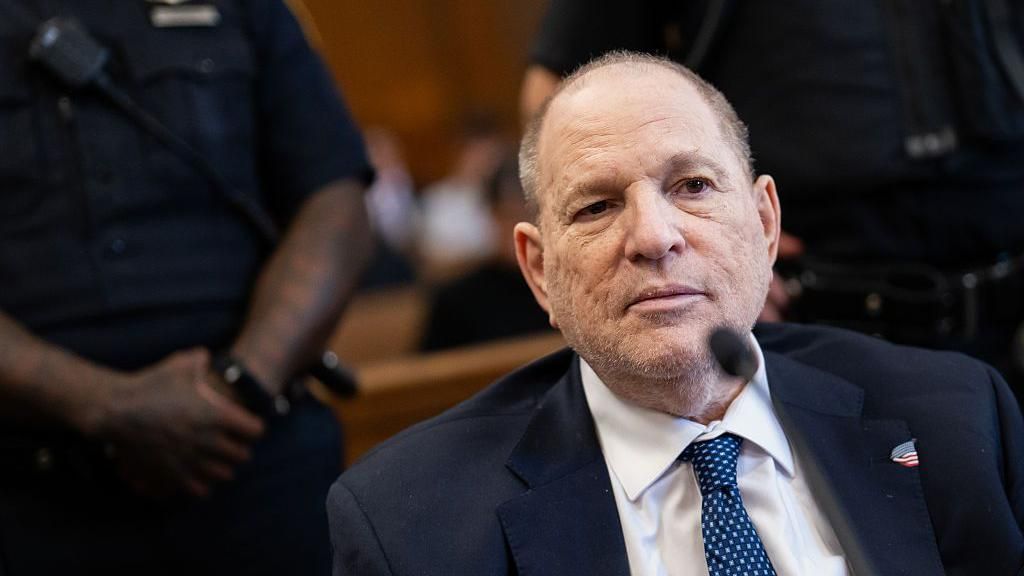
    A federal judge in New York has declared a mistrial in the latest sexual assault trial of disgraced former Hollywood film producer Harvey Weinstein, after the jury was unable to reach a unanimous verdict on the charges brought by accuser Jessica Mann. This outcome marks the third time proceedings against Weinstein over Mann’s allegations have collapsed, leaving the case unresolved. Now 74, Weinstein has already been convicted in two other separate sexual assault cases, meaning he will remain in custody regardless of this trial’s conclusion. The disgraced studio executive, whose decades-long pattern of alleged abuse sparked the global reckoning of the MeToo movement, is currently serving a 16-year prison sentence stemming from a 2022 California conviction for raping a European actress more than a decade ago. He is also appealing that conviction, alongside a June 2024 New York conviction for sexual assault against former film producer Miriam Haley. The first guilty verdict against Weinstein for Mann’s allegations, returned in 2020, was later thrown out over improper witness handling. A 2025 retrial ended in a mistrial after a bitter conflict among jury members, making this week’s outcome the second consecutive mistrial in the case. During the latest proceedings, Mann, now 40, recounted her first encounter with Weinstein at a 2013 industry party, when she was a 27-year-old aspiring actress and he was one of the most influential powerbrokers in Hollywood. She told the jury that Weinstein positioned himself as a potential mentor, showering her with flattering compliments — even saying she was prettier than A-list star Natalie Portman — and investing in her career by buying her acting textbooks. To the young, emerging actress, this attention initially felt like a once-in-a-lifetime miracle, she said. Mann’s testimony was deeply emotional, with frequent pauses as her voice cracked under the weight of recounting the alleged assault. Her account largely aligned with the testimony she gave in the two previous trials. In a post-declaration statement, Manhattan District Attorney Alvin Bragg acknowledged the disappointment of the mistrial outcome, while reaffirming respect for the jury system. “While we are disappointed that the proceedings ended with a mistrial, we deeply respect the jury system and sincerely thank all of the jurors for their time and dedication,” Bragg said. “For nearly a decade, Jessica Mann has fought for justice.” The 2017 exposure of dozens of sexual misconduct allegations against Weinstein, published in groundbreaking investigations by *The New York Times* and *The New Yorker*, ignited a watershed global movement centered on holding powerful perpetrators of sexual harassment and assault accountable. More than 80 women came forward with accusations against Weinstein, and the reporting triggered the MeToo movement that has reshaped workplaces and cultural attitudes around the world.

  • Eurovision is almost here! But how much do you know about Europe’s biggest pop spectacular?

    Eurovision is almost here! But how much do you know about Europe’s biggest pop spectacular?

    As the highly anticipated Eurovision Song Contest grand final rapidly approaches, fans across the globe are gearing up for one of the biggest cultural events in the international entertainment calendar. For those looking to get into the competitive spirit before the live show kicks off, a fun new challenge has emerged: put your Eurovision expertise to the test, and aim to walk away with a strong score – rather than the competition’s most infamous blank result, nul points.

    For more than six decades, the Eurovision Song Contest has brought together musical acts from across Europe and beyond, captivating millions of viewers with its unique blend of catchy pop music, over-the-top stage productions, and cross-cultural celebration. Each year, the event builds for weeks of semi-finals before culminating in the iconic grand final, where 26 finalists compete for the coveted winner’s trophy, with viewers and professional juries from each participating country casting their votes to crown a champion.

    Among the most recognizable phrases to come out of the contest is “nul points”, the French term for “zero points” that was historically announced when a country failed to earn any votes from other participants. Finishing with nul points is seen as the ultimate disappointment for competing acts, and has become a beloved part of Eurovision folklore among fans.

    Now, ahead of this year’s final, the challenge invites fans to test their own knowledge of Eurovision history, iconic entries, past winners, and quirky contest facts to see if they can score high and avoid the humiliation of a nul points result on their own quiz. Whether you are a long-time superfan who has watched every contest for decades, or a first-time viewer tuning in for this year’s show, the quiz offers a lighthearted way to build excitement in the final hours before the grand final gets underway.

  • Claudine Longet, singer and actor at center of a notorious manslaughter trial, dies at 84

    Claudine Longet, singer and actor at center of a notorious manslaughter trial, dies at 84

    Claudine Longet, the Paris-born singer and actor whose life and career became intertwined with one of the most sensational public trials of the 20th century, has passed away at the age of 84. Her death was first announced Thursday in a heartfelt social media tribute from her nephew, Bryan Longet, who remembered her as a lasting personal inspiration, calling her “another star in the sky” when sharing the news. When contacted by The Associated Press via phone, Bryan Longet confirmed the death but declined to share any details about the cause of her passing.

    Longet began her performance career as a child performer in her native France before building a public profile in Hollywood and the American entertainment industry. Over the course of her career, she guest-starred on dozens of popular television series, released multiple studio albums including the charted hit LP *Claudine*, and earned widespread recognition for her bossa nova ballad “Nothing to Lose”—a standout track from the 1968 comedy film *The Party*, where she starred opposite legendary actor Peter Sellers.

    In the early 1960s, Longet met iconic American singer Andy Williams while performing as a dancer in a Las Vegas stage revue. The pair married and raised three children together before divorcing in the mid-1970s. Following her split from Williams, Longet relocated to a community near Aspen, Colorado, where she began a relationship with Vladimir “Spider” Sabich, a celebrated American alpine skier who had competed for the United States at the 1968 Winter Olympic Games.

    It was in that Aspen home that the event that would define Longet’s public legacy unfolded on March 21, 1976. Longet fatally shot Sabich, 31, in the abdomen with a vintage Luger pistol; she maintained from the beginning that Sabich had been showing her the weapon when the shot fired accidentally, and she accompanied Sabich in the ambulance to the local hospital as he received emergency care.

    The subsequent trial held in Aspen drew intense global media attention, turning a local criminal case into a worldwide tabloid sensation. Notably, Longet’s ex-husband Andy Williams stood by her throughout the proceedings: he escorted her to and from the courthouse every day, covered all her legal expenses, and publicly maintained his belief that the case against her was unjust and the shooting was an accidental tragedy, a position he reaffirmed in a 2009 interview with *CBS This Morning*.

    Longet was originally charged with reckless manslaughter, but a major procedural error by law enforcement—collecting a blood sample from Longet without a required search warrant—weakened the prosecution’s case. After four days of deliberation in January 1977, the jury found Longet guilty on the lesser charge of negligent homicide. Her sentence included two years of probation, a $250 fine, and a 30-day jail term that she was allowed to serve on a flexible schedule of her choosing.

    Despite the relatively lenient sentence, the trial and its surrounding media frenzy effectively ended Longet’s entertainment career. For years after the verdict, she became a target of public mockery in mainstream American pop culture: she was parodied in a sketch on *Saturday Night Live*, and the Rolling Stones even recorded an unreleased taunting track titled *Claudine* with the refrain “Claudine’s back in jail again.”

    After the trial, Longet married her lead defense attorney Ron Austin and remained a private resident of Aspen for the rest of her life. In 1977, Sabich’s family filed a $1.3 million wrongful death civil suit against Longet; the two parties reached an out-of-court settlement that included a permanent gag order, barring Longet from ever publicly discussing the 1976 shooting or the subsequent trial.

  • How Eurovision pioneered transnational broadcasting

    How Eurovision pioneered transnational broadcasting

    As millions of music fans across the globe make their final preparations for the 2026 iteration of the Eurovision Song Contest, a brand new exhibition in the United Kingdom is pulling back the curtain on the seven-decade history of technical breakthroughs that transformed this iconic singing competition from a risky broadcast experiment into one of the world’s most watched live annual events.

    The very first Eurovision, held back in 1956 at Switzerland’s Teatro Kursaal in Lugano, was far from a simple production. In an era long before high-speed digital communications, engineers faced the unprecedented challenge of transmitting live video footage across Western Europe, navigating rugged mountain terrain, crossing multiple national borders, and working around incompatible domestic broadcasting systems using nothing more than microwave relay towers and early terrestrial transmission links.

    “It really was groundbreaking, because it was a really early example of a live simultaneous broadcast across Europe,” explained Sarah Rawlins, public programme developer at Bradford’s National Science and Media Museum and curator of the new exhibition. “Everyone in France and West Germany, Italy, they were all watching the same thing at the same time. When you think that was happening in 1956, that is actually remarkable that they had the technology to pull that off.”

    The foundational work for this cross-continental broadcast had already been laid years earlier, when the 1953 coronation of Queen Elizabeth II was transmitted across multiple European countries, Rawlins noted. That successful large-scale experiment proved both that there was widespread public appetite for shared pan-European television content and that transnational live broadcasting was technically achievable, clearing the way for the launch of Eurovision.

    Over the 70 years since that first contest, Eurovision has expanded dramatically from its original lineup of just 7 competing nations to the 35 countries that take part today. Alongside this growth, broadcast technology for the event has evolved continuously, adapting to rising global audience demand through shifts from early microwave transmission to satellite broadcasting, and more recently to high-speed digital fibre optic connections. That evolution has cemented Eurovision’s status as one of the world’s largest live broadcast events, with the 2025 contest drawing a global audience of more than 166 million viewers.

    The exhibition, titled *Setting the Stage: 70 Years of the Eurovision Song Contest*, traces this steady technological evolution step by step. Visitors can explore everything from the first satellite-broadcast contest in 1969 to behind-the-scenes time-lapse footage showing the rapid construction of the 2021 contest stage at Rotterdam Ahoy Arena in the Netherlands. The display also highlights Eurovision’s long history of driving industry-wide broadcast innovation: the contest hosted the first widespread color television broadcasts for a pan-European audience, launched the global career of iconic pop group ABBA with its 1974 competition, and pioneered the large-scale public televoting systems that remain a core part of the event today. That 1997 televoting trial also cemented one of Eurovision’s most iconic cultural phrases: “nul points.”

    While the exhibition’s central focus is the engineering and technology behind Eurovision’s global broadcast, it also dedicates space to the passionate global fan community that has sustained the competition for seven decades. “When you are talking about why it has been going for 70 years, a lot of it is down to the fans,” Rawlins said. “A lot of the time when we speak to fans, they talk a lot about their love of the competition, but also how it brings them together. I have spoken to a lot of people who have essentially made friends for life, and the community around Eurovision is a really big part of what they enjoy.”

    *Setting the Stage: 70 Years of the Eurovision Song Contest* will run at the National Science and Media Museum in Bradford until February 2027. Visitors can access additional related content on BBC Sounds and the BBC’s Look North regional news programme.