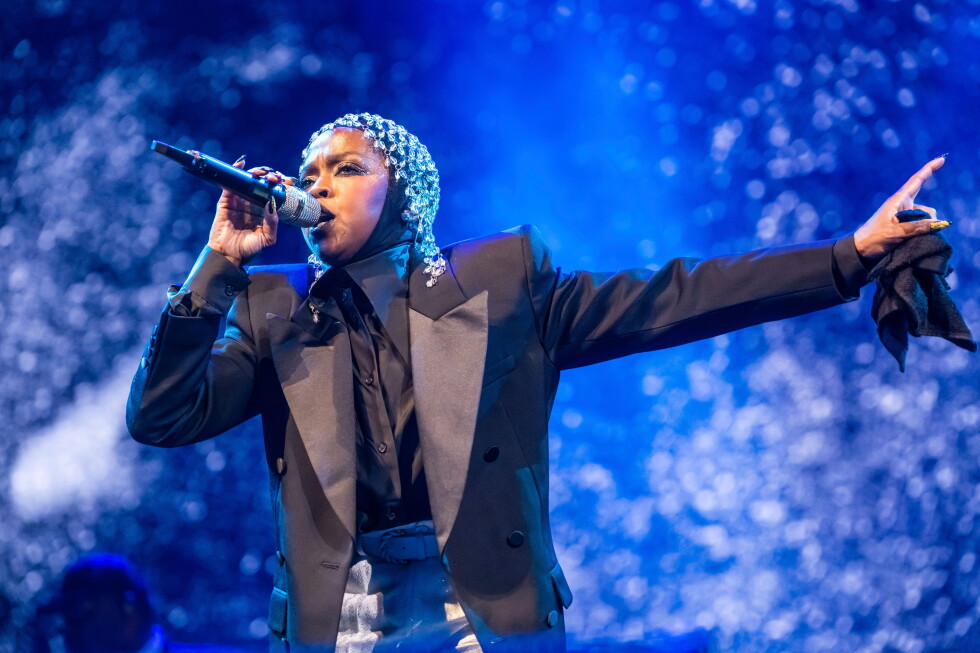
Just moments before iconic musician Lauryn Hill joined an interview with The Associated Press, she and Fugees bandmate Wyclef Jean found themselves surrounded by fans in the heart of London’s Piccadilly Circus. Hanging above the crowd on the giant bright LED display of the Piccadilly Lights was a vivid, animated short film: a vibrant collage celebrating the heroes and cultural symbols of the global African diaspora, curated by Hill and created by Los Angeles-based artist Lauren Halsey.
The core message of the public art installation was unmissable: it is a joyful tribute to shared community, interconnected culture, and the intersecting worlds of music and visual art. “The crowd was captivated,” Hill shared during the interview. Jean interjected, describing the moment as surreal. “The love was felt. It was amazing,” he said.
This surprise public showcase served as a teaser for a far larger milestone: this week marks the first time Hill’s beloved Diaspora Calling! festival will land in the United Kingdom, 10 years after the event made its debut in Brooklyn, New York.
Hosted by acclaimed comedian Dave Chappelle and featuring a stacked lineup of performers including Grammy-winning R&B icon Erykah Badu, rapper Giggs, Afrobeats star Fireboy DML, and reggae artists YG Marley and Zion Marley, the festival will take place at Milton Keynes’ iconic National Bowl venue. At the heart of the weekend’s programming, Hill and Jean — two-thirds of the legendary hip-hop trio Fugees — will perform their game-changing 1996 landmark album *The Score* in its entirety, to mark the record’s 30th anniversary.
In an edited interview with the AP, Hill and Jean opened up about the festival’s origins, the enduring legacy of *The Score*, and how they hope to honor the late, influential musician D’Angelo nearly one year after his passing.
When asked what drew the pair to bring Diaspora Calling! to the UK for the first time, Hill explained that the opportunity came organically through long-time industry partners. “We were given an opportunity by the promoters — the same promoters that do Reggae Land. He gave me the venue. And I said, ‘This is what I want to do.’ We’re basically blessed to have the opportunity. And, you know, ‘tis the season to bring people together in the name of growth, healing and pushing forward,” she said.
Hill also confirmed that the UK stop will not be the only international edition of the festival, with more global stops firmly on the table for the future: “Absolutely, absolutely, absolutely,” she said when asked about expanding the event beyond the US and UK.
Reflecting on how the festival’s core concept has evolved since its first Brooklyn gathering in 2016, Hill traced its origins back to a life-changing trip to Ghana early in her career. The connection she built on that trip planted the seed for a cross-continental gathering of the global African diaspora. Over decades of building community both together and separately, even when the Fugees were not actively performing or recording as a group, Hill and Jean built deep connections across diaspora communities worldwide — making now the perfect time to bring those communities together in one space, she explained.
When it comes to curating the festival’s dynamic, cross-genre lineup, Hill says the process has been driven by respect and mutual excitement. “We put a call out to the people that we know, love and respect. And I’ve gotten so much positivity — an abundance of responses, in terms of the creative community out here wanting to participate. So that’s huge,” she said.
The festival’s centerpiece performance, a full play-through of *The Score* for its 30th anniversary, finds the two musicians engaging with the album in a whole new way decades after its release. Both agree the record has lost none of its power or cultural resonance over 30 years, earning its place among other iconic timeless albums that shaped music globally.
“Absolutely. That’s a timeless piece of work for us as well. Timeless. How do you feel about it, Wyclef?” Hill asked, prompting Jean to draw a parallel between *The Score* and other legendary albums that have stood the test of time, from Bob Marley’s *Exodus* to Pink Floyd’s *The Wall* and Bob Dylan’s early studio records. “That’s forever,” Jean said.
Hill added that every performance of the decades-old record brings new energy and new meaning. “I think what is powerful about the album was that, you know, I’m a big fan of what Wyclef does. And I think he’s appreciative of what I do. So, we engage with each other’s art. And every time we perform it, even though (it’s) singing older lyrics, there’s a new energy, a new spirit. There’s a timelessness. I almost feel like we’re reclaiming timelines, healing timelines, so to speak, every time we’re performing,” she explained. Jean echoed that sentiment, noting that even after 30 years, performing the album still feels as fresh and exciting as it did the first time. “It doesn’t feel old,” Hill added.
For Hill, performing the record at Diaspora Calling! is the perfect alignment of the album’s core ethos and the festival’s mission. “It’s kind of the pinnacle of what the Fugees were all about. Our makeup is diaspora calls. I think we were a call to a particular unity, a particular kind of reflection and a particular kind of resistance to certain ideas that we knew better than. And we wanted to channel that outside and have other people feel what we were certain about, which is that there was being and resourcefulness and incredible brilliance throughout diaspora. And that division was not really an option,” she said.
Towards the end of the conversation, Hill reflected on the upcoming one-year anniversary of D’Angelo’s passing, after she paid tribute to the late artist alongside Roberta Flack earlier this year at the Grammys. Remembering D’Angelo as another timeless, irreplaceable creative soul, Hill said she hopes the world continues to lift up his extraordinary musical legacy, while protecting the privacy of his family. “He was good — without question,” she said.