分类: entertainment

  • How Bombay went from a fort city to a bustling metropolis

    How Bombay went from a fort city to a bustling metropolis

    One of India’s most dynamic and culturally layered cities, Mumbai—officially known as Bombay for most of its modern history—has grown from a cluster of seven isolated islands into a bustling megacity of 20 million people. Shaped over hundreds of years by shifting political tides, economic booms, and diverse social movements, its landscape and identity have been molded by generations of inhabitants: from the indigenous Koli fisherfolk who first settled its shores, to colonial urban planners, Bollywood icons, and wealthy textile magnates who each left their indelible mark. Today, the city continues its constant evolution, as old landmarks make way for new development, long-held traditions blend with cutting-edge modernity, and the metropolis reinvents itself decade after decade.

    To capture this centuries-long story of transformation, New Delhi-based art institution DAG has launched a groundbreaking new exhibition titled *Bombay Framed*, which traces the city’s changing shape and character through a stunning curated collection of paintings, vintage photographs, and multimedia artworks. Spanning 300 years of urban history, the exhibition features more than 100 visual works that document the full diversity of Bombay life, from the privileged worlds of Zoroastrian merchant elites and early Bollywood stars to the quiet, everyday struggles of working-class ordinary citizens.

    Curated by noted historian Gyan Prakash, the exhibition frames the city itself as a living work of art. “Together they invite us to see the city itself as a kind of artwork: layered, complex and made up of many different experiences,” Prakash explained in an interview with the BBC. Prakash highlights four pivotal turning points that fundamentally reshaped Bombay’s urban landscape. The first came in the 1830s and 1840s, when large-scale land reclamation projects and earthen bunds connected the seven scattered original islets into a single contiguous island city. Two decades later, in the 1860s, the old colonial fort walls were demolished, clearing space for grand imperial government and commercial buildings that gave the city its distinct colonial architectural identity. In the 1920s and 1930s, the iconic Marine Drive corniche—dubbed the “Queen’s Necklace” for its glowing curved skyline at night—was developed alongside a sweeping collection of Art Deco buildings, forging a uniquely modern architectural style that broke from the earlier Victorian Gothic aesthetic that had defined the city. Since the 2000s, urban planners have prioritized large-scale utilitarian infrastructure projects, including new sea bridges and expanded coastal highways that have radically altered the city’s 21st-century skyline.

    Throughout its history, Bombay has been defined by stark, striking contradictions that shape its unique character: gleaming luxury skyscrapers rise meters next to crowded informal shantytowns, the restless chaotic energy of the city center contrasts sharply with the quiet calm of the surrounding Arabian Sea, and centuries-old heritage structures stand alongside cutting-edge modern commercial developments. It is home to 2,000-year-old ancient rock-cut Buddhist caves, as well as sprawling modern textile mills and India’s premier atomic research facilities—creating such a diverse tapestry that no two people experience the city in the same way.

    Unlike many historical exhibitions that focus only on architecture and elite power, *Bombay Framed* centers the role of ordinary people in shaping the city’s soul. “Even the early British picturesque views of the sea and boats include human figures, reminding us that the environment was always shaped by human activity,” Prakash notes. From Parsi philanthropists and Maharashtrian nobility to textile mill workers and marginalized migrant settlers, the collection showcases the full spectrum of communities that have contributed to building Bombay over centuries. For example, commissioned portraits of early 20th-century Parsi elite reveal the patronage networks and social aspirations of the mercantile community that formed the economic backbone of the colonial city. In sharp contrast, works by socially conscious artist Chittaprosad—known for his sharp political commentary—offer intimate unflinching depictions of working-class and informal life on the city’s margins.

    The exhibition also honors Bombay’s outsized role as the birthplace of Indian cinema, blending art from the silver screen with the city’s street life. Vintage film posters from the 1950s and 1960s, once plastered across the walls of the city’s neighborhoods, are displayed alongside a collection of iconic portraits by JH Thakkar, founder of Mumbai’s legendary Dadar-based India Photo Studio. “His moody, meticulously composed silver gelatin portraits shaped how audiences saw stars like Raj Kapoor, Nargis, Dev Anand, Meena Kumari and Dilip Kumar,” the exhibition’s curatorial note reads.

    The exhibition’s title, which uses the colonial-era name “Bombay” rather than the official modern name “Mumbai,” has sparked gentle discussion around the city’s contested naming history. The Indian government officially changed the city’s name from Bombay to Mumbai in the mid-1990s, a move framed as a step to shed the country’s colonial legacy, and the name Bombay has become politically charged for many groups. Prakash explains that the choice of title was rooted in historical context, not political positioning: most of the works included in the exhibition date from the era when the city was officially known as Bombay. “For Marathi speakers, it was always Mumbai. I’m agnostic about the name, as are many people, which reflects the city’s long history of dual names and multiple perspectives. It really only becomes contentious when the issue is politicised,” Prakash says.

  • Rapper Gucci Mane kidnapped and robbed by fellow artist, prosecutors say

    Rapper Gucci Mane kidnapped and robbed by fellow artist, prosecutors say

    A high-profile case involving two well-known figures in the American hip-hop industry has sent shockwaves through the music community, after federal prosecutors unveiled details of an alleged armed kidnapping and robbery that targeted star rapper and label founder Gucci Mane earlier this year. Led by signed 1017 Records artist Pooh Shiesty, legal name Lontrell Williams Jr., the brazen attack unfolded at a Dallas recording studio on January 10, according to official court documents. At the time of the incident, Williams was already serving court-ordered house arrest stemming from a prior federal firearms conspiracy conviction.

    Prosecutors lay out that the group orchestrated the ambush under the false pretense of a professional meeting. Once inside the studio, Williams Jr. allegedly confronted Gucci Mane brandishing a black AK-style pistol, holding the rapper captive and coercing him to sign legal documents that would terminate Williams’ contract with 1017 Records. Beyond the contract demand, the suspects reportedly robbed Gucci Mane of multiple personal valuables, including his wedding ring, luxury watch, earrings and a sum of cash.

    Eight other co-defendants joined Williams in the plot, among them his own father, Lontrell Williams Sr. Multiple other people present in the studio during the attack were also targeted, according to the federal complaint. One additional victim was choked and sustained injuries during the attack, losing his own Rolex watch, Louis Vuitton handbag, AirPods and wallet to the robbers. All of the co-defendants are alleged to have drawn pistols to intimidate the victims, who prosecutors say genuinely believed they would be killed before the attackers forced them out of the building to their vehicles.

    In a striking twist, U.S. Attorney Ryan Raybould told reporters at a Thursday press conference that just hours after fleeing the studio, multiple suspects flaunted the stolen jewelry on social media for public viewing. Law enforcement operations carried out on Wednesday resulted in eight of the nine total suspects being taken into custody across three cities: Dallas, Memphis and Nashville. All eight suspects are now facing federal kidnapping and armed robbery charges, and none have yet entered formal pleas in court. If convicted on the federal charges, each defendant could face a life sentence behind bars. One suspect remains at large, with investigators currently coordinating with law enforcement partners in Georgia to track down and apprehend the fugitive.

    For context, Gucci Mane is an Atlanta-based hip-hop star who has collaborated with A-list musical artists including Usher, Doja Cat and Drake over the course of his decades-long career. He founded the independent label 1017 Records back in 2007, and signed Pooh Shiesty to the roster in 2020. As of Thursday, representatives for both Pooh Shiesty and Gucci Mane have not issued an immediate public response to requests for comment on the allegations.

  • Italy’s Uffizi Galleries targeted in cyber-attack but deny security breach

    Italy’s Uffizi Galleries targeted in cyber-attack but deny security breach

    One of the world’s most famous cultural institutions, Florence’s Uffizi Galleries, has confirmed that it fell victim to a cyber intrusion earlier this year, but has pushed back firmly against widespread reports that core security infrastructure protecting its iconic art collection was breached. The conflicting accounts of the incident, first reported by leading Italian newspaper Corriere della Sera, have sparked debate about digital security risks facing major global cultural heritage sites.

    According to Corriere della Sera’s reporting, hackers gained unauthorized access to the museum’s interconnected IT networks between late January and early February 2026, later confirming the attack specifically took place on February 1. The outlet claimed the intruders moved through connected workstations, office computers and staff mobile devices to gradually compile sensitive data: including internal facility maps, access codes, and the exact placement of CCTV cameras and alarm systems. The report added that after extracting the data, the attackers sent a ransom demand directly to Uffizi director Simone Verde’s personal mobile phone, threatening to auction the stolen information on the dark web if their demands were not met. The attack was also said to have expanded beyond the main Uffizi site to hit two affiliated Florence landmarks: the Palazzo Pitti former Medici royal residence and the adjacent Boboli Gardens.

    Corriere della Sera further claimed that in response to the hack, Palazzo Pitti’s Medici Treasure exhibition galleries were closed starting February 3, and the valuable historic collection held there was secretly moved to a secure vault at the Bank of Italy for protection. The report also alleged that several doors and emergency exits at the palace were bricked up, and staff were ordered not to discuss the incident with external parties.

    In an official statement addressing the reporting, the Uffizi leadership has pushed back against most of the outlet’s key claims, while acknowledging that a cyber attack did occur. Museum officials stressed that the physical security systems protecting the gallery’s world-famous artworks—including masterpieces like Botticelli’s *The Birth of Venus* and *Primavera*—were never put at risk. Unlike interconnected office IT networks, the museum’s security systems operate on a fully closed, internal network that cannot be accessed from external actors, the Uffizi explained.

    The institution also addressed specific claims one by one: it noted that any member of the public visiting the gallery can easily observe the location of security cameras, as is standard for all public spaces, so there is no risk in this information being known. It added that no passwords were stolen at any point, because the closed-circuit security system does not require external password access, and no staff personal devices were compromised by the intrusion. In response to claims that the hackers stole the Uffizi’s entire decades-long digital photographic archive of artworks and historical documents, museum officials confirmed that the main server was temporarily taken offline, but this was a precautionary step to restore from a pre-existing full backup. The restoration process is now complete, and no data was lost, the statement confirmed.

    Regarding the reported closure of Palazzo Pitti galleries and the transfer of the Medici Treasure to the Bank of Italy, the Uffizi did not deny the move, but clarified it was part of pre-planned renovation work, not a response to the cyber attack. On the subject of bricked-up doors and exits, the museum explained the work is tied to long-overdue fire safety upgrades and structural preservation for the 16th-century historic building, which had lacked official fire safety certification for decades. Just two days before the Uffizi’s statement, the institution submitted its full safety documentation to Italian fire brigade authorities, officials added.

    The incident comes at a time when major international museums are re-evaluating their physical and digital security protocols, in the wake of a high-profile daylight robbery at Paris’ Louvre Museum in late 2025. During that incident, a masked gang exploited the Louvre’s outdated, poorly functioning CCTV system to steal priceless artifacts, prompting widespread security reviews across top cultural institutions globally. The Uffizi noted that it had already been upgrading its security infrastructure before the cyber attack, including replacing all outdated analog cameras with modern digital systems following 2024 police recommendations, a process that has only been accelerated after the February intrusion. It also emphasized that its security posture is nothing like the Louvre’s pre-robbery infrastructure.

    Despite the cyber incident and ongoing public controversy around its details, the Uffizi—Italy’s second most visited museum after the Vatican Museums, which generates approximately €60 million in annual visitor revenue—remains fully open to the public. Ticketing operations and all public visitor areas have remained largely unaffected by the incident.

  • Iconic 19th Century painting sets Indian art record with $17.9m sale

    Iconic 19th Century painting sets Indian art record with $17.9m sale

    In a landmark auction held by Saffronart in New Delhi on Wednesday, a 130-year-old masterpiece by one of India’s most celebrated modern artists, Raja Ravi Varma, has made history as the most expensive Indian artwork ever sold at auction. Painted in the 1890s, when Varma was at the peak of his creative powers, *Yashoda and Krishna* fetched a staggering 1.67 billion Indian rupees, equivalent to $17.9 million, shattering the previous $13.8 million record set last year by MF Husain’s *Untitled (Gram Yatra)*.

    The winning bid came from Cyrus Poonawalla, the billionaire founder and managing director of the Serum Institute of India – the world’s largest vaccine manufacturer. In a post-auction statement shared via Saffronart, Poonawalla called the iconic canvas a “national treasure”, noting that it should be accessible for regular public display. He added that he would work to make this public access a reality in the coming years.

    Created in the 1890s when Varma was at the height of his career, the oil-on-canvas work captures an intimate, tender moment from Hindu mythology: the child deity Krishna waits beside his foster mother Yashoda as she milks a cow. The work depicts Krishna with a signature mischievous glint in his eye, while Yashoda’s features radiate quiet warmth and maternal care. Though the pair wear only minimal ornamentation, every detail of their jewelry is rendered with Varma’s characteristic precision. As the Raja Ravi Varma Heritage Foundation noted ahead of the auction, the artist’s singular genius lies in his ability to frame a sacred narrative through familiar, relatable domestic details. “The textures of silk, the gleam of jewellery, the softness of skin and the gentle stillness of the cow together create a scene that is both devotional and intimate,” the foundation wrote.

    Art historians have long praised Varma for reimagining traditional depictions of Hindu mythological figures. Before his work, iconic portrayals of deities prioritized awe over intimate affection, but Varma broke down the distance between the divine subject and the viewer, according to prominent Indian artist A Ramachandran. Born in 1848 in what is now the southern Indian state of Kerala, Varma is widely recognized as the father of modern Indian art. He famously blended formal European academic painting techniques with distinctly Indian narrative and cultural traditions, and his lithographic prints of mythological figures remain a common sight in household shrines across India to this day. Under India’s 1972 Antiquities and Art Treasures Act, all of Varma’s works are classified as national art treasures, meaning they cannot be exported and may only be sold to Indian-based buyers – a rule that added to the exclusivity of Wednesday’s sale.

    Industry leaders say the record-breaking price of *Yashoda and Krishna* reflects a rapidly maturing Indian art market, marked by growing domestic and global demand for historically significant South Asian works. Minal Vazirani, president and co-founder of Saffronart, called the final valuation a “powerful reminder of the enduring cultural and emotional resonance of Indian art”. Ashish Anand, chief executive and managing director of leading Indian art institution DAG, noted that the landmark sale will reshape how the world views Indian art, framing it not just as an aesthetic object for personal collectors, but as a legitimate, high-value financial asset. “There is a clear shift in how Indian art is being perceived,” Anand explained. “As the market matures and benchmarks rise, collectors are recognising both its cultural and financial value… The best works – those with provenance, rarity and historical significance – are now commanding extraordinary prices, reflecting the maturing of the market.”

    Experts point to multiple factors driving the current boom in prices for top-tier Indian art. First, masterworks by pioneering artists such as Varma, Amrita Sher-Gil and VS Gaitonde are extremely rare, with most held in permanent private collections and rarely entering the auction block. This inherent exclusivity pushes prices higher when high-quality works do become available. Additionally, there is growing global recognition of mythological art as a serious, desirable collecting category, further boosting demand for culturally significant works like Varma’s *Yashoda and Krishna*. The piece was put up for auction by a private collector, according to Saffronart’s auction catalogue.

  • Phoenix TV of Hong Kong marks 30th anniversary, eyes wider global reach

    Phoenix TV of Hong Kong marks 30th anniversary, eyes wider global reach

    HONG KONG – On March 31, 2026, Hong Kong-based international broadcaster Phoenix Television gathered industry leaders, government officials, and media partners for a milestone celebration marking three decades of operation since its founding in 1996. At the anniversary ceremony held in the city, John Lee Ka-chiu, Chief Executive of the Hong Kong Special Administrative Region (HKSAR), delivered a keynote address that framed the 30-year mark as both a moment to reflect on past accomplishments and a jumping-off point for a new chapter of growth.

    Lee emphasized that Phoenix TV has carved out a unique, influential role in global media over its 30-year history, thanks to its strategic positioning in Hong Kong and long-standing strengths in cross-border communication. He urged the network to continue building on these advantages to share nuanced, authentic stories about China with audiences across the world, reinforcing its role as a bridge between different regions and cultural communities.

    Xu Wei, Phoenix TV’s Chairman of the Board and Chief Executive Officer, reflected on the network’s three-decade evolution, noting that adaptive innovation and a willingness to embrace shifting industry landscapes have been the core driving forces behind the broadcaster’s sustained development. Looking forward, Xu outlined Phoenix TV’s new strategic vision: the network aims to extend the global reach of Chinese culture, connect with broader international audiences, and solidify its position as a foundational platform for constructive cross-cultural dialogue and global exchange.

    Since its launch 30 years ago, Phoenix TV has built out an extensive global infrastructure that supports its international mission. It currently operates 63 news bureaus across six continents, runs six distinct television channels, and delivers its signal to audiences in 190 countries and regions worldwide. In recent years, the broadcaster has also recorded consistent growth in its follower and user bases across major international digital and social media platforms, positioning it well for the next phase of global expansion.

  • Eurovision Song Contest launches first-ever Asia edition

    Eurovision Song Contest launches first-ever Asia edition

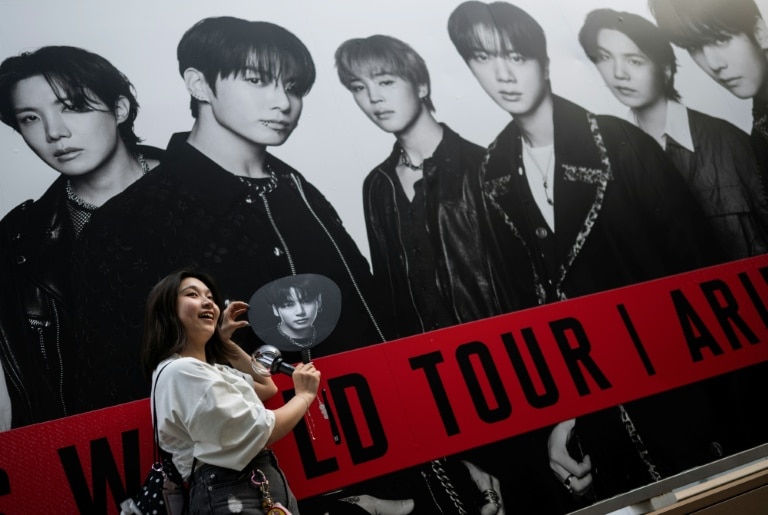
    After decades of dominating the global live music competition scene, the iconic Eurovision Song Contest is breaking new ground with the launch of its first standalone regional edition exclusively for Asia. The landmark expansion, which marks one of the most significant shifts in the contest’s 70-year history, has already generated widespread buzz across the continent’s vibrant music industry, with industry analysts and fans alike debating whether the massive popular appeal of Korean pop (K-pop) and Taiwanese pop (T-wave) will be the secret ingredient that turns the new Asia-focused iteration into a global and regional hit.

    For years, Eurovision has built its reputation as a platform that celebrates cultural diversity, theatrical performances, and breakout musical talent, drawing hundreds of millions of viewers across Europe and beyond to its annual broadcast. The decision to launch a regional Asia edition comes as the contest’s organizers look to tap into the world’s largest and fastest-growing music market, where streaming has exploded in popularity and regional pop genres have built massive global fanbases over the past two decades.

    Industry insiders note that K-pop, in particular, has already established an unrivaled global footprint, with acts topping charts across North America, Europe, and Asia, selling out stadium tours, and amassing billions of streams on digital platforms. Meanwhile, T-pop (often referred to as the T-wave) has carved out its own loyal regional following, blending infectious pop melodies with local cultural influences to create a unique sound that resonates with young audiences across East and Southeast Asia.

    The question on many industry observers’ minds is whether the Eurovision formula, which has worked so well for Europe, can be successfully adapted to Asia’s diverse musical landscape. Many optimistic analysts argue that the combination of Eurovision’s established brand recognition and the star power of popular regional genres like K-pop and T-pop will draw massive viewership, attract top sponsors, and cement the Asia edition as a permanent fixture on the global entertainment calendar. Skeptics, however, note that Asia’s fragmented regulatory environment, diverse linguistic and cultural differences, and already crowded landscape of regional music competitions could present unexpected hurdles for the new venture.

    As organizers prepare to roll out details about competing entries, broadcast schedules, and venue plans in the coming months, all eyes are on how the first Eurovision Asia edition will take shape, and whether regional pop trends will carry the new competition to widespread success.

  • Megan Thee Stallion taken to hospital during Moulin Rouge performance

    Megan Thee Stallion taken to hospital during Moulin Rouge performance

    One of hip-hop’s biggest award-winning stars has hit an unexpected hurdle early into her first Broadway stint. Grammy-winning rapper Megan Thee Stallion was rushed to a local New York hospital mid-show during a Tuesday night performance of *Moulin Rouge! The Musical*, her representative has officially confirmed.

    The 31-year-old artist, who made her highly anticipated Broadway debut March 24 stepping into the iconic role of Harold Zidler — the musical’s unapologetically eccentric emcee — began experiencing unexpected severe illness mid-performance. According to her spokesperson, she was immediately transported to a nearby medical facility for evaluation, where providers are still assessing the cause of her symptoms. “We will share additional updates as more information becomes available,” the representative told multiple U.S. media outlets.

    News of the emergency hospitalization was first shared publicly by Megan Thee Stallion’s long-time hair stylist Kellon Deryck, who posted a plea to fans on the social platform X: “Everyone say a prayer for Megan, we are all at the hospital.”

    The rapper, whose legal name is Megan Pete, had spent weeks building excitement for her limited Broadway run, which is currently scheduled to run through May 19. Ahead of her opening night, she shared her enthusiasm for trading her usual concert tour schedule for a turn in the spotlight of New York’s theater world. After her triumphant opening night performance, she took to social media to shout out her loyal fanbase — known affectionately as “Hotties” — writing, “HOTTIES IM ON BROADWAY!!”

    A multi-platinum global superstar, Megan Thee Stallion rose to mainstream fame with chart-topping hits including *Savage*, *WAP*, and *Body*. In 2021, she made history taking home three Grammy Awards in a single year: Best Rap Song, Best New Artist, and Best Rap Performance. She followed that milestone with a 2022 Album of the Year nomination for her critically acclaimed debut studio album.

    The role of Harold Zidler, which Megan is currently performing in the limited celebrity guest stint, is one of Broadway’s most coveted. The character was originated by Broadway veteran Danny Burstein, who took home the 2020 Tony Award for Best Actor in a Musical for his portrayal. Earlier this year, famous drag artist Bob the Drag Queen held the role for an eight-week limited engagement before Megan stepped into the part.

    The BBC has confirmed it has reached out to Megan Thee Stallion’s representation for additional comment as details of her health condition remain pending.

  • Friend says Tess Crosley endures ‘endless harassment’ over Lachie Neale marriage split

    Friend says Tess Crosley endures ‘endless harassment’ over Lachie Neale marriage split

    For more than three months, an ordinary Australian mother who found herself accidentally caught in the high-profile marital split of Australian Football League (AFL) star Lachie Neale has been subjected to relentless, invasive harassment from media outlets and online trolls, a close personal associate has revealed.

    Tess Crosley, a former close friend of Neale’s wife Jules, became the center of sensational tabloid speculation after Jules Neale announced the end of her marriage to the Brisbane Lions midfielder three months ago, with widespread rumors linking Crosley to the relationship breakdown. Since that moment, what should have remained a private matter for all involved has spiraled into a campaign of intrusion that has devastated Crosley’s daily life, according to Lyall Mercer, a public relations strategist who knows Crosley personally and has shared her experience in a public LinkedIn post.

    Mercer was clear to emphasize he is not an official representative for Crosley nor is he being compensated for his statement, noting only that he has witnessed firsthand the damage the relentless coverage has inflicted. “No one outside of the three people involved actually knows the full truth of what led to the Neales’ separation,” Mercer wrote. “Yet that hasn’t stopped the entire spotlight from being thrown onto Tess, who never asked for any kind of public attention.”

    The scope of the intrusion goes far beyond sensational news articles, Mercer confirmed. Paid photographers have tracked Crosley for months across every part of her routine, trailing her to the gym, grocery stores, her private home, and even on a road trip from Brisbane to the Gold Coast when she visited her extended family. Media outlets have published photos of her spending private time on the beach with her young son and dropping the child off at his father’s home — moments that carry zero legitimate public interest, but only serve to feed ongoing online vitriol.

    That vitriol has escalated beyond hurtful commentary to direct threats against Crosley’s safety, leaving her in a constant state of anxiety. The constant scrutiny has taken a severe emotional toll on Crosley and her entire family, turning a private situation into a public spectacle that has left the mother feeling constantly vulnerable. Mercer stressed that the level of coverage has clearly crossed a line from acceptable reporting into outright harassment and bullying.

    Mercer added that Crosley has approved and fully supports his statement, and he is calling on media organizations and the public to shift their focus away from the private citizen, respect her right to a normal personal life, and end the campaign of intrusion that has upended her life.

  • Golden toilet statue mocks Trump near renovated White House

    Golden toilet statue mocks Trump near renovated White House

    A provocative pop-up art installation has sparked public intrigue and political satire has drawn crowds in Washington DC just blocks from the newly renovated White House: a gold-painted toilet, styled as a mocking ‘royal throne’ for former and current President Donald Trump.

    Crafted with the same over-the-top faux marble finish that Trump has become famous for favoring in his personal and public design choices, the installation features a prominent plaque reading “A throne fit for a king.” The work was created and deployed by Secret Handshake, an anonymous guerrilla art collective that has become known for placing provocative temporary sculptures across the US capital over the past 12 months.

    When the installation debuted on Tuesday near the Lincoln Memorial, it immediately drew long lines of curious tourists and critical Trump opponents, all waiting for a chance to see and photograph the satirical piece. Among the visitors was 78-year-old Nancy Chase, who told Agence France-Presse she traveled specifically to Washington to snap photos of the golden toilet, citing her opposition to Trump as her core motivation.

    The satire comes amid a sweeping redesign of White House spaces that Trump has overseen during his second term in office, which have all bear his distinctively opulent aesthetic. The Oval Office now features extensive gold decorative accents, the traditionally understated elegant Rose Garden has been repaved, and the entire East Wing was demolished to clear space for a sprawling new grand ballroom. Beyond architectural changes, Trump has increasingly centered his own brand and image across Washington: his name already adorns the Kennedy Center for the Performing Arts in massive lettering, and a new official coin featuring his likeness is set to enter circulation soon.

    For many visitors who came to see the golden toilet, the work feels like a perfectly timed critique of Trump’s public persona. William Hoker, a 69-year-old retiree who biked to the installation site, called the piece a fitting characterization of the sitting president. “I wanted to see this statue before it disappeared, and I think it epitomizes perfectly the guy in the White House, he’s just a vulgar display,” Hoker explained to AFP. His friend Steve Toulotte echoed that sentiment, noting that political satire aimed at the president serves an important public purpose.

    This is not the first provocative work from Secret Handshake. Over the past year, the collective has placed multiple unauthorised temporary sculptures across Washington, including one that depicted Trump alongside his late disgraced associate, convicted sex offender Jeffrey Epstein.

  • ‘Art is a very powerful tool’ – Golden toilet throne appears in DC

    ‘Art is a very powerful tool’ – Golden toilet throne appears in DC

    A provocative new art installation has drawn sharp public attention in Washington D.C., after a gilded toilet throne, formally named “A Throne Fit for a King,” was positioned on the iconic National Mall. The site-specific work is framed as a pointed artistic critique of former U.S. President Donald Trump’s high-profile renovations to the White House during his time in office.

    The creator behind the work leans into the long-standing tradition of political satire in contemporary art, using the unexpected combination of a royal throne motif and a functional bathroom fixture to underscore their commentary. Placing the work in one of the capital’s most visited public spaces ensures the piece reaches wide audiences, sparking spontaneous debate about the intersection of political power, personal excess, and public artistic expression.

    Many art observers have echoed the core idea that art remains one of the most potent mediums for holding political figures to account, and this provocative installation is no exception. It turns a mundane object into a conversation piece that encourages passersby and art critics alike to examine the intersection of wealth, power, and public office in modern American politics.