分类: business

  • Asian shares climb after US stocks rise at the start of a holiday-shortened week

    Asian shares climb after US stocks rise at the start of a holiday-shortened week

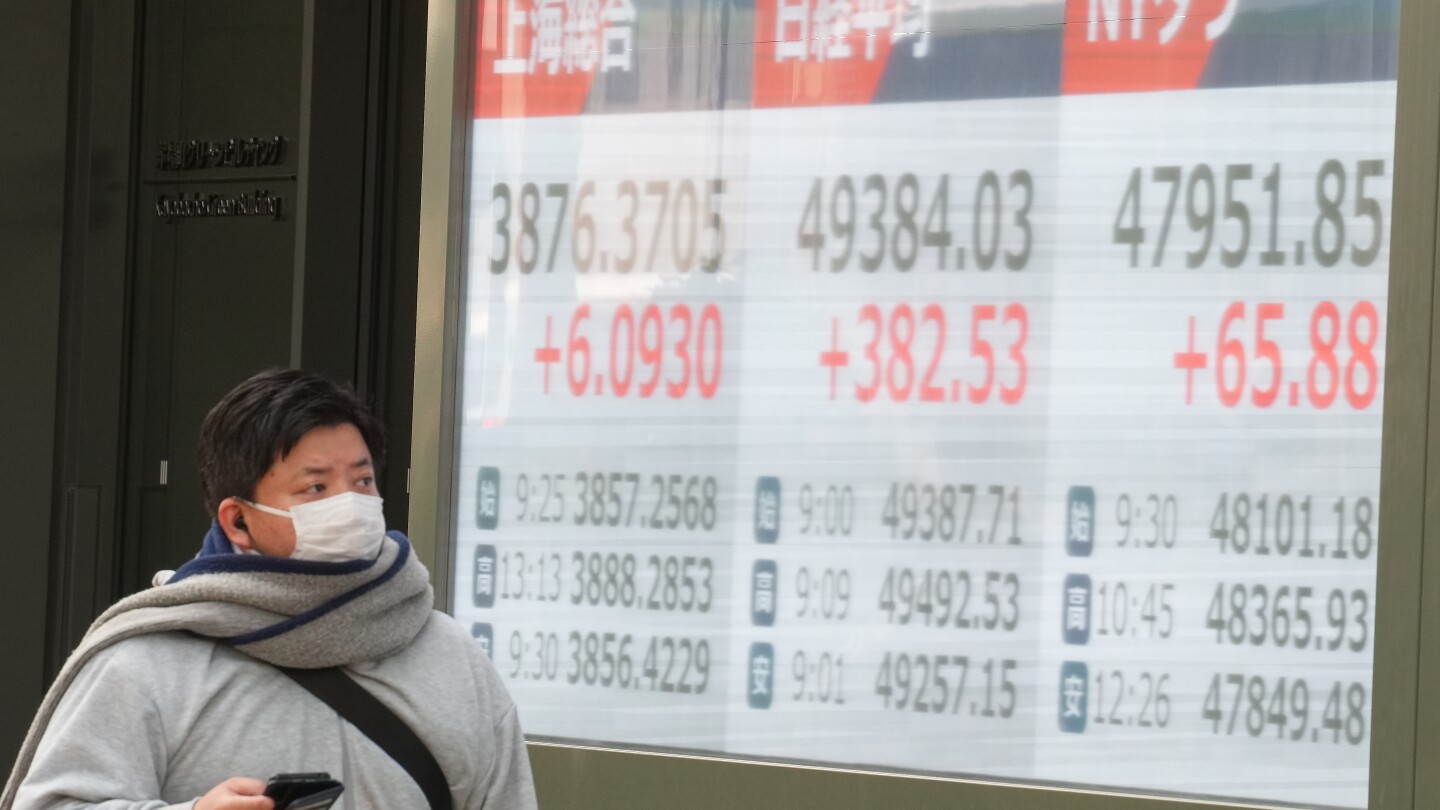
    Asian equity markets exhibited divergent trends on Tuesday as regional investors navigated a holiday-shortened trading week while monitoring currency movements and economic indicators. The trading session unfolded against a backdrop of Wall Street gains and heightened anticipation for key U.S. economic data releases.

    Japanese markets experienced notable pressure as the Nikkei 225 dipped 0.1% to 50,359.78, coinciding with the yen’s strengthening against the dollar. This currency movement followed explicit warnings from Tokyo officials regarding potential intervention should the yen exhibit excessive weakness. The dollar-yen exchange rate settled at 156.03, down significantly from Monday’s 157.04 level, while the euro strengthened to $1.1777.

    Regional performance varied considerably across Asian bourses. Australia’s S&P/ASX 200 outperformed with a robust 1.1% surge to 8,795.70, while South Korea’s Kospi gained 0.3% to reach 4,117.15. China’s Shanghai Composite edged marginally higher by 0.1% to 3,920.16, though Hong Kong’s Hang Seng relinquished early advances to close 0.1% lower at 25,762.64. Taiwan’s Taiex posted a respectable 0.6% advance, while India’s Sensex remained essentially flat.

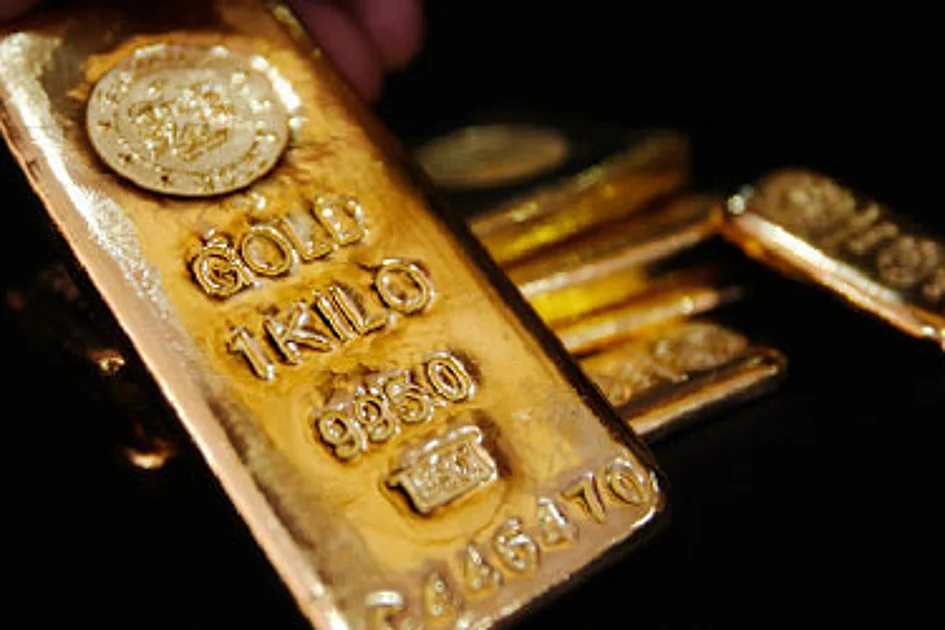
    The commodity sector witnessed significant movements as gold prices climbed nearly 1% to unprecedented levels, reaching $4,512.40 amid expectations of forthcoming Federal Reserve rate reductions. Silver similarly achieved record territory with a 1.2% increase. Conversely, oil prices retreated slightly early Tuesday after previous session gains, with U.S. benchmark crude declining 23 cents to $57.78 per barrel and Brent crude falling 22 cents to $61.85.

    Market participants awaited crucial U.S. economic reports scheduled for release during the abbreviated trading week, including third-quarter GDP estimates, weekly jobless claims data, and December consumer confidence figures. These indicators are expected to provide further insight into the American economic trajectory amid concerns about persistent inflation, moderating employment conditions, and weakened retail sales.

    Corporate developments included substantial gains for ride-sharing companies Uber and Lyft, both advancing over 2.5% following announcements regarding planned robotaxi services in London. Media sector activity intensified as Paramount Skydance elevated its takeover bid for Warner Bros. Discovery with substantial financial backing from Oracle founder Larry Ellison, resulting in a 4.3% share price increase.

  • Who are the frontrunners for the top Fed job?

    Who are the frontrunners for the top Fed job?

    The United States stands at a critical juncture in monetary policy leadership as President Donald Trump approaches a decision on the next Federal Reserve Chair, with Jerome Powell’s term concluding in May. This transition occurs during a period of exceptional complexity, marked by intense political influence and internal discord within the central bank regarding future interest rate trajectories.

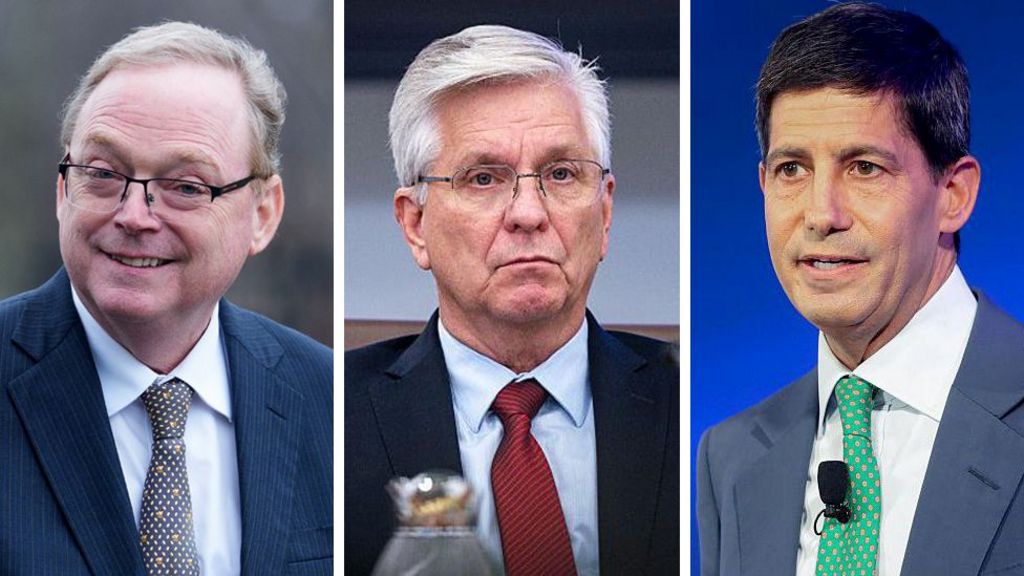
    Three prominent contenders have emerged in this high-stakes selection process. Kevin Hassett, the 63-year-old former White House economic adviser and Trump loyalist, currently leads prediction markets despite fading momentum. His consistent defense of presidential economic policies has raised concerns among analysts regarding potential independence at the Fed. Deutsche Bank analysts note Hassett might face challenges convincing fellow policymakers to implement significant rate cuts while addressing inflation concerns.

    Kevin Warsh, the 55-year-old former Fed governor and Hoover Institution fellow, has regained traction as a potential alternative. Despite his historically hawkish reputation, Warsh has recently positioned himself as an advocate for lower rates, calling for substantial ‘regime change’ at the central bank. His familial connections to Trump’s circle through billionaire father-in-law Ronald Lauder add intrigue to his candidacy.

    Current Fed Governor Christopher Waller has unexpectedly entered the contention following a recent meeting with the president. Nominated by Trump in 2020, Waller’s relative distance from the White House has garnered favorable attention from Wall Street analysts. Investment experts suggest his selection could create additional appointment opportunities for the administration next year.

    The ultimate decision carries profound implications for global financial markets and central bank independence, particularly given Trump’s persistent demands for lower borrowing costs. Other potential candidates including BlackRock’s Rick Reider and Treasury Secretary Scott Bessent remain in consideration, though considered less likely appointments.

  • Warner Bros bidding war and red hot M&A market has dealmakers working through holidays

    Warner Bros bidding war and red hot M&A market has dealmakers working through holidays

    Wall Street investment bankers and legal advisers are sacrificing their seasonal holidays to capitalize on one of the most explosive merger and acquisition markets in recent history. With approximately $463.6 billion in deals announced this December alone—representing a 30% surge from the previous year—financial professionals from New York to London are working tirelessly to finalize transactions before the New Year.

    The remarkable activity spans multiple sectors and includes several high-profile corporate maneuvers. Paramount Global, advised by Latham & Watkins, remains engaged in a competitive $108.4 billion pursuit of Warner Bros Discovery, facing rival bids from both Skydance Media and Netflix. In parallel, a consortium led by Permira and Warburg Pincus recently secured an $8.4 billion acquisition of Clearwater Analytics Holdings, while IBM completed its $11 billion purchase of data infrastructure firm Confluent.

    Industry leaders attribute this surge to shifting corporate strategies and favorable market conditions. John Collins, Global Head of M&A at Morgan Stanley, noted, ‘We’ve observed a fundamental shift in boardroom mentality—from seeking reasons to decline deals to actively pursuing reasons to proceed.’ This sentiment is echoed by Gerry Cardinale, Founder of RedBird Capital, who confirmed ongoing negotiations through the holiday period to communicate offer merits to Warner Bros shareholders.

    Global M&A volume has reached $4.8 trillion year-to-date, positioning 2025 as the second-most active period on record after the 2021 peak. Despite geopolitical tensions and trade policy fluctuations, diminished antitrust scrutiny and aggressive corporate positioning have fueled an exceptionally robust dealmaking environment. Financial and legal teams anticipate sustained momentum into early 2026, with several major transactions already in preliminary stages.

  • Gold jumps over 2% to all-time peak; silver follows with record gain

    Gold jumps over 2% to all-time peak; silver follows with record gain

    Global financial markets witnessed an extraordinary surge in precious metals on Monday as gold and silver prices shattered previous records amid escalating geopolitical tensions and favorable economic conditions. Gold experienced a remarkable 2% surge, reaching an unprecedented peak of $4,428.92 per ounce during trading sessions, while silver simultaneously achieved its own historic milestone with a 2.7% gain to $69.44 per ounce.

    The dramatic price movement stems primarily from renewed geopolitical friction between the United States and Venezuela. President Donald Trump’s recent announcement of a comprehensive blockade targeting sanctioned oil tankers entering and exiting Venezuelan waters has significantly heightened market uncertainty. This aggressive stance, complemented by increased military mobilization and multiple strikes on vessels in the Pacific and Caribbean regions, has triggered substantial safe-haven investment flows into precious metals.

    Market analysts from Nemo.Money indicate that gold had been consolidating just beneath record levels in previous sessions, with the current breakthrough representing a classic momentum surge amplified by reduced holiday trading volumes. The firm’s analysts have now identified $5,000 per ounce as a plausible target for gold bulls in the coming year.

    Beyond geopolitical factors, the metals rally demonstrates profound fundamental strength. Gold has achieved an astonishing 68% annual appreciation—its most substantial yearly gain since 1979—driven by robust central bank acquisitions, sustained safe-haven demand, and declining global interest rates. Silver has outperformed even this spectacular benchmark with an extraordinary 138% year-to-date increase.

    Macquarie strategists attribute silver’s exceptional performance to persistent supply-demand imbalances and heightened import requirements during India’s festive season, though they project a more moderate average of $57 per ounce for 2026.

    The broader precious metals complex participated in the rally, with platinum jumping 5.3% to multi-year highs and palladium climbing 3.2% to approach three-year peaks. A marginally weaker U.S. dollar further supported the advance by enhancing the affordability of dollar-denominated assets for international investors.

  • Drones and AI to accelerate the UAE’s $17 billion e-commerce market

    Drones and AI to accelerate the UAE’s $17 billion e-commerce market

    The United Arab Emirates’ rapidly expanding e-commerce sector, projected to reach $17 billion by 2025, is embracing cutting-edge technological solutions to revolutionize last-mile delivery systems. Industry leaders are increasingly turning to AI-powered drones and unmanned aerial systems (UAS) to meet growing consumer expectations for speed and convenience.

    According to market intelligence from Statista, the UAE’s successful economic diversification efforts have created a robust ecosystem conducive to digital innovation. The country’s exceptionally high social media penetration rate, with approximately 11.03 million active users forecasted by 2026, has further accelerated e-commerce adoption.

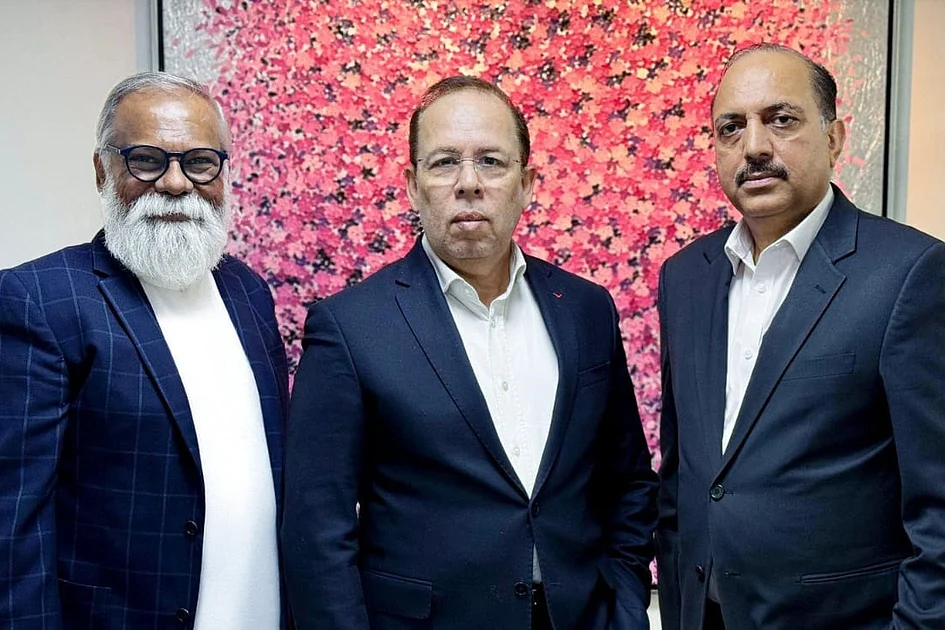
    Blue Ocean Global Group, through its subsidiary Blue Infinity LLC, is pioneering this transformation by providing comprehensive distribution services for both global and regional FMCG brands. Under the guidance of industry veterans Shahzad Ahmed and Ravi Narayan, the company has developed a data-driven approach that analyzes consumer behavior patterns to optimize inventory management and delivery efficiency.

    Global projections from PriceWaterhouseCoopers indicate dramatic growth in drone-assisted deliveries, expected to surge from 5 million in 2024 to 808 million within the next decade. The economics of drone delivery are becoming increasingly favorable, with current costs of $6-$25 per delivery anticipated to drop by over 70% in the coming years, potentially falling to around $2 by 2034.

    This technological shift is particularly significant for the MENA region, where Saudi Arabia’s e-commerce market is similarly booming—valued at $27 billion in 2024 and projected to exceed $50 billion by 2030. Millennials and Generation Z consumers, driven by digital-native lifestyles and seamless payment systems, are increasingly preferring online shopping for its convenience and efficiency.

    Seasonal shopping events including White Friday, Yellow Friday, Singles’ Day, and traditional holiday periods create additional opportunities for brands to implement innovative promotional strategies and bulk deals. Blue Infinity’s approach emphasizes rapid market execution, adaptive pricing strategies, and enhanced product visibility across both traditional e-commerce and quick-commerce (q-commerce) platforms.

    The convergence of AI analytics with advanced delivery systems represents a fundamental shift in regional retail dynamics, potentially serving 67% of the global population according to PwC estimates. This transformation promises to bridge accessibility gaps particularly for suburban and rural residents while creating new paradigms in customer satisfaction and operational efficiency.

  • UAE innovative policies strengthen new, circular economy pathways

    UAE innovative policies strengthen new, circular economy pathways

    The United Arab Emirates is systematically advancing its economic transformation through comprehensive policy measures designed to establish the nation as a global hub for sustainable business models. With 22 circular economy policies now operational across multiple sectors, the UAE is implementing concrete measures to revolutionize waste management, enhance nationwide recycling capabilities, and foster sustainable industrial practices.

    These policies encompass extended producer responsibility frameworks, sophisticated waste separation systems for residential and commercial sectors, and the creation of a national materials database. Additional measures regulate inter-emirate resource flows to optimize recycling investments and prevent plastic leakage into the environment.

    Abdullah bin Touq Al Marri, Minister of Economy and Tourism, articulated the strategic vision behind these developments, stating that the UAE is transitioning from a knowledge-based economy to a fundamentally new economic model. This transformation represents a core component of the ‘We the UAE 2031’ vision, which targets global leadership in the new economy within the coming decade.

    The ministry’s initiatives have yielded substantial results, with 56,000 companies and commercial licenses operating in new economy sectors by mid-2025. These span advanced technology, artificial intelligence, digital commerce, renewable energy, and financial technology.

    Legislative advancements have been equally significant, with ten key policies and laws updated or introduced, including the Law on Trading by Modern Technological Means and updated intellectual property protections.

    Concurrently, the UAE is developing specialized economic clusters, beginning with the food sector, which integrates agricultural production, food industries, and modern agricultural technologies within a unified ecosystem. This cluster already encompasses 40,486 registered national and international trademarks.

    The UAE Circular Economy Council is preparing a second policy package focused on green infrastructure development, circular water management, reverse logistics systems, and support for SMEs operating within circular economy frameworks. Additional initiatives target food waste reduction, sustainable agricultural management, expanded use of recycled materials, and advancements in sustainable transportation infrastructure, including electric vehicle charging systems and sustainable aviation fuel.

  • Mubadala invests €300m to Rezolv Energy, boosting UAE’s global renewable ambitions

    Mubadala invests €300m to Rezolv Energy, boosting UAE’s global renewable ambitions

    Abu Dhabi’s sovereign wealth fund Mubadala Investment Company has announced a strategic €300 million investment to partner with UK-based sustainable infrastructure investor Actis in Rezolv Energy, marking a significant expansion of its European renewable energy portfolio. This substantial financial commitment positions Mubadala as a joint controller of the rapidly growing clean energy platform operating across Central and Eastern Europe.

    Rezolv Energy, established by Actis in 2022, has rapidly emerged as a leading renewable developer in a region grappling with energy security challenges and increasingly stringent climate regulations. The platform currently maintains an impressive development pipeline featuring 750 megawatts of renewable projects under construction in Romania and Bulgaria, complemented by an additional 1.5 gigawatts of solar and wind capacity in advanced development stages. Among its flagship projects is the Dama solar facility in Romania, poised to become Europe’s largest solar power generation project upon completion.

    The investment represents a strategic alignment between Mubadala’s decarbonization objectives and Rezolv’s operational expertise. The platform’s leadership team brings over fifteen years of regional clean energy development experience, having previously developed landmark wind projects in Croatia, the Czech Republic, and Romania. Mubadala’s capital infusion, combined with Actis’s continued support, is expected to accelerate Rezolv’s expansion and solidify its position as a market-leading renewable producer.

    Saed Arar, Head of Infrastructure at Mubadala Real Assets, emphasized that the commitment reflects the fund’s strategy to build scalable real-asset platforms that enable the transition to a low-carbon economy. Rezolv CEO Alastair Hammond noted that Mubadala’s involvement would enable the company to pursue even more ambitious energy transition goals across Central and Eastern Europe.

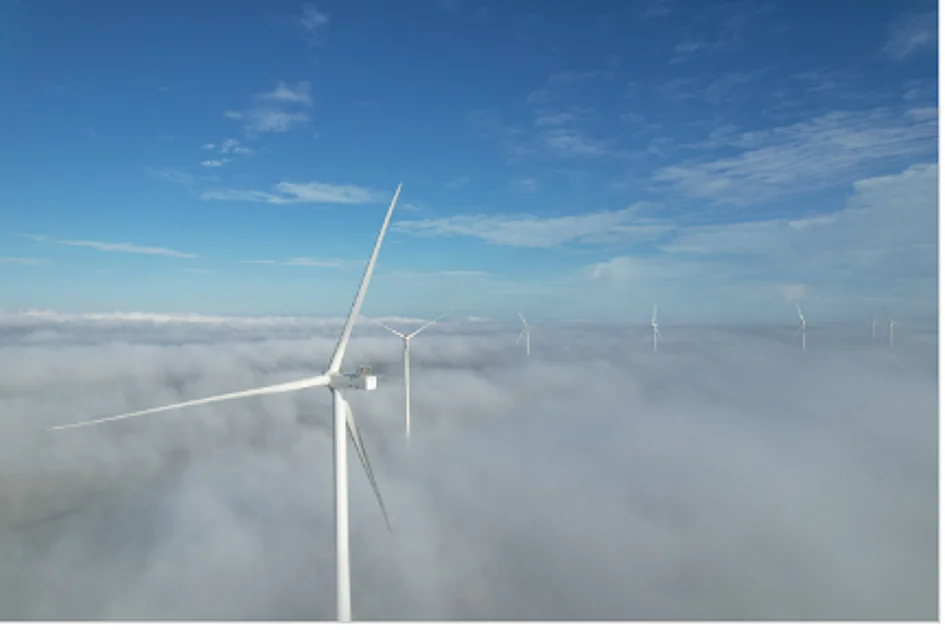
    This investment forms part of Mubadala’s broader global renewable strategy, which includes significant positions in Tata Power’s renewables platform in India and Skyborn Renewables, the world’s largest private offshore wind developer. The EU’s recent regulatory approval of Mubadala’s joint control of Rezolv underscores the strategic importance of this partnership within Europe’s renewable energy market.

    The move simultaneously advances the UAE’s broader ambitions to expand its international economic influence, diversify beyond hydrocarbons, and position itself as a global leader in climate action and energy security solutions for emerging markets.

  • PowerChina hosts “Corporate Open Day” event during UAE National Day

    PowerChina hosts “Corporate Open Day” event during UAE National Day

    DUBAI – In a strategic move to strengthen international partnerships, PowerChina hosted a corporate open day event on December 13th, aligning with the 54th UAE National Day celebrations. The event centered around an innovative basketball tournament that brought together Chinese and international employees from multiple PowerChina projects across the UAE.

    The basketball match, held at PowerChina’s Dubai residential complex, featured mixed teams comprising staff from China, Egypt, Pakistan, and other nations. This unique format broke down cultural barriers through the universal language of sports, with participants demonstrating seamless coordination on the court despite diverse backgrounds.

    Peng Gang, President of POWERCHINA MENA Regional Headquarters, emphasized the broader significance of the initiative: “These cross-cultural activities not only showcase the spirit of unity among our employees but also establish new platforms for China-UAE cooperation that transcend commercial contracts.”

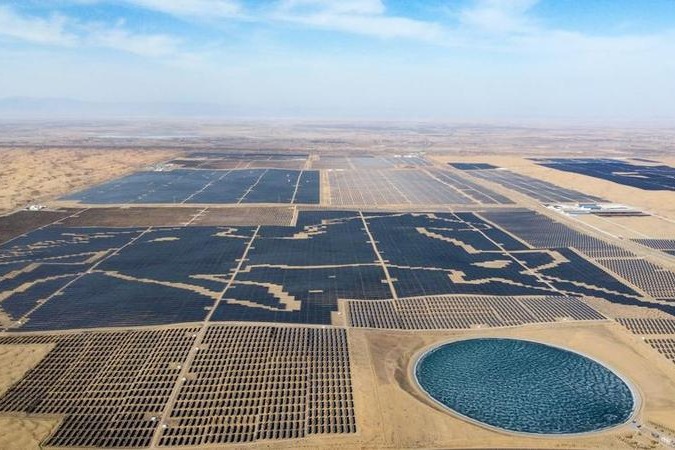
    The event gained particular importance given PowerChina’s ongoing involvement in the UAE’s clean energy sector. The company is currently engaged in the PV3 Al Ajban 1.5GW Photovoltaic Project, a major renewable energy initiative, where maintaining strong relationships with project owner AL AJBAN Solar Energy is crucial. Fayçal Malki, Site General Manager of the project company, participated in the event, highlighting the growing partnership between the organizations.

    Participants noted that the informal setting allowed for genuine relationship building. “Basketball doesn’t need language – a look, a pass can build trust,” remarked one attendee after the match. The relaxed interactions during breaks helped shorten psychological distances between teams, injecting additional humanistic elements into their professional relationships.

    This initiative represents PowerChina’s broader commitment to localization and cultural integration in its international operations. By creating cross-cultural brand experiences and building national exchange platforms, the company is implementing the cooperation concept of “extensive consultation, joint contribution, and shared benefits” while advancing clean energy development in the region.

    Looking forward, PowerChina plans to expand these cultural exchange efforts through diverse formats including arts, festival celebrations, and additional sports activities. These initiatives aim to solidify PowerChina’s brand identity as a builder, partner, and contributor in overseas markets while supporting people-to-people connectivity under the Belt and Road Initiative.

  • Despite record gold prices, UAE customers continue buying, just differently

    Despite record gold prices, UAE customers continue buying, just differently

    The UAE gold market is demonstrating remarkable resilience as prices reach unprecedented levels, with consumer purchasing patterns undergoing significant transformation rather than declining. On Monday, December 22, 2025, 24K gold opened at Dh539.75 per gram, continuing its record-breaking trajectory after previously hitting Dh525.25 on October 21 before experiencing a temporary correction and subsequent rebound.

    The price surge has extended across various karat weights, with 22K, 21K, 18K, and 14K gold reaching Dh492.25, Dh472, Dh404.50, and Dh315.50 respectively. International spot prices mirrored this trend, standing at $4,422 by 6 PM with a 1.8 percent increase from Sunday. Silver similarly achieved historic highs, climbing 2.7 percent to reach $69.23 earlier in the day before settling at $68.82.

    Market experts report that while gold prices have reached record levels, consumer demand has not diminished but instead evolved strategically. Ahmed Abdeltawab, CEO and co-founder of fractional gold purchase app O Gold, observed: ‘High prices haven’t stopped demand—they’ve fundamentally altered purchasing behaviors. We’re witnessing a pronounced shift toward fractional acquisitions and systematic accumulation strategies rather than traditional lump-sum investments.’

    Retail jewelers confirm this behavioral adaptation. Amina Mohamad Ali, director of MFar Jewellers, noted: ‘Customers are increasingly opting for lighter pieces, and we’ve observed corresponding growth in diamond jewelry demand. The anticipation of continued price increases has actually motivated rather than deterred purchasing decisions.’

    The current price environment is attracting new demographic segments to the gold market. According to Abdeltawab, ‘Record highs are particularly appealing to younger, first-time investors who typically begin with modest amounts. Enhanced financial education, improved market accessibility, and fractional ownership opportunities are primary factors driving this new investor cohort.’

    Ahmad Assiri, Research Strategist at Pepperstone, attributes the price appreciation to multiple converging factors rather than a single catalyst. ‘Global macroeconomic uncertainty surrounding growth prospects, geopolitical tensions, and persistent fiscal challenges have amplified gold’s appeal for portfolio management,’ Assiri explained. ‘Central bank demand has emerged as a dominant market anchor, surpassing the traditional influence of rate expectations. These collective factors have positioned gold as this year’s highest-performing major asset.’

    Despite expectations among some analysts that gold wouldn’t revisit record highs in 2025, the current rally demonstrates strong underlying fundamentals. Assiri added: ‘While volatility has characterized this year’s market, the overarching trend remains constructive. The sustained position above previous breakout levels indicates robust underlying demand, with investors increasingly considering gold an essential portfolio component rather than a speculative short-term play.’

  • China reports major gains in circular economy

    China reports major gains in circular economy

    China has achieved remarkable progress in building a circular economy since enacting its Circular Economy Promotion Law in 2009, according to Wang Dongming, Vice-Chairman of the National People’s Congress Standing Committee. The announcement came during a legislative session reviewing the implementation of the landmark environmental legislation.

    Inspections conducted from July to October across 16 cities in six provinces revealed substantial advancements in resource efficiency and ecological civilization construction. The comprehensive review demonstrated how circular economy principles have become integral to China’s green transformation of socioeconomic development.

    Statistical highlights from 2024 reveal the scale of China’s recycling achievements: over 400 million metric tons of ten major renewable resource categories were recycled nationwide. Waste paper constituted 70% of this total, while scrap steel accounted for 21%. Additionally, China utilized 3.97 billion tons of bulk solid waste, representing 59% of the total waste generated.

    The resource recycling industry has emerged as both an economic powerhouse and employment generator, with total output exceeding 4 trillion yuan ($550 billion) in 2024 while providing jobs for more than 35 million people.

    Financial mechanisms have played a crucial role in this transition. During the 14th Five-Year Plan period (2021-2025), China allocated more than 117 billion yuan to support resource recycling initiatives. The government has established specialized funds targeting waste electrical equipment, manufacturing transformation, and green finance mechanisms to bolster waste recycling systems and green industries.

    Government procurement practices have further reinforced these efforts, with energy-saving and environmentally friendly products now comprising over 85% of government purchases within their respective categories. Wang emphasized that recycled resources are playing an increasingly vital role in safeguarding national resource security, marking a significant shift toward sustainable development models.