
The 2025-26 sugarcane import season between China and Laos has officially commenced, signaling a significant boost in cross-border agricultural trade. On October 29, the first shipment of sugarcane from Laos arrived at Mengman Port in Xishuangbanna Dai Autonomous Prefecture, Yunnan Province, marking the start of a season expected to last until April 2026. Over 930,000 tons of sugarcane are projected to be imported into China for sugar extraction and production, with an estimated industrial output value of 620 million yuan ($87 million), reflecting a 12% increase from the previous season.
分类: business
-
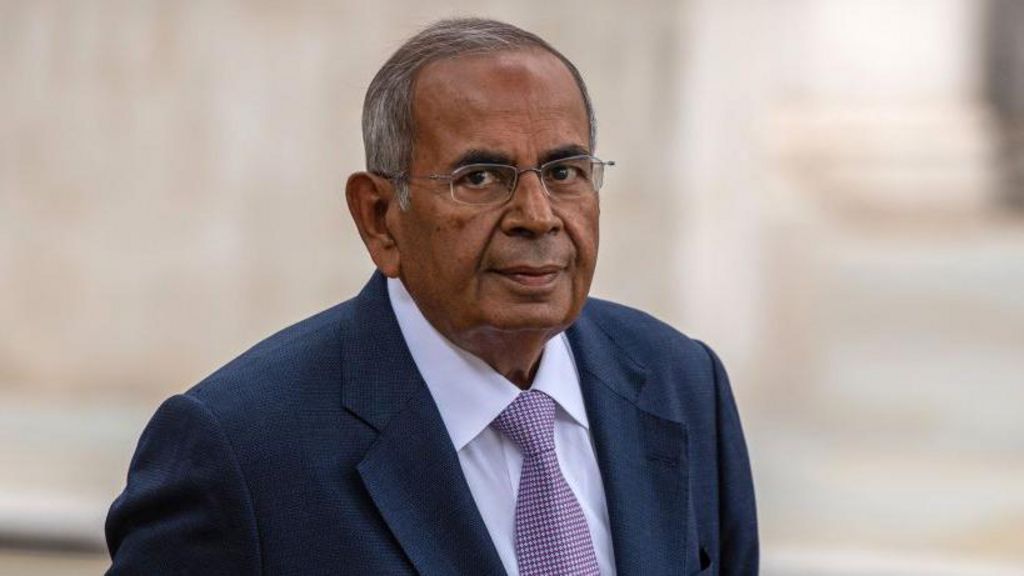
Head of UK’s richest family dies aged 85
Gopichand Hinduja, the patriarch of Britain’s richest family, has passed away at the age of 85. Known affectionately as GP, Mr. Hinduja was a pivotal figure in transforming his father’s modest textile and trading enterprises into the Hinduja Group, a global conglomerate operating across 11 sectors, including finance, media, entertainment, and oil. The group employs approximately 200,000 people worldwide. The Hinduja family, in a heartfelt statement, expressed that his passing “will leave a deep hole at the heart of our family,” and highlighted his “formidable work” as his enduring legacy. Mr. Hinduja and his family recently topped the Sunday Times Rich List with a staggering net worth of £35.3 billion and ranked 11th on Forbes’ list of India’s 100 richest businesspeople in 2024. He was the second eldest of four brothers who collectively steered the conglomerate for decades. His eldest brother, Srichand, passed away in 2023 at the age of 87. The leadership succession of the conglomerate remains uncertain, with the youngest brother, Ashok, currently overseeing operations in India, including the renowned truck manufacturer Ashok Leyland. The Hinduja family also boasts significant real estate holdings in London, including properties near St. James’s Park and the recently refurbished Old War Office in Whitehall, now housing a luxury hotel. Despite his low public profile, Mr. Hinduja was embroiled in the controversial “Hinduja affair” in 2001, which led to the resignation of Lord Peter Mandelson as an MP. The controversy arose after Mr. Hinduja wrote to Mr. Mandelson regarding his brother Prakash’s British citizenship application, following a £1 million donation by the family’s charity to the Millennium Dome project, overseen by Mr. Mandelson. Although Mr. Mandelson was later exonerated, the incident remains a notable chapter in Mr. Hinduja’s life. In a separate legal matter, Prakash Hinduja, his wife, and their son were convicted by a Swiss court last year for exploiting domestic staff at their Geneva residence.
-

UAE authority warns against illegal trading apps: 5 red flags explained
The Securities and Commodities Authority (SCA) in the United Arab Emirates has issued a stern warning to investors regarding the use of unauthorized trading applications. These apps, often operated by unlicensed entities, pose significant legal risks, including potential violations of anti-money laundering (AML) laws. The SCA emphasized that investors must exercise caution to avoid legal liabilities associated with such platforms. The authority highlighted five critical red flags to identify illegitimate trading apps: absence from official regulatory websites, promises of high returns with minimal risk, lack of transparent company details, operation without proper UAE licensing, and requests for funds to personal accounts instead of corporate ones. Investors are advised to use only verified platforms, confirm licensing, and report suspicious activities promptly to safeguard their investments and comply with UAE regulations.
-
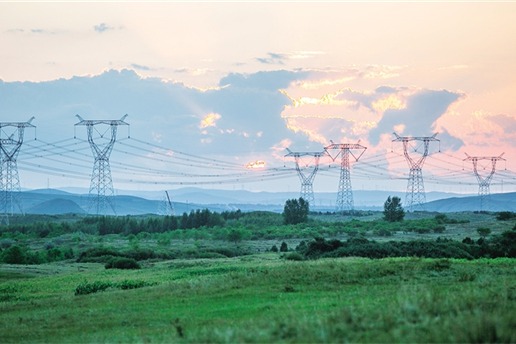
Inner Mongolia’s outbound UHV power transmission surpasses 800b kWh
Inner Mongolia has achieved a significant milestone in its ultra-high-voltage (UHV) power transmission, with outbound electricity surpassing 801.54 billion kilowatt-hours (kWh) as of October 31, according to the State Grid Inner Mongolia Eastern Electric Power Co. This monumental achievement, facilitated through eight UHV transmission channels, could supply annual electricity to approximately 280 million households, while reducing coal consumption by 270 million metric tons and cutting carbon dioxide emissions by 700 million tons. As a pivotal national energy and resource base, Inner Mongolia’s UHV grid development is integral to China’s broader energy strategy. Leveraging its abundant coal, wind, and solar resources, the region has established a robust network connecting major eastern load centers such as Shandong, Tianjin, Shanxi, Jiangsu, and Hebei. Annual power transmission has surged from 7.37 billion kWh in 2017 to 170.6 billion kWh in 2024, marking seven consecutive years of growth and solidifying Inner Mongolia’s role as a critical hub for interregional energy distribution. To ensure the safe and stable operation of UHV systems, the grid operator has implemented a comprehensive strategy encompassing smart control, multi-dimensional inspection, and precise maintenance. Customized maintenance plans tailored to geographic and climatic conditions, coupled with a two-hour emergency repair response network, have been established. Additionally, nine local monitoring teams, comprising herders and collaboration mechanisms with local power and wind energy companies, have enhanced joint risk management. The efficient operation of UHV channels is also accelerating the region’s green energy transition, with over 102 billion kWh of clean energy delivered to areas including Beijing, Tianjin, and Hebei, fostering cleaner and more sustainable energy structures across northern China.
-
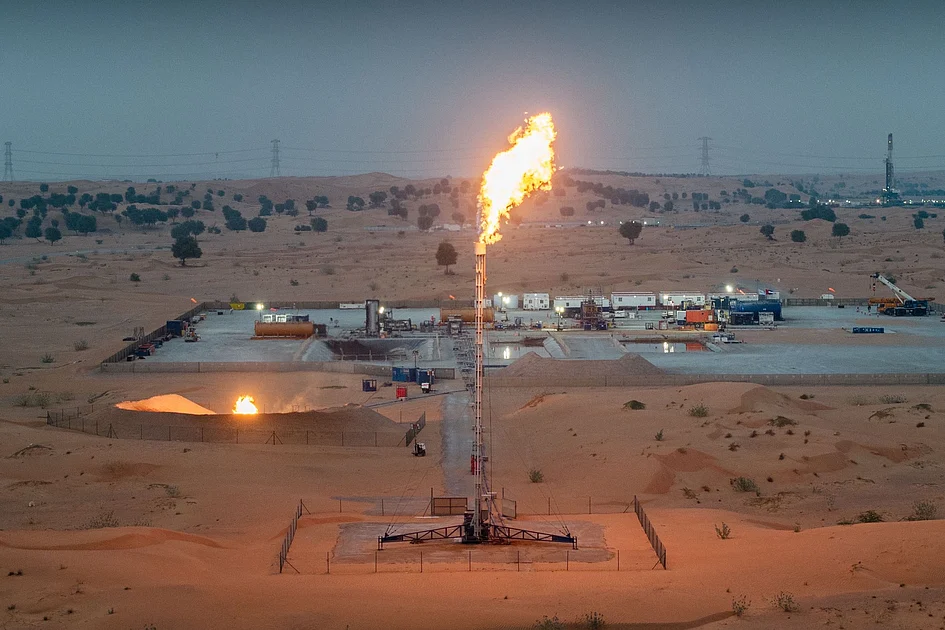
Watch: Sharjah announces discovery of additional gas reservoirs
In a significant development for the energy sector, the Sharjah National Oil Corporation (SNOC) has announced the discovery of additional gas reservoirs in the Hadebah Field, located north of the Sajaa Field. The discovery was made through the successful drilling and testing of the ‘Hadebah-02’ well, which reached a depth of 13,200 feet. This marks a new milestone in Sharjah’s ongoing exploration efforts. The well is part of the corporation’s evaluation and development work in the onshore Hadebah gas field. In the coming months, the well will be connected to the production line, and further drilling programs will continue to assess the full potential of the field’s reservoirs. The Hadebah Field is the fifth onshore gas and condensate field in Sharjah and the second discovery in the past five years, highlighting the emirate’s commitment to expanding its energy resources. The Sharjah Media Office emphasized that this achievement builds on the success of the ‘Hadebah-01’ well, discovered in 2024, which confirmed the presence of gas and associated liquids in the Thamama geological formations. This discovery is expected to bolster Sharjah’s energy production capabilities and contribute to the UAE’s broader energy strategy.
-

Pizza Hut’s parent company explores sale of struggling chain
Yum! Brands, the parent company of Pizza Hut, is reportedly evaluating the potential sale of its iconic pizza chain as it grapples with declining sales and fierce competition in the fast-food industry. Pizza Hut has faced multiple quarters of falling same-store sales in the United States, a critical market that accounts for 42% of its global revenue. This downturn has overshadowed growth in other regions, prompting Yum! Brands to explore strategic alternatives. In a recent statement, CEO Chris Turner emphasized the need for decisive action to unlock Pizza Hut’s full potential, suggesting that the brand might thrive better under new ownership. The pizza division’s struggles contrast sharply with the performance of Yum!’s other major brands, KFC and Taco Bell, which have both demonstrated resilience. Taco Bell, known for its affordable offerings, saw a 7% increase in same-store sales last quarter, while KFC posted a 3% rise despite economic headwinds. Pizza Hut, however, reported a 1% decline in sales at existing outlets. The chain operates approximately 20,000 stores worldwide, with 6,500 in the U.S., but has lost ground to competitors like Domino’s and Papa Johns. Domino’s recently reported a 6% surge in quarterly sales, partly driven by promotional strategies. Yum! Brands, which derives about 11% of its operating profits from Pizza Hut, has not set a timeline for a decision on the brand’s future. The broader fast-food industry is also feeling the pinch of cautious consumer spending, exacerbated by inflation and labor market challenges. In the U.K., Pizza Hut is closing half of its restaurants as consumers increasingly favor more agile competitors. Despite these challenges, Turner described U.S. consumers as ‘cautious but incredibly resilient,’ noting that Taco Bell’s sales have remained stable amid macroeconomic pressures.
-
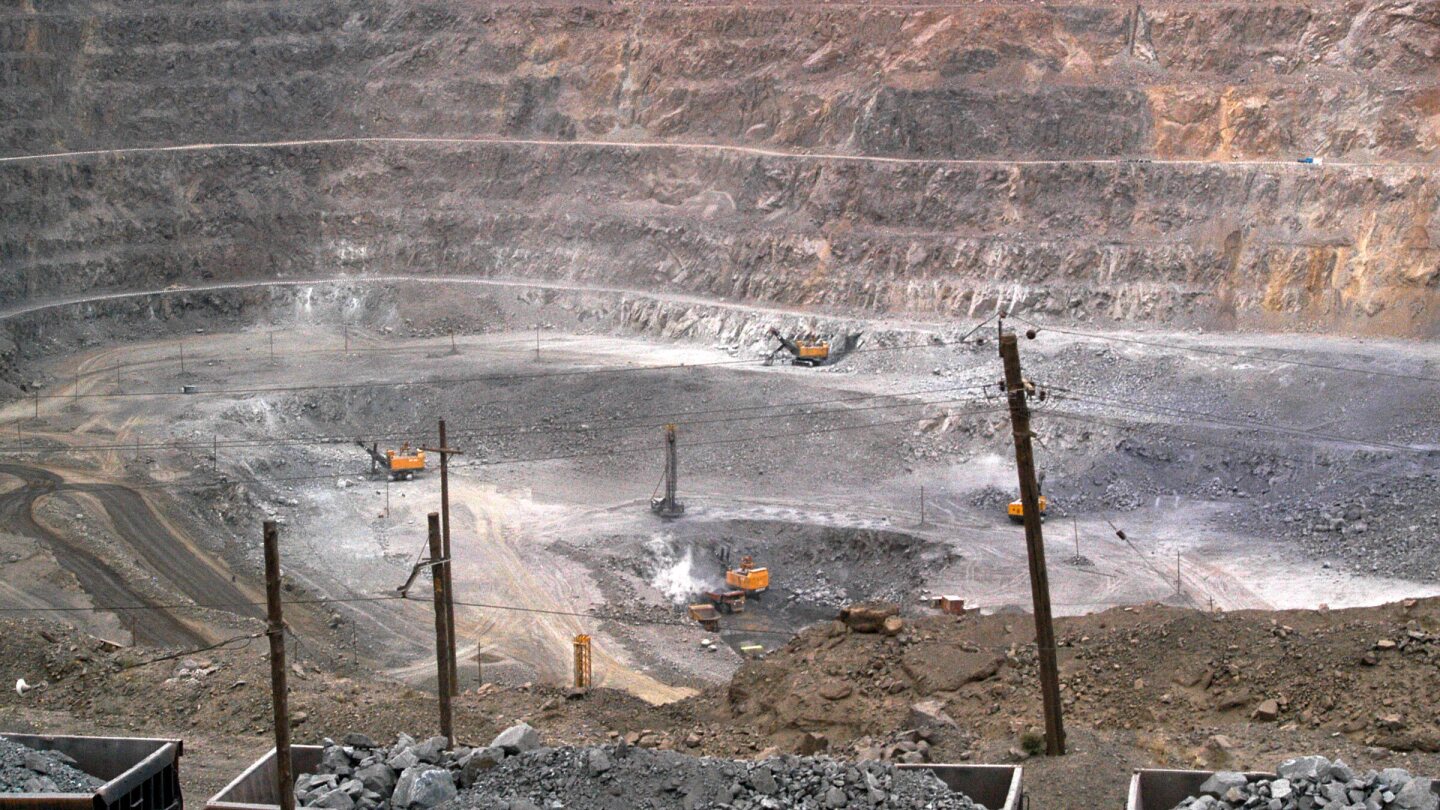
European Union welcomes suspension of China’s rare earth controls
In a significant move to secure the global supply chain of critical materials, the European Union (EU) and China have reached an agreement to stabilize the trade of rare earth materials and products. These elements are indispensable for high-tech and military applications, making their steady flow crucial for both economies. The agreement follows a series of discussions between EU Trade Commissioner Maroš Šefčovič and Chinese Commerce Minister Wang Wentao in Brussels last Friday. The talks centered on China’s export controls on rare earths, implemented in April and October, and the EU’s regulations on semiconductor sales. Olof Gill, a spokesperson for the European Commission, highlighted the EU’s reliance on China for rare earth materials, which are essential for manufacturing magnets used in automobiles and household appliances. The EU welcomed China’s recent 12-month suspension of rare earth export controls and emphasized the need for a stable trade system. Both parties are collaborating on an export licensing mechanism to ensure a consistent supply of these critical minerals. Šefčovič noted that Brussels and Beijing are committed to further discussions on trade measures, aiming to enhance the implementation of export control policies. With China being the EU’s second-largest trading partner, bilateral trade remains a cornerstone of the global economy, valued at approximately 2.3 billion euros ($2.7 billion) daily. The agreement underscores the shared interest of both regions in maintaining stable trade relations and advancing mutual climate goals.
-
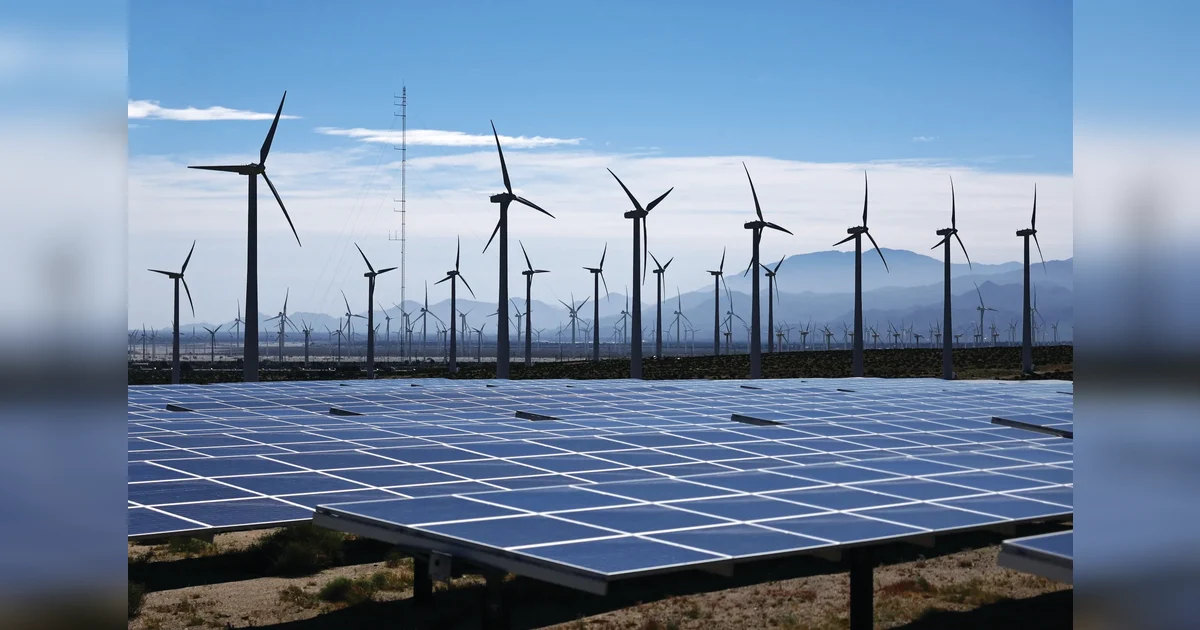
UAE strengthens renewable energy drive ahead of Adipec 2025
As the world prepares for Adipec 2025 in Abu Dhabi, the United Arab Emirates (UAE) is intensifying its renewable energy initiatives, transforming its national ambitions into actionable strategies. The UAE’s Energy Strategy 2050, launched in 2017, aims to triple the contribution of renewables to its energy mix by 2030, a critical step in reducing carbon emissions and diversifying energy sources in a fossil fuel-dependent global economy. This strategy is underpinned by significant investments, international collaborations, and cutting-edge digital innovations. Key projects like the Mohammed Bin Rashid Al Maktoum Solar Park in Dubai and Masdar’s global renewable energy investments highlight the UAE’s commitment to clean energy. These initiatives not only address climate concerns but also position the UAE as a competitive player in the sustainable energy market. Adipec 2025 will serve as a platform to explore the intersection of artificial intelligence (AI) and energy, with AI-powered systems projected to unlock $1.3 trillion in global economic value by 2030. The conference will also focus on hydrogen energy, policy frameworks, and infrastructure investments, showcasing the UAE’s integrated approach to energy transition. As the UAE progresses toward its Net Zero by 2050 target, Adipec 2025 will evaluate the nation’s advancements and the global readiness to embrace a renewable-driven future.
-

Dubai: Gold prices rise slightly; analysts say global costs could jump over $4,100
Gold prices experienced a modest increase in Dubai on Tuesday, with 24K gold rising to Dh480.25 per gram, while 22K, 21K, and 18K gold stood at Dh444.75, Dh426.50, and Dh365.25 per gram, respectively. This slight uptick comes after a dip in global spot prices, which fell to $3,971.26 per ounce at 10am UAE time, with silver priced at $47.56. The decline in gold prices on Monday was attributed to fading hopes of another interest rate cut by the US Federal Reserve in December, causing prices to drop below $4,000 at the start of Tuesday’s trading session. However, analysts are now predicting a potential surge in gold prices, driven by a weak ISM Manufacturing PMI report. The PMI stood at 48.7, significantly lower than the expected 49.4, signaling a slowdown in the US economy. Nadir Belbarka, an analyst at XMArabia, described the weak PMI as a ‘gut punch’ for the Federal Reserve, suggesting that a rate cut in December could ‘supercharge’ gold’s appeal as a safe-haven asset. Belbarka also noted that the US dollar is under pressure, down nearly 0.6%, with further declines likely if risk-off sentiment intensifies. He anticipates gold could reach $4,100 this week as inflation fears subside and real yields decline. Last month, gold prices rallied to record highs before sharply falling towards the end of the month. Analysts expect no major movements in gold prices for the remainder of the year.
-

US tech stocks soar: Will Wall Street’s AI bubble last?
As the US stock market soared to record highs in October 2025, fueled by the artificial intelligence (AI) boom, investors are questioning whether this surge represents a sustainable trend or an impending bubble. While comparisons to the dot-com bubble of the late 1990s are inevitable, experts argue that the current AI-driven rally is fundamentally different, supported by robust earnings growth and long-term technological advancements.