分类: business

  • Dubai: 24K close to Dh600 as gold prices hit record high 4th time this week

    Dubai: 24K close to Dh600 as gold prices hit record high 4th time this week

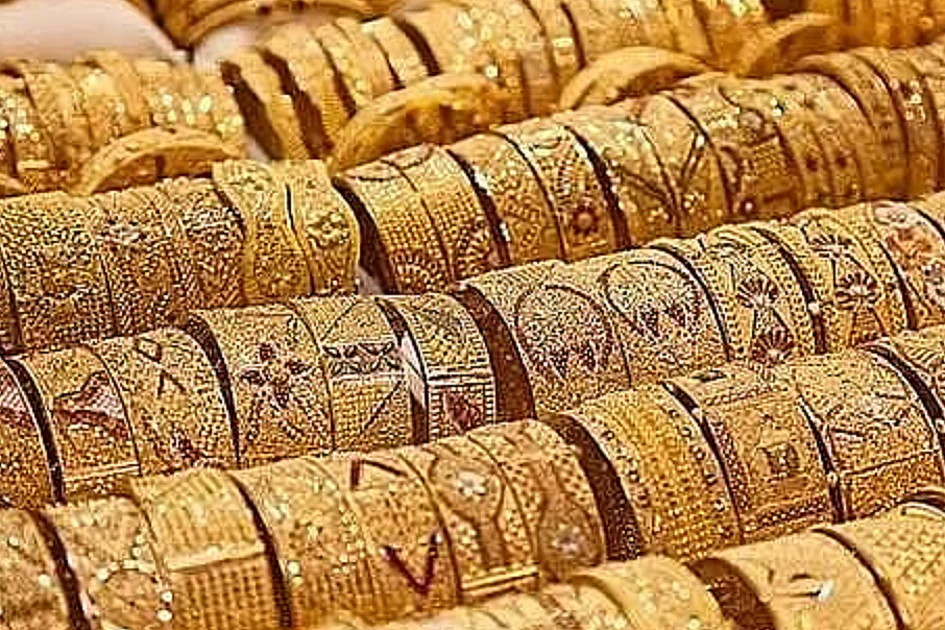
    Dubai’s gold market witnessed unprecedented trading activity on Friday as prices for the precious metal soared to historic highs for the fourth consecutive trading session this week. The 24K variant reached Dh597 per gram, marking a substantial increase of Dh19.25 within just 24 hours and approaching the psychological threshold of Dh600.

    The rally extended across all purity levels, with 22K opening at Dh553 (up Dh18), while 21K, 18K, and 14K traded at Dh530.25, Dh454.5, and Dh354.5 per gram respectively. The global benchmark simultaneously broke records, reaching $4,966.85 per ounce with a 1.17 percent gain.

    Market analysts attribute this sustained surge to fundamental shifts in investor sentiment toward traditional safe-haven assets. According to Kyle Rodda, Senior Market Analyst at Capital.com, “Faith in the US and its assets has been shaken, perhaps permanently, driving substantial capital into precious metals. The term ‘rupture’ has been circulating within financial circles, and I don’t believe this characterization exaggerates the current situation.”

    Rania Gule, Market Analyst at XS.com, provided additional context, noting that gold’s performance reflects a growing conviction among investors that the metal has transitioned into a strategic asset worth acquiring during price dips. This trend persists despite unexpected pressures from improved global risk appetite following recent geopolitical developments, including President Trump’s retreat from tariff threats.

    “The relative resilience of gold prices amid positive news suggests investors have grown more cautious about over-optimistic pricing in a global economy still confronting slowing growth, elevated debt levels, and questions about recovery sustainability,” Gule observed.

    The consecutive record-breaking performances indicate a structural repositioning within investment portfolios as market participants seek alternatives to traditional dollar-denominated assets amid ongoing economic uncertainty.

  • TikTok establishes joint venture to end US ban threat; Trump thanks Xi for approving deal

    TikTok establishes joint venture to end US ban threat; Trump thanks Xi for approving deal

    In a landmark resolution to a prolonged geopolitical standoff, TikTok has successfully established a majority American-owned joint venture to continue operating its US business, effectively neutralizing the threat of a nationwide ban. The newly formed entity, TikTok USDS Joint Venture LLC, will serve the platform’s massive American user base of over 200 million users and 7.5 million businesses while implementing rigorous new protocols for data security, algorithmic transparency, and content moderation.

    The corporate restructuring directly responds to legislation passed during the Biden administration that mandated Chinese parent company ByteDance divest its US operations or face prohibition in its largest market. The complex agreement, which largely confirms an outline presented to staff last month, stipulates that ByteDance will retain a 19.9 percent stake in the venture—strategically remaining below the critical 20 percent threshold specified by US law.

    Significant American investment firms form the venture’s backbone, with Silver Lake, Oracle, and Abu Dhabi’s AI investment fund MGX each acquiring 15 percent stakes. Additional investors include Dell Family Office, affiliates of Susquehanna International Group, General Atlantic, and several other established financial institutions. Notably, Oracle’s executive chairman Larry Ellison, a longtime ally of former President Donald Trump, plays a pivotal role in the arrangement.

    The joint venture will maintain autonomous decision-making authority over all US trust and safety policies and content moderation, while TikTok’s global entities will continue managing international product integration and commercial activities including advertising and e-commerce. Under the new structure, all US user data will be securely housed within Oracle’s cloud environment, subject to independent cybersecurity audits and strict adherence to federal standards.

    Governance will be administered by a seven-member board with American majority representation, including TikTok CEO Shou Chew and executives from major investment firms. TikTok veteran Adam Presser has been appointed CEO of the new entity, with Will Farrell assuming the role of chief security officer.

    The resolution prompted immediate political reactions, with former President Trump publicly thanking Chinese President Xi Jinping for approving the arrangement. ‘I am so happy to have helped in saving TikTok!’ Trump declared in a post on Truth Social. ‘I would also like to thank President Xi, of China, for working with us and, ultimately, approving the Deal.’

    The 2024 legislation emerged from longstanding bipartisan concerns among US policymakers that China could potentially exploit TikTok to harvest American user data or exert influence through its powerful algorithm. However, Trump, who has credited the platform with bolstering his appeal among younger voters, repeatedly delayed enforcement through executive orders, most recently extending the deadline to January 22.

  • Gulf’s hospitality renaissance: From mega-projects to intimate experiences

    Gulf’s hospitality renaissance: From mega-projects to intimate experiences

    The Gulf Cooperation Council (GCC) region is undergoing a profound transformation in its tourism strategy, shifting from large-scale urban developments to curated, experience-driven hospitality offerings. This strategic evolution marks a significant departure from the region’s previous focus on skyscrapers and mega-projects toward immersive, authenticity-focused travel experiences.

    Economic indicators demonstrate the sector’s accelerating growth trajectory. Travel and tourism contributed approximately $247 billion to GCC GDP in 2024, representing a 32% increase over 2019 levels. Projections indicate this figure will reach $371.2 billion by 2034, accounting for 13.3% of the region’s total economy. Visitor spending shows parallel growth, expected to climb from $135-136 billion in 2023 to $224 billion within the next decade.

    Saudi Arabia’s AlUla region exemplifies this ‘slow luxury’ approach, positioning itself as a high-yield niche destination rather than pursuing mass tourism. The Royal Commission for AlUla reports hosting over 260,000 visitors in 2023—a 40% year-on-year increase—with targets set for two million annual visitors by 2035. Development focuses on eco-conscious properties like Habitas AlUla and Banyan Tree AlUla, featuring tented villas and canyon-view suites that prioritize heritage preservation.

    The architectural marvel Sharaan Resort, designed by Jean Nouvel within the Sharaan Nature Reserve, will incorporate 38 rock-carved suites alongside wellness facilities, representing a groundbreaking approach to landscape-integrated architecture.

    Ras Al Khaimah and Oman are capitalizing on their natural landscapes to establish themselves as premier outdoor destinations. Ras Al Khaimah achieved record tourism in 2024 with 1.28 million visitors and 12% revenue growth, while Oman welcomed approximately 4 million international visitors, generating $5.5 billion in tourism revenue. Both destinations are developing mountain lodges, desert camps, and sustainable beach resorts that cater to adventure tourism and wellness-seeking travelers.

    Qatar has successfully transitioned from an events-focused market to a cultural tourism destination, surpassing five million visitors in 2024—a 25% increase over 2023. The country’s strategy integrates cultural landmarks like the Museum of Islamic Art with island-based resorts such as Rixos Premium Qetaifan Island North, which combines luxury accommodations with waterpark facilities and private beaches.

    This tourism evolution represents a fundamental component of Gulf economic diversification strategies. The sector is projected to generate 1.3 million new jobs by 2034, with intra-GCC tourism growing significantly—19.3 million tourists traveled within the bloc in 2024, constituting over 25% of all international visitors to GCC states. The proposed unified GCC tourism visa and improved connectivity将进一步 enhance regional tourism integration, enabling multi-destination itineraries that combine cultural, mountain, and coastal experiences across Gulf nations.

  • Chinese mainland reaches 5.32m invention patents, trademarks close to 50m

    Chinese mainland reaches 5.32m invention patents, trademarks close to 50m

    China has solidified its position as a global innovation leader with intellectual property holdings reaching unprecedented levels by the end of 2025. According to the China National Intellectual Property Administration, the mainland now holds 5.32 million valid invention patents, representing one of the world’s largest portfolios of protected intellectual innovations.

    The administration’s year-end report revealed remarkable progress across multiple metrics. Throughout 2025, Chinese authorities granted 972,000 new invention patents while significantly streamlining application processing times to just 15 months. This efficiency improvement demonstrates China’s commitment to fostering an innovation-friendly regulatory environment.

    Per capita measurements further underscore the nation’s technological advancement. The average ownership of high-value invention patents reached 16 patents per 10,000 people, indicating widespread innovation activity across Chinese society.

    The trademark landscape similarly experienced explosive growth, with over 4.2 million trademarks registered in 2025 alone. The cumulative total of effectively registered trademarks approached the 50 million milestone, reaching 49.87 million by year’s end.

    China’s brand value achievement places the nation firmly among global leaders. With Chinese brands accounting for $1.81 trillion in value among the world’s top 5,000 brands, China now ranks second globally in brand valuation, reflecting the international market’s recognition of Chinese products and services.

    These developments occur amid China’s broader push toward technological self-reliance and innovation-driven growth, positioning intellectual property rights as a cornerstone of the nation’s economic strategy.

  • How much more will UAE residents really pay for health insurance in 2026?

    How much more will UAE residents really pay for health insurance in 2026?

    Contrary to widespread speculation about dramatic premium hikes, UAE insurance experts project moderate health insurance cost increases ranging between 8-10% for 2026, significantly lower than the circulating 25% figure that has concerned residents.

    Industry specialists emphasize that premium adjustments will vary considerably based on individual circumstances rather than applying uniformly across all policyholders. Key determining factors include age demographics, claims history, specific plan types, and healthcare utilization patterns.

    Financial Impact Projections:
    • Single adults: Additional AED 250-600 annually
    • Typical family of four: Estimated increase of AED 1,200-2,500 per year
    • Senior residents: Potential increases from AED 1,600 to over AED 4,000 annually

    Anas Mistareehi, General Manager at E-sanad Insurance Brokers, clarified: “There is no universal percentage applicable to all residents. Premium calculations incorporate multiple variables including age brackets, previous claims, and plan categories.”

    Certain demographic groups may experience minimal changes, particularly those covered under large employer group plans, young single individuals with limited claims history, and basic health insurance plan holders. The government-regulated basic plan remains fixed at AED 320 annually, providing cost stability for lower-income residents.

    Mahdi Attya, Insurance Strategy Expert at MSS Advisors, explained additional considerations: “Beyond premium adjustments, insurers frequently modify hospital network coverage, outpatient service limits, pharmacy regulations, and co-payment structures. Policyholders often discover these network changes only when their preferred healthcare facilities become inaccessible.”

    Experts recommend proactive policy review and comparison shopping, advising residents to prioritize comprehensive inpatient and emergency coverage while potentially adjusting hospital network selections to manage costs effectively. The consensus emphasizes that catastrophic coverage protection remains most critical for financial security in healthcare management.

  • China’s renewed pledge to opening-up praised

    China’s renewed pledge to opening-up praised

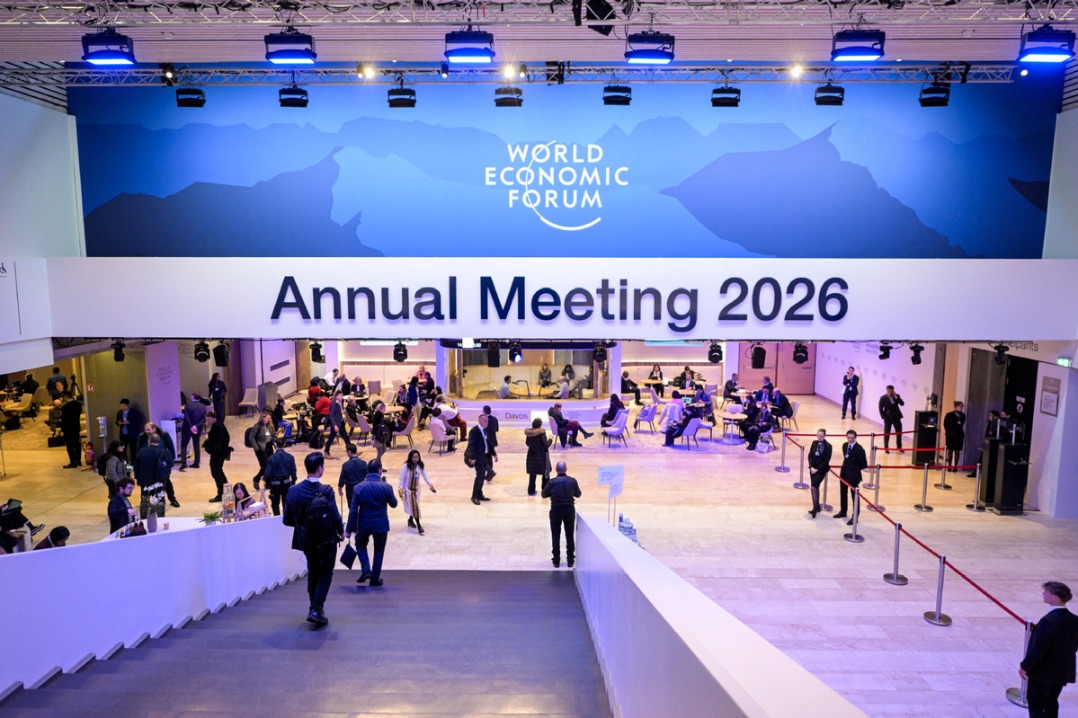
    At the 56th World Economic Forum in Davos, Switzerland, Chinese Vice-Premier He Lifeng articulated China’s economic strategy, earning widespread international praise from experts and officials. The address, delivered on January 22, 2026, positioned China’s transition to high-quality development as a critical stabilizing force against growing global economic fragmentation.

    Vice-Premier He, also a member of the Political Bureau of the Communist Party of China Central Committee, detailed three core propositions: advancing high-quality economic development, transforming China into both a manufacturing and consumption powerhouse, and deepening the nation’s commitment to reform and opening-up policies. He emphasized China’s role in fostering common prosperity through shared development opportunities, noting that China’s economy has expanded to over 140 trillion yuan ($20.1 trillion) with average annual growth rates of approximately 5.4%, contributing roughly 30% to global economic growth.

    International response to the speech highlighted its strategic significance. Mehmood Ul Hassan Khan, President of the Center for Knowledge and Public Policy in Islamabad, described the address as “timely and positive,” noting that it promotes hope for greater global progress and prosperity. He specifically referenced China’s forthcoming 15th Five-Year Plan (2026-30) as focusing on structural reforms that would advance digitalization, green technologies, and a paradigm shift toward domestic consumption-driven growth.

    Maroun Kairouz, Managing Director of the World Economic Forum, characterized China’s development transition as a strategic shift toward more sustainable and resilient growth. He noted that China’s reforms not only strengthen its own economic foundation but also create new global opportunities in clean energy, technology, and trade for 2026 and beyond.

    Anna Malindog-Uy, Vice-President of the Asian Century Philippines Strategic Studies Institute, observed that the speech addressed fundamental global anxieties about uncertainty and fragmentation in the international economic system. She highlighted that China’s move toward high-quality, domestic-demand-driven growth transforms the nation from primarily a global supplier to a significant source of global demand, promoting more balanced worldwide economic development.

    The address also briefed attendees on outcomes from the fourth plenary session of the 20th Communist Party of China Central Committee, reinforcing China’s commitment to expanding imports, strengthening industrial cooperation, and maintaining secure global supply chains.

  • Gold and tech stocks surge to lift ASX despite widespread market falls

    Gold and tech stocks surge to lift ASX despite widespread market falls

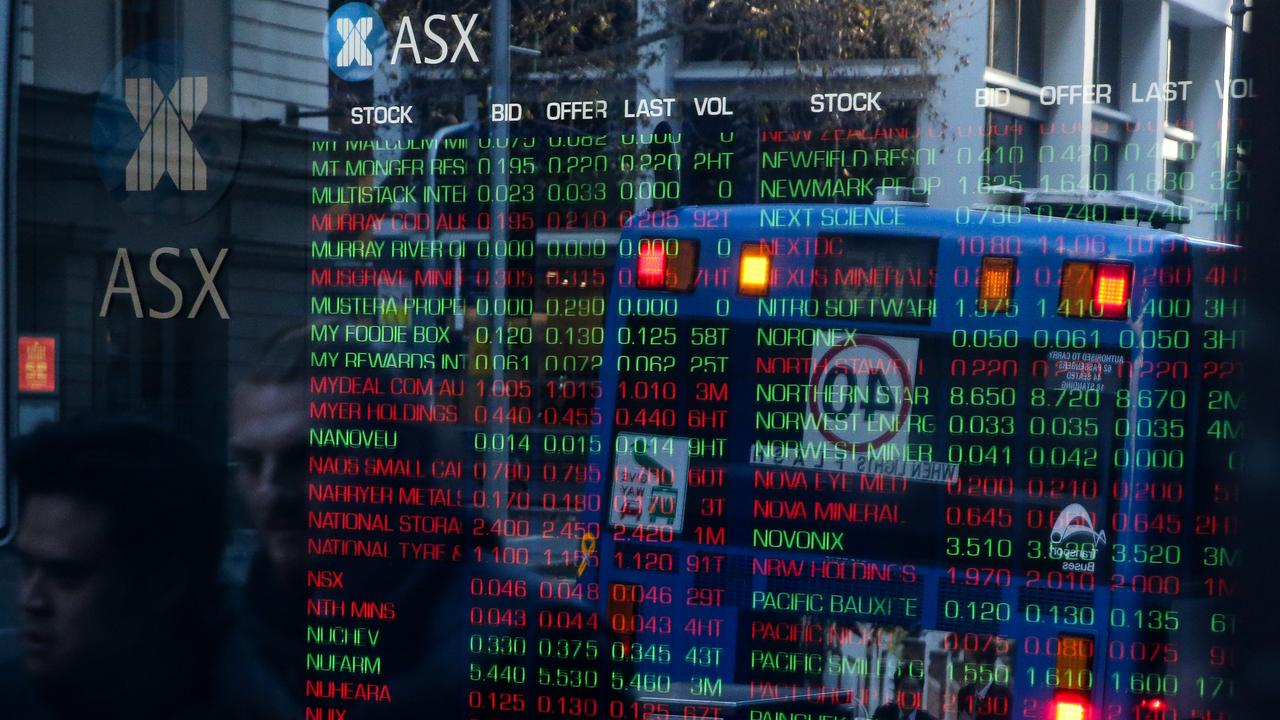
    The Australian Securities Exchange (ASX) registered modest gains on Friday, propelled by a powerful surge in gold mining stocks and a robust rebound in technology shares, effectively counterbalancing significant declines within the banking sector. The benchmark S&P/ASX 200 index advanced by 11.40 points, or 0.13 percent, concluding the session at 8,860.10. The broader All Ordinaries index demonstrated a stronger performance, climbing 17.40 points, or 0.19 percent, to settle at 9,189.90.

    This upward momentum on the local bourse was partially inspired by a Wall Street recovery overnight. The shift in sentiment followed US President Donald Trump’s decision to retract threats of military intervention and tariffs concerning Greenland, coupled with an encouraging upward revision of US third-quarter GDP growth to an annualized rate of 4.4 percent. Concurrently, the Australian dollar sustained its rally, appreciating to a fresh 15-month peak of 68.48 US cents.

    Market activity revealed a sectoral divergence. Only three out of the eleven primary sectors finished the trading day positively. The information technology sector emerged as a standout performer, spearheaded by an extraordinary rally in Life360 Inc. The family safety application developer witnessed its stock price skyrocket by 27.37 percent to $33.79, following an announcement of a projected 32 percent year-on-year revenue increase for fiscal 2025, estimated between $US486 million and $US489 million. Other tech giants also contributed significantly, with Xero Ltd. ascending 3.54 percent to $101.22 and TechnologyOne Ltd. gaining 2.76 percent to close at $27.18.

    The resources sector provided substantial buoyancy, primarily fueled by record-breaking gold prices which momentarily touched approximately $US4,965 per ounce. Leading gold producers recorded impressive gains: Northern Star Resources surged 5.42 percent to $27.60, Evolution Mining rallied 5.32 percent to $14.86, and Regis Resources led the pack with a formidable 10.16 percent climb to $8.35. According to AMP Chief Economist Shane Oliver, this historic gold rally is underpinned by concerns over U.S. Federal Reserve independence and escalating geopolitical tensions, driving investor demand for a reliable inflation and risk hedge.

    However, these gains were substantially offset by pronounced weakness in the financial sector. The ‘big four’ banks all closed in negative territory: Commonwealth Bank of Australia (CBA) receded 0.75 percent to $149.48, Westpac dropped 0.44 percent to $38.74, National Australia Bank (NAB) edged down 0.19 percent to $42.35, and ANZ Banking Group declined 0.52 percent to $36.21.

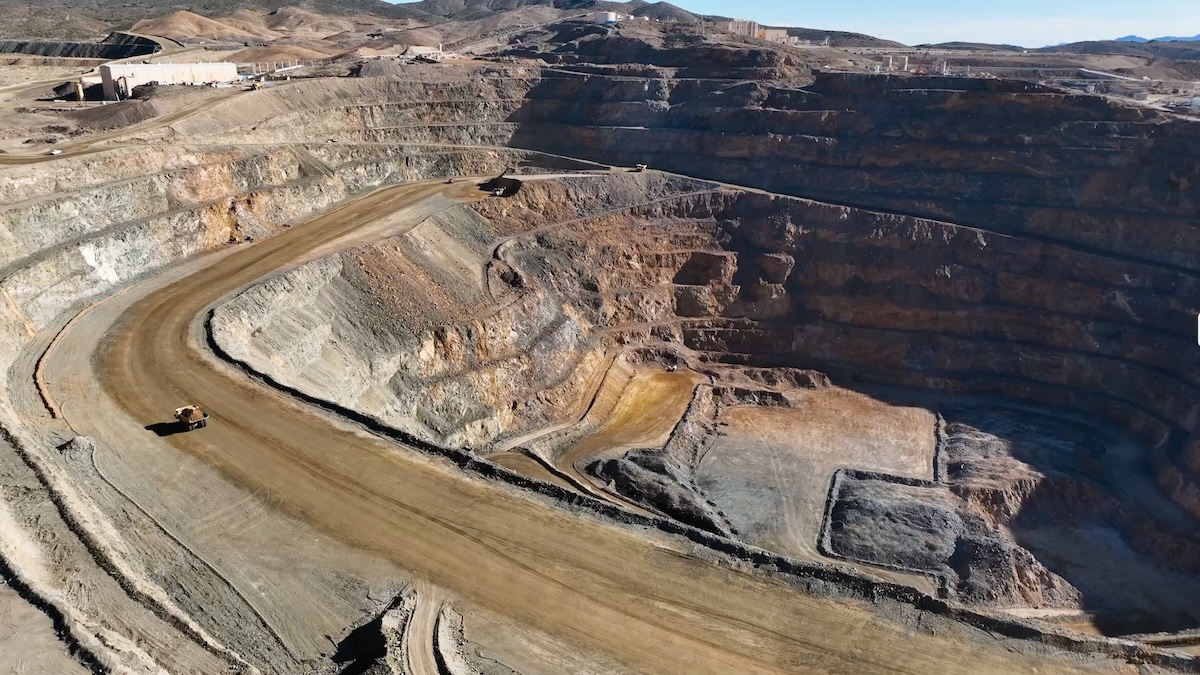
    Other notable movers included Guzman y Gomez, whose shares jumped 3.83 percent to $23.30 after the fast-food chain publicized a new multi-year exclusive delivery partnership with Uber Eats in Australia. In contrast, Capstone Copper shares fell 3.36 percent to $14.95 following operational updates at its Mantoverde site, where a workers’ strike is underway. Defence contractor DroneShield Ltd. was the session’s most significant laggard, slumping 5.50 percent to $4.47 without any accompanying corporate announcement.

  • US, China once had rare-earth aces in the hole but the US folded

    US, China once had rare-earth aces in the hole but the US folded

    In 1992, during a visit to Baotou’s rare earth mines in Inner Mongolia, Deng Xiaoping made a prophetic declaration: ‘The Middle East has oil. China has rare earths.’ This statement, initially overlooked by the international community, would ultimately foreshadow China’s ascent as the undisputed global leader in critical mineral resources that underpin modern technology.

    Rare earth elements—17 metallic components from the periodic table—form the fundamental building blocks of contemporary technological advancement. These minerals enable functionality in smartphones, electric vehicles, wind turbines, military drones, and sophisticated aerospace systems including the F-35 fighter jet. Despite their name, these elements are relatively abundant in nature but occur in dispersed formations that require complex, environmentally challenging extraction processes.

    While the United States led global rare earth production throughout the 1980s, Western nations gradually offshored mining operations to China, attracted by lower environmental standards and reduced labor costs. Regulatory changes by the Nuclear Regulatory Commission and International Atomic Energy Agency further accelerated this transition by classifying rare earths as ‘source material,’ dramatically increasing compliance costs for domestic operations.

    China capitalized on this strategic opportunity, investing heavily in developing a comprehensive rare earth ecosystem despite environmental consequences. By 2024, China controlled 44 million metric tons of reserves (the world’s largest), 70% of global mining production, 85% of refining capacity, and 98% of processing capabilities. The nation further solidified its dominance through intellectual property control, holding 80% of rare earth patents while establishing 39 university programs specializing in rare earth studies and seven institutions focused exclusively on processing technologies.

    This strategic positioning granted China significant geopolitical leverage during the 2025 trade war. When the White House imposed 145% tariffs on Chinese goods, Beijing responded with export controls on seven critical rare earth types and magnets. Although representing a small percentage of overall exports, these materials proved essential to American defense manufacturing and technological innovation.

    A RAND Corporation study revealed that a 90-day supply disruption could halt production at 78% of U.S. defense contractors. This vulnerability extends beyond military applications to next-generation computing, robotics, medical devices, and quantum hardware—effectively giving China a ‘kill switch’ over American technological advancement.

    The United States now faces a monumental challenge in rebuilding its rare earth infrastructure. Estimates suggest requiring a decade and $10-15 billion to establish a self-sufficient supply chain. Even with successful mineral discovery in locations like Greenland’s Kanana region (containing rich deposits of dysprosium and terbium), developing complete extraction, refining, and application ecosystems remains extraordinarily complex.

    China’s four-decade investment has enabled unprecedented purity standards advancement from 98% to 99.9999%—a critical factor in cutting-edge technology applications. As the global economy transitions toward AI and automation, rare earth elements have supplanted oil as the fundamental resource shaping geopolitical power structures, with China positioned as the dominant force controlling innovation pace through supply chain management.

  • Goldman Sachs raises 2026-end gold price forecast by $500 to $5,400/oz

    Goldman Sachs raises 2026-end gold price forecast by $500 to $5,400/oz

    In a significant revision of its precious metals outlook, Goldman Sachs has elevated its gold price forecast for late 2026 to $5,400 per ounce, representing a substantial $500 increase from its previous projection of $4,900. This bullish adjustment comes as the investment bank observes robust patterns of institutional and central bank diversification into the traditional safe-haven asset.

    The current market trajectory supports this optimistic outlook, with spot gold reaching a notable peak of $4,887.82 per ounce mid-week. The precious metal has demonstrated remarkable strength throughout 2026, registering an impressive 11% year-to-date gain that builds upon last year’s extraordinary 64% surge.

    Goldman analysts attribute this sustained rally primarily to private sector entities utilizing gold holdings as strategic hedges against global policy uncertainties. In a research note released Wednesday, the brokerage emphasized that these diversification-driven purchases have consistently exceeded price expectations, effectively establishing a higher baseline for future valuations.

    Concurrently, the investment bank anticipates renewed interest from Western exchange-traded funds as monetary policy evolves. Goldman projects the U.S. Federal Reserve will implement approximately 50 basis points of interest rate reductions during 2026, potentially enhancing gold’s appeal relative to yield-bearing assets.

    Central bank activity remains another critical supportive factor, with emerging market institutions expected to maintain substantial gold acquisitions averaging 60 metric tons throughout 2026. This sustained official sector demand reflects ongoing efforts to diversify reserve portfolios away from traditional fiat currencies.

    Despite the overwhelmingly positive outlook, Goldman analysts caution that any substantial reduction in perceived global monetary policy risks could trigger liquidation of policy hedge positions, potentially creating downward pressure on gold valuations.

  • Trump sues JPMorgan Chase over accounts closure

    Trump sues JPMorgan Chase over accounts closure

    Former U.S. President Donald Trump has initiated legal proceedings against banking giant JPMorgan Chase and its Chief Executive Officer Jamie Dimon, alleging the institution terminated his financial accounts and those of associated entities for political motivations. The lawsuit, lodged in a Miami state court within Florida’s jurisdiction, seeks substantial civil compensation exceeding $5 billion, according to regional media coverage.

    The legal action stems from the bank’s decision in February 2021 to sever banking relationships with Trump-affiliated accounts. This development occurred shortly after the January 6 Capitol unrest, during which supporters of the former president stormed the legislative building. The court documents contend that JPMorgan Chase acted upon ‘political and social motivations’ and what it describes as ‘unsubstantiated, woke beliefs,’ suggesting the bank sought to distance itself from Trump’s conservative ideology amid shifting political currents.

    Additionally, the litigation accuses the financial institution of unlawfully publishing the names of Trump, the Trump Organization, its affiliated entities, and family members on a purported blacklist under Dimon’s directive. The allegations include claims of trade libel, breach of the implied covenant of good faith and fair dealing, and violations of Florida’s Unfair and Deceptive Trade Practices Act.

    In a formal rebuttal, JPMorgan Chase dismissed the lawsuit as without merit. Bank spokesperson Patricia Wexler emphasized that the institution does not close accounts based on political or religious affiliations. Instead, account terminations occur when accounts present legal or regulatory risks to the company. Wexler expressed regret over such necessary actions, citing compliance with rules and regulatory expectations, while simultaneously endorsing administrative efforts to prevent the weaponization of banking services.