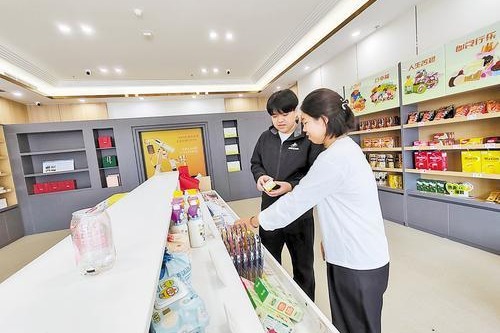
A groundbreaking bonded direct purchase store has recently opened in the comprehensive bonded zone of Xiong’an New Area, Hebei province, offering consumers an innovative shopping experience. This store features a wide array of bonded imported items, allowing customers to enjoy offline trials, place online orders, and receive direct deliveries from nearby bonded warehouses. According to a report by Hebei Daily, one shopper was pleasantly surprised to find a branded skincare product priced at just 588 yuan, significantly cheaper than online alternatives. The affordability is attributed to the 1210 model, which exempts tariffs and provides a 30 percent discount on value-added and consumption taxes, as explained by the Hebei Provincial Department of Commerce. The 1210 model, also known as the bonded warehouse model, enables e-commerce companies to ship international products in bulk to comprehensive bonded zones for storage. This approach allows shoppers to sample items like cosmetics and snacks from Japan, Europe, and South Korea before making online purchases, thereby reducing the risks associated with blind cross-border shopping. The introduction of this model underscores the rapid growth of cross-border e-commerce in Xiong’an, which has achieved full operational modes and attracted major projects, significantly enhancing the consumer experience, according to local authorities.
分类: business
-

Why Beyond Meat shares have surged 1,000% in four days
Beyond Meat Inc., the pioneer of plant-based burgers, has experienced an extraordinary surge in its stock price, rising approximately 1,000% over just four days. This remarkable rally comes despite the company’s ongoing struggles with sluggish sales and a lack of quarterly profits for over five years. The sudden spike has reignited debates about the frothiness of the stock market, particularly fueled by online enthusiasm among retail investors. The momentum began last week when a Reddit user sparked a wave of purchases, reminiscent of the meme stock rallies seen with GameStop and AMC. The surge was further amplified when Roundhill Investments added Beyond Meat to its meme stock ETF, triggering a short squeeze as investors betting against the company scrambled to cover their losses. Additionally, a newly announced distribution deal with Walmart provided another boost to the stock. However, market strategists caution that the company’s fundamentals remain weak. Mark Hackett of Nationwide noted that while the Walmart deal is a positive catalyst, it doesn’t address all underlying issues. Beyond Meat’s stock, trading at just over $4, is still far below its 2019 peak of $230. This meme stock frenzy occurs against a backdrop of broader market concerns, including fears of an overvalued AI industry and potential market corrections. The Securities and Exchange Commission has also flagged risks tied to meme stock manipulation, though calls for stricter regulations have yet to gain significant traction.
-
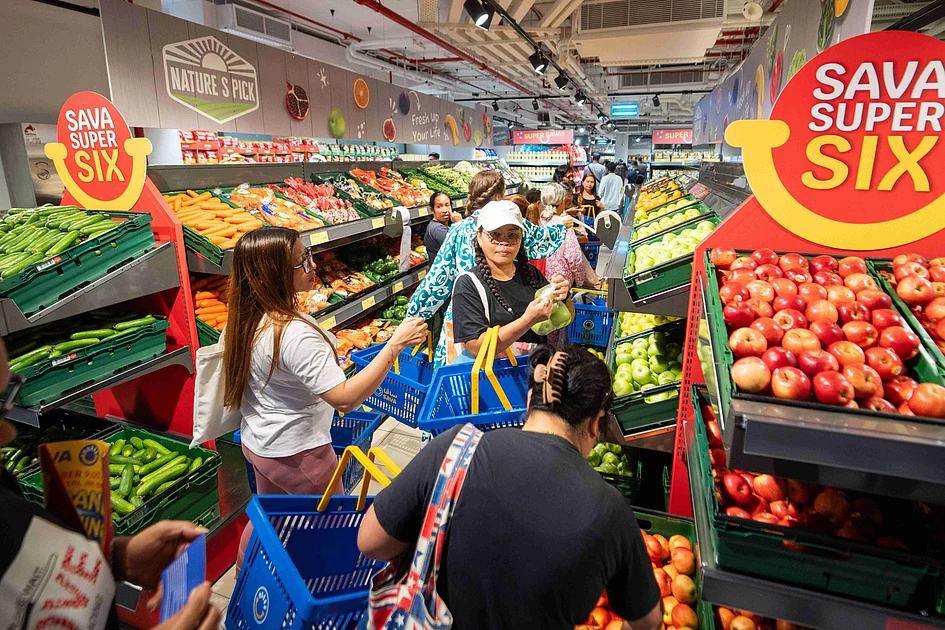
Dubai’s Majid Al Futtaim launches discount grocery brand Sava
Dubai-based retail conglomerate Majid Al Futtaim has introduced its new discount grocery brand, Sava, marking a significant expansion in the UAE’s retail sector. The company inaugurated its flagship store in Deira on Wednesday, with a second outlet opening in Murjan Tower at Jumeirah Beach Residences (JBR). Two additional stores are set to launch this week, with plans to establish 10 locations across the UAE by the end of the year. This move follows the closure of several Carrefour branches in the region, including one in Al Nahda, Dubai, which is currently undergoing renovation to rebrand as Sava. Majid Al Futtaim has also replaced Carrefour stores in Oman, Kuwait, Bahrain, and Jordan with its new hypermarket brand, HyperMax. However, the company has confirmed that Carrefour operations in the UAE will continue for now. Sava aims to redefine value in grocery retailing, offering over 1,600 products and 160 weekly deals to help customers maximize their budgets without sacrificing quality. Majid Al Futtaim, which operates 29 shopping malls across the Middle East, including Mall of the Emirates and Mall of Egypt, emphasized its commitment to innovation in the grocery retail sector through this launch.
-

St. James’s Place Middle East: Helping people take control of their financial futures
Dubai’s vibrant economy and modern infrastructure have positioned it as a hub for global professionals and high-net-worth individuals, making it an ideal location for financial advisory services. Anish Devkaran, Partner at St. James’s Place Middle East (SJP), relocated from the UK to the UAE in November 2024, driven by the region’s emergence as a global wealth centre. With over 20 years of experience in financial services, Anish saw an opportunity to bring world-class financial advice to the UAE, where demand for regulated and qualified financial advisers is on the rise. SJP, a FTSE 100 advisory giant with $245 billion in assets under management, established its Middle East office two years ago to cater to the growing need for tailored wealth management services, including tax advice, retirement planning, and estate planning. Since receiving regulatory approval from the Dubai Financial Services Authority (DFSA), SJP has been raising the bar for financial advice in the region. Anish highlights Dubai’s dynamism, safety, and collaborative professional environment as key factors that make it an exciting place to live and work. He balances his UAE client list with his UK business, advising clients on complex financial plans as they relocate between the two countries. Anish’s approach to financial planning is deeply personal, treating each client like family and ensuring transparency and trust. He emphasizes the importance of helping clients gain peace of mind and equipping them with the knowledge to make informed decisions about their financial futures. SJP’s presence in the Dubai International Financial Centre (DIFC) reflects its commitment to elevating financial advice in the region, fostering trust and professionalism in the sector.
-

China’s flaring struggles reignite heated US rate debate
As Wall Street’s rally shows signs of fatigue and gold loses its shine, global attention is increasingly drawn to China’s economic slowdown. Despite not being in a state of collapse, China’s 4.8% growth rate in the third quarter of 2025—the slowest this year—has raised red flags worldwide. External demand has kept China on track to meet its 5% annual growth target, but mounting trade tensions, including a threatened 130% U.S. tariff, have positioned China as a significant downside risk to U.S. economic growth. Stephen Miran, a Federal Reserve governor, has expressed concerns about China’s potential use of its rare earths monopoly as a retaliatory measure against U.S. tariffs, urging policymakers to consider new tail risks. Miran advocates for a 125 basis point rate cut to mitigate economic vulnerabilities. Meanwhile, global debt has surged to a record $337.7 trillion, with China, the U.S., and other major economies contributing significantly to this increase. The Institute of International Finance (IIF) warns that rising military spending and geopolitical tensions will further strain government finances. In the Eurozone, industrial production has weakened, and Japan faces challenges from trade uncertainties and domestic demand stagnation. China’s ambitious 5% growth target is increasingly threatened by U.S. tariffs, prompting calls for urgent fiscal stimulus and measures to boost domestic consumption. As Chinese Communist Party officials gather for the Fourth Plenum, the focus is on devising strategies to transition China into higher-value-added industries and strengthen social safety nets to encourage spending. The global economic outlook remains fraught with risks, with policymakers worldwide bracing for potential shocks as 2026 approaches.
-

UAE: Gold coins sell out at some Dubai jewellery stores this Diwali
Dubai’s jewellery stores witnessed an unprecedented surge in demand for gold coins during Diwali, leading to a temporary shortage of smaller denominations. Despite gold prices soaring over 50% this year, the festive season saw a remarkable increase in purchases, particularly for gifting purposes. Jewellers reported that five and 10-gram coins were the most sought-after, with demand surpassing last year’s figures. The rush peaked in the days leading up to Diwali, as customers flocked to buy coins for Lakshmi Puja and festive gifts. While larger denominations and bars remained well-stocked, the sudden spike in demand for smaller coins created a brief supply gap. Industry experts attributed this trend to gold’s dual role as a traditional gift and a safe investment. Suppliers and refineries are now working to replenish stocks, ensuring availability improves swiftly. The festive spirit, coupled with rising gold prices, has reinforced consumer confidence in gold as a valuable asset. Jewellers anticipate this momentum to continue through the wedding and year-end season, driven by both cultural and investment motivations.
-
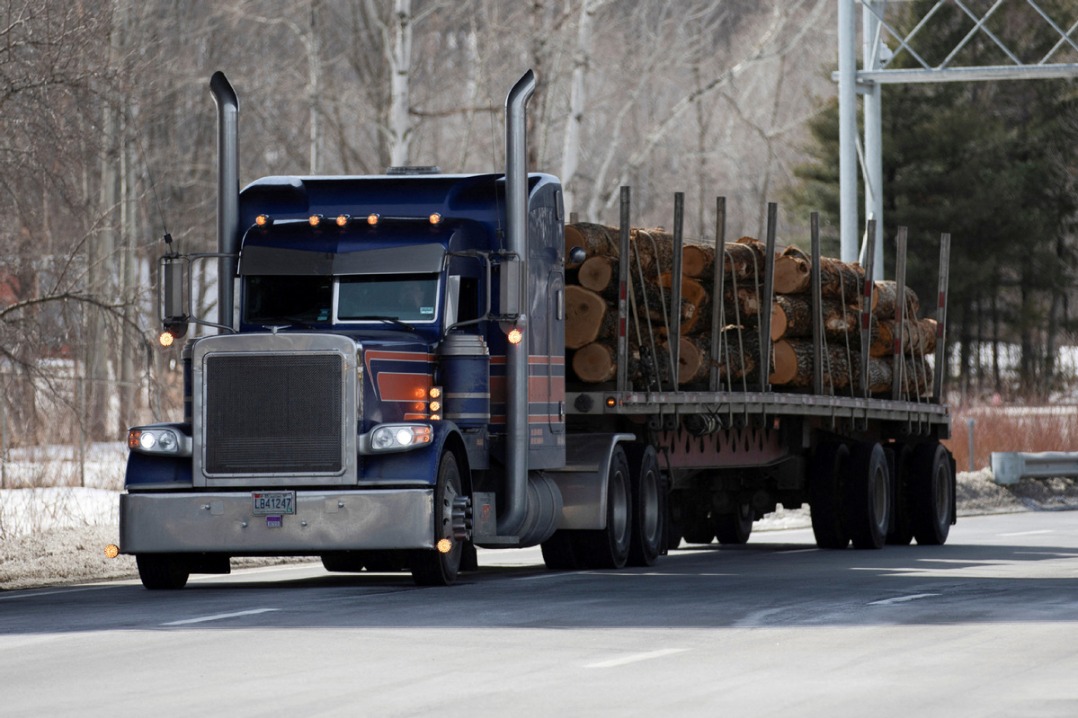
Canadian lumber sector under pressure as US raises import duties
The Canadian lumber sector is facing heightened challenges as the United States imposes additional tariffs on timber and furniture imports, exacerbating an already strained trade relationship. On October 14, 2025, the US introduced a 10% tariff on imported timber and lumber, alongside a 25% duty on kitchen cabinets, supplementing the existing 35% duty on Canadian lumber. Harry Nelson, an associate professor of forestry at the University of British Columbia, described the new tariffs as creating ‘unprecedented levels’ of trade barriers, with little expectation of reduction in the near future. The tariffs are expected to widen the price gap between domestic and export markets, with Canadian lumber prices likely to fall relative to US prices. Nelson warned that the broader North American economy could also suffer, with potential declines in housing starts and increased economic uncertainty. Industry groups, including the British Columbia Lumber Trade Council, have expressed deep disappointment, arguing that the tariffs will not enhance US national security but will instead drive up lumber costs and undermine the integrated trade relationship. The Canadian government has announced C$1.2 billion in aid for softwood producers, but Nelson emphasized that the impact extends beyond sawmills to contractors, loggers, and other interconnected sectors. With the possibility of further tariff increases in January 2026, the pressure on Canada to reach a trade agreement with the US is mounting. Canadian Prime Minister Mark Carney indicated that a deal could be possible ahead of the Asia-Pacific Economic Cooperation forum in South Korea, though negotiations remain ongoing.
-
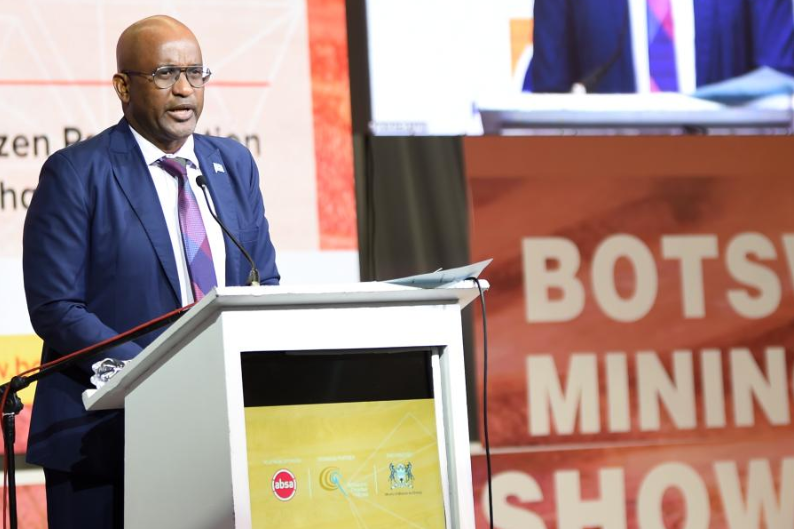
Botswana calls for youth, local communities to seize mining opportunities, diversify economy
Botswana’s government and financial institutions have issued a clarion call to the nation’s youth and local communities to actively engage in the mining sector, leveraging partnerships and financing opportunities to foster economic diversification. The appeal was made during the opening of the Botswana Mining Show in Gaborone on October 21, 2025, where key officials outlined the country’s strategic vision for sustainable industrial growth. Minister for State President Moeti Mohwasa, speaking on behalf of President Duma Boko, emphasized Botswana’s transition from a raw mineral exporter to a regional leader in mineral beneficiation and value-added transformation. He underscored the critical role of technology, innovation, and a digital-enabled economy in achieving this goal. Minister of Transport and Infrastructure Noah Salakae highlighted Botswana’s vast untapped mineral resources, including coal, copper, nickel, gold, and rare earth elements, which are pivotal for global renewable energy and advanced technology sectors. Salakae urged citizens to explore creative funding options and joint ventures to operationalize mining licenses, positioning Botswana as a hub for responsible and diversified mining. The government reaffirmed its commitment to investing in non-diamond minerals to reduce reliance on diamond exports and broaden the economic base. The three-day event, expected to draw 10,000 participants, aims to catalyze collaboration among ministers, entrepreneurs, financiers, and students to shape Botswana’s mining future.
-
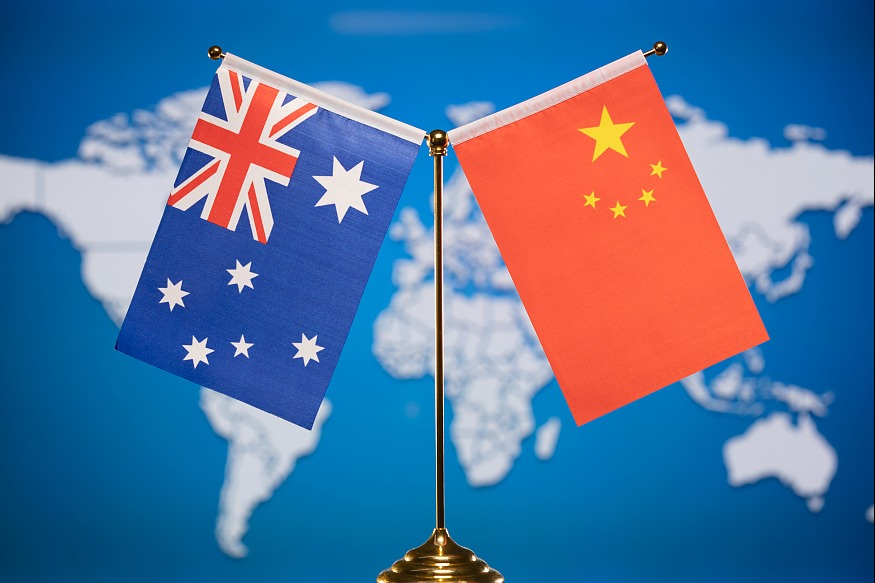
Seminar eyes fresh Sino-Australian growth frontiers
A recent seminar in Melbourne has underscored the growing momentum in economic cooperation between China and Australia, with participants emphasizing the potential for deeper collaboration in finance, clean energy, and emerging industries. The event, themed ‘Australia-China Economic Relations: Future Prospects,’ was part of the Bank of China Melbourne Branch’s 30th anniversary celebrations and the Victoria Business Confucius Institute’s Doing Business with China Workshop Series 2025. Craig Emerson, managing director of Emerson Economics and a former Australian trade minister, highlighted the renewed exchanges between the two countries, which he said are helping rebuild goodwill and restore trust. Emerson, who recently co-chaired the latest round of the China-Australia High-Level Dialogue in Beijing, noted that the talks have not only restored the good relationship but are now opening a new chapter. He also pointed out the economic complementarity between the two countries, with trade relationships evolving as China’s demands change what is bought and sold. Fang Xinwen, Chinese consul general in Melbourne, emphasized the resilience and long-term momentum of China’s economy and expressed optimism for deeper bilateral economic collaboration. He mentioned that the 20th Central Committee of the Communist Party of China is convening its fourth plenary session in Beijing to deliberate on a blueprint for China’s development over the next five years, marking the opening of a new chapter in the country’s modernization drive. Fang also highlighted that China will continue to advance reform and opening-up, develop new quality productive forces, and release the potential of its vast market, bringing more opportunities and confidence to countries including Australia. Last month, the Australian state of Victoria released a new strategy outlining its engagement with China over the next five years, envisioning ‘a new golden era’ of cooperation in areas such as agriculture, healthcare, education, and innovation. Fang said the strategy would inject renewed momentum and offer clearer direction for deepening bilateral economic engagement. Li Mang, general manager of Bank of China Sydney Branch and chairman of the China Chamber of Commerce in Australia, noted that China is developing new quality productive forces through technological innovation and green transformation, while Australia is prioritizing clean energy, critical minerals, and local manufacturing—areas that align closely with China’s development strategy. Li emphasized that by leveraging complementary strengths and promoting innovation, digital transformation, and sustainable investment, both countries can unlock new drivers of growth and enhance long-term competitiveness. He also stressed the importance of strengthening not only trade and investment ties but also cultural and educational exchanges to enhance mutual understanding and trust between the business and academic communities of both countries. Emerson added that future cooperation could expand into health services and artificial intelligence, noting that home-based rehabilitation, aged care, and AI-assisted medical diagnostics could benefit both countries and the wider region under Asia-Pacific Economic Cooperation-related mechanisms.
-

Eurostar orders first double-decker trains
Eurostar has announced a historic move to introduce double-decker high-speed trains through the Channel Tunnel, marking a significant milestone in cross-Channel rail travel. The company has confirmed a €2 billion (£1.74 billion) deal with manufacturer Alstom to acquire 30 ‘Celestia’ trains, with an option for 20 more. This expansion will increase Eurostar’s fleet size by nearly a third, with the first six trains expected to enter service by 2031. Each 200-meter-long train will offer enhanced capacity, with a combined 400-meter service accommodating approximately 1,080 seats. These will be the first double-decker high-speed trains to operate through the Channel Tunnel, a feat unmatched since a 1949 experimental double-decker train in the UK. Eurostar CEO Gwendoline Cazenave expressed pride in bringing this innovation to the UK, emphasizing ‘exceptional comfort’ for passengers. The company, which carried 19.5 million passengers last year, aims to grow this number to 30 million. The new trains will replace older models and increase services to London by 30%. Eurostar also plans to invest €80 million in upgrading the Temple Mills depot in London, the only UK facility capable of accommodating these larger trains. However, questions remain about the depot’s capacity to serve both Eurostar and potential rival operators, including Spanish start-up Evolyn, Virgin, and a Gemini Trains-Uber partnership. The Office of Rail and Road is currently reviewing proposals for depot access, with a decision expected soon. This development follows Eurostar’s June announcement of new routes to Geneva and Frankfurt, further solidifying its position as a leader in cross-Channel rail services.