分类: business

  • Pakistani firm wins auction with $482 million bid for state airline PIA

    Pakistani firm wins auction with $482 million bid for state airline PIA

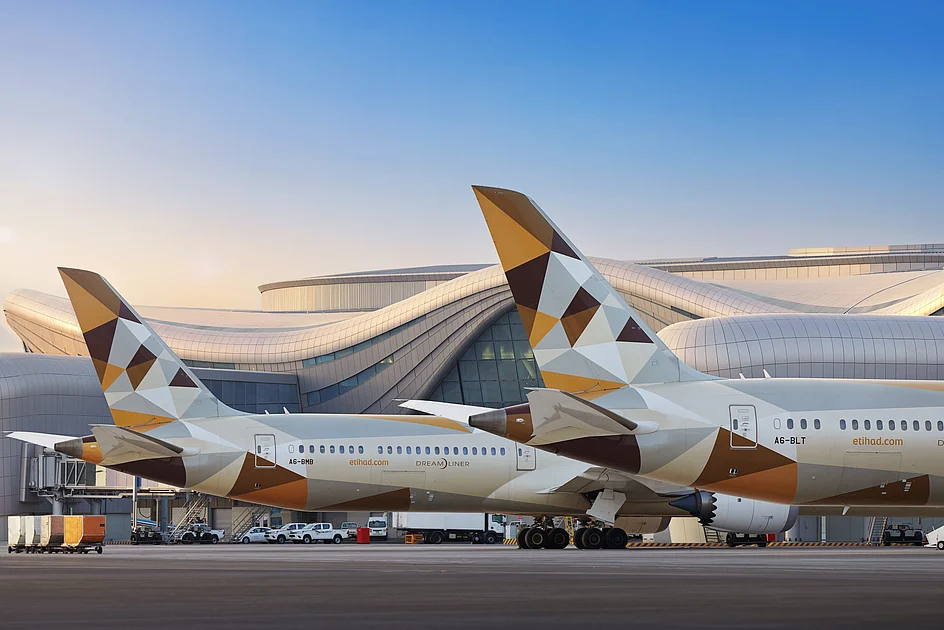
    In a landmark transaction for Pakistan’s privatization efforts, the Arif Habib investment consortium has prevailed in a competitive auction to acquire a controlling 75% stake in Pakistan International Airlines (PIA) with a bid of 135 billion rupees ($482 million). The high-stakes bidding process, broadcast live on state television on Tuesday, featured three domestic contenders vying for the national carrier.

    The transparent auction procedure saw the Arif Habib group outperform rival bids from a Lucky Cement-led consortium offering 134 billion rupees and private carrier Air Blue’s substantially lower 26.5 billion rupee proposal. The successful bidder retains an option to purchase the remaining 25% government stake within coming months.

    Prime Minister Shehbaz Sharif characterized the event as historically significant, emphasizing the government’s commitment to transparency in what represents Pakistan’s largest corporate transaction to date. The acquisition marks a critical turning point for the financially troubled airline, which reported a $437 million net loss on $854 million revenue in 2022 before being delisted from the stock exchange.

    This successful divestiture follows last year’s failed privatization attempt when a solitary $36 million bid fell dramatically short of the government’s $300 million valuation expectations. PIA’s operational challenges have included substantial financial losses, safety concerns that resulted in extended flight bans to Western destinations, and ongoing management issues that required repeated government bailouts.

    The transaction serves as a crucial test case for Pakistan’s broader commitment to privatizing dozens of state-owned enterprises across multiple sectors by 2029, a key condition of the nation’s $7 billion International Monetary Fund loan program. Founded in 1955 as a symbol of national prestige with designer uniforms by Pierre Cardin, PIA’s decline exemplifies the challenges facing many government-owned entities struggling with inefficiency and financial sustainability.

  • IMF strikes initial deal, unlocks $2.5 billion for Egypt’s economic reform

    IMF strikes initial deal, unlocks $2.5 billion for Egypt’s economic reform

    The International Monetary Fund has reached a pivotal staff-level agreement with Egyptian authorities, clearing the path for the disbursement of approximately $2.5 billion in critical funding. This development marks the successful completion of the fifth and sixth reviews under Egypt’s Extended Fund Facility arrangement alongside the first review under the Resilience and Sustainability Facility.

    This financial injection represents the latest phase in Egypt’s comprehensive economic reform program, which began with an expanded $8 billion support package negotiated in March 2024. The North African nation has been grappling with one of its most severe economic crises in modern history, prompting aggressive stabilization measures and structural adjustments.

    Ivanna Vladkova Hollar, the IMF’s mission chief for Egypt, confirmed that these stabilization initiatives have yielded substantial gains, with the Egyptian economy demonstrating signs of robust expansion. “The Egyptian economy is showing signs of strong growth,” Hollar stated, while emphasizing that “efforts to reduce the role of the state need to be accelerated” moving forward.

    The funding package combines resources from both the expanded $8 billion loan facility and an additional $1.3 billion financing arrangement approved earlier this year. The final approval rests with the IMF’s executive board, which will conduct a comprehensive evaluation before formally releasing the funds.

    Egypt’s reform agenda has centered on economic liberalization policies designed to address macroeconomic imbalances and attract foreign investment. The country’s commitment to these reforms has positioned it to access continued international financial support during its economic transition.

  • AI adoption surges across Middle East workforce as employees embrace tech-driven future

    AI adoption surges across Middle East workforce as employees embrace tech-driven future

    The Middle East has emerged as a global frontrunner in workplace artificial intelligence integration, with a remarkable 75% of regional employees actively utilizing AI tools in their professional roles over the past year. This adoption rate significantly surpasses the global average of 69%, according to PwC’s comprehensive Middle East Workforce Hopes and Fears Survey 2025.

    The comprehensive study reveals that AI has transitioned from theoretical concept to practical reality across Middle Eastern organizations. An impressive 79% of employees report substantial productivity improvements through AI implementation, while 87% note enhanced output quality and 84% experience heightened creative capabilities. This technological embrace reflects a fundamental cultural shift where AI is increasingly perceived as an empowering tool rather than occupational threat.

    Regional enthusiasm markedly contrasts with global apprehensions regarding AI’s workplace impact. Approximately 61% of Middle Eastern office workers express excitement about AI’s potential, compared to just 47% worldwide. This optimistic outlook is bolstered by cohesive national digital strategies, including the UAE’s National Strategy for AI 2031 and Saudi Arabia’s National Strategy for Data & AI, which provide clear frameworks for technological advancement.

    Generational analysis indicates Millennials and Gen Z employees are leading this transformation, demonstrating greater familiarity with generative AI tools like ChatGPT compared to senior colleagues. Their technological fluency positions them advantageously for evolving entry-level positions, though organizational leadership remains divided on whether these roles will expand (34%) or contract (43%) due to automation.

    Randa Bahsoun, Partner at PwC Middle East, emphasizes: “While employees demonstrate remarkable adaptability with AI, they seek security and support. Organizations providing role evolution clarity, learning access, and wellbeing protection will excel in retaining talent within this dynamic labor market.”

    The research further identifies a strong emphasis on skills development, with 69% of regional employees pursuing new competencies annually—substantially above global averages. Notably, 81% now prioritize positions offering transferable skill development, indicating learning opportunities have become fundamental career expectations. Companies are responding positively, with 63% of employees reporting managerial support for capability building and 68% acknowledging adequate learning resource access.

    Despite technological optimism, workforce challenges persist. Approximately 45% of employees report fatigue symptoms while 48% feel overwhelmed by increasing workloads. Concurrently, job security has become paramount for 82% of professionals amid ongoing economic uncertainties.

    The report ultimately depicts a region balancing technological ambition with human needs, suggesting organizations combining transparency with substantive upskilling and wellbeing initiatives will best sustain the Middle East’s accelerating AI momentum.

  • Pakistan gets 3 bids for privatisation of national carrier PIA

    Pakistan gets 3 bids for privatisation of national carrier PIA

    Pakistan’s ambitious privatization initiative for its national carrier reached a critical juncture on Tuesday as three prominent consortiums submitted formal bids for a controlling 75% stake in Pakistan International Airlines (PIA). The bidding process, conducted with unprecedented transparency and broadcast live nationwide, represents a watershed moment in Islamabad’s efforts to reform its state-owned enterprises.

    The consortiums, led by private carrier Air Blue, industrial giant Lucky Cement, and investment firm Arif Habib Corporation, formally deposited their proposals in a transparent container during a ceremony overseen by government officials. Prime Minister Shehbaz Sharif characterized the event as “essential transparency” for what he described as “the biggest transaction in Pakistan’s history.”

    This privatization attempt follows a failed 2024 effort that attracted merely one bid worth $36 million—dramatically below the government’s $300 million valuation threshold. The airline’s financial distress is substantial, having reported a $437 million net loss against $854 million revenue in 2022 before its delisting from the stock exchange.

    The government will establish a reference price on Wednesday, with the winning bidder to be announced pending minimum price fulfillment. This divestment forms part of Pakistan’s broader commitment under its $7 billion International Monetary Fund program to privatize dozens of loss-making state enterprises by 2029.

    PIA’s operational challenges remain significant. Currently, only 18 of its 34 aircraft remain active, and despite recent reinstatement of European and British flight permissions, the carrier remains excluded from US routes. The airline’s reputation has been severely damaged by financial mismanagement and safety concerns, notably the May 2020 Airbus A-320 crash in Karachi that claimed 98 lives and triggered international flight bans.

    Founded in 1955 as a symbol of national progress, PIA’s potential privatization marks a historic shift in Pakistan’s approach to state-owned enterprise reform and economic stabilization.

  • Dubai Shopping Festival announces discounts up to 90%, 12-hour sale

    Dubai Shopping Festival announces discounts up to 90%, 12-hour sale

    Dubai has launched its annual retail extravaganza, the Dubai Shopping Festival (DSF), promising unprecedented shopping experiences from December 26, 2025, through February 1, 2026. The citywide event features over 1,000 international and local brands across 3,500 retail outlets offering discounts ranging from 25% to an extraordinary 90% on diverse product categories including fashion, electronics, home goods, beauty products, and children’s items.

    The festival’s opening day will feature a special 12-hour sale event exclusively at Majid Al Futtaim shopping centers, including Mall of the Emirates, City Centre Mirdif, City Centre Deira, and three additional locations. From 10:00 AM to 10:00 PM on December 26, shoppers can access the deepest discounts of the festival at participating retailers.

    Beyond the substantial savings, DSF introduces multiple high-value prize opportunities. The centerpiece ‘Shop, Scan & Win’ promotion offers shoppers who spend Dh300 or more at participating stores the chance to win one of five Nissan Patrol SE T2 2026 vehicles in weekly drawings. Participants simply scan QR codes at point-of-sale and upload receipts through the designated digital platform.

    Additional premium promotions include Majid Al Futtaim Malls’ ‘Biggest Prize of the Year’ offering Dh1 million in cash for shoppers spending over Dh300 at selected locations. Dubai Festival City Mall presents the ‘Modesh and Blue Rewards Millionaire’ campaign, awarding one million Blue Points to lucky winners. Meanwhile, Dubai Holding’s ‘DSF Golden Tickit’ program will designate 38 winners to receive Dh10,000 in Tickit points each.

    Mercato Mall enhances the shopping experience with an exclusive mall-specific prize campaign running through January 12, providing additional winning opportunities during the post-Christmas shopping period. The comprehensive five-week festival represents Dubai’s continued commitment to establishing itself as a global retail destination while providing significant value to residents and visitors alike.

  • Indian luxury wedding brand “The Wedding Trunk” enters UAE’s growing destination wedding market

    Indian luxury wedding brand “The Wedding Trunk” enters UAE’s growing destination wedding market

    The United Arab Emirates has solidified its position as a premier global destination for luxury weddings with the strategic expansion of Indian high-end wedding planning company The Wedding Trunk into Dubai and Abu Dhabi. This development signals growing international demand, particularly from South Asian couples, for culturally authentic yet globally sophisticated wedding experiences in the Emirates.

    Founded in Mumbai, The Wedding Trunk has established an exceptional reputation throughout India for orchestrating elaborate celebrations that prioritize cultural authenticity, superior hospitality, and flawless event execution. The company’s entry into the UAE market coincides with increasing cross-border partnerships within the luxury events sector, facilitated by the country’s world-class infrastructure, exceptional connectivity, and diverse portfolio of premium venues.

    The UAE has become a particularly attractive wedding destination for Indian families due to its combination of luxury hotels, stunning desert landscapes, pristine beachfront properties, and streamlined logistics for international guests. Industry analysts note that destination weddings contribute substantially to the local economy, generating significant revenue for hotels, event spaces, décor specialists, catering services, and tourism-related businesses.

    The Wedding Trunk’s expansion strategy focuses on adapting traditional Indian wedding ceremonies to UAE settings while maintaining the elevated standards expected in the local luxury market. Their services cater to celebrations ranging from intimate gatherings to large-scale, multi-day events that often host guests traveling from numerous countries.

    Siddharth Bavishi, Founder and CEO of The Wedding Trunk, explained the strategic move: “The UAE provides an environment where cultural traditions and contemporary hospitality merge seamlessly. Modern couples increasingly seek meaningful, well-orchestrated experiences rather than merely grandiose events. Our planning philosophy emphasizes thoughtful coordination and guest experience, which aligns perfectly with the UAE’s offerings.”

    Unlike conventional destination wedding models that prioritize scale, The Wedding Trunk emphasizes meticulous coordination, cultural sensitivity, and guest comfort. This approach reflects a broader industry shift toward experience-driven celebrations where attention to detail and emotional resonance take precedence.

    As destination weddings continue gaining popularity among Indian and international families, market analysts anticipate further growth in specialized wedding planning services throughout the UAE. The Wedding Trunk’s expansion demonstrates how the Emirates is attracting global industry players seeking to serve an increasingly sophisticated and international clientele.

  • UAE gold prices up more than 60% in 2025; residents see investments nearly double

    UAE gold prices up more than 60% in 2025; residents see investments nearly double

    The United Arab Emirates has witnessed an extraordinary bull run in gold markets throughout 2025, with prices surging more than 60 percent in a single year and delivering nearly doubled returns for investors who entered the market earlier. This remarkable performance has transformed gold from a traditional safe-haven asset into one of the year’s top-performing investments.

    Abu Dhabi resident Zeba Mohammed exemplifies this trend, having purchased 10 grams of gold jewelry in December 2024 for approximately Dh3,000. Just twelve months later, her investment has appreciated to nearly Dh5,000 in value. ‘I keep advising my friends and family to do the same,’ Mohammed stated, highlighting gold’s growing popularity as both an accessible investment vehicle and meaningful gift.

    According to Ole Hansen, Head of Commodity Strategy at Saxo Bank, the foundations for this rally were established years ago, reflecting ‘a profound shift in the macro, geopolitical, and institutional backdrop for gold.’ The numbers speak volumes: 24K gold opened the year at Dh318.0 per gram before climbing to unprecedented heights of Dh540.0 per gram by year’s end.

    The soaring prices have democratized gold investment, attracting first-time and small-scale investors. UAE expat Sana Ashraf began her investment journey with gold and silver ETFs earlier this year, already witnessing a 30 percent portfolio growth within months. Similarly, Dubai resident Ashraf Khan participates in a jewelry shop scheme that allows him to systematically invest Dh2,000 annually while acquiring pieces without making charges.

    Despite the overwhelming optimism, analysts caution that 2026 may bring volatility. Hansen notes that January’s commodity index rebalancing could trigger significant selling in futures markets, potentially creating short-term price disruptions. Additionally, questions remain about the sustainability of central bank demand as rising prices automatically increase the value of existing reserves.

    Looking ahead, scenarios including sticky inflation combined with rate cuts could create stagflation-like conditions historically favorable for gold. Some analysts maintain long-term targets as high as $5,000 per ounce by late 2026, suggesting the golden run might have further to go despite anticipated bumps along the way.

  • The US economy survived 2025, but many Americans are reeling

    The US economy survived 2025, but many Americans are reeling

    As 2025 concludes, the United States economy has demonstrated remarkable durability through a year marked by significant challenges including trade conflicts, market volatility, and an unprecedented government shutdown. However, this resilience has not translated into widespread prosperity, leaving many Americans apprehensive about their financial security heading into 2026.

    The resumption of economic data flow following the government shutdown reveals a complex and contradictory landscape. November employment figures showed reasonable job creation alongside rising unemployment rates. Similarly, retail sales maintained strength while wage growth decelerated, and inflation moderated yet remained above target levels.

    Gross domestic product data anticipated for release is expected to reveal robust third-quarter expansion. Projections indicate approximately 1.5% inflation-adjusted growth for 2025, representing a moderation from 2024 performance but far from recessionary conditions.

    The economic benefits have been disproportionately distributed, with affluent households driving consumer spending through stock market gains while lower-income families face increasing financial strain. This disparity is evidenced by rising auto repossessions and delinquency rates among economically vulnerable populations.

    Particularly concerning are deteriorating conditions for recent college graduates and Black workers, whose unemployment rate reached 8.3% in November—double that of white workers and representing what experts describe as crisis-level conditions for that demographic.

    Policy responses including tax cuts and Federal Reserve interest rate reductions aim to stimulate economic activity in 2026. Many economists anticipate reduced policy uncertainty may encourage business investment and improve labor market conditions.

    However, underlying structural challenges persist—including housing affordability crises, childcare costs, rising utility expenses, and impending health insurance premium increases—creating significant headwinds for household economic security regardless of macroeconomic indicators.

  • SEF 2026 hosts masterclasses across business, technology, and creative growth

    SEF 2026 hosts masterclasses across business, technology, and creative growth

    The Sharjah Entrepreneurship Festival (SEF 2026) is set to elevate entrepreneurial education through an extensive program of applied masterclasses scheduled for January 31 to February 1 at the Sharjah Research Technology and Innovation Park (SRTIP). Now in its ninth edition, the festival anticipates welcoming over 14,000 global participants, including founders, investors, and ecosystem leaders from across the region and beyond.

    Organized by the Sharjah Entrepreneurship Center (Sheraa) under the theme ‘Where We Belong,’ SEF 2026 establishes the SEF Academy as a cornerstone initiative designed to provide practical, skill-driven learning experiences. These masterclasses address critical entrepreneurial challenges through instruction from regional and international experts across three primary domains: venture fundamentals, technological implementation, and creative growth strategies.

    The financial literacy curriculum includes ‘Demystifying the Mechanics of Equity Fundraising,’ which offers practical guidance on capital tables and investor readiness, while ‘Money Mastery 101’ focuses on personal and business financial management. Additional sessions analyze consumer spending patterns to enhance commercial decision-making capabilities.

    Technology-focused modules feature ‘Artificial Intelligence Automation for Businesses,’ exploring AI applications for customer engagement and operational efficiency, alongside ‘Building Your AI Workflow for Storytelling and Creativity,’ which demonstrates AI integration into content production processes. These sessions emphasize practical implementation rather than theoretical experimentation.

    The program also addresses personal development through ‘Personal Branding for Founders,’ which assists entrepreneurs in crafting authentic narratives, and ‘From Fear to Confidence: The 90-Minute Speaking Transformation,’ designed to enhance high-stakes communication skills.

    Creative professionals benefit from specialized offerings including hands-on photowalk sessions using both DSLR cameras and mobile devices, alongside ‘AI Prompt Engineering for Creatives’ and ‘How to Make a Full-Time Income with a Part-Time Audience,’ which reframes audience development as sustainable business growth.

    This comprehensive educational initiative reflects Sharjah’s ongoing commitment to fostering entrepreneurship through practical skill development, technological adoption, and creative innovation within the regional startup ecosystem.

  • myAster partners with Checkout.com to introduce smooth global payments

    myAster partners with Checkout.com to introduce smooth global payments

    In a significant digital healthcare advancement, Aster DM Healthcare’s myAster application has established a strategic partnership with global payments platform Checkout.com to transform financial transactions within its ecosystem. This collaboration, announced on December 23, 2025, represents a major step in enhancing the digital payment infrastructure for healthcare consumers across the Gulf Cooperation Council (GCC) region.

    The integration leverages Checkout.com’s extensive payments network, which accommodates over 145 currencies and numerous localized payment methods. This technological synergy delivers substantially improved payment approval rates, sophisticated fraud prevention mechanisms, and an optimized checkout process designed specifically for healthcare consumers. The system particularly benefits patients seeking cross-border medical services who require seamless international payment capabilities.

    Nalla Karunanithy, CEO of Aster Digital Health & Omnichannel, emphasized the strategic importance of this collaboration: “Our alliance with Checkout.com represents a pivotal advancement in making healthcare more accessible and convenient. Patients can now seamlessly book appointments, purchase healthcare packages, and acquire medical products through myAster with unprecedented ease and security. This initiative underscores our commitment to delivering a world-class, digital-first healthcare experience.”

    Remo Giovanni Abbondandolo, General Manager for MENA at Checkout.com, highlighted the growing intersection between healthcare and digital payments: “Healthcare represents a strategic priority for Checkout.com, and our partnership with myAster demonstrates our continued investment in building robust digital economies. By integrating our payment capabilities with myAster’s digital ecosystem, we’re enhancing their operational performance while facilitating rapid, frictionless healthcare experiences.”

    This partnership marks another milestone in Aster’s comprehensive digital transformation journey. The myAster platform has evolved into an integrated digital health ecosystem that connects patients with medical professionals, Aster Pharmacies, home care services, and diagnostic facilities through a unified platform. The collaboration with Checkout.com enables Aster to establish a cohesive, globally-oriented payment infrastructure across its network of hospitals, clinics, and pharmacies, serving both regional and international patient demographics.