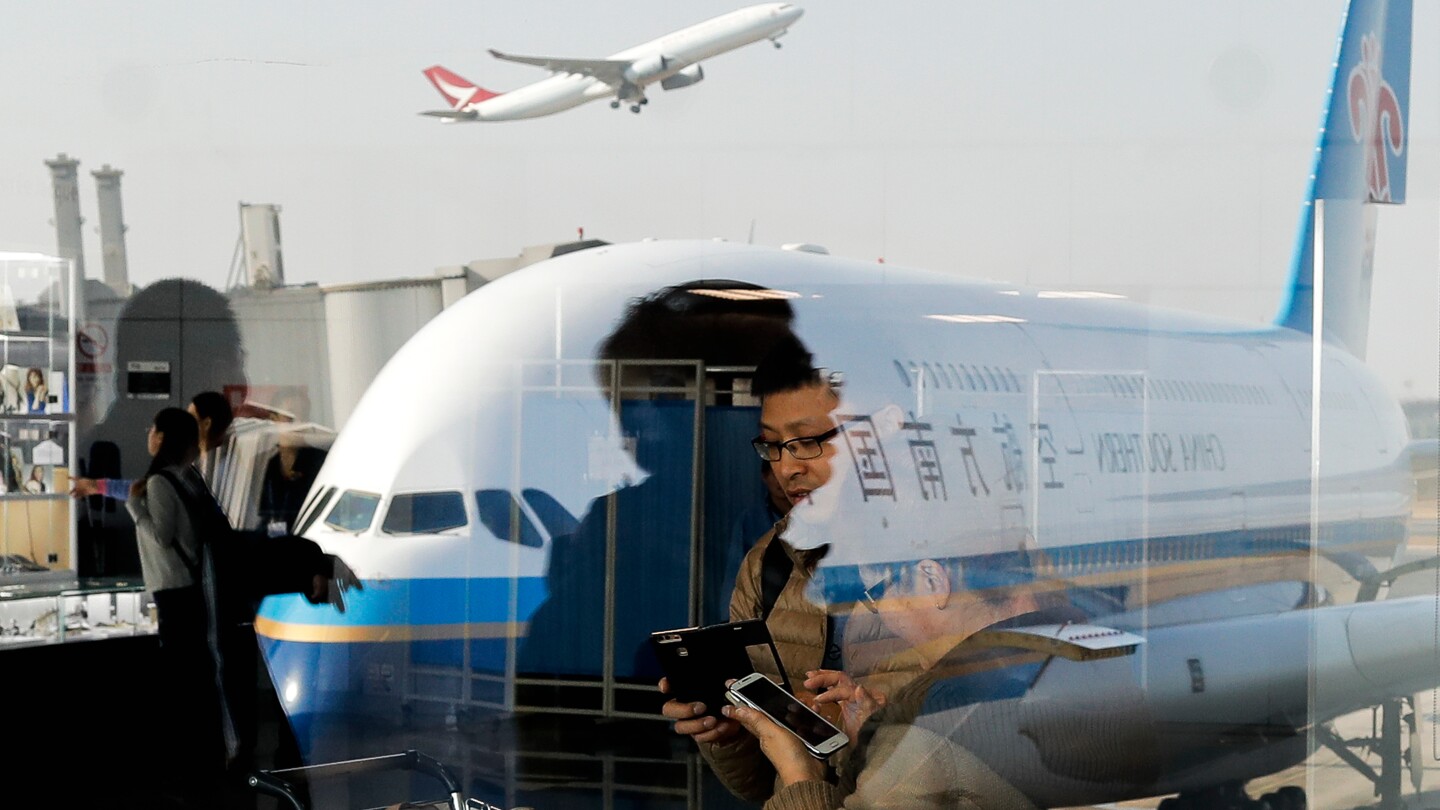
Major Chinese state-owned airlines have strongly opposed a U.S. proposal to prohibit them from flying over Russian airspace on routes to and from the United States. The U.S. argues that this restriction would level the playing field, as American carriers are barred from Russian airspace due to sanctions imposed after Russia’s invasion of Ukraine in 2022. Air China, China Eastern, and China Southern are among six carriers that have filed formal complaints against the proposed ban, warning of significant disruptions to travelers and increased costs. China Eastern emphasized that the ban would harm public interest and inconvenience passengers, leading to longer flight times, higher fuel consumption, and elevated airfares. China Southern highlighted the potential impact on thousands of travelers, while Air China estimated that over 4,400 passengers could be affected during the upcoming holiday season. The Chinese Foreign Ministry also criticized the proposal, labeling it as punitive to global passengers. Aviation expert David Yu noted that U.S. carriers face increased costs due to longer flight paths, while Chinese airlines benefit from cost savings by using Russian airspace. Despite these advantages, Chinese carriers have faced financial challenges, particularly since the COVID-19 pandemic. The U.S. Department of Transportation defended the proposal, citing ‘competitive imbalances’ caused by Chinese airlines’ access to more efficient routes. European carriers, including Air France-KLM, have also expressed concerns, while United Airlines urged that Cathay Pacific, Hong Kong’s flagship carrier, be excluded from the ban.
分类: business
-
Most US stocks rise after swinging through another erratic day
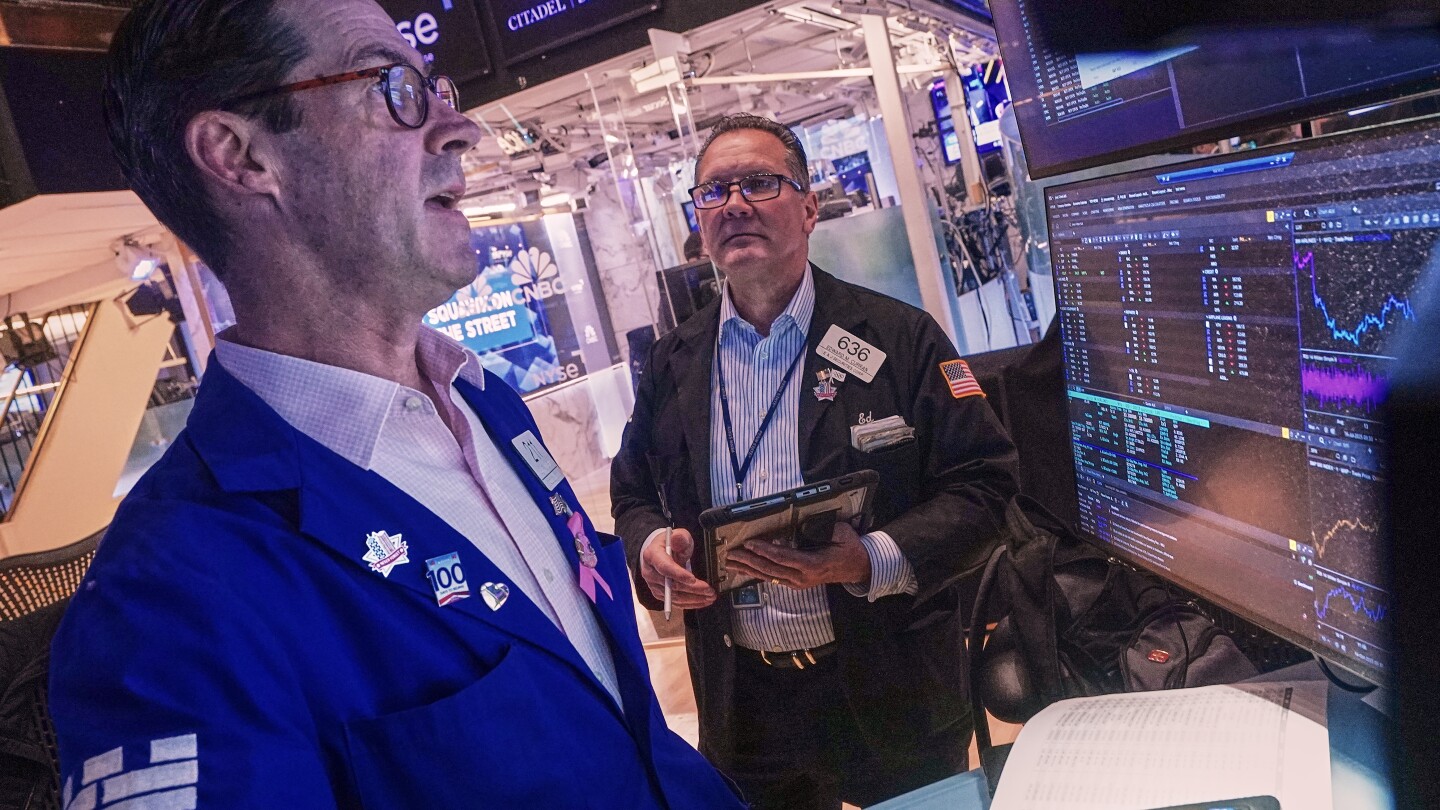
Wall Street experienced another day of erratic trading on Wednesday, with major indices showing mixed results. The S&P 500 gained 0.4%, recovering from earlier fluctuations that saw it nearly erase a significant morning rally. The Nasdaq composite rose 0.7%, bouncing between a 0.4% drop and a 1.4% surge, while the Dow Jones Industrial Average dipped slightly by 17 points, or less than 0.1%. This volatility follows a turbulent Tuesday, where the Dow swung between a 615-point loss and a 455-point gain, reflecting ongoing market uncertainty. The recent instability traces back to President Donald Trump’s threat of higher tariffs on China, which disrupted a period of relative calm in the markets. Technology stocks led the charge on Wednesday, buoyed by a strong earnings report from ASML, a key player in the semiconductor industry. ASML projected a 15% revenue increase by 2025, with next year’s earnings expected to match or exceed this year’s. CEO Christophe Fouquet highlighted the growing momentum in AI investments, countering concerns of a potential bubble akin to the dot-com frenzy of 2000. Financial institutions also contributed to the market’s upward movement, with Bank of America and Morgan Stanley posting better-than-expected profits. However, PNC Financial and Abbott Laboratories faced declines due to underwhelming forecasts and revenue shortfalls. Corporate earnings are under heightened scrutiny as investors seek clarity on the U.S. economy’s health, especially with delayed government reports on inflation and other key indicators. The Federal Reserve’s recent rate cut and hints of further reductions add another layer of complexity, as policymakers balance inflation concerns with a slowing job market. In the bond market, the 10-year Treasury yield held steady at 4.03%, while gold prices surged 0.9% to over $4,200 per ounce, driven by global economic uncertainties. Overseas, Asian markets saw strong gains, with South Korea’s Kospi jumping 2.7%, while European indices showed mixed results.
-
IMF: China’s economy to grow at 4.8%
The International Monetary Fund (IMF) has revised its economic growth projection for China, anticipating a 4.8% expansion in the coming year. This updated forecast, released in the IMF’s World Economic Outlook on Tuesday morning in Washington, marks a 0.3 percentage point increase from the previous year’s estimate. The upward adjustment reflects China’s robust economic performance in recent quarters, bolstered by fiscal expansion, resilient domestic consumption, and accelerated trade activities. These factors have effectively mitigated the adverse effects of elevated tariffs and persistent global uncertainties. The IMF’s optimistic outlook underscores China’s ability to navigate complex economic challenges while maintaining steady growth. (Reporter: Zhao Huanxin, Video: Bilin Lin)
-
China economy to stay growing, IMF forecasts
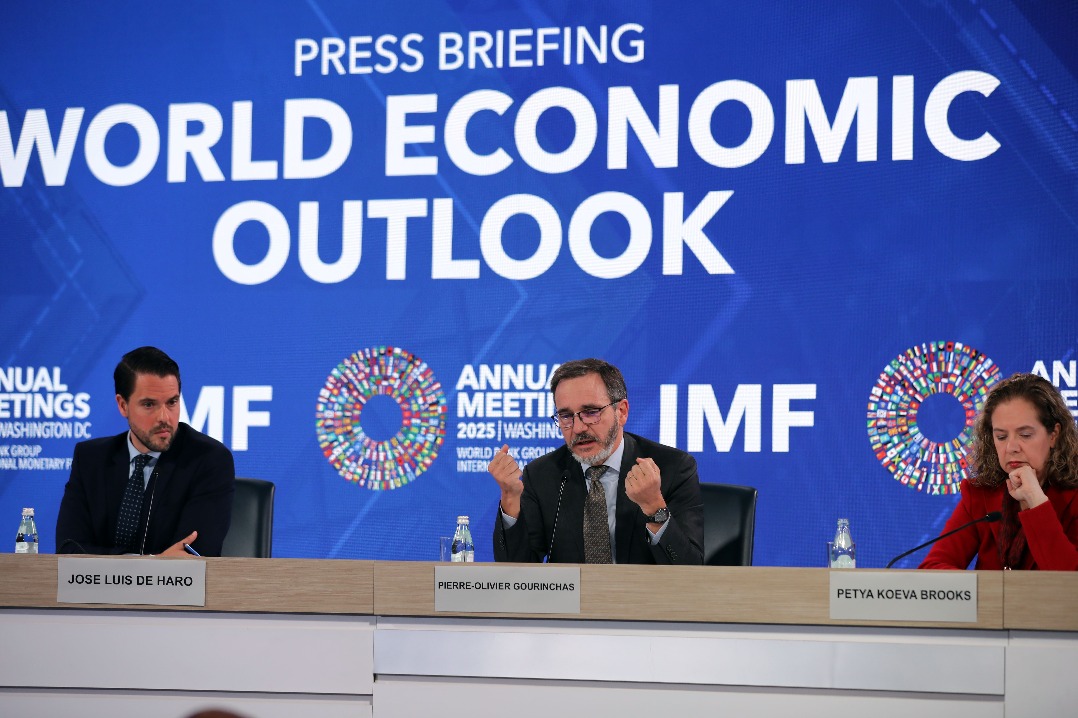
The International Monetary Fund (IMF) has revised its growth forecast for China’s economy, projecting a 4.8% expansion in 2025, up 0.3 percentage points from its earlier estimate. This optimistic outlook comes despite global economic headwinds, including escalating trade tariffs and potential downturns in the technology sector. The IMF’s World Economic Outlook, released during the annual IMF/World Bank autumn meetings, also highlighted a slowdown in global growth, with projections of 3.2% for 2025 and 3.1% for 2026, marking a cumulative downgrade of 0.2 percentage points from previous forecasts. China’s resilience is attributed to robust domestic consumption, fiscal expansion, and strategic trade redirection to Asia and Europe. Premier Li Qiang emphasized the importance of counter-cyclical adjustments, policy support, and reforms to sustain economic momentum. Meanwhile, the U.S. economy is expected to grow at a slower pace of 2% in 2025, down from 2.2% in 2024, due to policy uncertainty and higher trade barriers. IMF Economic Counselor Pierre-Olivier Gourinchas warned that while the immediate impact of tariffs has been limited, their long-term effects could lead to efficiency losses and supply chain disruptions. He also cautioned against the risks of a technology sector downturn, reminiscent of the dot.com bubble, which could trigger a global slowdown. Despite these challenges, resolving policy uncertainty and fostering stable trade agreements could provide a significant boost to global output.
-
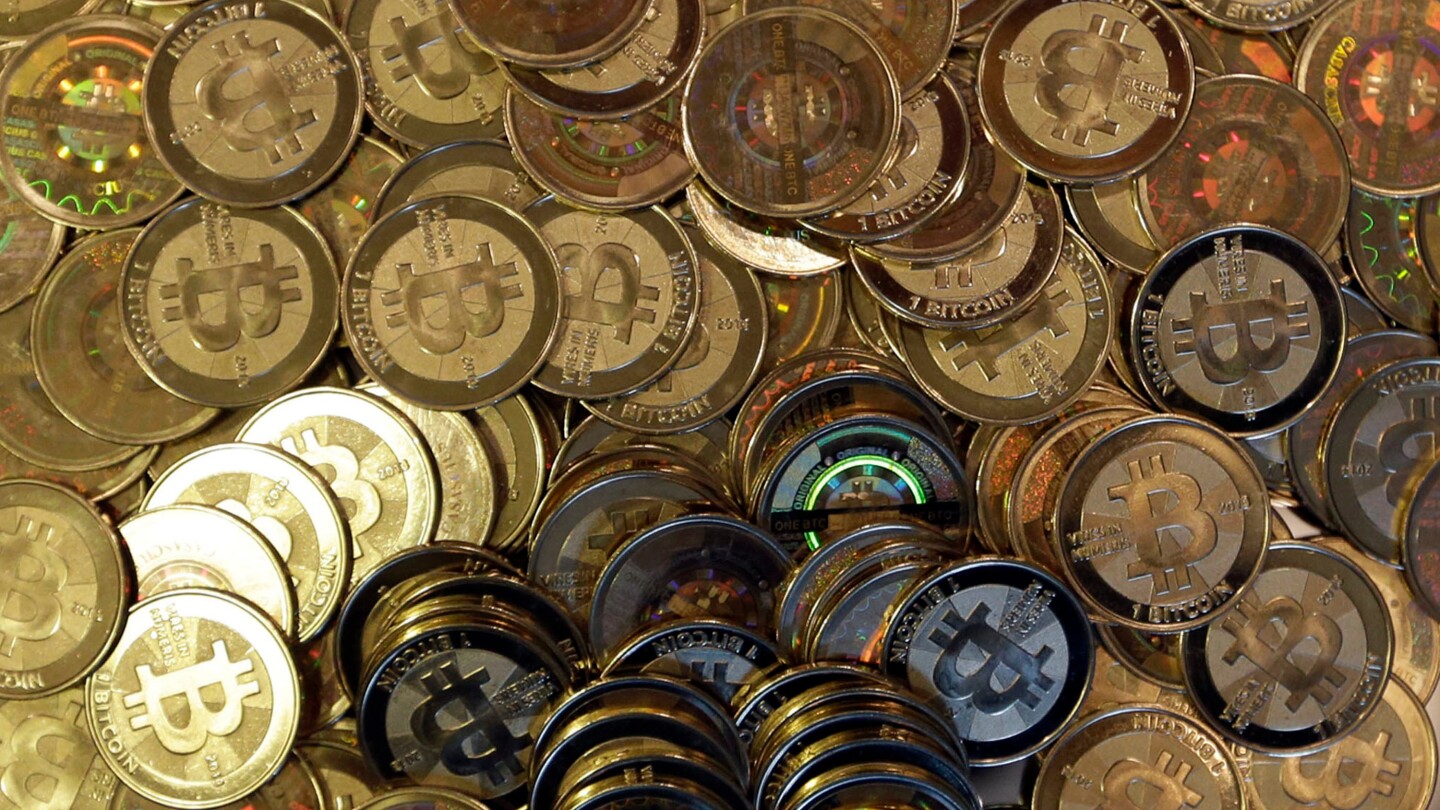
US charges Cambodian executive in massive crypto scam and seizes more than $14 billion in bitcoin
In a landmark crackdown on global financial crime, U.S. authorities have seized over $14 billion in bitcoin and charged Chen Zhi, the founder of Cambodia’s Prince Holding Group, with orchestrating a sprawling cryptocurrency scam. The indictment, unsealed by Brooklyn federal prosecutors on Tuesday, accuses Chen and unnamed co-conspirators of exploiting forced labor to defraud investors and laundering illicit proceeds to fund a lavish lifestyle, including the purchase of yachts, private jets, and a Picasso painting. Chen, 38, faces charges of wire fraud conspiracy and money laundering conspiracy, with potential penalties of up to 40 years in prison if convicted. The U.S. Treasury Department has designated Prince Holding Group, a conglomerate involved in real estate and financial services, as a transnational criminal organization, while sanctions have been imposed by both U.S. and British authorities. Chen, who remains at large, is alleged to have sanctioned violence against workers, authorized bribes to foreign officials, and used his businesses, including online gambling and cryptocurrency mining, to launder profits. The scam, described as one of the largest investment fraud operations in history, reportedly generated $30 million daily at its peak. U.S. authorities plan to use the seized bitcoins, currently valued at approximately $113,000 each, to compensate victims. The case highlights the growing threat of Southeast Asia-based scams, which cost Americans $10 billion in 2023 alone. Chen, a close associate of Cambodia’s ruling elite, has been under investigation by Chinese authorities since 2020 for cyber fraud and money laundering. Experts warn that while the indictment and sanctions disrupt the criminal network, dismantling the scam economy will require sustained international efforts.
-

Gulf job market adds 7 million workers as UAE leads shift toward gender-inclusive growth
The Gulf Cooperation Council (GCC) job market has witnessed a remarkable transformation over the past five years, with employment surging by nearly 7 million workers, according to the latest data from the Gulf Statistical Center. Between 2020 and 2024, the total workforce across the GCC grew from 28 million to 34.9 million, marking a 24.8% increase. This growth has been driven by robust labour market reforms, private-sector development, and a significant rise in female workforce participation, which expanded by 11.6% during the same period, from 2.8 million to 3.1 million women. The UAE has emerged as a regional leader in fostering a more dynamic, diversified, and inclusive labour market, particularly through its Emiratisation programme, Nafis, which has expanded to include small and medium enterprises (SMEs) and incentivised private-sector employment for Emiratis. Across the GCC, targeted reforms such as Saudi Arabia’s Saudisation policies, Kuwait’s private-sector incentives, and Bahrain’s flexible work permits have further bolstered workforce growth. Notably, women’s participation in the workforce has been a standout trend, with female nationals increasing from 2.2 million to 2.3 million between 2023 and 2024. However, challenges remain in achieving gender parity in leadership roles, as women still account for only 28% of promotions in top-performing companies. Despite this, 95% of leading companies in the region now offer leadership training for women, and 79% provide formal mentoring, signalling a cultural shift toward greater workplace inclusivity. Experts predict that the Gulf’s focus on integrating women into growth sectors like technology, finance, and renewable energy could mark a historic turning point for gender parity, with the UAE’s inclusive economic agenda serving as a model for the wider region.
-

IMF upgrades US growth outlook as Trump’s tariffs cause less disruption, for now
The International Monetary Fund (IMF) has revised its global economic growth projections upward, citing resilience in the face of U.S. tariffs. In its latest World Economic Outlook report, the IMF forecasts the U.S. economy to expand by 2% in 2025, slightly higher than previous estimates of 1.9% in July and 1.8% in April. For 2026, U.S. growth is projected at 2.1%, a marginal increase from earlier predictions. Globally, the IMF anticipates a 3.2% growth rate for 2025, up from 3% in July, with 2026 holding steady at 3.1%. Despite these positive adjustments, the IMF warns that ongoing tariff threats and trade uncertainties continue to pose significant risks.
-
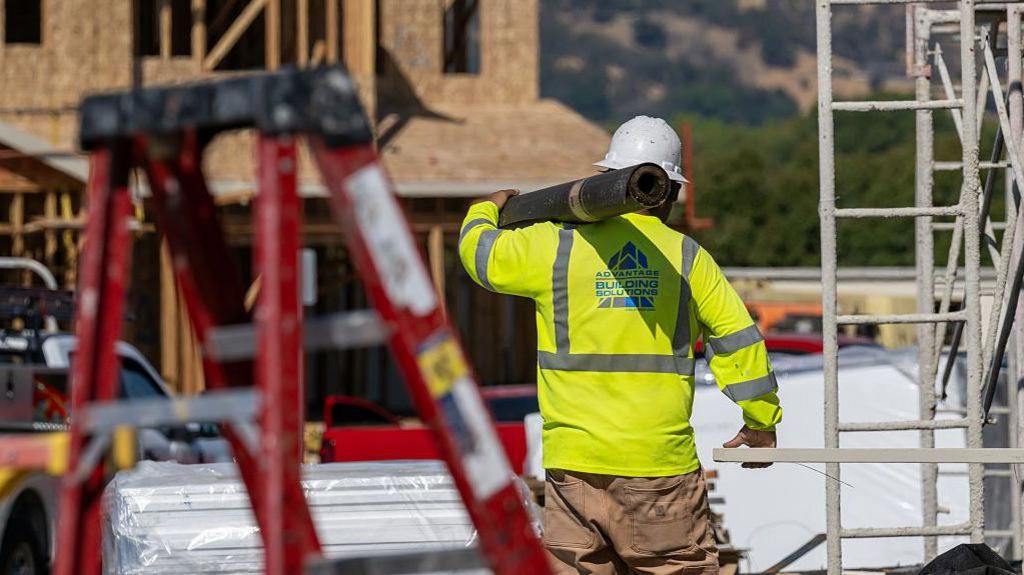
Trump tariffs on kitchen cabinets and lumber come into force
The United States has implemented a new wave of tariffs targeting imported kitchen cabinets, vanities, softwood lumber, timber, and certain upholstered furniture. These measures, enacted through a proclamation signed by President Donald Trump last month, took effect this week. The tariffs include a 10% levy on softwood lumber and timber, a 25% duty on kitchen cabinets and vanities—set to rise to 50% by January 1—and a 25% charge on upholstered wooden furniture, which will increase to 30% unless new trade agreements are negotiated. President Trump has justified these tariffs as necessary to protect U.S. manufacturers and address national security concerns. However, industry experts warn that the additional costs could drive up housing expenses and deter consumers from undertaking home renovations. Tariffs, which are taxes on imported goods paid by companies, often result in higher prices for end consumers, including American households and businesses. This latest move is part of Trump’s broader tariff strategy, which has included sector-specific duties on steel, aluminum, vehicles, and other products during his second term. Notably, the 10% global tariff on softwood lumber compounds existing duties on Canadian imports, bringing the total levy to over 45%. Canada, the second-largest global producer and a major U.S. supplier, has long been embroiled in trade disputes with the U.S. over this product. Meanwhile, wood products from the UK, EU, and Japan face lower tariffs under existing trade agreements. The White House asserts that these measures are essential to safeguard national security and bolster domestic manufacturing. However, critics, including the National Association of Homebuilders, argue that the tariffs will exacerbate challenges in the housing market by increasing construction and renovation costs. Retailers, too, are feeling the pressure. Analysts predict that companies will have no choice but to pass on the additional costs to consumers, potentially leading to double-digit price hikes. Swedish furniture giant Ikea has already acknowledged the difficulties posed by the tariffs, stating that they are impacting its business operations. As the holiday season approaches, retailers face the daunting task of balancing price increases with consumer demand.
-

China’s exports of electric vehicles doubled in September as competition at home intensifies
China’s electric vehicle (EV) exports surged by 100% in September compared to the same period last year, reaching 222,000 units, according to the China Association of Automobile Manufacturers. This growth underscores the aggressive expansion of Chinese automakers into international markets, particularly Europe and Southeast Asia. While the figure was slightly lower than August’s 224,000 units, it highlights the increasing reliance on overseas markets due to overcapacity and intense price competition domestically. The U.S.-based consultancy Rhodium Group noted that Chinese EV manufacturers invested more abroad than domestically in 2023, marking a significant shift since 2014. BYD, one of China’s leading EV producers, reported an 880% year-on-year sales increase in the United Kingdom, now its largest market outside China. However, domestic passenger car sales growth slowed to 11.2% in September, down from 15% in August. Chinese automakers are also diversifying their investments into the Middle East and Africa, partly in response to high tariffs imposed by the European Union, U.S., and Canada. Despite these challenges, September remains a peak sales period in China, supported by government subsidies for trade-ins of new energy vehicles, though some local governments have recently suspended such payments.
-

US shipping chaos: I fear my wedding sari is destroyed
The Trump administration’s abrupt changes to U.S. import regulations have triggered widespread chaos in the shipping industry, leaving customers like Nicole Lobo and Janani Mohan in distress. Nicole, a 28-year-old graduate student, shipped 10 boxes of her belongings from the UK to Philadelphia in late August, expecting them to arrive within days. Six weeks later, she fears her possessions may be lost or destroyed by UPS, which is struggling to handle a surge in packages under new customs and tariff rules. ‘It’s been horrific,’ she says, recounting frantic efforts to prevent the disposal of her items after receiving a notification last month. Similarly, Janani, a 29-year-old engineer, is devastated by the potential loss of a box containing her wedding dress, an heirloom sari, and wedding photos sent by her parents in India. ‘Everything in there is very close to my heart,’ she says, describing tearful phone calls with UPS. The new rules, implemented in late August, require parcels worth less than $800 to undergo inspections, taxes, or tariffs, subjecting an estimated 4 million packages daily to more rigorous processing. This has led to longer processing times, higher costs, and widespread confusion. Businesses like Mizuba Tea Co. and Swedish Candy Land are also feeling the impact. Mizuba, which imports matcha from Japan, has five shipments worth over $100,000 stuck in processing, while Swedish Candy Land has lost $50,000 due to destroyed packages. Experts warn the ripple effects could worsen, with FedEx executives describing it as a ‘very stressful period’ for customers. The National Foreign Trade Council fears the issues may persist, as companies struggle to adapt to the new trade environment.