分类: business

  • US calls Argentina peso bet a ‘homerun deal’

    US calls Argentina peso bet a ‘homerun deal’

    US Treasury Secretary Scott Bessent has publicly declared the nation’s high-stakes intervention in Argentina’s currency market a resounding success, confirming full repayment of American financial support with substantial profits. The controversial maneuver, executed last year during the Argentine peso’s sharp decline, was designed to prevent further economic turmoil and bolster President Javier Milei’s political faction ahead of critical midterm elections.

    The strategic operation involved purchasing depreciating pesos and establishing a currency swap facility that allowed Argentina to exchange pesos for US dollars. This intervention effectively halted the currency’s downward spiral, particularly after Milei’s party achieved a decisive electoral victory. According to official reports, Argentina’s central bank settled the swap arrangement in December, utilizing only $2.5 billion of the available $20 billion facility.

    Bessent characterized the outcome as an ‘America First homerun deal’ that simultaneously stabilized a key ally and generated tens of millions in profit for American taxpayers. The Treasury Department had faced significant criticism from Democratic opponents who questioned the wisdom of risking public funds in a nation with Argentina’s volatile financial history.

    Additional disclosures revealed separate financial support totaling $872 million involving International Monetary Fund reserves, though the Treasury has not provided detailed commentary on this transaction. While acknowledging the operation’s financial success, economic analysts caution that Argentina continues to face substantial challenges, including depleted foreign reserves and overreliance on external support mechanisms.

  • China invests 5.68 trillion yuan in water conservancy over past five years

    China invests 5.68 trillion yuan in water conservancy over past five years

    China has channeled an unprecedented 5.68 trillion yuan ($800 billion) into water conservancy projects throughout its 14th Five-Year Plan period (2021-2025), marking a transformative investment in national water security and economic stabilization. The substantial funding represents four consecutive years of exceeding the trillion-yuan threshold in annual water management investments.

    Vice-Minister of Water Resources Chen Min, speaking at a State Council Information Office press conference in Beijing, highlighted the dual economic and infrastructural benefits of this massive undertaking. The investments have served as a powerful economic stabilizer while simultaneously addressing critical water security challenges across the nation.

    In 2025 alone, water conservancy initiatives generated 3.15 million employment opportunities through 1.28 trillion yuan in allocated funding. This job creation aspect has proven particularly valuable in maintaining employment stability during periods of economic transition.

    The strategic allocation of resources has yielded tangible improvements in China’s water infrastructure network. Authorities have successfully reinforced 17,998 aging and high-risk reservoirs while implementing comprehensive river management programs across 3,741 small and medium-sized waterways.

    These enhancements have produced measurable results: a 31.8 billion cubic meter expansion in national water supply capacity, 22.3 billion cubic meters in additional reservoir storage, and irrigation access extended to over 3.5 million hectares of agricultural land. The improvements significantly bolster China’s flood control capabilities while addressing water scarcity concerns in various regions.

    The sustained investment reflects China’s commitment to building climate-resilient infrastructure and ensuring water security amid increasing climate volatility. The comprehensive water network development aligns with broader national strategies for agricultural stability, urban water supply reliability, and disaster prevention.

  • Qingdao targets Southeast Asian tourists with direct flights

    Qingdao targets Southeast Asian tourists with direct flights

    The coastal city of Qingdao in Shandong province has strategically positioned itself to capitalize on China’s burgeoning inbound tourism market by establishing new air connections with Southeast Asia. This development comes as Chinese urban centers intensify competition to attract international visitors amid the growing “Travel China” movement.

    The recently inaugurated direct flight route connecting Ho Chi Minh City and Qingdao has significantly reduced travel time between Vietnam and the eastern Chinese coastal destination. The non-stop service has slashed one-way journey duration to approximately five hours—nearly halving the previous travel time that required connecting flights through intermediary hubs.

    In a targeted promotional effort, Qingdao hosted more than thirty Vietnamese travel industry professionals and over ten influential digital content creators from January 2nd to 7th. This delegation experienced firsthand the city’s tourism offerings, with many participants utilizing the newly established air connection for their journey.

    The initiative represents a concerted push by Qingdao tourism authorities to capture market share from Southeast Asia and South Korea, recognizing the substantial potential of these regional markets. Industry observers note that the reduced travel time and convenience of direct flights serve as significant competitive advantages in attracting international tourists seeking accessible Chinese destinations.

    Visual documentation from the familiarization tour showcased Vietnamese visitors enjoying Qingdao’s picturesque coastal scenery, highlighting the city’s natural attractions as a key selling point for international marketing campaigns. Tourism officials anticipate that enhanced connectivity will stimulate increased visitor numbers from Southeast Asia throughout 2026.

  • Nevada eyes Chinese tech cooperation to boost economic diversification

    Nevada eyes Chinese tech cooperation to boost economic diversification

    In a strategic move to accelerate its economic transformation, the US state of Nevada is actively pursuing deeper technological and trade cooperation with China. Lieutenant Governor Stavros Anthony articulated this vision during the recent Consumer Electronics Show (CES) in Las Vegas, signaling a deliberate shift from the state’s iconic gaming and tourism image toward a diversified, innovation-driven economy.

    Anthony emphasized that Nevada’s longstanding diversification strategy now prioritizes attracting global high-tech enterprises, with Chinese technology firms representing a key demographic. This outreach occurs against the backdrop of enduring US-China trade tensions, yet Nevada maintains its commitment to being a business-friendly jurisdiction open to international investment.

    Chinese technological prowess was prominently displayed at CES 2026, where companies led advancements in robotics, intelligent automotive systems, next-generation displays (MiniLED and rollable OLED), AI applications, smart home ecosystems, and clean energy solutions. Multiple Chinese manufacturers received CES Innovation Awards, evidencing their manufacturing sophistication and design innovation.

    Nevada’s development priorities align closely with these technological strengths. The state is actively promoting sustainable industries, particularly those focused on water conservation and energy efficiency—critical concerns given its arid climate. Anthony explicitly welcomed Chinese companies specializing in renewable energy and water-efficient technologies to explore investment opportunities within the state.

    The historical context underpins this modern partnership. Chinese immigrants contributed significantly to Nevada’s 19th-century development through mining and railroad construction. Today, China remains Nevada’s largest import source, supplying electronics, machinery, and furniture, making the state one of the most reliant on Chinese goods in the US.

    Demonstrating its commitment, Nevada’s leadership formally recognized leading Chinese brands including Huawei, TCL, Haier, and Hisense at the Global Top Brands Awards ceremony co-hosted during CES, acknowledging their global innovative contributions. Anthony concluded by reinforcing Nevada’s ambition to be a ‘global state’ that collaborates internationally, including with China, to build a resilient and sustainable economic future.

  • Hubei’s eco resources help to build industries

    Hubei’s eco resources help to build industries

    Central China’s Hubei Province is pioneering an innovative economic transformation by converting its ecological treasures into sustainable industrial development along the Yangtze River Economic Belt. This strategic initiative demonstrates the practical implementation of China’s ‘two mountains’ concept that recognizes lucid waters and lush mountains as invaluable economic assets.

    In Shiyan city, the pristine Danjiangkou Reservoir—primary water source for the South-to-North Water Diversion Project—has evolved into the foundation of a burgeoning beverage industry. Under the premium ‘Wudang Mountain Water’ brand, the region has attracted 72 prominent beverage companies including Nongfu Spring and PepsiCo. This cluster has developed a comprehensive industrial chain encompassing drinking water, tea beverages, fruit juices and beer, collectively generating over 100 billion yuan ($14.32 billion) in output value.

    Beijing Yiqing Food’s industrial park in Danjiangkou exemplifies this sustainable approach. The company utilizes fully automated production lines to create beverages that incorporate local resources while implementing advanced environmental protections. Their operations include dedicated sewage treatment facilities, conversion of waste residue into organic fertilizer, and adoption of photovoltaic energy systems, creating a circular economy that benefits both production and ecological conservation.

    Further downstream in Zigui county, technological innovation is revolutionizing the citrus industry. Farmers like Guo Xingcheng have transformed traditional agricultural practices through drone technology. What previously required thirty minutes of manual labor now takes merely sixty seconds with drone-assisted harvesting. The county has developed an intelligent sorting system that categorizes oranges by size, moisture content and sugar levels, supported by an extensive cold chain logistics network that extends shelf life to several months.

    The ‘Zigui Navel Orange’ geographical indication brand now represents an industry spanning 26,667 hectares with annual output exceeding one million tons and comprehensive value approaching 20 billion yuan. Over 70% of local residents participate in orange-related industries, sustaining livelihoods for approximately 260,000 people while creating new professional roles in drone operation and e-commerce.

    In Shennongjia, renowned for its 91.1% forest coverage, authorities have developed financial innovations to monetize ecological value. The region’s annual carbon absorption capacity of 1.0968 million tons has been leveraged through carbon sink loans and ecological financing mechanisms. By August 2024, Shennongjia had issued approximately 120 million yuan in carbon sink loans, including 18.4 million yuan in carbon forest loans to two enterprises using afforestation carbon sink income as repayment collateral.

    These diverse initiatives—from water-based industries to agricultural modernization and carbon finance—collectively contributed to Hubei’s ecological product value exceeding 1.2 trillion yuan in 2024. The added value of green industries now constitutes 25.6% of the province’s GDP, demonstrating the successful integration of environmental conservation and economic development.

  • ASX flat as Rio Tinto-Glencore merger talks, falling banks weigh on market

    ASX flat as Rio Tinto-Glencore merger talks, falling banks weigh on market

    The Australian equity market concluded Friday’s session with minimal movement, showcasing a tense equilibrium between surging energy stocks and downward pressure from financial and mining sectors. The benchmark S&P/ASX 200 index experienced a marginal decline of 3 points, settling at 8,717.80, while the broader All Ordinaries index also remained virtually unchanged, dipping a mere 0.60 points to 9,045.90. The Australian dollar witnessed a slight depreciation, closing at 66.94 US cents.

    Market dynamics revealed a sectoral split, with five sectors advancing and six retreating. The energy sector emerged as the standout performer, propelled by a consecutive two-day rally in Brent crude futures, which climbed back above $92 per barrel. This bullish sentiment fueled significant gains for industry leaders: Woodside Energy ascended 2.79%, Santos surged 3.54%, and Ampol advanced 1.03%. Capital.com’s senior analyst, Kyle Rodda, attributed this momentum to markets recalibrating supply and demand equations following Venezuela’s reintegration into global energy markets.

    Conversely, the market faced substantial headwinds from two primary sources. Mining behemoth Rio Tinto plummeted 6.27% following its confirmation of preliminary merger discussions with London-based Glencore. In official ASX statements, both corporations acknowledged exploratory talks regarding a ‘possible combination,’ with Rio Tinto indicating any transaction would likely constitute its acquisition of Glencore through a court-sanctioned scheme. This development created a ripple effect across mining equities, though rival BHP managed a 0.80% gain while Fortescue Metals experienced a slight decline.

    The financial sector exerted additional downward pressure, with all four major banks closing in negative territory. ANZ led the losses with a 0.64% drop, followed by Westpac (0.29%), NAB (0.19%), and Commonwealth Bank (0.08%). Investment bank Macquarie Group further weighed on the sector, retreating 1.25%.

    Several individual companies delivered exceptional performances. Technology firm Codan skyrocketed 16.88% after announcing unaudited first-half profits surged 52% to $70 million. Biotechnology company Mesoblast rallied 4.07% on robust revenue growth, while defense contractors Droneshield and Austal advanced 4.41% and 3.33% respectively, bolstered by expanded U.S. military spending initiatives.

  • Asian shares rise and US futures are flat after modest Wall Street moves

    Asian shares rise and US futures are flat after modest Wall Street moves

    Asian equity markets demonstrated broad-based gains on Friday, propelled by a confluence of factors including robust corporate earnings and anticipatory sentiment surrounding U.S. policy developments. The trading session reflected a cautiously optimistic regional outlook, diverging from the previous day’s mixed performance on Wall Street.

    Japan’s Nikkei 225 index emerged as a standout performer, advancing 1.1% to close at 51,692.70. This surge was significantly driven by exceptional results from Fast Retailing, the parent company of global apparel brand Uniqlo. The retailer’s shares skyrocketed over 7% following the announcement of a remarkable 34% year-on-year increase in quarterly operating profit, prompting an upward revision of their full-year financial forecasts.

    Chinese markets posted modest gains with the Hang Seng Index in Hong Kong edging up 0.1% to 26,158.21, while the Shanghai Composite rose 0.3% to 4,095.33. This upward momentum coincided with the release of official data indicating China’s inflation rate accelerated in December at its fastest pace in nearly three years, signaling strengthening domestic demand that typically exerts upward pressure on consumer prices.

    In a notable market debut, Chinese artificial intelligence firm MiniMax experienced a spectacular initial public offering on the Hong Kong Stock Exchange, with shares surging more than 50% during early trading sessions, highlighting robust investor appetite for technology innovations.

    Meanwhile, Australia’s S&P/ASX 200 bucked the regional trend, dipping marginally by less than 0.1% to 8,715.60. This slight decline was largely attributed to a significant 6% drop in Rio Tinto shares following the mining giant’s confirmation of preliminary merger discussions with Glencore. A potential consolidation between these industry behemoths could potentially create the world’s largest mining conglomerate.

    Other regional indices including South Korea’s Kospi and Taiwan’s Taiex posted gains of 0.7% and 0.3% respectively, contributing to the overall positive Asian market performance.

    Market participants maintained heightened attention toward impending U.S. economic indicators, particularly the Labor Department’s December jobs report scheduled for release. Additionally, investors awaited a potential Supreme Court ruling on former President Trump’s proposed ‘Liberation Day’ tariffs, which could substantially influence market sentiment.

    The previous trading session on Wall Street witnessed significant rallies within the defense sector following statements from former President Trump advocating for increased military spending, potentially reaching $1.5 trillion by 2027. Major defense contractors including L3Harris Technologies, Lockheed Martin, and Northrop Grumman recorded substantial gains of 5.2%, 4.3%, and 2.4% respectively.

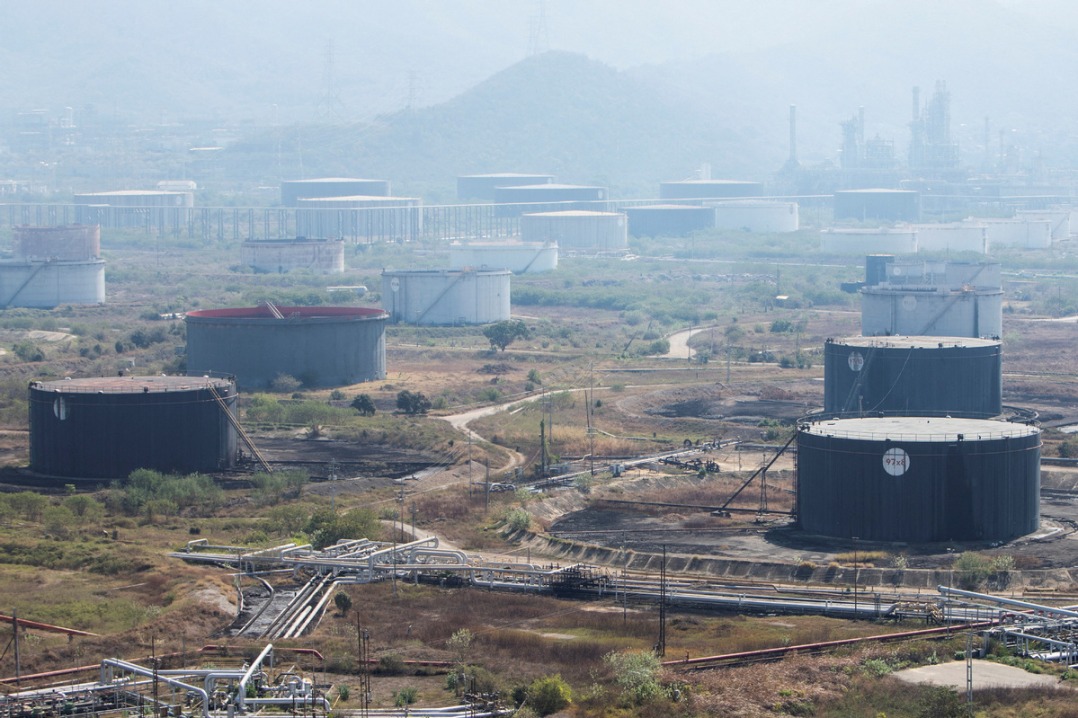
    In commodity markets, oil prices experienced upward movement amid ongoing supply concerns following geopolitical developments in Venezuela. Benchmark U.S. crude rose by 35 cents to $58.11 per barrel, while international standard Brent crude gained 38 cents to $62.37. These price increases occurred against a backdrop of continued U.S. efforts to assert control over Venezuela’s substantial oil resources, including recent seizures of tankers attempting to evade sanctions.

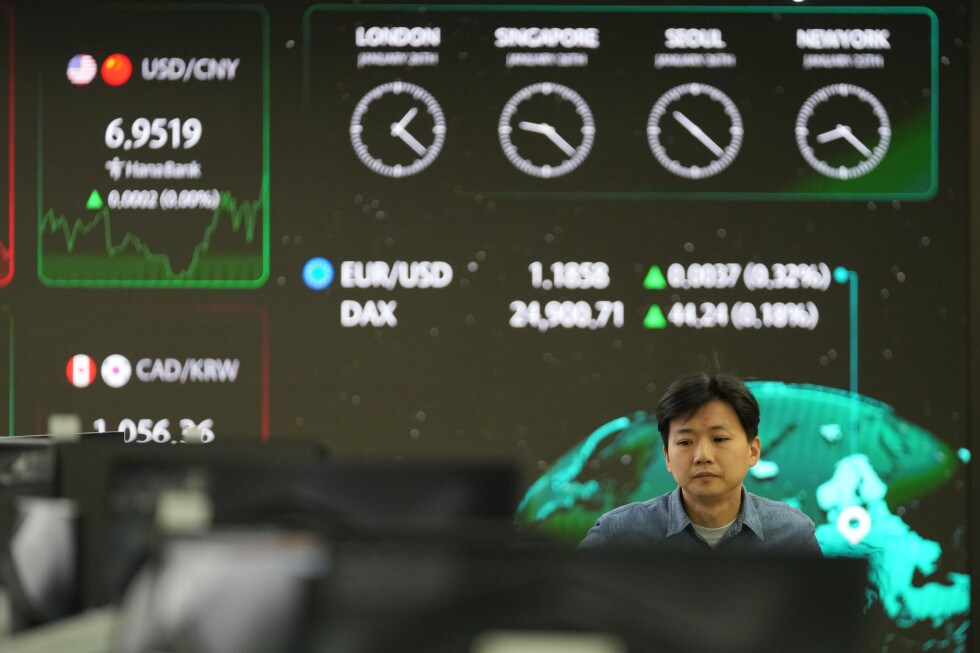
    Currency markets saw the U.S. dollar strengthen against the Japanese yen, rising to 157.27 yen, while the euro experienced a slight decline against the dollar to $1.1656.

  • UN report forecasts global economic output to grow 2.7 percent in 2026

    UN report forecasts global economic output to grow 2.7 percent in 2026

    The United Nations has projected a global economic expansion of 2.7 percent for 2026, according to its World Economic Situation and Prospects 2026 report released Thursday. This figure represents a marginal deceleration from the 2.8 percent growth estimated for 2025 and remains substantially below the pre-pandemic average of 3.2 percent, indicating a prolonged period of moderated economic performance worldwide.

    Regional economic trajectories reveal significant variations. The United States is anticipated to maintain relative stability with 2 percent growth in 2026, slightly improving from 1.9 percent in 2025, bolstered by monetary and fiscal easing measures. Conversely, the European Union faces a downturn to 1.3 percent growth in 2026 from 1.5 percent, constrained by elevated U.S. tariffs and persistent geopolitical uncertainties affecting export performance.

    East Asia demonstrates resilient yet slowing expansion at 4.4 percent for 2026, down from 4.9 percent, as the temporary stimulus from front-loaded exports diminishes. Japan’s economy is expected to grow modestly at 0.9 percent. South Asia maintains robust growth at 5.6 percent, primarily driven by India’s strong 6.6 percent expansion, though this represents a slight easing from regional performance in 2025.

    Notable improvements are forecast for Western Asia, with GDP growth accelerating to 4.1 percent from 3.4 percent. Africa projects a marginal uptick to 4 percent growth despite confronting substantial challenges including high debt burdens and climate-related disruptions. Latin America and the Caribbean anticipate moderate growth of 2.3 percent, slightly down from 2.4 percent, supported by steady consumer demand and gradual investment recovery.

    The Commonwealth of Independent States and Georgia demonstrate remarkable stability with 2.1 percent growth projected for 2026, maintaining pace despite ongoing macroeconomic pressures from the Ukraine crisis.

    Global trade exhibited unexpected resilience in 2025, expanding 3.8 percent despite policy uncertainties and rising protectionist measures, fueled by early-year shipment surges and vigorous services trade. However, this momentum is expected to moderate significantly to 2.2 percent growth in 2026, reflecting broader economic headwinds.

  • Saudia adds Kozhikode to its network with 8 weekly flights in each direction

    Saudia adds Kozhikode to its network with 8 weekly flights in each direction

    Saudi Arabia’s national carrier Saudia has announced a significant expansion of its Indian operations with the addition of Kozhikode as its seventh destination in the country. The new route connecting Kerala’s coastal city with Riyadh’s King Khalid International Airport will commence operations on February 1, 2026, featuring eight weekly flights in each direction.

    This strategic move positions Kozhikode alongside established Indian destinations including Bengaluru, Mumbai, Kochi, Delhi, Hyderabad, and Lucknow in Saudia’s growing network. The airline confirmed that bookings are currently available through its official digital platforms, while operational coordination with Kozhikode International Airport authorities is underway to ensure seamless service launch.

    The expansion aligns with Saudia’s broader strategy to enhance global connectivity to the Kingdom, optimize its modern fleet utilization, and strengthen international competitiveness. With this addition, Saudia’s extensive network now spans over 100 destinations across four continents, facilitating tourism, business travel, and religious pilgrimages during Hajj and Umrah seasons.

    The airline currently maintains an robust operational schedule of more than 550 daily domestic and international flights, reinforcing its position as a major aviation player connecting the Middle East with global markets.

  • Rio Tinto eyes acquisition of rival Glencore in major merger discussions

    Rio Tinto eyes acquisition of rival Glencore in major merger discussions

    In a landmark development within the global resources sector, mining behemoths Rio Tinto and Glencore have officially acknowledged engaging in preliminary merger discussions. This potential consolidation could forge one of the planet’s most formidable mining entities.

    Both corporations released separate statements confirming exploratory talks regarding a ‘potential combination of some or all of their business operations.’ Rio Tinto, the larger entity with a market valuation of approximately $US142 billion, indicated that any transaction would likely materialize as its acquisition of Glencore, which holds a market capitalization of $US65 billion. The proposed mechanism would be a court-sanctioned scheme of arrangement.

    This is not the first time the two giants have contemplated a merger; previous discussions were abandoned last year. Rio Tinto faces a deadline of 5:00 PM London time on February 5th to either formally declare its intention to make an offer or to withdraw from negotiations.

    The market reacted swiftly to the news. At the time of reporting, Rio Tinto’s shares experienced a significant downturn, sliding 5.25 percent to $144.62. Both companies emphasized the preliminary nature of the talks, with Rio Tinto explicitly stating, ‘There can be no certainty that an offer will be made or as to the terms of any such offer, should one be made.’ The outcome of these discussions is poised to reshape the competitive landscape of the global mining industry.