分类: business

  • The sweet taste of wellness: How Maria Galabova is redefining luxury health

    The sweet taste of wellness: How Maria Galabova is redefining luxury health

    In a remarkable career transition from international diplomacy to artisanal patisserie, Maria Galabova has established Keto Kartel as a pioneering force in the luxury health food sector. The brand represents a fundamental shift in how consumers approach wellness, positioning health not as a restrictive practice but as an elevated lifestyle choice that combines gourmet indulgence with nutritional benefits.

    Galabova’s inspiration emerged from witnessing her husband’s transformative 25-kilogram weight loss through keto dietary practices, which sparked her curiosity about food’s emotional and physiological impact. This personal experience revealed a significant market gap: the absence of premium sugar-free, gluten-free products that delivered both exceptional taste and health benefits without compromise.

    Keto Kartel distinguishes itself through its meticulous ingredient selection and European craftsmanship standards adapted to Dubai’s dynamic market. The company utilizes scientifically-backed components including monk fruit as a natural sweetener that doesn’t affect blood sugar levels, xanthan gum for metabolic benefits, and psyllium husk for digestive and cardiovascular support. Each product undergoes approximately two years of development to achieve the perfect balance between health benefits and gourmet quality.

    Galabova’s background in law, sociology, and politics profoundly influences the brand’s operational philosophy. Her diplomatic experience informs the company’s emphasis on transparency, consistency, and long-term relationship building rather than short-term gains. This approach has enabled Keto Kartel to develop a trusted brand identity in a market saturated with quick-fix solutions.

    The company’s expansion strategy across GCC and European markets maintains several non-negotiable principles: unwavering commitment to premium ingredients, complete transparency about product composition, and preservation of artisanal craftsmanship standards regardless of scale. Each creation is treated as a culinary work of art, reflecting the brand’s core belief that health-conscious consumers deserve both optimal nutrition and sensory satisfaction.

    With plans to introduce a new lactose-free product range in 2026, Keto Kartel continues to redefine luxury consumption by demonstrating that wellness and indulgence can coexist harmoniously in modern dietary practices.

  • Japan records 5th straight yearly trade deficit

    Japan records 5th straight yearly trade deficit

    Japan has marked its fifth successive year of trade deficit in 2025, according to preliminary data released by the Finance Ministry on Thursday. The nation reported an annual shortfall of 2.65 trillion yen ($17 billion), representing a significant 53% reduction from the previous year’s deficit. While exports demonstrated modest growth of 3.1% throughout the year, imports remained nearly stagnant with less than 1% growth.

    The December figures provided a temporary respite with a trade surplus of 105.7 billion yen ($669 million), though this represented a 12% decrease compared to the same month last year. Monthly data revealed exports growing at 5.1% while imports increased by 5.3% year-on-year.

    Geographic analysis reveals shifting trade patterns, with December exports to the United States declining by 11% amid ongoing trade tensions. Conversely, Japan experienced export growth to Britain, African markets, and Asian hubs including Hong Kong and India. Import dynamics showed strength in European sourcing while declining from Brazil and Middle Eastern suppliers.

    The trade landscape remains complicated by multiple geopolitical factors. The United States maintains a 15% tariff on most Japanese imports, representing a compromise from initially proposed 25% rates but still elevated from historical levels. Additionally, manufacturing sectors face potential disruption from China’s restrictions on rare earth exports, implemented following Prime Minister Sanae Takaichi’s comments regarding potential Japanese military response to Chinese actions toward Taiwan.

    Despite these challenges, Japan’s economy demonstrates resilience with the benchmark Nikkei index reaching record highs, even as public concerns persist regarding inflationary pressures and wage stagnation.

  • Trump credit card plan would be a ‘disaster’, JP Morgan boss warns

    Trump credit card plan would be a ‘disaster’, JP Morgan boss warns

    JPMorgan Chase CEO Jamie Dimon has issued a stark warning against former President Donald Trump’s proposal to cap credit card interest rates at 10%, characterizing the measure as potentially catastrophic for the U.S. economy. Speaking at the World Economic Forum in Davos, Dimon asserted that such a cap would drastically reduce credit access for approximately 80% of Americans and negatively impact multiple sectors including restaurants, retailers, travel companies, and educational institutions.

    The controversial proposal, which Trump initially floated during his 2024 presidential campaign and recently reaffirmed via Truth Social on January 13, calls for a one-year interest rate limitation effective from January 20, 2026. The former president framed the measure as protection for consumers against what he described as predatory practices by credit card companies. However, the mechanism for implementation and its legal enforceability remain unspecified.

    Dimon challenged the proposal’s feasibility, suggesting that if proponents like Senators Bernie Sanders and Elizabeth Warren support the concept, it should first be tested in their home states of Vermont and Massachusetts. The banking executive emphasized that the most severe consequences would not be borne by financial institutions but rather by small businesses and municipalities as consumers struggle to meet payment obligations.

    The financial industry has united in opposition to the concept, with banking associations warning that rate caps would ultimately restrict credit access and prove devastating to families and small businesses. Market reactions were immediately observable following Trump’s social media announcement, with shares of major credit card companies including American Express, Visa, Mastercard, and Barclays experiencing declines.

    Currently, the average credit card interest rate in the United States stands at approximately 20%, significantly higher than the proposed cap. While positioned as consumer protection, economists and financial experts caution that artificial rate limitations could constrict credit availability particularly for higher-risk borrowers, potentially exacerbating rather than alleviating financial pressures on American consumers.

  • As Trump talks tariffs, his Argentine ally welcomes a shipload of Chinese EVs for the first time

    As Trump talks tariffs, his Argentine ally welcomes a shipload of Chinese EVs for the first time

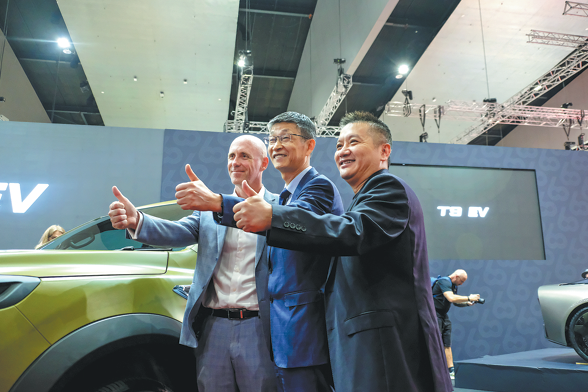
    ZÁRATE, Argentina — A monumental shift is underway in Argentina’s automotive landscape as thousands of Chinese electric and hybrid vehicles disembark at the port of Zárate, signaling a dramatic transformation in one of South America’s traditionally most protected economies. The arrival of BYD’s massive shipment represents both a symbolic and commercial breakthrough for Chinese automakers expanding their global footprint.

    This development comes amid President Javier Milei’s radical economic liberalization agenda that has dismantled decades of Peronist protectionism. Where previous governments imposed stiff tariffs and import restrictions to shield local industry, Milei has flung open Argentina’s doors to foreign goods, resulting in a record 30% surge in imports last year.

    Chinese manufacturers, particularly BYD, are positioned to capitalize on Milei’s new zero-tariff quota allowing 50,000 electric and hybrid vehicles into the country this year. The policy specifically benefits vehicles under $16,000—a price point where Chinese automakers hold significant competitive advantage over Western and Japanese rivals.

    The economic relationship between Argentina and China has deepened substantially, with Chinese imports surging 57% last year compared to a 9.6% increase from the United States. Chinese investment has simultaneously flowed into Argentina’s energy and mining sectors, creating comprehensive economic ties.

    While Western automakers express concern about unfair competition and opposition lawmakers warn of market disruption, industry analysts note that Chinese manufacturers possess both the technological capability and pricing structure to dominate this new market opening. The aging state of Argentina’s electrical infrastructure and lack of specialized repair networks for EVs present current limitations, but Chinese companies appear well-positioned for long-term dominance.

    The arrival of Chinese EVs also carries geopolitical significance, occurring simultaneously with the European Union’s hesitation to ratify a landmark free trade agreement with Mercosur nations. As European manufacturers struggle to compete with Chinese pricing, Argentina’s market becomes another front in the global EV competition.

  • Sharjah: Rising property prices make more investors eligible for Golden Visa

    Sharjah: Rising property prices make more investors eligible for Golden Visa

    Sharjah’s real estate sector is experiencing unprecedented growth, with surging property values creating new pathways to long-term residency for foreign investors. Market analysis reveals a remarkable transformation driven by policy shifts and economic dynamics.

    Following the emirate’s landmark 2023 decision to open its property market to all foreign nationals, Sharjah has witnessed double-digit price appreciation, particularly in premium developments. Industry executives report valuations for larger units in prime locations have surpassed the critical AED 2 million threshold, automatically qualifying purchasers for the UAE’s coveted Golden Visa program.

    The market’s robust performance is quantified by official 2026 figures showing record-breaking transaction values of AED 65.6 billion—representing a staggering 64.3% increase from the previous year’s AED 40 billion. Transaction volume similarly surged, with 132,659 recorded deals in 2025 marking a 26.3% year-over-year growth.

    Lamia Al Jewaied, Head of Studies and Research Bureau at Sharjah Real Estate Registration Department, confirms the Golden Visa initiative has become a significant market driver. “We observe substantial demand from investors specifically targeting real estate assets that qualify for long-term residency visas,” she noted during the Acres 2026 exhibition.

    Market analysts identify multiple factors fueling Sharjah’s property boom. Noreen Nasralla, Senior Vice President for Alef Group, highlights “spillover effects from neighboring emirates where escalating prices have pushed budget-conscious investors toward Sharjah’s more affordable options.” The emirate’s strategic proximity to key infrastructure including Sharjah International Airport and the Academic City further enhances its appeal.

    Notably, regulatory provisions allow investors to combine multiple properties to reach the AED 2 million eligibility requirement, expanding accessibility to the residency program. Developers are responding to increased demand for Golden Visa-qualifying units by designing larger apartments ranging from 3,500 to 4,000 square feet, with Raymond Khouzami of Al Thuriah Group reporting “unexpectedly strong demand for spacious residential units.”

  • How Ras Al Khaimah airport expanded international flights to 16 countries in 2025

    How Ras Al Khaimah airport expanded international flights to 16 countries in 2025

    Ras Al Khaimah International Airport has firmly established itself as a major aviation hub after achieving a monumental operational milestone in 2025. The airport successfully handled over 1.3 million passengers, marking its evolution from a medium-sized facility into a significant player in regional air travel. This remarkable growth represents a 51% surge in passenger traffic compared to previous years, accompanied by substantial expansions in both flight operations and destination networks.

    The airport’s strategic development has yielded an impressive international route map encompassing 16 countries across pivotal markets. Key destinations now include India, Pakistan, Saudi Arabia, Russia, and Egypt, reflecting the airport’s focused approach to connecting emerging economic corridors. This expansion contributed to a 14% increase in served destinations and a 37% growth in flight movements throughout the year.

    Under the leadership of Sheikh Salem bin Sultan Al Qasimi, Chairman of the Ras Al Khaimah Civil Aviation Authority, the airport executed comprehensive infrastructure enhancements. These included terminal facility upgrades, advanced operational systems implementation, and sophisticated passenger experience improvements. The development strategy prioritized seamless travel standards while maintaining rigorous international security protocols.

    Financial performance mirrored operational success, with net profits climbing 29.4% amid the expansion. The airport simultaneously renewed its ISO certifications across multiple domains including environmental management, innovation protocols, business continuity planning, and quality assurance—all without recording any regulatory violations.

    Innovation initiatives formed a core component of the growth strategy, highlighted by the launch of an advanced Drone Management System and strategic partnerships with aviation authorities in Dubai and Fujairah. The airport also achieved recognition as first runner-up in the Arab Award for Social Responsibility and Sustainability among small government entities.

    A particularly groundbreaking achievement involved the successful experimental flight of an electric vertical take-off and landing aircraft developed in partnership with Chinese aerospace company XPENG AEROHT, positioning the airport at the forefront of aviation technology adoption.

    Sheikh Salem attributed these accomplishments to the visionary leadership of Sheikh Saud bin Saqr Al Qasimi, Ruler of Ras Al Khaimah, and the oversight of Sheikh Mohammed bin Saud Al Qasimi, Crown Prince and Chairman of the Executive Council. Their support has enabled the airport to drive innovation while maintaining operational excellence.

    These developments collectively reinforce Ras Al Khaimah International Airport’s strategic position as a growing connectivity hub that actively supports the emirate’s broader economic diversification goals, tourism expansion initiatives, and commercial development objectives.

  • Ras Al Khaimah’s ultra-luxury residence sells for record-breaking Dh130 million

    Ras Al Khaimah’s ultra-luxury residence sells for record-breaking Dh130 million

    Ras Al Khaimah’s luxury property market has achieved an unprecedented milestone with the historic sale of the Sky Palace at Waldorf Astoria Residences for Dh130 million ($35.4 million), establishing a new benchmark as the highest-value single-unit residential transaction ever recorded in the emirate.

    The landmark transaction, announced by developer Al Hamra, was accompanied by the separate sale of the development’s signature penthouse for Dh55 million ($15 million), collectively demonstrating robust investor appetite for ultra-premium waterfront properties in the northern emirate.

    This record-breaking sale occurs amid Ras Al Khaimah’s remarkable transformation into one of the UAE’s most dynamic real estate markets. The emirate’s strategic infrastructure investments, government-supported initiatives, and growing portfolio of branded residential developments have propelled its emergence as a premier investment destination.

    Market data reveals substantial property appreciation throughout 2025, with villa prices in Al Hamra Village surging by 42 percent and five-bedroom homes exceeding Dh14 million. Apartments similarly demonstrated strong growth, driven by heightened investor participation and sustained demand for resort-style communities.

    The Sky Palace itself represents the pinnacle of luxury living, occupying the top three floors of the beachfront tower across approximately 10,000 square feet. The residence offers breathtaking panoramic views of the Arabian Gulf, Wynn Al Marjan Island integrated resort, and surrounding mountain ranges. Residents enjoy exclusive access to premium amenities including private lounges, a library, cigar salon, and cinema facilities, complemented by a dedicated ferry connection to the entertainment offerings of Wynn Al Marjan Island.

    Benoy J. Kurien, Group Chief Executive Officer of Al Hamra, emphasized that these transactions reflect growing confidence in Ras Al Khaimah’s long-term economic trajectory and the increasing appeal of meticulously designed luxury developments that meet international standards.

    These landmark sales not only establish new parameters for ultra-luxury real estate in the region but significantly enhance Ras Al Khaimah’s positioning as an emerging global hub for high-net-worth investors seeking sophisticated lifestyle investments.

  • Meraki Developers launches wellbeing-focused Nirvana Residence 1 in the 
heart of Dubai Production City

    Meraki Developers launches wellbeing-focused Nirvana Residence 1 in the heart of Dubai Production City

    Dubai’s real estate landscape gains a new wellness-oriented residential development with the official launch of Nirvana Residence 1 by Meraki Developers. This 22-story tower, situated in the serene Me’aisem district within Dubai Production City, introduces 392 meticulously crafted residential units ranging from studios to three-bedroom configurations.

    The development represents a paradigm shift in urban living, prioritizing resident well-being through thoughtfully integrated amenities and expansive green spaces known as Nirvana Groves. These wellness zones are strategically distributed throughout the property, creating natural retreats that promote relaxation and community interaction alongside comprehensive fitness facilities.

    Ajay Rajendran, Founder and Chairman of Meraki Developers, articulated the project’s philosophy: “Our vision transcends conventional housing by creating environments that actively nurture the human spirit. Nirvana Residence 1 embodies our commitment to harmonizing modern living with natural elements and community connectivity.”

    The project’s strategic location offers dual advantages: proximity to major transportation arteries ensuring quick access to Dubai’s urban core, while maintaining a tranquil residential atmosphere. This balance reflects Meraki’s overarching design principle of creating sanctuary-like communities without sacrificing urban convenience.

    With over 100 completed projects, the award-winning developer continues to emphasize sustainable design practices and customer-centric development, positioning Nirvana Residence 1 as their latest innovation in quality-conscious real estate that merges architectural excellence with holistic living concepts.

  • Seven trillion and one reasons China stocks will keep rallying

    Seven trillion and one reasons China stocks will keep rallying

    TOKYO — Against a backdrop of escalating geopolitical tensions and unconventional US policy maneuvers, China’s financial markets are demonstrating remarkable resilience as global investors recalibrate their strategies. Major financial institutions are now projecting significant growth for Chinese equities, with Goldman Sachs forecasting a 20% surge in the MSCI China Index for 2026, building upon the previous year’s 28% rally.

    According to Kinger Lau, strategist at Goldman Sachs, the anticipated equity appreciation will be predominantly earnings-driven, supported by three critical factors: artificial intelligence advancement, China’s ‘Going Global’ initiative, and ‘anti-involution’ policy measures. This optimistic outlook emerges despite ongoing concerns about China’s economic reforms and property market stability.

    The investment landscape is further bolstered by approximately $7 trillion in Chinese time deposits maturing this year, creating a substantial pool of domestic capital poised for market deployment. This liquidity surge coincides with expectations of additional stimulus measures from Beijing following China’s fourth-quarter 2025 economic performance, which at 4.5% year-on-year growth, represented the weakest expansion in three years.

    Global financial institutions are notably revising their China assessments. Fidelity analyst George Efstathopoulos recently declared China no longer ‘uninvestable,’ while Bernstein Societe Generale Group upgraded its China equities outlook. Wang Dan of Shenzhen Sunrise Asset Management anticipates ‘a slow bull trend’ to continue, citing declining interest rates and strategic positioning in undervalued assets.

    The yuan’s simultaneous strengthening with Shanghai stocks in 2025 has particularly captured strategists’ attention. Christy Tan, Franklin Templeton strategist, notes that ‘a firmer yuan can help equities by improving dollar-based returns and risk sentiment,’ creating a virtuous cycle where genuine equity inflows support currency valuation.

    Citigroup economist Xiangrong Yu observes a ‘markedly positive shift in investor narrative on China,’ predicting managed yuan appreciation to 6.8 against the dollar within 6-12 months from the current 6.96. UBS Group similarly anticipates further yuan gains against trading partner currencies, reflecting robust export performance and trade surplus.

    This renewed confidence in Chinese assets contrasts sharply with mounting concerns about US market stability under the Trump administration’s unconventional policies. Recent actions including tariff escalations, threats to Federal Reserve independence, and unconventional foreign policy moves have created global financial uncertainty. Evercore ISI analyst Krishna Guha warns of a potential ‘sell-America trade’ resurgence similar to April 2025’s market turbulence.

    The implications extend beyond bilateral relations, affecting global debt markets as evidenced by recent volatility in US Treasuries and Japanese government bonds, where 40-year yields reached 4% – the highest in decades. Institute of International Finance economist Emre Tiftik notes investor attention is ‘increasingly shifting toward government bond auctions and borrowing plans’ amid elevated budget deficits.

    This global financial recalibration presents both opportunity and imperative for China. While Trump administration policies inadvertently enhance China’s appeal as a financial alternative, Beijing faces pressure to accelerate promised reforms including fuller yuan convertibility, enhanced transparency, and property market stabilization. With trillions in domestic capital awaiting deployment and global investors watching closely, China’s financial evolution enters a critical phase amid unprecedented global monetary uncertainty.

  • Surprise jump in UK inflation not expected to derail rate cuts

    Surprise jump in UK inflation not expected to derail rate cuts

    Britain’s inflation rate defied economic forecasts in December 2026, climbing to 3.4% from November’s 3.2% according to Office for National Statistics data. This unexpected increase marks the first upward movement since July, primarily driven by seasonal airfare adjustments and tobacco duty increases implemented during the holiday period.

    Despite this temporary acceleration, economic analysts maintain that the trajectory toward price stability remains intact. Services inflation—a critical metric monitored by the Bank of England—edged upward to 4.5%, aligning precisely with economist projections in Reuters’ polling. The nation continues to exhibit the highest inflation rate among G7 countries despite experiencing sluggish economic growth patterns.

    Market reactions remained notably subdued following the announcement, with investors maintaining existing positions regarding anticipated interest rate reductions. Financial instruments currently price in one to two quarter-point cuts by the Bank of England throughout 2026. Governor Andrew Bailey has previously indicated that inflation should approach the central bank’s 2% target around April or May, reflecting expectations that utility cost increases and government-regulated tariffs from the previous year will cycle out of annual comparisons.

    Geopolitical tensions introduce potential complications to this forecast. British natural gas futures have surged approximately 25% over recent weeks, partly attributable to deteriorating transatlantic relations following controversial tariff threats by U.S. leadership. The Monetary Policy Committee’s December decision to reduce Bank Rate to 3.75% encountered significant dissent, with nearly half of members advocating for maintaining previous levels due to persistent inflation concerns.

    Fourth-quarter data revealed notable pressures in services sector producer prices, which accelerated to 2.9% from the previous quarter’s 2.0%, while manufacturing output prices remained stable. Economic research institutions including the National Institute of Economic and Social Research anticipate at least one rate reduction in the first half of 2026, contingent upon geopolitical developments not disrupting current inflation pathways.