分类: business

  • LA port chief highlights US-China supply chain and green shipping ties

    LA port chief highlights US-China supply chain and green shipping ties

    The Port of Los Angeles, maintaining its position as America’s busiest container port for 26 consecutive years, is intensifying efforts to enhance sustainable shipping practices and deepen its crucial trade partnership with China. Executive Director Gene Seroka revealed these strategic priorities during his annual address, emphasizing that China accounts for approximately 40% of the port’s business—more than double that of any other trading partner.

    Seroka highlighted the indispensable nature of trans-Pacific supply chains, noting that there is no faster route for Chinese goods to reach US markets than through Los Angeles. His multiple visits to China throughout the previous year reinforced relationships with government agencies, state-owned enterprises, and private companies, underscoring the mutual economic dependency between the nations.

    The port’s environmental initiatives have achieved significant milestones, particularly through the Los Angeles-Long Beach-Shanghai Green Shipping Corridor. This pioneering partnership has successfully completed all Phase 1 objectives, including expanded use of shoreside electricity for docked vessels, advancement of cleaner vessel technologies, and foundational work for future bunkering of low-carbon marine fuels.

    Infrastructure development remains central to the port’s ‘Building Bigger and Building Smarter’ strategy. Ambitious projects include the proposed Pier 500 Marine Terminal, designed for next-generation, zero-emission operations. Los Angeles currently boasts the lowest emissions per TEU of any major global port, demonstrating its environmental leadership.

    Local officials, including LA City Councilmember Tim McOsker and Mayor Karen Bass, echoed the importance of stable US-China economic relations for regional logistics and manufacturing sectors. The San Pedro Bay port complex handles approximately 40% of all US containerized imports, with substantial volumes originating from Chinese export hubs like Shanghai, Ningbo-Zhoushan, and Yantian.

    As global supply chains evolve, analysts emphasize that US-China cooperation in decarbonization, digital logistics, and green shipping corridors will become increasingly critical for maintaining trans-Pacific trade efficiency and resilience.

  • EU, India agree ‘mother of all’ trade deals

    EU, India agree ‘mother of all’ trade deals

    In a landmark development for global trade, the European Union and India have finalized a comprehensive trade agreement described as the “mother of all deals” by Indian Prime Minister Narendra Modi. The pact, concluded after twenty years of complex negotiations, establishes one of the world’s largest free trade zones encompassing approximately two billion people.

    The agreement eliminates or substantially reduces tariffs on 97% of European exports to India, projected to save EU businesses up to €4 billion annually in customs duties. Key European sectors including automotive, agriculture, and services are positioned to gain significant market access, while India anticipates substantial benefits in textiles, gems and jewelry, and leather goods.

    Market liberalization measures include the gradual reduction of India’s automotive tariffs from 110% to as low as 10%, while wine duties will decrease from 150% to 20%. The agreement completely eliminates tariffs on processed food products including pasta and chocolate, currently taxed at 50%.

    EU Commission President Ursula von der Leyen characterized the agreement as historic, noting it provides “the highest level of access ever granted to a trade partner in the traditionally protected Indian market.” The pact represents approximately 25% of global GDP and one-third of worldwide trade.

    The strategic alignment comes as both economic powers seek to diversify their trade relationships amid increasing global economic tensions. Bilateral trade in goods reached €120 billion in 2024, showing 90% growth over the past decade, with an additional €60 billion in services trade.

    The agreement includes provisions for facilitated movement of seasonal workers, students, researchers, and professionals, alongside anticipated security and defense cooperation agreements. The partnership signals a significant reconfiguration of global trade alliances as both economies reduce dependencies on traditional partners.

  • India and EU set to announce landmark trade deal

    India and EU set to announce landmark trade deal

    In a significant geopolitical development, India and the European Union have finalized a comprehensive trade agreement following nearly two decades of intermittent negotiations. The breakthrough comes as both economic powers seek to strengthen international partnerships amid growing trade tensions with the United States.

    European Commission President Ursula von der Leyen and European Council President António Costa attended India’s Republic Day celebrations in Delhi as chief guests, setting the stage for Tuesday’s bilateral summit where the agreement will be formally announced. The presence of EU leadership at this symbolic event underscores the strategic importance both parties place on this partnership.

    The agreement, described by officials as the ‘mother of all trade deals,’ represents approximately 25% of global GDP and one-third of worldwide trade. It will enhance market access for Indian exports to European markets while facilitating entry for European investments and goods—particularly automobiles and beverages—into India’s rapidly expanding economy.

    This development occurs against a backdrop of increasing protectionist measures globally. Both India and the EU have faced economic pressure from recent US tariff policies, including the 50% tariffs imposed by the Trump administration last year. The timing of this agreement sends a powerful message about both economies’ commitment to multilateral trade cooperation in an era of rising trade barriers.

    While negotiations began in 2007 and stalled in 2013 due to disagreements over market access and regulatory standards, discussions formally resumed in July 2022. The most contentious issues included access to India’s automobile sector, agricultural goods, and carbon-linked tariffs. Intensive negotiations over recent days successfully resolved these remaining chapters.

    The formal signing is expected later this year following approval by the European Parliament and European Council. This agreement marks India’s latest in a series of trade pacts, including recent agreements with the UK, Oman, and New Zealand, while the EU recently concluded a landmark deal with Mercosur after 25 years of negotiation.

  • India’s prime minister says it has reached a free trade deal with the EU

    India’s prime minister says it has reached a free trade deal with the EU

    In a landmark development for global trade, Indian Prime Minister Narendra Modi announced on Tuesday the successful conclusion of a comprehensive free trade agreement between India and the European Union. This monumental pact, affecting approximately two billion people across both economies, culminates sixteen years of complex diplomatic and economic negotiations.

    The agreement, characterized by both parties as the ‘mother of all deals,’ establishes one of the world’s most significant bilateral trade frameworks. The partnership encompasses an extraordinary 25% of global GDP and accounts for approximately one-third of worldwide trade activity, creating substantial opportunities for businesses and consumers across both markets.

    Prime Minister Modi revealed the breakthrough during a virtual address at an energy conference, emphasizing the transformative potential of the agreement. ‘This landmark accord will generate tremendous economic benefits and strengthen strategic cooperation between our nations,’ Modi stated, highlighting the agreement’s broad economic implications.

    The timing of this agreement carries particular significance as both India and the EU face escalating trade tensions with the United States, which has imposed substantial import tariffs affecting both economies. These developments have disrupted traditional trade patterns and accelerated the pursuit of alternative economic partnerships among major global players.

    The formal announcement was scheduled to occur later Tuesday through a joint declaration involving Prime Minister Modi, European Commission President Ursula von der Leyen, and European Council President Antonio Luis Santos da Costa. This high-level participation underscores the strategic importance both sides attribute to the agreement.

    Analysts suggest this agreement could reshape global trade dynamics by creating a powerful economic bloc that balances against other major trading nations while establishing new standards for international commerce in the 21st century.

  • Asian shares track Wall Street gains as gold edges lower

    Asian shares track Wall Street gains as gold edges lower

    Asian equity markets demonstrated remarkable resilience on Tuesday, posting broad gains despite escalating trade tensions between the United States and South Korea. The positive momentum followed an upward trajectory on Wall Street, where robust corporate earnings reports continued to fuel investor optimism.

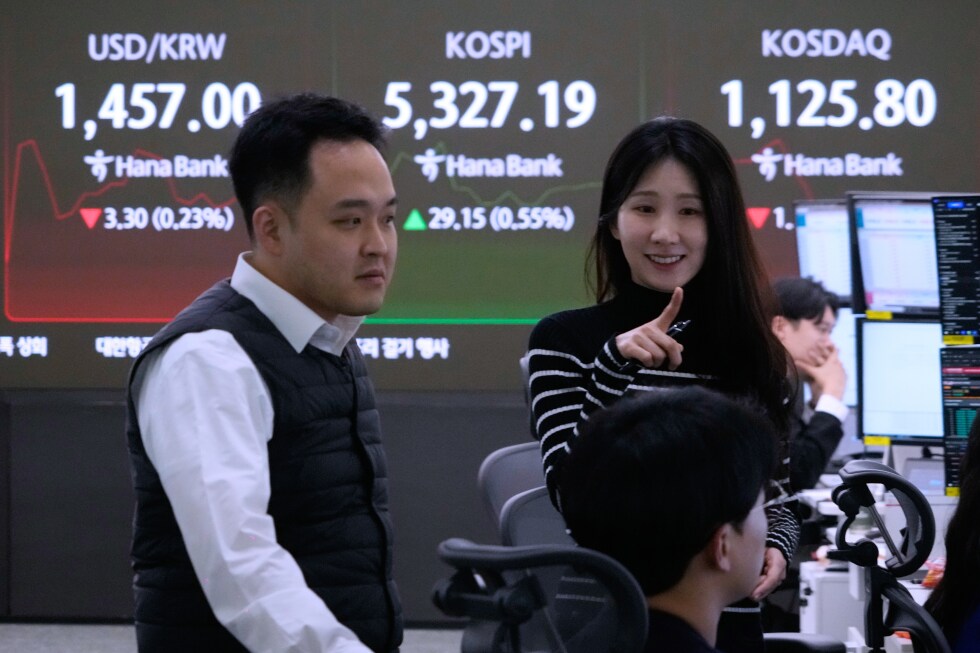
    Japan’s Nikkei 225 advanced 0.9% to close at 53,333.54, while South Korea’s Kospi delivered a particularly impressive performance with a 2.7% surge to 5,084.85. This substantial gain occurred despite former President Donald Trump’s announcement of impending tariff increases on South Korean goods, including automobiles, lumber, and pharmaceutical products. Trump declared via social media that rates on certain goods would escalate from 15% to 25%, citing insufficient progress on trade framework implementation.

    The South Korean government responded with diplomatic urgency, confirming high-level meetings with U.S. officials. Industry Minister Kim Jung-Kwan will engage with Commerce Secretary Howard Lutnick, while Trade Minister Yeo Han-koo prepares for separate discussions with Trade Representative Jamieson Greer. The presidential office reiterated its commitment to implementing last year’s trade agreement.

    Technology stocks emerged as the primary drivers of South Korea’s market performance. Samsung Electronics climbed 4.9%, and semiconductor manufacturer SK Hynix soared 8.7%, effectively counterbalancing losses in the automotive sector where Kia Corp. declined 1.1% and Hyundai Motor Co. dropped 0.8%.

    Other Asian markets showed mixed but generally positive results. Hong Kong’s Hang Seng Index gained 1.3% to reach 27,106.83, while China’s Shanghai Composite added 0.2% to 4,139.90. Taiwan’s Taiex advanced 0.8%, and India’s Sensex edged 0.1% higher. Only Shenzhen’s smaller market benchmark experienced a slight decline of 0.1%.

    Investors now turn their attention to the Federal Reserve’s impending interest rate decision scheduled for Wednesday. While the central bank is expected to maintain current rates, market participants anticipate potential cuts in 2026 to stimulate economic growth. The persistent inflation exceeding the Fed’s 2% target complicates monetary policy decisions.

    This week also brings earnings reports from several technology titans including Meta Platforms, Microsoft, Tesla, and Apple, which could significantly influence market direction. Precious metals continued their ascent with gold adding 0.2% to $5,089.70 per ounce after briefly surpassing $5,100 for the first time, reflecting investor caution amid geopolitical uncertainties.

  • Orkla’s Eastern strengthens UAE leadership as demand for spices and convenience foods surges

    Orkla’s Eastern strengthens UAE leadership as demand for spices and convenience foods surges

    Orkla India’s flagship brand Eastern has solidified its position as the UAE’s leading Indian spice label, with company executives identifying the Emirates as the strategic spearhead of their global expansion ambitions. This market dominance comes amid surging consumer demand for both traditional spices and modern convenience foods across the Gulf region.

    According to Ashvin Subramanyam, CEO of International Business at Orkla India, the GCC accounts for approximately 70% of the company’s international sales, with the UAE alone contributing over one-third of this revenue. The company has demonstrated remarkable growth with a 14% compound annual growth rate over the past three years, a trajectory management expects to accelerate further.

    Initially popular among the Malayali and broader Indian diaspora, Eastern has successfully transcended cultural boundaries to gain significant traction in Arabic and Emirati households. Strategic partnerships with major retailers including Union Coop and Sharjah Coop have been instrumental in mainstreaming the brand beyond its traditional consumer base. Recent market data confirms Eastern’s position as the household reach leader among Indian spice brands in the UAE.

    The brand’s cross-cultural success stems from Orkla’s sophisticated culinary research capabilities through its Cuisine Centre of Excellence. This dedicated facility conducts in-depth studies of regional dishes, reverse-engineers flavor profiles, and drives innovation across spice blends, meal solutions, and convenience food categories.

    This research-driven approach has enabled Eastern to expand beyond Indian flavors into a growing Arabic spice range, supported by locally tailored marketing and product development. The company has particularly focused on younger consumers seeking convenient formats without compromising authenticity, exemplified by innovations like the “5-Minute Breakfast” range that recreates Kerala staples in ready-to-prepare formats.

    With a distribution network spanning over 16,000 outlets, Orkla’s growth strategy centers on innovation, expanded distribution, and consumer insight-led marketing. The UAE’s dynamic food landscape—characterized by global culinary trends, health-driven preferences, and demand for clean-label offerings—provides fertile ground for accelerated expansion.

    Industry events like Gulfood have served as significant catalysts for the brand’s regional visibility and innovation efforts. Subramanyam emphasized the importance of such platforms in fostering the “positive collision of ideas” that drives culinary innovation and international recognition for regional brands.

  • Mandate or defining moment? The UAE’s upcoming eInvoicing regulation is about more than compliance

    Mandate or defining moment? The UAE’s upcoming eInvoicing regulation is about more than compliance

    While July 2026 might appear distant on the calendar, the UAE’s impending eInvoicing mandate demands immediate strategic attention from businesses. Contrary to viewing this as merely another regulatory hurdle, forward-thinking organizations recognize it as a transformative opportunity to revolutionize financial operations and procurement ecosystems.

    This regulatory shift fundamentally differs from previous implementations like VAT or corporate tax. eInvoicing operates at the transactional level in real-time, creating an embedded governance mechanism that validates compliance at the moment of issuance. This transforms compliance from retrospective control to continuous assurance, reconnecting the traditionally fragmented invoicing process into a seamless Source-to-Pay lifecycle.

    Early adopters gain significant competitive advantages beyond compliance. They secure choice in platform selection, alignment with broader digital transformation initiatives, and phased implementation strategies. The automation potential is substantial: where manual processing limits employees to approximately 6,000 invoices annually, automated systems can handle over 90,000—a 1,400% efficiency increase according to Ernst & Young research.

    The strategic value extends far beyond productivity gains. Integrated eInvoicing platforms create a single auditable truth that connects supplier agreements, purchase orders, and payment execution. This ensures automatic validation against agreed terms, reducing disputes while strengthening governance across the entire procurement value chain.

    Financial benefits materialize through accelerated payment cycles—reducing the typical 41-day invoice processing timeline—and access to early-payment discounts up to 2% per invoice. For international operations, early implementation allows organizations to establish global compliance platforms capable of adapting to diverse jurisdictional requirements.

    The current budget planning period presents an ideal opportunity for finance leaders to position eInvoicing as working capital optimization strategy rather than compliance cost. Proactive investment avoids the premium costs of last-minute implementations while future-proofing organizations against evolving regulatory landscapes.

    Ultimately, the July 2026 deadline will distinguish organizations viewing this as a compliance exercise from those leveraging it to build connected, future-ready digital ecosystems. The true mandate represents a watershed moment for financial leadership to replace fragmented processes with integrated digital transformation.

  • Dubai real estate matures into one of the world’s most resilient markets

    Dubai real estate matures into one of the world’s most resilient markets

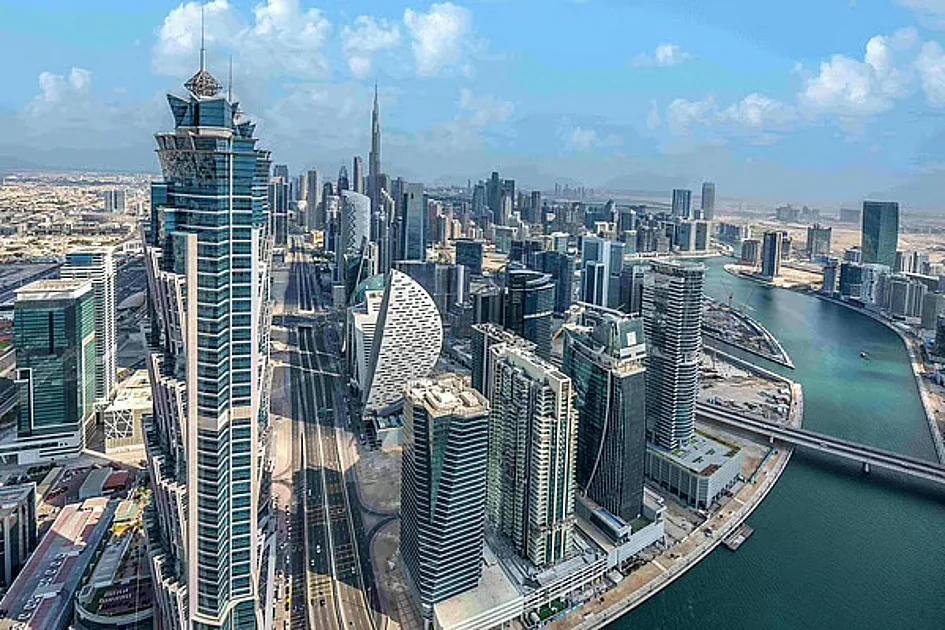
    Dubai’s property sector has evolved into one of the world’s most robust and resilient real estate markets, driven by pioneering regulation, technological innovation, and shifting investor expectations. According to Riz Ahmed, CEO of SmartCrowd, the market’s maturation stems from early regulatory frameworks that fundamentally transformed investment practices across the United Arab Emirates.

    The implementation of comprehensive regulation established new industry standards that prioritized transparency, governance, and performance accountability. Ahmed emphasized that being the region’s first fully regulated real estate investment platform created a foundation of trust that preceded scale. “Transparency became non-negotiable. Investors now expect real data, audited returns, and full visibility—benchmarks we established from day one,” he stated.

    The market transformation is demonstrated through substantial performance metrics. SmartCrowd has facilitated over 60 successful property exits—triple the combined total of other regional crowdfunding platforms—delivering consistent returns across varying market cycles. Their Buy & Hold properties have generated average net annualized returns of 14.34%, with an overall net return of 43.95% across an average holding period of 3.2 years. The innovative Flip model, designed for shorter investment cycles of 9-15 months, has produced average net returns of 27.40% with annualized returns of 24.01%.

    Ahmed attributes this success to Dubai’s dual appeal: stable rental income combined with significant capital appreciation as the market continues to mature. The recent acquisition of SmartCrowd by Nawy marks a strategic shift toward creating an integrated digital ecosystem for real estate investment throughout the MENA region. This consolidation aims to develop a comprehensive platform where users can invest, finance, manage, and exit properties under a single digital infrastructure.

    The evolution continues through continuous innovation rather than isolated breakthroughs. Ahmed concluded that maintaining leadership requires anticipating market trends and investor needs, ensuring Dubai remains at the forefront of global real estate investment innovation.

  • Libya signs $20bn oil deals with US and French energy companies

    Libya signs $20bn oil deals with US and French energy companies

    In a significant move to revitalize its energy sector, Libya’s Tripoli-based Government of National Unity has finalized a monumental 25-year oil development pact with global energy titans TotalEnergies and ConocoPhillips. The agreement, signed during an economic summit in the capital, targets a substantial expansion of the Waha Oil Company, a subsidiary of Libya’s National Oil Corporation (NOC).

    The cornerstone of the deal is a $20 billion investment package designed to more than double Waha’s current output from approximately 350,000 barrels per day (bpd) to a projected 850,000 bpd. This ambitious plan involves the development of four new oil fields and an extensive exploration program across 19 concession areas. Libyan Prime Minister Abdul Hamid al-Dbeibah heralded the partnership on social media platform X, projecting over $376 billion in state revenue over the next quarter-century and characterizing it as a ‘qualitative and unique achievement’ that strengthens ties with major global energy players.

    The signing ceremony also featured a separate logistics and exploration agreement with Chevron and Egypt, underscoring a broader international re-engagement with Libya’s energy wealth. The presence of U.S. Special Presidential Envoy Massad Boulos, whose family connections to former President Trump have drawn scrutiny, lent diplomatic weight to the proceedings. The U.S. Embassy in Libya issued a statement praising the expanded Waha Consortium as evidence of ‘deepening collaboration’ between the two nations.

    This massive investment represents a potent vote of confidence in the Dbeibah administration from Western governments and corporations, despite Libya’s protracted political instability. The country, which possesses Africa’s largest oil reserves, has seen international investment dwindle since the 2011 NATO-backed uprising that ousted Muammar Gaddafi. The nation subsequently fractured, with eastern Libya currently under the control of military commander Khalifa Haftar and his sons, who are courting support from various international patrons including the UAE and Turkey.

    Analysts note the deals signal a pragmatic shift in the complex proxy conflicts that have defined post-Gaddafi Libya, with foreign governments and local elites increasingly prioritizing economic interests over rigid political alliances. This realignment is further illustrated by Egypt’s engagement with the Tripoli government despite its ongoing disputes with the Haftar family over the latter’s alleged support for the Rapid Support Forces in Sudan.

    The involvement of Envoy Boulos has attracted particular attention following previous reports by Middle East Eye and The New York Times concerning discussions about unlocking frozen Libyan assets for U.S. investments and his family’s social connections to figures with interests in the region’s oil sector.

  • Award winning Islamic Finance leader joins ComTech Gold

    Award winning Islamic Finance leader joins ComTech Gold

    In a strategic move poised to reshape the landscape of digital Islamic finance, ComTech Gold has secured the expertise of internationally acclaimed Islamic finance leader Lim Say Cheong as Chief Advisor for Digital Assets and Islamic Finance. This appointment signals the company’s determined push to establish global leadership in Shariah-compliant real-world asset tokenization.

    The recruitment arrives at a transformative juncture for the $6 trillion global Islamic finance sector, which is increasingly embracing blockchain technology, tokenization frameworks, and digital asset infrastructure. This shift toward technological integration aims to enhance transparency, operational efficiency, and financial inclusion across Muslim-majority markets and beyond.

    Lim brings an exceptional portfolio of credentials to his new role, including receipt of the prestigious 2025-2026 Chevening and Oxford Centre for Islamic Studies Fellowship, awarded by the UK Government in recognition of his pioneering work in financial innovation. His industry stature is further cemented by the Cambridge Islamic Finance Leadership Award, which honored his global impact in advancing Islamic capital markets and public sector advisory services.

    With professional experience spanning more than fifty international Sukuk issuances for sovereign and corporate entities including Hong Kong, the United Kingdom, Dubai, and Emaar Properties, Lim possesses unparalleled expertise in Islamic finance structuring. His advisory roles have extended to central banks and governmental institutions such as the National Bank of Kazakhstan and Bangladesh Bank, while his leadership positions at Al Hilal Bank and Noor Islamic Bank have established him as a transformative figure in the industry.

    Jignesh Ve, Founder and CEO of ComTech Gold, emphasized the significance of this appointment: “Lim combines sovereign advisory credibility with visionary digital innovation. His leadership will position tokenized gold as the natural evolution of Shariah-compliant investment—fully asset-backed, transparent, and globally accessible.”

    In his capacity as Chief Advisor, Lim will spearhead the development of Shariah-compliant tokenization frameworks for gold, real estate, and infrastructure assets. He will also enhance regulatory engagement with Islamic finance authorities and digital asset regulators worldwide while supporting ComTech Gold’s strategic expansion across the GCC, Europe, Central Asia, and Southeast Asia.

    Commenting on his new role, Lim stated: “Gold tokenization represents the natural convergence of Islamic finance and blockchain technology, both anchored in real assets, transparency, and ethical principles. Through tokenizing fully allocated physical gold, we’re creating fractional, tradable investments that appeal not only to Muslim investors but to anyone seeking credible, asset-backed value in the digital economy.”

    Lim’s academic credentials include an Executive MBA from INSEAD Business School in France and an Advanced Diploma in Islamic Finance from CIMA, complemented by executive education programs at Wharton, Oxford, Cambridge, and Columbia University. His practical experience in building Islamic banking platforms from the ground up and transforming institutions into top-tier Sukuk arrangers positions him uniquely to advance ComTech Gold’s global ambitions.