分类: business

  • CRYSTAL unveils a new vision for real estate in Dubai

    CRYSTAL unveils a new vision for real estate in Dubai

    DUBAI – A transformative new player has emerged in Dubai’s competitive real estate landscape with the official launch of CRYSTAL, a design-focused development firm built upon principles of cultural integration and generational legacy. The company formally announced its market entry on January 30, 2026, revealing both its distinctive brand identity and preliminary details of an upcoming flagship project in Jumeirah Village Circle (JVC).

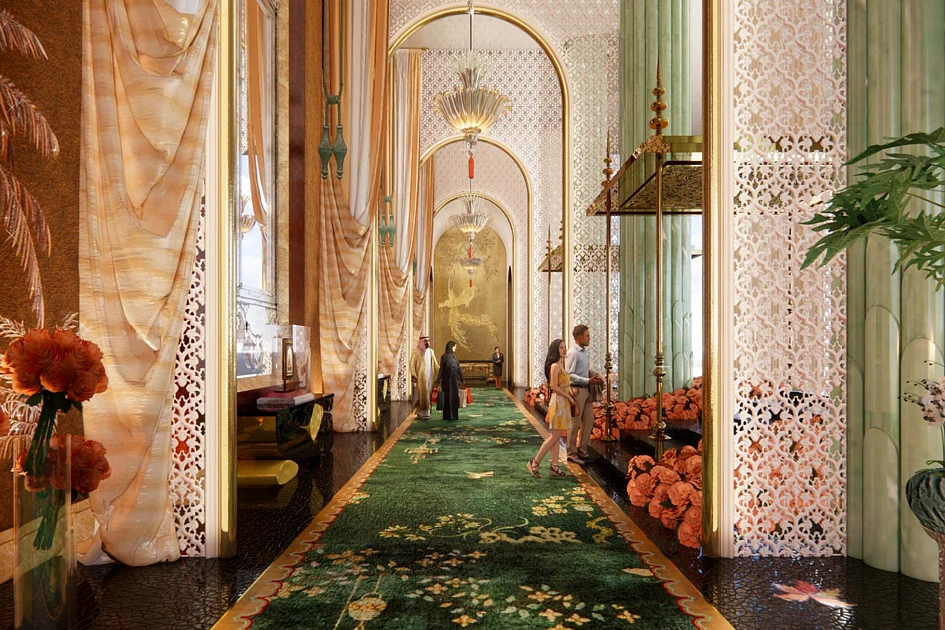
    CRYSTAL distinguishes itself through a philosophy that merges Indian heritage with Arabic and Western influences, creating a unique architectural and design approach that prioritizes meaningful spaces over conventional development formulas. Founded on family values and long-term responsibility, the company represents what it terms a ‘second-generation mindset’ – blending respect for tradition with technological innovation and forward-thinking urban design.

    CEO Mustafa B Gandhi articulated the company’s vision: ‘Dubai has consistently demonstrated ambitious growth, but true vision requires more than repetition. CRYSTAL introduces intentionality to real estate development, where every architectural detail serves a purpose and each residential space conveys a narrative.’

    The developer’s methodology emphasizes craftsmanship, material integrity, and spatial design that enhances daily living experiences. Rather than pursuing rapid expansion or maximum scale, CRYSTAL focuses on creating environments that evolve with their inhabitants, prioritizing longevity and cultural relevance over transient market trends.

    While specific details of the JVC flagship project remain confidential, the company confirms it will embody CRYSTAL’s core principles of elevated living standards, cultural equilibrium, and architectural transparency. The development promises to challenge conventional market expectations through its fusion of design excellence and cross-cultural inspiration.

    CRYSTAL’s emergence signals a potential shift in Dubai’s property sector toward more culturally-rooted, design-conscious development approaches that value lasting impact over immediate returns.

  • Free Seminar on U.S. Investment Visa

    Free Seminar on U.S. Investment Visa

    A complimentary seminar addressing the EB-5 Immigrant Investor Program will provide comprehensive guidance on navigating imminent regulatory changes and securing U.S. residency pathways. Scheduled with expert U.S. immigration attorneys, this event offers investors and families critical insights into one of America’s most direct green card acquisition methods.

    The educational session comes at a pivotal juncture as the EB-5 program faces significant modifications. Participants will receive detailed analysis of the September 30, 2026 filing deadline—a crucial timeframe offering legal protection against potential program restructuring. Legal experts will explain how meeting this deadline safeguards applicants from future regulatory shifts that might otherwise compromise their immigration status.

    Furthermore, the seminar will address the anticipated investment threshold increase scheduled for January 1, 2027. The current $800,000 minimum investment requirement is expected to rise substantially, making strategic action before this deadline financially imperative for prospective applicants.

    Attendees will gain updated information on visa processing timelines and administrative procedures affecting various nationalities. The presentation aims to provide families with comprehensive understanding of the entire process from initial application to potential citizenship acquisition, including rights and benefits for spouses and children.

    The event features interactive Q&A sessions with legal professionals specializing in U.S. investment immigration. While attendance is offered without charge, registration is required due to limited seating capacity. Interested parties can reserve positions through digital registration platforms or via telephone at +971 52 446 6095.

  • Al Habtoor Motors launches Mitsubishi Destinator 7-seater SUV in the UAE

    Al Habtoor Motors launches Mitsubishi Destinator 7-seater SUV in the UAE

    Al Habtoor Motors, the exclusive UAE distributor for Mitsubishi Motors, has officially launched the all-new Mitsubishi Destinator SUV in the Emirates. The vehicle made its inaugural appearance at a dedicated launch event held at the Al Joud Ballroom within Dubai’s Hilton Al Habtoor City.

    Positioned as a mid-size seven-seater SUV, the Destinator represents a strategic expansion within Mitsubishi’s vehicle lineup. It is engineered specifically to address the growing consumer shift in the UAE automotive market toward vehicles that seamlessly blend urban sophistication with weekend adventure capability.

    Design and Engineering
    The Destinator’s exterior is built upon a design philosophy termed “Gravitas & Dynamism,” aiming to project both a stable, commanding presence and an energetic profile. Its front fascia is dominated by the evolved “Dynamic Shield” grille, which integrates strong horizontal and vertical elements. This is complemented by an innovative honeycomb-patterned inner grille set beneath a transparent acrylic surface. The rear design draws from Mitsubishi’s heritage, featuring the “Hexaguard Horizon” concept. Rugged styling cues are emphasized by pronounced front and rear skid plates, 18-inch wheels, and distinctive T-shaped LED lighting.

    Performance and Capability
    Under the hood, the SUV is powered by a high-efficiency 1.5-litre MIVEC Turbo engine, designed to deliver responsive performance and robust torque. This is paired with a Continuously Variable Transmission (CVT) tuned for smooth power delivery across diverse driving conditions. A key feature for regional adaptability is the inclusion of five selectable drive modes: NORMAL, GRAVEL, TARMAC, WET, and MUD. With a class-leading ground clearance of 214 millimeters and optimized approach, break-over, and departure angles, the Destinator is positioned as a confident performer on both city roads and varied terrain.

    Interior and Technology
    The cabin is crafted as a spacious, high-quality environment focused on family comfort and shared experiences. It is equipped with a monolithic display integrating a 12.3-inch Smartphone-link Display Audio (SDA) system and an 8-inch Digital Driver Display, offering standard Apple CarPlay and Android Auto connectivity. A notable first for Mitsubishi is the inclusion of a 64-colour ambient lighting system, controllable via the central screen. Premium comfort is further enhanced by a panoramic sunroof, dual-zone automatic climate control, and a bespoke console tray with wireless charging.
    For acoustic excellence, the vehicle features a Dynamic Sound Yamaha Premium audio system with an eight-speaker setup, fine-tuned by a Yamaha “sound meister” and offering four optimized sound modes. Practicality is addressed with generous storage solutions, including seatback tables, multiple USB ports (Type A and C) for all three rows, and significant cargo capacity that remains functional even with all seven seats in use.

    Market Positioning and Availability
    Ahmed Khalaf Al Habtoor, CEO of Al Habtoor Motors, stated that the Destinator’s launch responds to a clear market evolution. He highlighted increasing customer demand for mid-size SUVs that deliver advanced technology, genuine space, and everyday versatility without the compromises of larger vehicles. The Destinator is now available at Al Habtoor Motors showrooms across the UAE, offered in a palette of six monotone exterior colours including Quartz White Pearl, Blade Silver Metallic, and Lunar Blue Mica.

  • YRD demonstration zone seeks to advance concerted institutional reform and innovation

    YRD demonstration zone seeks to advance concerted institutional reform and innovation

    The Yangtze River Delta Ecological Green Integration Demonstration Zone is poised to intensify its institutional reform agenda throughout China’s 15th Five-Year Plan period (2026-2030), according to official statements from a Thursday government press conference. This strategic initiative aims to foster cross-regional collaboration through innovative policy frameworks and sustainable development practices.

    Gu Jun, Director of Shanghai Municipal Development and Reform Commission and head of the zone’s executive committee, outlined the comprehensive roadmap emphasizing low-carbon transformation of traditional industries. The strategy includes establishing green industrial clusters and implementing carbon emission budgeting systems across key sectors. The zone will prioritize substantial development in next-generation information technology and green新材料 while actively planning for artificial intelligence and future energy advancements.

    A significant milestone was achieved on January 23 with official approval of a high-tech industrial development area within the demonstration zone. This designated area will concentrate on three strategic emerging industries: digital technologies, intelligent manufacturing, and green新材料, featuring corporate headquarters and green sci-tech innovation services.

    Major infrastructure projects are scheduled for deployment during the 15th Five-Year Plan period to support industrial transformation. These include Alibaba’s Yangtze River Delta intelligent computing base, China Mobile’s 5G data center for the region, and China Telecom’s computing center in Wujiang district.

    Established in 2019 across Qingpu district (Shanghai), Wujiang district (Suzhou, Jiangsu), and Jiashan county (Zhejiang), the demonstration zone has demonstrated remarkable economic performance. During the 14th Five-Year Plan period (2021-2025), the zone achieved an annual nominal GDP growth rate of 7.3%, reaching 571.6 billion yuan ($82.3 billion) in 2025.

    The zone’s innovation ecosystem has yielded significant results, with 161 institutional innovation measures developed over five years, including 61 replicated nationwide. In 2025 alone, nine new institutional innovations were released for national adoption while 15 innovative measures were promoted across the Yangtze River Delta region.

    High-tech enterprises have multiplied dramatically, growing to 3,713 by end-2025—a 2.4-fold increase since the zone’s inception. Cross-regional integration has deepened substantially, with over half of service contracts at Xiangfu Laboratory’s Jiashan facilities serving projects in Shanghai and Jiangsu.

    Complementing these efforts, a dedicated investment fund launched in October 2025 with an initial capitalization of 500 million yuan. According to Qu Wei, Deputy Head of Shanghai Municipal Commission of Science and Technology, this fund specifically targets green-low-carbon development and technological innovation projects.

  • AES Visionary Entrepreneurs’ Forum Season 2 to inspire UAE’s businessmen

    AES Visionary Entrepreneurs’ Forum Season 2 to inspire UAE’s businessmen

    The UAE’s business community is preparing for the highly anticipated AES Visionary Entrepreneurs’ Forum Season 2, scheduled for February 6, 2026, at the Khaleej Times headquarters in Dubai. This exclusive gathering will unite entrepreneurs, industry leaders, and innovative changemakers from across the Emirates for a morning of strategic networking and knowledge sharing from 10:00 AM to 12:00 PM.

    Organized by AES Edu Marketing & Events Network with Khaleej Times as exclusive media partner, the event underscores a shared commitment to strengthening the nation’s entrepreneurial infrastructure through meaningful collaboration and story amplification. The forum’s carefully designed program features curated panel discussions, recognition ceremonies, and networking sessions specifically tailored for AES community members.

    Central to the event’s agenda is the celebration of entrepreneurial success stories, leadership insights, and the growing importance of community-driven business models in today’s dynamic economic environment. The forum aims to transcend conventional business networking by fostering genuine connections that extend beyond transactional relationships.

    Leading this initiative is Ayesha Shaik, founder of AES Edu Marketing Events Networks FZE, recognized as one of the UAE’s most influential voices in education and entrepreneurship. As a serial entrepreneur, educator, and podcaster, Shaik conceived the platform to honor authentic business journeys while empowering emerging leaders.

    ‘Our vision centers on creating inclusive, value-driven environments where entrepreneurs can learn, grow, and collaborate with purpose,’ Shaik explained regarding the forum’s underlying philosophy. The AES network continues to focus on building supportive ecosystems that facilitate meaningful professional development and strategic partnership opportunities within the UAE’s vibrant business landscape.

  • Who is Kevin Warsh, Trump’s pick for Fed chair?

    Who is Kevin Warsh, Trump’s pick for Fed chair?

    In a move that could redefine the trajectory of U.S. monetary policy, former President Donald Trump has announced his nomination of Kevin Warsh to chair the Federal Reserve. The decision, revealed via Trump’s Truth Social platform, culminates weeks of intense speculation regarding the future of the current chair, Jerome Powell, who has faced mounting criticism from Trump over interest rate policies.

    Warsh, a 55-year-old economist who previously served as a Federal Reserve governor from 2006 to 2011, brings a complex background to the nomination. Currently a fellow at the conservative Hoover Institution and a board member at UPS, Warsh was previously considered for the Fed leadership during Trump’s first term. His nomination arrives amid extraordinary tension between the Trump administration and the central bank, highlighted by a criminal investigation into Powell’s congressional testimony regarding Fed building renovations.

    The appointment represents a pivotal test for the Federal Reserve’s cherished independence. Trump has repeatedly condemned Powell for what he perceives as insufficiently rapid interest rate cuts, creating unprecedented public friction between the White House and the central bank. Warsh himself has been an outspoken Fed critic, challenging the institution’s data-dependent approach and balance sheet management while recently advocating for what he terms ‘regime change’ at the central bank.

    Despite his historically hawkish reputation favoring higher interest rates to combat inflation, Warsh has recently positioned himself as advocating for lower rates in the near term. He has proposed shrinking the Fed’s balance sheet to reduce short-term rates, though some economists have questioned the theoretical foundation of this approach.

    Warsh’s personal connections to Trump’s circle add another dimension to the nomination. His marriage to Jane Lauder of the Estée Lauder cosmetics dynasty places him within Trump’s influential network, as his billionaire father-in-law Ronald Lauder remains a longstanding Trump donor and political ally.

    The nomination now advances to the Senate for confirmation, where it may encounter significant delays. Republican Senator Thom Tillis, a Banking Committee member, has previously stated he would oppose any Trump nominees until potential legal proceedings against Powell are resolved. Warsh was among four leading candidates for the position, alongside White House economic adviser Kevin Hassett, Fed governor Christopher Waller, and bond expert Rick Rieder.

    Financial markets responded cautiously to the news, with the dollar strengthening slightly and gold prices declining approximately 6% as rumors of the nomination circulated. Analysts described Warsh as a ‘relatively safe choice’ whose historical hawkishness might alleviate concerns about excessive political influence. Investors appeared relieved by the selection of an experienced candidate who commands respect across financial markets, though market participants will scrutinize Warsh’s actions intensely for signs of compromised Fed independence.

  • China aligns green finance with global standards, boosting renewable leadership

    China aligns green finance with global standards, boosting renewable leadership

    China has emerged as the world’s preeminent force in renewable energy generation and clean technology manufacturing through the strategic development of its sustainable finance system, which has progressively integrated international standards while maintaining distinctive national characteristics, according to a landmark United Nations Environment Programme report.

    The comprehensive analysis, drawing from systematic review of over 50 Chinese policy documents, reveals how China has constructed a multilayered green finance framework over the past eighteen years. This system blends historically steeped administrative approaches with innovative experimentation, fundamentally guided by the nation’s ecological civilization philosophy while simultaneously addressing both green transition objectives and broader socioeconomic development goals.

    Zhu Shouqing, China Policy Advisor at the UN Environment Programme Finance Initiative, presented these findings at the 2026 CSO Global Summit, highlighting how China’s financial mechanisms are systematically redirecting the economy from natural resource dependency toward innovation and capital-driven growth models. The report identifies a clear pattern of gradual transition and harmonization in China’s approach to sustainable finance.

    Over two decades, China has methodically embedded sustainability considerations into its national development framework, establishing economy-wide environmental goals while creating enabling conditions for green and low-carbon advancement. These measures demonstrate intentional alignment with global frameworks including the 2015 Paris Agreement, the 2022 Kunming-Montreal Global Biodiversity Framework, and the UN Sustainable Development Goals.

    The evolution of China’s green finance concept reflects this strategic balancing act. Initially focused primarily on environmental protection, the scope has significantly expanded to incorporate climate considerations, environmental factors, and broader social governance elements. This progression represents a shift from domestically-driven policy initiatives toward internationally integrated practices that maintain responsiveness to China’s unique developmental context and energy resource endowment characterized by coal abundance alongside oil and gas deficiencies.

  • Exxon Mobil reports strong quarterly profit on solid production at home and abroad

    Exxon Mobil reports strong quarterly profit on solid production at home and abroad

    ExxonMobil Corporation delivered a robust financial performance for the fourth quarter, surpassing analyst earnings projections despite falling short on revenue expectations. The energy behemoth reported quarterly earnings of $6.5 billion, equating to $1.53 per share. This performance, while strong, represents a decline from the $7.61 billion, or $1.72 per share, recorded in the same period the previous year.

    A critical metric for investors, adjusted earnings excluding one-time events, reached $1.71 per share. This figure exceeded the Wall Street consensus estimate of $1.68 per share, as compiled by Zacks Investment Research. The company maintains a policy of not adjusting its officially reported results for such non-recurring items.

    The quarter was notably driven by a significant uptick in production output. Net production rose to 5 million oil-equivalent barrels per day, a marked increase from 4.7 million in the third quarter. This surge was largely fueled by exceptional results from two key operational regions: the Permian Basin, which yielded 1.8 million oil-equivalent barrels per day, and projects in Guyana, which are rapidly approaching a gross production level of 875,000 barrels per day.

    However, total revenue for the quarter was reported at $82.31 billion, slightly below the analyst forecast of $83.18 billion. This revenue shortfall, combined with external geopolitical factors, seemingly influenced investor sentiment. Consequently, ExxonMobil’s stock experienced a pre-market dip of over 2% on the announcement day.

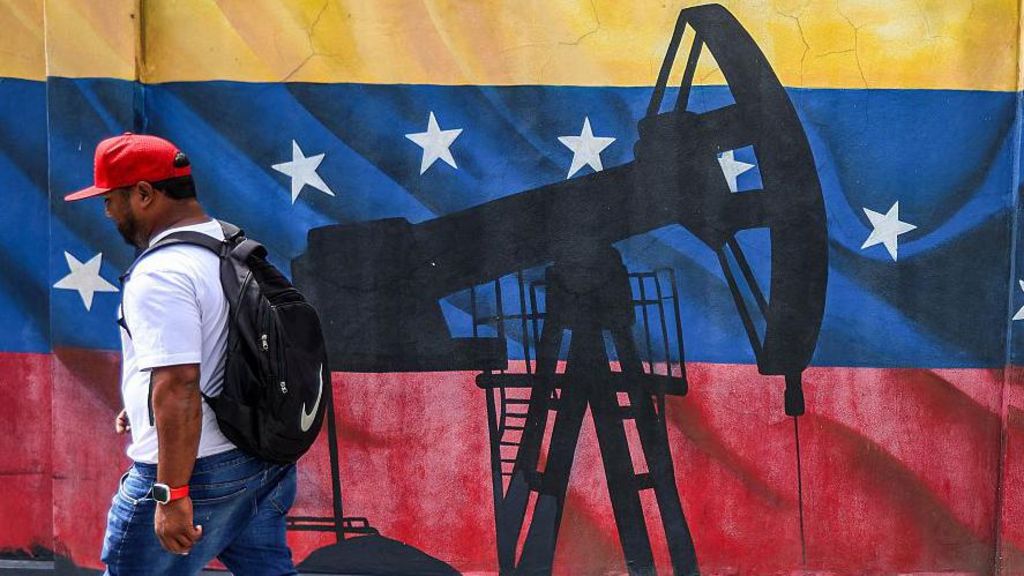
    The reporting period was also shadowed by geopolitical commentary from the White House. President Donald Trump indicated a predisposition to exclude ExxonMobil from future operations in Venezuela. This statement followed public skepticism from the company’s leadership regarding the viability of oil investments in the country following the political upheaval and ousting of former President Nicolás Maduro. Encouraging U.S. energy firms to invest and aid in rebuilding Venezuela’s crippled oil infrastructure remains a stated priority for the Trump administration.

  • How financial centres can reimagine the global dynamics of finance?

    How financial centres can reimagine the global dynamics of finance?

    Global financial centers are undergoing a fundamental transformation as they confront the limitations of aging infrastructure in an era of digital assets, AI innovation, and continuous operational demands. Historically, these hubs have driven remarkable economic growth—economies with international financial centers have achieved 3.3% annual per capita growth since the 1980s, significantly outpacing the global average of 1.4%. Yet their physical environments have largely remained static while the ecosystem of occupants has dramatically evolved.

    Today’s financial districts host not only traditional institutions but technology firms, data-intensive businesses, regulatory specialists, and AI-driven startups operating beyond cyclical patterns. This new reality demands infrastructure that supports closer coordination between regulators and firms across disciplines including FinTech, RegTech, data analytics, and artificial intelligence.

    The challenge extends beyond physical space to talent retention. Senior professionals and technologists now evaluate locations through a practical lens that considers commute times, housing options, and lifestyle amenities alongside professional networking opportunities. Single-use office zones are increasingly giving way to mixed-use environments that integrate residential space, education, hospitality, and public amenities to support round-the-clock activity.

    Dubai International Financial Centre (DIFC) exemplifies this evolution with its expansion into Zabeel District. Rather than creating a disconnected satellite, DIFC is developing a physically contiguous extension designed as a polycentric hub that maintains governance consistency while absorbing future demand. This strategic approach addresses the critical need for infrastructure, governance, and connectivity to scale together—preserving the proximity between institutions that fosters innovation and institutional trust.

    The Zabeel District represents a structural response to growth challenges, positioning DIFC as a regional driver of global finance’s next era. By implementing an integrated masterplan, the expansion supports emerging areas like advanced technology and AI within the same operational environment that made DIFC successful. This model demonstrates how mature financial centers must adapt to remain functional at scale while preserving their competitive advantages.

    As urban populations are projected to exceed two-thirds of humanity by 2050, the success of financial districts will increasingly depend on their ability to sustain density through thoughtful design of streets, public spaces, and pedestrian connections. For investors, mixed-use developments offer diversified income and long-term growth potential despite the challenges of capital investment, land acquisition, and regulatory navigation.

    The transformation underway at DIFC underscores a broader shift in global finance: competitiveness will be determined by whether districts can maintain operational effectiveness, governance coherence, and talent retention as they grow. Zabeel District represents not merely a real estate project but a strategic blueprint for reimagining finance’s global dynamics through integrated, future-ready design.

  • Europe sees modest growth, but the weaker dollar looms as a threat

    Europe sees modest growth, but the weaker dollar looms as a threat

    FRANKFURT, Germany — The European economy demonstrated unexpected durability during the final quarter of 2025, registering a 0.3% growth rate that matched previous quarter performance despite ongoing trade uncertainties. According to Eurostat’s Friday report, year-over-year expansion reached 1.3%, defying earlier recession predictions that emerged during heightened U.S. trade tensions.

    The moderate growth occurred following the resolution of tariff negotiations between the European Union and the United States, which established a 15% cap on import taxes. While not ideal for commercial operations, this agreement provided businesses with sufficient certainty to proceed with strategic planning. However, this stability was temporarily jeopardized in January when former President Trump threatened additional tariffs regarding Greenland, though these warnings were subsequently retracted.

    Economic activity within the services sector—encompassing diverse industries from personal care to healthcare—showed consistent improvement according to S&P Global’s purchasing managers index. Consumer spending resilience emerged from December’s reduced inflation rate of 1.9% and rising wages, though industrial exports continued facing challenges.

    A new economic challenge has materialized through the euro’s significant appreciation against the U.S. dollar, which has reached its weakest point in 4.5 years. This 14.4% currency shift over twelve months makes European exports less price-competitive in critical international markets. The dollar’s decline stems from concerns that proposed tariffs could hinder economic growth and that political pressure on Federal Reserve Chair Jerome Powell might undermine the institution’s inflation control capabilities.

    Financial analysts suggest the European Central Bank might implement interest rate reductions later this year should currency pressures persist. Meanwhile, Germany—the eurozone’s largest economy—recorded its strongest quarterly performance in three years with 0.3% growth, though the government has revised its 2026 growth forecast downward from 1.3% to 1%. The nation continues confronting multiple structural challenges including energy price volatility, skilled labor shortages, increased Chinese competition in automotive and machinery exports, and chronic infrastructure underinvestment.

    The broader 27-nation European Union mirrored the eurozone’s 0.3% quarterly growth, achieving 1.4% annual expansion. The euro currency union expanded to 21 members in January following Bulgaria’s accession.