分类: business

  • UAE homebuyers can now check monthly mortgage instantly while browsing property

    UAE homebuyers can now check monthly mortgage instantly while browsing property

    In a groundbreaking development for the UAE real estate sector, leading property portals Bayut and Dubizzle have forged a strategic partnership with financial technology company Prypco to integrate instant mortgage calculation features directly into their property listings. This innovation eliminates the traditional need for prospective homebuyers to consult multiple banking institutions or use external calculators, providing immediate repayment estimates with a single click while browsing properties.

    The newly implemented functionality displays a fully branded mortgage section within each property listing, enabling users to instantly calculate monthly repayment amounts and view personalized financing options tailored to their budgetary constraints. This transformative feature aims to demystify the financial aspects of property acquisition, offering transparency from the initial browsing stage and potentially accelerating decision-making processes for UAE residents.

    The partnership agreement was formally executed at Dubai Design District through a signing ceremony attended by Amira Sajwani, Founder and CEO of Prypco, and Haider Khan, CEO of both Bayut and Dubizzle, who also serves as CEO of Dubizzle Group Mena. Both executives emphasized that this collaboration represents a significant advancement toward creating a more streamlined and transparent property purchasing experience throughout the Emirates.

    Haider Khan articulated the strategic vision behind the integration, stating: “Our objective is to enhance the intelligence and user-friendliness of property acquisition by addressing one of the most persistent challenges buyers encounter—comprehending affordability. Technology should function as an eliminatory force against barriers rather than a source of additional complexity.” He further emphasized that this initiative contributes to developing a more interconnected and technologically advanced real estate ecosystem.

    Amira Sajwani highlighted the alignment with Prypco’s fundamental mission of promoting accessibility and transparency in real estate financing: “We are committed to simplifying the home-buying journey for all participants. By positioning financial information adjacent to property details, we provide crucial clarity from the very inception of the property search process.”

    This technological integration supports the UAE’s broader ambition to establish itself as a global pioneer in Property Technology (PropTech), intelligent living solutions, and digital real estate services. The feature effectively transforms online property browsing into an experience analogous to e-commerce, where potential buyers can simultaneously evaluate properties, comprehend associated costs, and explore financing alternatives within a unified digital environment.

  • Shein faces European Union scrutiny over child safety and illegal products

    Shein faces European Union scrutiny over child safety and illegal products

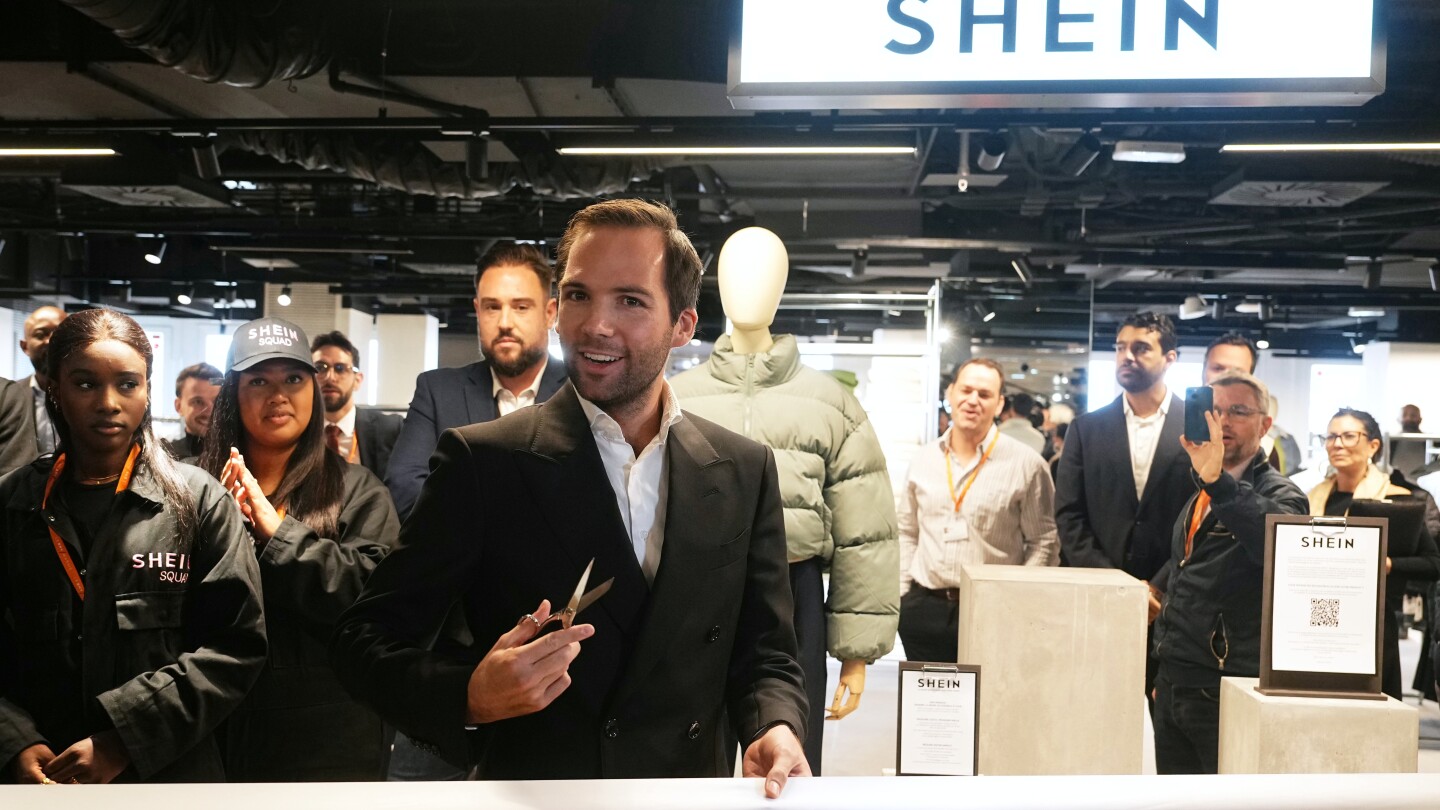
    European Union regulators are escalating their investigation into Shein’s safety protocols following alarming discoveries by French authorities. The fast-fashion giant’s website was found to be selling illegal weapons and child-like sex dolls, prompting immediate action. The European Commission announced on Tuesday that it is leveraging the EU’s Digital Services Act to demand detailed information from Shein regarding its measures to protect minors and prevent the sale of prohibited items on its platform. The French government has already taken steps to suspend access to Shein’s website in France and has urged the EU to launch a formal inquiry. The Digital Services Act mandates that online platforms enhance user protection or face substantial fines. Thomas Regnier, a Commission spokesperson, revealed that Shein has been issued a formal request for information due to “serious indications” of systemic risks to consumers across the EU. Shein, which originated in China in 2012 and is now headquartered in Singapore, stated that it has received the request and is collaborating with EU regulators to address the concerns promptly. The company emphasized its commitment to maintaining an open dialogue with regulatory bodies.

  • Bangkok court issues an arrest warrant for Thai co-owner of Miss Universe pageant

    Bangkok court issues an arrest warrant for Thai co-owner of Miss Universe pageant

    A Bangkok court has issued an arrest warrant for Jakkaphong “Anne” Jakrajutatip, co-owner of the Miss Universe Organization, following her failure to appear at a scheduled hearing on Tuesday. The court deemed her a flight risk after she did not notify them of her absence. Jakkaphong, who was previously charged with fraud in 2023 and released on bail, is now facing renewed legal scrutiny. The hearing has been rescheduled for December 26, 2024. The case stems from allegations that Jakkaphong and her company, JKN Global Group Public Co. Ltd., defrauded Raweewat Maschamadol by selling him corporate bonds in 2023, resulting in a loss of 30 million baht ($930,362). JKN, which has been financially troubled since 2023, defaulted on investor payments and initiated debt rehabilitation procedures in 2024, with reported debts totaling 3 billion baht ($93 million). The company acquired the Miss Universe pageant rights in 2022 and sold 50% of its shares to Legacy Holding Group USA in 2023. Jakkaphong, a prominent transgender celebrity in Thailand, resigned from all company positions in June 2024 after being accused by Thailand’s Securities and Exchange Commission of falsifying financial statements. Her current whereabouts are unknown, and she did not attend the 74th Miss Universe competition held in Bangkok earlier this month. The event itself faced controversies, including allegations of rigging and illegal promotion of online casinos. JKN has denied rumors of Jakkaphong liquidating assets and fleeing the country, but she remains unreachable for comment.

  • Trade unions in India stage nationwide protests against new labor codes

    Trade unions in India stage nationwide protests against new labor codes

    In a significant show of dissent, a coalition of 10 major Indian trade unions organized nationwide protests on Wednesday, vehemently opposing the government’s implementation of new labor codes. The unions labeled the reforms as a “deceptive fraud” against workers, arguing that the changes undermine job security, weaken collective bargaining, and increase employer control. Demonstrations erupted across various regions, with millions of laborers and farmers voicing their concerns over the sweeping overhaul. This marks the first coordinated labor action since the codes came into effect last week, highlighting the escalating tensions between unions and the government regarding economic reforms. While the government claims the new framework modernizes outdated laws, enhances efficiency, and expands social protections, unions contend that it strips essential safeguards and disproportionately favors employers amid rising job insecurity. Tapan Sen, general secretary of the Centre of Indian Trade Unions, accused the government of bulldozing workers’ rights and masking the move with misleading claims of benefits for laborers. The four new codes—covering wages, industrial relations, social security, and occupational safety—replace 29 existing labor laws. The government asserts that the consolidated structure simplifies compliance, reduces fragmentation, and improves access to social security and safety norms. However, unions argue that the reforms are skewed in favor of employers, citing provisions that facilitate layoffs, expand fixed-term employment, and impose stricter conditions for forming unions or organizing strikes. Amarjeet Kaur, general secretary of the All India Trade Union Congress, likened the reforms to a regression to the colonial era, where workers’ voices were suppressed. The government has yet to formally respond to the protests but maintains that the codes are essential to attract investment and create formal jobs in the long term.

  • ‘This is the first year I can’t find a holiday job’

    ‘This is the first year I can’t find a holiday job’

    The holiday job market in the United States is facing unprecedented challenges, with seasonal hiring expected to drop to its lowest level since the aftermath of the 2008 recession. According to the National Retail Federation, retailers are projected to hire between 265,000 and 365,000 seasonal workers this year, a significant decline from 442,000 in the previous year. This pullback reflects a cautious approach among businesses grappling with tariffs, inflation, and consumer uncertainty. Nicholas Strahl, a 41-year-old part-time retail sales associate in Indiana, exemplifies the struggles of job seekers. Despite applying to multiple retailers since October, he has yet to secure a seasonal position. ‘I’ve never seen the job market like this—it’s pretty crazy,’ he remarked. The labor market is described as ‘frozen with frostbite’ by Allison Shrivastava, an economist at the Indeed Hiring Lab, as a larger pool of job seekers competes for fewer opportunities. Retail job openings in October were down 22% compared to last year, according to Revelio Labs. Major retailers like Target and Walmart have remained tight-lipped about their seasonal hiring plans, a departure from previous years. Meanwhile, smaller businesses, such as Hobby Works in Maryland, are scaling back hiring due to economic pressures and the recent government shutdown. For many Americans, the lack of seasonal work means cutting back on holiday spending and delaying essential expenses, further highlighting the economic strain faced by households across the country.

  • Maersk to resume shipping routes through Red Sea and Suez Canal

    Maersk to resume shipping routes through Red Sea and Suez Canal

    Global shipping leader Maersk has announced its intention to resume operations through the Red Sea and Suez Canal as soon as conditions permit, prioritizing crew safety above all else. CEO Vincent Clerc made the announcement during a press conference in Egypt alongside the Suez Canal Authority chief, expressing optimism following the recent ceasefire between Israel and Hamas. This truce, Clerc noted, has created a more stable environment for navigating the Bab al-Mandab Strait, a critical waterway connecting the Red Sea to the Gulf of Aden. However, Maersk has not yet set a definitive timeline for resuming the route, contradicting earlier claims by the Suez Canal Authority of a partial December reopening. The Red Sea has seen increased maritime traffic since the Gaza ceasefire on October 10, according to the canal authority. Maersk had previously diverted ships away from the region after repeated attacks by Yemen’s Houthi rebels, who targeted vessels in solidarity with Palestinians in Gaza. These attacks, totaling over 100 incidents from 2023 to 2024, prompted many shipping companies to reroute via the southern tip of Africa, costing Egypt an estimated $7 billion in lost Suez Canal revenue. Maersk has also faced criticism for its ties to Israeli settlements in the occupied West Bank, leading to its divestment from companies linked to these settlements in June. The company has been accused of transporting military equipment to Israel, including components for F-35 fighter jets used in Gaza. Despite denying these allegations, Maersk has faced protests and scrutiny from human rights groups globally.

  • World stocks climb after Wall Street rallies on hopes for lower interest rates

    World stocks climb after Wall Street rallies on hopes for lower interest rates

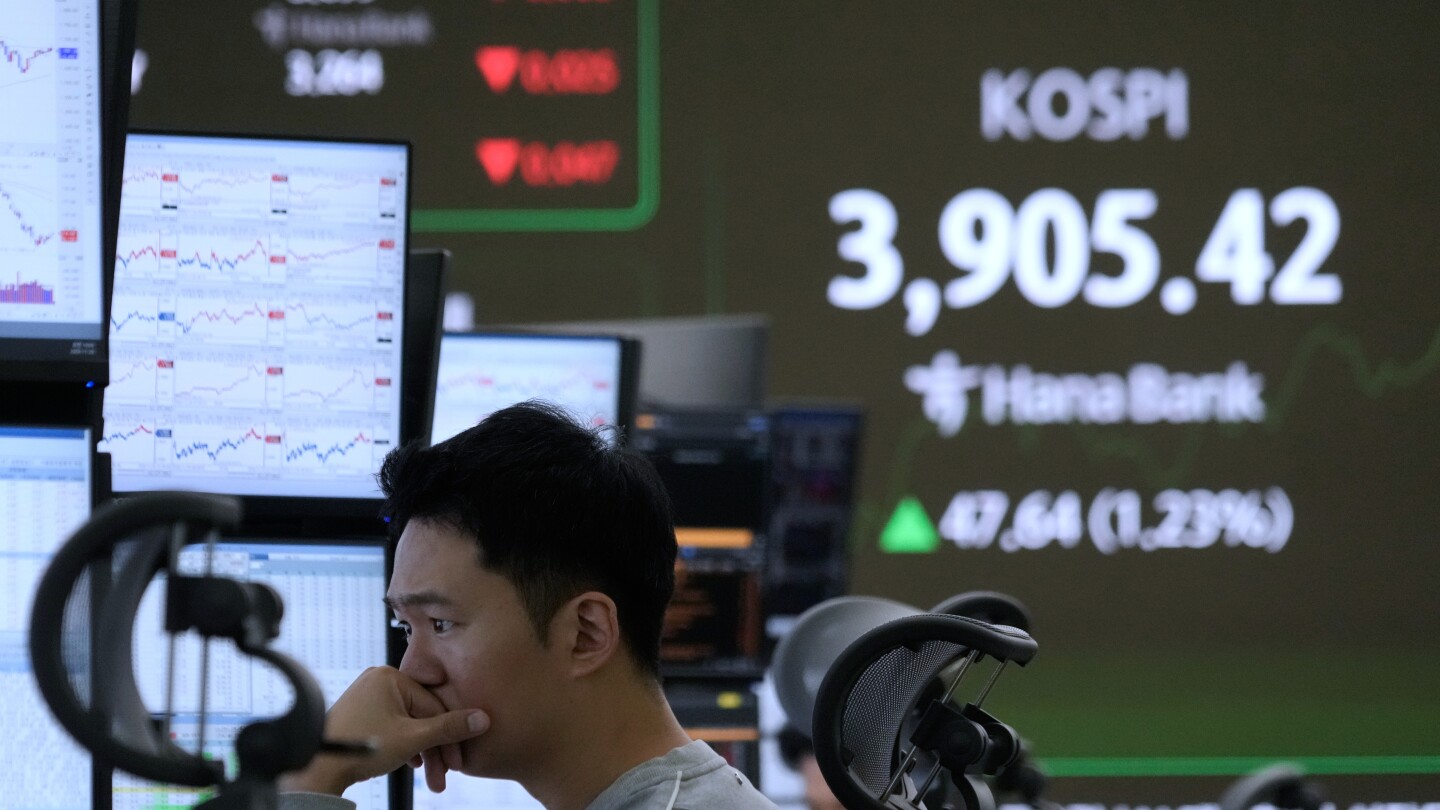
    Stock markets across Europe and Asia experienced notable gains on Wednesday, driven by optimism that the Federal Reserve may soon reduce interest rates. This sentiment followed a strong performance on Wall Street, where benchmarks surged in anticipation of potential rate cuts. In early European trading, Germany’s DAX climbed 0.2% to 23,500.98, while France’s CAC 40 also rose 0.2% to 9,623.22. The UK’s FTSE 100 saw a modest increase of 0.1%. In Asia, Tokyo’s Nikkei 225 soared 1.9% to 49,559.07, supported by gains in major exporters and technology shares. However, Kioxia’s shares plummeted 14.9% amid reports that Bain Capital plans to sell $2.3 billion of its shares. South Korea’s Kospi surged 2.7% to 3,960.87, buoyed by a 3.5% rise in Samsung Electronics, the market’s largest player. SK Hynix, a leading computer chip maker, also saw a 1% increase. Taiwan’s Taiex jumped 1.9%, while Chinese markets showed mixed results. Hong Kong’s Hang Seng edged up 0.1% to 25,928.08, but the Shanghai Composite slipped 0.2% to 3,864.18. Alibaba, the Chinese e-commerce and technology giant, fell 1.9% after its U.S.-traded shares dropped 2.3% on Tuesday due to weaker-than-expected profits, despite stronger revenue. Australia’s S&P/ASX 200 rose 0.8% to 8,606.50, and New Zealand’s S&P/NZX 50 added 0.6% after the central bank cut its official cash rate to 2.25%. U.S. markets are set for a shortened trading week due to the Thanksgiving holiday, with closures on Thursday and reduced hours on Friday. On Tuesday, the S&P 500 gained 0.9%, the Dow Jones Industrial Average rallied 1.4%, and the Nasdaq composite rose 0.7%. The Russell 2000 index, which tracks smaller U.S. companies, led the market with a 2.1% jump. Mixed economic data has left traders betting on an 83% probability of a Fed rate cut in December. Retail sales in September fell short of expectations, and consumer confidence worsened more than anticipated in November, signaling the economy could benefit from lower interest rates. While easier rates can stimulate borrowing and investment, they may also exacerbate inflation, a key concern for the Fed. U.S. benchmark crude oil rose 5 cents to $58.00 per barrel, while Brent crude increased 8 cents to $61.88. The U.S. dollar strengthened to 156.46 Japanese yen, and the euro rose to $1.1575.

  • Binance accused of aiding terrorists in new lawsuit

    Binance accused of aiding terrorists in new lawsuit

    Binance, the world’s largest cryptocurrency exchange, and its billionaire founder Changpeng Zhao (CZ) are embroiled in a high-profile lawsuit in the United States. The legal action, filed by victims of the October 7, 2023, attacks in Israel and their families, accuses Binance of facilitating the transfer of over $1 billion to US-designated terrorist organizations, including Hamas and Hezbollah. The lawsuit alleges that Binance knowingly allowed these transactions, including $50 million sent after the attacks, and maintained lax monitoring of inbound funds, enabling illicit activities on its platform. The complaint further claims that Binance intentionally structured itself as a haven for criminal activity, with no significant changes to its core business model despite previous legal settlements. This lawsuit reignites scrutiny of Binance’s practices, coming just weeks after former President Donald Trump pardoned Zhao, who had pleaded guilty to money laundering charges in 2023. Binance has denied the allegations, stating it complies with international sanctions laws and has improved its compliance systems. The plaintiffs are seeking financial damages through a jury trial. The case has sparked controversy over Trump’s pardon, with critics arguing it sends a dangerous message to cryptocurrency executives and white-collar criminals.

  • UAE banks set for stable 2026 amid geopolitical, oil-price risks

    UAE banks set for stable 2026 amid geopolitical, oil-price risks

    Gulf Cooperation Council (GCC) banks are entering 2026 with stable credit fundamentals, robust capital buffers, and resilient profitability, according to a recent assessment by S&P Global Ratings. The agency highlights that 90% of bank ratings in the region carry a stable outlook, reflecting the Gulf’s solid economic foundation and conservative banking frameworks. However, geopolitical tensions and oil-price volatility remain significant risks. S&P analysts Mohamed Damak and Tatjana Lescova emphasize that the sector’s stability hinges on its ability to navigate these external challenges effectively. The agency’s base case assumes no major geopolitical disruptions or prolonged oil-price declines, but warns of potential downside scenarios, including regional conflicts or a sharp drop in oil prices due to global economic slowdowns. External funding needs are rising across the Gulf, with Bahrain and Qatar holding the highest levels of external debt. Saudi banks are expected to continue accessing international debt markets to support Vision 2030 projects. Despite these pressures, the region benefits from strong capital inflows, driven by high oil revenues and diversification efforts. S&P’s average long-term rating for GCC banks is A-, slightly higher than last year, reflecting improved operating conditions and government support. UAE banks, in particular, are expected to thrive due to rapid non-oil economic expansion, population growth, and robust credit demand. The UAE’s digital transformation has also enhanced retail lending efficiency. Economic activity across the Gulf is projected to strengthen, with Brent crude prices stabilizing at around $60 per barrel in 2026 and average real GDP growth estimated at 3.1%. The UAE is expected to outperform this average, supported by growth in tourism, real estate, trade, and technology. Asset quality has improved significantly, with non-performing loan ratios falling to 2.7% and loan-loss provision coverage rising to 155.6%. However, S&P cautions about latent risks, including untested credit exposures and potential defaults in Türkiye. Capitalization remains a key strength, with GCC banks reporting an average Tier-1 capital ratio of 17%. While hybrid instruments have increased, particularly in Saudi Arabia, the overall quality of capital remains solid. S&P concludes that UAE banks are well-capitalized and profitable but must remain vigilant to navigate potential turbulence.

  • Dubai: New initiative aims to boost financing options for first time property buyers

    Dubai: New initiative aims to boost financing options for first time property buyers

    Dubai’s real estate market, renowned for its dynamic growth, has long faced a significant hurdle: the absence of mortgage options for off-plan properties. Traditionally, financing in the UAE has been restricted to ready-to-move-in homes, creating financial challenges for first-time buyers. To address this, the Dubai Land Department has introduced measures such as reduced down payments, partial waivers on registration fees, and priority booking under the First-Time Home Buyer Programme. These initiatives aim to ease market entry for aspiring homeowners. In a groundbreaking move, Majid Al Futtaim, a leading developer in the region, has partnered with Emirates NBD to launch off-plan mortgage financing across its residential portfolio. This collaboration marks a pivotal shift in Dubai’s property market, offering buyers the opportunity to secure home loans during the off-plan phase. Under the agreement, buyers who have completed 50% of their property payments can apply for mortgages with competitive interest rates and repayment terms of up to 25 years. This initiative is open to both UAE nationals and residents meeting standard credit criteria, providing a streamlined and transparent path to homeownership. The partnership not only addresses a critical financing gap but also aligns with Dubai’s broader efforts to make property investment more accessible. Ahmed El Shamy, CEO of Majid Al Futtaim Development, emphasized the importance of financial clarity in homebuying decisions, stating that the collaboration offers customers a flexible and familiar option. Rohit Garg of Emirates NBD highlighted the growing demand for structured payment plans, underscoring the partnership’s role in supporting sustainable homeownership. This initiative is expected to enhance market confidence and make high-quality residential communities more attainable for a diverse range of buyers.