分类: business

  • Dubai-based Binghatti’s 2025 net profit nearly doubles to Dh3.58 billion

    Dubai-based Binghatti’s 2025 net profit nearly doubles to Dh3.58 billion

    Dubai’s property sector continues to demonstrate remarkable resilience as Binghatti Holding Ltd, a premier UAE real estate developer, announced extraordinary financial results for 2025. The company revealed a staggering 96% year-on-year surge in net profit, reaching Dh3.58 billion, alongside revenue that nearly doubled to Dh12.43 billion from Dh6.34 billion in the previous year.

    The exceptional performance stems from multiple strategic factors including robust operating leverage, sustained sales momentum, accelerated project completions, and a diversified portfolio spanning mainstream, premium, luxury, and ultra-luxury property segments. CEO Katralnada BinGhatti attributed this success to Dubai’s strong market fundamentals and the company’s vertically integrated business model that ensures quality control while optimizing costs from design to delivery.

    Dubai’s real estate market continues to outperform global counterparts, fueled by consistent population growth, increasing homeownership rates, and steady international capital inflows. Long-term development initiatives including the Dubai Economic Agenda D33 and Dubai 2040 Urban Master Plan further strengthen the city’s economic foundation and sustain housing demand.

    According to Property Monitor data, Binghatti dominated Dubai’s off-plan market in December 2025, capturing a commanding 24.7% market share with 2,965 transactions across multiple developments. Key projects driving this performance included Binghatti Vintage in Majan (883 sales), Binghatti Titania (447 sales), and several other premium developments across Jumeirah Village Circle, Jumeirah Village Triangle, and Business Bay.

    The company maintained impressive profitability metrics with 44% gross margin, 35% EBITDA margin, and 29% net margin. Financially, Binghatti strengthened its balance sheet significantly with total assets growing 92% to Dh24.37 billion and cash reserves reaching Dh8.84 billion, providing substantial liquidity for continued strategic expansion.

    The year concluded with landmark achievements including the launch of Mercedes-Benz Places Binghatti City, the world’s first Mercedes-Benz-branded urban development, and the sale of the Middle East’s most expensive penthouse at approximately $150 million (Dh550.5 million), setting new benchmarks in ultra-luxury residential demand.

  • Wynn Bridge to link Al Marjan Island resort directly to UAE’s E311, E611 highways

    Wynn Bridge to link Al Marjan Island resort directly to UAE’s E311, E611 highways

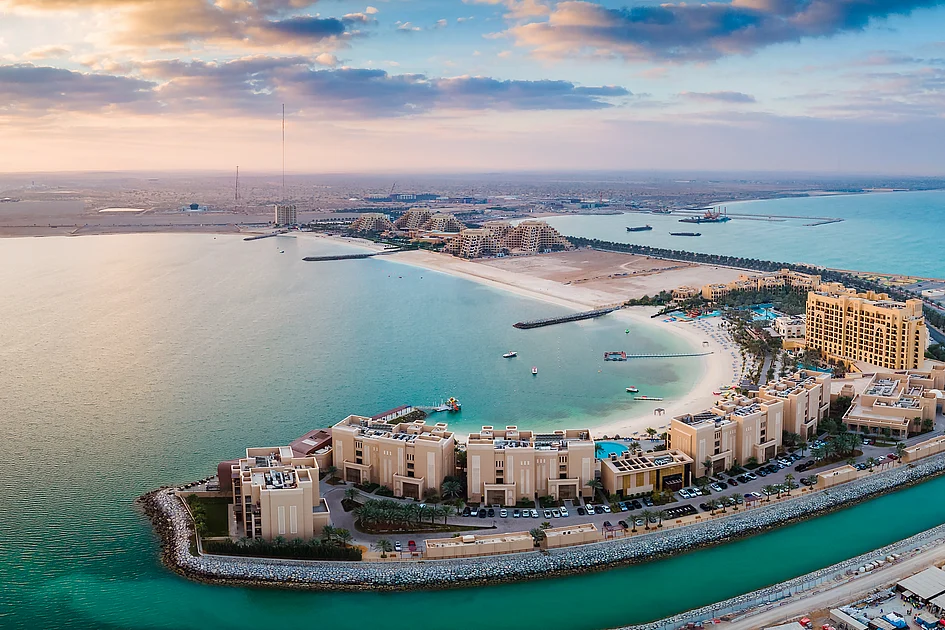
    Construction of the pivotal Wynn Bridge, a 548-meter infrastructure project designed to connect the forthcoming Wynn Al Marjan Island resort directly to the UAE’s E311 and E611 highways, has achieved nearly 50% completion. This development marks a critical milestone in the comprehensive transportation network supporting the luxury resort’s scheduled Spring 2027 opening.

    The bridge will serve as the primary conduit between the resort’s Wynn Boulevard and the nation’s major highway systems, establishing seamless connectivity between Dubai and the Northern Emirates. Project officials confirm construction remains on schedule for a late 2026 completion, with piling works fully finalized and nine of the ten bridge column pile caps already positioned.

    Concurrent with the bridge development, the broader resort construction demonstrates significant progress. The project’s signature tower, which reached its maximum height of 299 meters in December 2025, has completed all structural concrete works up to the 71st floor roof. Installation of the steel roof crown is currently underway, while façade installation stands at 83% completion with over 21,800 panels installed.

    Structural works for all 1,530 guest accommodations—including rooms, suites, townhouses, and Marina Estates—have been fully completed. Interior fit-out operations are now progressing throughout the entire inventory alongside comprehensive mechanical and electrical installations.

    Low-rise structures across the resort campus are approaching finalization with concrete and structural steel works 99% complete. Recent weeks have seen the commissioning of air-conditioning systems serving podium office areas, enabling the commencement of final finishing works.

    In a parallel development, Wynn Al Marjan Island has announced ‘Oasis: A Wynn Community,’ a dedicated residential complex for employees situated near Marjan Island and Wynn Boulevard. The 26-acre development, scheduled for Summer 2026 opening, will accommodate over 7,000 staff members across 15 residential buildings.

    Encompassing more than 60 hectares, the integrated resort destination will feature extensive amenities including multiple dining venues, leisure and wellness facilities, event spaces, swimming pools, a private beach, and a deep-water marina upon its 2027 debut.

  • Disney warns of hit from flagging foreign visits

    Disney warns of hit from flagging foreign visits

    The Walt Disney Company has issued a warning regarding anticipated challenges at its American theme park operations, citing declining international visitor numbers as a primary concern. Despite this headwind, the entertainment giant maintains confidence in its domestic marketing strategies to sustain modest growth within its lucrative parks division.

    Recent data reveals a notable shift in US tourism patterns, with foreign visits declining by 2.5% in the past year—marking the first decrease since 2020. Industry analysts attribute this trend partially to geopolitical factors, including potential backlash against certain US policies. Particularly striking is the approximately 20% plunge in Canadian visitors during the first three quarters of the year, following trade-related tensions.

    The tourism industry faces additional pressure from proposed regulatory changes, including potential social media screening requirements for international travelers. A World Travel & Tourism Council survey indicates that one-third of global travelers would be less inclined to visit the US if such measures were implemented.

    Despite these challenges, Disney’s recent financial performance demonstrates resilience. Parks revenue increased by 6% year-over-year in the latest quarter, surpassing $10 billion. Company executives note that domestic bookings remain strong with a projected 5% growth trajectory for the year, while overall attendance saw a 1% increase in the most recent reporting period.

    Ampere Analysis expert Guy Bisson commented on the situation: ‘While not achieving the stellar results they might have hoped for under normal circumstances, the current performance is far from catastrophic.’

    The company’s broader financial picture showed mixed results: total quarterly revenue grew 5% to $26 billion, driven by successful film releases including Zootopia and Avatar sequels. However, profits declined nearly 6% due to increased content production and distribution costs. Investor reaction was immediately apparent as Disney shares fell 4% following the earnings announcement.

  • Indian tax on animal imports spells setback for Ambani family’s Vantara zoo

    Indian tax on animal imports spells setback for Ambani family’s Vantara zoo

    India’s newly implemented fiscal policy has introduced a substantial 30% customs duty on animal and bird imports, effective immediately. This legislative shift eliminates previous duty exemptions and presents significant financial challenges for conservation projects, most notably the ambitious Vantara zoo operated by the philanthropic division of Reliance, chaired by Asia’s wealthiest individual Mukesh Ambani.

    Spanning 3,500 acres in Gujarat, Vantara houses approximately 2,000 species and represents India’s most extensive private zoological initiative. Unlike typically state-operated facilities, Vantara has engaged in substantial international animal transfers since 2022, importing species including cheetahs, rhinoceroses, and numerous reptiles from nations such as South Africa, United Arab Emirates, and Venezuela.

    The government’s unexpected policy change provides no explicit justification, though analysts suggest it may aim to stimulate domestic breeding programs. Rajat Mohan, senior partner at AMRG Associates, notes that while import volumes remain limited, the financial implications for conservation projects are profound. Vantara maintains that it never engages in commercial animal transactions but bears substantial costs for insurance and freight during rescue and rehabilitation operations.

    The zoo has previously faced international scrutiny after CITES, the UN wildlife trade monitoring body, identified discrepancies in trade documentation and raised concerns regarding origin verification protocols. Although India’s Supreme Court ultimately cleared Vantara of wrongdoing, European authorities continue monitoring its import activities closely.

    According to Reuters analysis, Vantara’s shipments have reached a declared value of $9 million. A single 2023 consignment of 26 rare parrots from Germany demonstrated the financial impact, with $25,194 declared for insurance and freight costs that would now incur approximately $7,500 in additional taxes under the new regime.

  • SmartCrowd exits DIFC duplex apartment flip at 22.5% above target

    SmartCrowd exits DIFC duplex apartment flip at 22.5% above target

    Dubai’s leading property investment platform SmartCrowd has concluded a landmark transaction involving a three-bedroom duplex apartment within the prestigious Dubai International Financial Centre (DIFC), achieving an exceptional sale price of AED 8.7 million. This successful exit substantially surpassed initial projections by 22.5%, delivering investors a net return on investment of 25% after all associated fees.

    The transaction underscores the remarkable resilience of Dubai’s premium residential market, particularly within the DIFC commercial hub where demand for high-quality, centrally located properties continues to demonstrate strength. This achievement follows closely on the heels of SmartCrowd’s recent successful exit from a Palm Jumeirah property, demonstrating consistent performance in the short-term property flipping segment.

    SmartCrowd has emerged as a dominant force in the regional proptech investment landscape, having facilitated over AED 220 million in successful exits with an additional AED 300 million planned for 2026. The platform’s innovative approach combines traditional buy-and-hold strategies with targeted flip opportunities, creating diversified investment pathways for its stakeholders.

    Chief Executive Officer Riz Ahmed emphasized the company’s investor-centric philosophy, stating: ‘Our consistent outperformance in both DIFC and Palm Jumeirah transactions reflects our disciplined methodology in acquisition, value-added renovation, and strategic asset management. Exceeding projections by such a significant margin validates both Dubai’s prime market fundamentals and our operational expertise.’

    The consecutive successful flips demonstrate growing investor appetite for short-term property investments in Dubai’s prime locations, with SmartCrowd having completed three times more exits than all other regional crowdfunding platforms combined according to company statements.

  • Bitcoin sinks below $75,000 on Monday as selloff snowballs

    Bitcoin sinks below $75,000 on Monday as selloff snowballs

    Digital asset markets experienced significant turbulence on Monday as Bitcoin, the leading cryptocurrency, plummeted below the crucial $75,000 threshold. Trading data from Asian markets indicated Bitcoin’s value had dropped to approximately $74,684, representing its lowest valuation point since April 2025 and extending what has become one of the most prolonged bearish trends in recent years.

    The current downturn has erased nearly 40% of Bitcoin’s value from its previous peak, with January alone witnessing an 11% depreciation. This marks the fourth consecutive monthly decline, establishing the longest sustained negative performance period since the major cryptocurrency collapse of 2017-2018.

    The selling pressure has extended across the digital asset spectrum, with Ethereum, the second-largest cryptocurrency by market capitalization, falling below the psychologically significant $2,200 level. This broad-based decline has amplified risk-aversion sentiment among market participants globally.

    In the United Arab Emirates, particularly within Dubai’s emerging digital asset ecosystem, retail investors have adopted increasingly cautious positions. Trading platforms report substantial increases in hedging activities and conversions to stablecoins as investors seek to protect capital during this period of elevated volatility. Nevertheless, some strategic investors view the current price levels as accumulation opportunities, anticipating that ongoing institutional adoption and regulatory developments will ultimately support long-term valuation recovery.

    Market analysts attribute the current downturn to multiple converging factors. Technical indicators reveal severely oversold conditions with bearish trend signals remaining firmly entrenched. The decline has been exacerbated by substantial leveraged position liquidations exceeding $700 million within 24 hours, with approximately 77% of these forced closures affecting long positions. Ethereum alone accounted for nearly $270 million in liquidations, highlighting the extensive speculative exposure across major digital tokens.

    Macroeconomic conditions have simultaneously turned less favorable for risk assets. Robust economic indicators from the United States have revived concerns about prolonged elevated interest rates, while strengthening bond yields and dollar appreciation have reduced investor appetite for non-yielding volatile assets. Geopolitical uncertainties and equity market fragility have further driven capital toward traditional safe-haven investments, creating additional headwinds for cryptocurrency markets.

    Market strategists remain divided regarding near-term prospects. Some anticipate potential testing of the psychologically critical $70,000 support level if selling pressure persists, while others interpret the movement as a cyclical correction within a broader structural bull market. Most analysts agree that until speculative positioning undergoes substantial reset and broader risk appetite improves, elevated volatility will likely continue characterizing market conditions.

  • Gold rebounds after historic plunge as Dubai market braces for fresh volatility

    Gold rebounds after historic plunge as Dubai market braces for fresh volatility

    Global precious metals markets experienced dramatic volatility as gold and silver prices staged a significant recovery after their most severe single-day collapse in over a decade. The rebound occurred during early Asian trading sessions, with spot gold climbing approximately 1% following a nearly 4% decline in the previous session, while silver demonstrated even more pronounced swings with an 8% surge after briefly plummeting almost 12%.

    This market turbulence follows an extraordinary rally that had previously driven both metals to unprecedented record highs, fueled by multiple factors including escalating geopolitical tensions, concerns about currency devaluation, and substantial speculative positioning by investors. The remarkable price surge saw gold exceeding $5,500 per ounce and silver surpassing $120 before the sharp correction emerged.

    In Dubai’s bustling bullion market, international spot gold trading between $4,650 to $4,750 per ounce translates to approximately Dh17,000 to Dh17,450 locally. Retail prices remain elevated with pure gold trading near Dh17,400 to Dh17,800 per ounce after dealer premiums. Silver, known for its heightened volatility due to industrial applications, has been fluctuating between $75 to $85 per ounce (Dh275 to Dh315 locally).

    Dubai’s retail gold market reflects these global dynamics with 24-carat gold trading between Dh560 to Dh590 per gram, 22-carat at Dh520 to Dh545, and 21-carat hovering near Dh500 to Dh525 per gram. This elevated pricing environment has subdued jewelry demand as consumers await clearer market signals.

    The recent sell-off was primarily triggered by a strengthening US dollar, which typically pressures dollar-denominated commodities by making them more expensive for international buyers. Additional contributing factors included broad weakness across global equity markets and renewed uncertainty regarding US monetary policy, prompting investors to unwind leveraged positions in derivatives markets.

    Market dynamics have been further complicated by recent US inflation data showing producer prices rising at their fastest pace in five months, reinforcing expectations of persistent price pressures. This development provides the Federal Reserve with justification to maintain current interest rates in the near term, though markets continue to anticipate at least two rate cuts later this year—a scenario that traditionally supports gold prices despite its non-yield-bearing nature.

    Analysts note that derivatives trading has significantly amplified price movements. Goldman Sachs analysts observed that extensive call-option buying mechanically reinforced the rally as option sellers hedged their exposure by purchasing underlying assets, creating a feedback loop that accelerated both gains and subsequent losses when market sentiment reversed.

    Despite current volatility, gold’s longer-term fundamentals remain robust with continued central bank accumulation, geopolitical uncertainty, and institutional hedging demand providing structural support. Silver’s outlook appears more complex due to its dual role as both precious and industrial metal, making it more sensitive to global economic indicators, manufacturing demand, and changes in futures margin requirements.

    Dubai traders report cautious buyer behavior with many investors opting for staggered purchases rather than lump-sum allocations to average costs amid unpredictable price swings. Physical jewelry demand has softened compared to peak seasons as households monitor global markets before committing to significant purchases.

    Market attention now turns to upcoming economic data releases, including manufacturing PMI figures from China, Europe, and the United States, which may provide fresh insights into industrial demand and broader economic momentum. Any renewed geopolitical developments or sharp dollar movements are expected to have substantial impact on precious metals pricing.

    Traders caution that the current rebound offers limited relief following one of the most dramatic sell-offs in decades. Dubai’s gold market, where investment flows and consumer demand intersect, anticipates continued choppy conditions with elevated prices, high volatility, and finely balanced market sentiment prevailing in the near term.

  • Dubai gold prices drop further, down over Dh100 per gram since last week’s peak

    Dubai gold prices drop further, down over Dh100 per gram since last week’s peak

    Dubai’s gold market witnessed a significant downturn on Monday as prices continued their sharp decline from last week’s historic highs. The precious metal’s value experienced a substantial drop, with 24K gold falling by Dh26.25 per gram at market opening, settling at Dh563.25 per gram according to Dubai Jewellery Group data.

    This recent decline marks a dramatic reversal from Thursday’s peak of Dh666 per gram, representing a total decrease of Dh102.75 per gram within days. All gold variants in the Dubai market now trade below the Dh600 threshold, with 22K, 21K, 18K and 14K gold dropping to Dh521.5, Dh500.0, Dh428.75 and Dh334.25 per gram respectively.

    The price correction triggered a wave of selling activity among UAE residents and investors who rushed to liquidate their gold and silver holdings. Market participants moved quickly to capitalize on the recent rally, believing the precious metals had reached their peak valuation.

    International spot gold mirrored this trend, trading at $4,651.34 per ounce with a nearly five percent decline as the US dollar strengthened in global markets. This represents the first time since last month that Dubai’s gold prices have retreated below the Dh600 per gram level after previously surpassing this milestone for both 24K and 22K variants.

    Market analyst Rania Gule of XS.com Mena attributed the selling pressure to a complex interplay of psychological factors and macroeconomic variables. “In phases that follow the achievement of record highs, markets are rarely driven by a single factor; rather, investor decisions are shaped by fears of losing accumulated gains, the rapid flow of news, and shifts in broader macroeconomic expectations,” she explained.

    The current market behavior reflects typical profit-taking activity following exceptional price performance, with investors reassessing their positions amid changing market conditions and currency fluctuations.

  • Why the UAE is pulling ahead in the EV transition

    Why the UAE is pulling ahead in the EV transition

    The United Arab Emirates has quietly positioned itself at the forefront of the global electric vehicle revolution, creating a unique market paradigm that transcends conventional EV adoption narratives. While many nations still approach electric mobility through the lens of environmental responsibility and cost savings, the UAE has engineered a comprehensive ecosystem where government policy, infrastructure development, and consumer aspirations converge to accelerate adoption.

    Market projections reveal remarkable growth trajectories, with battery electric vehicle sales expected to expand at a 19% compound annual growth rate between 2024 and 2029. This momentum stems from unprecedented public-private alignment, including Dubai’s transformation of approximately 70% of its taxi fleet to battery electric and hybrid models—a clear indicator of systemic change rather than niche adoption.

    The charging infrastructure network continues to scale strategically, initially emphasizing slow chargers but rapidly expanding fast-charging capabilities as utilization increases. For ride-hailing operators, the economic model proves increasingly compelling, with earnings between 15-22% achievable under battery replacement frameworks.

    Luxury Redefined: From Performance to Experience

    In a region historically synonymous with V12 engines and dramatic arrivals, the very definition of automotive luxury is undergoing profound transformation. Industry leaders note that premium EV adoption in the UAE represents a paradigm shift where technology, digital integration, and seamless experiences have become the new benchmarks of luxury.

    Karim-Christian Haririan, Managing Director of BMW Group Middle East, emphasizes that success stems from ‘the power of choice, enabled by technological openness.’ The forthcoming BMW Intelligent Personal Assistant, built on Amazon’s Alexa+ AI architecture, exemplifies this evolution—transforming vehicles from mechanical marvels into intuitive digital companions.

    Ricky Mullins, Executive Vice-President of Exeed UAE, observes that luxury now reflects ‘intelligence, effortlessness, and emotional ease’ rather than overt status symbols. This recalibration is particularly significant in a market where refinement is measured by how quietly, smoothly, and intuitively vehicles perform.

    Roberto Colucci, Director of EVs at AW Rostamani Group, describes the transition as fundamental: ‘The absence of engine noise isn’t a loss, it’s a gain. It creates a refined cabin environment that allows for an entirely new level of comfort and conversation.’

    Beyond Sustainability: The Experience Economy

    While sustainability initiates consumer consideration, it no longer dominates purchase decisions. Comprehensive research indicates that 52% of UAE buyers prioritize lower operating costs, while 47% cite environmental concerns—but the ultimate decision hinges on overall experience, design, and lifestyle alignment.

    This psychological shift from duty-based to desire-driven adoption explains why 94% of UAE EV owners intend to purchase another electric vehicle. The market has matured beyond compromise, offering vehicles that deliver superior driving experiences while addressing environmental considerations.

    Digital-First Ownership Models

    The UAE’s advanced digital landscape has reshaped EV ownership expectations, with smartphones becoming the new control centers for vehicle management. From checking charge levels and preconditioning cabins to scheduling maintenance and locating chargers, integrated apps have transformed the ownership experience.

    Flexible subscription models through platforms like Shift Rent a Car and Subscribe Me further lower adoption barriers, particularly valuable in a market characterized by mobility and transient residency patterns. These digital-native approaches align with broader regional trends in banking, retail, and service consumption.

    Securing Global Leadership

    Maintaining the UAE’s competitive advantage requires transitioning from rapid adoption to comprehensive system building. Industry leaders emphasize the necessity of sustained infrastructure investment, supportive regulatory frameworks, and innovative public-private partnerships.

    The next phase demands full ecosystem integration, including charging interoperability across networks, smart grid capabilities enabling vehicle-to-grid technologies, and developing circular economy solutions for battery repair, reuse, and recycling. With premium vehicles above $80,000 currently dominating the market, expanding mid-range options will be crucial for mass adoption.

    As the UAE continues to refine its EV ecosystem, the nation demonstrates how strategic alignment across government, industry, and consumer preferences can accelerate sustainable transportation transitions while creating market leadership in the emerging electric mobility economy.

  • UAE creators race to complete advertiser permits before January 31 deadline

    UAE creators race to complete advertiser permits before January 31 deadline

    The United Arab Emirates has ushered in a new era of digital content regulation as its mandatory advertiser permit system took full effect on January 31, 2026. The groundbreaking policy, initially announced in July and subsequently extended through October, represents a significant shift in how the Gulf nation oversees its burgeoning creator economy.

    Content producers across the Emirates shared predominantly positive experiences despite a weekend registration surge preceding the deadline. The permit system mandates that all individuals publishing promotional material online—whether compensated or not—obtain official authorization or face potential penalties reaching AED 500,000 (approximately $136,000).

    Dubai-based creator Yasmin M. reported an efficient application process completed within thirty minutes at an Amer Lounge service center. “The procedure was remarkably smooth,” she noted. “After presenting identification and a brief wait, officials processed my application despite my lack of prior trade licensing.”

    The regulatory framework requires applicants to be at least 18 years old, with provisions for minors to apply under guardian supervision. All permit holders must maintain valid electronic media trade licenses, renewable annually with a 30-day grace period following expiration. International visitors may participate through UAE-based licensed agencies.

    While most creators reported straightforward experiences, some encountered unexpected hurdles. Amina (pseudonym), whose application faced rejection without detailed explanation, has initiated an appeals process seeking clarification. “The system operated professionally,” she acknowledged, “but transparency regarding content standards would be beneficial.”

    The implementation has sparked diverse reactions across social platforms. Mariam Salih, a casual TikTok user with modest followership, pursued compliance as a precautionary measure. “I primarily create content for enjoyment,” she explained, “but regulatory compliance outweighs potential risks.”

    This regulatory development coincides with increased institutional support for UAE creators, including a recently announced Dh5-million fund for family-oriented content producers and Amazon’s Creators Foundry initiative. The simultaneous introduction of support mechanisms and compliance requirements signals the government’s dual approach to nurturing and regulating the digital content sector.

    As enforcement commences, the UAE joins global discussions about balancing creative expression, commercial opportunity, and regulatory oversight in rapidly evolving digital economies.