分类: business

  • Irish economy grew strongly in 2025

    Irish economy grew strongly in 2025

    Ireland’s economy demonstrated remarkable resilience in 2025 with official data revealing nearly 5% growth in domestic economic activity. The measurement of modified domestic demand (MDD), which provides a more accurate picture of Ireland’s economic performance by excluding multinational corporate distortions, indicates robust expansion despite global economic challenges.

    Finance Minister Simon Harris highlighted that the figures confirm strong domestic growth despite external pressures. While acknowledging that headline growth figures might slightly overstate underlying economic strength, Harris emphasized two critical positive indicators: rising real incomes and record-breaking employment levels reaching unprecedented numbers.

    Ireland’s economic performance appears even more impressive when considering the context of potential trade disruptions. Initial concerns about significant impact from U.S. tariff policies have largely not materialized, primarily because pharmaceutical exports—Ireland’s main export to the American market—have generally remained exempt from these trade measures.

    The nation’s fiscal position has been further strengthened by sustained corporation tax revenues, creating a substantial financial buffer. This has enabled the establishment of a national wealth fund for long-term investment while simultaneously supporting increased government spending that contributes to economic growth.

    Looking forward, the government has committed to major infrastructure development, including Dublin’s inaugural underground railway system, signaling continued investment in the nation’s economic future.

    However, this strong macroeconomic performance contrasts with microeconomic challenges faced by many citizens. Despite overall economic prosperity, younger demographics particularly report not feeling the benefits due to persistently high housing costs. While the job market remains healthy, soaring rental expenses consume disproportionate portions of income for young workers. The government maintains that housing construction initiatives are progressing, though recent polling suggests many voters remain skeptical about these claims.

  • China to establish national fund for low-carbon transition, boost green economy: draft govt work report

    China to establish national fund for low-carbon transition, boost green economy: draft govt work report

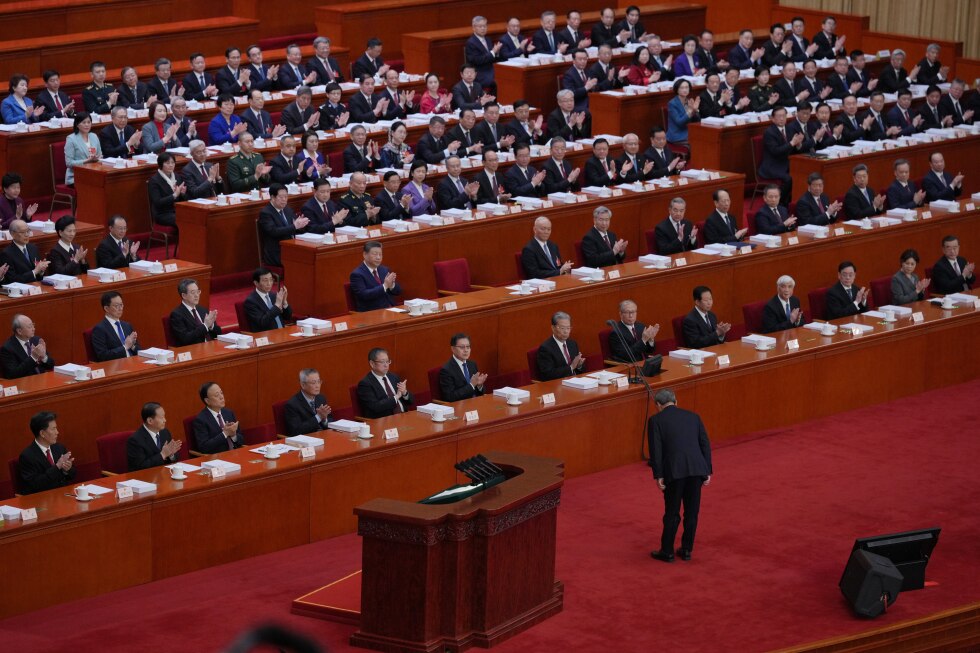
    China is poised to establish a groundbreaking national fund dedicated to accelerating its transition toward a low-carbon economy, according to the draft government work report presented at the ongoing National People’s Congress session. This strategic initiative represents a cornerstone of the nation’s comprehensive strategy to cultivate sustainable economic growth while addressing climate commitments.

    The newly proposed fund will specifically channel resources into developing cutting-edge green technologies and emerging sectors, with hydrogen power and green fuels identified as primary beneficiaries. This financial mechanism aims to catalyze innovation and scale up deployment of clean energy solutions across industrial sectors.

    Beyond the fund establishment, the policy blueprint outlines a multi-faceted approach to environmental stewardship. The government plans to enhance existing green development policies while launching specialized initiatives targeting quality upgrades, cost reduction, and carbon emission cuts in key industries. The development of zero-carbon industrial parks and factories will receive prioritized support as demonstration projects.

    While maintaining stringent oversight on energy-intensive and high-emission projects, China will accelerate the phase-out of obsolete production capacity. Concurrently, the nation will bolster research, development and implementation of advanced green technologies and equipment. The comprehensive strategy further includes improvements to total resource consumption control mechanisms, enhanced resource conservation systems, and expanded recycling programs for reusable materials.

    The policy framework explicitly supports China’s dual climate objectives of achieving peak carbon emissions before 2030 and carbon neutrality by 2060. Government authorities emphasize a balanced approach of “active yet prudent” advancement toward these targets.

    Implementation will involve establishing a dual-control system managing both the total volume and intensity of carbon emissions. The government will also refine carbon emission statistics, accounting methodologies, and carbon footprint management protocols. Additional measures include expanding China’s national carbon trading market coverage and formulating a strategic outline to strengthen the energy sector’s resilience.

    The transition plan acknowledges the interim role of fossil fuels, promoting their cleaner and more efficient utilization while accelerating construction of smart grid infrastructure. Development of novel energy storage technologies and broader adoption of green electricity will receive significant policy support to build a new electric power system fit for a low-carbon future.

  • Key takeaways from China’s new 5-year economic blueprint and growth target

    Key takeaways from China’s new 5-year economic blueprint and growth target

    China has announced its most conservative annual economic growth target in over three decades, setting a benchmark of approximately 5% for 2026 during the opening session of the National People’s Congress. This calibrated approach reflects Beijing’s pragmatic response to persistent domestic challenges including a protracted property sector crisis, weakened consumer confidence, and demographic pressures.

    Premier Li Qiang’s government work report acknowledged the “grave and complex” economic landscape while highlighting China’s achievement of meeting its 2025 growth target of 5%, largely propelled by a record trade surplus nearing $1.2 trillion. The economic strategy now prioritizes technological self-reliance, with substantial investments earmarked for artificial intelligence, robotics, semiconductors, and quantum technologies as part of the newly unveiled five-year plan extending to 2030.

    The comprehensive policy blueprint outlines ambitious research and development objectives, targeting minimum annual growth of 7% in nationwide R&D expenditure. Concurrently, China will maintain robust defense spending with a 7% budget increase to approximately $270 billion, while slightly moderating environmental targets with a 17% reduction in carbon intensity over the next five years.

    Addressing demographic concerns, officials pledged to create a “fertility-friendly society” through enhanced childcare, healthcare, and education support systems as the nation confronts a fourth consecutive year of population decline. The property market stabilization remains a priority, with commitments to regulate supply and reduce inventory amid ongoing housing market adjustments.

  • Japan sees stagflation risk rise

    Japan sees stagflation risk rise

    Japan faces mounting economic vulnerability as escalating Middle East tensions trigger serious concerns about potential stagflation. The recent joint military operations by the United States and Israel against Iran have sent shockwaves through global markets, with Japan positioned as particularly susceptible to energy supply disruptions due to its heavy reliance on Middle Eastern oil.

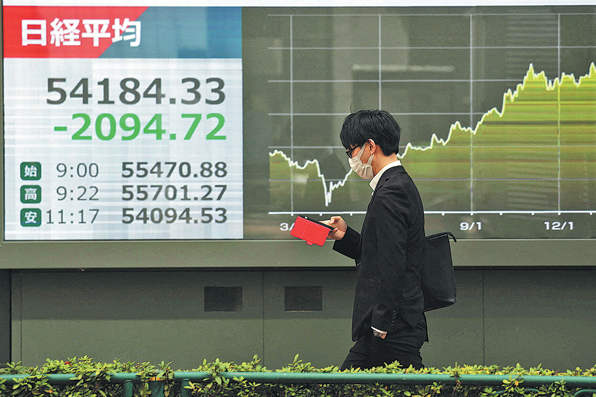
    Financial markets reacted immediately to the geopolitical turmoil, with Tokyo’s benchmark Nikkei 225 index plummeting 3.61 percent on Wednesday amid a worldwide sell-off driven by surging oil prices and heightened uncertainty. The broader TOPIX index followed suit, dropping 138.50 points to close at 3,633.67.

    The Strait of Hormuz, a critical maritime passage for global energy shipments, now represents Japan’s primary economic vulnerability. According to data from Japan’s Agency for Natural Resources and Energy, over 90 percent of the nation’s crude oil imports originate from the Middle East, with most shipments navigating this strategic choke point. Any sustained disruption to traffic through the strait could trigger dramatic increases in global oil prices.

    Despite government assurances regarding strategic petroleum reserves—reportedly sufficient for approximately 254 days of domestic consumption—leading economists warn that prolonged conflict could severely strain Japan’s energy security. Hideo Kumano, chief economist at Dai-ichi Life Research Institute, projected significant oil price surges should tensions continue to escalate, potentially driving up gasoline and electricity costs across the country.

    The stagflation scenario—a dangerous combination of stagnant economic growth and rising inflation—has emerged as a distinct possibility. Takahide Kiuchi, executive economist at Nomura Research Institute, cautioned that extended closure of the Strait of Hormuz by Iran could precipitate precisely this economic crisis.

    The ripple effects would extend throughout Japan’s real economy. Akuta Tomomichi, senior economist at Mitsubishi UFJ Research and Consulting, calculated that every $10 increase in global oil prices would raise Japan’s crude import costs by approximately 1.3 trillion yen, impacting sectors ranging from agriculture to fisheries and food production.

    Meanwhile, the Japanese government’s response to the military strikes has drawn criticism from diplomatic and political circles. Prime Minister Sanae Takaichi urged Iran to pursue diplomatic solutions while refraining from offering definitive legal assessment of the US-Israel bombardment, citing insufficient detailed information.

    Ukeru Magosaki, director of the Tokyo-based East Asian Community Institute and former Japanese ambassador to Iran, characterized the strikes as violations of international law without proper justification. Public dissent has manifested in protests across Japan, including a gathering of approximately 500 demonstrators in Tokyo who called for immediate cessation of attacks against Iran.

    Tomoko Tamura, chair of the Japanese Communist Party, condemned the military actions as violations of the United Nations Charter, suggesting international pressure could become a decisive force in halting the conflict.

  • Zhou Li’an: Rural vitalization lies in value creation and ‘rural CEOs’

    Zhou Li’an: Rural vitalization lies in value creation and ‘rural CEOs’

    In a groundbreaking exclusive interview with China Daily, Zhou Li’an—esteemed member of the 14th CPPCC National Committee and distinguished professor at Peking University’s Guanghua School of Management—presented a transformative vision for rural e-commerce development. The academic expert proposed a strategic pivot from destructive price wars to sustainable value creation as the cornerstone for rural revitalization.

    Professor Zhou identified product homogeneity as the critical challenge currently plaguing rural e-commerce platforms, creating an environment of intensified competition that undermines long-term viability. He emphasized that breakthrough success requires developing integrated business models that generate distinctive value propositions rather than competing solely on price points.

    The visionary economist introduced the innovative concept of ‘rural CEOs’—professional management experts who would bring sophisticated business acumen to agricultural industries. This paradigm shift would inject fresh vitality into rural economic structures through specialized management mechanisms traditionally reserved for corporate environments.

    Zhou’s analysis suggests that rural communities must embrace professionalization of management practices to unlock their full economic potential. By implementing corporate-style leadership structures, villages could leverage local resources more effectively while creating sustainable market advantages.

    The proposed model represents a significant departure from traditional agricultural management approaches, potentially setting new standards for how rural industries operate within China’s rapidly evolving digital economy. This professionalization initiative could serve as a blueprint for modernizing agricultural business practices nationwide.

  • Henan intensifies efforts for higher-level opening-up

    Henan intensifies efforts for higher-level opening-up

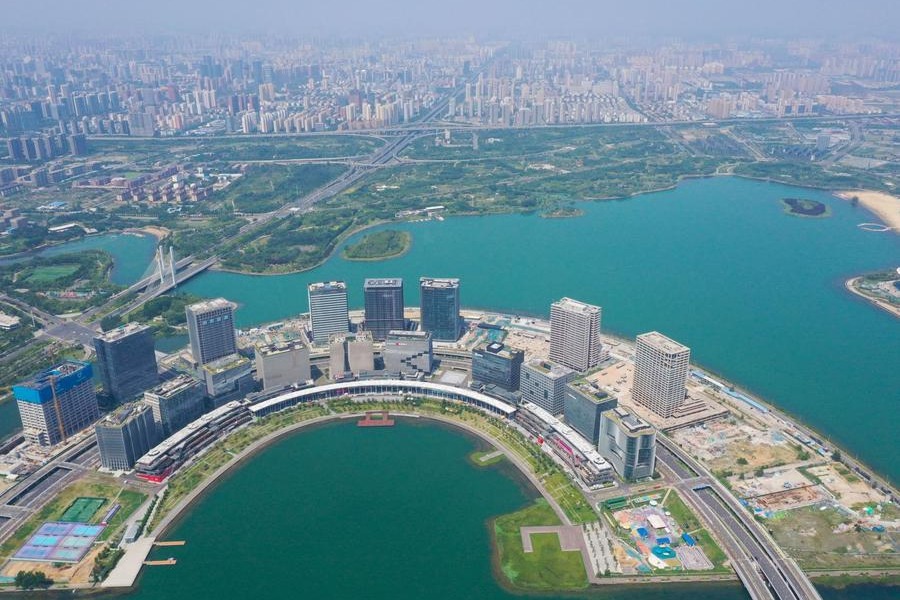
    Central China’s Henan province is executing an ambitious strategy to transform into a high-capacity inland hub for global commerce, leveraging enhanced trade corridors and digital infrastructure to connect domestic and international markets. Under the leadership of Provincial Party Committee Secretary Liu Ning, the region is prioritizing integration with China’s national unified market as the cornerstone of its economic development framework.

    The comprehensive approach centers on establishing Henan as a critical circulation nexus, facilitating the efficient movement of international products to Chinese consumers while simultaneously propelling locally manufactured goods onto the world stage. Cross-border e-commerce serves as the primary engine of this transformation, supported by an extensive network of specialized ports, bonded zones, and pilot e-commerce centers designed to streamline customs procedures and accelerate trade flows.

    This strategic focus has yielded substantial economic returns, with provincial foreign trade reaching 935.67 billion yuan ($135.72 billion) in the previous year—representing a robust 14.1 percent growth compared to 2024. Henan has achieved national leadership in exporting diverse products including commercial buses, mobile devices, and hair products, with provincial capital Zhengzhou emerging as a dominant import-export center.

    The province’s logistics capabilities demonstrate remarkable efficiency, particularly in perishable goods transportation. Cold-chain imports through Henan more than doubled year-over-year, with Malaysian durians clearing customs within half a day and reaching consumers nationwide within 36 hours. Norwegian chilled salmon now reaches markets within 24 hours of arrival, enabled by Henan’s innovative “pre-clearance + dedicated cargo flights + cross-border e-commerce” model that processes nearly 1,000 metric tons of outgoing cargo daily.

    Henan’s global commercial integration extends beyond logistics to corporate expansion. Beverage chain Mixue Ice Cream and Tea has established comprehensive overseas warehousing systems and operates over 4,800 international stores. Yutong Bus maintains its position as the global leader in large and medium-sized bus sales for the fifteenth consecutive year, while Xuchang City distributes approximately 40,000 hair product sets worldwide each day.

    Transport infrastructure metrics further underscore the province’s growing connectivity: Zhengzhou airport handled 1.033 million tons of cargo in 2025, representing a 25.2 percent annual increase and ranking fifth nationally for international cargo volume. The China-Europe and China-Central Asia freight train services from Zhengzhou have completed more than 17,000 journeys, establishing direct connections to 26 overseas stations and nine border ports.

    Looking forward, Henan plans deeper integration during the second golden decade of China’s Belt and Road Initiative, enhancing Eurasian connectivity through expanded freight rail services, digital trade infrastructure development, and improved rail-sea intermodal transportation. The province will continue refining its business environment through institutional reforms, standardized procurement practices, and enhanced regulatory efficiency while reducing operational costs for land, energy, labor, and financing.

    Foreign investors can anticipate streamlined administrative services and improved support systems covering entry procedures, residence permits, healthcare access, and payment processing. “Henan offers tremendous market potential, superior transportation networks, comprehensive industrial systems, and abundant human resources,” Liu affirmed. “Investment here presents exceptional opportunities and a promising future.”

  • Tech shares and miners lead ASX rebound after strong Wall Street rally

    Tech shares and miners lead ASX rebound after strong Wall Street rally

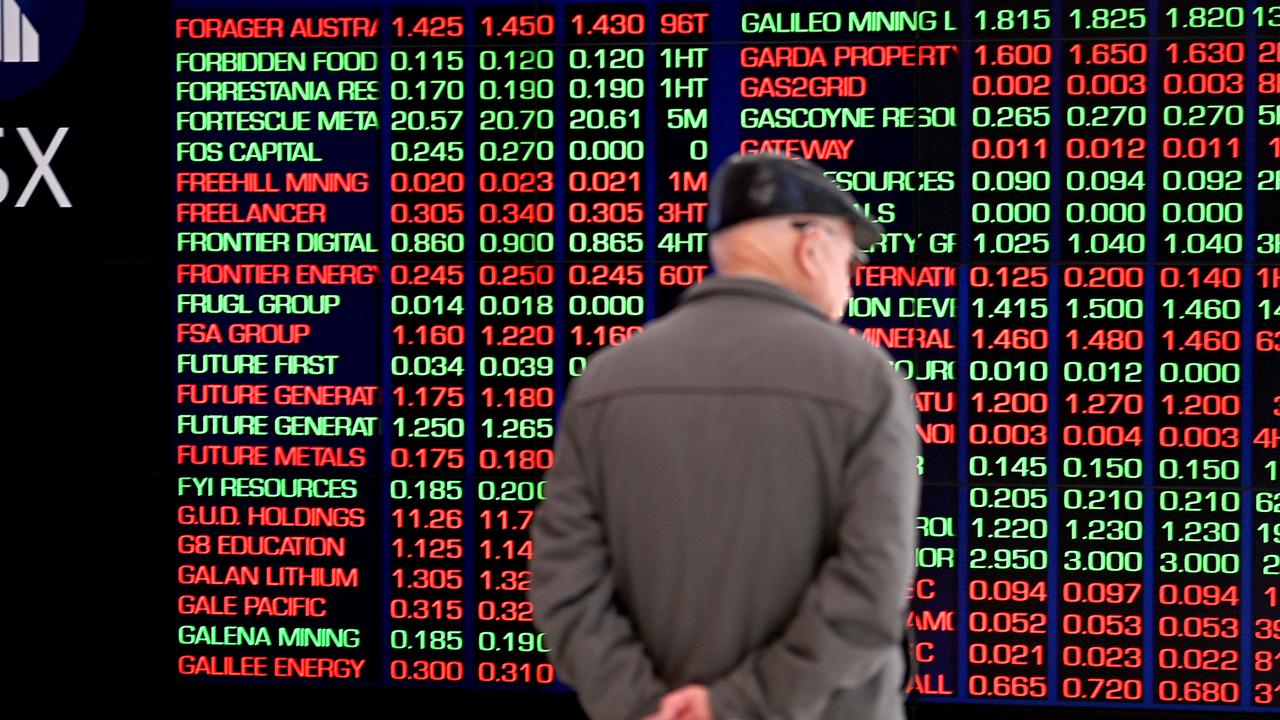
    Australia’s financial markets staged a robust recovery on Wednesday, reversing a significant $63 billion downturn as new economic data altered monetary policy expectations. The benchmark ASX 200 index climbed 39.10 points (0.44%) to settle at 8,940.30, while the broader All Ordinaries index advanced 47.80 points (0.52%) to reach 9,164.90.

    The resurgence was primarily fueled by unexpectedly modest household spending figures from the Australian Bureau of Statistics, which showed a mere 0.3% increase—substantially below market projections. This development significantly reduced pressure on the Reserve Bank of Australia to implement consecutive interest rate hikes, creating a more favorable environment for equity investments.

    Technology equities spearheaded the market recovery with remarkable sector growth of 4.65%. Leading this charge were WiseTech Global, surging 7.14% to $47.57, Xero climbing 4.26% to $83.89, and Technology One advancing 4.41% to $26.30. Healthcare stocks also contributed substantially to the rally, with industry giant CSL jumping 2.54% to $146.49 following its announcement of a major vaccine supply agreement with Canada for pandemic preparedness.

    The financial sector exhibited mixed performance with three of the four major banks recording gains. National Australia Bank led the group with a 1.39% increase to $47.33, while Commonwealth Bank edged up 0.44% to $172.66, and Westpac rose 0.58% to $41.37. ANZ bucked the trend, declining 0.45% to $37.77.

    Commodity markets provided additional support as Singapore iron ore futures surged to a four-week peak of $US101.20, driven by China’s renewed commitment to addressing steel production overcapacity. This development propelled Rio Tinto shares upward by 1.16% to $164.58 and Fortescue Metals by 2.05% to $19.39. BHP experienced a 0.95% decline to $55.15 as the mining conglomerate traded ex-dividend.

    The domestic recovery mirrored positive momentum on Wall Street, where stronger-than-anticipated ISM Services PMI data demonstrated continued resilience in the U.S. economy. Market analysts noted that declining price subindex components helped alleviate concerns about persistent inflationary pressures.

    AMP economist My Bui commented on the spending data: ‘We anticipate further moderation in spending growth in coming months. Momentum had already begun slowing prior to February’s RBA rate hike, likely driven by weakening consumer sentiment, while rising inflation continues to erode real purchasing power.’

    Overall, eight of the eleven market sectors finished higher, indicating broad-based recovery across the Australian equity landscape.

  • Credit card loyalty costing Australians $1.6bn a year in interest, new figures reveal

    Credit card loyalty costing Australians $1.6bn a year in interest, new figures reveal

    New financial research has uncovered a massive economic drain affecting millions of Australian households, revealing that persistent credit card loyalty is costing consumers approximately $1.6 billion annually in unnecessary interest payments. The comprehensive study conducted by financial comparison platform Canstar surveyed over 2,000 credit cardholders nationwide, uncovering that nearly one-third (31%) have never conducted a formal review of their current credit card arrangements.

    The analysis presents startling figures: Australians collectively paid more than $3.4 billion in credit card interest during the previous year, carrying an average interest rate of 18% on outstanding balances totaling $19.6 billion. Financial experts emphasize that simply transitioning to lower-rate cards offering 10% interest or less could effectively halve this enormous interest burden, creating substantial savings for consumers.

    Sally Tindall, Director of Data Insights at Canstar, characterized these findings as a significant financial oversight by Australian consumers. ‘Our research indicates that one in three cardholders have never reviewed their credit card arrangements. In a marketplace where rates vary dramatically from 8.99% to 28.49%, this approach is essentially equivalent to handing your bank your wallet and hoping for favorable outcomes,’ Tindall explained.

    The personal finance implications are equally striking. For individual consumers carrying an average debt of $4,000, switching from the average rate to a more competitive 10% option could yield annual interest savings approaching $350—funds that could substantially reduce principal debt balances.

    Beyond interest rates, the research highlights how annual fees continue to erode consumer finances regardless of outstanding balances. With some premium cards charging up to $1,200 annually, Tindall notes that eleven providers currently offer credit cards with zero ongoing fees, including three that maintain rewards programs alongside fee-free structures.

    Financial advisors now recommend that consumers conduct comprehensive credit card health checks every twelve months, carefully evaluating interest rates, fee structures, and rewards program valuations to ensure their current banking arrangements remain financially advantageous.

  • War with Iran chokes flows of oil and natural gas, highlighting energy security risks for Asia

    War with Iran chokes flows of oil and natural gas, highlighting energy security risks for Asia

    BANGKOK (AP) — Escalating military conflict around the Persian Gulf has triggered severe disruptions to global energy markets, with oil and natural gas shipments through the critical Strait of Hormuz facing unprecedented challenges. The strategic waterway, which facilitates approximately one-fifth of global crude oil and liquefied natural gas (LNG) trade, has become a flashpoint in regional tensions, sending energy prices soaring worldwide.

    Asia emerges as the most vulnerable region due to its heavy dependence on imported energy resources. According to energy consultancy Kpler, approximately 13 million barrels of oil transited through the corridor daily in 2025, representing about one-third of all seaborne crude. The U.S. Energy Information Administration reports that over 80% of LNG shipments through the strait in 2024 were destined for Asian markets.

    Since hostilities began, Brent crude prices have surged by 15% to approximately $84 per barrel, reaching their highest level since July 2024. U.S. President Donald Trump announced potential naval protection and risk insurance for shippers, but the ripple effects extend far beyond the immediate region. Wealthier nations are outbidding developing economies for scarce energy cargoes, recreating patterns observed during previous energy shocks.

    Zulfikar Yurnaidi of the ASEAN Centre for Energy warned that “the crisis, with the closure of the Hormuz Strait as the latest development, would not only raise oil and gas prices but also grind global economic activity to a halt.”

    China and India face particularly significant challenges as the world’s largest and third-largest crude oil importers, respectively. While China maintains substantial strategic petroleum reserves and alternative supply routes—including discounted Iranian, Russian, and Venezuelan oil through independent refiners—the price volatility remains a concern. India’s situation appears more precarious with less than one month of crude reserves, creating potential for rapid deterioration if conflicts persist.

    East Asian economies demonstrate varying levels of vulnerability. Japan imports approximately 95% of its crude from the Middle East, while South Korea sources around 70% of its crude oil and 20% of its LNG from the region. Taiwan, despite diversification efforts, remains heavily dependent on Qatari LNG. All three economies maintain energy stockpiles but face challenges in energy-intensive industries.

    Southeast Asian nations are implementing emergency measures as developing economies risk being outbid in tightening markets. Singapore has warned of higher energy bills, Manila has restricted non-essential fuel use, and Thailand has suspended petroleum exports while boosting domestic production. The region’s reliance on spot-market LNG creates additional exposure to price volatility and geopolitical instability.

    Energy analysts emphasize that current reserves provide only temporary relief, with many nations regretting insufficient investment in renewable energy diversification that could have served as a natural hedge against such disruptions.

  • China sets lowest economic growth target since 1991

    China sets lowest economic growth target since 1991

    China has announced its most conservative annual economic growth target in over three decades, setting a range of 4.5% to 5% for the coming year during the ongoing Two Sessions political gathering. This marks the lowest expansion goal since 1991 and represents the first downward adjustment since the “around 5%” target established in 2023.

    The revised growth framework emerges as Beijing confronts multiple economic headwinds, including persistently weak domestic consumption, an unresolved property sector crisis, and escalating trade tensions with Western nations. The announcement coincided with preliminary details of China’s 15th Five-Year Plan, which outlines strategic investments in innovation, high-tech industries, and scientific research.

    Premier Li Qiang addressed delegates emphasizing the government’s dual focus: stimulating household consumption while advancing manufacturing sophistication. This approach reflects concerns about over-reliance on export-driven growth despite China recording a record $1.19 trillion trade surplus in the previous year.

    Recent economic data reveals the complexity of China’s situation. While officially meeting the 5% growth target for 2025 overall, expansion slowed to 4.5% in the final quarter, consistent with the new target’s lower bound. This slowdown has prompted more than two-thirds of Chinese provinces to similarly temper their growth expectations.

    Georgetown University researcher Ning Leng notes that China’s export dependency creates vulnerability, particularly as former President Donald Trump’s tariff policies continue to pressure trade relations. In response, China has aggressively pursued trade diversification strategies to maintain manufacturing output and market access.