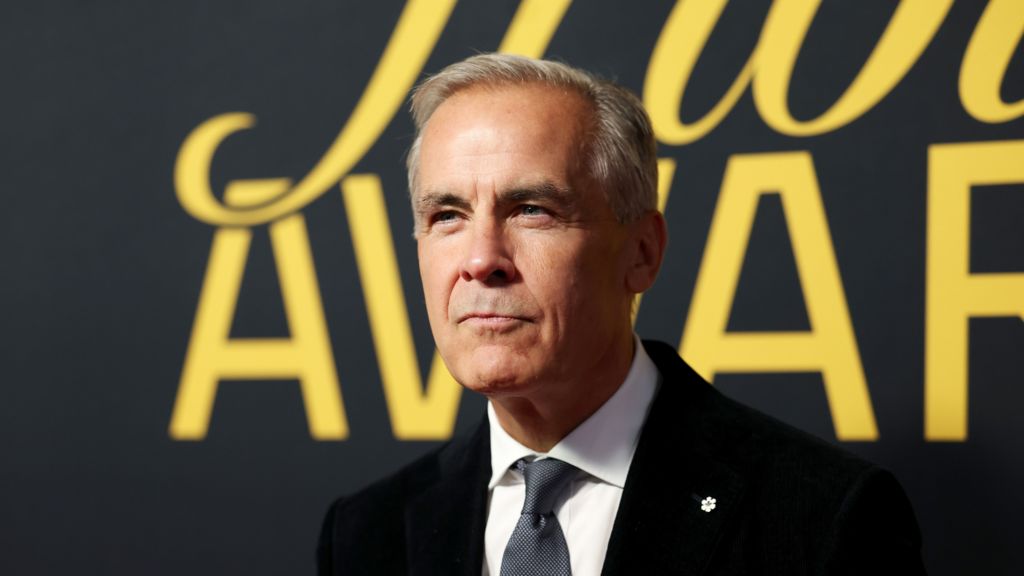
As trade tensions between Canada and the United States spiral to new heights, Canadian Prime Minister Mark Carney has publicly clarified his government’s strategic approach to deepening ties with the European Union, confirming Ottawa is not pursuing full bloc membership but a bespoke, far-reaching partnership. Carney made the remarks to reporters in Toronto Sunday, on the sidelines of the Toronto International Film Festival.
“What we are looking – and will begin discussions for – [is] a unique alliance with the European Union,” Carney stated, pushing back against recent reports that Canada had sought associate member status in the 27-nation bloc. He emphasized that Canada and the EU share foundational democratic values, overlapping policy priorities, and economically complementary strengths that make closer collaboration mutually beneficial. “We’re stronger together. And this is at a time when the world’s more dangerous and divided, and friends need to stick together at these times,” he added.
Carney’s comments follow a Wall Street Journal report citing anonymous officials from both sides that revealed the prime minister had floated the idea of associate membership, and that EU officials had signaled openness to the proposal. The outlet also reported that Carney had directed his special envoy to Europe to map out the most ambitious possible cooperation frameworks that stop short of full accession. Carney’s Sunday briefing put those rumors of a membership bid to rest.
This week, Carney will embark on a high-stakes European tour to kick off formal discussions on the proposed alliance. He is scheduled to address the European Parliament in Strasbourg, attend European Commission President Ursula von der Leyen’s annual State of the European Union address, and travel to Liverpool to meet with United Kingdom Prime Minister Andy Burnham.
The push for closer EU alignment comes directly in response to a rapidly escalating trade conflict with the United States that erupted after bilateral trade negotiations collapsed in late August. The Trump administration has implemented steep tariffs on core Canadian export sectors, including steel, aluminum, and softwood lumber, before adding an extra 50% levy on roughly C$28 billion ($20 billion) worth of Canadian goods. Ottawa hit back with reciprocal tariffs of up to 50% on an equal value of U.S. imports, ranging from industrial steel to consumer goods like furniture and cotton apparel.
Since taking office, Carney has centered his economic policy on building a “more independent, more resilient economy” for Canada, a shift driven by increasingly hostile trade and political rhetoric from the Trump administration. In a notable escalation of tensions, Trump has publicly mused about absorbing Canada as the 51st U.S. state, and recently issued an executive order directing U.S. federal agencies to rebrand Lake Ontario as “Lake America” — a move widely seen as a deliberate provocation. In his January address to the World Economic Forum in Davos, Carney already laid out his vision for closer cooperation between like-minded middle powers, declaring that “the old order is not coming back” and urging aligned nations to build new frameworks for collective security and economic stability.