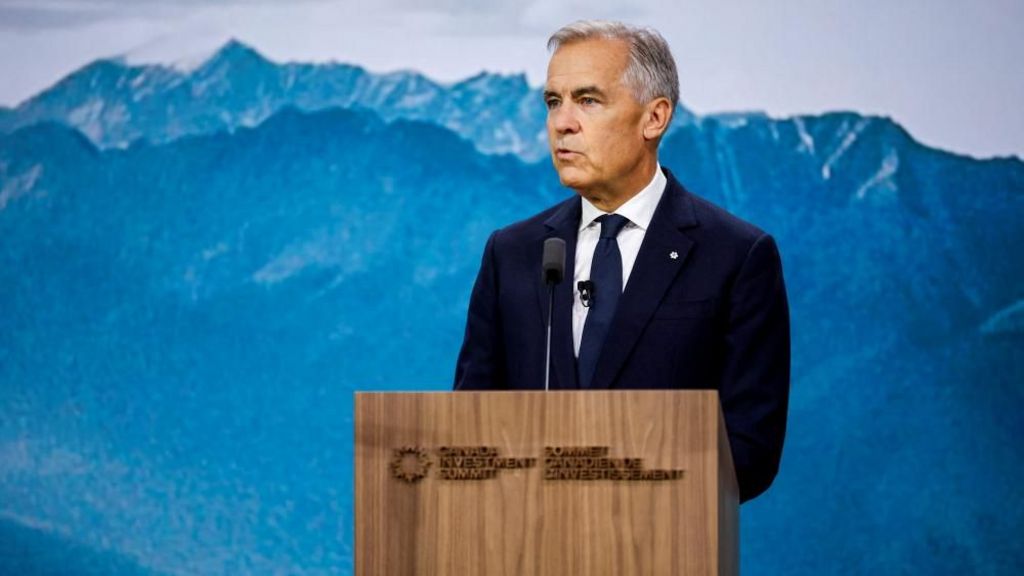
Against a backdrop of escalating geopolitical tension and global economic volatility, Canadian Prime Minister Mark Carney has positioned his nation as a stable “safe harbour” for the world’s largest institutional investors, as Ottawa works to attract massive new capital inflows and reduce overreliance on its fractious trade relationship with the United States.
Hundreds of delegates, including leaders of the world’s biggest sovereign wealth funds and global finance houses who collectively manage a staggering C$120 trillion ($86 trillion) in assets, gathered in Toronto this week for a landmark investment summit hosted by the Canadian government. Carney laid out an ambitious vision before attendees, arguing that Canada is uniquely positioned to thrive in the emerging global economic order, and inviting investors to deploy capital across high-priority sectors ranging from artificial intelligence and critical infrastructure to defence, energy, and mining.
In total, Ottawa is showcasing more than 160 ready-to-progress investment opportunities, spanning from new data centre developments to cross-border energy pipeline projects. The push comes at a critical moment for Canada, after trade negotiations with its largest trading partner collapsed last month, triggering a tit-for-tat tariff war that has disrupted cross-border commerce. On Tuesday, the same day the summit opened, new US duties on a range of Canadian goods entered into force, with additional restrictions on Canadian alcohol and motorcycles set to take effect next week.
In a direct address to American executives in attendance, Carney struck a conciliatory tone, emphasizing the deep-rooted ties between the two North American neighbours regardless of current trade friction. “We will always be neighbours, and Canada will continue to be the US’s most important partner in many key areas,” he said. “After all, even at times of disagreement during our long history, we have always maintained deep ties.” To diversify Canada’s economic partnerships beyond the US, Carney’s government has actively courted new investment from Europe, Asia and the Middle East, with a stated policy goal of making Canada the G7’s most attractive investment destination.
As a core policy step toward this goal, Carney used the summit to announce a new plan to privatize operations at four of Canada’s largest airports, a move that the government says will raise billions in fresh capital to reinvest into national transport infrastructure upgrades. The summit, which includes high-profile industry speakers such as Deutsche Bank CEO Christian Sewing, BlackRock CEO Larry Fink, Blackstone President Jon Gray and Bombardier executive Eric Martel, is structured around closed-door private sessions and bilateral negotiations, rather than large public announcements. Carney’s office has framed the event as an opportunity for deep-pocketed global financiers to “peer into our shop window”, downplaying expectations of immediate major deal announcements.
For Canada, the gathering marks a key opportunity to repair the country’s reputation as an investment destination after years of underperforming capital inflows. Economic analysts have warned that Canada needs widespread policy reforms — including more competitive corporate tax rates, streamlined regulatory frameworks, and expanded investment in skilled labour training — to unlock sustained investment growth.
The summit has not been without controversy: on the eve of the opening, hundreds of protesters gathered outside a downtown Toronto museum hosting the summit’s opening night gala, accusing the Carney government of orchestrating a “great Canadian sell-off” that would hand over public assets and critical infrastructure to private foreign corporate interests. Kai Nagata, a representative of Canadian advocacy group Dogwood, argued that the large share of American investors invited to the summit threatens Canadian sovereignty. “Let’s be clear, every piece of our country that we sell off to American billionaires brings us closer to becoming the 51st state,” Nagata said.
For Carney, who built his career as a central banker and senior global finance executive before entering politics, the summit represents a high-stakes test of whether his administration can deliver on its promise to boost Canadian economic resilience and attract the transformative investment it has promised.