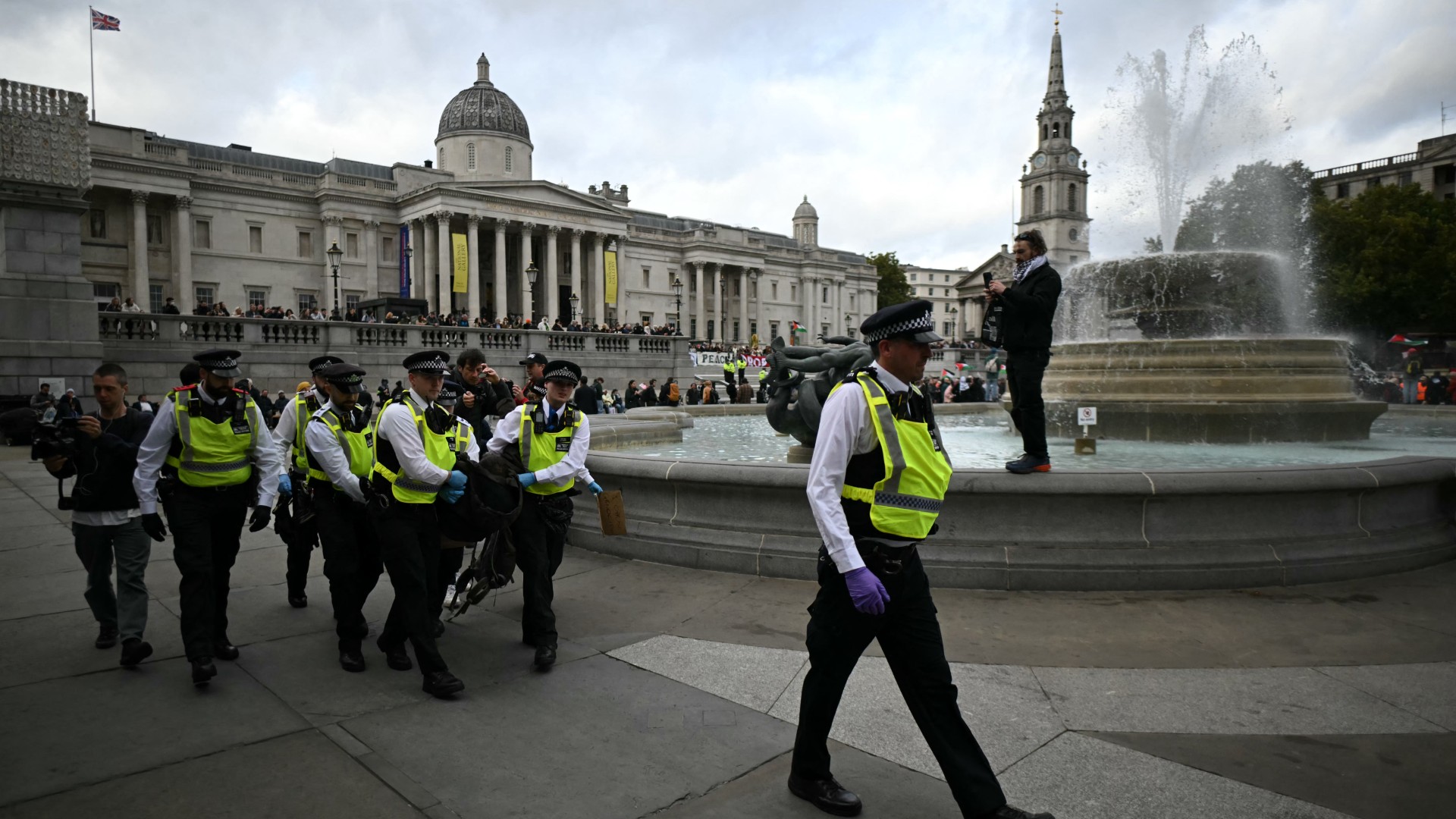
A Manchester-based cafe owner and prominent pro-Palestine activist has brought serious allegations against British law enforcement, claiming officers offered him financial incentives and informal leniency for minor offenses in exchange for spying on the banned advocacy group Palestine Action. Shams Sadiq, 51, who owns two local cafes, shared his account with The Guardian, detailing that the improper offer was made when he attended a police station in Ashton-under-Lyne on May 15 to recover electronic equipment police had seized following his 2023 arrest over alleged ties to the group.
During the private meeting described as a “man to man” discussion, two officers told Sadiq they had examined his confiscated devices and concluded he had deep connections to Palestine Action. Instead of moving forward with charges related to his 2023 arrest, however, they presented him with an under-the-table deal. According to Sadiq, the officers explicitly stated there would be tangible benefits for cooperating with their investigations. When Sadiq pressed to confirm the incentives included financial support, the officers confirmed they could assist with expenses such as his tax obligations, and added that they would be willing to overlook certain low-level offenses. When Sadiq asked if the deal could cover his existing speeding tickets, the officers replied that minor infractions like speeding were of no concern to them in this arrangement.
Sadiq says he understood the request to be a demand for him to provide intelligence on Palestine Action members and activities. He added that officers specifically noted his standing in the local Muslim community, leading him to believe they also wanted him to report on community members at his local mosque who they labeled as holding extreme views. This is not the first recent interaction law enforcement has had with Sadiq: just four days before the May 15 police station meeting, he was detained and questioned for three hours under Schedule 7 of the UK’s Terrorism Act at Manchester Airport. Though he was not arrested during that stop, officers again seized his electronic devices, which were only returned days later. During the airport questioning, Sadiq says he was interrogated about his connections to Palestine Action, his personal finances, and his views on Iran, as well as asked how he would respond to someone with extreme views at his mosque. Sadiq remains under active investigation for a separate alleged offense linked to Palestine Action that dates to 2024.
Sadiq has long been a visible local figure for pro-Palestine advocacy, and has already been targeted for his activism: last year, vandals placed Israeli flags on the door of one of his cafes. After rejecting the officers’ offer, Sadiq chose to go public with his account as a safety measure. He told The Guardian that officers attempted to reassure him by offering protection for his family and did not pressure him for an immediate answer, instead leaving a private phone number for him to text if he changed his mind.
Sadiq’s lawyer, Simon Pook, is preparing to file a formal complaint against Greater Manchester Police over the incident. Pook drew a parallel between the alleged conduct and the controversial informancy practices the British state employed during the Troubles in Northern Ireland, noting that “We’re unhappy that he was put in that position and offered inducements to work for the state.” Pook also raised questions about the legality of the airport detention under Schedule 7, arguing that if the stop was only a pretext to set up the later inducement offer, the use of the anti-terrorism powers was unlawful. Schedule 7 is legally only permitted to be used when authorities have reasonable suspicion that a person is involved in terrorism or terrorist planning.
To date, Greater Manchester Police has declined to issue any comment on the allegations. The case comes amid growing controversy over the UK government’s 2023 decision to proscribe Palestine Action as a terrorist organization, a move that came after group members carried out a break-in at a British military air base. The ban makes membership in or public support for Palestine Action a criminal offense punishable by up to 14 years of imprisonment. Since the proscription went into effect, hundreds of people have been arrested and charged on grounds of supporting the group, including high-profile Swedish climate activist Greta Thunberg, who was detained in December for holding a sign stating her support for Palestine Action prisoners and opposition to what she calls genocide in Gaza.
The ban has also drawn sharp international criticism from human rights officials. United Nations High Commissioner for Human Rights Volker Turk publicly condemned the proscription last July, arguing that UK authorities were misusing counter-terrorism legislation to suppress activities that amount to the legitimate exercise of fundamental civil and political rights. Turk called the decision “disproportionate and unnecessary.”