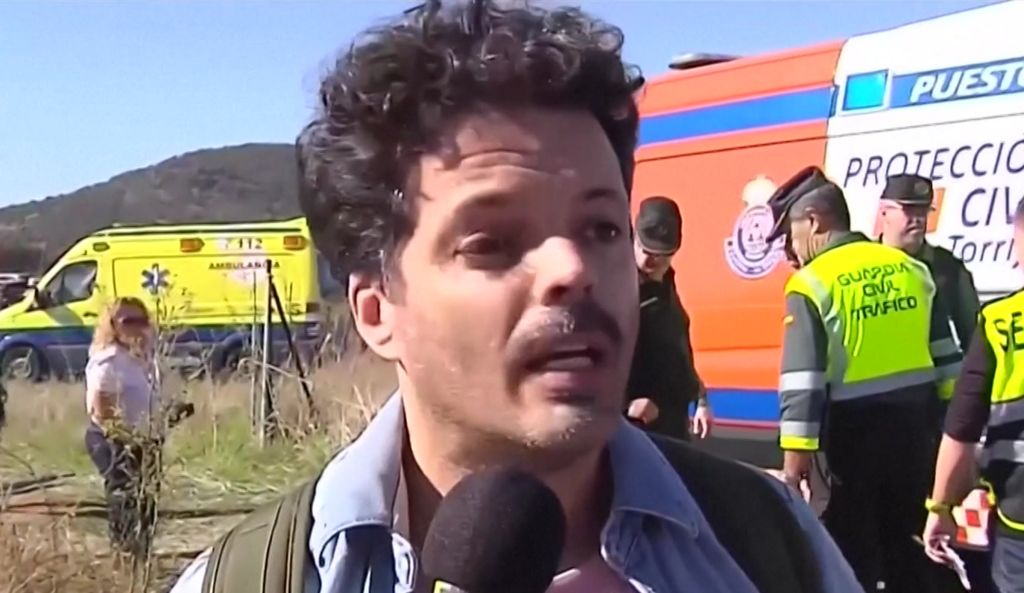
A catastrophic rear-end collision between two high-speed passenger trains on the Madrid-to-Seville rail line unfolded shortly before 9 a.m. local time (8 a.m. GMT) on a recent weekday, marking Spain’s deadliest rail incident since 2013, and coming just months after a separate fatal high-speed rail crash further south on the same corridor. The two southbound trains were operating sequentially on the same stretch of track: the lead service, run by private rail operator Iryo, carried 147 passengers, while the trailing train, operated by state-owned national carrier Renfe, was transporting 397 travelers. All services on that segment of the line had been forced to a full halt after a computer malfunction disabled the line’s automatic signalling system, prompting temporary suspension of all movements. At 8:36 a.m., a rail control employee issued an erroneous order instructing the Renfe service to resume travel, even as the Iryo train and five other halted services remained stationary on the tracks. Just 17 minutes later, the Renfe train crashed directly into the back of the parked Iryo service, roughly 140 kilometers south of Madrid, between the small municipalities of Mora and Orgaz. Passengers on both carriages described scenes of utter chaos and sudden, violent impact. Roberto Gómez, a Spanish journalist dozing aboard the Renfe train, recalled that passengers had first been told the stoppage was due to general track congestion, with no mention of a system failure. He stated the force of the crash left one carriage completely destroyed, with scattered luggage strewn across mangled interiors, and many passengers sustaining blunt force trauma to the chest, ribs and head. Other travelers reported people flying from their seats, a partial carriage overturn, and many panicking to escape through broken windows. Passengers aboard the Iryo service recounted being thrown violently into forward seats, with immediate reports of broken noses, fractured limbs, and thick plumes of smoke spreading through the carriages in the immediate aftermath. Several witnesses confirmed seeing fatalities at the scene, including victims trapped under the derailed carriages, with one carriage catching fire shortly after impact. Even passengers with minor lacerations and injuries rushed to assist more severely hurt fellow travelers before emergency responders arrived. Local residents from nearby towns mobilized rapidly, bringing bottled water, personal vehicles to support evacuation efforts to the adjacent town of Urda, and other supplies to aid the injured, ahead of formal deployments of Guardia Civil police, ambulance teams, and rescue units. The collision comes after a devastating high-speed rail derailment near Córdoba in January, known as the Adamuz disaster, that killed 46 people, sparking widespread public anger toward rail regulators and operators. Transport Minister Óscar Puente publicly described the incident as “inexplicable” and “truly unbelievable”, noting that existing safety protocols require any train resuming movement after a signalling failure to travel at “sight speed” of roughly 40 km/h, a slow pace that would allow a driver to brake immediately if an obstacle is spotted. Investigators have launched a full probe to verify three critical details: the exact content of the erroneous order issued to the Renfe train, whether the service was travelling at the line’s standard 200 km/h operating speed rather than the required low sight speed, and why the Renfe driver and operating team did not halt their journey when their control displays clearly showed a stationary train occupying the track ahead. Many affected passengers expressed open frustration at the failures, questioning how such a catastrophic oversight could occur even with the advanced digital safety systems installed across Spain’s high-speed rail network, noting that no prior warning was issued to travelers about the grave risk of collision.
Bloodied, dazed and angry – how passengers’ rail journey turned to disaster in Spain