New York’s moniker as the city that never sleeps has taken on new meaning at this year’s US Open, where a string of historic late finishes has sparked a heated debate over competitive fairness and tournament scheduling. What began as a quirky alignment with the city’s nocturnal reputation has now become a major point of contention, as top players push through disrupted sleep cycles and lopsided preparation gaps heading into the tournament’s semifinal round.
Two semifinalists, Alexander Zverev and Ben Shelton, have each been part of two of the five latest finishes in this year’s tournament, with multiple matches stretching past 1 a.m. and into the early hours of the morning. For Zverev, three of his five matches over the first two weeks finished after 1 a.m., leaving the German star juggling a sleep schedule completely out of sync with normal daily routines. “I’ve been to bed as late as 6:45am in the past week so I’m kind of a bit jet-lagged,” Zverev explained. “I feel like I’m playing the Australian Open in New York right now.”
Ahead of his Friday semifinal against Karen Khachanov, Zverev will step onto court for his first daytime match of the entire tournament. The contrast in preparation could not be starker: Khachanov wrapped up his quarterfinal win shortly before 7 p.m. local time on Wednesday, and has never played a match that stretched past midnight at this year’s event, giving him a full, uninterrupted recovery period.
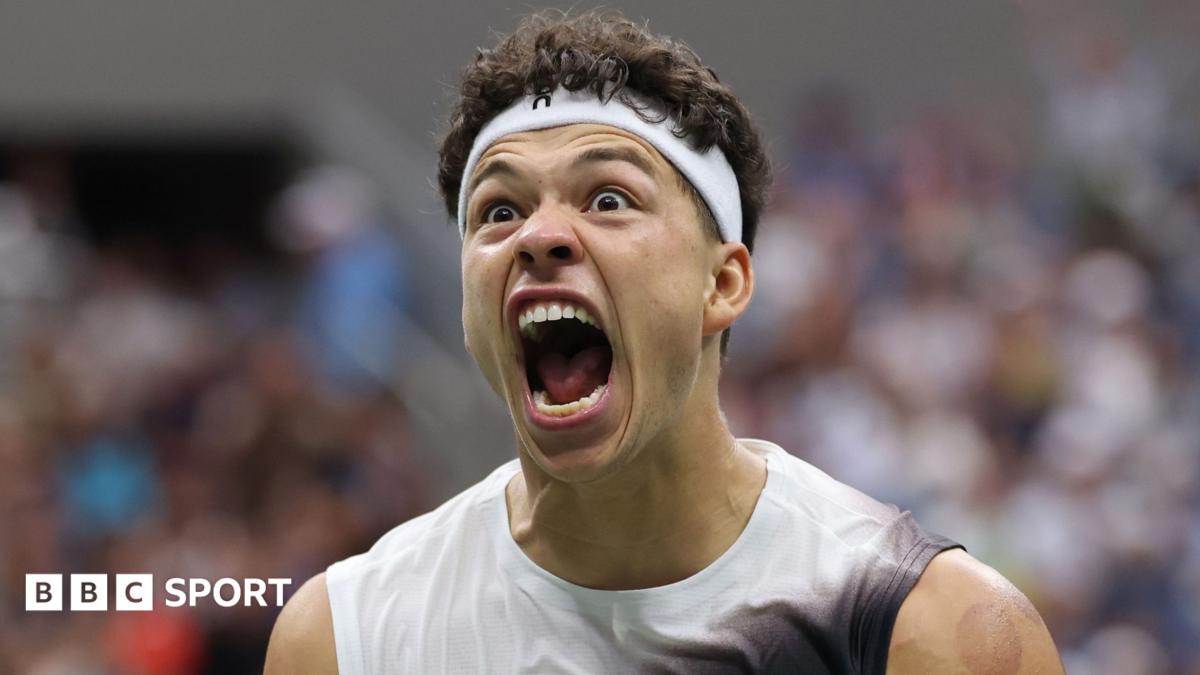
The lopsided preparation gap is even more visible in the other men’s semifinal. American underdog Ben Shelton made history when he claimed a stunning five-set upset win over defending champion Carlos Alcaraz, finishing the match at 3:34 a.m. on Wednesday. His opponent, 11th seed Frances Tiafoe, wrapped up his own quarterfinal victory by 7 p.m. on Tuesday, giving him nearly two full extra days of unbroken rest compared to Shelton.
Elite tennis performance experts warn that this scheduling discrepancy creates a major competitive advantage for players who finish early. Matt Little, long-time strength and conditioning coach for former world number one Andy Murray, notes that disrupted sleep has lasting knock-on effects that can hinder performance for days. “We can all relate to it – if you have one really bad night’s sleep, you have the knock-on effect of that for the coming days,” Little told BBC Sport. Little saw the impact firsthand when Murray finished a second-round match at the 2023 Australian Open at 4 a.m., leaving the former champion with just three hours of sleep before he was required to return to the venue the next morning.
While Shelton has downplayed concerns, saying he will recover “all right” thanks to two days off court, Little says the young American will need to take intentional steps to reset his body clock. “He’ll have to be napping to catch up some sleep,” Little explained. “On the nutritional side, he’ll be making sure he gets as many carbs and as much protein as he can in for that next match, and trying to get back to a bit of a routine. It’s about making sure you can optimise the hydration and get as much sleep as possible without completely going into a full slumber.”
This year’s tournament has already rewritten the record books for late scheduling. Venus Williams and Sofia Kenin kicked off the tournament by setting a new US Open record for the latest match start, beginning their first-round clash at 12:13 a.m. By the quarterfinal stage, Shelton’s win over Alcaraz claimed the record for the latest finish in US Open history. Two-time Grand Slam singles champion Martina Navratilova, who won 18 Grand Slam singles titles throughout her career, has called for urgent change. “Something has got to give,” Navratilova said. “This is not OK and it is not normal.”
Some fans and commentators argue that these late-night epics are part of the US Open’s unique identity, fitting perfectly with New York’s reputation for round-the-clock energy. But the spike in early-morning finishes this year can be partially attributed to a broader trend: professional tennis matches are getting longer on average, and the three consecutive five-set quarterfinals on Arthur Ashe Stadium this year created a cascade of delays that pushed Shelton’s match deep into the night.
The conversation around scheduling reform has reignited long-running debates about how to fix the issue at Grand Slams. The most widely discussed proposal is moving the start time of main court night sessions earlier, but the idea has faced pushback from television broadcasters and practical barriers: many working fans in New York are not able to travel to Flushing Meadows much before 7 p.m. local time.
A more controversial proposal is abandoning the traditional best-of-five set format for men’s Grand Slam matches, an idea that gained traction earlier this year when Tennis Australia CEO Andrew Abdo suggested the Australian Open could consider the shift. The suggestion drew immediate backlash from current players, including Tiafoe, who defended the historic format. “Do I love five-setters? Absolutely not,” Tiafoe admitted. “But it’s tennis, man. I grew up watching so many incredible five-setters. Novak-Rafa, Federer-Rafa, epic five-setters that go on for hours and hours. That’s the history of the game.”
Rule changes introduced by the ATP and WTA in 2024 limit non-Grand Slam three-set matches from starting after 11 p.m., but these regulations do not apply to the four major tournaments, leaving the US Open and other Slams to set their own scheduling policies. Following the controversial 4 a.m. finish at the 2023 Australian Open, that tournament made a small adjustment, cutting the number of day session matches on main courts from three to two to reduce the risk of cascading delays. For now, though, the US Open remains a testing ground for the impacts of late scheduling on player well-being and competitive fairness, as the sport continues to debate how to balance tradition, fan experience, and fair play.