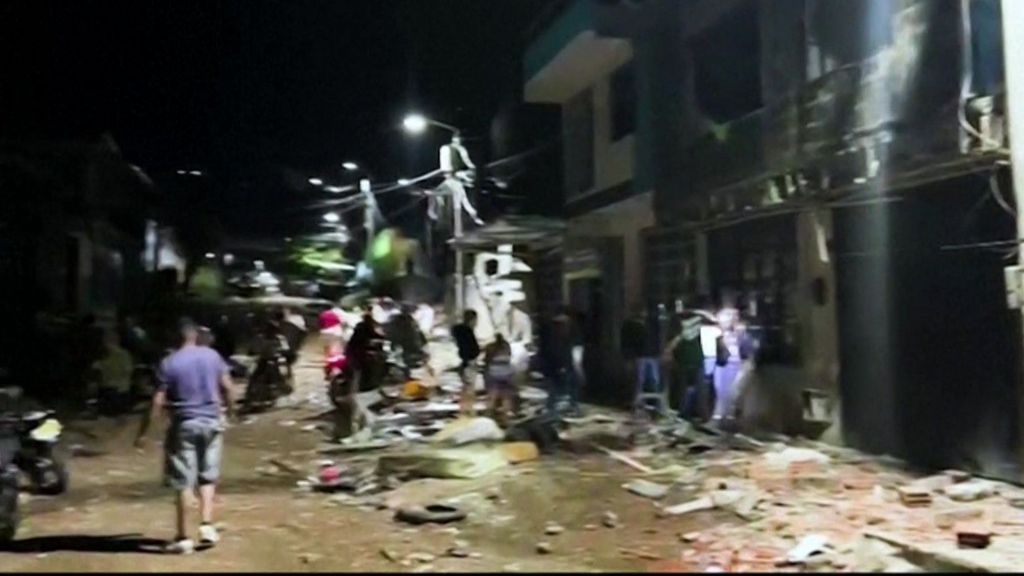
A devastating explosives-laden lorry blast ripped through a populated area near a military base in the Planadas municipality of Colombia’s western Tolima province on Sunday, claiming at least four civilian lives, local authorities confirmed. Tolima provincial governor Adriana Magali Matiz shared details of the fatalities via her official X account, noting that a two-month-old infant girl was among those killed in the powerful detonation. The force of the explosion inflicted severe structural damage on multiple surrounding facilities, including a local pharmacy and the town’s primary hospital, disrupting access to critical care for residents in the immediate aftermath of the attack. As of press time, no group has publicly claimed responsibility for the bombing, but the assault fits a rapidly escalating pattern of retaliatory violence targeting state security forces carried out by Colombia’s illegal armed criminal networks in recent weeks. The surge in attacks traces directly to the hardline security agenda implemented by newly inaugurated right-wing President Abelardo de la Espriella, who took office in August after running an election campaign centered on uncompromising tough-on-crime policies. Within his first 30 days in office, de la Espriella formally terminated ongoing peace negotiation processes with several of the country’s illegal armed factions, talks that had been initially launched under his left-wing predecessor Gustavo Petro. At the time of the decision, de la Espriella posted a public statement on social media vowing that “under my administration, criminals will be granted no political recognition, no leniency, and no impunity.” Petro’s presidential tenure had been defined by his landmark “Total Peace” strategy, which rested on the core premise that sustained, inclusive dialogue represented the only viable path to ending decades of armed violence perpetrated by fragmented armed groups across Colombian territory. Even under Petro’s leadership, however, repeated, systematic breaches of negotiated ceasefire terms by armed factions had forced his administration to pause segments of the broader peace framework. De la Espriella’s administration has gone far beyond partial suspensions, rolling out an unprecedented nationwide crackdown that includes targeted air raids on remote armed group encampments. The aggressive security campaign has prompted a sharp spike in retaliatory attacks from criminal networks, who have increasingly adopted improvised explosive devices deployed via ground vehicles and, more recently, modified drones to target state personnel. Just one day prior to the Tolima lorry bombing, a separate motorcycle-borne explosive device detonated in southern Huila province, killing one police officer and leaving six other members of the security forces wounded. President de la Espriella condemned that assault in a public statement as “a cowardly terrorist attack.” A separate drone-enabled bombing carried out on October 23 targeted a Colombian Navy vessel operating in Cauca province, killing one marine infantry service member and injuring four of his comrades.