作者: admin

  • Saudi Arabia on cusp of severing ties with LIV Golf: Report

    Saudi Arabia on cusp of severing ties with LIV Golf: Report

    Saudi Arabia’s $1 trillion sovereign wealth vehicle, the Public Investment Fund (PIF), is poised to end its financial backing of the breakaway LIV Golf league, according to multiple industry and media reports, as shifting geopolitical risks and delayed domestic megaprojects force a broad re-evaluation of the fund’s global investment priorities.

    The Financial Times first reported Wednesday that PIF could formally announce its withdrawal from LIV Golf as early as Thursday, a move that would force the fund to absorb a full write-down on its $5 billion commitment to the upstart circuit. PIF has served as LIV Golf’s sole primary financial backer since the league launched in 2021, and insiders widely view an exit as a fatal blow to the tournament series, which has accumulated steep operating losses since its founding.

    The LIV Golf investment was a core component of Saudi Arabia’s broader economic diversification strategy, which aims to reduce the kingdom’s long-term dependence on oil and gas exports by expanding its footprint in global sports and entertainment. The league was designed to compete directly with the established PGA Tour, shaking up the global golf landscape and drawing dozens of top players with unprecedented multi-year contract offers.

    PIF leadership had already been considering an exit from the golf project months before the outbreak of the US-Israeli war on Iran, but the conflict has accelerated the fund’s push to consolidate capital and refocus on domestic priorities, industry analysts note. The shift is already sending ripples through global sports and business circles, as many organizations that have grown reliant on large infusions of capital from Gulf sovereign wealth funds now face uncertainty about future funding.

    The pullback from LIV Golf is just one part of a broader scaling back of ambitious PIF projects that predates the current geopolitical crisis. Earlier this year, Saudi authorities paused construction on the Mukaab, a massive 400-meter cubic megastructure planned for central Riyadh, and shelved proposals for a desert indoor ski resort and a large artificial lake dam project. In a December 2025 address, Saudi Finance Minister Mohammed al-Jadaan emphasized that the government had “no ego” blocking necessary project reassessments as budget priorities shift.

    While Saudi Arabia has emerged as a rare beneficiary of the current conflict, able to export oil independently of Iranian control over the Strait of Hormuz via its East-West pipeline connecting the Persian Gulf to the Red Sea, and has profited from sustained elevated global crude prices, the war has created new headwinds for the kingdom’s economic agenda. The conflict has undermined efforts to position Gulf states as stable, secure hubs for international tourism and foreign direct investment, adding new fiscal pressure to reorient spending.

    In an interview with Al Arabiya Business published Wednesday, PIF Governor Yasir al-Rumayyan explicitly confirmed that the war on Iran has altered the fund’s strategic planning. “The war would add more pressure to reposition some priorities,” he told the outlet. He also confirmed for the first time that The Line, the iconic 170-kilometer car-free linear city that was the centerpiece of the $500 billion Neom futuristic development project, is no longer a near-term priority.

    “Everyone thinks The Line is NEOM, but The Line is one project in NEOM,” Rumayyan said. “Is it necessary to have The Line by 2030? I think no. It’s good to have, but not a must-have.”

    The exit from LIV Golf aligns with PIF’s new target to allocate 80 percent of its investment capital to domestic projects, with just 20 percent deployed to international holdings. That marks a sharp reduction from the 30 percent foreign investment share the fund held in recent years, as the kingdom prioritizes shoring up domestic economic activity amid growing regional uncertainty.

  • ‘I’ve never faced it before’: The daunting challenge being faced by Mitch Moses as Eels consider hitting the open market

    ‘I’ve never faced it before’: The daunting challenge being faced by Mitch Moses as Eels consider hitting the open market

    As Parramatta Eels captain Mitchell Moses navigates the toughest leadership test of his professional rugby league career, a potential mid-season addition of star forward Jaydn Su’A sits firmly on the back burner, with an unprecedented injury crisis taking every ounce of his focus.

    Speaking at an event launching Greyhound National Adoption Day alongside Sydney Roosters captain James Tedesco in central Sydney, Moses opened up about the unprecedented challenges his side has faced through the opening six rounds of the NRL season. The Eels are coming off a demoralizing 52-point defeat to the Gold Coast Titans, a result that saw the under-strength side booed off the field by frustrated fans at full-time. But Moses made clear the club has a valid explanation for its poor form: an injury toll that has gutted the playing roster unlike anything he has experienced in his career.

    Three key first-team players – J’maine Hopgood, Bailey Simonsson and Matt Doorey – have already been ruled out for the entire 2024 season. For this weekend’s clash against the Canterbury Bulldogs, the list of unavailable talent grows even longer, with rising stars Jonah Pezet and Isaiah Iongi among the multitude of sidelined players. This has forced the Eels to field a roster heavy with inexperienced rookies, who are still learning the ropes of top-flight NRL football.

    That youth-driven lineup has forced a shift in Moses’ approach to on-field leadership. Known for wearing his heart on his sleeve and not holding back when challenging teammates, the captain said he has had to rein in his outward frustration to avoid undermining the young players getting their first opportunities at the top level. “That’s the core challenge I’m facing right now as skipper – I’ve never encountered anything like this, even before I took the captaincy,” Moses explained. “I’ve never been part of a team that’s been hit this hard by injuries. It’s already unprecedented, but add the captaincy on top, and you have to figure out how to lead the right way. With all these young kids coming in, you don’t want to lose your temper and let that negativity filter through the group. I’m taking lessons from how I’ve led in the past and working to get better at this.”

    The brutal 52-point defeat exposed major flaws in Parramatta’s defensive structure, with the side conceding a massive 226 points across the first six rounds of the season. A tough post-match video review only confirmed how far below the club’s standard the performance was. “To be honest, it was really tough to sit through that review,” Moses admitted. “It didn’t feel like us, as a team or as a club. This isn’t one person’s fault – it’s on all of us, and we all have to step up to fix this. This week’s match against the Bulldogs isn’t going to get any easier, either. There were moments in the Titans game where we could have clawed our way back into contention, and we failed to take those chances. We have to do better.”

    A mainstay of the New South Wales Blues Origin squad for several years, Moses has been a consistent standout for the state side. But right now, he said, even thinking about Origin selection is impossible – every bit of his energy is focused on righting the ship at Parramatta. “My full attention is on this club right now, it’s the only thing I can focus on,” he said. “I’ve never been through anything like this injury crisis in my career, and as captain, I’m actually excited for the challenge of pulling us out of this slump. We’re not hiding from how bad the last performance was. We weren’t happy with it, we don’t want to see that again, and we’re going to step straight into the pressure to fix it.”

    With the injury crisis mounting, speculation has grown that the Eels will look to the mid-season transfer market to bolster their thin roster. The most high-profile name linked with a move to the club is St George Illawarra Dragons forward Jaydn Su’A, who has already confirmed he will leave the Red V at the end of his contract, with a 2027 move to Parramatta already widely reported. Moses made clear he would jump at the chance to add a player of Su’A’s quality to the Eels’ right edge immediately, but stressed that any transfer deal is out of his hands as he focuses on leading the injury-hit side. “There’s no point hiding how bad our injury situation is right now,” Moses said. “If the club’s recruitment team decides bringing in someone like Su’A is the best move for us, I fully support whatever they think is the right fit for this team. When you talk about Su’A, any club would jump at the chance to add a player of his calibre. I’d love to have him here, but this decision isn’t up to me.”

  • Pope to visit Cameroon conflict zone under high security

    Pope to visit Cameroon conflict zone under high security

    Nearly a decade after a deadly separatist insurgency first erupted in Cameroon’s English-speaking northwest region, Pope Leo XIV arrived in the conflict’s epicenter, Bamenda, on Thursday for a heavily secured peace mission aimed at healing divisions and ending years of bloodshed.

    The pontiff’s visit to the volatile zone comes on the third leg of his first major international tour, which already saw two days of unrest and political tension in Algeria, marked by twin suicide bombings and a public spat with former U.S. President Donald Trump. Ahead of the trip, separatist fighters fighting for an independent “Ambazonia” announced a three-day truce to clear the way for the papal visit, clearing a path for an expected gathering of 20,000 worshippers to attend the pope’s public mass and keynote address.

    For local residents and religious leaders, the pontiff’s visit carries profound hope for a breakthrough in the conflict that has shattered communities across Cameroon’s two anglophone regions. “The pope’s visit will soften the hearts of the extremists so that we can find common ground… and reach a peaceful solution,” said Andrew Nkea, Archbishop of Bamenda, echoing widespread local expectations of progress. Even among those who have personally suffered from the violence, the visit has sparked tentative optimism: Giovanni Mbuna, a 36-year-old who was abducted by separatists in 2023, told reporters that all violence and kidnapping should cease the moment the pope sets foot on Bamenda’s soil.

    Not all voices have greeted the visit with unreserved support, however. Some Cameroonian Catholics have raised concerns that the trip could inadvertently lend credibility to 93-year-old long-serving President Paul Biya, whose disputed fourth-term re-election six months prior was met with a violent government crackdown on protesters. On Wednesday, during a meeting with Biya at the presidential palace, the pope pushed back against government abuses carried out in the name of counterinsurgency, delivering an uncharacteristically pointed rebuke that the president heard firsthand. “Security is a priority, but it must always be exercised with respect for human rights,” Leo stated, a clear call for accountability amid reports of extrajudicial violence by both government forces and separatist fighters.

    The conflict that brings the pope to Cameroon dates back to 2016, when protests against systemic marginalization of the country’s anglophone minority—who make up roughly one-fifth of the national population—by the French-speaking majority were violently suppressed by authorities. The crackdown escalated into a full insurgency by 2017, and by 2024, human rights groups estimate the conflict has killed more than 6,000 people and displaced hundreds of thousands.

    Leo’s visit to Cameroon is only the fourth papal trip to the central African nation, and the first since Pope Benedict XVI’s 2009 visit. When the U.S.-born pontiff arrived in the country on Wednesday, crowds of singing worshippers turned out to greet him despite the lingering security and political tensions.

    The papal tour has already faced political headwinds before arriving in Cameroon, after Trump publicly stated he was “not a big fan” of Leo following the pope’s calls for peace in the Middle East. U.S. Vice President JD Vance, a practicing Catholic, added to the criticism, urging the Vatican to “stick to matters of morality.” Leo dismissed the attacks outright during a press briefing aboard the papal plane on Monday, saying: “I have no fear, neither of the Trump administration, nor speaking out loudly about the message of the Gospel.”

    After concluding his visit to Bamenda, the pope will travel to Cameroon’s economic capital Douala on Friday to lead mass for a crowd projected to reach hundreds of thousands, before departing for Angola on Saturday to continue his international tour.

  • Australian judge rejects US Marine pilot’s appeal against extradition to US

    Australian judge rejects US Marine pilot’s appeal against extradition to US

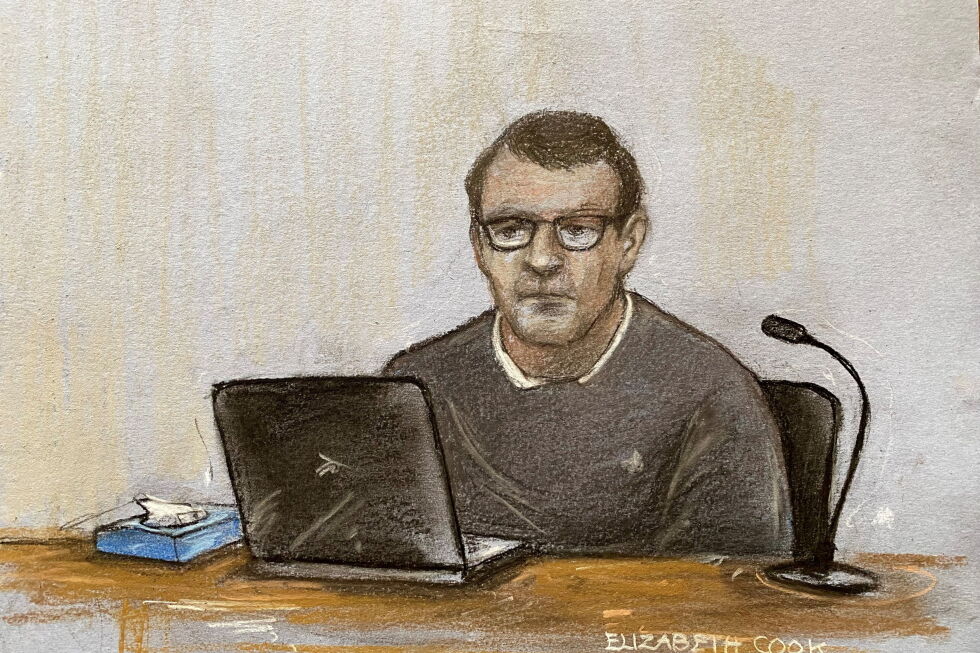
    CANBERRA, Australia — In a landmark ruling that keeps an extradition process on track, an Australian federal judge has rejected a legal challenge from a former U.S. Marine Corps pilot fighting his transfer to U.S. authorities, who accuse the aviator of leading illegal training for Chinese military personnel more than 10 years ago.

    Fifty-seven-year-old Daniel Duggan, a Boston-born former pilot who had been residing in Australia before his 2022 arrest, stands accused of conducting unlicensed training for Chinese military aircrew while working as an instructor for South Africa’s Test Flying Academy between 2010 and 2012, according to a U.S. indictment. Duggan has repeatedly denied all charges against him, arguing the accusations are nothing more than political maneuvering and that he has been unfairly targeted by U.S. authorities.

    Federal Court Justice James Stellios handed down his ruling Thursday, confirming that no legal or jurisdictional error was committed by former Australian Attorney-General Mark Dreyfus when he approved Duggan’s extradition earlier in 2024. The judge’s decision to dismiss the appeal clears a major legal hurdle for the extradition process.

    Speaking to reporters outside the Canberra courthouse immediately after the ruling, Saffrine Duggan — Daniel Duggan’s wife and mother to their six children — said the defendant’s legal team would explore all available avenues to challenge the extradition order. The team has also formally requested that current Attorney-General Michelle Rowland, Dreyfus’s successor, overturn the extradition approval.

    “We are deeply disappointed by this outcome, and we will take time to carefully assess every legal option open to us,” Saffrine Duggan told reporters. “Make no mistake: we are not backing down. Today’s ruling does not mark the end of our fight for justice.”

    In a formal statement released after the judgment, a spokesperson for Rowland’s office acknowledged the court’s ruling and confirmed that Duggan will remain in Australian extradition detention until he is formally transferred to U.S. custody.

    The case against Duggan originated from a 2016 indictment issued by the U.S. District Court in Washington, which remained sealed until it was unsealed in late 2022. Prosecutors claim Duggan received roughly 88,000 Australian dollars, equal to around 61,000 U.S. dollars, split across nine separate payments from a co-conspirator, in addition to covering travel costs to the U.S., South Africa and China. Prosecutors note that much of this travel was labeled as “personal development training” to mask the true nature of the work, according to the indictment.

    Since his arrest in 2022 at a grocery store near his New South Wales family home, Duggan has been held in maximum-security detention in Australia, a status that will continue following Thursday’s ruling.

  • Fuel supply fears after blaze tears through crucial Australian refinery

    Fuel supply fears after blaze tears through crucial Australian refinery

    A devastating chain of explosions sparked by a gas leak has torn through one of Australia’s only two operating oil refineries, leaving authorities warning of imminent domestic fuel supply disruptions just months after regional conflict upended global energy markets. The blaze broke out late Wednesday at Viva Energy’s Geelong refinery, located roughly an hour’s drive southwest of Melbourne in Victoria state. At its peak, flames reached 60 meters into the sky, turning the sky over the industrial hub thick with acrid black smoke.

    Fire Rescue Victoria confirmed Thursday that the inferno had been contained, though emergency officials cautioned hotspots could continue to smolder for the rest of the day. Initial assessments confirm the fire was concentrated in the section of the facility dedicated to high-octane petrol production, Energy Minister Chris Bowen confirmed to reporters. Rapid action by plant personnel to trigger emergency isolation valves prevented the fire from spreading to adjacent units that produce jet fuel and diesel, sparing those critical operations from major damage.

    Owned by energy firm Viva Energy, the Geelong plant accounts for roughly 10% of Australia’s total domestic fuel output, with a maximum processing capacity of 120,000 barrels of crude oil per day. Combined with the only other operating refinery, Ampol’s Brisbane facility, the two plants produce just 10 to 20% of the nation’s total fuel demand, leaving Australia heavily dependent on imports to cover the gap. This geographic isolation and limited domestic refining capacity leaves the country uniquely vulnerable to global supply shocks, a risk that has been amplified by ongoing conflict in the Middle East.

    Incident controller Mark McGuinness described the blaze as unusually intense, saying “It was quite ferocious. It went from a small fire through several explosions to a large, intense fire” in short order. Viva Energy CEO Scott Wyatt emphasized that safety remained the company’s top priority in the aftermath of the incident, noting “Production is not our primary priority today. Today it is getting the site safe.” No casualties have been reported as of Thursday, but full assessments of damage and production shutdown timelines are still underway.

    Already strained by the halt of shipping traffic through the Strait of Hormuz—an artery that carries one-fifth of the world’s global oil and gas supply, which has been effectively closed since U.S. and Israeli strikes against Iran on February 28—Australia’s fuel markets are now facing a second major shock. Government data shows Australia currently holds just 38 days of petrol reserves, far below the 90-day minimum stockpile requirement set by the International Energy Agency. The federal government has not yet activated fuel rationing, but has urged motorists to conserve fuel where possible and switch to public transit for routine travel when they can.

    In a public address Thursday, Minister Bowen urged Australians to avoid panic buying that would exacerbate existing supply strains. “It’s important that people buy as much fuel as they need. But no more, no less,” he said, adding that the timing of the incident was particularly unfavorable given already tight market conditions. “It’s not great. It’s not great timing, is it?”

  • China’s economy grows faster than expected despite Iran war

    China’s economy grows faster than expected despite Iran war

    Against a backdrop of escalating global economic disruption fueled by the US-Israel-Iran conflict, China’s first-quarter economic growth has outperformed projections, offering a rare bright spot for the world economy while revealing deep-rooted and emerging challenges that continue to shape its trajectory.

    Official data released shows China’s gross domestic product expanded 5% year-on-year in the first three months of 2026, exceeding the 4.8% growth forecast by a consensus of economists. This stronger-than-expected result comes even as the Middle East conflict, which erupted in late February, has severely roiled global energy markets, hitting Asian economies particularly hard.

    The better-than-anticipated growth reading marks the first official GDP release since Beijing downgraded its 2026 full-year growth target to a range of 4.5% to 5% last month, the lowest annual growth goal China has set since 1991. The new target was formally announced alongside broader economic priorities for the latest Five-Year Plan in March, where Chinese leadership outlined commitments to heavy investment in innovation and high-tech manufacturing, paired with policy measures to stimulate flagging domestic consumer spending.

    The ruling Communist Party has been working to recalibrate China’s economic model, which has been grappling with a cascade of persistent headwinds for years: stagnant household consumption, a rapidly shrinking working-age population, and a years-long ongoing property sector crisis that has dampened investment across the real estate industry. This quarter’s growth was largely driven by expansion in manufacturing output, while the broader economy continues to be dragged down by falling investment in the property sector, according to the official data.

    Beyond domestic challenges, China also faces external pressure from energy market volatility tied to the Middle East conflict and ongoing global trade frictions, particularly long-standing tariff policies enacted by former US President Donald Trump. Currently, most Chinese goods exported to the US face a 10% US tariff, but US Treasury Secretary Scott Bessent indicated in comments Tuesday that the administration could restore tariffs to their pre-Supreme Court ruling levels by early July, after the high court struck down a large portion of Trump’s original import levies.

    Despite the positive GDP surprise, new trade data released Tuesday points to growing external strain on China’s economy. March export growth slowed sharply to just 2.5% year-on-year, down from a more than 20% combined surge in exports across January and February, and hitting a six-month low. China aggregates January and February trade data annually to account for shifting Lunar New Year holiday dates, which typically cause large seasonal fluctuations in trade activity. The earlier jump in exports had been fueled by strong global demand for Chinese electronics and manufactured goods.

    In a counterpoint to slowing exports, March imports surged nearly 28% year-on-year in value terms, driving China’s monthly trade surplus – the gap between total exports and total imports – down to just over $50 billion (£36.85 billion), the smallest surplus recorded in more than a year.

    Yixiao Zhou, an economics lecturer at the Australian National University, explained that the sharp rise in the value of imports is largely a reflection of higher global commodity costs driven by the Middle East conflict. Iran’s threats to block commercial traffic through the Strait of Hormuz, a critical chokepoint that carries roughly a fifth of the world’s daily oil supply, have pushed up global prices for crude oil and petroleum-derived products including plastics, which China imports in large volumes.

    For exports, Zhou added, slowing growth stems from reduced consumer spending power across global markets, as conflict-driven inflation erodes household budgets. “Export growth ultimately depends on your trading partners’ economies,” she noted. “It is hard to sustain that growth at a very high rate continuously.”

    Looking ahead, high-level diplomatic attention is already focused on an expected meeting between US President Donald Trump and Chinese President Xi Jinping scheduled to take place in China in May, where trade policy and tariff disputes are expected to top the agenda.

  • China’s economy grows at 5% in first quarter, shrugging off initial impact of Iran war

    China’s economy grows at 5% in first quarter, shrugging off initial impact of Iran war

    HONG KONG, April – Newly released official data shows China’s economy outperformed market projections in the first three months of 202X, logging a 5% year-on-year expansion that marked an acceleration from the 4.5% growth recorded in the final quarter of last year. The strong quarterly performance comes even as the ongoing Iran conflict, now in its seventh week, has roiled global energy markets and dragged on worldwide economic momentum, with China proving more resilient to short-term disruptions than many analysts initially predicted.

    Economists broadly agree that China is well-positioned to absorb the immediate shocks stemming from the Iran war, which has driven a sharp uptick in global energy costs and worsened already persistent inflationary pressures across major economies. Still, the conflict carries clear longer-term risks for China’s growth trajectory, particularly through its impact on global demand for Chinese manufactured exports.

    Fresh trade data published earlier this week already signaled a notable cooling in China’s outbound shipments: exports rose just 2.5% year-on-year in March, a sharp slowdown from the faster growth recorded in the first two months of the year. Cornell University economics and trade policy professor Eswar Prasad noted that as nations around the world prioritize shielding their domestic industries, households and economies from the Iran war’s spillover effects, global appetite for Chinese imports is clearly contracting. “A prolonged conflict, paired with elevated energy prices that stick around longer than expected, will dent overall global growth, and that will directly undermine other economies’ capacity to purchase Chinese goods,” Prasad explained.

    Last month, Chinese leadership set a 202X full-year growth target of 4.5% to 5%, the lowest official annual growth target the country has announced since 1991. The International Monetary Fund this week revised down its 2026 growth forecast for China to 4.4%, marking a downgrade from earlier projections. Even so, most economists believe China remains on track to hit this year’s growth target via targeted policy stimulus measures. However, additional structural risks persist beyond the Iran conflict’s spillover effects.

    The country has been grappling with a multi-year slump in its real estate sector, which has dragged down both consumer and investor confidence for the past several years. Despite this headwind, China still hit its “around 5%” growth target in 202X-(last year), powered by surprisingly robust export performance that pushed the country’s annual trade surplus to a new record of nearly $1.2 trillion – even in the face of elevated punitive tariffs imposed by the U.S. under former President Donald Trump.

    Lynn Song, chief economist for Greater China at ING Group, noted that while near-term disruptions are manageable, a drawn-out conflict and sustained higher energy prices will likely start to erode China’s growth by the second half of the year. Prasad added that while ramping up public sector investment can help stabilize headline growth to hit the official target this year, the approach carries its own downsides. Without a meaningful strengthening in household consumption demand, increased public investment could intensify underlying deflationary pressures and leave the Chinese economy even more dependent on export-driven growth in the long run.

  • Report: Newly crowned UFC champ Carlos Ulberg says he lost title belt while celebrating the win

    Report: Newly crowned UFC champ Carlos Ulberg says he lost title belt while celebrating the win

    MIAMI – In a dramatic turn of events at UFC 327, New Zealand’s 35-year-old Carlos Ulberg defied a painful right knee injury to claim the promotion’s coveted light heavyweight crown with a knockout victory over former titleholder Jiri Prochazka in the event’s main event. Just hours after his career-defining win, however, Ulberg made an unexpected, embarrassing admission: he had lost his brand-new championship belt entirely.

    In an interview with Fox Sports Australia published Monday, the newly crowned champion opened up about the chaotic post-fight celebrations that led to his belt going missing. “I’ve lost the belt, bro,” Ulberg told the outlet. He explained that he originally planned to stay sober after the high-stakes match, but the excitement of the moment got the better of him. “But you know how these things go, right? First, someone gives you a champagne to celebrate. Then one thing leads to another and you’re doing shots.”

    To add another layer of complexity to Ulberg’s historic win, the knee injury he sustained during the fight is expected to keep him out of competition for up to a full year. Per UFC regulations, that extended layoff will force the promotion to strip him of his active champion status and organize an interim title fight to fill the vacancy in the division.

    Despite the dual setbacks of his injury and the missing belt, Ulberg remains upbeat about the situation. He expressed confidence that the golden championship belt will be located before he travels to Las Vegas for a full medical evaluation of his knee. After the assessment, Ulberg plans to complete a period of rehabilitation and training at the UFC Performance Institute before returning home to New Zealand to reunite with his family.

    Reflecting on where the belt could be, Ulberg joked that he set the belt down to avoid carrying it around during celebrations, meaning it is likely still in the rented accommodation the team used for fight week. “I didn’t want to be carrying the belt around so I think it’s still there at the apartment somewhere. One of the boys probably has it in bed with him,” he said.

  • Former US Marine pilot loses appeal against extradition from Australia

    Former US Marine pilot loses appeal against extradition from Australia

    Nearly two and a half years after his dramatic arrest at the request of U.S. authorities, former U.S. Marine Daniel Duggan has lost his final legal bid to block extradition from Australia, setting the stage for his transfer to the United States to face arms trafficking charges.

    The 57-year-old Australian citizen, who renounced his U.S. citizenship years ago, was first taken into custody in October 2022 in the New South Wales regional city of Orange. U.S. prosecutors allege that between 2010 and 2012, Duggan violated American arms trafficking laws by providing unauthorized flight training to Chinese fighter pilots in South Africa. Duggan has repeatedly denied all accusations against him.

    On Thursday, a Federal Court of Australia judge dismissed Duggan’s appeal against an earlier extradition approval, a ruling that paves the way for his removal to the U.S. The decision marks a significant turning point in a high-profile transnational legal case that has strained the family’s finances and personal well-being.

    Duggan’s legal team had long argued that the extradition request did not meet Australia’s requirements, noting that the charges Duggan faces in the U.S. do not have a matching equivalent under Australian law – a core condition for approving cross-border extradition. Despite that pushback, then-Attorney General Mark Dreyfus signed off on the extradition in 2024, a decision Duggan appealed to the Federal Court.

    Outside the courtroom after the ruling, Duggan’s wife Saffrine spoke publicly about the family’s devastation. She described her husband, a father of six currently held in an Australian maximum-security prison, as an ordinary Australian resident who never violated any Australian laws. She called on the Australian federal government to step in and halt the extradition process.

    Since Duggan’s arrest in a supermarket parking lot – moments after he dropped his children off at school – the family has endured more than 1,200 days of ongoing trauma, Saffrine told the Australian Broadcasting Corporation. She added to the Australian Associated Press that the multi-year legal battle has cost the family roughly half a million Australian dollars. A court injunction placed on the family’s home has prevented them from selling the property to cover legal fees, leaving them in severe financial strain.

    Under the terms of the Federal Court’s ruling, Duggan has been ordered to cover the Australian government’s legal costs related to the case. He retains the right to launch a new appeal within the next 28 days. If the extradition moves forward and Duggan is ultimately convicted on all U.S. charges, he faces a maximum sentence of 65 years in American federal prison.

  • Doubt cast over One Nation seat as ‘absent votes’ found

    Doubt cast over One Nation seat as ‘absent votes’ found

    A razor-thin election victory for Australia’s One Nation party in the state of South Australia has been thrown into uncertainty after election officials uncovered dozens of overlooked ballots that could overturn the initial result.

    Chantelle Thomas, running on behalf of Pauline Hanson’s right-wing populist party, was officially declared the winner of the regional Narungga seat in last month’s state election, holding a wafer-thin 58-vote advantage over her closest competitor, Liberal Party candidate Tania Stock. That narrow margin, the smallest of any contest across the entire election, meant Thomas’s victory was not finalized until April 2, nearly two full weeks after polling closed on March 21. The Narungga electorate covers most of South Australia’s rural Yorke Peninsula region.

    The entire outcome was upended this week when election administrators discovered 77 uncounted absent ballots that had not been included in the original final tally. Critically, the number of uncounted votes exceeds Thomas’s winning majority by 19 votes, opening the door for the result to be reversed.

    On Thursday, the Electoral Commission of South Australia officially notified all competing candidates of the discovery and ordered a full recount scheduled for Friday April 17. “Following the discovery of votes that have not been counted, I have secured the unopened ballot papers and have ordered a further count for the district of Narungga,” explained Leah McLay, the commission’s acting commissioner. “I have informed all candidates and will oversee the count on Friday, April 17 and nominated scrutineers are invited to attend.”

    Reaction to the administrative blunder has been sharp, with One Nation’s South Australian leader Cory Bernardi launching a scathing attack on the electoral commission’s competence. “How can we rely on the integrity of what has transpired?” Bernardi told local outlet The Advertiser. “Now there’s plenty of questions to be asked and I think the answers need to be forthcoming, but this is very shaky territory for democracy right now.”

    For the opposition Liberal Party, leadership has called for rapid transparency from election officials to clear up widespread public confusion. “Who knows what this will mean for the seat of Narungga, but that’s why I think the electoral commission needs to provide some clarity to people quickly,” said Ashton Hurn, leader of the South Australian Liberals, in comments to the Australian Broadcasting Corporation. Stock, the Liberal candidate who placed second in the original count, told reporters she had not yet been contacted by the commission and was unaware of the planned recount when approached for comment.

    All parties and local voters are now bracing for an anxious 24 hours as the recount gets underway, with the final result of the closely contested seat hanging in the balance. The unforeseen error has sparked broader questions about the integrity of South Australia’s election administration, even as officials move quickly to correct the mistake and confirm a definitive final result.