作者: admin

  • Watch: Snake at train station scares Sydney commuters

    Watch: Snake at train station scares Sydney commuters

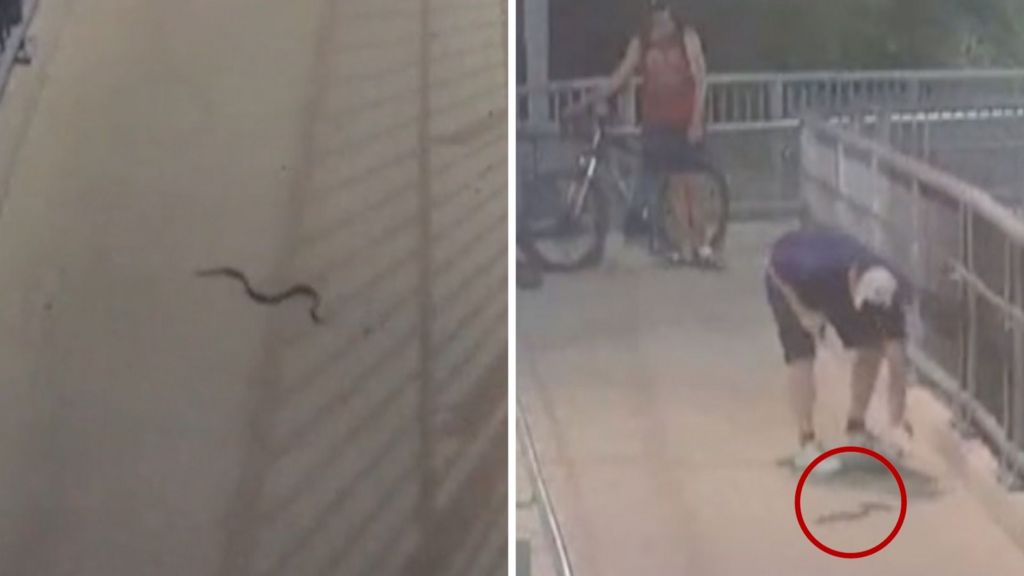
    A sudden encounter with a highly venomous snake triggered panic and mass evacuation at a busy Sydney train station during peak commuting hours. Terrified passengers were captured on video scrambling to safety as the reptile unexpectedly emerged in the crowded transit area.

    Eyewitness accounts describe scenes of chaos as commuters instinctively recoiled upon identifying the dangerous intruder. Station security personnel immediately cordoned off the affected area while awaiting specialized wildlife handlers.

    Australian reptile experts subsequently identified the serpent as a red-bellied black snake, a species whose venom contains potent neurotoxins and myotoxins capable of causing severe medical emergencies. Though naturally reclusive, the snake’s presence in an urban setting created unprecedented safety concerns.

    Transport authorities temporarily suspended services while herpetologists safely captured and relocated the animal to nearby bushland. The incident has prompted reviews of wildlife management protocols at urban infrastructure facilities, with officials considering enhanced perimeter monitoring systems to prevent similar occurrences.

    Emergency services confirmed no bites were reported despite the dramatic confrontation. Medical professionals nevertheless reminded the public that Australian snakes account for approximately 3,000 venomous bite incidents annually, though fatalities remain rare due to advanced antivenom availability.

  • Iran summons EU ambassadors to protest Revolutionary Guard being listed as terror group

    Iran summons EU ambassadors to protest Revolutionary Guard being listed as terror group

    DUBAI, United Arab Emirates — Iran has initiated a significant diplomatic escalation by summoning European Union ambassadors in Tehran to formally protest the bloc’s recent designation of Iran’s Revolutionary Guard as a terrorist organization. The move comes amid heightened regional tensions and the potential threat of U.S. military action in response to Iran’s crackdown on demonstrators and possible mass executions.

    Iranian Foreign Ministry spokesman Esmail Baghaei confirmed that ambassador summons began Sunday and continued through Monday, characterizing the EU’s decision as “illegal, unreasonable and very wrong.” Baghaei indicated that Iranian authorities are preparing reciprocal measures, with decisions expected in coming days.

    The EU’s designation last week specifically references the Revolutionary Guard’s role in suppressing nationwide protests in January that resulted in thousands of deaths and tens of thousands of detentions. This places the EU alongside the United States and Canada, which had previously classified the paramilitary force as terrorist entities.

    Concurrently, Iran’s parliament speaker declared that Tehran now considers all European Union militaries to be terrorist organizations, invoking a 2019 law that mandates reciprocal responses to such designations.

    The Revolutionary Guard, established during Iran’s 1979 Islamic Revolution as a protector of the clerical government, has evolved into a powerful parallel military force with substantial economic influence. Its expansion into private enterprise followed the Iran-Iraq war under Supreme Leader Ayatollah Ali Khamenei’s authorization.

    Evidence emerging via Starlink satellites and other means indicates the Guard’s Basij force played a central role in the violent suppression of protests, with footage showing armed personnel shooting and beating demonstrators during internet blackouts that isolated Iran’s 85 million citizens.

    Meanwhile, the Revolutionary Guard conducted naval exercises in the strategically critical Strait of Hormuz, through which twenty percent of globally traded oil passes. While Iran had notified shipping traffic of the drills, it hasn’t officially acknowledged their execution. The U.S. Central Command issued stern warnings against Iranian harassment of its warships and aircraft or interference with commercial vessel transit through the vital waterway.

  • Rural markets charm new generation

    Rural markets charm new generation

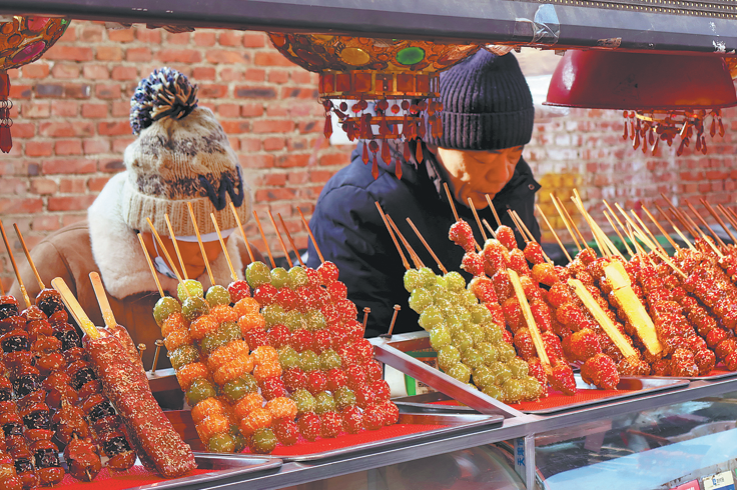
    Amid subzero temperatures in Jinan, Shandong province, where mercury plunged to -10°C on January 20, an unexpected phenomenon defied the winter chill: the vibrant resurgence of century-old rural markets attracting a new generation of urban youth. While residual snow clung to roadside surfaces and frosty air transformed breath into visible mist, the Liubu rural market buzzed with unprecedented energy as early as 7 am.

    The atmospheric marketplace featured traditional vendors stir-frying local specialty millet flour in large iron woks, with queues forming for niangao glutinous rice cakes. What distinguished this scene from previous years was the substantial presence of fashion-conscious young adults adorned in trendy down jackets and equipped with photographic equipment, seamlessly blending with the market’s traditional atmosphere.

    This generational shift stems from multiple factors, including social media influence, pursuit of authenticity, and cultural rediscovery. Twenty-five-year-old Sun, who traveled over an hour from Jinan’s Shizhong district, explained her motivation: “I searched for open rural markets on Douyin and discovered Liubu. Despite the freezing conditions, I sought to experience this genuine sense of daily vitality.” Her statement reflects a broader trend of digital platforms directing urban youth toward traditional cultural experiences.

    Beyond Shandong province, similar phenomena emerged across China’s northeastern regions. Young visitors documented their market experiences through photography and video, sharing their discoveries of traditional foods, handicrafts, and seasonal specialties. The convergence of ancient market traditions with contemporary digital culture has created a unique cultural exchange, preserving traditional practices while introducing them to new audiences.

    The rural market revival represents more than mere consumer activity—it signifies cultural reconnection, community engagement, and the preservation of intangible cultural heritage through intergenerational participation.

  • Livestreaming hosts focus on grassroots fairs, local livelihoods

    Livestreaming hosts focus on grassroots fairs, local livelihoods

    Across China’s countryside, a new generation of digital storytellers is transforming traditional rural markets through the power of livestreaming technology. These content creators are documenting the vibrant tapestry of grassroots commerce while creating meaningful connections between urban viewers and rural producers.

    In Hunan province, 37-year-old Guo Na has dedicated her weekends for the past two years to broadcasting from rural markets under her account “Village Letters.” Equipped with multiple smartphones for different platforms including Douyin and WeChat Channels, Guo captures the predawn bustle of these traditional gathering places. “Having grown up in this region, it pains me to see farmers establishing their stalls as early as 3 am merely to secure favorable positions,” she explains. Her mission extends beyond documentation—she actively facilitates sales, having already moved over 100,000 yuan ($14,390) worth of agricultural products.

    Meanwhile, in the Ningxia Hui Autonomous Region, Hu Jiayin brings a global perspective to this phenomenon. As an international communication reporter, she broadcasts these authentic Chinese market experiences in English to worldwide audiences. “Market-gathering represents something uniquely Chinese—lively, genuine, and overflowing with human warmth,” Hu observes. “Presenting this through English creates a captivating contrast that serves as an excellent medium for sharing China’s narratives with the international community.

    The approaches of these livestreamers reflect careful strategy within spontaneous environments. Hu prepares thematic frameworks for her broadcasts while remaining open to improvisation, often engaging passersby for unrehearsed reactions. Guo alternates between local dialect and Mandarin, conducting intimate interviews with vendors about their produce, preparation methods, and personal stories. Her follower base of 28,000 on each platform consists predominantly of Hunan natives, with significant viewership from Guangdong, Jiangxi, and Hubei provinces.

    These digital efforts are generating tangible impacts beyond mere viewership metrics. Hu’s broadcasts have attracted increased visitor numbers, particularly among younger demographics seeking authentic experiences unavailable in sterile supermarket environments. “Young viewers frequently inquire about parking availability, pricing, and travel distances,” Hu notes. “Many express intentions to visit on weekends, drawn by the authenticity that conventional retail establishments cannot provide.

    As rural markets modernize with improved safety standards and structured layouts, their essential character remains intact. “Supermarkets prioritize efficiency, whereas markets foster genuine human connection,” Guo reflects. “Where else can consumers converse directly with those who cultivated their vegetables or enjoy traditional opera performances while shopping?”

    With Spring Festival approaching—the peak season for rural markets—both creators have prepared special content. Hu plans an English-language feature highlighting Ningxia’s market culture, while Guo intends to collaborate with restaurant owners for bulk procurement of local products.

    For these digital pioneers, livestreaming represents not merely a pastime but a significant long-term commitment. Hu aims to present a dynamic, lived-in portrayal of Ningxia to global audiences, while Guo views her work as “valuable documentation” that will endure as a historical record. “I don’t produce disposable content,” Guo states. “I aim to preserve these moments so future generations can understand what rural life truly encompassed.”
  • Stars hit red carpet at Grammy Awards show

    Stars hit red carpet at Grammy Awards show

    The 2026 Grammy Awards red carpet transformed into a dazzling runway of sartorial excellence and symbolic statements, setting the stage for an evening of musical celebration in Los Angeles. Stars from across the global music landscape showcased their most eye-catching ensembles, blending haute couture with personal expression.

    Sabrina Carpenter made a striking entrance in a form-fitting crystal and diamond gown that evoked Marilyn Monroe’s iconic glamour, perfectly complementing her nomination for Album of the Year with ‘Man’s Best Friend.’ The blonde bombshell aesthetic proved particularly fitting as she took the stage to perform during the ceremony.

    History was made both in fashion and achievement as Bad Bunny arrived in classic tuxedo elegance. The Puerto Rican artist’s sophisticated appearance preceded his groundbreaking victory, becoming the first artist in the Grammys’ 68-year history to win Album of the Year with a completely Spanish-language record after receiving six nominations.

    Chappell Roan generated significant buzz with a rust-colored gown that concealed a revealing secondary outfit, while Lady Gaga revisited the feathered aesthetic she debuted at previous ceremonies. The fashion statements extended beyond mere aesthetics as Venezuelan artist Raniero Palm made a political statement by carrying his national flag on the red carpet.

    Trevor Noah marked his sixth and final hosting appearance with understated elegance, while Justin and Hailey Bieber sported matching ‘Ice out’ badges on their coordinated black outfits. Kesha made a dramatic late arrival in an all-white shoulder-bare dress, followed by Canadian singer Tate McRae in a sophisticated long black gown.

    Supermodel Heidi Klum demonstrated her runway expertise in a flesh-toned dress that captivated photographers, maintaining her signature smile throughout the challenging navigation of the media line. The golden theme emerged as a trend among attendees, with rapper Killer Mike’s wife Shana Render among those embracing the metallic hue.

    Pharrell Williams celebrated an early win for Best Rap Performance while showcasing his Louis Vuitton creative directorship in a distinctive pink velour suit. The evening proved particularly momentous for British artists, with Olivia Dean becoming the first UK winner of Best New Artist since Dua Lipa in 2019, and Yungblud paying tribute to the late Black Sabbath star during his performance.

    K-Pop sensation Rosé brought international flair to the carpet before launching the ceremony with an explosive performance alongside Bruno Mars. Girl group Katseye turned heads with their nomination for both Best New Artist and Best Pop Duo/Group Performance, while Lola Young represented British talent with her hit ‘Messy’ performance despite her smart shirt-and-tie ensemble.

    The red carpet served as more than just a fashion prelude—it established the tone for an evening celebrating musical diversity, artistic expression, and historic achievements in the industry.

  • Son of Norway’s crown princess to go on trial on rape and other charges

    Son of Norway’s crown princess to go on trial on rape and other charges

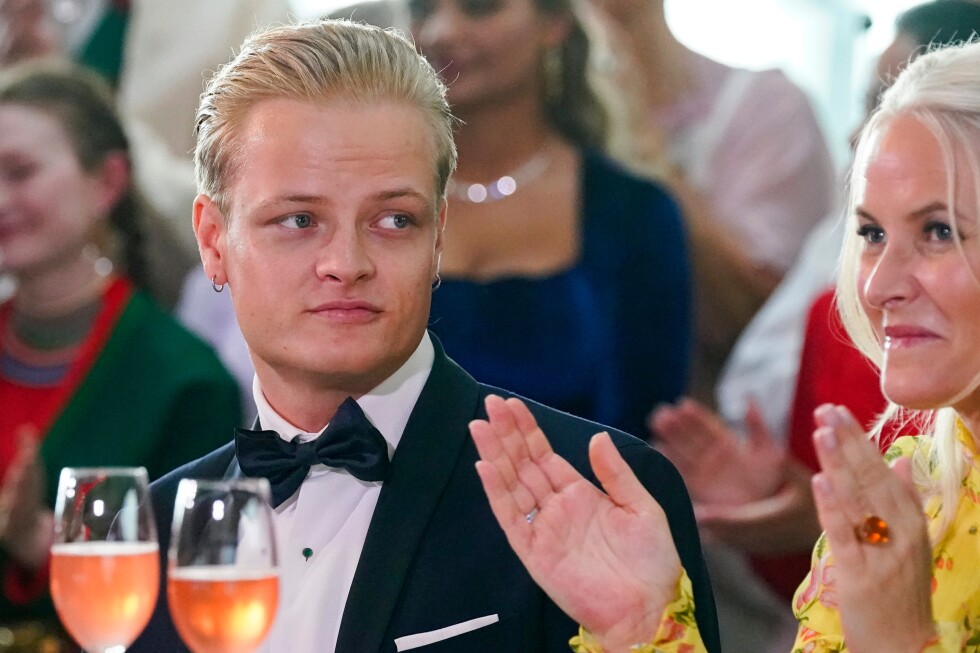
    OSLO, Norway — A significant criminal trial commenced Tuesday against Marius Borg Høiby, the eldest son of Norway’s Crown Princess Mette-Marit, marking a profound embarrassment for the royal family amidst simultaneous revelations about the crown princess’s past associations with convicted sex offender Jeffrey Epstein.

    Høiby, 29, stands indicted on 38 criminal counts including rape, domestic abuse, drug trafficking, death threats, and traffic violations. The Oslo District Court will hear allegations detailing four separate rape incidents occurring between 2018 and November 2024, alongside patterns of violence against two former partners. Prosecutors indicate a potential decade-long prison sentence if convictions are secured during the trial, projected to continue through mid-March.

    The defendant, product of Crown Princess Mette-Marit’s previous relationship, holds no royal title or formal duties within the monarchy. His stepfather, Crown Prince Haakon, issued an unusual public statement clarifying that neither he nor Mette-Marit intend to attend court proceedings, emphasizing Høiby’s status as a private citizen subject to Norway’s judicial system like any other.

    Compounding the royal family’s challenges, newly unsealed court documents from the Epstein files reveal extensive communications between Crown Princess Mette-Marit and the disgraced financier. Norwegian media reports confirm she utilized Epstein’s Palm Beach, Florida property in early 2013 through a mutual acquaintance. In a contrite statement, the crown princess acknowledged ‘poor judgment’ and expressed deep regret for her association with Epstein, extending sympathy to his victims.

    This dual controversy emerges alongside ongoing public scrutiny of Princess Märtha Louise’s unconventional business activities and her 2024 marriage to American self-described shaman Durek Verrett, collectively presenting unprecedented public relations challenges for Norway’s typically popular monarchy.

    Defense attorney Petar Sekulic maintains his client’s innocence regarding all sexual abuse charges and most violence allegations, promising Høiby will present his comprehensive version of events during the judicial process.

  • ‘Enemy’ insults and questioning Putin: Steve Rosenberg on tightrope of reporting from Russia

    ‘Enemy’ insults and questioning Putin: Steve Rosenberg on tightrope of reporting from Russia

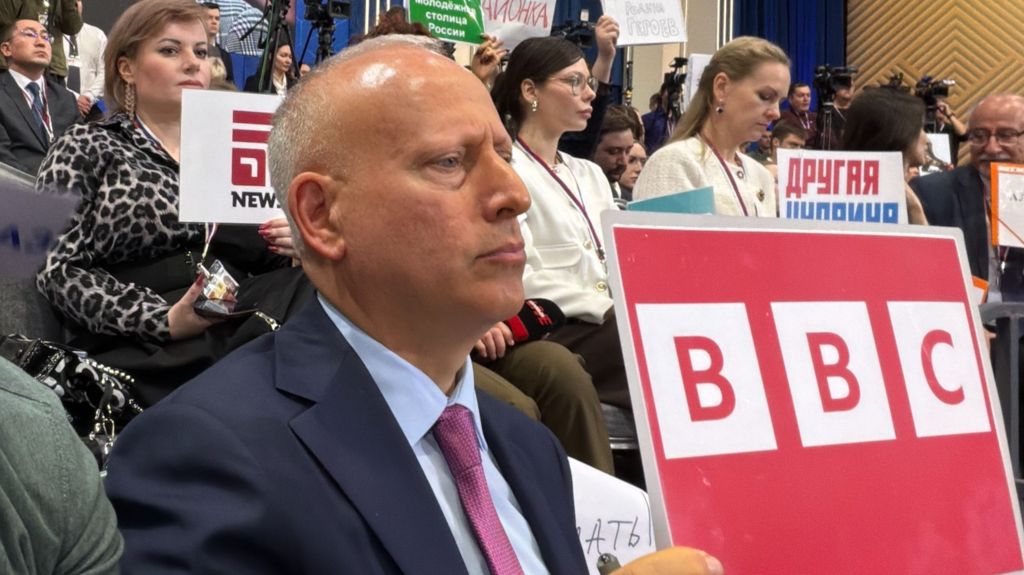
    In a revealing account of contemporary media operations within Russia, BBC Moscow correspondent Steve Rosenberg details the increasingly hostile environment facing Western journalists. The situation has deteriorated markedly since Russia’s full-scale invasion of Ukraine in February 2022, creating what Rosenberg describes as a ‘legal minefield’ for foreign correspondents.

    The hostility manifests through multiple channels, including vitriolic attacks on state-controlled television. Prominent presenter Vladimir Solovyov has personally targeted Rosenberg with derogatory remarks, labeling him ‘Steve Rotten-berg’ and comparing his appearance to a ‘defecating squirrel’ while explicitly branding him ‘a conscious enemy of our country.’

    Operational challenges have intensified significantly. Journalists from nations designated ‘unfriendly’ by the Kremlin, including the United Kingdom, now face heightened scrutiny. Visa arrangements have been tightened, with accreditation requiring renewal every three months instead of the previous annual permits. Travel involves ‘additional checks’ at borders, creating constant administrative hurdles.

    The legal landscape has become particularly perilous. The 2023 espionage conviction of Wall Street Journal reporter Evan Gershkovich, who spent sixteen months imprisoned despite widespread condemnation of the charges as fabricated, demonstrated that foreign citizenship provides no protection against detention. New repressive laws have silenced dissent and criminalized criticism of authorities, forcing many former Russian contributors to avoid Western media outlets entirely.

    Despite these challenges, some access persists. Western broadcasters maintaining Moscow bureaus continue receiving invitations to Kremlin events, occasionally providing opportunities to question President Putin directly. These rare interactions offer insights into Moscow’s perspective, particularly Putin’s persistent resentment over NATO expansion and perceived Western disrespect toward Russian interests.

    The geopolitical alignment has shifted notably with Donald Trump’s return to the American presidency. Moscow perceives improved relations with Washington, resulting in redirected media hostility toward European nations and the UK instead of the United States. This marks a dramatic reversal from the 1990s, when Rosenberg appeared on popular Russian television programs celebrating British culture and Allied cooperation during World War II.

    The correspondent’s personal reflections highlight Russia’s contradictions: simultaneous hostility and warmth from different segments of society. While state media propagates antagonistic narratives, individual Muscovites continue expressing appreciation for Western journalists’ presence, embodying the nation’s double-headed eagle symbolism of conflicting orientations.

  • ‘Executions, torture, abductions, rape’: Ethiopia’s hidden conflict

    ‘Executions, torture, abductions, rape’: Ethiopia’s hidden conflict

    Deep within the forested terrain of Ethiopia’s Oromia region, rebel commander Jaal Marroo maintains a nomadic existence, evading government drones while leading the Oromo Liberation Army (OLA). Designated as a terrorist organization by Ethiopian authorities, the OLA has waged an insurgency since 2018, with both sides accused of committing severe human rights violations against civilians.

    Marroo, in a rare interview from an undisclosed location, refuted government allegations that his fighters target civilians. “Our war is not against the people,” he told The Associated Press. “It is against the brutal regime that has occupied and oppressed the nation for generations. We are fighting to correct a system that treats the Oromo as subjects, rather than citizens.”

    The conflict has created a humanitarian crisis largely obscured from international view due to government restrictions on journalists and rights groups. United Nations investigators and human rights organizations document atrocities committed by both parties, including summary executions, torture, abductions, and sexual violence.

    Amnesty International’s regional spokesperson Sarah Kimani stated: “Our research puts both the OLA and government forces in the middle of the conflict in terms of summary executions, torture, abductions, and rape of women.” The organization plans to publish a comprehensive report on human rights abuses in March.

    Civilians recount harrowing experiences of being targeted by both sides. Ayantu Bulcha, an opposition party member, described how soldiers killed her cousin, father, and uncle in early December after accusing them of supporting rebels. “I can’t even go there to grieve with her,” Bulcha said of her mother. “I am afraid for my own safety.”

    The violence has crippled essential services, with the UN reporting 3.2 million children out of school due to fighting. Humanitarian aid distribution remains severely constrained, contributing to widespread malnutrition. Medical facilities have not been spared—the International Committee of the Red Cross reported in 2023 that nearly all 42 health posts in Oromia’s Begi district had been looted or damaged.

    Although recent government offensives have degraded OLA capabilities, including convincing a key commander to defect, the region remains highly unstable. Beyond the insurgency, criminal enterprises engage in extortion, kidnapping, and robberies, creating a complex security landscape where civilians suffer regardless of affiliation.

    Prime Minister Abiy Ahmed’s Oromo heritage has not resolved longstanding grievances among Ethiopia’s largest ethnic group, who say they remain marginalized in the federal power structure. With movement severely restricted and violence pervasive, residents describe Oromia as fundamentally insecure, caught between multiple armed factions with civilians paying the ultimate price.

  • All the winners at the 2026 Grammy Awards

    All the winners at the 2026 Grammy Awards

    The 68th Annual Grammy Awards ceremony unfolded in Los Angeles with a night of spectacular victories and unexpected upsets, headlined by Kendrick Lamar’s remarkable five-award sweep and Bad Bunny’s triumphant capture of the coveted Album of the Year honor.

    Kendrick Lamar solidified his status as a contemporary music titan by securing five golden gramophones, making him the ceremony’s most decorated artist for the second consecutive year. His collaborative masterpiece ‘Luther’ with SZA earned Record of the Year, while his innovative rap collection ‘GNX’ claimed Best Rap Album. Despite this dominance, the evening’s most prestigious award eluded him as Puerto Rican global phenomenon Bad Bunny captured Album of the Year for his critically acclaimed work ‘Debí Tirar Más Fotos’.

    The British music scene celebrated early success with Yungblud’s victory for Best Rock Performance alongside legendary musicians Nuno Bettencourt and Frank Bello for their electrifying live rendition of ‘Changes.’ This win marked a significant moment for the UK artist on music’s biggest international stage.

    In the pop categories, Lady Gaga’s ‘Mayhem’ secured Best Pop Vocal Album, while emerging talent Lola Young earned Best Pop Solo Performance for her raw and emotional track ‘Messy.’ The collaboration between Cynthia Erivo and Ariana Grande on ‘Defying Gravity’ received recognition for Best Pop Duo/Group Performance.

    The ceremony highlighted remarkable diversity across genres, with Tyla winning Best African Music Performance for ‘Push 2 Start,’ and Natalia Lafourcade taking home Best Latin Pop Album for ‘Cancionera.’ The jazz world celebrated Samara Joy’s ‘Portrait’ as Best Jazz Vocal Album, while Sullivan Fortner’s ‘Southern Nights’ claimed Best Jazz Instrumental Album.

    In the visual media categories, Ludwig Göransson’s score for ‘Sinners’ earned Best Score Soundtrack, while the animated film ‘K-Pop Demon Hunters’ produced the winning track ‘Golden’ by Huntr/x for Best Song Written for Visual Media.

    The awards also recognized technical excellence, with Cirkut earning Producer of the Year and Amy Allen receiving Songwriter of the Year honors for their contributions to multiple chart-topping projects throughout the eligibility period.

  • Epstein files show Kaaba cloth pieces from Makkah shipped to Epstein via UAE contacts

    Epstein files show Kaaba cloth pieces from Makkah shipped to Epstein via UAE contacts

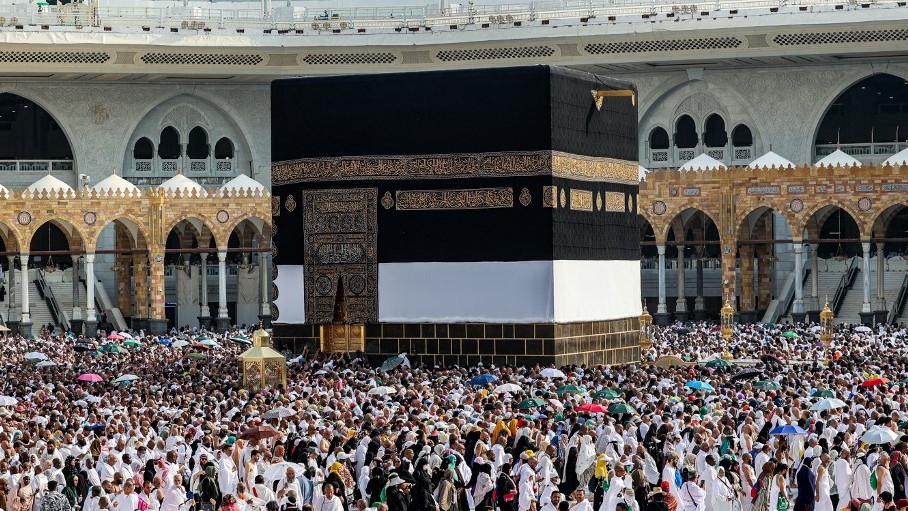
    Newly unsealed court documents from the Jeffrey Epstein case have revealed a startling transaction involving sacred religious artifacts from Islam’s holiest site. The records detail how pieces of the Kiswa—the elaborately embroidered black cloth that covers the Kaaba in Makkah—were systematically shipped to the convicted sex offender’s Florida residence in early 2017.

    The correspondence, dating from February to March 2017, exposes a coordinated effort between Emirati businesswoman Aziza Al-Ahmadi and an associate named Abdullah Al-Maari to transport three distinct pieces connected to the sacred covering. The shipment included one fragment from inside the Kaaba, another from the previously used outer covering, and a third piece crafted from identical materials but never actually deployed on the structure.

    Notably, the emails reveal strategic classification of these religious artifacts as ‘artworks’ to facilitate customs clearance and international transport. The items traveled via air freight from Saudi Arabia to Florida through British Airways, with meticulous attention given to logistical details including invoices and delivery arrangements.

    The spiritual significance of these objects was explicitly acknowledged in communications, with Al-Ahmadi directly informing Epstein that the black cloth fragment ‘was touched by minimum 10 million Muslims of different denominations.’ She elaborated on its profound religious meaning, noting how pilgrims embed ‘their prayers, wishes, tears and hopes on this piece’ during circumambulation of the Kaaba.

    The documents further reveal an ongoing relationship between Al-Ahmadi and Epstein, evidenced by her concerned communications following Hurricane Irma’s devastation of his Caribbean island in September 2017. Despite repeated attempts to ascertain his wellbeing through his secretary, the correspondence provides no clarity on how their association originated or why these specifically Islamic relics were directed to Epstein.

    In a separate development, an FBI memorandum included in the release suggests intelligence connections, stating Epstein ‘trained as a spy’ under former Israeli Prime Minister Ehud Barak and maintained operational ties with both U.S. and Israeli intelligence agencies.