作者: admin

  • North Korea launches ballistic missiles toward sea

    North Korea launches ballistic missiles toward sea

    Fresh tensions have risen on the Korean Peninsula following a new series of ballistic missile launches carried out by North Korea into adjacent waters on Sunday, according to announcements from the country’s neighboring nations, marking the latest in a string of weapons development tests Pyongyang has conducted throughout 2024.

    South Korea’s top military body, the Joint Chiefs of Staff, confirmed that the firing operations originated in the eastern coastal district of Sinpo early Sunday morning. In response to the provocation, South Korea has upgraded its intelligence surveillance posture and maintains constant, close information sharing with key security allies the United States and Japan to monitor further developments.

    South Korea’s presidential administration also confirmed that the country’s National Security Council would convene an emergency session to assess the threat posed by the launches and coordinate a formal government response.

    Japan’s Defense Ministry independently verified the tests, adding its assessment that the projectiles fell into waters off North Korea’s eastern coastline. Japanese officials lodged a formal strong protest with Pyongyang over the incident, noting that Sunday’s launches undermine stability across the region and the broader international community, and run counter to long-standing United Nations Security Council resolutions that prohibit all ballistic missile activity by North Korea.

    The latest test comes just one week after Pyongyang announced that leader Kim Jong Un personally oversaw a separate round of missile tests conducted from a North Korean naval destroyer. Following that exercise, Kim emphasized that North Korea would continue advancing its military capabilities, stating the country remained committed to the “limitless expansion” of its nuclear deterrent forces. He also issued new, undisclosed directives to refine North Korea’s nuclear strike capacity and rapid military response systems.

    In a separate development last week, International Atomic Energy Agency Director General Rafael Grossi confirmed that the UN nuclear watchdog has recorded a marked, rapid acceleration in operational activity at all of North Korea’s known nuclear facilities, adding another layer of concern to the international community’s growing scrutiny of Pyongyang’s weapons programs.

  • Britain’s youngest F1 driver on his debut season so far – and learning to skateboard

    Britain’s youngest F1 driver on his debut season so far – and learning to skateboard

    At 18 years old, Arvid Lindblad has already etched his name into Formula 1 history as Britain’s youngest driver to compete at the sport’s highest level. Just three races into his highly anticipated debut season, however, an unforeseen gap in the 2026 calendar has handed the Racing Bulls rookie an unexpected month-long break from the grid, forcing the teen to pause what has already been a whirlwind introduction to elite motorsport.

    Lindblad kicked off his F1 journey with a standout performance at last month’s Australian Grand Prix in Melbourne, where he immediately delivered points to his team by crossing the finish line in eighth place. Back-to-back races in Shanghai and Tokyo followed, before the scheduled rounds in Bahrain and Jeddah, Saudi Arabia were called off over escalating conflict in the Middle East. The cancellation means Lindblad was meant to hit 200mph around Jeddah’s iconic street circuit this past weekend, a date that now sits empty on his racing schedule.

    With weeks of unplanned free time on his hands, the teen has used the break to slow down, reflect on his opening performances, and embrace ordinary teenage experiences he has rarely had time for. He has reconnected with friends, and even picked up an entirely new hobby: learning to skateboard. When asked about his progress, Lindblad joked that he can now ride comfortably and navigate small ramps, and has set a goal to nail a kickflip by the end of the year. Still, he admits that even with an enjoyable break, racing remains his core passion, and he is counting down the days to get back behind the wheel.

    For the 18-year-old, the reality of being a full-time Formula 1 driver has not fully sunk in yet. “This is something I’ve been working towards my whole life,” he told BBC Newsbeat in an exclusive interview. “So the fact it’s come true is extremely special, extremely cool.”

    Lindblad’s next shot at racing will come in a fortnight at the Miami Grand Prix, a round he says he is eagerly anticipating. Beyond that, he has his sights set on his first home Grand Prix at Silverstone in July, an event that will hold deep personal meaning for the Surrey-born driver. “My whole family will be there. I think racing at home, there’s no real feeling like it,” he said.

    The rookie driver has also opened up about the multicultural heritage that has shaped his identity, which he proudly displays on the back of his racing helmet with three national flags: England, Sweden, and India. Though raised in Virginia Water, Surrey, Lindblad’s father is Swedish, while his mother comes from an Indian background. “I’ve really been surrounded by all three cultures. It’s shaped me into the person and driver I am today,” he explained.

    That Indian connection has left Lindblad with a long-term dream: to compete in a Formula 1 Grand Prix on Indian soil. The country last hosted an F1 race at Uttar Pradesh’s Buddh International Circuit in 2013, before the event was scrapped following a tax dispute with local authorities, with F1 officials at the time citing “very political” reasons for the cancellation. Earlier this month, an Indian government minister claimed a 2027 Grand Prix would go ahead, but F1 bosses quickly debunked the announcement, confirming no race will be held in India next year. Still, Lindblad says a future Indian Grand Prix would mean the world to him. “I race under the British flag so having one home race is pretty cool, if there were to be a second one that’d be really special as well,” he said. “I don’t know the ins and outs of it, or how realistic it is, but it would mean a lot to me.”

    As a new face on the 2026 grid, Lindblad has yet to check one major rookie rite of passage off his list: filming his intro segment for Netflix’s hit F1 documentary series *Drive to Survive*. The show launched when Lindblad was just 10 years old, at the start of his own karting journey, so the opportunity to step in front of its cameras is one he is eagerly looking forward to. “I’ve watched loads of those clips and to be able to sit in that chair will be really cool at some point,” he said.

    Off the track, Lindblad says team chemistry at Racing Bulls is strong, with a positive dynamic alongside teammate Liam Lawson. He has also built a close connection with four-time reigning world champion Max Verstappen, who has become a valued mentor for the young rookie. “His journey to F1 was quite similar to mine, we both came in at a young age and rose through the ranks quite quickly,” Lindblad explained. “He’s been really good on that side if I needed some advice or had a question.”

    For now, though, the teen is just enjoying the unexpected break while gearing up for his return to racing – and it’s clear his skateboarding hobby won’t be replacing the thrill of the F1 cockpit any time soon. “I’ve enjoyed the break but racing is my passion,” he said. “It’s probably what makes me happiest.”

  • ‘The weapons were loud, but there was always music’: Sudanese band play on through the war

    ‘The weapons were loud, but there was always music’: Sudanese band play on through the war

    Three years after Sudan’s brutal civil war erupted, tearing one of the nation’s most beloved musical groups apart, members of Aswat Almadina – which translates to Sounds of the City – remain scattered across the globe, clinging to a shared mission: keeping the flame of hope for peace burning through their art. The conflict that broke out in April 2023 has left more than 150,000 people dead and displaced an estimated 12 million Sudanese, creating what the United Nations has labeled the world’s worst ongoing humanitarian catastrophe. For the members of Aswat Almadina, the war shattered their lives and careers, but it could not break their bond or their commitment to their homeland.

    Founded in Khartoum in 2014 by Mohammed Almustafa – known publicly as Timon – and lead vocalist Ibrahem Mahmoud, the band carved out a unique space in Sudan’s music scene from its earliest days. Blending the rich traditions of Middle Eastern folk with the energy of urban pop and the improvisational spirit of jazz, their sound was rooted entirely in the capital city they loved. “We called ourselves Sounds of the City because Khartoum is our inspiration,” Timon explained in an interview with BBC’s *Focus on Africa* podcast. “Our music comes from the atmosphere of Khartoum, the natural sounds of the city, the voices of the people, the rhythm of the streets.”

    The band quickly amassed a loyal, widespread following, particularly among young Sudanese, and made history as the first Sudanese group to tour across the entire country. Their lyrics, which openly addressed systemic corruption, social inequality, and the daily hardships facing the nation’s youth, earned them widespread respect and a prestigious appointment as United Nations Development Programme Goodwill Ambassadors in 2017. For Mahmoud, music and activism have always been inseparable. Long before the 2019 uprising that ousted longtime authoritarian leader Omar al-Bashir, Mahmoud was repeatedly detained by state security forces for his politically critical work. “I got arrested a lot by national security because of what I was doing – singing the truth,” Mahmoud says. “Thank God I’m still alive.”

    When anti-government protests erupted across Sudan in late 2018, sparked by austerity measures and cuts to bread and fuel subsidies that exacerbated a already crippling economic crisis, Aswat Almadina’s music became a soundtrack for the revolution. Protesters chanted the band’s lyrics in streets across the nation during the months-long movement that ultimately ended Bashir’s 30-year rule.

    That peaceful transition of power was cut short, however, when full-scale civil war broke out in April 2023. Mahmoud and Timon still vividly recall that day: the entire band was gathered in a small Khartoum recording studio, surrounded by their instruments, writing and recording new material, when the crackle of gunfire echoed through the city streets. “At that time I didn’t believe it was a war,” Mahmoud says. “It was a confusing moment. We didn’t know what was going on. We had never been in this situation before. It was very, very confusing.”

    Convinced the fighting would end quickly, Mahmoud sheltered in the studio and kept creating, even as explosions and gunfire rang out around him. He wrote and recorded *Give Peace A Chance* remotely, collaborating with another musician based in central Sudan even as unstable, flickering internet connections and constant shelling made exchanging files a struggle. “The sounds of the weapons were loud, but there was always music going on,” Mahmoud recalls. “Music is my survival mechanism, it’s always saving my life.”

    Within two months of the war’s start, most band members had fled the country. Timon, who now lives in Cairo Egypt, escaped through the United Arab Emirates, and endured a two-year separation from his family that caused him to miss the birth of his second child. Today, he looks back at pre-war photos of the band’s final Khartoum concert – held just one month before fighting began – with quiet longing. “It was a month before the war. When you look at this, there was a Khartoum. There were very lovely nights in Sudan.” Mahmoud, who previously lived in Nairobi Kenya, now resides in Jeddah Saudi Arabia, but refuses to consider the kingdom his home. “I don’t consider myself based in Saudi Arabia. I’m just visiting. My journey is still going on, and I don’t know when it will end,” he says.

    Though scattered across multiple countries, the band’s connection remains unbroken. They continue to collaborate remotely, and are set to release a new single titled *Sudan* later this April, a track the members say honors both the deep beauty of their homeland and the immense suffering it has endured. They believe their music carries unique weight for millions of Sudanese caught up in the crisis. “The arts have a power,” Mahmoud says. “It carries a lot of emotion for people.”

    For Aswat Almadina, the core mission that defined their work from the start remains unchanged: to inspire a movement of peace for their war-ravaged nation. The band holds onto unshakable hope that one day, all members will stand together in a Khartoum studio again, making music as they once did. “Being part of this band is a dream come true for us,” Timon says. “There’s always hope. I want everyone, not just me, to speak about peace and love. That’s what will make things better, more than speaking about war.”

  • Harry and Meghan’s trip felt like a royal tour – except many Aussies weren’t interested

    Harry and Meghan’s trip felt like a royal tour – except many Aussies weren’t interested

    After four days of tightly curated engagements mixing charity work, cultural outreach and private commercial ventures, the Duke and Duchess of Sussex have concluded their first private visit to Australia’s east coast, a trip that stands in stark contrast to their high-profile 2018 royal tour when the pair still served as working members of the British monarchy.

    In 2018, a nine-day cross-country official tour drew tens of thousands of well-wishers lining streets across the nation. This time around, as private citizens, the tour followed a far quieter script: most Australians surveyed by the BBC said they had little to no awareness of the visit, and public turnout for unscripted public appearances remained minimal. Despite its low profile, the trip has sparked heated debate over two key issues: potential taxpayer-funded security costs for the couple’s public events, and the blurred line between charitable outreach and commercial money-making activities amid Australia’s ongoing cost-of-living crisis.

    The itinerary echoed the structure of traditional royal tours, with stops to engage with Indigenous Australian communities, honor fallen service members at the Australian National War Memorial, celebrate national sporting culture, and advance the couple’s longstanding focus on mental health advocacy. Unlike official royal tours, every engagement was planned and executed by the Sussexes’ private team, with a deliberate focus on controlled, low-risk encounters to avoid public backlash or confrontation.

    Giselle Bastin, an associate professor at Flinders University specializing in Australian-monarchy relations, noted the tour’s carefully curated format was designed to minimize negative pushback. “They didn’t organize large, publicly advertised walkabouts where crowds could turn out to see them, so they’ve managed to cut down the risk of negative reactions, heckling or booing,” Bastin explained. “It’s been very carefully controlled, with spontaneous-seeming appearances at pre-vetted locations.”

    Even with the controlled structure, the pair displayed their characteristic warmth in small, personal interactions that aligned with their public brand. The BBC witnessed multiple warm encounters, including a meeting at the Sydney Opera House between Prince Harry and Michelle Haywood, daughter of Daphne Dunne — a 99-year-old war widow and long-time royal acquaintance who died in 2019. Haywood had waited days to present Harry with a vintage photo of her mother posing with him in army fatigues from a 2015 visit. “He just said, ‘Oh my gosh’ and then he gave me a big hug,” Haywood recalled. “He went through every time he’d met her, and even remembered the meeting where it was pouring rain. He remembered it perfectly.”

    Meghan similarly connected with attendees at multiple stops: she listened compassionately to survivors of the 2024 Bondi Beach attack, and chatted with a young boy about her children’s love of the popular Australian children’s book *Diary of a Wombat*. A review of daily press releases from the Sussexes’ media team found the word “connection” was used 30 times across post-day briefings, while “community” appeared 21 times and “wellbeing” eight times. Notably, the word “royal” only appeared once — in the official name of the Royal Children’s Hospital in Melbourne, which the couple visited at the start of the tour.

    Mental health advocacy formed a core pillar of the public agenda, including a roundtable with young people focused on the harms of online bullying. During that discussion, Meghan opened up about her decade-long experience as what she called “the most trolled person in the world,” sharing personal stories of persistent online harassment and abuse.

    The couple’s 8.7 million-follower @sussexroyal Instagram platform remains a major asset, and the tour comes as the pair actively pursue new commercial opportunities following the end of their high-profile content deals with Spotify and Netflix. This shift to independent income has left the public with little clarity around which engagements are charitable and which are paid commercial appearances.

    Prince Harry headlined a high-profile mental health summit where he spoke candidly about grieving his mother Princess Diana while serving as a working royal. While tickets were heavily discounted, they still cost nearly AU$1,000 per person. Organizers repeatedly declined to confirm whether Harry received a speaking fee, only noting that all ticket proceeds were donated to Australian mental health charity Lifeline. Meghan did confirm a paid appearance at an exclusive, women-only luxury retreat, where VIP entry cost AU$3,199 per person. She also publicly announced her investment in OneOff, an artificial intelligence fashion platform that curates celebrity-inspired style recommendations, with creators and celebrity investors earning a small commission on sales generated through their profiles. The Duchess’s profile already features clothing she wore during the Australian tour.

    Compared to the 76 engagements the couple completed across 16 days of the 2018 tour (which also included stops in New Zealand, Fiji and Tonga), this four-day visit had significant gaps in the public schedule. Most notably, Meghan had no public appearances on the Wednesday of the tour, and it was later revealed she had been filming a guest spot on *MasterChef Australia*. It is understood she received no payment for the appearance, though she has a food-focused lifestyle brand, As Ever, which holds Australian trademarks for a range of products including cookware and table linens.

    The only mention of commercial activity on the tour came in a footnote of a five-page pre-tour briefing, which stated: “As with many visits of this nature, a small number of private engagements are included to support broader commercial, charitable, and community objectives.” As private citizens, the couple are under no legal obligation to disclose earnings or publicize every private engagement.

    Critics have argued the commercial focus of the trip is out of step with Australia’s current economic struggles. Bastin described many of the commercial ventures as “tone deaf in a cost-of-living crisis,” while a Sydney Morning Herald columnist wrote that “Australia was good to Harry and Meghan. Now they want to use us as an ATM.”

    Supporters push back against that framing, however. Michael Hartung, chief executive of Invictus Australia, the national arm of Harry’s Invictus Games for wounded and ill veterans, said the criticism overlooks the tangible positive impact of the couple’s charitable work. “A lot of criticism is thrown their way, but what we’ve seen this past week is they do an enormous amount for charity and for organisations like ours,” Hartung told the BBC. “Their presence here has moved our work years forward, something that would have taken us countless hours of outreach and effort to achieve on our own. It really does make a difference.”

    Fans who met the couple during the tour echoed that sentiment, noting the pair are entitled to earn a living as private citizens. “They’ve chosen their path in life and if that’s their brand and they need to make a living and do it how they wish, they should be allowed to do so,” said Lisa Perry, a Sydney visitor who got a selfie with the couple. Vida Benic, who met the pair in Melbourne, said she avoided negativity around the visit. “They’re welcome to come here any time. Our big Australian arms and hearts are fully open to them – and to their children hopefully one day.”

  • ‘Croatia, but cheaper’: The quirky holiday spots on trend for 2026

    ‘Croatia, but cheaper’: The quirky holiday spots on trend for 2026

    In an era where the thrill of discovering a lesser-known travel spot has become one of the most sought-after holiday experiences, shifting travel trends among British holidaymakers are throwing a spotlight on underrated European gems that balance affordability, authenticity, and adventure. New data from the Association of British Travel Agents (ABTA) reveals that 2024 has seen a growing preference for genuine, off-the-beaten-path trips over crowded, one-size-fits-all all-inclusive resorts, with 40% of Britons planning to visit a country they have never explored before this year. This shift comes against a backdrop of global uncertainty: ongoing conflict in the Middle East has pushed many travelers to seek safer European alternatives, while concerns over potential jet fuel shortages and the ongoing cost-of-living crisis have put longer-haul trips out of reach for many. For those hunting for a cost-effective, unique summer getaway, a handful of lesser-known European destinations are quickly climbing must-visit lists.

  • Alec Baldwin to face civil trial over Rust film set shooting

    Alec Baldwin to face civil trial over Rust film set shooting

    Three years after a fatal on-set shooting rocked the production of the indie Western film *Rust*, Hollywood actor Alec Baldwin is set to face civil litigation over the incident, even after his criminal case was fully dismissed in early 2024. The latest development in this high-profile entertainment industry tragedy came when a Los Angeles judge ruled that a negligence lawsuit filed against Baldwin by the film’s former lighting technician Serge Svetnoy can proceed to trial.

    The incident that sparked the litigation dates back to October 2021, when the *Rust* crew was conducting a scene rehearsal at a New Mexico film set. A prop gun held by Baldwin discharged a live bullet, killing 42-year-old cinematographer Halyna Hutchins and leaving the film’s director Joel Souza with serious injuries. Svetnoy, who was on set during the incident, alleges that a bullet came dangerously close to striking him, and that both Baldwin and the film’s production team failed to follow mandatory and industry-standard gun safety protocols. He has brought claims of negligence and intentional infliction of emotional distress against the defendants.

    In a significant 2024 development that cleared Baldwin of criminal liability, a New Mexico judge dismissed the involuntary manslaughter charge against the actor with prejudice. This ruling came after defense attorneys uncovered that law enforcement and prosecution teams had withheld key evidence—a collection of unshared bullets potentially connected to the shooting—from Baldwin’s legal team. While prosecutors maintained the ammunition was unrelated to the incident and did not match the projectile recovered from the set, the judge ruled that the evidence must be shared with the defense regardless of prosecutors’ assessment, leading to the full dismissal of the criminal case. A dismissal with prejudice means the charge cannot be re-filed against Baldwin once all appeals of the ruling are finalized.

    Separately, the film’s on-set armourer Hannah Gutierrez-Reed was convicted of involuntary manslaughter for her role in the shooting in 2024, and was sentenced to 18 months of prison time. Baldwin has consistently maintained he never pulled the trigger of the prop gun, a claim that has remained at the center of his defense throughout all legal proceedings.

    When reviewing Svetnoy’s civil suit, Los Angeles Superior Court Judge Maurice Leiter allowed the core claims of negligence and emotional distress to move forward, but threw out the additional allegation of assault. Court documents released Friday confirmed the judge’s ruling, with a provisional trial date set for October 12 of this year if no out-of-court settlement is reached between the parties ahead of the hearing. The BBC has reached out to Baldwin’s legal team for comment on the latest ruling, and prior to this decision, Baldwin and *Rust*’s producers had reached a confidential settlement in a separate wrongful death lawsuit brought by Hutchins’ family.

  • Chernobyl’s last wedding: The couple who married as a nuclear disaster unfolded

    Chernobyl’s last wedding: The couple who married as a nuclear disaster unfolded

    On the cusp of their wedding day in April 1986, 19-year-old trainee teacher Iryna Stetsenko and 25-year-old nuclear power plant engineer Serhiy Lobanov had every reason to look forward to their future. The young couple were building their life in Pripyat, a purpose-built, newly constructed Soviet city constructed to house workers of the nearby Chernobyl Nuclear Power Plant. What they could not know that night was that 4 kilometers from their apartment, the world’s worst nuclear disaster was already unfolding.

    It was just after midnight when Iryna, who had just finished polishing her nails for the ceremony, stepped out onto her balcony and heard an unfamiliar, deep rumble. “It was as if a hundred planes were roaring overhead, everything hummed, and every window pane shook,” she recalled. Serhiy, sleeping on a kitchen mattress in a relative’s apartment full of wedding guests, felt a low, rolling wave that he mistook for a minor earthquake before drifting back to sleep.

    When dawn broke on April 26, Serhiy woke full of excitement for his sunny wedding day. As he ran pre-ceremony errands, he noticed signs that something was very wrong: soldiers in gas masks patrolled the streets, workers hosed down roads with foamy decontamination solution, and colleagues from the plant told him they had been called in urgently for an emergency they could not explain. Glancing across the city, he could see dark smoke billowing from the damaged Reactor Number Four. What would later become clear is that firefighters and plant workers had spent the entire night fighting a massive toxic blaze, absorbing potentially lethal doses of radiation to contain the disaster.

    Though anxiety prickled at him, Serhiy continued with his plans. He found the city market nearly deserted on what was usually a busy Saturday morning, and picked five simple tulips for his bride. Back at Iryna’s apartment, her mother had spent the night fielding frantic calls from neighbors warning of an unspecified catastrophe, but Soviet information controls kept any details of the accident from being released. When Iryna’s mother called local authorities for answers, officials insisted all scheduled city events proceed as planned. Schools stayed open, and the wedding went forward.

    The wedding party processed in a line of cars to Pripyat’s Palace of Culture, the city’s central venue for both state ceremonies and popular local discos. The couple exchanged their vows standing on a cloth embroidered with their names, then moved to a nearby café for their wedding banquet. But the joy of the day was swallowed by uncertainty. “Everyone knew something terrible had happened, but nobody knew what it was,” Serhiy said. The couple had practiced a traditional waltz for their first dance, but as the weight of the unfolding tragedy settled over them, they lost the rhythm almost immediately. “We just hugged each other and stayed that way, moving together in the hug,” Iryna remembered.

    By the early hours of Sunday, just hours after they were married, the couple were warned to evacuate immediately: a mandatory evacuation train was set to depart Pripyat at 5 a.m. Iryna only had a thin celebration dress with her, so she slipped her voluminous wedding dress back on to run back to her mother’s apartment to pack. Her new shoes had already given her blisters, so she ran barefoot through rain puddles, wedding dress trailing behind her. As their train pulled out of the station in the pre-dawn dark, they could see the glowing, collapsed reactor against the sky. Serhiy described it as “looking straight into the eye of an active volcano.” Authorities told evacuees the displacement would only last three days. The couple never returned.

    The 1986 Chernobyl explosion, which occurred in what is now northern Ukraine, was caused by a catastrophic failed safety test. The International Atomic Energy Agency and World Health Organization estimate the blast released 400 times more radioactive material than the atomic bomb dropped on Hiroshima. The Soviet Union faced widespread international condemnation for its slow, opaque response: it only confirmed the accident two days later, after Swedish nuclear monitors detected abnormal radiation drifting across Western Europe, and Soviet leader Mikhail Gorbachev did not address the disaster publicly for more than two weeks.

    Nikolai Solovyov, a lead turbine engineer on shift at the plant when the explosion hit, described the moment: “It felt like an earthquake under our feet. We saw the roof collapsing, a blast of hot air rushed toward us carrying thick black dust, and then the sirens started.” He and his colleagues rushed to the site assuming a generator had exploded, never imagining the reactor itself had blown. One worker’s dosimeter registered radiation levels far beyond its measuring capacity. They found a colleague alive but vomiting, a clear sign of acute radiation sickness—he was among the first to die from the disaster.

    The official death toll in the immediate aftermath of the accident stands at 31: two killed directly by the blast, 28 who died from acute radiation sickness in the weeks that followed, and one fatality from cardiac arrest. The long-term death toll remains fiercely contested: a 2005 UN agency study estimated up to 4,000 people may eventually die from radiation-related causes, while other independent estimates put the number as high as tens of thousands.

    To contain the spreading radiation, Soviet authorities launched a massive clean-up operation, mobilizing hundreds of thousands of “liquidators” from across the union to stabilize the site and clear radioactive debris. Extreme radiation levels fried electronic equipment, forcing many workers to clear toxic debris by hand in short shifts designed to limit lethal exposure. Jaan Krinal, one of dozens of liquidators deployed from Soviet-era Estonia, recalled wearing 20+ kilograms of lead plating for protection, plus a construction helmet, goggles, and a dosimeter tucked in his pocket. He and fellow Estonian liquidator Rein Klaar worked in 60-second bursts on the roof of Reactor Three, with no time to process the danger they faced. “Nobody could tell us what was what,” Rein said. “There was no time to think.”

    In the months after the evacuation, Iryna and Serhiy were staying with Iryna’s grandmother 300 kilometers away in the Poltava region, east of Kyiv, when doctors made an unexpected discovery: Iryna was three months pregnant. Evacuated women were broadly warned that radiation exposure could harm fetuses, and many were advised to terminate pregnancies. “I was scared to have the baby, and scared to have an abortion,” Iryna remembered. But one supportive female doctor encouraged her to carry the pregnancy to term, and later that year, Iryna gave birth to a healthy daughter, Katya. Today, Katya is a mother herself, and the couple have a 15-year-old granddaughter.

    Four decades on, the legacy of the Chernobyl disaster stretches across generations, and new upheaval has again upended the lives of those who survived it. The site of the explosion has become an active war zone following Russia’s 2022 full-scale invasion of Ukraine. In 2022, Russian tanks seized the Chernobyl plant complex, holding staff hostage for five weeks, laying mines, and digging defensive trenches across contaminated land. In 2025, a drone strike punched a hole in the 1.6 billion USD safety shield installed over Reactor Four in 2016, replacing an unstable original concrete sarcophagus. While radiation levels did not spike after the strike, the International Atomic Energy Agency has confirmed the shield can no longer perform its primary safety function. The plant requires constant monitoring and maintenance to prevent further radiation leaks.

    Much of the 1,000-square-mile Chernobyl Exclusion Zone is now safe for short-term visitor tours, but permanent settlement remains banned, and hotspots of deadly contamination remain in areas like the Red Forest, a stand of pine trees killed by radiation that remains heavily toxic. Pripyat, once celebrated as a beacon of Soviet technological progress and youthful optimism, is now a crumbling ghost city. The Palace of Culture where Iryna and Serhiy married stands abandoned and derelict, succumbing to decades of neglect.

    For Iryna and Serhiy, displacement became a second reality in 2022, after a Russian missile struck their daughter’s Kyiv apartment. The couple fled Ukraine for a new life in Berlin, forced to uproot their lives for the second time—once for a nuclear disaster, once for war. Though they suspect radiation exposure has contributed to long-term health issues Iryna has endured, including two total knee replacements, and a 2016 heart attack Serhiy suffered, their four-decade marriage has become their anchor through every crisis.

    “I think we really had to go through so many difficulties in life to understand that we really can’t be one without the other,” Iryna said. “After 40 years, I can say with certainty that we are like a thread and a needle. We do everything together.”

    This story accompanies new BBC programming marking the 40th anniversary of the Chernobyl disaster. UK viewers can watch *What Happened at Chernobyl* on BBC One at 8:30 p.m. on April 20, with streaming available on BBC iPlayer from 6 a.m. the same day. *The Last Dance Floor in Chernobyl*, a podcast telling the full story of Iryna and Serhiy’s wedding against the backdrop of disaster, will also be released.

  • The South Korean authors rising above a tide of hate to become bestsellers

    The South Korean authors rising above a tide of hate to become bestsellers

    Against a backdrop of rising anti-feminist pushback across South Korea, a growing cohort of female writers and storytellers are building a grassroots, community-centered movement to claim space for women’s unfiltered voices—a shift that author Eunyu describes as a “slow-but-sure revolution.”

    When Seen Aromi’s 2024 memoir celebrating the joys of intentional singlehood hit bookstores, it quickly climbed to the top of bestseller lists. *So What if I Love My Single Life!* resonated across generations and relationship statuses: women from all walks of life drew comfort from Seen’s unapologetic rejection of unsolicited social pressure, and many found validation in choosing a life centered on their own priorities. But the book’s runaway success also sparked a tidal wave of online vitriol, largely from male readers who attacked Seen, predicted she would die alone, labeled her selfish, and even accused her of betraying the nation for rejecting traditional marital and maternal norms.

    Gender-based discrimination, harassment, and sexual violence remain pervasive systemic challenges in South Korea, where the term “feminism” has become deeply polarizing, often wielded as a damning accusation that triggers online witch hunts and professional or social censure. As young men have led a widespread backlash against gender equality advocacy, openly embracing female independence has become increasingly risky. Yet even in this charged climate, women have carved out a growing, vibrant niche in the country’s literary landscape to share their lived experiences.

    The movement reached a historic milestone this year, when women took home top honors in all six categories of South Korea’s most prestigious literary honor, the Yi Sang Awards—a first in the prize’s history. Beyond institutional recognition, community-focused spaces for women writers and readers, called guelbang, have sprung up across the country. These reading and writing rooms offer women dedicated time and space to gather, connect, and grow as a collective. Even beyond the 2024 Nobel Prize in Literature won by iconic South Korean author Han Kang, which cemented Korean women’s writing on the global stage, women’s voices were long sidelined in the country’s mainstream literary scene. The 2016 South Korean MeToo movement, Eunyu notes, was a critical turning point that encouraged ordinary women to speak up about their experiences. Eunyu, who launched her own writing space back in 2011, says that even as backlash against feminist-aligned work grew, more women stepped forward to lead writing workshops and reading sessions, making these community spaces accessible to women who had never before shared their stories. “Many of the women who joined as attendees have gone on to become writers in their own right,” Eunyu explains. “I’ve seen countless instances of attendees digesting their pain, restoring their sense of self and confidence through the act of writing. While these shifts are deeply personal, when they unfold in a community they can often inspire a chain of reaction. In that sense, what we’re witnessing here is a slow-but-sure revolution.”

    Seen’s story of intentional singlehood represents a radical break from South Korea’s long-held social norms: at 39, she purchased a home in the countryside, bucking the national trend of concentrating population in the greater Seoul area, and chose to forgo marriage and children at a time when the government is scrambling to reverse one of the world’s lowest birth rates. She embraces the quiet joy of her self-designed life, from harvesting fresh vegetables for homemade salads to writing in a home decorated entirely to her taste. “I’m not claiming that everyone should abandon marriage or look down on married people in any way,” Seen clarifies. “I simply wrote about how making my own choices, prioritising my desires, has led me to truly enjoy my life. I felt that people were really waiting to hear stories like mine.” Readers have echoed that sentiment: “As someone who’s been questioning whether marriage is really right for me, this book made me tune into my inner voice,” one online reviewer wrote. Another commented, “My life might have been different if I’d read this book before I married. Back then, I never realised that marriage was optional.” The memoir’s success has earned Seen a six-figure international translation deal with Penguin Random House, placing her work in front of a global audience.

    Seen is far from alone in this breakthrough. Buoyed by swelling global interest in Korean culture, sales of translated Korean books more than doubled in 2024 compared to the previous year, opening new international doors for South Korean women writers. The resulting body of work is richly varied, spanning genres from thriller to sci-fi to memoir to historical fantasy: Gu Byeong-mo’s *The Old Woman With the Knife* follows a legendary 60s-year-old assassin navigating retirement and loneliness; Kim Cho-yeop’s sci-fi anthology *If We Cannot Go at the Speed of Light* tells the story of a stranded scientist dedicating her life to reuniting with her family light-years away; singer and author Lang Lee unpacks intergenerational trauma from the Korean War to domestic violence that haunted the women of her family after her sister’s suicide; and Esther Park’s *The Legend of Lady Byeoksa* reimagines the story of a cross-dressing Joseon-era demon slayer and her doomed love, echoing the popularity of hit K-culture projects like *Demon Hunters*.

    As South Korea’s public discourse around gender has grown increasingly hostile, the literary world has emerged as a critical outlet for conversations that can no longer safely happen in mainstream public spaces. In recent years, high-profile anti-feminist campaigns have targeted public figures ranging from A-list actors Gong Yoo and Bae Suzy to K-pop idols. Male fans have even burned merchandise from female artists after discovering they read feminist books or carried phone cases with pro-women messaging. In response, many South Koreans, both women and men, have embraced what they call “stealthy feminism” to avoid professional and social retaliation. For countless women, guelbang and other women-centered literary gatherings offer a much-needed escape from the suffocating pressure to self-censor.

    On a recent Saturday afternoon, 50 women lined up outside a repurposed old church on a quiet street in Daejeon, 160 kilometers south of Seoul, to attend a talk by feminist author Ha Mina. Attendees traveled from across the country, and one even brought her toddler daughter along. Ha, who leads the community writing workshops, explains that in a country defined by cutthroat competition and relentless social pressure, these gatherings offer something transformative: “We listen to each other’s stories here — and that experience can be transformative, especially amid Korea’s cut-throat competition and the immense pressure to succeed. But these workshops are a safe space for women to make mistakes and grow, perhaps for the first time in their lives.” Ha, an aspiring writer early in her career, recalls that toxic, predatory behavior was rampant in writing workshops led by male writers and poets. It was only when she joined a class led by a female mentor that she found her voice. Her first critically acclaimed book, *Crazy, Freaky, Arrogant and Brilliant Women*, draws on interviews with 30 young South Korean women to explore the link between widespread female depression and restrictive social expectations and gendered violence. Making these stories public, Ha says, was a deeply healing act: “I stopped having suicidal thoughts after publishing this book. Isn’t that incredible?”

    Beyond the push for systemic change, what unites most of the women drawn to this movement is a simple desire: a room of their own, a space where they can speak freely without fear of judgment or retaliation. “I don’t need to censor myself, whether we are talking about our experience of sexual violence, discrimination, or our desires and sexuality,” says 28-year-old Kim Gahyun, who traveled to Daejeon for Ha Mina’s talk. Meeting other women from varied backgrounds has shifted her perspective: “Womanhood is not a singular experience and we can’t be boxed into the same category.”

    That celebration of diversity resonates deeply with 36-year-old Choi Suwon: “It’s not just women, people of all sorts of minority backgrounds bring their unique stories to the table, and we listen to each other no matter how far they are from ‘the norm.’ Writing and sharing my stories in these spaces make me feel a deep sense of liberation.” For 29-year-old Lee Hae, who traveled two hours by bullet train from Daegu to attend author Lee Sulla’s “book concert” in Seoul, the gatherings are a much-needed personal joy. “I love reading Lee’s and other contemporary women writers’ works, because I can really empathise with these stories,” she says.

    Lee Sulla, whose subversive debut novel *In The Age of Filiarchy* was named the most popular work by a contemporary Korean writer in a 2023 poll by one of the country’s largest booksellers, reimagines traditional family dynamics in her bestseller. The novel’s protagonist, a successful independent publisher, becomes the head of her family, reversing generations of patriarchal structure: she hires her mother, Bokhee, as a paid chef and assistant, and her father as a paid driver and housekeeper. For the first time, Bokhee receives fair compensation for her lifelong domestic labor, while her father, stripped of his traditional patriarchal authority, finds contentment in his quiet daily routine of cleaning, caring for the family cats, and driving his daughter around the city. Lee’s understated, warm, humorous writing has made the book a nationwide hit, and she notes that even older men attend her talks. But it is her gentle reimagining of gender and family that has captured the hearts of so many women. “What I depict are not grand, ground-shaking events, only small shifts in the dynamics of a family,” Lee says. “But these can be potent enough to create a completely new order.”

  • ‘I am going crazy’: Families of missing Gaza children endure agonising uncertainty

    ‘I am going crazy’: Families of missing Gaza children endure agonising uncertainty

    It was supposed to be a simple, ordinary trip to gather cooking fuel for the family evening meal. For 14-year-old Anas al-Sayed, that June 2025 outing in northern Gaza would turn into a missing person case that has left his family trapped in a nightmare of unknowing that has stretched on for 10 months.

    Anas left the damaged, makeshift refuge his family occupied in Gaza City’s Shati refugee camp at around 4 p.m. on June 24, accompanied by his 12-year-old cousin, who also needed firewood for his own household, his mother Naima al-Sayed recalled in an interview with Middle East Eye. The pair traveled to a stretch of land located close to an Israeli military outpost. What should have been a quick foray soon turned to chaos when Israeli artillery opened direct fire on the two boys, forcing them to flee in separate directions to seek safety.

    “My nephew ran west toward the sea, while my son turned east, deeper into territory closer to Israeli forces,” Naima, 49, explained. The cousin managed to take cover behind large boulders, calling out for Anas repeatedly, but got no response. By roughly 10 p.m., the young boy returned to the family alone, with no clue what had become of Anas.

    Panicked, Anas’s father immediately set out to search for the teen, but was turned back by an Israeli quadcopter that appeared overhead and opened fire on the area. He returned home with a warning that the zone was far too dangerous to enter. “I didn’t sleep a wink that night. I counted every minute until the sun came up,” Naima said. At dawn, she set out on foot, walking for hours, asking every person she encountered if they had seen her son. Rumors swirled: some said Anas had been detained, others claimed he had been killed. That same day, the family made three trips to al-Shifa Hospital to cross-reference his name with incoming bodies, but found no trace. Anas had vanished without a clear explanation.

    Anas’s case is not an isolated tragedy. According to the Palestinian Centre for the Missing and Forcibly Disappeared (PCMFD), roughly 2,900 Palestinian children have been reported missing across the war-ravaged Gaza Strip since Israel launched its military campaign in October 2023. Overall, the group estimates that nearly 8,000 Palestinians of all ages remain unaccounted for across the enclave.

    Of the 2,900 missing children, PCMFD data suggests around 2,700 are likely killed, their bodies still trapped beneath the thousands of tons of collapsed rubble that litter Gaza following months of intensive airstrikes and ground operations. Another 200 children have simply disappeared without a trace across different areas of the Strip. “These children are either detained and forcibly disappeared by the Israeli military during operations, or killed in targeted strikes that left their remains in dangerous, inaccessible areas including aid distribution sites and zones under direct Israeli military control,” explained Mona Abunada, PCMFD’s media coordinator. “Families don’t even get the closure of knowing whether their child is dead or alive. Many have told us they would accept any answer — they just can’t bear this endless uncertainty.”

    Since the start of Israel’s ground invasion in October 2023, Israeli forces have detained thousands of Palestinians from their homes, at military checkpoints, and in areas near force deployments. Israeli authorities have consistently refused to release information about people in their custody, including minor detainees, and have rejected repeated requests from the International Committee of the Red Cross (ICRC) for access to detention facilities and details on detainee whereabouts.

    Ten months after Anas went missing, his family has reached out to multiple international humanitarian organizations, including the ICRC, for help tracing the teen, but none have been able to confirm where he is or what has happened to him. The family has combed through every list of released detainees, searching for Anas’s name. “I check the ages first. I look for 15 now, because he would have turned 15 by now,” Naima said. They have shown Anas’s photo to every recently released detainee they can meet, but no one has been able to confirm they saw him in custody.

    Patrick Griffiths, an ICRC spokesperson for Israel and the occupied Palestinian territories, confirmed the organization’s inability to assist desperate families. “We have had no access to Israeli detention facilities since October 2023, and we have not received any notification of people being detained,” Griffiths told Middle East Eye. “That creates an information black hole — we can’t share any details with families who are waiting for news of their loved ones.”

    For those who may be killed and trapped under rubble, the situation is no less intractable. Thousands of bodies remain buried beneath destroyed buildings across Gaza, and rubble removal operations are severely limited by a lack of equipment and extreme safety risks. “There are almost no functional heavy machines to clear debris. We’re talking one or two working bulldozers for the entire habitable part of Gaza, and the whole area is littered with unexploded ordnance that makes clearing rubble incredibly dangerous and slow,” Griffiths added.

    When the al-Sayed family was forced to flee northern Gaza for the relative safety of southern Gaza’s Khan Younis, Naima packed a plastic bag of Anas’s clothes to bring with her. Today, she keeps the bag beside her sleeping space in the family’s makeshift tent, holding onto the only tangible piece of her son she has left.

    “I wish we knew whether he was dead or alive — just to know whether we are looking for a detained child or a body,” Naima said. “I don’t know if he’s in prison, hungry, being tortured, or if his body is already decaying. The anguish I feel is unbearable. I feel like I am going crazy.”

  • Iran says to control traffic through Hormuz until war definitively ended

    Iran says to control traffic through Hormuz until war definitively ended

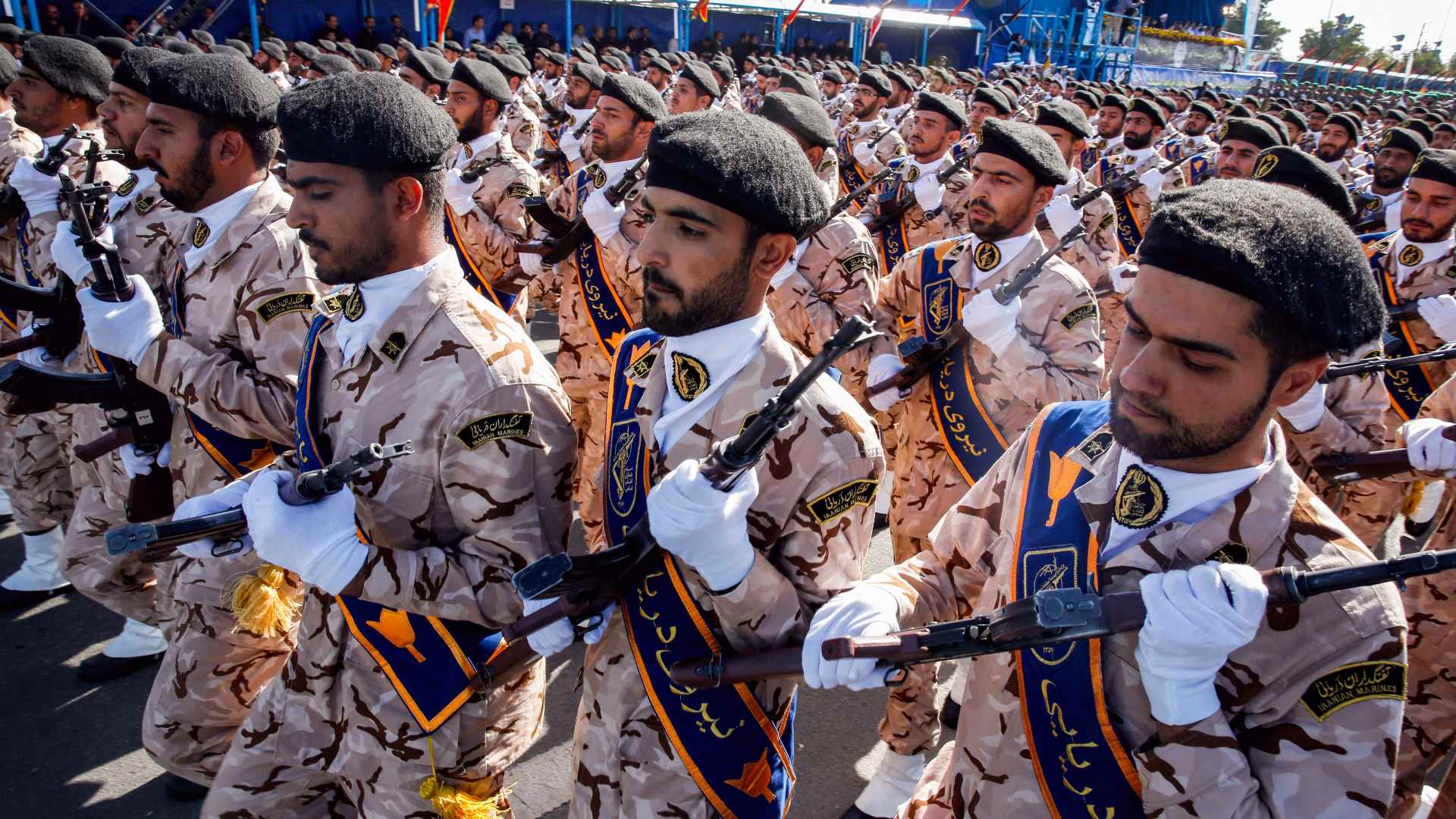
    TEHRAN – In a decisive statement released Saturday, Iran’s Supreme National Security Council (SNSC) has confirmed the country will maintain full control and regulatory oversight of all maritime traffic passing through the strategically critical Strait of Hormuz until a definitive end to regional hostilities and the establishment of a lasting regional peace.

    The official confirmation from Iran’s top security body comes only hours after the Khatam al-Anbiya Central Headquarters, Iran’s primary military command, ordered the resumption of strict Strait of Hormuz controls, citing the unbroken implementation of a U.S. naval blockade targeting Iranian commercial and maritime activity.

    Under the new control framework laid out by the SNSC, Iran will manage all transits through the strait by mandating pre-submission of vessel identification and cargo information, requiring official passage permits for all ships, collecting fees for the provision of regional security protections and environmental monitoring services, and directing all maritime movement in line with Iran’s domestic regulations and active wartime protocols.

    The statement clarified that any effort by adversarial forces to disrupt vessel transits, including the enforcement of a naval blockade that violates the existing two-week ceasefire agreement, will prompt Iran to abandon the conditional, limited reopening of the strait that was implemented during the truce.

    The SNSC further emphasized that a large share of military equipment for U.S. military bases across West Asia transits through the Strait of Hormuz, a flow of materiel that the council characterizes as a direct threat to both Iranian national security and broader stability across the Persian Gulf region.

    In a separate development included in the statement, the SNSC confirmed that Iran has received new diplomatic proposals from the United States, which were transmitted via Pakistani officials during a recent visit to Islamabad by Pakistan Army Chief Asim Munir. Iranian authorities are currently reviewing the terms of the new offers, the statement added, stressing that Iran’s negotiating team will refuse any concessions that compromise Iranian national interests and will defend the country’s sovereignty with full force.

    The current standoff over the Strait of Hormuz dates back to February 28, when Iran first tightened restrictions on transits through the waterway immediately after the United States and Israel launched joint airstrikes on Iranian territory. Tensions escalated further after preliminary peace talks held in Islamabad broke down, prompting the U.S. to formalize its naval blockade of vessels traveling to and from Iran.

    Just one day before Saturday’s announcement, Iranian Foreign Minister Seyed Abbas Araghchi had confirmed that the Strait of Hormuz would remain fully open to commercial commercial shipping for the duration of the two-week ceasefire between Iran and the U.S. that took effect on April 8, aligned with the broader truce agreement reached between Israeli and Lebanese forces. The reversal of that temporary opening comes as direct violations of the ceasefire terms by the U.S. have prompted Iran to reimpose full military and regulatory control over the strategic waterway, through which roughly 20% of the world’s daily oil supplies transit.