作者: admin

  • Thousands gather for Pope Leo’s first mass in Angola

    Thousands gather for Pope Leo’s first mass in Angola

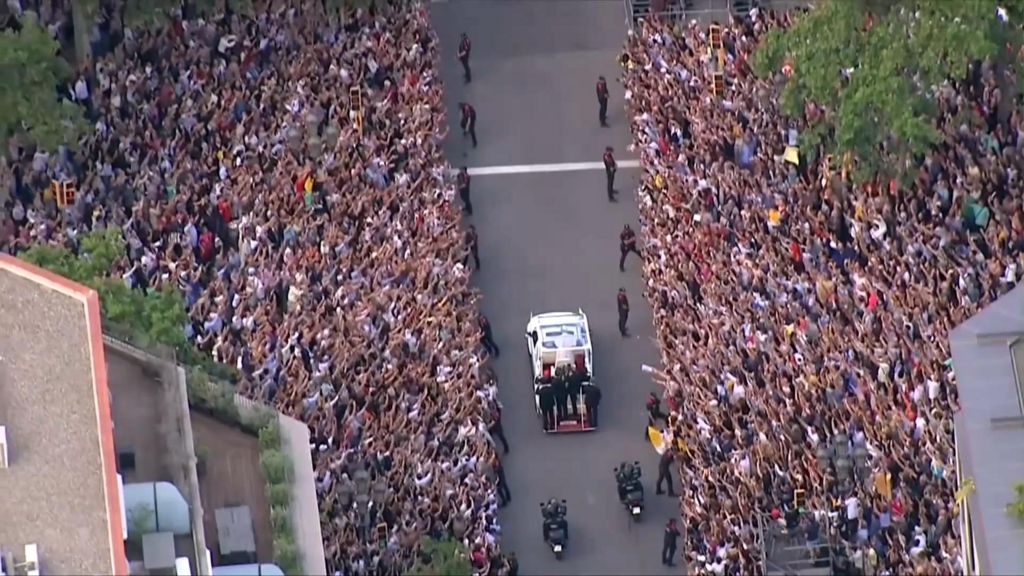
    On the second day of his high-stakes visit to Angola, a resource-rich southern African nation grappling with systemic widespread poverty, Pope Leo XIV led a massive open-air Holy Mass on Sunday that drew tens of thousands of pilgrims and hopeful attendees to the Kilamba district on the outskirts of the capital, Luanda.

    The pontiff arrived in the Portuguese-speaking country Saturday to kick off the third leg of his 11-day, four-nation tour across the African continent. Immediately after landing, he held a formal meeting with Angolan President Joao Lourenco and top government officials, where he delivered sharp criticism of systemic oppression, the deep human suffering driven by extreme poverty, and the unregulated exploitation of Angola’s abundant natural resources. These remarks aligned with the core theme of his entire tour, which has centered on repeated warnings about the scourge of transnational corruption and the continued plunder of African natural wealth by foreign and domestic elites.

    For many in the crowd, the Pope’s visit represented a rare opportunity to appeal for global attention to Angola’s paradox of plenty: a nation sitting on some of the continent’s largest reserves of crude oil and diamonds, yet marked by crippling income inequality. Thirty-two-year-old attendee Patricio Musanga, who wore a branded cap and T-shirt emblazoned with the Pope’s image, told reporters he had come seeking a message of encouragement for Angola’s struggling youth. Facing persistent mass unemployment, thousands of young Angolans flee every year to Western countries in search of better economic prospects. Musanga noted, “We are very rich in natural resources but … there is a glaring inequality between those who live well and the others,” adding that he hoped the Pope would reinforce that Angolans can build prosperous lives at home without leaving for opportunities abroad.

    World Bank data underscores this gap: despite its status as one of Africa’s top crude oil producers, roughly one-third of Angola’s 36.6 million residents live below the international poverty line. Father Pedro Chingandu, who traveled from Angola’s eastern Moxico Province to attend the mass, pointed to decades of conflict as a key driver of persistent inequality. “There’s a concentration of wealth in the hands of very few, and of course the war just aggravated the situation,” he told Agence France-Presse, calling for “real democracy and the redistribution of wealth and justice” across the country. Angola has yet to fully heal from the 27-year civil war that broke out immediately after the nation gained independence from Portugal in 1975, only ending in 2002.

    Following the Kilamba mass, Pope Leo is scheduled to travel 110 kilometers by helicopter to Muxima, Angola’s most sacred Catholic pilgrimage site. The small river town is home to a 300-year-old church that overlooks the Kwanza River, once a major transit route for enslaved Africans trafficked to the Americas. Built by Portuguese colonial settlers to baptize enslaved people before they were shipped across the Atlantic, the church houses the beloved statue of the Virgin Mary known locally as “Mama Muxima,” which draws two million pilgrims annually. Large crowds are expected to greet the pontiff during his stop at the historic slave-route shrine.

    The Angolan government has drawn criticism for its multi-million-euro infrastructure project to build a new basilica, residential housing, and expanded public services in Muxima ahead of the Pope’s visit, with opponents questioning the government’s spending priorities at a time when widespread poverty persists across the country. Economic frustration already boiled over into public unrest last July, when a three-day looting spree across Luanda and other urban centers left roughly 30 people dead, many killed during what critics called a heavy-handed police crackdown. Political analysts have framed the unrest as a clear signal of widespread public dissatisfaction with the ruling socialist MPLA party, which has held uninterrupted control of the Angolan government since independence in 1975.

    In comments to reporters on his flight to Angola, the Pope, who was elected to the papacy one year ago, opened up about a recent public dispute that has overshadowed much of his African tour. He expressed regret over his public war of words with U.S. President Donald Trump, who has attacked the Pope as “weak” after Leo called for an immediate ceasefire to end the ongoing war in the Middle East. “It is not in my interest at all” to publicly debate the U.S. leader, the Pope affirmed.

    After wrapping up his engagements in Angola, Pope Leo will travel to Equatorial Guinea for the final stop of the 18,000-kilometer cross-continental tour, concluding a journey that has centered the needs of African nations and the urgent need for equitable global development.

  • UAE investors view China as an attractive market

    UAE investors view China as an attractive market

    At a bilateral China-UAE business promotion convened in Beijing this week, senior business leaders and industry experts from the United Arab Emirates have publicly affirmed their enduring confidence in China’s market, framing the world’s second-largest economy as an increasingly attractive hub for cross-border capital.

    The delegation of UAE investors highlighted three core strengths that set China apart for foreign capital: a stable, predictable regulatory framework that delivers a safe and reliable operating environment for overseas firms, fast-growing world-leading high-tech industrial ecosystems that drive new growth opportunities, and a deep pool of skilled, professional talent across key sectors from advanced manufacturing to digital innovation.

    The remarks come amid growing bilateral economic ties between China and the UAE, with two-way trade and cross-border investment flows hitting new records in recent years. For UAE investors, expanding exposure to China’s market is not just a short-term opportunity, but a long-term strategic priority that aligns with both global diversification goals and China’s ongoing opening-up to foreign business.

  • Watch: Runners v robots at China half marathon

    Watch: Runners v robots at China half marathon

    In a groundbreaking clash between human athleticism and artificial engineering, Sunday’s half marathon in Beijing delivered a stunning result that turned heads across the global sports and technology communities: a robotic competitor outperformed all its human runners, finishing far ahead of the pack to claim a historic victory.

    The unusual race, which pitted elite and amateur human runners against a fleet of advanced robotic entrants, marked one of the first public head-to-head competitions between man and machine in a mainstream long-distance running event. The event organizers designed the matchup to showcase advancements in robotics and mobility technology, while also creating a one-of-a-kind spectacle for spectators gathered along the race route.

    By the final kilometer of the 21.1-kilometer course, the top-performing robot had already opened an insurmountable lead over the nearest human contender. Crossing the finish line well ahead of the entire human field, the winning machine cemented its place as the unlikely champion of the day, leaving even the fastest human rivals trailing far in its wake.

    The event has sparked new conversations about the rapid progress of robotic engineering, and how automated systems are increasingly crossing into domains long dominated by human physical performance. While many in attendance viewed the matchup as a lighthearted exhibition, the outcome also highlights just how far mobility technology has advanced in recent years, opening new questions about future intersections of sports, technology and human competition.

  • Step into thousand-year painting: Spring in Xi’an

    Step into thousand-year painting: Spring in Xi’an

    More than a millennium ago, one of China’s most celebrated Tang Dynasty court painters captured a fleeting moment of spring grace that still resonates with visitors to modern-day Xi’an, the ancient imperial capital once known as Chang’an.

    In his iconic work *Lady Guoguo’s Spring Outing*, Zhang Xuan immortalized a traditional Shangsi Festival gathering – a celebration held on the third day of the third lunar month, when ancient Chinese would gather by waterways to mark the arrival of warm weather and wash away winter’s stagnant energy. The painting perfectly matches the soft, vivid mood of Tang poet Du Fu’s famous lines: “The weather’s fine in the third moon on the third day, by riverside so many beauties in array.” In Zhang’s brushstrokes, elegant noblewomen from the Tang imperial court drift along the banks of Qujiang Pool, their flowing silk robes catching the spring breeze as they admire blooming foliage and glinting water.

    Centuries have passed since that scene was painted, and dynastic eras have risen and fallen, but Qujiang Pool’s springtime magic has not faded. Today, the site is protected as Qujiang Pool Heritage Park in Xi’an, the capital of China’s northwestern Shaanxi Province. Updated April 19, 2026, this report explores how the park preserves the quiet elegance of the Tang-era landscape while opening it up to modern visitors. Where noble women once strolled, people from across the country now wander tree-lined paths, pause to take in the reflective waters of the pool, and soak in the same soft spring sunlight that warmed the faces of Tang Dynasty visitors a thousand years before. Far from being a static relic of the past, the park breathes new life into the ancient poetic vision, turning a thousand-year-old painting into a tangible, immersive experience that invites every guest to step into history and embrace a timeless spring journey.

  • Shocking footage of shooting at The Men’s Gallery strip club shared online

    Shocking footage of shooting at The Men’s Gallery strip club shared online

    Newly released dashcam footage has laid bare the terrifying moments of a recent drive-by shooting outside a popular Melbourne strip club, capturing the shooter’s actions and the rapid, life-saving reaction of an on-duty security guard.

    The chilling clip circulated online Friday via gang-focused media outlet Outlaw Media, emerging just hours after the incident unfolded around 4:10 a.m. at Men’s Gallery, a long-standing adult entertainment venue located on Melbourne’s Lonsdale Street. In the footage, a hooded, gloved suspect positioned in the passenger seat of a moving vehicle can be seen firing a silver handgun just meters from the club’s front entrance. Spotting the incoming threat almost instantly, the security guard posted at the doorway sprints away to take cover, narrowly avoiding any harm.

    Official statements from Victoria Police confirmed that no people suffered physical injuries in the attack. Authorities also confirmed that the shot originated from a dark-colored vehicle, fired directly toward the licensed premises. In the wake of the shooting, law enforcement has issued a public call for any witnesses or members of the public with relevant security footage or information to come forward and contact Crime Stoppers to assist with the investigation.

    What makes this incident particularly alarming for investigators is its timing: the shooting comes only days after the same venue was targeted in a failed arson attack around 5:45 a.m. on April 14. Detectives from Victoria Police’s Arson and Explosive Squad are currently probing whether this shooting is connected to that attempted arson, as well as a recent spike in suspicious fires across licensed hospitality venues across Melbourne over the past week.

    Speaking to reporters Friday, Detective Inspector Chris Murray noted that at least seven separate arson attacks have hit bars, restaurants, and clubs in recent days, and the underlying motive for the wave of violence remains unclear. While authorities are actively investigating potential connections between all the incidents, Murray confirmed that no concrete links have been confirmed to date. Venue owners have been fully cooperative with investigators, he added, and none have been able to explain why their properties have been targeted.

    Murray told reporters that police suspect the attacks are being organized by third parties who hire inexperienced young people to carry out the violent acts. “What we suspect is these jobs are being tasked out to anyone … these young kids are being used as cannon fodder,” he said.

    So far, police have made a small number of arrests connected to two of the suspicious fires. Investigations have revealed that the young males accused of carrying out those attacks were paid only a few hundred Australian dollars to commit the crimes, Murray said.

    In a public appeal for community assistance, Murray urged residents and business owners to report any suspicious activity immediately to Crime Stoppers. Specifically, he called attention to out-of-character late-night activity: “Call Crime Stoppers if you see something unusual, and when I say ‘something unusual’ … we see young males get out of vehicles in possession of jerry cans at 3am in the morning, now if you see that; obviously that’s something we’re interested in.”

  • Revealed: How well is your state or territory responding to the illicit tobacco crisis?

    Revealed: How well is your state or territory responding to the illicit tobacco crisis?

    Australia’s fragmented response to the growing illicit tobacco trade has been laid bare in a new performance ranking from the Australian Council on Smoking & Health (ACOSH), which identifies two front-running jurisdictions leading the fight while calling out two laggard regions as drastically off pace.

    The ACOSH Illicit Tobacco Ladder, published this week, evaluates every Australian state and territory across three core metrics: legislative frameworks, law enforcement operations, and public health interventions. The ranking comes amid rising concerns that the unregulated illicit tobacco industry has grown increasingly violent, with organized criminal networks dominating the trade and endangering communities across the country.

    At the top of the ranking, Queensland secured first place, followed closely by South Australia in second. ACOSH credits both jurisdictions for their unwavering commitment to strong, proactive enforcement. Queensland, the report notes, stands out for its rapid, preventative responses to illegal trade, backed by the nation’s most robust enforcement infrastructure and a large on-the-ground workforce. South Australia, meanwhile, earns praise for its strict bans on online tobacco sales, consistent strong enforcement, and clear, dedicated leadership from state ministers.

    ACOSH Chief Executive Laura Hunter explained that the ranking was developed to highlight successful strategies that other jurisdictions can replicate. “We created this ladder to demonstrate exactly how well governments across the country are controlling illicit supply, upholding the law, and applying meaningful penalties that deter criminal activity,” Hunter said. “Queensland and South Australia have incredible political buy-in: leaders are committed to tackling this issue, they are investing funding and resources into on-the-ground enforcement, and we are seeing illegal operations shut down every single day. That’s the model we want other regions to adopt.”

    New South Wales claimed third place, but the ranking makes clear there is a significant gap between NSW and the two leaders — a gap large enough to “park a few semi-trailers,” as the report puts it. The state needs to substantially boost its performance by increasing enforcement resourcing, introducing harsher penalties for property landlords who enable illegal trade, and implementing fines large enough to act as a real deterrent, the report found. Hunter added that while NSW has made some progress, namely introducing lease termination powers that protect landlords, it still lacks the complementary penalties for property owners who knowingly allow illegal tobacco sales from their premises.

    University of Sydney public health professor Becky Freeman, a leading researcher with more than 25 years of experience in tobacco and vaping control, said the ranking exposes a fundamental flaw in Australia’s current approach: a patchwork of inconsistent policies that has allowed the national crisis to spiral. “Some states have gotten on top of this, or are actively working to do so, while others are dragging their feet even with clear successful examples to copy,” Freeman said. Speaking from her base in NSW, she noted that the state only launched its tobacco licensing system in 2025, years after early adopters including Queensland, Tasmania, and Western Australia.

    Freeman also pushed back on a common misperception about the illicit tobacco trade: that it operates as an invisible “black market.” In reality, she explained, the trade is openly conducted at legitimate retail locations across the country, with retailers selling untaxed illegal products as a core part of their business model, often without fear of consequence. “It’s an in-your-face market, not a hidden black market,” she said. “Retailers don’t even feel like they’re doing something wrong or working with criminals anymore.”

    The professor also dismissed recent proposals from Federal Liberal MP Mary Aldred, who argued cutting the national fuel excise would reduce profit incentives for criminal networks and ease pressure on law enforcement. Freeman called the idea overly simplistic and harmful to public health. “It’s politically attractive to think that if legal cigarettes are expensive, lowering taxes will undercut the illicit trade. But that logic ignores basic reality: criminal networks can still undercut any legal price point, they haven’t hit rock bottom yet. Cutting tobacco costs across the board will only drive up smoking rates, which is the opposite of what public health policy should achieve,” she said.

    At the bottom of the ranking, the Australian Capital Territory (ACT) and Northern Territory placed seventh and eighth respectively, with both labeled “totally off pace” compared to other regions. The ACT, the report says, “talks a good game but isn’t playing one,” citing a near-total lack of meaningful penalties and very few successful closure orders for illegal operations. The Northern Territory, meanwhile, has not passed any new legislative changes to address the crisis and needs to make massive new investments in enforcement resources, the report found.

    Hunter outlined the core failures that have allowed the illicit tobacco crisis to grow in underperforming jurisdictions: weak licensing frameworks, an overabundance of unregulated tobacco retailers, insufficient on-the-ground enforcement, and inconsistent, toothless penalties that do nothing to deter illegal operators.

    Federal Assistant Customs Minister Julian Hill welcomed the independent ranking, noting that while the scrutiny may be uncomfortable for some state governments, the ACOSH scorecard is a critical tool to drive improvement. “Combined efforts by Commonwealth, state and territory agencies are already delivering strong results: we’re raising the stakes for criminals, cutting into their profits, and pushing up the price of illegal tobacco,” Hill said. “Governments must never surrender public health policy to organized crime, or condemn the next generation of Australians to the devastating harm of tobacco addiction, chronic disease and early death.”

    As of 2025, Australia has roughly 40,000 retail outlets selling tobacco products, even though only 10% of Australian adults report smoking. Australian Border Force data shows the agency seized a record volume of illicit tobacco and vapes in the 2024-25 financial year, averaging around 120 illegal shipments detected every day.

  • Bodies of 50 infants dumped at Trinidad graveyard

    Bodies of 50 infants dumped at Trinidad graveyard

    Authorities in Trinidad and Tobago have launched a full criminal investigation after a grim discovery at a rural graveyard: the remains of at least 50 infants and six adults were found dumped in an unmarked site, local police confirmed this week.

    The mass grave was uncovered in Cumuto, a small town located roughly 40 kilometers southeast of Port of Spain, the capital of the Caribbean twin-island nation, according to an official statement from the Trinidad and Tobago Police Service (TTPS). Preliminary investigative work has pointed to potential unlawful disposal of unclaimed corpses as a leading line of inquiry, police added.

    As of the latest update, investigators have not confirmed whether the discovery is connected to the country’s persistent gang violence crisis, which has left Trinidad and Tobago with one of the highest homicide rates across Latin America and the Caribbean. Of the six adult remains recovered, five bore identification tags, and two of the bodies showed clear evidence of prior post-mortem examinations, police detailed in their statement.

    Allister Guevarro, the country’s police commissioner, described the find as deeply disturbing and pledged full accountability for any party found responsible. “Any individual or institution found to have violated that duty will be held fully accountable,” Guevarro said, referencing the legal and ethical obligation to handle human remains with proper dignity and protocol.

    The discovery comes amid a prolonged state of emergency that was first enacted on March 2 this year and has since been renewed, granting expanded search and arrest powers to police to address the country’s ongoing security challenges. Since the state of emergency was implemented, the U.S. Department of State has issued multiple updated travel advisories for Trinidad and Tobago, warning U.S. travelers of elevated risks from both widespread crime and potential terrorism activity.

    The advisory notes that while violent crime has fallen significantly across the country since 2024, driven by enhanced security operations launched during earlier states of emergency, criminal activity remains a pervasive national challenge that visitors and residents alike must navigate.

  • Trump says US negotiators will be in Pakistan on Monday for talks with Iran

    Trump says US negotiators will be in Pakistan on Monday for talks with Iran

    Eight weeks into open conflict between the United States, Israel and Iran, fragile hopes for diplomatic de-escalation have emerged alongside fresh threats of renewed violence, as Washington prepares to send a negotiation team to Islamabad for new talks with Iranian officials just days before a bilateral ceasefire is set to expire. The planned meeting, announced by former U.S. President Donald Trump on social media, comes as tensions remain locked over the strategic Strait of Hormuz, where Iran has blocked all commercial transits in response to a ongoing U.S. naval blockade of Iranian ports, a standoff that threatens to roil global energy markets and drag the entire Middle East back into full-scale war.

    The pathway to negotiations was laid out over the weekend, when Pakistani mediators confirmed that advance U.S. security teams have already arrived in the Pakistani capital to finalize arrangements for the second round of face-to-face talks. Iran’s top leadership confirmed Saturday that it had received new U.S. proposals via Pakistani military envoys and remained open to diplomatic dialogue, even as it held firm to its position that the strait will remain closed to all commercial traffic for as long as the U.S. blockade cuts off Iran’s own access to global shipping.

    “It is impossible for others to pass through the Strait of Hormuz while we cannot,” Iranian Parliament Speaker and chief nuclear negotiator Mohammed Bagher Qalibaf stated in remarks broadcast on Iranian state television Saturday evening. In line with that position, Iran reversed an earlier announcement that it would reopen the waterway following the start of a 10-day truce between Israel and Iran-backed Hezbollah in Lebanon, after Trump reaffirmed that the U.S. blockade would remain in full effect until a comprehensive final deal is reached with Tehran.

    After a brief resumption of transit attempts Saturday, two India-flagged merchant vessels came under fire while attempting to cross the strait, forcing both to turn back and leaving the waterway at a complete standstill, just as it was before the ceasefire took hold. The UK Maritime Trade Operations, which monitors Gulf commercial shipping, confirmed that Revolutionary Guard gunboats fired on an oil tanker, and a projectile struck a nearby container vessel, damaging cargo. India’s foreign ministry responded by summoning Iran’s ambassador to New Delhi to protest the attack, which came only days after Iran had allowed multiple India-bound ships to pass through the strait.

    In his announcement of the upcoming talks, Trump doubled down on pressure against Tehran, accusing Iran of violating the existing ceasefire with the attacks on commercial shipping and issuing an extreme threat to Iran’s civilian infrastructure if Tehran rejects the U.S.’s final proposal. “If they don’t [take the deal], the United States is going to knock out every single Power Plant, and every single Bridge, in Iran,” Trump wrote. He did not name which U.S. officials would travel to Islamabad for the talks, and the White House and the office of Vice President JD Vance, who led the first round of U.S.-Iran negotiations, have not responded to requests for comment as of Sunday morning.

    Iranian officials have pushed back against U.S. pressure, framing the American blockade as a reckless violation of the existing ceasefire that puts the entire diplomatic process at risk. “Americans are risking the international community, risking the global economy through these, I can say, miscalculations,” Iranian Deputy Foreign Minister Saeed Khatibzadeh told the Associated Press, adding that the U.S. is “risking the whole ceasefire package.”

    Iran’s Supreme National Security Council, which has operated as the country’s top de facto decision-making body throughout the conflict, reiterated Saturday that Iran will maintain full control over all transits through the strait until the U.S. blockade is lifted and the war is formally ended. The council also rejected a core U.S. proposal that would require Tehran to hand over its existing stockpile of 440 kilograms of enriched uranium, with Khatibzadeh calling the demand “a nonstarter” while noting that Iran remains open to addressing international concerns over its nuclear program through diplomacy.

    Qalibaf emphasized Saturday that Iran remains committed to the diplomatic process despite the wide gap between the two sides’ positions and deep-seated distrust of U.S. intentions. “There will be no retreat in the field of diplomacy,” he said, adding that Iran continues to seek a peaceful resolution to the conflict.

    The conflict between the U.S., Israel and Iran began on February 28, when military operations were launched amid ongoing negotiations over Iran’s nuclear program. For Tehran, the closure of the Strait of Hormuz — through which roughly 20% of the world’s daily oil trade passes — has emerged as its most powerful leverage point, capable of disrupting the global economy and raising political pressure on the U.S. administration. For Washington, the naval blockade serves to cut off Iran’s key export revenue, squeezing its already fragile economy to force concessions at the negotiating table.

    As of the weekend, the ongoing conflict has killed more than 3,000 people in Iran, over 2,290 in Lebanon, 23 in Israel, and more than a dozen across Gulf Arab states. Fifteen Israeli soldiers deployed to Lebanon and 13 U.S. service members stationed across the Middle East have also been killed. Pakistani Foreign Minister Ishaq Dar confirmed Saturday that his government is working aggressively to bridge remaining gaps between the two sides, with mediation efforts already in their final stages ahead of the planned talks.

    It remains unclear whether either side has shifted its core positions on the key unresolved issues that derailed the first round of negotiations, including the future of Iran’s nuclear enrichment program, Iran’s support for regional militant proxies, and long-term sovereignty over the Strait of Hormuz. With the existing ceasefire set to expire later this week, the outcome of the Islamabad talks will likely determine whether the region can step back from the brink of full-scale war or slip back into open conflict.

  • Hezbollah leader vows to retaliate against Israeli ceasefire violations, seeks fresh start with Lebanese govt

    Hezbollah leader vows to retaliate against Israeli ceasefire violations, seeks fresh start with Lebanese govt

    BEIRUT, April 19, 2026 – Days after a 10-day ceasefire between Israel and Hezbollah went into effect, the group’s leader Naim Qassem has issued a firm warning that any Israeli violations of the truce in southern Lebanon will be met with immediate retaliation, while also opening the door to a new era of cooperation with Lebanon’s national government.

    The ceasefire, brokered following an announcement by former U.S. President Donald Trump, took effect at 2100 GMT on Thursday, bringing a temporary halt to weeks of open hostilities between the two sides. But within 48 hours of the truce coming into force, reports emerged of multiple actions by the Israel Defense Forces (IDF) that raise questions about Israel’s commitment to the pause in fighting.

    In a public statement released Saturday, Qassem stressed that a ceasefire cannot be a one-sided arrangement. “There is no ceasefire from one side only,” he said, noting that Hezbollah’s fighters stand ready to “respond to violations of aggression accordingly.”

    Qassem laid out five non-negotiable core conditions for a durable long-term peace, starting with a permanent end to all hostilities across Lebanese territory. He also called for a full withdrawal of Israeli forces from all occupied areas of southern Lebanon, the release of all detainees held by Israel, the safe return of thousands of displaced Lebanese residents who fled their homes amid the recent escalation, and large-scale reconstruction of damaged infrastructure backed by Arab and international partners. Rejecting claims that Hezbollah had been weakened by the conflict, Qassem reaffirmed the group’s commitment to advancing Lebanon’s full liberation and national sovereignty.

    On the domestic front, Qassem struck a conciliatory tone, saying Hezbollah is ready to turn “a new page” in its relationship with Lebanon’s official state institutions. He stressed the group’s willingness to work alongside the Lebanese government to reinforce national unity and protect the country’s territorial independence amid ongoing external pressure.

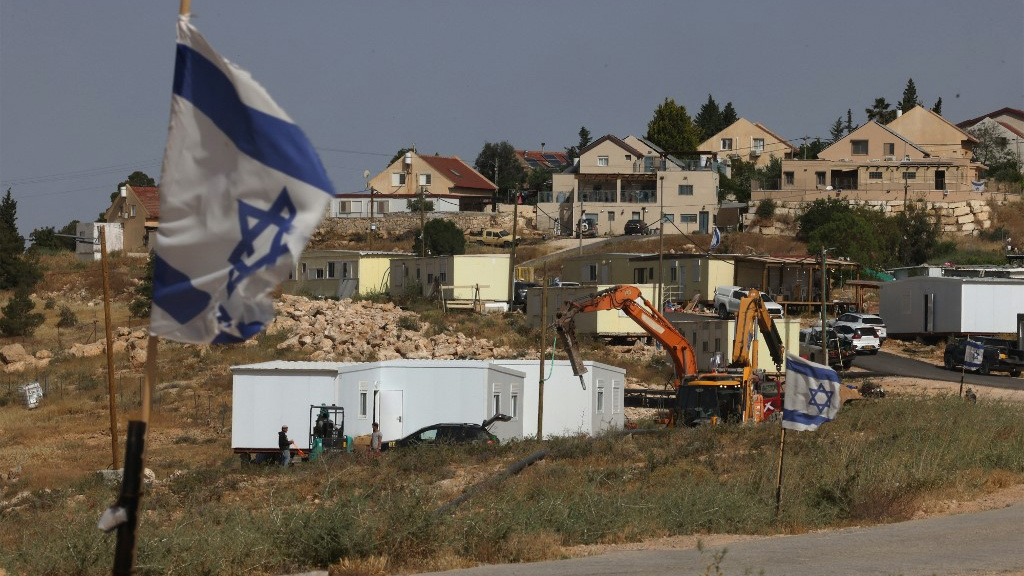
    Even as diplomatic efforts to cement the ceasefire move forward, the IDF confirmed Saturday that it had carried out airstrikes on militants it said approached the “Yellow Line,” the de facto border marking the northern edge of an Israeli-declared “security zone” inside southern Lebanon. Beyond the strike, local eyewitnesses and a Lebanese security source confirmed Saturday that Israeli engineering units, protected by a Merkava main battle tank, had begun earthmoving works to build a new permanent military outpost on Rbaa al-Teben hill, roughly 1.5 kilometers inside Lebanese territory from the official demarcation line with Israel. The site, which includes existing olive groves and vineyards owned by local Lebanese farmers, is located southwest of the southern Lebanese border village of Kfarchouba. Works include ground leveling, excavation, and construction of defensive earthen berms, with the new outpost set to be administratively linked to Israel’s existing deployment near Kfarchouba.

    The new construction comes amid widespread concerns in Lebanon that Israel is using the 10-day ceasefire to solidify its territorial gains inside southern Lebanon rather than withdrawing, as called for in preliminary truce discussions. The escalation of Israeli infrastructure work along the border has already heightened tensions, with Hezbollah’s warning marking the first formal response to the reported breaches since the ceasefire took effect.

  • Iran’s IRGC says Strait of Hormuz blocked, demands end to US naval blockade

    Iran’s IRGC says Strait of Hormuz blocked, demands end to US naval blockade

    Escalating regional tensions have boiled over into a new standoff in one of the world’s most critical maritime chokepoints, as Iran’s Islamic Revolution Guards Corps (IRGC) Navy announced it has blocked all passage through the Strait of Hormuz, with the closure remaining in place until the United States withdraws its ongoing naval blockade of Iranian waters. The shutdown went into effect Saturday evening, the IRGC confirmed in an official statement published by its media wing Sepah News.

    The action came in direct response to what the IRGC calls a clear breach of a two-week ceasefire agreement that entered force on April 8. Under the terms of that truce, the U.S. was expected to end its naval blockade targeting Iranian commercial vessels and national ports. That commitment never materialized, leaving Iran to follow through on its warnings of retaliatory action, the statement added.

    In its advisory to global maritime operators, the IRGC urged all vessel crews and shipowners to monitor official updates through its dedicated communication channel and VHF Channel 16, the global standard for maritime safety and emergency communications. The IRGC also dismissed any statements from U.S. President Donald Trump regarding navigation rights in the strait and surrounding Gulf waters as entirely lacking credibility. The corps issued a stark warning: all vessels currently anchored in the Persian Gulf or Gulf of Oman are prohibited from moving, and any ship attempting to approach the blocked strait will be considered to be collaborating with the enemy, and will be met with defensive targeting.

    This latest escalation builds on months of growing friction over control of the strategic waterway. Iran first ramped up access controls on February 28, shortly after the United States and Israel carried out joint airstrikes on Iranian sovereign territory. At that time, Tehran banned any passage for vessels owned by or affiliated with the two countries. Following the collapse of bilateral peace talks hosted in Islamabad, Pakistan, Washington responded by imposing its own naval blockade on the strait.

    Just days before the closure, Iranian Foreign Minister Seyed Abbas Araghchi reaffirmed that the strait would stay fully open to non-military commercial shipping for the duration of the ceasefire with the U.S., aligning Iran’s position with the truce agreement reached between Lebanon and Israeli forces. But the U.S. refused to match Iran’s public commitment. On Friday, President Trump confirmed that the American naval blockade would remain in full effect, noting the restriction would only be lifted once Washington secured a new comprehensive deal with Tehran. One day later, on Saturday, Trump doubled down, accusing Iran of attempting to use the strategic strait as leverage for blackmail against the United States.

    The Strait of Hormuz remains the most critical oil transit chokepoint in the world, with roughly 20% of the globe’s daily oil consumption passing through the narrow waterway. Any prolonged closure is expected to send shockwaves through global energy markets and raise the risk of open military conflict between Iran and the United States.