作者: admin

  • Macao university hosts intl conference on regenerative medicine

    Macao university hosts intl conference on regenerative medicine

    The 5th International Conference on Regenerative Medicine for the Guangdong-Hong Kong-Macao Greater Bay Area has concluded its 2026 iteration, co-hosted across Macao and the neighboring Guangdong province’s Hengqin New Area by the University of Macau (UM), the institution confirmed in an official media briefing this Monday, April 21. Drawing close to 400 attendees spanning the global scientific and healthcare community, the gathering brought together top-tier academic researchers, practicing clinical specialists, biotech industry leaders, early-career scientists and graduate students from dozens of countries to exchange cutting-edge insights in the fast-growing field.

    Centered around the core theme “Decoding Pluripotency and Reshaping Therapy,” this year’s conference centered its discussions and collaborative workshops on three key focus areas: advances in pluripotent stem cell research, breakthrough innovations in regenerative medicine, and the growing importance of cross-sector interdisciplinary collaboration to move the field forward. Unlike many single-venue academic events, the dual-site format across Macao and Hengqin was designed to reflect the integrated development agenda of the Greater Bay Area, facilitating cross-jurisdictional exchange of knowledge, talent and innovative resources.

    In his opening remarks at the event, UM Vice-Rector Ge Wei emphasized that the annual conference has evolved into a foundational regional platform for driving research progress and innovation in regenerative medicine across the Greater Bay Area. He noted that the successful organization of the cross-border conference serves as a tangible example of how the Greater Bay Area is advancing deep integration, enabling the free dynamic flow of talented researchers, groundbreaking ideas, and innovative development resources across its constituent regions.

    Xu Renhe, Associate Dean of UM’s Faculty of Health Sciences and co-chair of the 2026 conference, highlighted the event’s unique strategic focus: closing the long-standing gap between foundational laboratory research and real-world clinical use. By creating dedicated spaces for conversation between basic scientists and clinical practitioners, the conference aims to speed up the translation of promising early-stage research outcomes into life-changing clinical therapies and accessible medical applications that can benefit patients globally.

  • Soccer fan Orbán’s election loss could prompt rethink of Hungary’s sports ambitions

    Soccer fan Orbán’s election loss could prompt rethink of Hungary’s sports ambitions

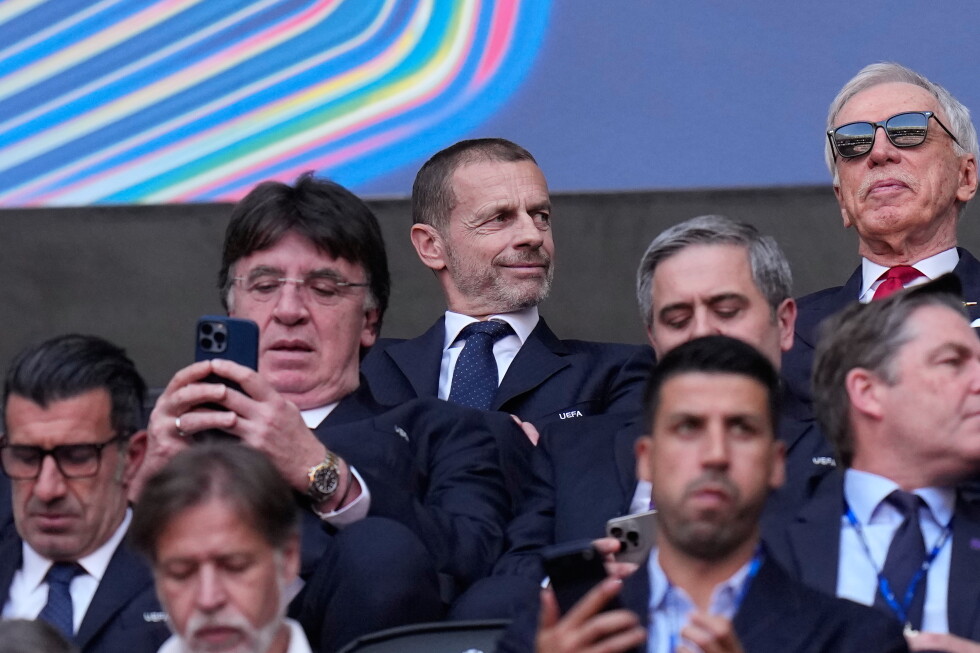
    For years, Hungarian authoritarian populist leader Viktor Orbán—an avid lifelong soccer fan and a self-identified sports enthusiast who built a large part of his national legacy around hosting elite global sporting events—has been sidelined by a stunning heavy defeat in the country’s recent general election. His unexpected exit from power hands the spotlight to incoming Prime Minister Péter Magyar ahead of next month’s UEFA Champions League final, the crown jewel of European club soccer, set to take place in Budapest’s state-of-the-art Puskás Aréna on May 31. This political transition has sparked new uncertainty around the future of Orbán’s ambitious pipeline of elite sports initiatives, from upcoming track and swimming championships to a long-planned 2036 Olympic bid, and forces international sports governing bodies to adapt to a new government with sharply different priorities.

    Orbán, a former lower-league Hungarian soccer player who has held a permanent spot in the VIP boxes at Champions League finals and FIFA World Cups for decades, poured billions in public funds into constructing a network of new, world-class stadiums across Hungary over his 12 years in power. The Puskás Aréna, which will host this year’s Champions League final, was always meant to be the crowning glory of his sports-focused statecraft. “That was supposed to be the icing on the cake for Orbán and his regime. He’s been working very hard to get that final to Budapest and to Hungary,” explained Győző Molnár, a professor of sport sociology at the University of Worcester. If Magyar, leader of the victorious Tisza party, takes the high-profile official spot at the final originally reserved for Orbán, Molnár added, it will serve as a clear public signal of a full regime change in the country.

    For Orbán, elite international sporting events were never just about athletics: they served as a strategic counter to widespread criticism from the European Union over his government’s democratic backsliding, anti-LGBTQ+ policies, and opposition to EU support for war-torn Ukraine. By hosting major global tournaments, Orbán could frame international sports bodies’ willingness to partner with Hungary as a quiet endorsement of his rule, regardless of EU pushback. “These aren’t just sporting events for him. They were Orbán’s answer to, for instance, EU criticisms” that allowed him to argue “UEFA still trusts us with the biggest match,” Molnár noted. Still, not all of Orbán’s soccer ambitions panned out: despite tax breaks that encouraged allies to invest heavily in domestic Hungarian soccer clubs, the country’s national team has not qualified for a FIFA World Cup since 1986, a far cry from the legendary “Mighty Magyars” sides that finished as World Cup runners-up in 1938 and 1954.

    Beyond the Champions League final, Orbán’s administration locked in a full slate of upcoming elite events: the inaugural track and field Ultimate Championships, which boasts the sport’s richest ever prize purse, is set for September in Budapest, with the 2025 World Swimming Championships—Hungary’s third in a decade—following the next year. Budapest has also been preparing a bid for the 2036 Summer Olympics, and over the past decade, multiple global sports governing bodies, including World Aquatics, have relocated their headquarters from Switzerland to Budapest, incentivized by generous packages including 15 years of free office space, legal immunity for official acts, and full tax benefits.

    Since the election upset, however, questions have grown over whether the new Hungarian government will maintain Orbán’s focus on large-scale prestige sports projects. While Magyar has rejected opposition claims that he will cut overall sports funding, his Tisza party’s election platform marked a clear break from past policy, criticizing the Orbán administration for pouring public funds into overpriced stadiums and vanity projects while grassroots school and local sports programs have declined. Magyar has also pledged to end what he calls the systemic politicization of sports that flourished under Orbán, noting that “politics has become entrenched in the sports associations and the soccer clubs to a degree that we didn’t even see during socialism.”

    So far, no scheduled events have been canceled, but long-term policy priorities are expected to shift. The new government will likely be focused heavily on addressing ongoing cost of living crises, a pressing concern across much of Europe in the current volatile global economic climate. Complicating the 2036 Olympic bid further is the political landscape in Budapest: the city’s mayor is a liberal opponent of Orbán who has no close alignment with Magyar’s party, and plans to revisit the bid next year after an earlier Orbán-backed 2024 bid was withdrawn. The International Olympic Committee has declined to comment on domestic political developments or the status of the bid.

    International sports governing bodies have begun navigating the transition, with most reaffirming their commitment to upcoming events. World Athletics, which is preparing for September’s Ultimate Championships, stated that it continues to work closely with Hungarian partners to deliver a successful tournament. World Aquatics, which is scheduled to complete its relocation to Budapest by 2028, said it has a longstanding positive relationship with Hungary and “has no doubt that this relationship will continue to thrive under the new leadership of Péter Magyar, whom we congratulate on his recent victory as Prime Minister of Hungary.” UEFA, for its part, has said that planning for the Champions League final continues as scheduled, and declined to comment on whether it will extend invitations to both Orbán and Magyar for the match.

  • Middle East crises divide Europe with rising fuel costs and tensions over Israel policy

    Middle East crises divide Europe with rising fuel costs and tensions over Israel policy

    Top diplomatic leaders from across the European Union have convened in Luxembourg this week, with a newly shifted political landscape in Hungary raising hopes for unblocking stalled policy action on a range of pressing global and regional crises. The gathering comes on the heels of a landmark Hungarian election that ousted long-serving Prime Minister Viktor Orbán, a habitual obstructionist of coordinated EU action on issues from Ukraine support to Middle East sanctions, whose departure has already been cited as a potential catalyst for forward movement on long-blocked initiatives.

    On the agenda for the two-day meeting are a broad slate of urgent challenges: continuing military and diplomatic support for Ukraine in its defensive war against Russian invasion, countering ongoing Russian hybrid aggression across the bloc, and mitigating economic turbulence and energy market volatility amplified by the ongoing conflict in the Middle East involving Iran. But the most significant and divisive issue dominating early discussions is the bloc’s future policy toward Israel, as widespread unrest and escalating violence across Gaza, the occupied West Bank, and the Israeli-Lebanese border pushes member states to debate new pressure tactics against Prime Minister Benjamin Netanyahu’s government.

    The EU’s longstanding 2000 Association Agreement, which governs bilateral trade and cooperation with Israel, sits at the center of this debate. Three member states — Spain, Slovenia, and Ireland — have tabled a formal proposal to suspend the agreement in its entirety. Spanish Foreign Minister José Albares acknowledged that a full suspension is unlikely to secure the unanimous support required for EU policy action, but noted that a targeted partial suspension focused exclusively on trade provisions could command enough backing to move forward.

    “The European Union has to say today very clearly to Israel that a change is needed,” Albares told reporters ahead of the meeting. EU investigators have already documented clear indications that Israel has breached terms of the association agreement during its military campaign in Gaza, adding legal weight to calls for a policy shift.
    Irish Foreign Minister Helen McEntee argued that a suite of recent Israeli actions — including the expansion of illegal settlements in the occupied West Bank, the passage of legislation introducing the death penalty for some Palestinians, and escalating cross-border clashes with Hezbollah in Lebanon — leave the bloc with no choice but to ramp up pressure. “We need to act. We need to make sure that our fundamental values are protected. And we need to make sure that any agreement that we have with any other country that country is fulfilling and upholding their obligations,” McEntee said.
    Swedish Foreign Minister Maria Malmer Stenergard added that France and Sweden have put forward a separate, more targeted plan to restrict trade with entities operating out of Israeli settlements in the West Bank. The gathering also hosted Lebanese Prime Minister Nawaf Salam, who addressed delegates on the fragile ongoing ceasefire along the Lebanese-Israeli border, international efforts to disarm the Hezbollah militant group, and the urgent need for additional EU economic and security assistance for his conflict-battered nation. “Lebanon today needs its European partners more than ever,” Salam posted on social media platform X ahead of his address.
    EU foreign policy chief Kaja Kallas highlighted that Orbán’s recent election defeat at the hands of pro-European opposition leader Péter Magyar has cleared the way for progress on dozens of issues blocked by Hungarian vetoes in recent years. “A lot of issues … have been blocked” by Hungary, she told reporters. “We are reopening the discussions and hope that we get a positive result.”
    Beyond the Middle East, diplomats also focused heavily on the ongoing conflict involving Iran, where a temporary ceasefire between Tehran and Washington is set to expire just days after the Luxembourg meeting began. Kallas called for an immediate extension of the truce “until there is a diplomatic solution,” noting that “the ceasefire is very fragile, but diplomacy should have a chance.” German Foreign Minister Johann Wadephul urged Iranian leaders to accept ongoing diplomatic outreach, calling on Tehran to send negotiators to upcoming talks in Islamabad with U.S. Vice President JD Vance. “Iran should now take this outstretched hand in the interest of its own people,” Wadephul said.
    The ongoing conflict has disrupted global oil and gas markets, sending energy prices soaring and creating significant economic anxiety across the EU, which relies heavily on imported energy. While foreign ministers debated geopolitical strategy in Luxembourg, EU transportation ministers held a parallel video conference to address growing energy security concerns, after the head of the International Energy Agency warned that the bloc currently faces less than six weeks of remaining jet fuel supply.
    The current conflict, which has pitted Israel and the United States against Iran and allied militant groups across the region, has already claimed at least 3,375 lives in Iran, more than 2,290 in Lebanon, 23 in Israel, and more than a dozen across Gulf Arab states. Fifteen Israeli soldiers deployed in Lebanon and 13 U.S. service members operating across the region have also been killed in the fighting. The Luxembourg meeting follows a day after a major Palestinian peace conference in Brussels, which gathered representatives from 60 nations alongside Palestinian Prime Minister Mohamed Mustafa and Bulgarian diplomat Nikolay Mladenov, who leads the U.S.-backed Board of Peace established during the Trump administration. While most EU institutions are headquartered in Brussels, key bodies including the European Court of Justice remain based in Luxembourg, making the capital a regular host for high-level EU diplomatic gatherings.

  • In jab at Taiwan, China ramps up military support for Somalia

    In jab at Taiwan, China ramps up military support for Somalia

    In a notable departure from its longstanding low-profile, cautious engagement in Somalia, China has recently announced a significant expansion of military backing for Mogadishu’s ongoing counterterrorism campaign against al-Shabaab militants. The new commitment includes provision of military equipment, specialized training for Somali security forces, and deeper bilateral security collaboration, a shift analyzed in depth by Brendon J. Cannon, an associate professor at Khalifa University whose research focuses on external power engagement in sub-Saharan Africa.

    Cannon breaks down China’s interests in Somalia and the broader Horn of Africa into two interconnected core strands, the first rooted in broad geopolitical strategy and the second tied specifically to Beijing’s priorities around Somalia and Somaliland. Geopolitically, the Horn of Africa has long held massive strategic value for China as a critical crossroads connecting the Indian Ocean, Red Sea, and Mediterranean. This strategic importance has already driven China to establish a permanent military base in Djibouti and roll out extensive infrastructure investments across neighboring regional states including Ethiopia, Kenya, Uganda, and South Sudan, all aimed at expanding Beijing’s political influence and embedding it within existing regional security frameworks.

    The second, Somalia-specific driver of China’s growing engagement centers on its long-running diplomatic campaign over Taiwan. Beijing claims the self-governing island of Taiwan as an inalienable part of its territory, and has viewed with deep concern the formal diplomatic ties established between de facto independent Somaliland and Taipei in 2020. Somaliland withdrew from its voluntary union with Somalia in 1991 and has since pursued international recognition, making its diplomatic alignment with Taiwan a direct challenge to Beijing’s “One China” policy. Today, Somaliland and the southern African kingdom of Eswatini are the only two African entities that maintain formal diplomatic relations with Taiwan, putting them squarely in Beijing’s diplomatic crosshairs.

    To counter Somaliland’s recognition of Taiwan, China has aligned itself closely with the federal government in Mogadishu, which also rejects Somaliland’s independence claim and asserts territorial control over the entire region. Beyond diplomatic backing and development aid, China has now added counterterrorism-focused security and military cooperation to its support package for Mogadishu. Even with this expanded security engagement, however, China’s overall economic footprint in Somalia remains modest: unlike neighboring Ethiopia, which has received billions in Belt and Road Initiative funding for railways, ports, and airports, Somalia has not attracted large-scale Chinese infrastructure investment. This makes Chinese engagement in Somalia a fundamentally selective, strategic project rather than a transformative economic undertaking, Cannon argues.

    Tensions escalated further in late 2025, when Israel became the first UN member state to formally recognize Somaliland’s independence, with U.S. policymakers also signaling growing support for Somaliland’s bid for international standing. In response, Beijing doubled down on its public affirmation of Somalia’s sovereignty and territorial integrity. This alignment has created a natural convergence of interests between China and the Mogadishu government: both have publicly reaffirmed their commitments to “One China” and “One Somalia” respectively, uniting their opposition to the self-determination claims of Taiwan and Somaliland. Unlike Somalia’s federal government, which has failed to establish effective sovereign control over large swathes of its territory and struggles to field a capable national military against al-Shabaab, Somaliland has built a relatively functional security apparatus and enjoys broad domestic political legitimacy for its independent government.

    Cannon draws a clear distinction between China’s approach to the region and that of other external actors. Western powers have historically prioritized direct counterterrorism operations, governance overhauls, and security sector training in Somalia. Meanwhile, regional actors such as Turkey and the United Arab Emirates have combined military engagement with large-scale infrastructure investment and commercial activity, often becoming deeply entangled in Somalia’s internal clan and political dynamics. China, by contrast, has centered its engagement on propping up the Mogadishu regime to reinforce Somalia’s claimed territorial integrity, with its assistance tied closely to diplomatic objectives rather than overt military expansion or commercial gain. Across much of Africa, China has prioritized building technological and institutional dependency in sectors ranging from telecommunications to surveillance, a pattern it is now replicating in Somalia.

    Looking ahead, Cannon warns that deeper Chinese involvement carries significant risks for the already fragile Horn of Africa region, adding a new layer of great power geopolitical competition to existing local conflicts. Rather than acting as a stabilizing force, Beijing is likely to find itself pulled into the same complex local political dynamics that have derailed the engagement of past external powers. There is little evidence to suggest China’s military assistance will deliver better results than the decades of support provided by other external actors, with most of its impact expected to be political rather than operational on counterterrorism.

    One of the most visible flashpoints of this new geopolitical dynamic is Las Anod, a contested city in eastern Somaliland that has become the base for the SSC Khatumo political entity, which is backed by Mogadishu and labeled illegitimate by Somaliland. Multiple reports indicate SSC Khatumo has received arms from external actors including China. In January 2026, Abdikhadir Firdhiye was inaugurated as the first president of the Northeast State recognized by Mogadishu, with Las Anod designated as its capital. Diplomats from China, Turkey, Saudi Arabia, Djibouti, and Sudan all attended the inauguration, a clear signal that the contest over Las Anod has become intertwined with broader regional and global geopolitical rivalries. For Somaliland, the development makes clear that its decades-long bid for independence is now fully entangled in a much larger geopolitical struggle centered on China’s diplomatic campaign over Taiwan.

  • Mass trial for 486 alleged MS-13 gang leaders begins in El Salvador

    Mass trial for 486 alleged MS-13 gang leaders begins in El Salvador

    A landmark mass trial that marks one of the largest gang prosecutions in modern history has commenced in El Salvador, targeting 486 top leaders and key associates of the notorious transnational criminal organization MS-13, the country’s attorney general’s office has confirmed. The sprawling case comes nearly three years after President Nayib Bukele launched a hardline, widely debated nationwide crackdown on gang activity that has reshaped the Central American nation’s security landscape.

    According to official prosecutors, the 486 defendants are collectively linked to more than 47,000 separate criminal offenses carried out between 2012 and 2022. The long list of charges includes murder, extortion, drug trafficking, arms smuggling, femicide, forced disappearances, and an unprecedented charge of rebellion. Prosecutors allege the group sought to consolidate territorial control across El Salvador to build a parallel state that could challenge the authority of the elected government. A number of the accused are also tied to a devastating 2022 outbreak of gang violence that left 87 people dead over a single weekend in March of that year—a bloodbath that directly prompted Bukele to declare a formal “war on gangs” and roll out sweeping emergency security measures.

    Prosecutors have stated they hold compelling evidence that will support the pursuit of maximum criminal penalties for all defendants convicted in the case. As of the trial’s opening, 413 of the accused are already in custody, while 73 remaining suspects are being tried in absentia, with active arrest warrants still in effect for the fugitives. El Salvador’s National Civil Police says its years of targeted intelligence gathering, research and covert monitoring operations made it possible to map out the gang’s hierarchical structure, locate suspects, and document the full scope of their criminal activity ahead of trial.

    MS-13, the transnational gang at the center of the case, traces its origins back to 1980s Los Angeles, where it was formed by Salvadoran refugees fleeing the country’s brutal civil war. In recent decades, the organization has expanded its footprint dramatically across Central America, where it now maintains a larger and more powerful presence than it does in the United States. Last year, the U.S. government formally designated MS-13 as a terrorist organization, acknowledging its cross-border reach and violent impact. In a statement ahead of trial, El Salvador’s attorney general’s office emphasized that the gang’s decades of systematic criminal activity have not only spread fear and immeasurable grief across Salvadoran households, but also held back the country’s broader economic and social progress.

    The trial is taking place against the backdrop of a controversial ongoing state of emergency that Bukele first implemented in March 2022, shortly after the deadly wave of violence. The emergency measure vastly expanded law enforcement’s power to detain individuals suspected of gang ties or collaboration, and temporarily suspended a number of constitutional rights protections. Since the policy was implemented, tens of thousands of suspected gang members and affiliates have been arrested across the country, but the approach has drawn sharp criticism from international human rights organizations, which have documented widespread allegations of arbitrary detentions of innocent civilians and other human rights abuses. Legal reforms enacted by the Bukele administration in recent years also explicitly paved the way for mass gang trials like the proceeding that opened this week.

  • Unprecedented ruling finds Hungary’s anti-LGBTQ laws in breach of EU values

    Unprecedented ruling finds Hungary’s anti-LGBTQ laws in breach of EU values

    Nine days after Hungarian voters ended 16 years of unbroken rule by Prime Minister Viktor Orbán’s nationalist government, the European Union’s highest judicial body delivered a landmark ruling that the Orbán administration’s 2021 anti-LGBTQ laws violate core European Union regulations and founding values of equality and minority protection.

    Orbán’s Fidesz party, which held a two-thirds parliamentary supermajority for most of its time in power, first enacted the original law in 2021, framing the ban on so-called “promotion of homosexuality and gender transition” to minors as a necessary child protection measure. Last year, the outgoing government passed a follow-up amendment that expanded restrictions to ban all public events hosted by LGBTQ community groups, including Budapest’s long-running annual Pride march. Despite the official ban, organizers moved forward with the 2025 march, leading Hungarian prosecutors to file criminal charges against opposition-aligned Budapest Mayor Gergely Karácsony.

    In its ruling, the European Court of Justice (ECJ) found that the law violated EU regulations on multiple fronts, and made an unprecedented determination that the legislation breached the core founding values outlined in Article 2 of the EU Treaty. The court concluded that the law interferes with fundamental EU rights including non-discrimination based on sex and sexual orientation, respect for private and family life, and freedom of expression and information. Beyond procedural violations, the ruling noted that the law deliberately stigmatized and marginalized transgender and non-heterosexual Hungarians, drawing an unfair and harmful parallel between LGBTQ identity and pedophilia. The court stressed that the law ran “contrary to the very identity of the Union as a common legal order in a society in which pluralism prevails.”

    Legal experts described the ruling as a historic turning point for minority rights across the bloc. John Morijn, a professor of law and international relations politics at the University of Groningen in the Netherlands, noted that the decision carries symbolic weight that extends far beyond Hungary’s borders, establishing that the fundamental rights of marginalized social groups are not open to political negotiation. “You cannot equate what is totally natural – that 10% of the population loves the same sex – with egregious crime,” Morijn told the BBC, adding that the ruling sets a new precedent for holding EU member states accountable for violating both the letter and spirit of EU law, particularly the core values of pluralism, equality, and rule of law enshrined in Article 2. This precedent, Morijn explained, opens the door for the European Commission to take similar legal action against other member states that roll back minority rights.

    The ruling places immediate pressure on Hungary’s new governing majority, led by Péter Magyar’s Tisza Party, which defeated Fidesz in the April 12 general election. While Magyar has not released a detailed public position on the specific anti-LGBTQ laws, his election victory speech laid out a vision for a Hungary “where no-one is stigmatised for thinking differently than the majority, or loving differently than the majority.” Magyar has run on a strongly pro-European platform, promising to repair Hungary’s strained relations with Brussels, reverse Orbán’s authoritarian policies, and unlock more than €10 billion in blocked EU cohesion funding that was frozen over concerns about rule of law backsliding under the previous government. With Tisza holding a two-thirds supermajority of 141 seats in the 199-seat National Assembly, the new government has the parliamentary power to repeal the contested legislation immediately.

    European Commission officials have confirmed that repealing the anti-LGBTQ law will be a top priority in discussions with the new Hungarian administration. “It’s up to the… Hungarian government to abide by the ruling and once that is done the issue is solved,” said commission spokeswoman Paula Pinho.

    LGBTQ rights advocates have called for swift action from both Magyar’s government and the European Commission. Katja Štefanec Gärtner, policy advisor at pan-European LGBTQ rights group Ilga-Europe, argued that the landmark ECJ ruling removes any justification for delaying repeal. “If Péter Magyar truly aims to be pro-EU, he must place this at the top of his agenda for his first 100 days in office,” Štefanec Gärtner said.

  • Iran war is turbocharging China’s Africa pivot

    Iran war is turbocharging China’s Africa pivot

    Against a backdrop of mounting global geoeconomic instability – driven by the second Donald Trump U.S. presidency and escalating hostilities in the Middle East – China’s evolving strategic approach to economic cooperation with Africa has grown increasingly critical for both sides. This strategic shift, which first began taking shape in 2019, is centered on a new investment-focused framework anchored in central China’s Hunan Province, developed to address longstanding flaws in earlier cooperation models and adapt to shifting domestic and global demands.

    The old Angola Model, which paired Chinese infrastructure construction in African nations for access to natural resource extraction, ran into significant sustainability challenges. Many African economies, inherently vulnerable to external market shocks, struggled to keep pace with growing debt repayment obligations under this framework. Simultaneously, shifting domestic economic priorities in China and rising trade barriers on traditional global trade routes pushed Beijing to pursue a new path. The country selected Hunan as the core implementation hub for this next era of China-Africa trade and development, giving rise to what analysts now call the Hunan Model. Its strategic importance grew further following the formal approval of the China-Africa Economic and Trade Deep Cooperation Pilot Zone in early 2024, building on the momentum of the China-Africa Economic and Trade Exhibition launched that same year.

    At its core, the Hunan Model aims to deepen balanced trade and industrial integration between China and African nations. It is designed to directly address three of the most persistent barriers to African development: chronic shortages of capital, skilled labor, and reliable infrastructure, while also providing China with a stable, expanding supply of critical natural resources.

    ### The Structural Framework of the Hunan Model
    The model is built around two flagship national policy initiatives: the China-Africa Economic and Trade Exhibition, and the integrated logistics, trade, and investment system of the China-Africa Economic and Trade Deep Cooperation Pilot Zone, which is designed to align Chinese and African supply chains for mutually beneficial development.

    Hunan’s capital city Changsha hosts China’s third-largest wholesale market, the Gaoqiao Grand Market, which serves as the primary distribution hub for non-commodity imports from Africa. The market operates expedited “green lanes” that speed African exports to Chinese consumers, and hosts a permanent trade facilitation hall where African nations can directly showcase their goods and access targeted trade support services.

    To connect landlocked Hunan to global markets with a focus on African trade, the model leverages three geographically focused functional hubs:
    1. The Changsha Free Trade Airport Zone, a national airfreight hub that added the direct Changsha-Addis Ababa cargo route in 2022 to expand direct connectivity between China and East Africa.
    2. Yueyang Chenglingji Port, which links Hunan’s heavy industrial sectors – including timber processing and machinery manufacturing – to global shipping routes via the Yangtze River.
    3. The Changsha Jinxia Economic Zone, which supports combined sea-rail trade corridors from Hunan to southern China’s Guangdong province, before goods continue onward to Africa.

    Five specialized industry clusters drive targeted trade, investment, and industrial development across both regions, focusing on sectors where Hunan already holds strong competitive advantages that align with African industrialization goals. Key sectors include construction machinery, mining equipment, and precious metals processing. Beyond the permanent exhibition space in Changsha, the China-Africa Economic and Trade Exhibition now hosts regular expos in both China and African nations, with events already launched in key African economies including Kenya and Nigeria in recent years.

    ### Global Shocks Accelerate the Model’s Expansion
    Analyst Lauren Johnston, an associate professor at the University of Sydney’s China Studies Centre who has studied China-Africa trade relations for years, argues that recent geopolitical shocks – particularly the ongoing Middle East tensions and their cascading global economic disruptions – are speeding two key Chinese policy shifts that play directly to the Hunan Model’s strengths: China’s accelerated transition to renewable energy and economy-wide electrification, and its push to open new emerging markets for Chinese goods. Both shifts carry profound implications for Africa.

    Already, the second Trump presidency and escalating U.S.-China trade tensions have boosted the Hunan Model’s importance. As Western markets have grown increasingly restrictive for Chinese exports, China has rapidly pivoted toward deeper economic engagement with the Global South, and Africa has been a major beneficiary. In 2025, while China’s total global foreign trade grew by just 3.8%, bilateral China-Africa trade surged by 17.7%.

    Disruptions to global energy supply chains from Middle East hostilities are only intensifying China’s push for renewables and electrification. That has driven skyrocketing global demand for electric vehicle (EV) technology – and Hunan is home to one of the world’s largest EV manufacturers, Chinese giant BYD. Hunan’s central role in China’s domestic renewables industry, from electric mobility to critical minerals processing and infrastructure construction, positions the Hunan Model to lead a new renewable-powered phase of China-Africa cooperation.

    This shift is already visible in trade data: In 2025, the fastest growing segment of Changsha’s exports to Africa was the so-called “new three items” – lithium batteries, electric vehicles, and photovoltaic products. Year-on-year, Hunan’s exports of these goods to Africa jumped 160.4%, 840.4%, and 62.1% respectively, earning them the status of a new calling card for Hunan’s trade with the continent. Beyond EV maker BYD, Hunan is also headquarters for rail giant CRRC, which is leading a surge in exports of green electric railway infrastructure to African nations. Following recent supply disruptions linked to Middle East tensions, China also announced plans to establish a new national rare minerals research and innovation hub in Changsha, further strengthening Hunan’s position in critical global supply chains.

    ### Addressing Remaining Risks for Mutually Beneficial Growth
    While the Hunan Model represents a clear improvement over older extraction-focused frameworks, and prioritizes reducing non-tariff barriers to balanced trade, notable risks remain. The divergent growth rates of bilateral trade – China’s exports to Africa rose 17.7% in 2025, while African exports to China grew by just 5.4% – highlights a growing trade imbalance that needs to be addressed to ensure long-term sustainability.

    For long-term inclusive growth, African nations and sub-regions need to build out their own domestic industrial supply chains, following the path China took when it attracted foreign investment to build its own industrial base. While the Hunan Model already supports a research alliance of Chinese scholars and industry experts to guide its development, African nations need to develop equivalent local research and governance capacity to shape cooperation on their own terms.

    In an era of repeated global economic shocks that have upended traditional trade and growth frameworks, the Hunan Model is no longer just an experimental policy idea. It is already driving tangible economic transformation across China and Africa, and carries significant potential for shared, sustained growth for both regions in the decades ahead.

  • AIGC science film creation camp launched at Beijing film festival

    AIGC science film creation camp launched at Beijing film festival

    The 16th Beijing International Film Festival made a groundbreaking foray into the intersection of artificial intelligence, science communication and cinematic art on Monday, with the official launch of the first-ever AIGC-powered science film creation camp hosted at the China Science and Technology Museum. The launch kicks off a high-stakes 48-hour extreme creation challenge, designed to test and showcase how generative AI tools can reshape the landscape of science-focused filmmaking.

    This initiative is not an impromptu experiment: it builds on a comprehensive five-day foundational training program held in late March, where more than 100 aspiring creators mastered the end-to-end workflow of AIGC science film production, ranging from structured scientific reasoning to final AI-generated visual output. From that early pool, 19 cross-disciplinary teams were selected to advance to the on-site challenge, where they will work under the expert mentorship of a diverse group including leading scientists, award-winning film directors, and top industry professionals. All teams are centering their projects around the provocative, forward-looking theme “My Brain-Computer Dog 2045”, which blends emerging technology, everyday life and speculative futurism.

    At the official launch ceremony, Ren Hechun, head of the China Science and Technology Museum’s online science popularization department, welcomed participating creators, framing their work as a historic step for public science communication. “You are the first explorers in science popularization venues who hold new tools and define new languages,” Ren said, highlighting the transformative potential of AIGC to expand access to science filmmaking.

    The creation camp was also featured at the opening of the Beijing International Film Festival’s dedicated Science and Technology Unit via a pre-recorded video link, where organizers shared an early look at participants’ innovative conceptual approaches and creative energy. On-site industry and academic experts have already begun offering formative feedback on teams’ interim work to guide their final projects.

    To democratize access to this experimental process, the China Science and Technology Museum has launched a 48-hour uninterrupted panoramic slow livestream of the entire camp. This open broadcast allows global and domestic netizens to follow along in real time, watching as teams turn ideas and AI tools into completed science documentary projects, marking a new level of public transparency for creative innovation at the intersection of technology and art.

    The core goal of the initiative is to explore how artificial intelligence generated content tools can lower long-standing barriers to entry for science film production. Traditionally, creating high-quality science content requires substantial production budgets, specialized technical crews, and access to expensive equipment – barriers that have limited the diversity of creators working in the science communication space. By leveraging AIGC, organizers hope to open the field to new voices, while also finding fresh, more engaging ways to present complex scientific knowledge to general audiences.

  • Macron to press Lebanon ceasefire and sovereignty in Paris talks

    Macron to press Lebanon ceasefire and sovereignty in Paris talks

    Diplomatic activity across the Middle East is accelerating this week, with a key meeting between French President Emmanuel Macron and Lebanese Prime Minister Nawaf Salam set for Tuesday in Paris, focused on shoring up the fragile ceasefire between Israel and Hezbollah. Macron’s office confirmed that the top agenda items for the Elysee Palace talks include reaffirming France’s unwavering backing for the truce and upholding Lebanon’s full territorial sovereignty. Additional discussions will cover urgent humanitarian aid for thousands of displaced Lebanese civilians, as well as progress on the economic and financial reforms that Macron’s team says are critical to rebuilding Lebanon’s infrastructure, reinforcing its national independence and reviving its stagnant economy.

  • The head of Myanmar’s army-backed government proposes new peace talks with armed resistance groups

    The head of Myanmar’s army-backed government proposes new peace talks with armed resistance groups

    BANGKOK, April — For the first time since assuming the presidency earlier this month, Myanmar’s military-aligned head of state Min Aung Hlaing has extended an invitation to the country’s sprawling network of armed resistance groups to join a new round of peace negotiations, state-run media confirmed Tuesday. The proposal to resume talks forms a core pillar of the administration’s newly unveiled 100-day policy agenda, which Min Aung Hlaing outlined during a Monday cabinet gathering in the national capital of Naypyitaw, with peace, stability, and national development named as the plan’s top priorities, according to state-owned publication Myanma Alinn.

    Min Aung Hlaing took office on April 10 following a general election that was widely dismissed by international and domestic critics as neither free nor fair. The poll was widely viewed as a calculated maneuver to cement the military’s ongoing control over Myanmar’s political system, half a decade after the armed forces seized power from Aung San Suu Kyi’s democratically elected civilian government in 2021. Min Aung Hlaing, who served as the military’s top commander, led the 2021 coup and headed the unelected junta that governed the country for four years before the recent election.

    The 2021 coup reignited and escalated long-running tensions between the military and armed opposition forces across Myanmar. Pro-democracy activists aligned with the ousted civilian government joined forces with decades-old ethnic armed groups that have fought for greater regional autonomy for generations, spurring a widespread civil conflict that currently impacts the majority of the country’s territory. Between 2022 and the present, the junta held multiple rounds of in-person peace negotiations with ethnic armed leaders, a strategy designed to split anti-military opposition alliances. Those talks failed to deliver any tangible, lasting progress toward ending the conflict.

    Under the terms of Min Aung Hlaing’s new offer, all ethnic armed organizations — both those that signed the 2015 and 2018 Nationwide Ceasefire Agreement (NCA), and those that rejected the deal — are invited to participate in new discussions before the July 31 deadline. The invitation also extends to the People’s Defense Force (PDF), the network of pro-democracy guerrilla groups formed after the 2021 coup to restore civilian rule. Min Aung Hlaing called on all participating groups to lay down their arms and enter the country’s formal legal political framework within the 100-day window of his administration’s plan. The rest of the 100-day agenda focuses on social welfare reforms, economic recovery initiatives, and infrastructure development projects across the country.

    Myanmar has cycled between temporary ceasefires and resumed conflict for more than 70 years. No previous negotiation process has resulted in a comprehensive, lasting political settlement that addresses the core demand of ethnic armed groups: meaningful autonomy for the border regions where they hold majority control.

    The latest peace overture comes at a moment when the military has regained the strategic upper hand in the nationwide civil conflict. After a series of China-brokered temporary ceasefires with key rebel coalitions and a surge in troop numbers following the implementation of a mandatory conscription law in early 2024, the military has retaken large swathes of territory from opposition forces. This includes territory seized by the Three Brotherhood Alliance, a coalition of major ethnic armed groups that launched large-scale coordinated offensives in 2023 along the Chinese border in northeastern Myanmar and in western Rakhine State.

    Despite the new invitation, opposition leaders have rejected the offer outright. Nay Phone Latt, spokesperson for the National Unity Government (NUG) — the ousted civilian administration-in-exile that coordinates most of the country’s anti-military resistance — confirmed Tuesday that the NUG and all PDF units under its command will continue their armed struggle alongside allied resistance forces until their goal of restoring civilian democratic rule is achieved. “We all already understood that the military’s fake invitations are aimed at prolonging people’s subjugation under military rule,” Nay Phone Latt said.

    Of Myanmar’s 21 active ethnic armed organizations, 10 signed the NCA during previous administrations. However, four of those 10 signatories abandoned the agreement and returned to armed conflict immediately after the 2021 coup. Not all opposition groups have rejected the new talks, however. The Ta’ang National Liberation Army, a core member of the Three Brotherhood Alliance, released a statement last Wednesday congratulating Min Aung Hlaing on his presidency and saying it is open to participating in new peace negotiations.