作者: admin

  • Sunken train station on infamous WWII ‘Death Railway’ resurfaces from Thailand reservoir

    Sunken train station on infamous WWII ‘Death Railway’ resurfaces from Thailand reservoir

    Decades after being swallowed by the waters of a Thai reservoir, a key depot on World War II’s notorious “Death Railway” has reemerged, giving historians and descendants of those forced to build the line a once-in-a-generation chance to document and understand this brutal chapter of wartime history.

    The 415-kilometer Thailand-Burma Railway, better known by its grim nickname the Death Railway, was constructed between 1942 and 1943 as a supply route for occupying Japanese forces across mainland Southeast Asia. Built at the cost of staggering human life, the project forced approximately 60,000 Allied prisoners of war—mostly captured from Australia, the United Kingdom, the United States, and the former Dutch East Indies—to work alongside more than 200,000 Asian laborers, who the Japanese called römusha. Official records confirm more than 12,500 POWs and 75,000 laborers died from starvation, disease, abuse, and dangerous working conditions during construction, cementing the railway’s place in global wartime memory. The site has been featured in popular culture ranging from the 1957 classic film *The Bridge on the River Kwai* to the 2025 miniseries adaptation of the award-winning novel *The Narrow Road to the Deep North*.

    The newly exposed site, Nithe Station, was once a major hub along the railway, and has remained completely submerged under the reservoir backed by Vajiralongkorn Dam for decades. The unexpected reappearance came after Thailand’s Electricity Generating Authority drained the reservoir for scheduled maintenance work. With the dam’s maintenance set to wrap up in August and the Southeast Asian monsoon season approaching fast, the reservoir will quickly refill, leaving researchers with a narrow window of time to survey the site before it disappears under water once again.

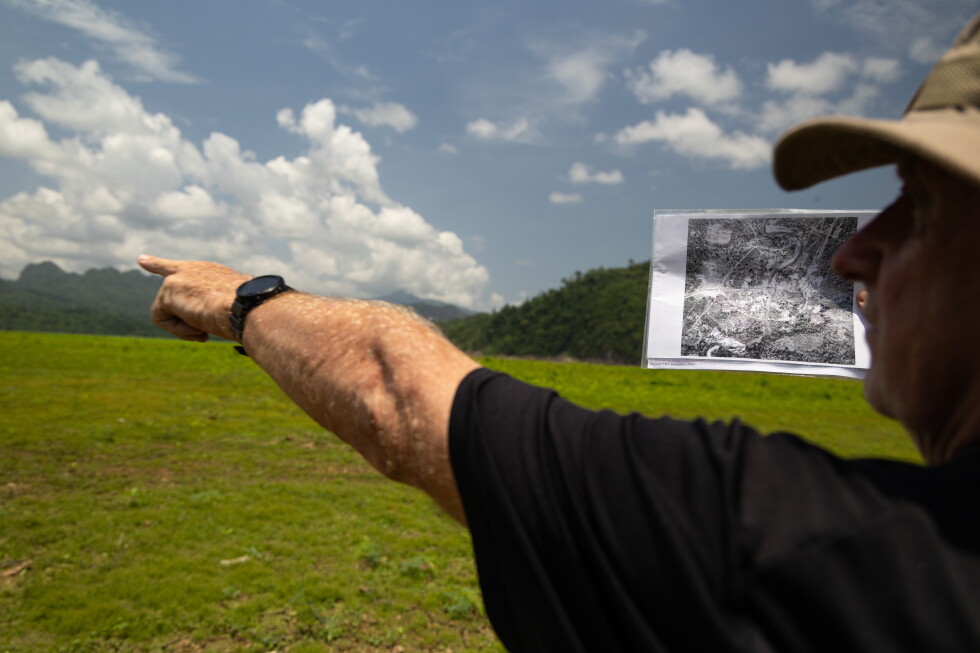
    For many researchers working at the site, the project is deeply personal. Martyn Fryer, an independent Australian researcher from Perth, traveled thousands of kilometers to examine the exposed station after his grandfather, a POW captured in Singapore in 1942, died while working on the railway. Traversing muddy bogs in 38-degree Celsius heat, Fryer called the trip a chance to connect to the experience of the men who built the line. “I’ve been to Nithe Station three times in the past, but the water level has always been too high to actually really appreciate the fantastic offerings that it has with the remaining infrastructure and the layout of the railway itself,” Fryer explained. While scanning historic embankments with a metal detector, he has already recovered small but meaningful artifacts including iron railway spikes and bridge staples. Working alongside Andrew Snow, a researcher from the Thailand-Burma Railway Centre whose own father was captured in Singapore and forced to work on the railway, the pair cross-reference 1940s wartime aerial photographs from the UK National Archives with hand-drawn historical maps to pinpoint the location of former POW camps surrounding the station.

    Snow noted that this year’s drawdown is uniquely suited for research: while dry seasons occasionally expose small portions of the station, the unusually low water levels and rapid draining left little time for vegetation to regrow, leaving the full layout of the depot exposed for the first time in generations. “It is a good opportunity for us to do some surveying,” he said. “When you’re dealing with relatives of people that worked on the railway, it’s always nice to be able to show them the areas that maybe their relative worked on.”

    The unexpected reappearance has also drawn hundreds of domestic tourists to the remote western Kanchanaburi province site. Local resident Kitti Laokham’s social media posts of the exposed station have accumulated more than 32 million views, and visitors like Channarong Noimala have traveled hundreds of kilometers to see the rare sight. “At least for those who died here, no matter whether they are laborers or prisoners of war, we can remember them,” Noimala said.

    The rediscovery of Nithe Station comes as public interest in preserving the Death Railway’s legacy continues to grow. Around 100 kilometers southwest of the newly exposed site sits Hellfire Pass, one of the most brutal and well-documented sections of the railway, where hundreds of POWs died carving a path through solid rock. The Hellfire Pass Interpretive Centre, funded by the Australian government, welcomed a record 169,000 visitors in 2025—the 80th anniversary of the end of World War II. Mick Clarke, an Australian Army veteran who manages the center, explained that as time passes, these physical sites grow only more important. “They keep personal stories alive and help future generations understand the cost of war,” he said. For Australia alone, the statistics underscore the deep national connection to the site: around 13,000 Australian POWs were forced to work on the railway, and 2,800 died during construction. “For many Australians, Hellfire Pass is deeply personal,” Clarke said. “It connects families and the nation to a difficult but important chapter of wartime history.”

  • South Africa marks 50 years since Soweto uprising, but challenges linger for its youth

    South Africa marks 50 years since Soweto uprising, but challenges linger for its youth

    JOHANNESBURG — June 16, 2026 marks 50 years since one of the most pivotal moments in South Africa’s fight against apartheid: the Soweto Uprising, a student-led protest that redefined the trajectory of the nation’s liberation movement against white minority rule. On that fateful day in 1976, hundreds of young demonstrators took to the streets of Soweto to oppose the discriminatory apartheid education system, only to be met with deadly force from state police; official records estimate more than 200 young people were killed in the violence, a massacre that shocked the world.

    Today, June 16 is nationally honored as Youth Day, a permanent tribute to the lives lost and the courage of the students who led the uprising. Historians widely recognize the 1976 protest as a critical turning point in the anti-apartheid struggle. What began as a local demonstration quickly sparked mass uprisings across every region of South Africa, galvanizing widespread public resistance to apartheid and forcing the international community to confront the brutal realities of state-enforced racial oppression against Black South Africans.

    Half a century later, as the nation gathers to honor the uprising’s legacy, lingering and new challenges facing South Africa’s youth remain a source of deep concern. For survivors, activists, and young people born after the end of apartheid in 1994, the promises of liberation have yet to be fully realized for the country’s younger generation. Systemic racial inequality, crippling youth unemployment, widespread intergenerational poverty, and growing social crises including drug and alcohol abuse continue to block opportunity for millions of young South Africans.

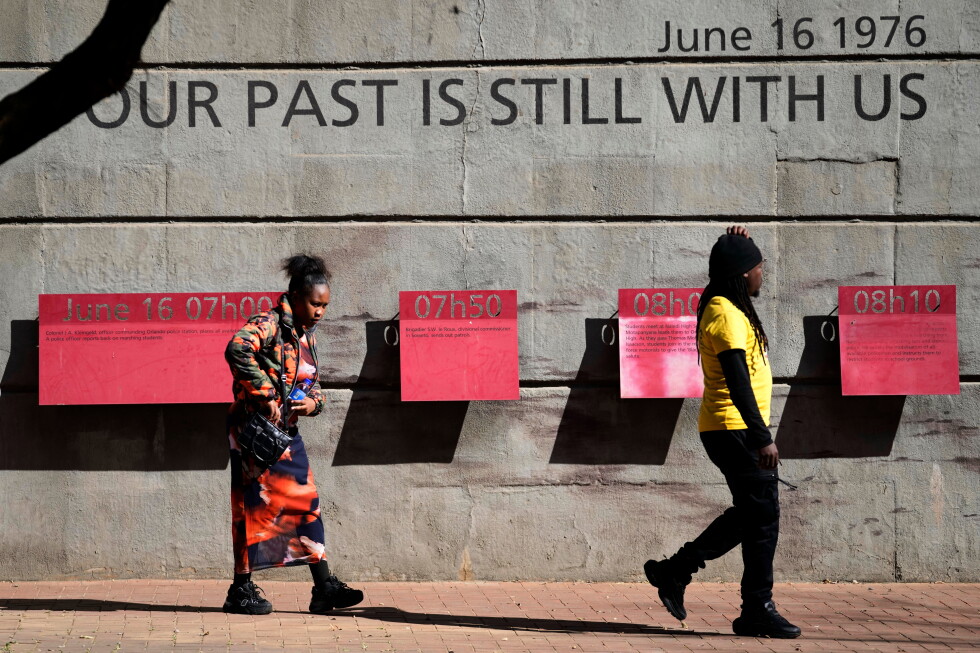
    Soweto, South Africa’s oldest and most iconic township, remains dotted with permanent memorials to the 1976 uprising that draw thousands of local and international visitors each year. The most famous of these is the Hector Pieterson Memorial, named for a 13-year-old protester killed on June 16. A Pulitzer Prize-winning photograph of Pieterson’s lifeless body being carried by a fellow student became the global symbol of the uprising, printed on front pages across the world to expose apartheid’s brutality. Murals of protesting youth line the township’s streets, alongside the larger June 16 Memorial Acre that preserves the history of the day.

    For survivors like Seth Mazibuko, who took part in the protest as a teen, these landmarks carry more than historical significance — they are painful, vivid reminders of the violence that shaped his life. Mazibuko, now an elder of the liberation movement, recalled the chaos of the day in a recent reflection: when police first fired tear gas to disperse the crowd of thousands of students, shifting winds blew the gas back toward officers, forcing them to release attack dogs on the demonstrators. “We used stones to chase the dogs back to them,” he remembered. Mazibuko was arrested shortly after the uprising, spending 18 months in pre-trial detention before being sentenced to seven years’ imprisonment on Robben Island, the same prison that held Nelson Mandela for nearly three decades, where he served his sentence alongside other anti-apartheid political prisoners.

    For South Africa’s “born free” generation — young people born after the formal end of apartheid — the legacy of the uprising is mixed. Many express gratitude for the freedom won by the protesters of 1976, but share deep frustration at the unaddressed crises that shape their daily lives. Nineteen-year-old Sima Poto, who visited the June 16 Memorial to mark the 50th anniversary, pointed to systemic poverty as the root of modern youth struggles. “I would say the issues of poverty and crime are the most pressing ones,” she said. “It is poverty that is leading many of them into crime.” Zola Mguli, 29, who works with the Southern African Alcohol Policy Alliance on campaigns to reduce substance abuse, acknowledged the progress South Africa has made while calling on young people to continue the fight for equality. “I am grateful to belong to a generation that has grown up in freedom, even as significant challenges remain,” Mguli said. “Things are not going as well as our forefathers hoped, there is still racism, alcoholism and other things we are battling with. But if we, the youth, rise up, we can do better.”

    Leading South African historian Noor Nieftagodien, who has extensively studied the Soweto Uprising, echoed the urgency of retaining the movement’s original political meaning 50 years on. He described the 1976 student movement as both a traumatic and transformative moment that placed young people at the center of the anti-apartheid struggle, reshaping liberation politics permanently. “This was a generation that was young, gifted, and Black,” Nieftagodien said. “They wanted equal education. The idea of Black power resonated with this new generation of young people. Black consciousness was kind of electrifying; it inspired university students and then increasingly also students in high schools.”

    Nieftagodien raised a key critique of how the day is commemorated today: after apartheid ended, the national government declared June 16 a public holiday, but over time, the political meaning of the uprising has been watered down by apolitical celebratory events. “It has lost its meaning,” he argued. “What has happened is that we’ve had the day marked with concerts, etc. I’m all for concerts. But, in fact, in so doing, the kind of celebrations that have been organized have been disinvested from politics, from a critical understanding of what happened.”

  • Injured Matt Garbett ruled out of New Zealand’s World Cup squad, replaced by Logan Rogerson

    Injured Matt Garbett ruled out of New Zealand’s World Cup squad, replaced by Logan Rogerson

    Just hours before kickoff of their opening 2022 FIFA World Cup group stage match against Iran, New Zealand has received a devastating last-minute injury blow: starting midfielder Matt Garbett has been withdrawn from the nation’s 26-man tournament squad.

    The news was officially confirmed in a social media statement released by New Zealand Football on Monday, which clarified that the 24-year-old sustained a hamstring strain during a team training session over the weekend.

    “The whole squad’s thoughts are with Matt at this time and we are gutted he won’t be able to play in the tournament,” the governing body said in its public announcement.

    Garbett, who plies his trade for English third-tier club Peterborough United, has been a mainstay in the New Zealand national setup, earning 38 caps and notching five goals for the All Whites. Most recently, he featured in New Zealand’s 1-0 friendly defeat to England in Florida earlier this November, a warm-up fixture designed to prepare the side for their World Cup campaign.

    To fill the vacant spot in the squad, New Zealand Football has called up Logan Rogerson, a forward from domestic side Auckland FC, who will travel with the team for the remainder of the tournament.

    This World Cup marks New Zealand’s first appearance at soccer’s global flagship event in 12 years, with their last tournament run dating back to 2010 in South Africa. Drawn into Group G, the side faces far stiffer competition, grouped alongside Iran, African powerhouse Egypt and European giants Belgium as they fight to advance out of the group stage for the first time in their history.

  • Uruguay’s Maxi Araújo scores equalizer in 1-1 World Cup draw with Saudi Arabia

    Uruguay’s Maxi Araújo scores equalizer in 1-1 World Cup draw with Saudi Arabia

    MIAMI GARDENS, Fla. – In an intriguing Group H opening match at the Hard Rock Stadium on Monday, Saudi Arabia and Uruguay left everything on the pitch before splitting points with a 1-1 draw, a result that set the tone for an unpredictable group stage following another shock result elsewhere in the bracket.

  • Australia to probe assault claims by Gaza flotilla activists against Israeli forces

    Australia to probe assault claims by Gaza flotilla activists against Israeli forces

    In a development that has escalated diplomatic tensions between Australia and Israel, Australia’s federal law enforcement agency has opened formal inquiries into serious allegations of sexual violence and torture leveled by a group of humanitarian activists against Israeli forces. The claims stem from the interception of the Global Sumud flotilla, a civilian mission organized to deliver desperately needed humanitarian aid to the blockaded Gaza Strip, in mid-May.

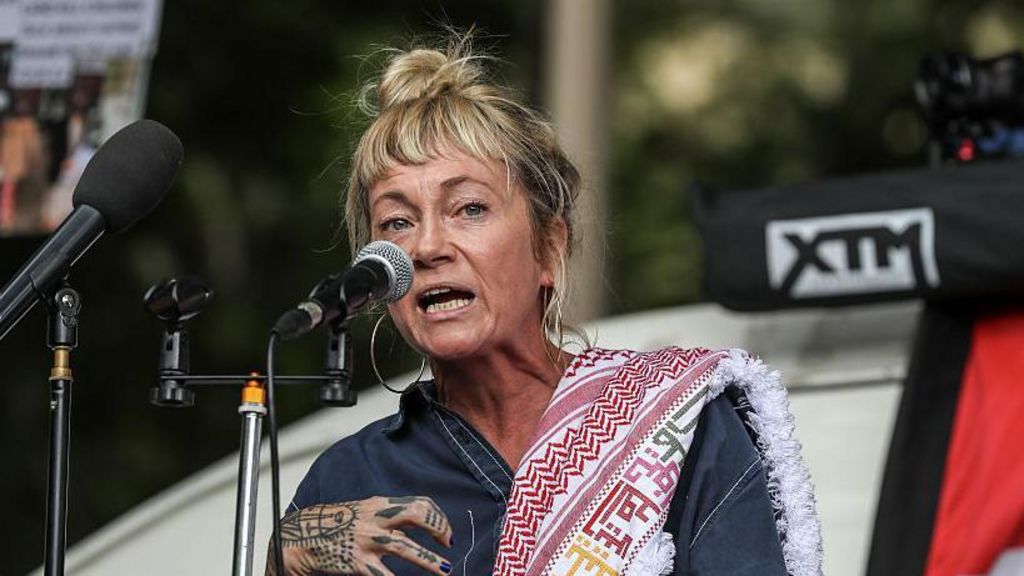
    Eleven Australian citizens were among hundreds of activists detained by Israeli military personnel after the flotilla was intercepted while en route to Gaza on May 18. On Monday, four of those Australian activists held a high-stakes meeting with Australia’s Foreign Minister Penny Wong, senior government representatives, and federal police officials to detail their alleged experiences at the hands of Israeli forces. Following the meeting, activist Juliet Lamont — one of the four delegates who met with Wong — told reporters that the Australian government had committed to launching an independent probe into the group’s claims of kidnapping, physical abuse, rape, and torture. Lamont added that Minister Wong had stated she believed the activists’ accounts, and law enforcement officials had confirmed they would move forward with formal investigations.

    The Australian Federal Police (AFP) later verified the launch of inquiries in an official statement, noting that the investigation would center on the needs of survivors, with a trauma-informed approach to handling the serious allegations. “The AFP has begun inquiries into allegations made by a representative of the group,” a spokesperson for the agency said, adding that an update on the investigation’s progress would be released once appropriate. A spokesperson for Wong’s office added that Monday’s meeting marked the first time the foreign minister had met directly with the activists, giving leadership the chance to hear firsthand accounts of the alleged abuse. The spokesperson confirmed that Wong has repeatedly raised the allegations with Israeli officials, and has consistently called for an independent, fully transparent investigation into the incident.

    The case has already sparked significant international backlash after far-right Israeli National Security Minister Itamar Ben-Gvir shared a public video of himself taunting detained activists, who were shown kneeling with their hands bound behind their backs. In response to widespread global condemnation of the video, Israeli Prime Minister Benjamin Netanyahu distanced his government from the action, stating that Ben-Gvir’s conduct “was not in line with Israel’s values and norms.” Wong’s office also noted that the Australian government has already imposed sanctions on Ben-Gvir over his previous inflammatory actions, and that the minister has formally condemned the conduct of Israeli authorities in the flotilla incident.

    Israeli officials have forcefully rejected all allegations of abuse. A spokesperson for the Israeli Embassy in Canberra said there is “no credible evidence” to support the activists’ claims, and that no formal complaint has been submitted directly to the Israeli government. The embassy repeated its characterization of the flotilla participants as “professional provocateurs,” claiming their accusations “have already been proven to be false” according to comments reported by Australian national broadcaster ABC.

  • What one country’s experiment says about attempts to boost birth rates

    What one country’s experiment says about attempts to boost birth rates

    On a quiet park bench in Debrecen, eastern Hungary, 33-year-old social worker Barbara Elek refreshes her email inbox with trembling hands. Ten days removed from her third round of in vitro fertilization, she and her 34-year-old chef husband Levi wait for life-changing news: whether their years-long struggle to start a family has finally succeeded. If the treatment fails, Barbara says, the grief of losing a pregnancy will not be their only burden. If they cannot prove an expected child by November 1, the couple stands to lose everything they have built financially.

    Like tens of thousands of other young Hungarian couples, Barbara and Levi accepted a 10 million forint (£25,000) interest-free loan and a linked mortgage subsidy under a landmark pronatalist policy introduced by former Prime Minister Viktor Orbán’s government in 2010. In exchange for promising to have two children within a set timeline, the pair gained access to unprecedented financial support. But under the policy’s fine print, couples who fail to meet their child-bearing commitment face crippling penalty interest between 1.5 and 3.5 million forint (£3,700-£8,600) – a sum Barbara and Levi say they simply cannot afford.

    Orbán’s 15-year experiment in state-backed fertility promotion stands as one of the most ambitious population policy overhauls in modern history. When Fidesz took power in 2010, Hungary faced a demographic crisis: its fertility rate rested at 1.25 children per woman, far below the 2.1 replacement rate needed to sustain a stable native population, compounded by mass emigration and minimal immigration. Orbán’s approach rejected the Western solution of increased immigration, famously stating: “We don’t need numbers, we need Hungarian children.” Over 15 years, the government rolled out billions in incentives: tax breaks for large families, interest-free home loans, mortgage subsidies, and grants for home renovations and larger vehicle purchases, all restricted to married, heterosexual couples with formal employment.

    For a decade, the policy appeared to deliver on its promises. Hungary’s fertility rate climbed steadily, hitting 1.59 by 2020, earning the program praise from conservative circles around the world, particularly in the United States. But by 2025, that progress had evaporated: the fertility rate fell back to 1.31, barely higher than its 2010 baseline. Demographers now widely classify the initiative as a failure to meet its core goal of reversing population decline. What went wrong with one of the world’s most aggressive pronatalist projects, and what lessons can other nations grappling with falling fertility learn from Hungary’s experience?

    Supporters of the policy argue it still softened the blow of a continent-wide fertility decline. “Without these policies, there would be hundreds of thousands of fewer children,” says Fruzsina Skrabski of pro-family NGO Three Princes, Three Princesses, who notes the program simply did not go far enough to reverse long-term demographic trends. For large families like Maté and Agi Gorondy of suburban Budapest, who have five children under 10 and may have more, the incentives have been life-changing. The couple leveraged generous maternity pay, tax cuts, and subsidies to renovate their home and buy a larger vehicle; as a mother of more than two children, Agi will pay no income tax if she returns to work. Maté says a cultural shift is visible even at the neighborhood level: “Four- or five-child families are no longer rare” in his community, a shift reflected in mid-2010s data that saw a steady rise in families with three or more children, peaking in 2020 before declining again.

    Critics, however, point to deep structural flaws that limited the policy’s impact. The benefits were unevenly distributed, notes János Tóth, a demographic studies professor at the University of Szeged: the incentives worked well for lower-middle-class rural families, but did little to boost fertility in urban areas, where birth rates are lowest and the cost of living has eroded the value of the 10 million forint baby loan amid soaring inflation. Tóth adds that the policy focused too heavily on encouraging additional children from existing parents, rather than removing barriers to first-time parenthood – “the first child is the most important.”

    Other experts argue the temporary rise in fertility simply reflected a timing shift, not a permanent increase in total births. “These policies prompted a cohort of people to have children they would have had anyway, just a little earlier than planned,” explains Eva Fodor, co-director of the Democracy Institute at Central European University. After the initial rush of earlier planned births, rates naturally fell back to trend. A similar pattern has played out across Eastern Europe: the Czech Republic, which did not implement Hungary-scale pronatalist incentives, saw an identical rise and subsequent fall in fertility over the same period.

    For many Hungarian parents, financial support was never the main barrier to having more children. Antonia Miskolczi, a 29-year-old first-time mother in Budapest, says fears over Hungary’s underfunded public healthcare system far outweighed any financial incentive when she and her husband decided to limit their family to two children. After seeing social media warnings of under-resourced public hospitals and hearing horror stories from relatives, Antonia chose to deliver her son at a private clinic. “I don’t think big promises are needed. Just fix the fundamentals and the willingness to have children will increase,” she says. “Improving education and healthcare should be the very first step if people are going to feel comfortable having children.”

    Fodor’s 2019 research with middle-class professional Hungarian women confirms this gap. Most respondents viewed one-time government payments as insufficient, citing a persistent lack of reliable childcare, functional public health infrastructure, and work flexibility as their core barriers to expanding their families. While Hungary expanded childcare access under Orbán, many families still report services are insufficient to meet demand.

    Hungary is far from alone in its struggle to reverse falling fertility. Across the globe, more than half of all countries now have fertility rates below replacement level, a trend that has accelerated since the 2020 COVID-19 pandemic. South Korea, for example, has spent more than £215 billion since 2008 on fertility incentives including £20,000-£30,000 baby bonuses and monthly child benefits, yet its fertility rate fell to 0.8 in 2025. Demographers point to overlapping global crises driving this trend: pandemic uncertainty, the war in Ukraine, soaring global inflation, and widespread political instability have all eroded public confidence in the future, a key driver of decisions to have children. “Fertility tends to decline because people don’t have confidence in the future,” notes Vienna Institute of Demography demographer Tomas Sobotka.

    Looking at global success stories, Nordic countries like Sweden have come closest to sustaining higher fertility through a different model: policies that prioritize work-family balance, including shared parental leave, universal affordable childcare, and support for dual-earner households. While Sweden’s fertility has also fallen in recent years, it remains far higher than most of Europe, and has avoided the extreme decline seen in East Asia. “Countries that make it easier for men and women to share work and care are far better protected against deep fertility decline,” Sobotka explains.

    By contrast, Fodor argues, Orbán’s policy reinforced rigid traditional gender roles that frame women as the primary caregivers, a cultural norm that discourages many women from having children in the modern workforce. “Even state-owned companies are not flexible, they do not take into account the fact that men and women both may have responsibilities outside of the labour market,” Fodor says. This aligns with patterns seen in South Korea, where rigid traditional gender roles and a lack of work-life balance leave women bearing the full burden of childcare, driving many to delay or forgo having children entirely. Only Israel, among OECD nations, sustains a fertility rate above replacement level, a trend experts attribute more to strong cultural norms around family building than high government spending.

    Orbán’s government spent roughly 5% of GDP on its family initiative, and the policy remained popular enough that Hungary’s new prime minister Peter Magyar did not campaign to roll it back after taking office in April 2026. While experts agree that any financial support for families is a net positive, Fodor argues the money could have delivered far more impact if invested in institutional infrastructure and gender equality. “If that money had been spent on social institutions and gender equality and promoting men’s role in domestic work, I think a similar increase in the fertility rate could have been achieved,” she says.

    For Barbara and Levi, the policy’s contradictions have come at a devastating cost. The Hungarian National Bank estimates one in five couples who took out the baby loan five years ago have not had children, many for reasons of infertility entirely outside their control. The new government has said it is reviewing the policy’s penalty terms, but no changes have been announced yet.

    The long-awaited email finally arrived. The implanted embryo had not survived. “It’s horrible, just horrible,” Levi said, holding his crying wife. In a country that brands itself as family-friendly, the couple has been left with neither the child they dreamed of, nor the financial stability the policy promised – caught in a failed experiment that has left millions of families facing uncertainty.

    *This report is published ahead of the June 16 launch of BBC News Magyarul, a new Hungarian-language service from BBC World Service serving Central European audiences.*

  • Married at First Sight Australia allegations ‘disturbing’, says country’s watchdog

    Married at First Sight Australia allegations ‘disturbing’, says country’s watchdog

    The global hit reality dating series *Married at First Sight Australia* (MAFS Australia) is facing unprecedented regulatory and public scrutiny following a bombshell BBC News investigation that revealed explosive allegations: multiple female contestants claim they were never informed that their on-screen partners had prior convictions for violent offenses and drug-related crimes.

    Nine former cast members from the Australian iteration of the controversial social experiment have gone public with calls for sweeping overhauls to the show’s participant vetting processes, demanding that producers bar anyone with a criminal history from joining the series. The allegations have already triggered action across borders, with UK broadcaster Channel 4 — which airs MAFS Australia to large British audiences — removing all episodes of the domestic *Married at First Sight UK* franchise from its on-demand streaming platform All 4, even as the Australian version remains available to stream.

    This latest controversy comes on the heels of a separate crisis rocking the UK edition of MAFS, where a BBC Panorama investigation uncovered rape allegations made by two female contestants against male participants, all of whom have denied the claims. In response, Channel 4 has launched an independent external review into cast member welfare across all its MAFS content, with results expected to be published by the end of summer. The UK and Australian versions of the show are produced by separate independent production companies.

    Australia’s top media regulator, the Australian Communications and Media Authority (ACMA), has labeled the new claims from MAFS Australia contestants as both “serious and disturbing.” In an official statement to the BBC, ACMA noted that its regulatory authority is restricted to reviewing whether broadcast content aligns with existing industry codes of practice — and crucially, those current codes do not include binding rules governing the treatment and safety of program participants. When public concerns fall outside ACMA’s remit, the agency encourages complainants to raise issues directly with the broadcaster and relevant law enforcement or oversight bodies where applicable.

    Across in the UK, Ofcom, the country’s communications regulator, mirrored ACMA’s reaction, describing the latest allegations as “deeply concerning.” A spokesperson for Ofcom said the regulator expects Channel 4 to incorporate these new claims into its ongoing welfare review, and that Ofcom will review the final report alongside all other available evidence once it is delivered.

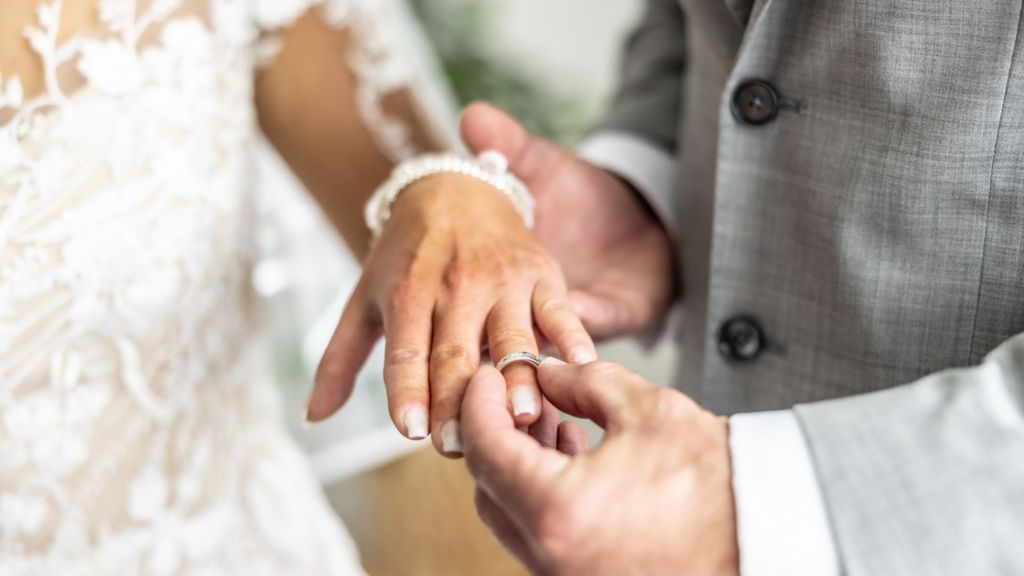
    For context, the MAFS format follows a high-drama social experiment premise: single contestants agree to marry a complete stranger, meeting their spouse for the first time only at the on-camera wedding ceremony. While the unions are not legally binding, the series films contestants nearly every day as they go on honeymoons, move in together, and navigate the early stages of their new relationship. The format has become a massive ratings success both in its native Australia and in international markets including the UK.

    In an official joint response to the BBC investigation, Australia’s Channel 9, which broadcasts the local MAFS, and production company Endemol Shine Australia defended their current processes, saying they take participant health, safety and wellbeing extremely seriously. The pair noted that all contestants must complete a multi-stage vetting process that includes police and criminal background checks for every country a contestant has resided in, independent psychological clinical assessments, medical screenings, formal statutory disclosure declarations, and legal and digital due diligence.

    Channel 4, for its part, has clarified that it does not participate in the production of MAFS Australia and holds no editorial control over the series. A spokesperson for the broadcaster added that Channel 4 requires all acquired content it airs to comply fully with Ofcom’s broadcasting code.

  • Witnessing joy amid the death: BBC travels to epicentre of Ebola outbreak

    Witnessing joy amid the death: BBC travels to epicentre of Ebola outbreak

    Against a backdrop of widespread loss and death in the Democratic Republic of the Congo’s Ituri province, moments of joy have broken through at local Ebola treatment facilities — moments that could turn the tide in the fight against the unfolding outbreak.

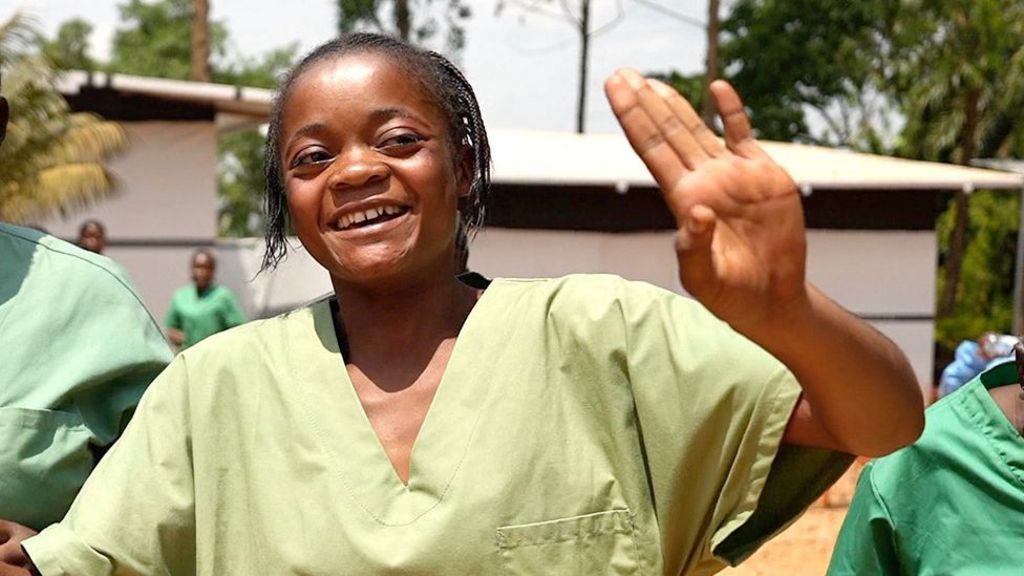
    On a Friday just after noon, a dozen frontline healthcare workers in green scrubs formed two lines along the marked exit path of Mongbwalu’s Ebola treatment center, singing hymns of gratitude as they escorted 49-year-old Daniel Kitambala out of the facility. Two consecutive negative diagnostic tests confirmed he had cleared the rare Bundibugyo Ebola strain after three weeks of care, bringing the subsistence farmer his long-awaited discharge.

    “That disease is terrible. I was feeling very ill when I came here. But God is great, I am well now,” Kitambala told the BBC, beaming with relief as he carried a bag of his sterilized personal items. Raising his hands three times in a victory salute, he urged community members to seek prompt care if they develop Ebola symptoms, echoing a message that has slowly started to shift local skepticism of treatment facilities.

    Ituri province was declared the epicenter of the new Ebola outbreak just over a month ago, but health officials now confirm the virus has likely spread undetected in the region for months. To date, more than 140 confirmed deaths have been recorded from the Bundibugyo strain, which kills roughly one in five people it infects. Five frontline health workers have already died from the virus, with several more still undergoing treatment, though updated infection prevention protocols and personal protective equipment have lowered risk for care teams since the outbreak was formally declared. A new on-site laboratory installed at Mongbwalu’s hospital two weeks ago also cut wait times for test results from more than a week to just 24 hours, speeding up care and contact tracing.

    For months, dangerous misinformation and local myths have undermined response efforts. The most widespread belief, dubbed the “coffin curse,” blames a series of early deaths on the burning of a broken coffin that carried a deceased person from the provincial capital Bunia for burial in Mongbwalu, rather than the virus itself. Long before the outbreak was confirmed, false rumors that treatment centers spread disease circulated through communities. In May, attackers set fire to an Ebola treatment tent at Mongbwalu hospital, and a treatment center in the second outbreak epicenter of Rwampara was burned two days later, mirroring attacks on care facilities during the 2018-2020 Ebola outbreak in neighboring North Kivu.

    But a string of recent recoveries has begun to turn public opinion. Deogratias Kasereka, a 55-year-old pastor, became the first patient to be discharged from the Mongbwalu center a week before Kitambala, and his safe return home has already driven more community members to seek care voluntarily.

    “We have seen a huge difference in the community since the first patient recovered and returned home. More people are coming here now seeking treatment,” said Dr. Richard Lukodu, medical director of Mongbwalu hospital. Lukodu added that he remains optimistic that these success stories will help rebuild trust in local healthcare, a critical shift after years of violence fueled by misinformation around Ebola response.

    Mongbwalu mayor Sesereki Mandro Israel confirmed that the situation is gradually improving, after early misdiagnosis slowed response — initial tests targeted more common Ebola strains, not Bundibugyo, delaying confirmation of the outbreak. Community leaders have since been mobilized to educate residents on Ebola symptoms and direct suspected cases to treatment centers.

    In Rwampara’s reopened treatment center, where strict safety protocols separate patients from visitors via glass barriers, 2-meter gaps, and isolated cubicles for severe cases, Mireille Gahindo is already looking ahead to her discharge. Both Gahindo and her 11-month-old child tested positive for Ebola after the infant developed a fever that failed to respond to initial local care, and both are now recovering. “I feel very happy. I’m looking forward to going back home,” she said, eager to reunite with her two other young children and her husband.

    For many local families, the pain of the outbreak has already been profound. Eli Asimwe Bawere, who came to the Rwampara center to visit his sister, brother, and stepmother, told the BBC he had already lost his mother and sister-in-law to the virus. “We have mourned a lot. We don’t want to mourn any more,” he said.

    Every patient recovery brings a small, vital wave of hope to a region grappling with widespread death, but health officials warn major gaps remain in the response. To fully stop transmission, every contact of a confirmed Ebola case must be traced and monitored — officials confirm many exposed people are still missing, meaning the fragile optimism of recent weeks could quickly fade if the virus continues to spread undetected.

  • Neymar’s World Cup doubts continue after Brazil forward has new tests on his injured right calf

    Neymar’s World Cup doubts continue after Brazil forward has new tests on his injured right calf

    Uncertainty clouded the prospects of soccer superstar Neymar making his World Cup debut on Monday, as the Brazilian forward underwent a new round of medical assessments for a lingering right leg injury that has kept him sidelined for months.

    Initial optimism had circulated within the Brazil camp that the 34-year-old would rejoin full team training on Monday. Instead, the veteran attacker skipped group sessions and traveled to a specialized sports clinic to complete updated scans on his injured right calf. The Brazilian Football Confederation has not yet released any official statement on the outcomes of these tests, leaving fans and analysts guessing about his availability for the tournament.

    Neymar, who is competing in his fourth World Cup, has not played competitive soccer since picking up the injury during a club match with Santos on May 17. Since Brazil’s five-time World Cup champions set up their pre-tournament training base in Morristown, New Jersey, the star playmaker has not taken part in a single full team training session. His first potential chance to take the pitch comes this Friday, when Brazil faces off against Haiti in Philadelphia.

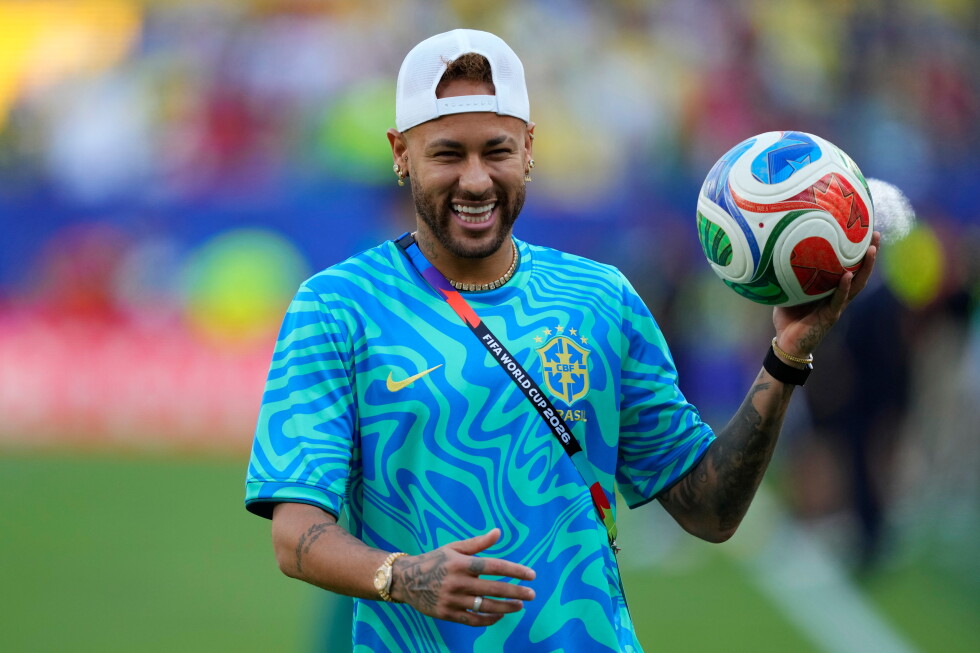
    The question of Neymar’s return has grown far more pressing for Brazil following a underwhelming 1-1 draw against Morocco in the team’s tournament opening match on Saturday. Though Neymar could not take the field at MetLife Stadium in East Rutherford, New Jersey, he still drew crowds and attention on the sidelines, greeting high-profile spectators including rapper Travis Scott and seven-time NFL Super Bowl champion Tom Brady before kickoff.

    Brazil’s toothless attacking performance against Morocco immediately reignited calls from fans and pundits alike for Neymar’s experienced playmaking presence in the starting lineup. However, the star’s inclusion in the World Cup squad has already sparked fierce public debate across Brazil, ever since new head coach Carlo Ancelotti named him to the roster. Supporters argue that the veteran, who made his World Cup debut on home soil back in 2014, still offers unmatched creativity and leadership that can lift Brazil to a sixth title. Critics, by contrast, claim Neymar is past his athletic peak and that his spot in the squad should have gone to a younger, fit player who could contribute earlier in the tournament.

    Brazil’s medical team is reportedly targeting a full recovery for Neymar in time for the tournament’s knockout stage, according to local Brazilian media reports. For now, the nation waits for official test results to clarify when their biggest star will finally step onto the World Cup pitch.

  • What did Trump do differently to Obama on Iran?

    What did Trump do differently to Obama on Iran?

    For decades, Iran’s nuclear program and regional geopolitical role have stood as one of the most intractable foreign policy challenges for successive U.S. administrations. When comparing the tenures of former presidents Barack Obama and Donald Trump, their strategies toward Iran could hardly be more distinct – differences that have reshaped regional dynamics and set the stage for Trump’s current push for a new negotiated agreement, according to BBC senior White House correspondent Gary O’Donoghue’s analysis.

    The Obama administration centered its Iran strategy on diplomatic engagement, culminating in the 2015 Joint Comprehensive Plan of Action (JCPOA), a multilateral nuclear deal reached alongside China, France, Germany, Russia, the United Kingdom, and the European Union. Under the terms of the agreement, Iran agreed to severely roll back its nuclear enrichment activities and accept rigorous international inspections in exchange for the lifting of crippling economic sanctions that had crippled Iran’s economy for years. Obama framed the deal as a pragmatic, long-term solution that prevented Iran from developing a nuclear weapon and reduced the risk of a broader military conflict in the Middle East through diplomatic dialogue rather than confrontation.

    In stark contrast, Trump adopted a maximalist pressure campaign from the moment he took office, repeatedly denouncing the JCPOA as the “worst deal ever negotiated” by the United States. In 2018, his administration made the controversial decision to unilaterally withdraw from the multilateral agreement, ignoring widespread international objections from other signatory powers. Following the withdrawal, Trump reimposed all previously lifted U.S. sanctions on Iran and expanded them further in a policy dubbed “maximum pressure,” designed to force Iran back to the negotiating table with stricter terms. The campaign pushed Iran’s economy into a deep recession, sent inflation soaring, and gradually led the country to begin violating key nuclear limits of the original deal in subsequent years.

    Now, as Trump promotes plans for a new comprehensive peace deal with Iran, observers are continuing to unpack how his confrontational, sanctions-first approach fundamentally altered the trajectory of U.S.-Iran relations that Obama worked to establish through diplomatic compromise. While Obama prioritized incremental confidence-building through multilateral cooperation, Trump’s strategy relied on unilateral economic coercion to force Tehran to accept a new agreement that addresses not just Iran’s nuclear program, but also its ballistic missile development and regional military support for allied armed groups across the Middle East – priorities the original JCPOA did not cover.