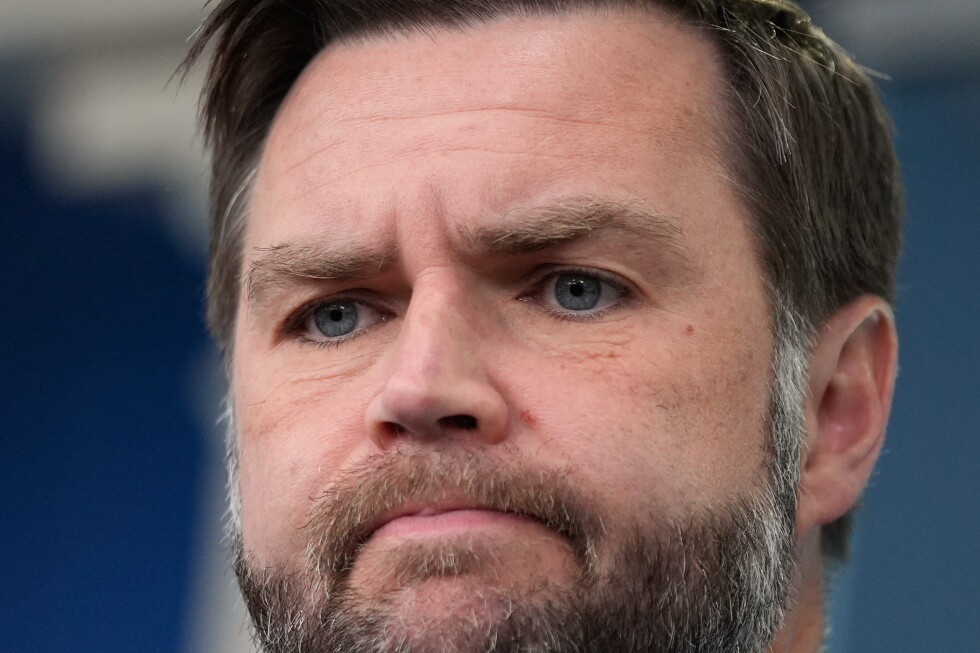
TEHRAN – In a clear statement released on Tuesday, Iran’s semi-official Tasnim news agency has confirmed that Tehran’s decision to skip the second round of direct talks with the United States, scheduled to take place this Wednesday in Pakistan, is final and non-negotiable. According to the agency, Pakistani authorities acting as the mediator for the planned diplomatic meeting have already been formally notified of Iran’s choice to withdraw from the engagement. The report added that the decision was crafted to uphold and fully protect the sovereign rights and national interests of the Iranian people, closing the door on any last-minute speculation that Iran might reverse its stance ahead of the planned meeting. This development comes amid long-running tensions between Tehran and Washington, with Pakistan having stepped in to facilitate diplomatic dialogue between the two adversarial nations in recent months.
作者: admin
-

ASX plunges as healthcare giant Cochlear and big banks drag down market
On Wednesday, Australia’s benchmark stock market suffered its sharpest single-day decline in three weeks, driven by widespread selloffs across two of its largest core sectors: healthcare and financial services. The benchmark ASX 200 plunged 105.80 points, or 1.18%, to settle at 8,843.60, while the broader All Ordinaries index dropped 102.8 points, or 1.12%, to close at 9,074.30. Against this downturn, the Australian dollar gained ground through the trading session, ending the day at 71.72 U.S. cents.
Of the 11 tracked sectors on the ASX, seven closed in negative territory, with healthcare and financials recording the heaviest losses. The healthcare sector as a whole tumbled 6.01%, led by an unprecedented 40.71% single-day crash for implant manufacturer Cochlear, which erased roughly $4.5 billion in market value to push the share price down to $99.58, its lowest level in a decade. Two core factors triggered the collapse: the company issued a downward revision to its full-year profit guidance, and new policy actions from the Trump administration targeting Medicaid spending have made it significantly harder for American patients to access coverage for Cochlear’s hearing implant devices.
The downward momentum spread across the entire healthcare sector, dragging other major players into negative territory. Biotech and blood products giant CSL fell 5.7% to $129.19 after announcing the U.S. military would no longer require all service members to receive its flu vaccines. Sleep therapy device maker ResMed slid 2.47% to $30.76, while medical imaging firm Pro Medicus dipped 1.16% to $140.58.
Australia’s big four retail banks, which are among the most heavily weighted stocks on the ASX, also delivered significant drag on the broader index. Commonwealth Bank of Australia shares fell 2.53% to $175.04, Westpac Banking Corporation dropped 2.11% to $39.40, National Australia Bank slid 2.4% to $40.22, and ANZ Group closed 2.33% lower at $36.41.
Not all segments of the market ended the day in the red, however. Consumer staple stocks bucked the broader downturn, posting a collective gain of more than 1%. Supermarket giants Woolworths rose 0.87% to $38.15, while rival Coles Group added 0.39% to $23.07. A2 Milk Company closed 0.54% higher at $7.39, giving the consumer sector enough momentum to partially offset losses elsewhere. Two individual large-cap stocks also posted strong gains: Treasury Wine Estates surged 16.5% to $4.72 following its announcement of a major restructuring that will integrate its luxury Penfolds wine brand into a new regional operating model, ending Penfolds’ status as a standalone division. Mining multinational BHP added 1.19% to $56.17 after releasing its quarterly operational update, which revealed record-breaking iron ore production that beat market expectations.
Geopolitical tensions in the Middle East also continued to hang over global market sentiment, even as oil prices edged slightly lower. Brent Crude dipped to $98 U.S. dollars per barrel after former U.S. President Donald Trump announced an extension of the ceasefire between the U.S. and Iran, noting that Iran’s leadership is currently facing severe internal fragmentation. But Kyle Rodda, senior financial market analyst at Capital.com, warned that the path to a lasting diplomatic resolution remains unstable. “The mooted second round of talks between the U.S. and Iran have fallen through and the Strait of Hormuz remains closed, with the markets driving like Thelma and Louise toward a major supply cliff in global energy markets,” Rodda said. He did add, however, that there is still cautious optimism that both sides have incentive to continue negotiations and ultimately reach a peace agreement that could ease energy supply pressures. -

UK inflation rises in March as prices at the pump spike higher after Iran war
LONDON – New official data released Wednesday confirms that United Kingdom inflation ticked upward in March, driven by a dramatic surge in fuel prices triggered by widespread energy supply disruptions stemming from the ongoing conflict in Iran.
The Office for National Statistics (ONS) reported that the annual consumer price inflation rate climbed to 3.3% this March, up from 3% recorded in February. This upward shift aligned exactly with projections shared by financial market analysts ahead of the data release.
Market observers now confirm that this unexpected (but widely forecast) inflation spike has erased any remaining hopes that the Bank of England would move to lower borrowing costs in the near term. Before the Iran conflict erupted on February 28, financial circles widely predicted that the central bank would cut its benchmark main interest rate from the current 3.75%. That forecast was built on expectations that inflation would gradually fall back toward the Bank of England’s 2% target by the spring months.
A breakdown of the inflation data shows that higher motor fuel prices were the single largest contributor to the overall increase. Fuel prices jumped 8.7% between February and March, marking the steepest monthly rise since June 2022 – a period that saw similar energy market volatility shortly after Russia’s full-scale invasion of Ukraine. Beyond pump prices, secondary upward pressure came from airfares and grocery costs, both of which tracked higher as a knock-on effect of the broader energy price spike.
-

US, China forge rival fusion chains as Europe weighs role
The long-standing strategic competition between China and the United States has expanded beyond high-profile domains like artificial intelligence and space exploration into a new frontier: fusion energy, a game-changing power source widely hailed as a near-limitless, zero-carbon solution to the global climate crisis. Both nations are racing to scale domestic fusion capabilities and lock in resilient supply chains to support future commercial reactor deployment, and both have turned to Europe for its irreplaceable expertise in core fusion technologies ranging from superconducting magnets and high-power lasers to advanced robotics and tokamak design—expertise that is critical to moving fusion from small-scale laboratory research to full-grid commercial operation.
Tokamaks, the most widely tested magnetic confinement fusion design, are doughnut-shaped chambers that use intense magnetic fields to contain superheated plasma heated to hundreds of millions of degrees Celsius, the core condition required to sustain a fusion reaction. But as Washington and Beijing both court European partnership, the global fusion community remains deeply divided over how Europe should navigate the growing US-China rivalry in this sector. Some experts urge European stakeholders to align exclusively with the United States, arguing that denying China access to advanced fusion technology is critical to preventing Beijing from gaining an edge that could reshape the existing global geopolitical order. Others counter that the extraordinary technical complexity of commercial fusion development demands broad, inclusive international collaboration—including active participation from China.
One of the most prominent voices calling for open international partnership is Laban Coblentz, chief strategic advisor to the International Thermonuclear Experimental Reactor (ITER), the world’s largest multinational fusion megaproject hosted in southern France. In an interview with Asia Times in London, Coblentz pointed to China’s track record of large-scale nuclear infrastructure delivery to illustrate the benefits of integrating global supply chains: China completed construction of its 1,000-megawatt Hualong-1 third-generation fission reactor in just five years for $5 billion, a timeline and cost that outpaces most comparable projects in the United States and Europe. What many observers miss, he noted, is that 140 French firms are embedded in the Hualong-1 supply chain, a clear example of how cross-border collaboration drives efficient, affordable progress.
Coblentz also voiced hope that upcoming talks between US President Donald Trump and Chinese President Xi Jinping, scheduled for mid-May in China, will break down existing trade and technology barriers and shift the relationship from pure competition to complementary collaboration. His remarks referenced ongoing contract negotiation challenges between ITER and American firms, where trade barriers have created unnecessary delays and added costs. During a speech at the Fusion Industry event organized by Economist Impact on April 14, Coblentz shared a surprising anecdote about US Senator Joe Manchin, a prominent critic of Chinese technology policy who has publicly accused Chinese scientists of intellectual property theft from US research labs. After touring the ITER assembly hall in 2022, Manchin told a gathering of 30 US ITER staff that he saw, for the first time in years, a “light at the end of the tunnel” for global energy security, and even a path to long-term world peace. Manchin noted that many historical conflicts have been rooted in competition over energy access, and observed that the ITER site brings together scientists and engineers speaking Mandarin, French, Italian, English, Russian and dozens of other languages—proof that if fusion succeeds, it could fundamentally rewrite the rules of global geopolitics.
ITER, the foundational global fusion project, traces its origins back to 1986, when Euratom, Japan, the Soviet Union and the United States agreed to co-design a large-scale international fusion test facility. Concept development began in 1988, with the final design approved in 2001, laying the groundwork for one of the most ambitious international scientific collaborations in modern history. Construction launched in 2013 with an initial budget of 6 billion euros ($6.8 billion), but costs have ballooned far beyond initial projections: ITER’s official 2021 estimate put total costs at roughly 22 billion euros, while the US Department of Energy projects total costs could reach $65 billion by 2039, the current target date for full fusion operations. The European Union covers 45.6% of ITER’s total costs, with China, India, Japan, South Korea, Russia and the United States each contributing approximately 9.1%.
Despite the long history of multinational collaboration on ITER, a growing cohort of US experts are warning that the West risks falling behind China’s rapid fusion expansion, pointing to China’s close diplomatic and trade ties with US adversaries including Russia, Iran and North Korea. Ylli Bajraktari, president and CEO of the Special Competitive Studies Project (SCSP), a non-partisan US think tank, used an address at the same Fusion Fest event to warn that the West is at risk of repeating the same mistakes it made in other emerging clean energy sectors, where China now holds dominant global market share.
“China didn’t create the original scientific breakthroughs for electric vehicles, solar panels or 5G infrastructure, but they prioritized government subsidies and scaled manufacturing capacity rapidly, and that strategy paid off massively,” Bajraktari argued. “China didn’t scale solar manufacturing just to hit net-zero emissions targets; they sold panels at below production cost to lock in global economic dependence. The same scenario will play out in fusion if the US and EU don’t move quickly and coordinate closely.”
Bajraktari noted that since the Lawrence Livermore National Ignition Facility achieved the first net energy gain from fusion three years ago, China has invested $6.5 billion in new fusion infrastructure—with independent analysts putting the actual figure as high as $10 to $13 billion, a level of spending that outpaces current US investment. He outlined four major public projects that form the backbone of China’s national fusion strategy: the Chinese Fusion Engineering Testing Reactor (CRAFT) and Burning Plasma Experimental Superconducting Tokamak (BEST) in Hefei, Anhui, an integrated research campus designed to move from component testing to grid-connected net fusion power demonstration by the end of this decade; the Xinghuo fission-fusion hybrid reactor in Nanchang, Jiangxi, which targets 100 megawatts of output by the early 2030s; the Shengguang-IV laser fusion facility in Mianyang, Sichuan, a large inertial confinement fusion facility estimated to be far larger than the US National Ignition Facility; and the long-running Experimental Advanced Superconducting Tokamak (EAST) in Hefei, which has repeatedly set global records for plasma confinement and serves as the anchor of China’s domestic fusion research program.
Beyond large-scale test facilities, Bajraktari emphasized that China is also investing heavily across the entire fusion supply chain: scaling domestic production of high-temperature superconductors for fusion magnets, tightening export controls on critical raw materials including gallium and germanium, securing long-term access to copper and other key resources through overseas investment, and expanding domestic capacity in precision manufacturing and advanced components. “Control of the fusion supply chain is an existential threat to the West’s long-term energy future,” he said. “We can’t outcompete China by copying their state-driven model. For the West to succeed, we need to collaborate across our allied bloc.” Bajraktari outlined a proposed allied division of labor that leverages each partner’s existing strengths: the United Kingdom leads in magnetic confinement and radiation-resistant robotics, the US in inertial confinement, beryllium supply and venture-backed private innovation, Germany in laser technology, and Japan in high-performance superconductors. “It’s time to stop treating fusion like a distant academic science project,” he said. “It’s no longer a curiosity. We need to take it as seriously as China does—this is critical national infrastructure that we have to build.”
Global fusion development currently follows two primary technical pathways: magnetic confinement fusion (MCF) and inertial confinement fusion (ICF). MCF is the more mature approach, which includes tokamak and stellarator designs: tokamaks use magnetic fields in a doughnut-shaped chamber to contain and heat plasma, while stellarators use complex twisted coils to achieve more stable long-term plasma confinement. ICF, by contrast, uses high-energy lasers or particle beams to rapidly compress and heat fusion fuel pellets to trigger the reaction, a pathway pursued most prominently at the US National Ignition Facility.
China’s state-led fusion program pursues a diversified portfolio across both pathways, with active projects in tokamaks, stellarators and inertial confinement systems. Its EAST project, often nicknamed the “artificial sun,” made global headlines in January 2025 when it sustained plasma at 100 million degrees Celsius for 1,066 seconds, a new world record for fusion plasma confinement. The EAST program aligns closely with research at France’s WEST tokamak, which tests tungsten plasma-facing components and steady-state plasma conditions to support ITER development. As a core ITER member, China has not only absorbed European tokamak technology through the project but has also emerged as a key supplier of large-scale critical components: in April 2025, China shipped key oversize components for ITER’s tokamak magnet feeder system to the project site in southern France.
In contrast to China’s state-driven model, the US Department of Energy supports a market-driven approach that prioritizes funding for private fusion firms. Current US funding supports projects including Commonwealth Fusion Systems’ tokamak development, Type One Energy Group’s stellarator program, and Xcimer Energy’s laser-based inertial confinement fusion work. Jennifer Arrigo, senior adviser for fusion energy sciences at the US Department of Energy, acknowledged that China is a major global fusion player but emphasized that the West’s core advantage lies in dynamic public-private collaboration. “China is one of the big players in this space, but if you look at the innovation ecosystem across the US and Europe, the partnership between private industry and government is just as powerful,” Arrigo said. “It’s critical that we support our domestic industry and lead on inclusive international collaboration with our allies. That’s how we win the fusion race—by keeping it a global endeavor with the US at the center of that effort.”
In comments to Asia Times, Arrigo added that a core goal of the US Fusion Science and Technology Roadmap, launched in October 2025, is to build out a diversified domestic and allied supply chain. The Department of Energy is currently working with fusion-related private firms, supporting university spinouts and expanding domestic industrial capacity, with the explicit goal of reducing reliance on Chinese parts, components and services and securing alternative supply sources across the US and its allied partners.
Last month, Duan Xuru, chief scientist for fusion energy at China National Nuclear Corporation, noted that global commercial fusion development is accelerating faster than many forecasts predicted. Following China’s phased, risk-mitigation strategy, the country aims to complete its first full-scale engineering test reactor by around 2035 and a full commercial demonstration reactor by approximately 2045, putting it on track to be one of the first nations to deploy grid-connected commercial fusion power.
-

Pope visiting Equatorial Guinea prison in spotlight after US migrant deportations
As Pope Leo XIV wraps up an ambitious 11-day, four-nation African tour that spanned from North Africa’s Algeria to Southern Africa’s Angola, with a stop in Cameroon along the way, his final full day in the continent centers on a high-profile visit to one of Equatorial Guinea’s most notoriously troubled correctional facilities.
On Wednesday, the pontiff traveled to the infamous Bata City prison, a stop that carries on the legacy of his predecessor Pope Francis, who made prison visits a core priority of his papacy. Francis launched these visits with a dual mission: to extend a message of hope to incarcerated people and affirm the Church’s solidarity with them, while also drawing global attention to systemic injustices including overcrowding, judicial misconduct, and inhumane confinement conditions.
Leo XIV’s day began with an early morning Mass in Mongomo, a city in Equatorial Guinea’s far eastern region, before he traveled to Bata, the coastal nation’s most populous urban hub. Later in the day, he was also scheduled to lead a prayer service at a memorial honoring the victims of a 2021 military barracks explosion in Bata, a disaster widely attributed to government negligence.
Longstanding concerns over systemic human rights and judicial abuses in Equatorial Guinea have framed the pontiff’s visit. Led by President Teodoro Obiang Nguema Mbasogo, who has held power since 1979, the country has faced consistent international condemnation over widespread corruption and authoritarian rule. While the United Nations human rights body welcomed Equatorial Guinea’s 2022 abolition of the death penalty, both global monitors and human rights organizations have repeatedly flagged deep flaws in the nation’s prison and justice systems.
In its 2023 country report, the U.S. State Department documented a long list of violations, including extrajudicial and arbitrary killings, unlawful detentions, widespread political imprisonment, routine torture, life-threatening prison conditions, and a severe lack of judicial independence. Marta Colomer Aguilera, senior campaigner for Amnesty International’s West and Central Africa division, emphasized the organization’s deep alarm over the country’s human rights landscape. She confirmed that torture is routinely used to extract confessions or punish dissidents, human rights advocates face constant harassment, and the absence of judicial independence effectively eliminates any guarantee of fair trials.
A particularly contentious issue that has taken center stage during the papal visit is the controversial third-country migrant deportation deal struck with the Trump administration, under which Equatorial Guinea has received millions of dollars to accept migrants deported from the U.S. who have no connection to the country. AP investigative reporting has confirmed at least 29 such migrants have been deported to Equatorial Guinea. While none were placed in the Bata prison, many remain in detention in the capital Malabo with severely limited access to legal representation and medical care. Others have been forcibly transferred back to their home countries, where they face targeted persecution.
The Equatorial Guinean government has repeatedly denied allegations of human rights abuses, and has not issued any public response to questions regarding the migrant deportation agreement. Notably, Leo XIV, who was born in the United States, has previously condemned the Trump administration’s broader deportation policy as “extremely disrespectful” of human dignity.
On the eve of the prison visit, 70 global and regional human rights organizations published an open letter urging the pope to use his platform to speak out explicitly about the third-country deportation scheme, and to pressure African nations to refuse complicity in the practice. The letter argues that these deportation arrangements bypass international humanitarian protections, leave vulnerable refugees exposed to arbitrary detention and coercion, and violate the international legal principle of non-refoulement, which prohibits sending people to territories where their lives or freedoms face direct threat.
“The conditions under which these deportations have been carried out have also reflected a very troubling disregard for human life and safety. We call for the intercession of Pope Leo XIV to discourage African countries from being complicit in these violations and instead to protect these individuals,” the groups wrote.
One of the letter’s signatories, EG Justice, is an organization that has long documented and condemned the detention of political prisoners in Equatorial Guinea. The group has called on Leo to leverage his global moral authority to address the issue directly. Tutu Alicante, the U.S.-based director of EG Justice, noted: “There are individuals — prisoners of conscience, and human rights activists — in detention whose cases raise serious humanitarian and due process concerns. At moments like this, sentence review and a real commitment to reform the judiciary can send a powerful signal of a willingness to turn a page toward justice and reconciliation.”
Alicante acknowledged that the Equatorial Guinean government has taken minor, cosmetic steps to improve certain detention facilities in the months leading up to the papal visit, but emphasized these changes are temporary. “The real test will be whether humane conditions, access to medical care, and basic rights are sustained long after the papal visit concludes,” he said.
This coverage of religious affairs from the Associated Press is produced through a collaboration with The Conversation US, with funding provided by Lilly Endowment Inc. The AP holds sole responsibility for all content.
-

India orders school water bells to beat heat
As India’s capital New Delhi braces for an approaching severe heatwave, local education authorities have rolled out a series of new protective rules for the city’s schools, including an unusual policy: regular “water bells” to remind children to stay hydrated and avoid dehydration amid soaring temperatures.
India, the world’s most populous nation, has long grappled with deadly summer heat. Official government data shows that between 2012 and 2021, more than 11,000 people across the country died from heat stroke, a stark reminder of the public health risk posed by extreme high temperatures. The country hit a grim milestone in 2024, when it recorded the hottest annual average temperature since systematic climate record-keeping began in 1901, aligning with the global trend of increasingly frequent extreme weather events driven by human-caused climate change.
In May 2024, New Delhi saw temperatures climb to 49.2°C, matching the capital’s all-time record high set just two years prior in 2022. While Wednesday morning brought relatively mild conditions, with temperatures hovering at a comfortable 29.4°C across the 30-million-person metropolitan region, forecasters warn that a sharp warm-up is already on the way.
Temperatures are projected to jump to 41-43°C by Wednesday afternoon, and could climb even higher to 42-44°C by the end of the week. In response, the India Meteorological Department has issued a yellow heatwave alert for the entire Delhi region, signaling that sustained extreme heat is likely to arrive in the coming days.
On Tuesday, the Delhi Directorate of Education released an official set of guidelines outlining new heat safety protocols for all city schools, designed to protect student health as temperatures rise. Beyond the distinctive water bell policy, the guidelines require schools to restrict or cancel all strenuous outdoor physical activities, hold public awareness sessions to educate students on the importance of consistent hydration, curtail outdoor school assemblies or move them to shaded or indoor spaces held for shorter durations, and ban all open-air classes entirely.
One of the most unique requirements is the mandatory water bell system, which requires schools to ring a bell every 45 to 60 minutes throughout the school day specifically to remind students to stop and drink water to prevent dehydration. Another innovative addition to the guidelines is a mandated buddy system: every student is paired with a peer to monitor one another’s physical well-being and catch early signs of heat-related illness before they become serious. This low-cost, easy-to-implement policy is designed to help school staff catch at-risk students who may not speak up about discomfort on their own.
-

Fiji villagers reject plan for ‘Pacific ashtray’ in beach paradise
A $630 million proposal to construct a massive waste-to-energy incinerator on Fiji’s main island has ignited widespread public and political pushback, with critics decrying the project as a form of “waste colonialism” that threatens one of the South Pacific’s most beloved coastal tourism hubs.
The initiative is led by two Australian businessmen: Ian Malouf, founder of the Australian waste disposal giant Dial-a-Dump, and Rob Cromb, owner of the global fashion label Kookai, who was born in Fiji and maintains manufacturing operations for his brand in the country. The pair plan to build both the incinerator and a dedicated port just 15 kilometers from Nadi, Fiji’s primary international tourism gateway that welcomes hundreds of thousands of visitors annually to its iconic white-sand beaches and coral reefs.
According to project projections, the facility would process up to 900,000 tonnes of non-recyclable waste each year. Proponents argue the incinerator could meet 40% of Fiji’s total electricity demand, cutting the small island nation’s heavy reliance on expensive and polluting diesel-generated power. In a formal statement, Cromb noted that energy-from-waste systems are widely deployed in regions with strict global environmental standards, asserting that diverting waste from landfills—where methane, a far more potent greenhouse gas than carbon dioxide, is released—would deliver net lifecycle emissions benefits. He also emphasized the project would address Fiji’s own domestic waste management challenges and rejected claims that it would primarily import foreign waste. “It is not a project intended to import waste from overseas,” Cromb said, adding that developer TNG has taken local concerns over environmental safety, transparency, and project scale seriously.
However, official project documents submitted to Fiji’s government tell a different story: the facility is designed to process not only local waste but also up to 700,000 tonnes of waste shipped annually from Australia and other regional economies. Environmental documents also confirm the incinerator would increase Fiji’s total national greenhouse gas emissions by 25%—a striking figure for a low-lying island nation that has positioned itself as a global leader in climate change advocacy. Opponents add that toxic ash residue and dioxin emissions would contaminate local fishing grounds and the broader food chain, threatening the livelihoods of coastal villages that have relied on the ocean for generations.
The project already faced a high-profile rejection years earlier in Australia: Malouf spent seven years pursuing approval for an identical waste-to-energy facility near Sydney’s Blacktown suburb, only to have it blocked in 2018 over documented risks to public health. Stephen Bali, who led local opposition as Blacktown mayor and now serves as a member of New South Wales’ state parliament, has publicly called on Fijian officials to commission independent scientific analysis of the proposal. “Gathering up rubbish from Australia, driving it in a diesel truck to port, putting it on a diesel ship to Fiji to be offloaded — it would be interesting to look at those emissions,” Bali told Agence France-Presse. “We need to deal with our own waste.”
On Tuesday, Inoke Tora, a traditional Fijian landowner, traveled by bus from the proposed project site to the capital city of Suva to deliver a villagers’ petition opposing the plan to Fijian Prime Minister Sitiveni Rabuka. “There are hundreds of people living in villages in this place and they fish each day, eat fresh crabs. They call that beach paradise,” Tora told AFP during his journey. “The government should stop this.”
High-profile Fijian figures have echoed the opposition. Fiji’s United Nations Ambassador Filipo Tarakinikini wrote in a social media post Monday that the Vuda Coast, the project’s proposed location, “must not become the Pacific’s ashtray,” echoing widespread criticism that wealthy nations are shifting their waste burdens to vulnerable Pacific island states, a practice opponents label as waste colonialism. Fiji’s Tourism Ministry has also warned that the incinerator could jeopardize the entire Nadi tourism region—Fiji’s economic backbone, which draws millions of visitors annually drawn to the country’s reputation as an unspoiled eco-tourism destination. The ministry noted that similar waste facilities globally are sited far from population centers and tourist hubs, while this proposal would place the incinerator near residential villages, hotels, and local schools. Local resident Eremasi Matanatabu, a food company manager based in the region, added that the industrial facility would irreparably alter the historic bay where the first Fijian settlers arrived centuries ago. “It will stick out like a big sore thumb,” he said.
Opponents also point out that importing large volumes of foreign waste to Fiji would violate the 1989 Basel Convention, a global treaty restricting transboundary movement of hazardous waste, which both Australia and Fiji have ratified. As of this week, Fijian environmental officials confirmed the project is still under formal intergovernmental review, with no final decision yet reached. Malouf has not responded to multiple requests for comment from AFP.
-

‘No ability or power’: Radio giant’s claim about bullying in Kyle & Jackie O stoush
One of Australia’s biggest radio powerhouses has fired back in a high-stakes legal battle with its former star breakfast duo, Kyle Sandilands and Jackie ‘O’ Henderson, making a bombshell legal claim that it had no ability to intervene to stop alleged on-air bullying against Henderson. Court documents filed by ARN Media’s subsidiary Commonwealth Broadcasting Corporation (CBC) have pulled back the curtain on the network’s formal defence, launched after both popular hosts launched multi-million-dollar lawsuits following their abrupt firing earlier this year.
The sacking came in the wake of a fiery on-air blow-up between the long-time co-hosts, where Sandilands publicly lashed out at Henderson, calling her “off with the fairies”, “unfocused” and accusing her of not caring about their top-rating KIIS FM breakfast program. The explosive argument, which grew out of Sandilands’ criticism of Henderson’s well-known public interest in astrology, marked the breaking point for a working relationship that had been strained by allegations of ongoing mistreatment.
Following their termination, both Sandilands and Henderson have taken legal action against the network, with vastly different claims. Henderson, through her production company Henderson Media, alleges her dismissal amounted to unlawful adverse action after she informed the network she could no longer continue working alongside Sandilands. She is seeking a staggering $82 million in compensation for the early termination of her 10-year contract, which paid Henderson Media $9.4 million annually to deliver her on-air services.
For his part, Sandilands is pushing for immediate reinstatement to his old role. He argues that his blunt, abrasive comments to Henderson were simply in line with the on-air persona CBC actively cultivated for the show, and that his firing is unlawful because no serious misconduct or breach of contract actually occurred.
In its formal defence lodged with the Federal Court, ARN has pushed back hard against both claims, taking a particularly controversial stance on Henderson’s bullying allegations. The network confirms it holds service contracts with the hosts’ own separate production companies – Henderson Media for Henderson, and Quasar for Sandilands – not with the personalities directly. ARN argues that under the terms of these commercial agreements, the production companies hold exclusive responsibility for controlling how program services are delivered, and for ensuring the health and safety of their talent while they are on air.
“As a consequence, once any broadcast began, CBC had no ability or power to contemporaneously prevent Mr Sandilands from engaging in bullying or other unwanted conduct towards Ms Henderson,” the defence documents state. The network further emphasized that the $9.4 million annual deal with Henderson Media explicitly places the obligation to protect Henderson’s wellbeing on her own company.
Henderson’s legal team has painted a far different picture of events. In a formal complaint letter sent to ARN and CBC just days after the February 20 incident, which was included in the network’s defence filing, lawyers allege that Henderson endured persistent, relentless bullying at Sandilands’ hands for a long time before the public blow-up. The letter claims that ARN had repeated opportunities to address the behaviour, but failed to take meaningful action, both legally and ethically.
“The simple fact is that our client has been attacked and bullied on live prime time radio,” the complaint reads. “The consistent and ongoing bullying has left Ms Henderson psychologically unwell and has defamed and humiliated her in a public forum.” At the time the letter was sent, Henderson’s legal team noted she was actively considering additional defamation proceedings against the network and Sandilands.
Both legal matters connected to the former KIIS FM stars are scheduled for a directions hearing in the Federal Court this Friday, marking the first public step in what is expected to be one of the highest-profile media legal battles in recent Australian history.
-

Taiwan president cancels trip after African countries close airspace
A landmark development in cross-strait diplomatic tensions has forced Taiwan leader Lai Ching-te to scrap a planned overseas trip to Eswatini, marking the first publicly recorded instance of a Taiwanese leader abandoning a foreign journey after multiple countries revoked required overflight access.
Lai was scheduled to travel to the southern African nation, Taiwan’s only remaining diplomatic ally on the continent, to participate in celebrations marking 40 years of King Mswati III’s reign. According to senior Taiwanese officials, three island nations in the Indian Ocean — Seychelles, Mauritius and Madagascar — withdrew their previously granted overflight permissions following what Taipei describes as “intense pressure” and economic coercion from Beijing.
In a public statement posted to the social platform X, Lai pushed back against Beijing’s actions, framing the permit revocations as clear examples of authoritarian coercion that highlight broader threats to global international order. “No amount of threats or coercion will shake Taiwan’s resolve to engage with the world,” Lai wrote.
For its part, Beijing has rejected accusations of coercion, instead praising the three African countries for upholding the long-standing one-China principle, which forms the foundation of Beijing’s territorial claim to the self-governing island. In official comments, a spokesperson for China’s Taiwan Affairs Office expressed “high appreciation” for the position taken by Seychelles, Mauritius and Madagascar. China’s Ministry of Foreign Affairs went further, reiterating that no official title of “President of the Republic of China” holds any international recognition, in a direct rebuke of Lai’s status. Both Seychelles and Madagascar have publicly confirmed their decision to revoke permits stems from their non-recognition of Taiwan as a sovereign state, aligning with Beijing’s position.
Eswatini’s government has expressed regret over the canceled visit but emphasized that the disruption will not alter the long-standing bilateral diplomatic ties between the two nations. Currently, only 12 United Nations member states around the world recognize Taiwan diplomatically, most of them small island nations in Latin America and the Pacific.
Cross-strait relations have remained strained since Lai took office, with Beijing repeatedly labeling Lai a “troublemaker” who threatens cross-strait peace. Beijing maintains that Taiwan is an inalienable part of Chinese territory, a position it has defended for decades, and has not ruled out the use of military force to bring the island under its control. Most of the international community, including the United Nations, recognizes the one-China principle, though many Western nations maintain unofficial economic and cultural ties with Taiwan.
The cancellation has already drawn criticism from U.S. political leaders. The majority staff of the U.S. House Foreign Affairs Committee issued a statement on X affirming that it “stood with Taiwan against this blatant coercion.” U.S. Senator Ted Cruz also publicly condemned Mauritius’s decision, claiming the country was “determined to ally with the Chinese Communist Party.”
-

Thirteen killed in second India fireworks blast in three days
A devastating explosion at an illegal makeshift firecracker assembly site in India’s southern Kerala state has left at least 13 people dead and multiple others critically injured, marking the second fatal industrial disaster in the country’s fireworks sector within seven days.
The blast struck shortly after 3 p.m. local time on Tuesday in the city of Thrissur, where roughly 40 workers were gathering to assemble fireworks ahead of the upcoming Thrissur Pooram, one of India’s most prominent annual Hindu temple festivals. Local authorities confirmed that five of the injured are in life-threatening condition, and damage from the explosion extended to nearby residential structures, with the shockwave felt as far as several kilometers away — so powerful that many local residents initially misidentified it as an earthquake.
Witnesses reported chaotic scenes in the immediate aftermath of the blast, with local residents rushing to the site to pull survivors and deceased victims out of the rubble before official emergency teams arrived. The response effort was significantly hampered by the location of the temporary assembly sheds: the structures were built alongside rural paddy fields with narrow, unpaved access roads that slowed the arrival of fire trucks and ambulances. The initial blast also triggered a series of secondary smaller explosions from stored firework materials, forcing rescuers to pause operations while hazards were neutralized.
Officials confirmed the workers were contracted to produce fireworks for the Thiruvambady Temple, one of the two main temple groups that host the iconic competitive fireworks display that is the centerpiece of the 7-day Thrissur Pooram festival. Kerala’s Revenue Minister K Rajan told reporters that the organizing committee held official permission to produce and store fireworks in designated, regulated areas, but it remains unclear why assembly was taking place at the unauthorized rural makeshift site. Food preparations for roughly 40 workers were found at the site, confirming that a large workforce was present when the explosion occurred, though an exact headcount remained incomplete in the hours after the disaster.
While the exact cause of the blast has not been confirmed, Thrissur’s municipal chairman PN Surendran told reporters that high mid-afternoon temperatures may have been a contributing factor. “There is still no clarity on how many workers were in the shed or the full extent of injuries,” Surendran said. “It is suspected that extreme heat may have triggered this tragedy.”
This explosion comes just three days after a separate blast at a firecracker factory in neighboring Tamil Nadu state killed 25 people, bringing the total death toll from fireworks sector accidents in south India this week to 38. Deadly explosions are an endemic, recurring crisis in India’s $1 billion fireworks industry, which supplies pyrotechnics for religious festivals, weddings, and cultural celebrations across the country. The sector is dominated by informal, unregulated small-scale operations that handle highly explosive raw chemicals in cramped, low-cost facilities, where even a tiny stray spark can trigger a catastrophic blast.
India’s largest fireworks production hub is Sivakasi in Tamil Nadu, which produces more than 90% of the country’s domestic firecracker supply. A 2010 study documented nearly 10,000 fireworks-related accidents in Sivakasi between 2003 and 2010 alone, including almost 400 fatal incidents. Weak regulatory enforcement and surging consumer demand ahead of major festivals like Diwali routinely push safety protocols to the background, with factory owners often cutting corners to meet deadlines and keep costs low.
Kerala has already seen one of the deadliest fireworks disasters in Indian history: a 2016 explosion at an unauthorized fireworks display at the Puttingal Temple in Kollam killed more than 100 people and injured 400 others. Investigations later found that basic safety rules were completely ignored, with explosives stored in unregulated makeshift sheds, and community competitive pressure overriding existing safety regulations.
In response to Tuesday’s disaster, Kerala authorities have ordered a full magisterial inquiry to determine the cause of the blast and assign responsibility for any safety violations. Kerala Chief Minister Pinarayi Vijayan has announced that the state government will bring in specialized burn care experts from other regions of India if needed to treat injured victims. Indian Prime Minister Narendra Modi also released a statement offering condolences and announcing official financial assistance: 200,000 Indian rupees (roughly $2,140) for each victim’s family, and 50,000 rupees for each injured survivor.