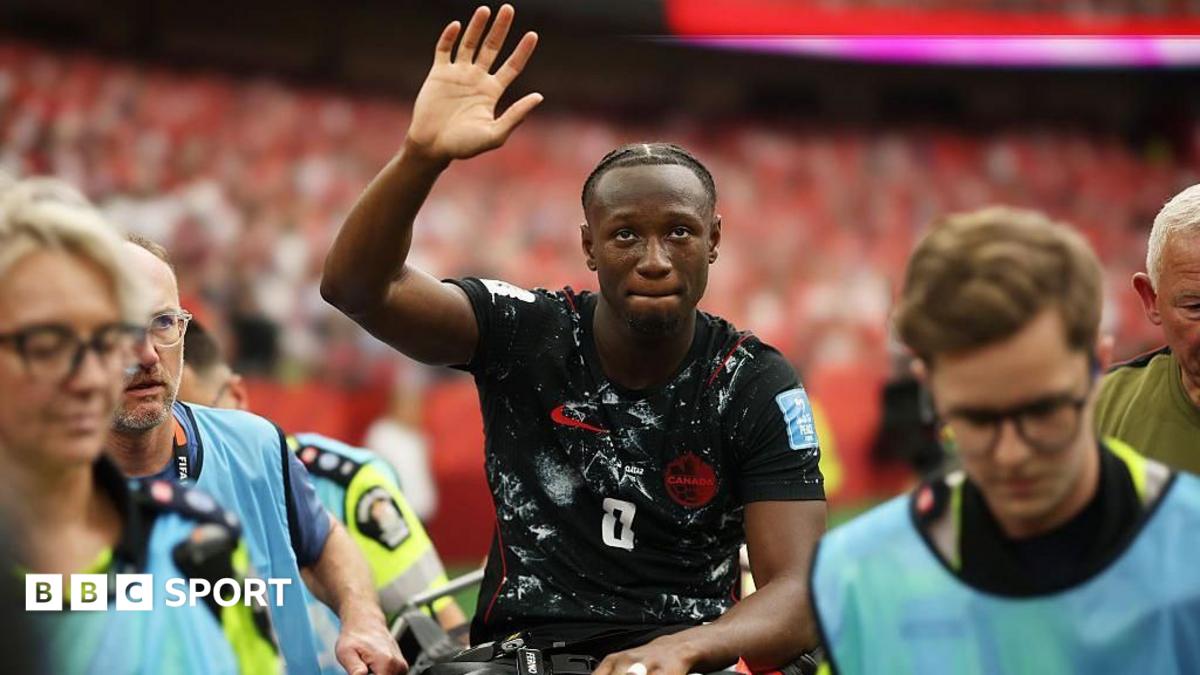
Forty years after making their FIFA World Cup debut, Canada earned a long-awaited, history-making first tournament victory with a dominant 6-0 thrashing of Qatar at a sold-out, raucous Vancouver Stadium. The result leaves the Canadian side on the cusp of qualification for the knockout round of 32, an achievement many thought unthinkable for a nation that had never claimed a World Cup point before a 1-1 opening draw against Bosnia-Herzegovina. But what should have been an afternoon of unbridled celebration was quickly marred by a horrific career-interrupting injury to Canadian midfielder Ismael Kone.
The fateful incident unfolded in the 53rd minute, with Canada already holding a comfortable 3-0 lead. Shortly after collecting a pass, the 24-year-old Sassuolo player was caught with a late, reckless challenge by Qatar’s Assim Madibo. The impact left Kone with a visibly broken leg, and his immediate reaction of anguish and shock made the severity of the injury clear to everyone in the stadium. Teammates rushed to his side in distress as the referee stopped play to allow medical personnel onto the pitch, while Madibo stood stunned, hands clasped to his head in disbelief. Tensions boiled over soon after, sparking a brief scuffle between the two sides as frustration over the hard tackle boiled over.
Despite suffering an injury that has ended his 2026 World Cup campaign, Kone displayed remarkable composure and grit as he was stretchered off the field, lifting a thumb to the cheering crowd and waving to supporters to acknowledge their support. Canadian head coach Jesse Marsch later described the harrowing scene, noting that everyone in the technical area could hear the bone snap. “He’s at the hospital now preparing for surgery,” Marsch told reporters post-match. “Everybody’s a little shaken by this. Ismael is such a core part of this team, and this is a huge loss for us.”
Even amid the shock and grief of losing one of their key players, the Canadian squad pulled together to stay focused on the match, just as Kone would have wanted. After the hydration break, during which Marsch was seen openly in tears, Canada pushed forward and scored three more goals to cement their lopsided win. Substitute Nathan Saliba, who stepped in for Kone after the injury, held up Kone’s jersey after scoring the team’s fourth goal as a tribute to his fallen teammate.
Marsch confirmed after the final whistle that Madibo had visited the Canadian dressing room to apologize for the tackle, and he emphasized that he does not believe the challenge was made with malicious intent. “I don’t think he meant such a gruesome tackle, I don’t fault him for that,” Marsch said. “But I don’t understand the reaction from their bench.” Madibo was sent off for the foul, leaving Qatar to finish the match with nine men after Homam El Amin was also red-carded in the first half for a professional foul on Tajon Buchanan.
The historic result puts Canada one point away from guaranteed knockout round qualification. The side will next face Switzerland, where a win will lock in first place in their group and allow them to remain on home soil for the knockout stage. Reflecting on the moment that defined the match beyond the scoreline, Marsch praised Kone’s character and the tight bond that holds the Canadian squad together. “It is a statement about Ismael, but also this is an incredible team. I have been telling people for years about the character of this group,” he said. “You got to see how everyone was crushed but we had to find a way to stay focused… In a moment like this, I don’t think they need me so much, they have each other.”
Marsch added that Kone remains in good spirits despite the injury, and expressed confidence the midfielder would return stronger than ever. “He will be back stronger than ever and he will continue to have a great career,” Marsch said. “I said at the water break that he would want us to finish this game – and that is what the guys did.”
After the final whistle, the team allowed themselves a brief moment to celebrate their landmark victory, gathering in a huddle before completing a lap of honor to thank the sold-out crowd of cheering Canadian fans. For Marsch, the result is a career-defining moment: he took over the Canadian job in May 2024, after being sacked by Leeds United a year prior and being passed over for the head coaching role with his native United States. He called the opportunity to lead Canada at a home World Cup a unique chance to redefine soccer in the country.
“No-one will forget this. No Canadian will forget this day,” Marsch said. “It is an incredible, seminal moment in this country.”