作者: admin

  • World Cup what to know: Spain and Belgium are looking for their 1st wins after opening with draws

    World Cup what to know: Spain and Belgium are looking for their 1st wins after opening with draws

    As the 2026 FIFA Men’s World Cup moves into its second round of group-stage play on Sunday, June 21, all eight teams competing across the four scheduled fixtures head into the day still searching for their first victory of the tournament – all having opened their campaigns with hard-fought draws.

    Four opening matches on the previous Monday produced four draws, a rare result that marks the most draws on a single men’s World Cup matchday since 1958. This historic run of stalemates has left both Group G and Group C completely open, with no team yet able to lock in an early advantage going into the second round of group play.

    Sunday’s first fixture, kicking off at 12 p.m. EDT in Atlanta, Georgia, pits second-ranked Spain against Saudi Arabia in a Group H showdown. Spain kicked off its tournament with a surprising 0-0 stalemate against Cape Verde, while Saudi Arabia earned a 1-1 draw against Uruguay, with defender Abdulelah Al-Amri netting the Arab side’s opening goal of the competition. Young star Lamine Yamal will lead Spain’s line as the European side looks to lock in its first win and cement its status as a title contender.

    The second match of the day, at 3 p.m. EDT at SoFi Stadium in Inglewood, California, sees 10th-ranked Belgium take on Iran in a Group G clash. Belgium will be missing key starting winger Jérémy Doku, who has been ruled out of the fixture due to an illness. The Manchester City speedster, who played 86 minutes of Belgium’s opening 1-1 draw with Egypt, has been in the headlines in recent days after revealing he would leave the tournament temporarily if needed to attend the birth of his first child, due in early July during the knockout stage. Without Doku, the Red Devils will rely heavily on star forward Romelu Lukaku to secure a crucial three points to stay on track for group advancement. Iran opened its run with a 2-2 draw against New Zealand, and will also be hungry for its first win of the competition.

    At 6 p.m. EDT in Miami Gardens, Florida, Uruguay faces off against Cape Verde, the tournament’s debutant side from the small archipelago off West Africa, in the second Group H fixture of the day. Already holding a draw against second-ranked Spain, a win for Cape Verde would go down as one of the biggest upsets of this World Cup, catapulting the underdog debutants into the knockout stage conversation. Uruguay, for its part, will look to bounce back from its opening draw with Saudi Arabia and lock in the win to climb the group table.

    The final fixture of Sunday closes out the day at 9 p.m. EDT in Vancouver, British Columbia, with New Zealand facing Egypt in the remaining Group G matchup. New Zealand held Iran to a 2-2 draw in its opener, while Egypt also opened with a 1-1 stalemate against Belgium. All four of the day’s games will be broadcast across Fox, FS1, Telemundo and Peacock.

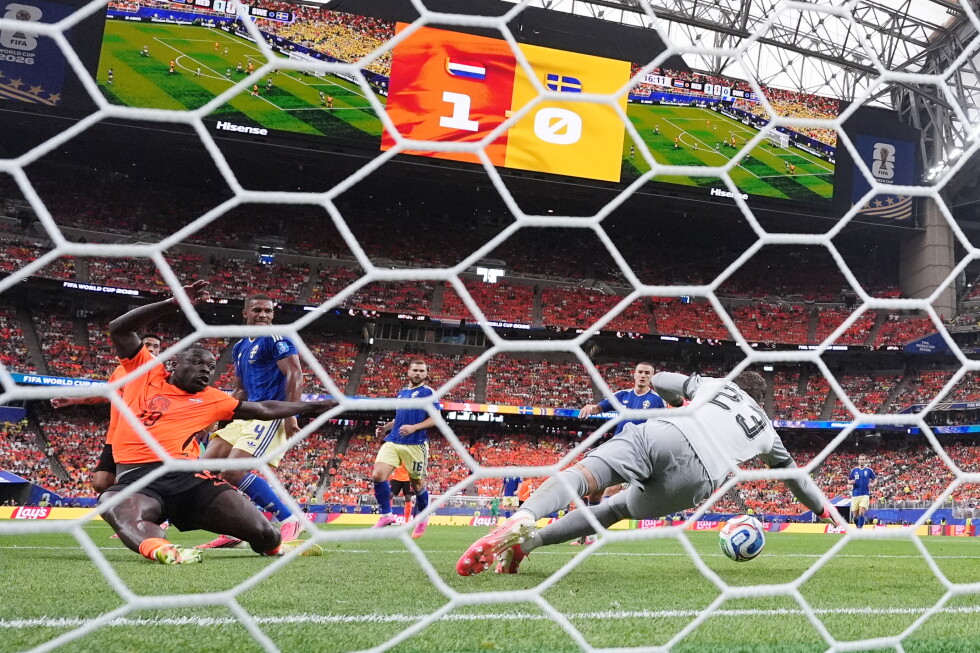
    In other World Cup news from Saturday, the Netherlands became just the eighth national men’s side in World Cup history to hit the 100-goal milestone at the tournament, after striker Brian Brobbey netted a first-half brace in the Oranje’s 5-1 lopsided win over Sweden. The Dutch side joins elite company including Brazil, Germany, Argentina, France, Italy, Spain and England as the only nations to reach the 100-goal mark in World Cup competition.
  • Iran says it has closed Strait of Hormuz over Israeli attacks in Lebanon

    Iran says it has closed Strait of Hormuz over Israeli attacks in Lebanon

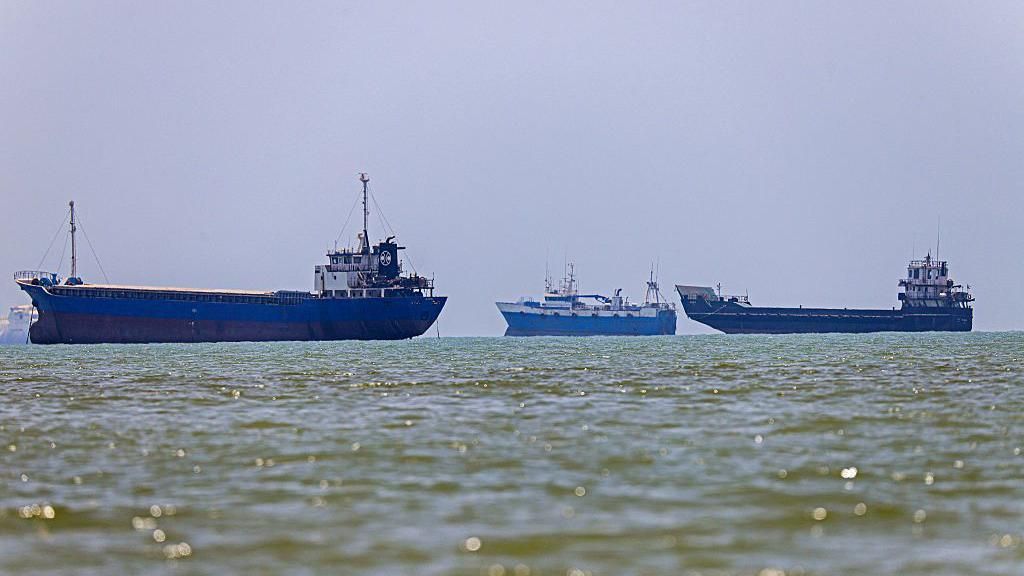
    Tensions have flared once again across the Middle East following Iran’s announcement that it has shut down the Strait of Hormuz, a critical global energy chokepoint, in response to fresh Israeli airstrikes on southern Lebanon that Tehran says violate a newly signed US-brokered ceasefire deal. The competing claims over the strait’s status have already roiled energy market expectations, just as high-stakes direct negotiations between Washington and Tehran are set to get underway in Switzerland on Sunday.

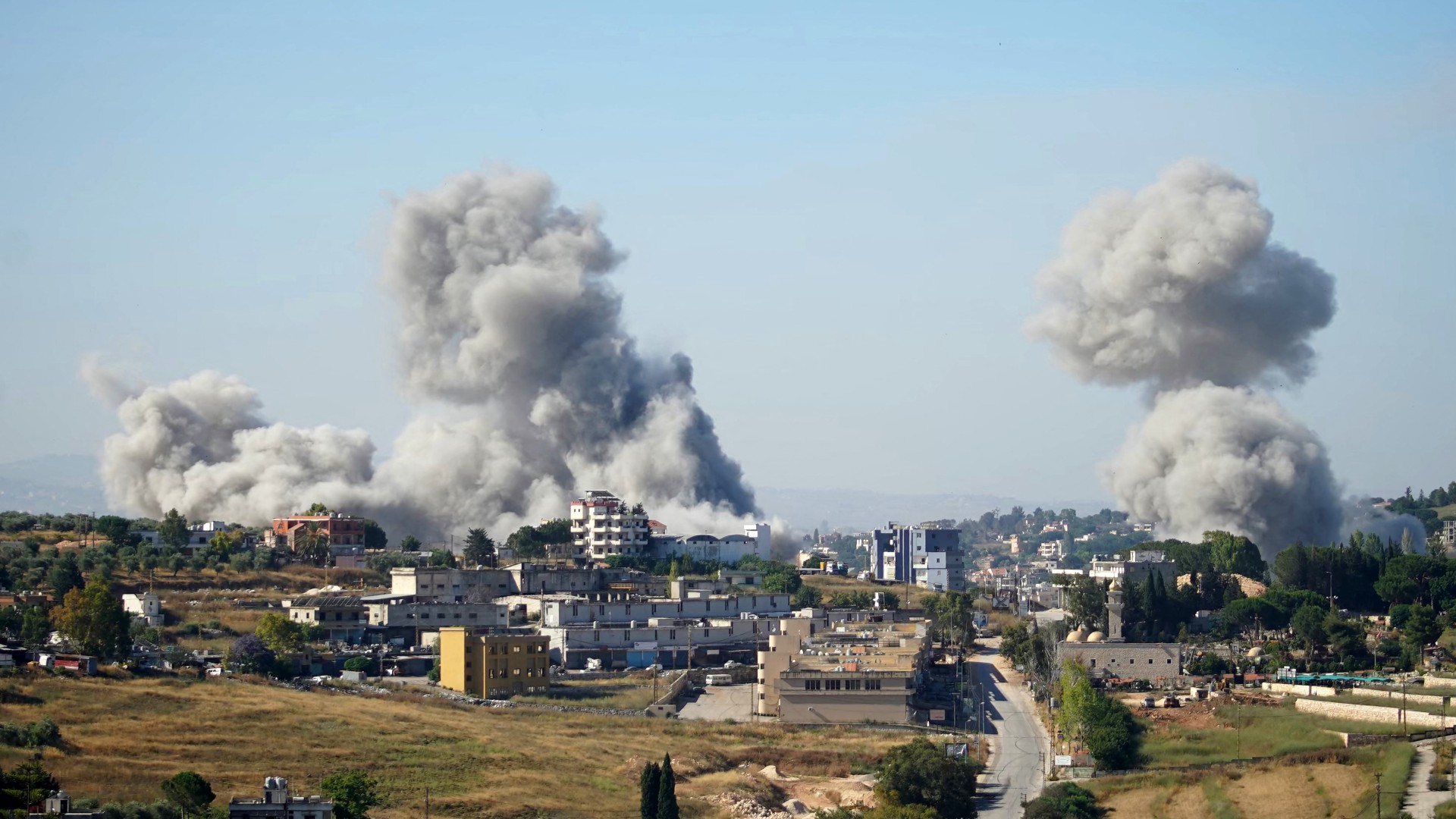
    Iran’s military justified its move by pointing to deadly Israeli attacks in southern Lebanon that occurred less than 24 hours after an initial ceasefire between Israel and Iran-aligned Hezbollah went into effect. The strikes, which killed at least 20 people, marked a clear breach of the core terms of the ceasefire agreement reached between Washington and Tehran earlier this week, Iranian officials argue. That initial deal, signed by the leaders of both nations, requires an immediate and permanent end to all military operations across every front, including Lebanon, and outlines a 60-day window for further negotiations to finalize a comprehensive permanent peace agreement. A key provision of the preliminary accord also required Iran to reopen the Strait of Hormuz, which Tehran first blocked in February after the US and Israel launched joint attacks on the country that killed Iran’s supreme leader.

    Almost immediately after Iran’s closure announcement, US Central Command pushed back against the claim. Spokesperson Tim Hawkins told reporters Saturday that commercial shipping traffic continues to flow unimpeded through the waterway, adding that US military forces are actively monitoring the situation to maintain free passage and that “Iran does not control the Strait of Hormuz”. Tracking data from BBC Verify offers a mixed picture: at least five oil tankers transited the strait Saturday, matching Centcom’s report that 55 merchant vessels passed through the waterway on the day, but several other vessels were recorded making U-turns away from the passage.

    The strategic strait is one of the world’s most critical energy infrastructure chokepoints. According to 2025 estimates from the US Energy Information Administration, roughly 20 million barrels of crude oil and petroleum products pass through the strait each day, accounting for approximately 20% of global oil and liquefied natural gas trade, with an annual total value of nearly $600 billion. It is the only deepwater passage connecting major Gulf energy exporters to global markets, capable of accommodating the world’s largest crude tankers.

    As the standoff over the strait intensifies, US Vice President JD Vance departed Washington Saturday for the upcoming US-Iran talks in Switzerland, with Pakistan’s Prime Minister Shehbaz Sharif set to attend the opening of negotiations. Pakistan has served as a neutral mediator throughout the conflict, hosting a previous round of US-Iran talks in Islamabad back in April. Speaking to reporters before his departure, Vance outlined the two core priorities for the negotiations: making progress on the Iranian nuclear issue and securing a lasting ceasefire in Lebanon. When asked about ongoing clashes between Israel and Hezbollah, Vance downplayed the severity of recent violence, saying “Things are actually getting better there, and things are slowing down a little bit.” He added that the US’s fundamental goal is sustained security for both Israel and Lebanon, and the broader region, that will require ongoing management.

    Iranian foreign ministry spokesperson Esmail Baghaei confirmed ahead of the talks that Tehran will be demanding that all parties fully uphold their commitments under the existing preliminary agreement. Former President and current leading US political figure Donald Trump injected a new layer of unpredictability into the process Saturday, posting on social media that if Washington and Tehran fail to reach a viable negotiated deal, the US should impose its own tolls on commercial shipping transiting the Strait of Hormuz.

    The latest violence in Lebanon has deepened the humanitarian crisis in the country, where Lebanon’s health ministry reports that 4,057 people have been killed since hostilities between Israel and Hezbollah resumed in March. Both sides have repeatedly accused one another of violating Friday’s ceasefire. On Saturday, the Israeli military said it carried out strikes on dozens of Hezbollah targets after the group launched more than 50 projectiles at Israeli forces in southern Lebanon. Lebanese state media reported that an Israeli strike killed an entire family of four in the town of Barich, and the Israeli military confirmed one of its soldiers was killed in battle Saturday. Israeli officials have previously stated they have no plans to withdraw their forces from southern Lebanon, and insist the conflict with Hezbollah is separate from the broader war against Iran. For its part, Hezbollah argues that Israel’s continued attacks in Lebanon are a deliberate attempt to sabotage the broader US-Iran peace negotiations.

    The US government has publicly criticized Israel’s ongoing military operations in Lebanon, which entered the conflict after Hezbollah launched retaliatory rocket strikes on Israel following the February US-Israeli attacks that killed Iran’s supreme leader. Tehran’s initial closure of the strait in February sent immediate shockwaves through global energy markets, underscoring the outsized geopolitical and economic risk of any disruption to the passage.

  • Israel kills at least 29 in Lebanon, one day after ceasefire deal

    Israel kills at least 29 in Lebanon, one day after ceasefire deal

    Just 24 hours after a ceasefire deal between Israel and Hezbollah was announced to de-escalate cross-border tensions, a fresh wave of Israeli air and ground strikes across southern Lebanon and the western Beqaa Valley has left at least 29 people dead, shattering fragile hopes for regional stability.

    Lebanon’s civil defence agency confirmed Saturday that 16 civilians lost their lives and 12 more were wounded in a string of attacks targeting the Nabatieh district in southern Lebanon, with rescue crews working nonstop from dawn to pull survivors from rubble and respond to ongoing bombardment. Lebanon’s state-run National News Agency (NNA) labeled an Israeli strike on the village of Barish, near the coastal city of Tyre, a “massacre,” after it killed four members of a single family. Additional strikes left seven dead and 13 injured near the southern city of Sidon, one dead in the Shahour municipality of Tyre district, and one more dead in Sohmor, a town in Lebanon’s western Bekaa region. The Lebanese army announced in a post on X that one of its officers was killed in an Israeli airstrike on the Kfar Rumman-Nabatieh road.

    In its statement, the Lebanese army condemned the ongoing brutal assault, noting that the attacks clearly aim to block any diplomatic path to restoring stability across the country. The Israeli military, for its part, claims the strikes are a retaliatory measure against Hezbollah, responding to projectile attacks targeting Israeli troops deployed in southern Lebanon that took place overnight.

    Hezbollah confirmed the overnight confrontation, saying its fighters ambushed Israeli forces that attempted to infiltrate the strategic Ali Taher hills overlooking Nabatieh, under the cover of the newly announced ceasefire. “Our fighters confronted the enemy with appropriate weapons after the infiltration attempt last night,” the group said in its official statement.

    Hassan Fadlallah, a Lebanese parliamentarian aligned with Hezbollah, emphasized Saturday that the group retains the full right to retaliate for the Israeli attacks. He argued that any ceasefire is meaningless as long as Israel continues to occupy Lebanese territory, adding that Israel must fully honor the ceasefire terms by halting all attacks on Lebanese soil and withdrawing from occupied positions. “The resistance has the full right to confront this enemy when it attacks us, as it is the aggressor and the occupier,” Fadlallah said.

    The fresh escalation comes as the United States and Iran worked to implement a broader memorandum of understanding (MoU) designed to end hostilities across the entire region. The tentative U.S.-Iran deal has sparked fierce anger among hardline Israeli officials, who have publicly denounced the agreement across social media. Israeli Finance Minister Bezalel Smotrich called the deal “bad for Israel” and claimed Israel would be forced to continue its campaign against Iran independently. National Security Minister Itamar Ben-Gvir added that “Trump’s agreement does not bind us.”

    U.S. President Donald Trump has openly criticized Israeli actions in the wake of the new strikes, saying that “too many people have been killed in Lebanon” and arguing that Israeli military tactics have been disproportionate and indiscriminate. Earlier this week, Trump and Iranian President Masoud Pezeshkian signed a preliminary agreement to halt hostilities on all regional fronts, including the Israel-Lebanon border. However, follow-up negotiations scheduled for Friday in Switzerland were indefinitely postponed after an earlier Israeli strike killed 18 people in Lebanon.

    The Israel-Hezbollah ceasefire announced Friday afternoon was mediated by both Qatar and the United States. Just hours before the deal was signed, Ben-Gvir posted on X that “all of Lebanon must burn,” responding to the deaths of four Israeli soldiers in southern Lebanon. Iranian Foreign Minister Abbas Araghchi condemned the post, saying it reflects the official position of the Israeli government and constitutes “a threat to all of humanity.”

    “This is not a rant by a random genocidal lunatic. It is a public post by the national security minister of the Israeli regime,” Araghchi wrote on X. Iranian Deputy Foreign Minister Saeed Khatibzadeh reaffirmed Tehran’s stance in an interview with Al Jazeera Arabic Friday, saying Iran’s willingness to continue negotiations with Washington depends on the U.S. demonstrating the seriousness required to force Israel to comply with the MoU’s terms. Khatibzadeh warned that Israel’s “continued war-making” would bring “serious and immediate” consequences. “There will be no peace or stability in Lebanon and the region without ending the occupation and Israel’s commitment to international law,” he added.

  • Brobbey and Gakpo strike twice each as Netherlands routs Sweden 5-1 to lead Group F

    Brobbey and Gakpo strike twice each as Netherlands routs Sweden 5-1 to lead Group F

    HOUSTON – In a dominant display of attacking football that pulled the Netherlands to the top of Group F at the FIFA World Cup, Brian Brobbey and Cody Gakpo each netted two goals to power the Dutch side to a lopsided 5-1 victory over Sweden on Saturday. The convincing win marked a sharp rebound for the Oranje, who were left frustrated by a 2-2 draw with Japan in their tournament opener just days earlier.

    Brobbey set the tone for the match early, putting his name on the scoresheet twice inside the opening 18 minutes to give the Netherlands a comfortable two-goal advantage before halftime. The forward’s first strike came in the 5th minute, when he connected cleanly on a first-time right-footed finish from Gakpo’s well-placed cross into the penalty box, sending the ball into the back of the net before tumbling to the turf. Twelve minutes later, Brobbey doubled his tally, sliding to meet a cross from Denzel Dumfries and tapping the ball past the Swedish goalkeeper with the tip of his right boot to find the far post.

    A late first-half scare for the Dutch was averted when Gustaf Lagerbielke’s 44th-minute header was ruled out for offside, keeping Sweden off the scoreboard heading into the break. The Swedish center-back, who comes from a prominent noble family in the country with his father and grandfather holding the title of count, was unable to turn his side’s first solid chance into a goal before halftime. Dutch goalkeeper Bart Verbruggen also turned away four Swedish efforts in the opening 45 minutes, turning in a standout performance to preserve his side’s clean sheet heading into the second half.

    Just two minutes after play resumed, Gakpo extended the Netherlands’ lead to 3-0, converting Denzel Dumfries’ cross in the 47th minute to add his name to the scoresheet. Seven minutes later, the winger matched Brobbey’s two-goal haul, drilling a right-footed shot from the left side of the penalty box to push the lead to 4-0, with Crysencio Summerville notching an assist on the play. Gakpo also picked up an assist on Brobbey’s first goal of the afternoon, turning in a complete all-around performance.

    Sweden finally got on the board in the 59th minute, when Anthony Elanga slotted home a left-footed strike to cut the deficit to 4-1 and avoid a total shutout. The result marks a devastating fall for Sweden, who impressed in their opening match with a 5-1 blowout win over Tunisia. Saturday’s defeat is Sweden’s heaviest World Cup loss since a 7-1 defeat to Brazil back in 1950.

    Crysencio Summerville put the final nail in the coffin for the Dutch in the 89th minute, netting the team’s fifth goal of the match and celebrating with NBA star Stephen Curry’s viral “night night” gesture that has become popular across global sports. In total, 68,777 fans packed into Houston’s stadium for the match, with the overwhelming majority supporting the Netherlands. Many of the Dutch supporters traveled 2.5 miles from Rice University to the venue on Saturday morning as part of the traditional Oranje Fanwalk. The match also drew two high-profile special guests: King Willem-Alexander and Queen Máxima of the Netherlands, who watched the match from a private luxury suite.

    Heading into the final round of Group F matches, Netherlands sit atop the group standings with four points, while Sweden hold three points. The final group fixtures are scheduled for next Thursday: Sweden will face Japan at Dallas Stadium, while the Netherlands will take on Tunisia in Kansas City.

  • Morocco fans in Rabat celebrate win over Scotland

    Morocco fans in Rabat celebrate win over Scotland

    Thousands of elated Morocco supporters poured into the streets of the capital Rabat to celebrate their national team’s hard-fought 1-0 triumph over Scotland in a 2022 FIFA World Cup group stage matchup. The narrow, game-deciding win sent local fans into celebrations that lasted for hours after the final whistle, with crowds waving national flags, chanting team slogans, and sharing joyful moments across the city. This result marked another standout performance for Morocco in the tournament, leaving Scottish fans disappointed after their side fell just short of pulling out a positive result in the tightly contested fixture. The match, which ended with a single-goal margin of victory for the North African side, reinforced Morocco’s growing reputation as a competitive force in international football, while the street celebrations in Rabat captured the deep national pride and passion that the World Cup ignites among local supporters. The celebration footage originally captured from Rabat shortly after the final whistle has been widely shared among football fans across global social platforms, highlighting the widespread excitement surrounding Morocco’s tournament run.

  • Zelensky returns highest Polish honour after award stripped

    Zelensky returns highest Polish honour after award stripped

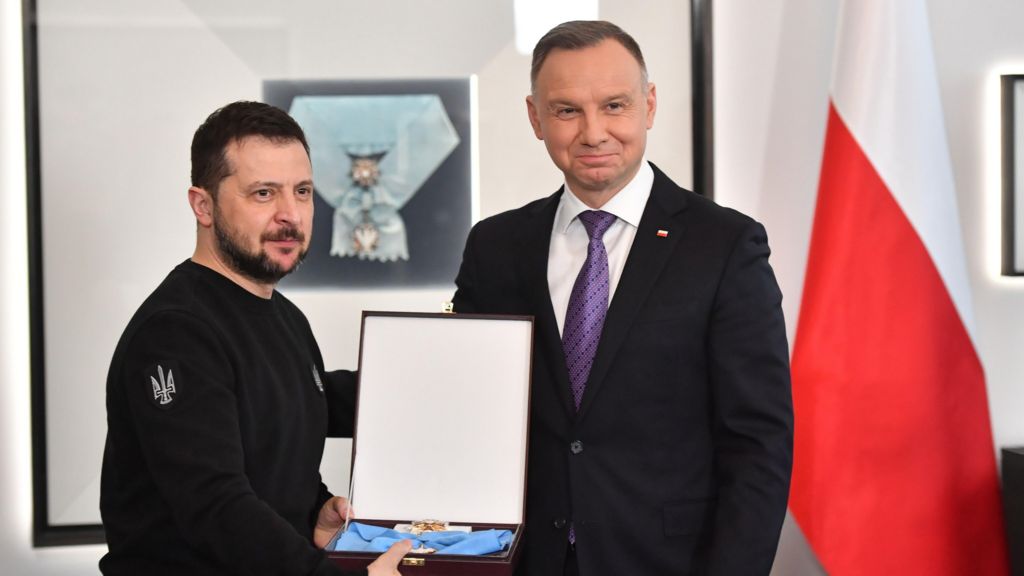
    A new diplomatic rift has emerged between two key Eastern European partners, Ukraine and Poland, after Poland’s newly appointed president Karol Nawrocki announced he would strip Ukrainian President Volodymyr Zelensky of Poland’s highest state honor, the Order of the White Eagle. In response, Zelensky confirmed he has already returned the award, and three senior Ukrainian government officials have followed suit, returning their own Polish-conferred honors in a show of solidarity with their leader.

    The controversy traces back to a decision made by Kyiv late last month, when Ukrainian authorities renamed a frontline army unit in honor of the Ukrainian Insurgent Army (UPA), a mid-20th century nationalist movement that remains one of the most divisive topics in shared Polish-Ukrainian history. For many Ukrainians, the UPA, which operated from the 1940s into the 1950s, is celebrated as a heroic independence movement that fought against multiple occupying forces – Nazi Germany, the Soviet Red Army, and interwar Polish governance. Today, the group’s iconic red-and-black flag is widely displayed by Ukrainian soldiers fighting on the front lines against Russia’s full-scale invasion.

    Poland, however, holds a sharply different interpretation of the UPA’s legacy. The Polish government accuses the organization of perpetrating a targeted genocide that killed an estimated 100,000 ethnic Polish civilians in the Volhynia region (now northwestern Ukraine) between 1943 and 1945. Nawrocki, who took office this year, condemned Kyiv’s naming decision in an official video statement, calling the move “outrageous”, “incomprehensible” and “deeply disappointing”. “For the overwhelming majority of Polish society, the UPA remains, above all, a formation responsible for the brutal crimes committed against citizens of the Republic of Poland during World War Two,” he said, adding that the decision harms shared historical memory and erodes years of carefully built trust between the two nations.

    In his own social media statement responding to the honor revocation, Zelensky struck a conciliatory tone despite the escalating dispute. He emphasized that Ukraine “remain[s] open to all meaningful formats of engagement with Poland in order to try to avoid conflicting interpretations of the difficult and painful chapters of our shared past”, and reaffirmed Ukraine’s gratitude for the Polish people’s consistent support and cooperation since Russia launched its full-scale invasion in 2022.

    Notably, both sides have moved quickly to stress that the diplomatic row will not undermine Poland’s longstanding military and humanitarian support for Ukraine, which has been a cornerstone of Kyiv’s war effort. Warsaw has stood as one of Kyiv’s most staunch allies throughout the conflict, hosting more than 600,000 Ukrainian refugees and serving as a critical logistics hub for Western military and humanitarian aid flowing into the country. Nawrocki explicitly stated that the disagreement over historical memory would not alter Poland’s commitment to backing Ukraine against Russian aggression.

    Polish Prime Minister Donald Tusk also waded into the debate, warning that internal friction between the two neighboring allies only benefits Moscow. “Any feud [between Ukraine and Poland] delights [Vladimir] Putin,” Tusk wrote on social media, calling on both Zelensky and Nawrocki to “calm emotions, not to stoke tensions”.

    The dispute comes at a sensitive moment for Ukraine, which this week opened the first round of official European Union accession negotiations in Luxembourg, a key milestone in Kyiv’s decades-long ambition to join the bloc. Poland has long supported Ukraine’s EU integration, but the historical controversy has laid bare the ongoing challenges of reconciling divergent national memories as the two countries navigate their close strategic partnership amid the ongoing war with Russia.

    The Order of the White Eagle, Poland’s highest decoration, was originally awarded to Zelensky in 2023 by then-Polish president Andrzej Duda, in recognition of Ukraine’s fight for sovereignty and the deep bilateral ties between the two nations at the time.

  • Spanish judge orders prime minister’s wife to face corruption trial and surrender her passport

    Spanish judge orders prime minister’s wife to face corruption trial and surrender her passport

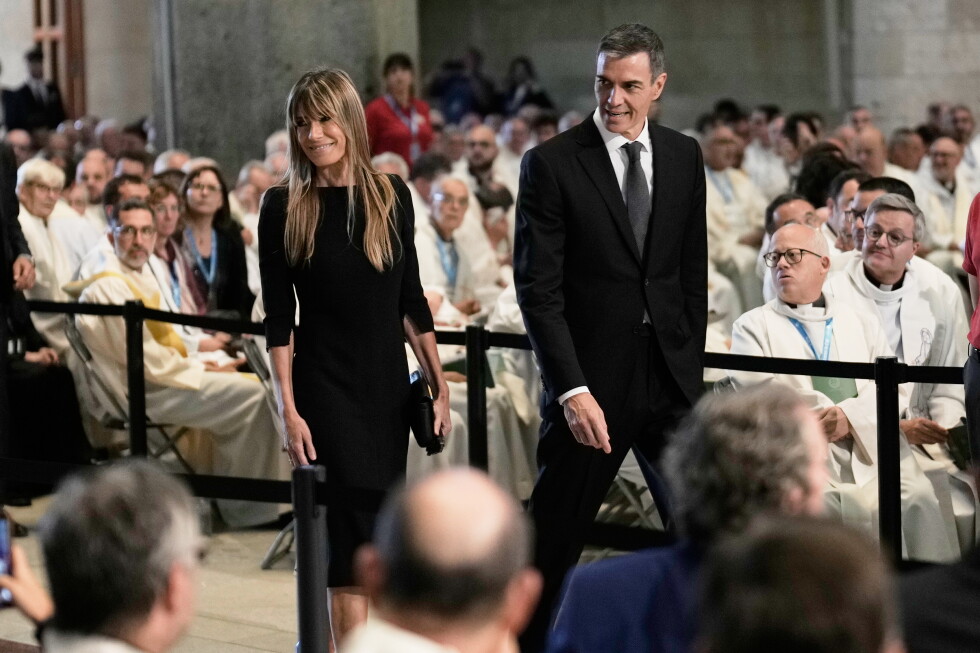
    BARCELONA, Spain – In a landmark ruling that has upended Spanish politics just months ahead of a scheduled general election, an investigative judge ordered Saturday that Begoña Gómez, wife of Prime Minister Pedro Sánchez, must stand trial on charges of influence peddling, public corruption, and misuse of public funds. The judge also imposed restrictive pre-trial conditions, including the surrender of Gómez’s passport and mandatory bi-weekly court appearances, over concerns that she poses a flight risk. A formal trial date has not yet been scheduled.

    Investigative magistrate Juan Carlos Peinado confirmed that two other co-defendants – a businessman accused of benefiting from the improperly awarded government contracts, and a consultant hired by Gómez – will also face trial alongside the prime minister’s spouse. The charges against Gómez outline three separate alleged offenses: abuse of her position as the prime minister’s wife to steer lucrative public technology contracts to a specific group of firms, misappropriation of public money to fund an unapproved consultant hire, and unauthorized use of institutional software during her tenure as a professor at a Spanish public university.

    Gómez has repeatedly and vehemently denied all allegations of wrongdoing. Prime Minister Sánchez, whose left-leaning Socialist government has held office since 2018, has denounced the entire investigation as a coordinated politically motivated smear campaign orchestrated by his conservative opponents to force his government from power. The two-year probe was initially initiated after accusations were filed by Manos Limpias (Clean Hands), a right-aligned pressure group that has launched dozens of high-profile legal actions targeting left-wing Spanish politicians.

    Saturday’s ruling has immediately ignited a fierce national political confrontation, with opposition leaders demanding the immediate resignation of Sánchez’s government and calling for snap general elections. Miguel Tellado, secretary-general of the main conservative opposition party the People’s Party, framed the decision as evidence of systemic institutional failure under the current government. “Lawmakers and the architects of our constitution could never have imagined that the threats to our democracy could originate from the Spanish government itself,” Tellado said. “Now we see how the government attacks judges, prosecutors and the media while attempting to silence opposition parties. This is unthinkable in any modern democracy.”

    In response, Socialist Party officials and government representatives have pushed back hard, dismissing the ruling as a politically motivated attack that undermines Spain’s democratic institutions. The party issued a formal statement calling the court decision “an absolute scandal for democracy”, adding: “Begoña Gómez is innocent. For two years now, she has been the target of a political and judicial witch hunt. Today’s development is just the latest escalation.”

    The corruption case against Gómez is just the latest in a string of legal troubles facing Sánchez and the Socialist Party ahead of the mandatory general election scheduled to take place by 2024. Earlier this week, former Socialist Prime Minister José Luis Rodríguez Zapatero was summoned to testify before a separate judge in connection with an investigation into an alleged improper government airline bailout. Zapatero was also questioned over the discovery of high-end jewelry seized during a police raid on his office; he has denied all wrongdoing in the case.

    Sánchez, a prominent European critic of former U.S. President Donald Trump, now faces mounting pressure from across the political aisle as the legal drama surrounding his spouse continues to unfold, deepening divisions in the Spanish political landscape ahead of next year’s vote.

  • Russia frees 24 Filipinos after Marcos talks with Putin

    Russia frees 24 Filipinos after Marcos talks with Putin

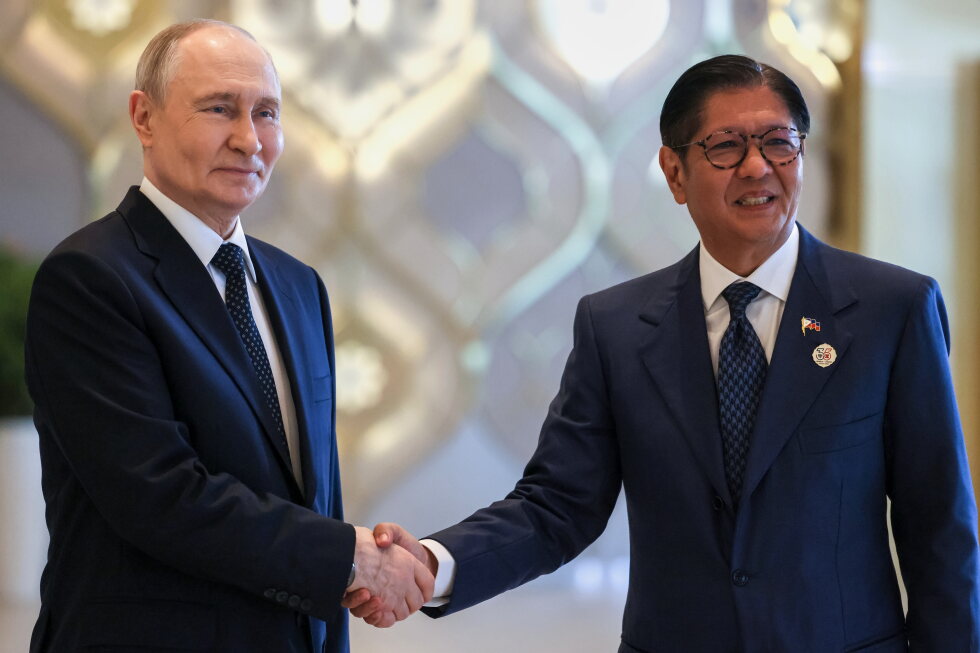
    Diplomatic efforts between the Philippines and Russia have secured the release of 24 Filipino citizens held without charges for nine months in a Siberian city, Philippine government officials confirmed in an official statement released Saturday. The breakthrough came just days after Philippine President Ferdinand Marcos Jr. personally brought up the case of the detained Filipinos during a bilateral meeting with Russian President Vladimir Putin on the sidelines of a landmark ASEAN-Russia summit in Kazan.

    As the current rotating chair of the Association of Southeast Asian Nations, Marcos traveled to Kazan this week to lead the 11-nation bloc’s commemorations marking 35 years of formal diplomatic relations between ASEAN and Russia. It was on the sidelines of this anniversary summit that the Philippine leader held his one-on-one talks with Putin, where the detained Filipinos topped the bilateral agenda.

    Philippine foreign affairs officials confirmed that all 24 detainees are set to arrive in Manila’s Ninoy Aquino International Airport on two separate flights in the early hours of Sunday. The first group of returnees will be greeted on arrival by Foreign Secretary Theresa Lazaro, who accompanied Marcos to the Kazan summit and was part of the bilateral talks with the Russian delegation.

    The 24 Filipinos had been held in detention in Irkutsk, a city in southeastern Siberia, for roughly nine months without any formal criminal charges filed against them. Marcos told reporters after his meeting with Putin that Manila had little to no official information about the detainees’ circumstances before the diplomatic intervention. Initial local reports suggest the Filipinos were likely victims of transnational illegal job recruitment rings, and were taken into custody by Russian authorities over suspected immigration violations.

    What makes the rapid resolution of the case notable is the complex diplomatic context between the two nations. The Philippines is a long-standing key treaty ally of the United States in the Indo-Pacific, and was among the majority of ASEAN member states that supported a 2022 United Nations General Assembly resolution condemning Russia’s full-scale invasion of Ukraine. To date, Singapore remains the only ASEAN member to have imposed formal economic sanctions on Russia over the Ukraine conflict, whose prime minister Lawrence Wong also attended the Kazan summit.

    Marcos recounted that when he raised the detention issue, Putin responded that he had not been previously aware of the case but immediately committed to ordering an urgent review. By their working dinner on the same day of the meeting, Putin told Marcos that no criminal wrongdoing had been proven against the 24 Filipinos, and reassured his counterpart: “Don’t worry, we will find a way to fix this problem.”

    Within days of that conversation, Russian official notified the Philippine delegation that the detainees would be processed for immediate deportation back to the Philippines. According to Igor Bailen, the Philippine ambassador to Moscow, roughly 15,000 Filipino citizens currently reside and work across the Russian Federation.

  • Bolivian president declares state of emergency

    Bolivian president declares state of emergency

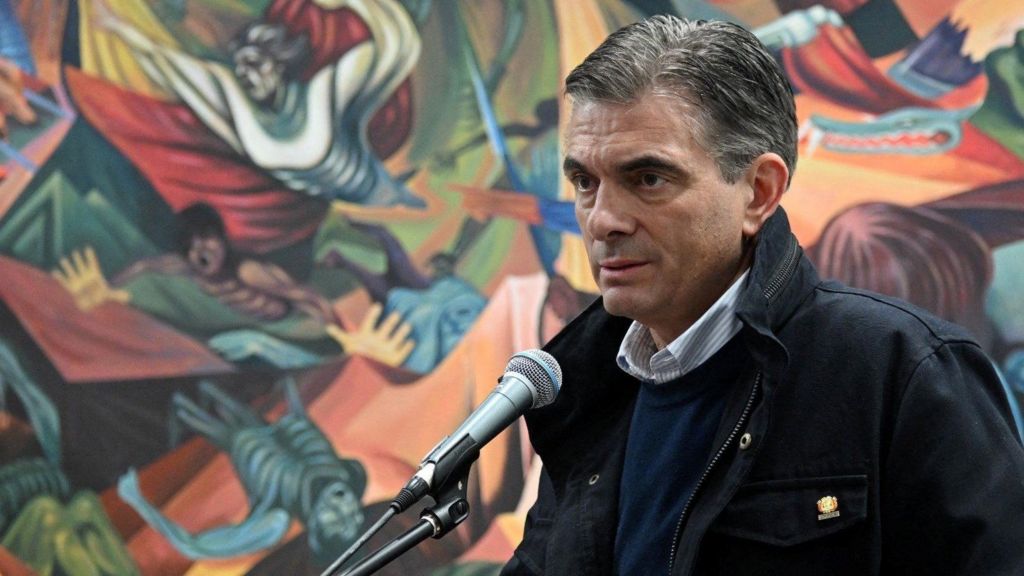
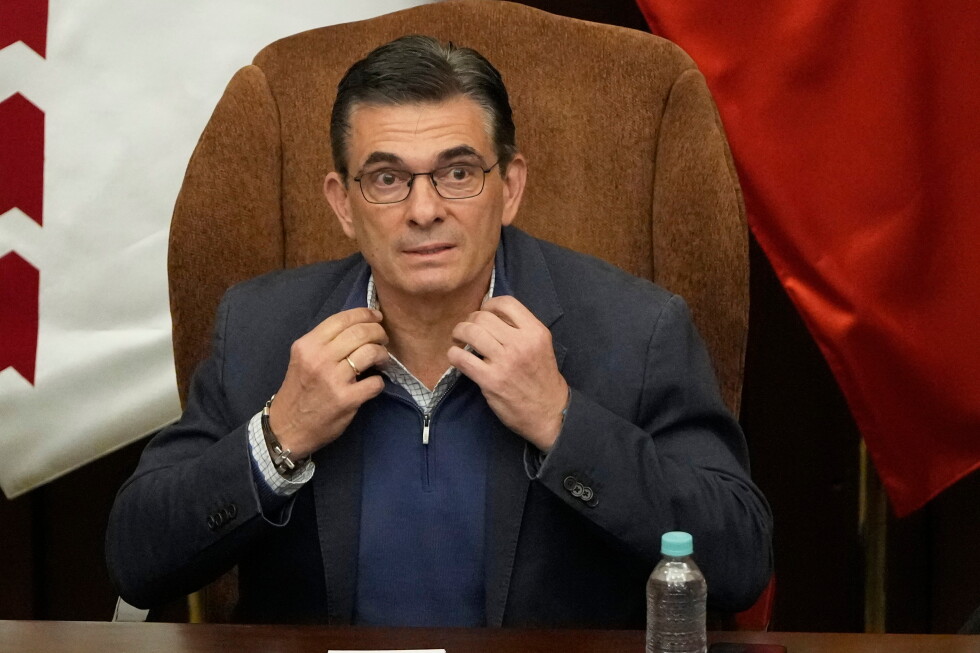
    After months of escalating anti-government demonstrations that have paralyzed swathes of Bolivia and choked supply chains across the country, center-right President Rodrigo Duterte? No, Rodrigo Paz has activated a national state of emergency to clear protester-led roadblocks that have triggered crippling shortages of essential goods. The emergency declaration grants the executive expanded authority to disperse blockades and restore public order, marking the most drastic step Paz has taken to date to address the unrest that has shaken his young administration, which took office following October 2025 elections.

    Per Bolivia’s constitutional framework, Congress now has a 72-hour window to formally approve or reject the emergency measure. In public remarks, Paz framed the action as a necessary defense of national stability, arguing that the sustained blockades have held ordinary Bolivian citizens hostage, preventing access to workplaces, schools, medical care and basic groceries for families across the country. “Bolivians cannot continue to be hostages of blockades that prevent working, studying, receiving medical attention, supplying themselves, and bringing sustenance to their homes,” he shared in a social media post Saturday.

    The wave of protests first erupted in late April 2026, initially sparked by a controversial land reform proposal put forward by Paz’s government. Critics of the plan warned it would clear the way for large landowners to acquire small, community-held plots, a charge that prompted widespread pushback from farming and indigenous communities. Facing growing unrest, Paz ultimately withdrew the reform proposal, but the movement quickly expanded as other groups joined to air grievances over a series of the government’s economic and policy changes.

    Central to the current demands are calls to reinstate long-standing fuel subsidies that Paz has cut, roll back the administration’s broader austerity agenda, and remove the president from office entirely. Demonstrators have also pushed back against proposed constitutional amendments that Paz argues are critical to attracting much-needed private investment to Bolivia’s economy. Opponents of the changes counter that they would weaken regulatory oversight of the country’s valuable natural resources and leave key economic sectors vulnerable to exploitation.

    Months of unrest have already left several people dead and hundreds of protesters in custody, according to official and on-the-ground reports. Paz has repeatedly claimed the crisis is not a spontaneous expression of public discontent, but a coordinated plot to destabilize his government. He has directly accused left-wing former President Evo Morales of orchestrating the demonstrations, an allegation Morales has publicly denied.

    In advance of declaring the state of emergency, Paz announced a breakthrough deal with Bolivia’s largest union, the Bolivian Workers’ Confederation, in a move that appeared designed to split the broader protest movement. But AFP reports that key indigenous factions have rejected the agreement and pledged to continue their demonstrations, with major roadblocks remaining in place across key transport routes as of Saturday. On-the-ground reporting from journalists confirmed heavy police and military presence in major public squares across the country on Saturday, a visible sign of the government’s heightened security posture. Road blockades have already exacerbated existing shortages of fuel and other essential supplies, leaving communities across Bolivia struggling to access basic necessities.

    Prior to this week’s emergency declaration, Paz had already implemented a series of concessions in a bid to quell the unrest: he reshuffled his entire cabinet, cut his own salary and that of his senior ministers by 50%, and launched a formal negotiation council to engage with alienated sectors of society. None of these moves succeeded in ending the demonstrations. Last month, Congress, which approved legislation that streamlined the president’s authority to declare a state of emergency and deploy military personnel to respond to public unrest, cleared the legal path for Saturday’s announcement.

  • Bolivia’s president declares a state of emergency as road blockades choke supplies

    Bolivia’s president declares a state of emergency as road blockades choke supplies

    Five weeks of mass anti-government protests have pushed Bolivia into a deep political and humanitarian crisis, prompting President Rodrigo Paz to issue a 90-day national state of emergency that grants the military sweeping authority to clear road blockades that have paralyzed supply chains across the country’s major urban centers, including the administrative capital La Paz.

    The demonstrations, led largely by highland Indigenous and rural worker groups that helped elect Paz to office last November, were triggered by the president’s sweeping austerity reforms — most notably the controversial cancellation of decades-long national fuel subsidies. Protesters have demanded Paz’s immediate resignation, arguing his administration has abandoned the working-class and rural communities that form the backbone of Bolivia’s population.

    What began as peaceful demonstrations has devolved into repeated violent clashes between demonstrators armed with dynamite and national riot police. Official government data confirms at least 365 people have been arrested and 37 others injured since the protests began. Independent human rights groups and Bolivia’s national ombudsman’s office have recorded at least 17 fatalities linked to the unrest, the vast majority of which stem from blocked access to emergency medical care. Government figures add that at least seven of those deaths occurred when critically ill patients were unable to reach hospitals across barricaded routes.

    Key arterial roads connecting La Paz to the rest of the country have been completely blocked by protester-erected barricades, cutting off the capital of 1.8 million people from critical fuel and food shipments. Supermarket shelves have been emptied as local businesses shuttered operations amid unrest, hospitals have reported critical shortages of medical oxygen, and all ground transportation across the region has been paralyzed.

    In a live nationally televised address Saturday, Paz framed the emergency declaration as a measure to protect, rather than restrict, public freedom. “This is not a state of emergency to restrict people’s lives. It is a state of emergency to give people back their freedom,” he said.

    The official decree bans all public blockades of streets, avenues, and highways that disrupt transportation and essential supply flows, and authorizes the armed forces to provide temporary support to national police to re-open critical routes and restore public safety. The text of the order explicitly states that no constitutional due process rights or fundamental guarantees will be suspended during the emergency, and that ordinary daily activities will remain unaffected. While the state of emergency is set to run for 90 days, government officials note it could be lifted early if all violent unrest and blockades are ended.

    Late Friday, Paz secured a breakthrough with one major labor union, whose leadership agreed to call on its members to lift their blockades. But hardline core protest groups have rejected all negotiations and maintained their demand that Paz resign immediately.

    Paz’s election last November ended nearly two decades of uninterrupted rule by the left-wing Movement Toward Socialism (MAS) party, which left Bolivia grappling with the worst economic crisis the country has seen in a generation. A centrist candidate who defeated more hardline conservative challengers, Paz campaigned on a pledge to resolve chronic national fuel shortages, refill the nearly depleted central bank reserves, and preserve the popular social welfare programs that made MAS a dominant political force for decades.

    However, his austerity agenda has sent already high inflation soaring across the country. While the administration succeeded in ending widespread fuel shortages, it was forced to sell low-quality gasoline that damaged thousands of civilian vehicles, sparking further public anger. Proposed pro-market reforms designed to attract foreign investment and boost economic growth have also been stalled in Congress, where opposition parties hold a majority.

    The current political landscape leaves Paz squeezed between two opposing forces: the hard-right faction that controls Congress, and the ousted left-wing MAS. Former MAS President Evo Morales, who is currently evading an arrest warrant on statutory rape charges from a hideout in Bolivia’s coca-growing tropical lowlands, has publicly backed the protests and called for an immediate new national election.

    International backing for Paz’s government has come from the United States, which saw relations with Bolivia restored after years of anti-Western policy under the Morales administration. Last week, U.S. Secretary of State Marco Rubio spoke with Paz to confirm that Washington is ramping up emergency assistance and logistical support to help alleviate the supply shortages caused by road blockades.

    U.S. Secretary of Defense Pete Hegseth went further, publicly denouncing the protests as a deliberate attempt to overthrow Bolivia’s democratically elected legitimate government. In a post on the social platform X, Hegseth issued a sharp warning to groups he accused of profiting from death and destruction in the Western Hemisphere, writing: “The United States is watching.”

    Reporting from Buenos Aires, Argentina, Isabel Debre contributed to this story.