China’s National Healthcare Security Administration (NHSA) has launched a comprehensive framework of national pricing guidelines that aims to streamline access to innovative medical treatments and standardize essential care services for elderly and pediatric populations, marking a major step forward in balancing technological innovation, industry development and public affordability.
As of the latest update, the administration has rolled out 39 batches of these guidelines, covering approximately 180 categories of emerging medical technologies, products and care services. The new framework establishes unified national standards for service nomenclature, clinical definitions, and overarching pricing structures across all public healthcare institutions, while leaving authority for local governments to set final, context-specific fee levels aligned with regional economic conditions.
Speaking at a press conference held on Monday, Dong Zhaohui, deputy director of the NHSA’s price bidding and purchasing department, outlined that the guidelines encompass a wide range of groundbreaking novel therapies. These include high-tech interventions such as surgical robotics, remote surgical procedures, brain-computer interface (BCI) implants, artificial heart devices, cochlear implants, artificial larynx devices, and high-intensity focused ultrasound treatment. When China granted the world’s first commercial approval for a BCI implant in March this year, the corresponding pricing guideline was released immediately to support rapid clinical rollout.
Beyond neurological and device-based innovations, the framework also covers cutting-edge cancer treatments, including proton radiotherapy, heavy ion radiotherapy, and boron neutron capture therapy — interventions that have long been out of reach for many patients due to unclear pricing and limited infrastructure. Dong explained that when drafting the guidelines, regulators factored in multiple key priorities: fair returns for medical innovators, cost burdens for healthcare institutions, equitable patient access to new treatments, and practical implementation data from pilot regions such as Shanghai. The guidelines explicitly set reasonable payment caps per full treatment course, with a core goal of expanding affordable access for patients across the country.
To further accelerate the adoption of life-saving new technologies, Dong added that the NHSA is exploring a proactive pre-approval pricing model, which would release guidance during the clinical trial stage of novel therapies, rather than waiting for full commercial approval. This early clarity is expected to cut development timelines and help bring new treatments to patients faster.
Industry analysts and healthcare experts say the standardized pricing framework is already unlocking growth across China’s medical innovation ecosystem. Jiang Changsong, a professor at the National Institute of Healthcare Security at Capital Medical University, noted that under the new guidelines, government-referenced prices for invasive BCI implantation sit at around 7,000 yuan ($873) per procedure in Beijing, Hubei and Zhejiang, while non-invasive BCI implantation is priced at roughly 1,000 yuan.
“With a clear pricing benchmark in place, medical enterprises can accurately calculate the return cycle for their R&D investments, which makes investors far more willing to commit capital to innovation. Hospitals also gain a transparent, official basis for service charging, and as a result, the entire industry chain is put into smooth motion,” Jiang explained. He added that the guidelines have already had a tangible impact on advanced cancer radiotherapy infrastructure: with a clear price anchor in place, more regional governments are confident in planning and constructing new proton therapy centers, which will eventually eliminate the need for patients to travel long distances across the country and wait in lengthy queues for life-saving treatment.
For domestic medical device manufacturers, the standardized pricing framework is leveling the playing field in previously unregulated segments. Xing Yuzhu, executive deputy general manager of Beijing Surgerii Robotics Co, noted that before the new guidelines were introduced, surgical robot services lacked uniform national pricing standards, with fragmented pricing structures largely controlled by a small number of leading international companies. Under the new rules, fee structures for both primary surgical and auxiliary robotic procedures are clearly defined, with tiered pricing set based on the level of robotic involvement in each procedure. This structure enables domestic manufacturers to compete on a more equal footing with global brands while still ensuring they can earn reasonable returns on their innovation investments.
In addition to supporting cutting-edge medical innovation, the new pricing guidelines also address pressing public welfare priorities aligned with China’s policy goals. To support the development of a birth-friendly society, the NHSA has added standardized pricing for a range of childbirth-related services, including fetal color ultrasound examinations, labor pain relief, family companionship during delivery, neonatal inpatient beds, general newborn nursing, and specialized care for premature infants.
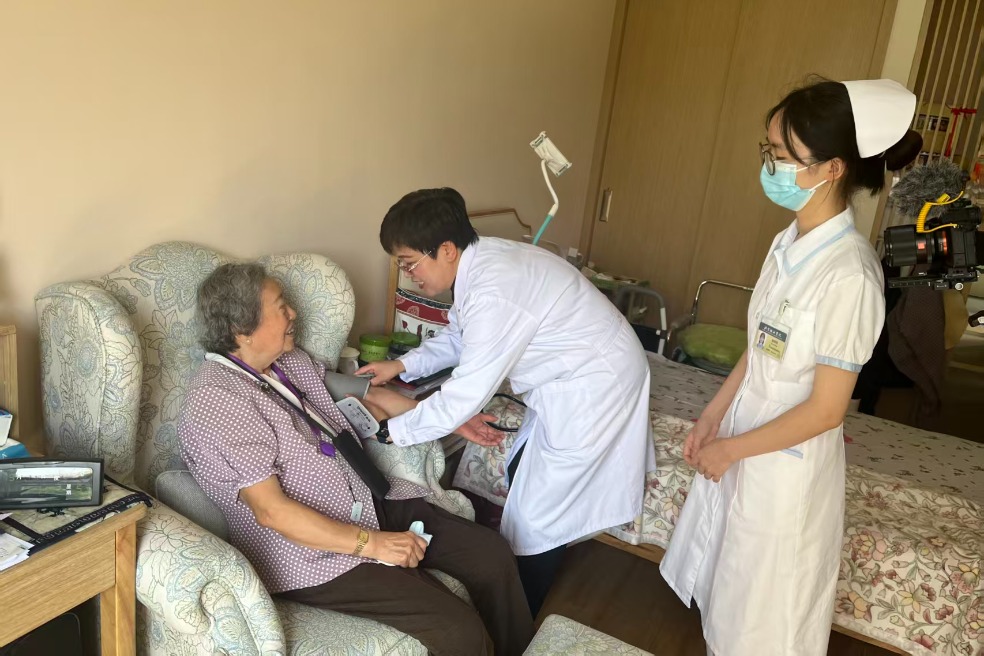
To improve access to high-quality, affordable care for China’s aging population, the administration has also introduced standardized pricing items for a full spectrum of elderly care services. These include 24/7 “companion-free” non-medical inpatient care, home care visits, end-of-life hospice care, home-based hospital beds, online follow-up consultations, and remote health monitoring, all designed to bring essential care services closer to elderly populations.
Dong noted that under the guidelines, one-to-several “companion-free” care services are priced between 100 and 180 yuan per day across different regions, far lower than the 300 to 500 yuan typically charged by independent private caregivers. “This framework not only eases the financial burden on families caring for elderly relatives, but also helps attract more skilled talent to the professional nursing industry,” Dong said.