作者: admin

  • Air India crash families’ year-long battle to identify remains of victims

    Air India crash families’ year-long battle to identify remains of victims

    June 12 marks one year since one of the deadliest aviation disasters in India’s history, when an Air India passenger flight crashed just 32 seconds after taking off from Ahmedabad, Gujarat, killing 260 people — 241 on board the aircraft and 19 more on the ground. Only one passenger survived the catastrophic impact, which left emergency response teams and forensic experts facing an unprecedented challenge to identify the hundreds of victims.

    Among those killed were London residents Ashok and Shobhana Patel, who were heading home after their trip. Their son Miten Patel, who traveled to Ahmedabad just hours after the crash with his brother to deliver his parents’ dental records, still carries the trauma of the chaotic aftermath. With no other commercial options available, the pair flew Air India to reach the city, and Miten credits his parents’ decision to teach him the local Gujarati language for helping him navigate the overwhelming logistics of recovering his parents’ remains.

    It took more than a week for the Patels’ remains to be repatriated to the United Kingdom, but the ordeal was far from over. Four days after the remains arrived in London, local police contacted Miten to request an urgent evening meeting, refusing to share details over the phone. Further imaging revealed that Shobhana Patel’s casket held mixed remains: alongside her body were additional skeletal fragments belonging to an unrelated unidentified man. UK authorities asked Miten to keep the error secret for weeks, but he pushed to meet with the coroner directly to demand separation of the remains. The family was forced to wait another full month to hold a joint cremation for both of his parents, delaying Ashok’s final rites to allow the separation and reprocessing to be completed.

    Today, almost 12 months after the crash, the unidentified man found in Shobhana Patel’s casket remains unrecognized. UK Coroner Fiona Wilcox confirmed during a hearing this week that palm prints and DNA samples have been sent to Indian authorities for matching, but no confirmation of identity has been received to date. She noted that opening an inquest almost a year after a death is an extraordinary step, adding that she remains hopeful the man’s identity will be confirmed.

    The Patel family is not alone in their suffering. At least one other family affected by the crash has reported a major identification error: Amanda Donaghey returned to the UK last year believing she was bringing home the remains of her 39-year-old son Fiongal Greenlaw-Meek, only to discover she had been given the body of 70-year-old Indian woman Vasuben Narendrasinh Raj. Wilcox confirmed this week that authorities have only recently connected with Raj’s son, and Donaghey is still waiting to recover her son’s remains.

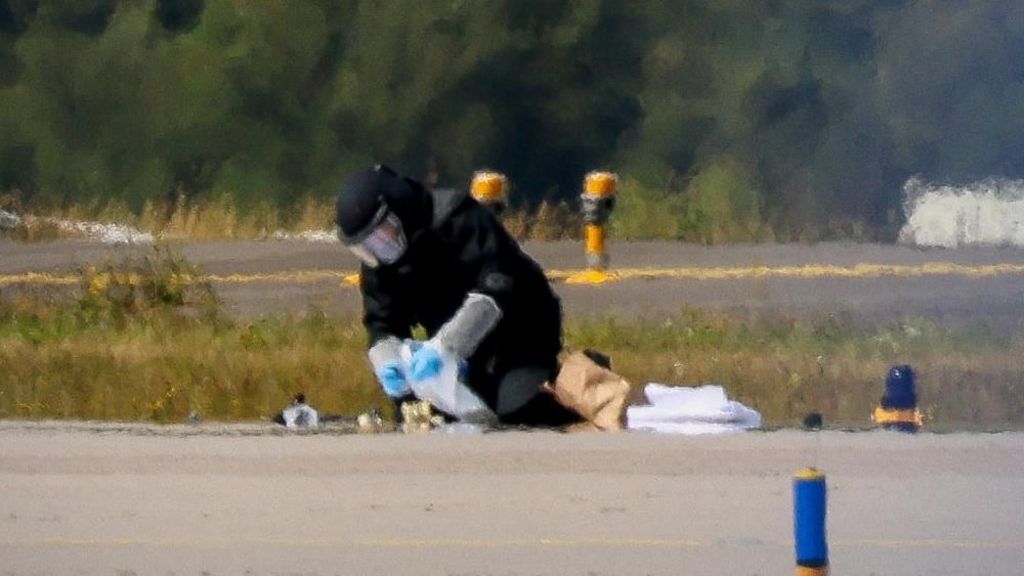
    Forensic experts who responded to the crash say the scale of the disaster created unavoidable challenges for victim identification. The aircraft broke apart on impact after crashing into a block of medical student accommodation, scattering wreckage and human remains across 37,000 square meters — an area roughly equal to five full-sized football pitches. Ninety percent of victims suffered severe charring from the post-crash fire, with extreme thermal damage destroying fingerprints, facial features and other common visual identifiers. Forensic teams spent months working through the rubble in 40-degree-plus Celsius heat, surrounded by decomposing remains, a working environment many describe as permanently traumatic.

    Dr Deepak Venkatesh, an independent forensic expert deployed to the crash site to assist with identification, explained that in the immediate aftermath of the disaster, emergency responders prioritized search and rescue over strictly segregating recovered remains. “The recovery environment presented challenges for maintaining the separation of remains, which can contribute to commingling,” he said, noting that commingling — the mixing of remains from multiple individuals — was an unavoidable risk given the conditions. After the initial rescue effort wrapped up, teams conducted a systematic grid search of the entire crash site to recover all remaining fragments.

    India’s National Disaster Management Authority (NDMA) has formally acknowledged the systemic gaps exposed by the crash, and in January 2026, released updated victim identification guidelines that use the Air India crash as a core case study. The guidelines note that prior to the disaster, comprehensive disaster victim identification had not received adequate systematic attention in India’s national disaster management framework. At the time of the crash, protocols prioritized DNA verification over the globally recognized faster, more reliable method of dental identification, which created a crippling bottleneck at the only regional forensic laboratory in Gandhinagar. The sudden influx of hundreds of highly degraded DNA samples overwhelmed the lab’s capacity, the NDMA report found, concluding that India needs to expand regional DNA testing infrastructure and integrate more dental identification into standard protocols.

    Despite the procedural changes that have come from the tragedy, grieving families say they have yet to receive the transparency and accountability they deserve. James Healey-Pratt, the lawyer representing both Miten Patel and Amanda Donaghey, argues that even with the unprecedented scale of the disaster, authorities owe families a full accounting of what went wrong. “There still needs to be transparency and accountability, because the families deserve it,” he said, adding that no senior Indian authority has accepted responsibility for the identification errors more than a year later. “It’s highly embarrassing, and it makes them look incompetent.”

    For Miten Patel, the fight for accountability is a way to honor the parents he lost. Most days, he sets his grief aside to focus on his advocacy, but late at night, he retreats to a private room to watch old videos of his parents. “At the end of the day, my mother came back home with somebody else,” he said. When he thinks about the future, he says he only wants one thing: to be able to tell his parents he did everything he could after they were gone. “I want them to say to me, Beta (son), we are so proud of you. You did everything you could after we went.”

    The BBC has reached out to India’s foreign ministry, the Ahmedabad hospital that led on-site identification, and the UK Foreign Office for comment on the ongoing inquest and identification errors, but has not received a response. Last July, roughly one month after the crash, the Indian foreign ministry said in a statement that authorities had “carried out identification of victims as per established protocols and technical requirements” and “handled all mortal remains with utmost professionalism and with due regard for the dignity of the deceased.”

  • Did US ‘precisely’ bomb water facilities serving 20,000 Iranians?

    Did US ‘precisely’ bomb water facilities serving 20,000 Iranians?

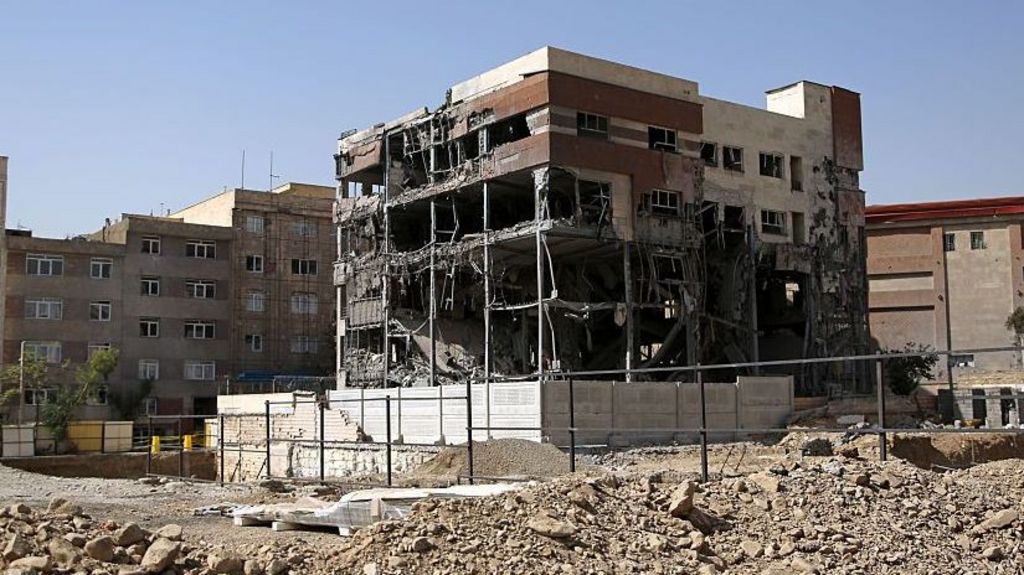
    Amid a sweltering heatwave that pushed temperatures above 100°F in Bemani, an Iranian village located just kilometers from the strategically critical Strait of Hormuz, two critical civilian water storage facilities were destroyed in a bombing this week, cutting off safe drinking water access to 20,000 local residents. Multiple independent open-source analyses and Iranian official reports now point to the attack being an intentional precision strike carried out by U.S. military forces, raising grave legal and ethical questions over whether the Trump administration deliberately targeted non-combatant infrastructure — a violation that would qualify as a war crime under binding international humanitarian law.

    The incident unfolded in the early hours of Wednesday, when Hormozgan Province’s water authority confirmed two large water storage tanks with a combined capacity of 2,500 cubic meters had been completely destroyed in the strike. In a public statement posted to social media shortly after the attack, U.S. Central Command acknowledged that U.S. Air Force and Navy units had launched a series of strikes near the Strait of Hormuz, using precision-guided munitions to target what it described as Iranian air defense positions, ground control stations, and surveillance radar sites. The command made no mention of any damage to nearby water infrastructure in its initial announcement.

    Esmaeil Baqaei, spokesperson for Iran’s Ministry of Foreign Affairs, swiftly condemned the attack, releasing public video footage of the destruction that clearly shows light blue pipes and structural components consistent with civilian water infrastructure. “As part of its ongoing aggression against Iran, the U.S. military has deliberately targeted vital civilian water infrastructure in Sirik, Hormozgan,” Baqaei stated in his address. “These facilities supplied drinking water to more than 20,000 residents across 10 local villages. This is not collateral damage — it is a calculated war crime, a flagrant violation of human rights and international humanitarian law. The United States must be held fully accountable for this systematic brutal attack on infrastructure that sustains civilian life.”

    An in-depth analysis published by *The New York Times* late Wednesday corroborated many of Iran’s claims. The outlet confirmed that commercial satellite imagery matches the location and description of the two damaged facilities provided by Abdolhamid Hamzehpour, chief executive of Hormozgan Province’s water authority, who first reported the missile strike on Wednesday. Local media footage from the site shows one facility’s roof fully collapsed, while a second has a clear, concentrated impact point at the center of its roof, consistent with a precision-guided strike.

    Crucially, the *Times* analysis notes that both water facilities are located in a remote area with no military infrastructure within their immediate vicinity, further supporting the conclusion that the strike was deliberate. Open-source weapons researchers from the Open Source Munitions Portal later examined photos of bomb fragments recovered from the site and published by Iran’s semi-official Tasnim News Agency, confirming the fragments are components of a GBU-39 precision-guided bomb, a weapon exclusively used by the U.S. Air Force. The *Times* adds that the damage pattern observed at the site — a clean, concentrated punch through the facility roof with limited surrounding blast damage — aligns perfectly with the effects of a GBU-39 strike.

    The strike comes at a period of extreme volatility in U.S.-Iran relations, just months after an April ceasefire agreement reached following former President Donald Trump’s public threats to “wipe out Iran’s civilization.” Trump has publicly complained in recent days that Tehran is moving too slowly to finalize a new negotiated deal, and the U.S. military expanded its offensive operations with additional strikes targeting an oil tanker in the Gulf of Oman and additional Iranian radar and air defense positions between Wednesday night and early Thursday.

    Regional officials and independent security experts have condemned the strike in sharp terms. Phillips P. O’Brien, a professor of strategic studies at the University of St. Andrews, argues that the attack is a deliberate act of intimidation targeting civilian populations rather than military objectives. “Trump is so angry that Iran will not give him the deal he wants that he is telling the U.S. military to commit war crimes,” O’Brien explained. “Destroying a drinking water facility in the middle of a heatwave is not an attack on a legitimate military target. It is a mafia-style operation designed to inflict suffering on the Iranian people to force political concessions.”

    Local officials have confirmed that temperatures in the region remain “unbearably high” for residents now cut off from their main drinking water supply, though emergency response teams have deployed mobile water tanks to the 10 affected villages to mitigate the immediate public health risk.

  • The World Cup is coming to Central America’s doorstep. The billions won’t

    The World Cup is coming to Central America’s doorstep. The billions won’t

    As the 2026 FIFA World Cup, the largest men’s edition in the tournament’s 92-year history, prepares to kick off its tournament cycle with co-hosts Mexico, the United States, and Canada, a stark geographic irony plays out just to the south. Central America, a region where football is not just a pastime but a cultural thread woven into every corner of daily life – where children chase worn balls across dust-strewn neighborhood pitches and a single national team victory can freeze entire cities in celebration – will once again be relegated to the sidelines. Only one nation from the region, Panama, has qualified for the 2026 tournament, and more significantly, not a single match will be played on Central American soil. Economists and sports policy analysts agree this exclusion is unlikely to change any time soon, and the barrier has nothing to do with the quality of the region’s football and everything to do with FIFA’s costly hosting model.

    The economics of modern World Cup hosting have priced out most small, developing nations, and Central America is no exception. As FIFA’s flagship event has grown into a multibillion-dollar commercial enterprise, the upfront costs of staging the tournament have surged far beyond the fiscal capacity of countries in the region, where poverty rates reach as high as 50% in some nations. Central America not only lacks the extensive network of modern stadiums, intercity transport links, and hospitality infrastructure FIFA mandates, but it also cannot cover the billions in upfront investment the governing body requires of all host nations.

    Sports economists point to FIFA’s hosting structure as the core barrier. Unlike major event organizers that contribute to host infrastructure, FIFA covers none of the construction or upgrade costs required to meet its strict standards, even as it pulls in billions in revenue from broadcasting rights, corporate sponsorships, and commercial partnerships. FIFA’s binding Host City Agreements place 100% of the financial risk on local hosts, requiring cities to cover all expenses related to hosting and waive all rights to liability claims against the governing body. In return, FIFA only provides minimal compensation: nominal stadium rental fees and prize money distributed to participating national teams, which does nothing to offset the cost of building new roads, expanding airports, or upgrading broader public infrastructure. Per city, infrastructure, security, and logistical costs alone range from $100 million to $200 million.

    FIFA’s strict venue requirements only compound the challenge. The governing body mandates a minimum of 14 stadiums with seating capacities of at least 40,000, paired with thousands of quality hotel rooms, dedicated training facilities, and logistics networks capable of handling hundreds of thousands of international visitors. In all of Central America, just one venue – Costa Rica’s national stadium – comes close to meeting these standards, and it alone cannot support the scale of the modern World Cup. Beyond infrastructure, regional political and economic fragmentation adds another layer of difficulty: while Costa Rica and Panama have higher average incomes than their neighbors, coordinated cross-national hosting bids face significant political and financial coordination hurdles. For any individual nation, the price tag is also politically unpalatable: as democratic states, large-scale infrastructure spending for a World Cup requires broad public support, which is hard to secure when social spending on healthcare, education, and poverty reduction is already stretched thin.

    Even if Central American nations could scrape together the required funding, economists widely warn that hosting a World Cup makes little financial sense for developing countries, pointing to a long track record of poor returns on investment. The 2022 Qatar World Cup, the most expensive in history, cost an estimated $220 billion in infrastructure spending, while the International Monetary Fund calculated total economic returns from tourism and related revenue at just $2.3 billion to $4.1 billion – a fraction of the upfront cost. Brazil’s 2014 World Cup offers another cautionary tale: the tournament cost $15 billion, including $3.6 billion for 12 new or renovated stadiums. Tourist revenue from 4 million visitors covered only a tiny share of the total cost, and Moody’s projected the total economic stimulus over a full decade would amount to just $11.1 billion, equal to a 0.4% increase in national GDP. Many of Brazil’s large new stadiums became white elephants after the tournament, with 50,000-seat venues handed to low-tier fourth-division clubs that draw an average of just 1,500 fans per match, leaving local governments stuck with ongoing maintenance costs.

    While some analysts argue large global tournaments deliver intangible benefits – such as increased social cohesion, new trade connections, and global visibility for host nations – those gains are rarely enough to offset the massive financial burden. “There is at least some evidence, although I think it’s pretty weak, that big events like the World Cup bring people together in a way that later causes business leaders to come together, allowing for future trade negotiations and other things,” explained Victor Matheson, a renowned sports economist at Massachusetts’s College of the Holy Cross, in an interview with Middle East Eye. “If you have a South African World Cup and Costa Rica is in it, you see at least some increase in bilateral trade between South Africa and Costa Rica that you don’t see with otherwise similar countries like Honduras or Nicaragua. But that doesn’t make it right.”

    The 2026 tournament’s expansion to 48 teams, up from 32 in previous editions, has only raised the stakes and raised questions about whether the World Cup can still claim to be a truly global event. The expanded format requires more stadiums, more training facilities, and more logistical capacity than any prior tournament, locking in access to hosting for only the world’s largest and wealthiest nations. While the 2010 World Cup in South Africa was widely celebrated as a milestone for bringing the tournament to Africa for the first time, it also left a relatively poor nation carrying massive debt while FIFA collected billions in revenue. Even in Brazil, one of the world’s most football-mad countries, widespread public protests erupted against the tournament, as public funds were diverted from healthcare and public transit to build luxury stadiums, pushing up transit fares for working-class residents.

    This gap between FIFA’s public rhetoric and its commercial business model has drawn widespread criticism from analysts. FIFA’s official motto is “Football Unites the World”, and its slogan “For the Game. For the World” positions the organization as a force for global development, aligned with United Nations Sustainable Development Goals focused on reducing inequality and driving inclusive growth. But under its current hosting rules, the costs of even hosting a handful of matches are out of reach for most of the world’s developing nations.

    “Fifa will do what is best for Fifa, and that is unlikely to involve giving hosting duties to small, developing countries,” said Dennis Coates, a sports economist at the University of Maryland. “Fifa probably does not put much weight on greater international visibility, national pride, optimism, etc, for potential host countries, nor do I think they should since those are all impossible to measure.”

    FIFA is projected to generate $11 billion in total revenue from the 2026 World Cup across its current four-year cycle. In comparison, each national member federation receives just $5 million over the same period, while FIFA’s financial reserves have surged from $1.5 billion in 2014 to nearly $4 billion in 2022.

    “Fifa positions football as a global public good, but its business practices are not in line with that sentiment,” said Nikolas R Webster, clinical assistant professor of sport management at University of Michigan.

    Critics argue that FIFA’s structure extracts billions from the global popularity of football while investing almost nothing to help lower-income nations build the infrastructure required to host the sport’s biggest event. Andrew Zimbalist, an economist at Smith College and one of the world’s leading experts on the economics of mega sporting events, went even further in his assessment. “Hosting the World Cup is not a development opportunity, it is a development retardant, especially in countries that don’t have stadiums and infrastructure that meet Fifa’s requirements,” Zimbalist said. “The US, Mexico and Canadian hosts will all be hurt from hosting.”

    For Central American football fans, who live and breathe the sport just meters from the 2026’s host borders, that means decades more of watching the world’s biggest tournament from the outside looking in.

  • Cheering for the ‘home team’ during the World Cup gets complicated for Canadians

    Cheering for the ‘home team’ during the World Cup gets complicated for Canadians

    As Toronto prepares to welcome the 2026 FIFA World Cup’s opening group stage match between Canada and Bosnia and Herzegovina, the country’s long-celebrated multicultural identity has emerged as the defining narrative of the tournament for Canadian fans, turning a high-stakes athletic clash into a celebration of shared belonging across diverse communities.

    For many residents with roots in both competing nations, the match poses a gentle, joyful dilemma that perfectly encapsulates Canada’s dual-heritage culture. Nikola Vukelic, a Toronto-based lifelong football fan who has lived in Canada since 1999 after growing up supporting Bosnian domestic clubs, says he still cannot pick a side to cheer for. He described Bosnia’s stunning qualifying victory over four-time World Cup champions Italy as a “surreal” moment he never expected to witness, but decades of calling Canada home have left him equally invested in the host nation’s campaign. Vukelic’s solution? A mixed uniform: his Bosnia national team jersey paired with Canada football shorts, to be worn while hosting a watch party with friends close to BMO Stadium, the venue for Friday’s opening match. For him, the final score is irrelevant. “I’m going to have fun either way,” he said.

    Vukelic’s experience is far from unique. Canada’s most recent national census data shows more than 35% of the population – approximately 13 million people – identify with multiple ethnic and cultural origins, a demographic reality that has been on full display across host cities Toronto and Vancouver in the lead-up to the tournament. Across both cities, cross-cultural watch parties have popped up in unexpected, community-focused spaces: Turkish fans gathering to cheer on their team at an Australian-owned pub, Balkan supporters setting up screens outside a specialty food market, and football fans of all backgrounds meeting at an Iraqi-run hookah lounge.

    This culture of inclusive diversity has become a core selling point for Canadian soccer organizers, who have framed the tournament as a counterpoint to growing global division. Speaking at the 2026 FIFA World Congress held in Vancouver earlier this year, Canada Soccer President Peter Augruso emphasized that the country’s multiculturalism is more than a policy – it is a lived experience. “Here, the world doesn’t just visit,” he said. “The world lives, works, learns, and thrives together.”

    That ethos is clearly visible in the community-led celebrations being held across Greater Toronto. For Adis and Amir Mrakovic, Bosnian-Canadian brothers who own Mrakovic Fine Foods, a beloved Balkan specialty store in the Toronto suburb of Etobicoke, the opening match pairing their home country and their adopted nation is a once-in-a-lifetime moment. The pair arrived in Canada with their family in 1994, not long after their father launched the small business selling traditional smoked meats. Over nearly 30 years, the shop has grown into a community staple, famous across the city for its grilled ćevapi kebabs that serve the region’s large Balkan diaspora.

    Like most fans, the brothers never expected Bosnia to qualify for the 2026 tournament. The side had not reached the World Cup since 2014, and faced a grueling qualifying draw that included tough competitors Austria and Italy. When Bosnia knocked Italy out via penalty shootout on March 31 to secure their spot and set up the opening match against Canada, the result was a shock to the entire global football community. “It was a shock for everybody,” Amir said.

    Within days, the brothers planned a large public watch party outside their store, outfitting the space with a 26-foot big screen, a local DJ, and a full menu of grilled ćevapi for attendees. They expect hundreds of fans to attend, with some traveling more than 500 kilometers from Montreal to join the celebration. For the Mrakovics, the event is as much a celebration of their Canadian identity as it is their Bosnian roots. “We felt an obligation to bring people together,” Adis explained. When asked what final score they hope for, Amir laughed and summed up the mood of many dual-heritage fans: the best outcome is a tie.

    Even for Canadian fans of Italy, who saw their ancestral nation fall just short of qualification, the moment has become a celebration of multiple belonging. In Toronto’s Little Italy neighborhood, the 2026 World Cup qualifying loss left many Italian-Canadian fans heartbroken, as many had dreamed of watching Italy face Canada in the opening match. To honor that disappointment, Canada Soccer organized a promotional event at Cafe Diplomatico, a historic Italian restaurant that has served as a gathering spot for Canadian soccer fans for decades, inviting fans to swap their Italy jerseys for new Canada kits. When fans reached the front of the line, organizers surprised them with a message: they did not have to give up their Italy jerseys after all. They could keep both, an announcement that moved some long-time fans to tears. “It’s very rare to be in a country like ours where you’re allowed to have multiple homes in your hearts,” said Canada Soccer spokesperson Paulo Senra.

    The spirit of cross-cultural fan camaraderie extends across the country to Vancouver, the second Canadian host city that will welcome groups of fans from around the world for 13 total matches, including matchups between Australia and Turkey, New Zealand and Egypt, and Switzerland and Canada. Even when two rival nations face off, fans from both sides often gather to watch together: for the Australia-Turkey matchup, a local Turkish band is hosting a joint watch party at a Vancouver pub, where fans of both nations will cheer side by side. Ilyas Kayran, a member of the hosting band Istanbul the Band, says this inclusive dynamic is core to what it means to be Canadian. “This is Canadian identity,” he said.

    Even Canada’s national men’s team itself reflects the country’s multicultural makeup. The squad’s captain and star player, Alphonso Davies, was born in a refugee camp in Ghana before his family resettled in Edmonton, Alberta, where he developed his skills and launched his professional career. This year marks only the third time Canada has qualified for the FIFA World Cup, and the first time the team has competed on home soil as a co-host of the 2026 North American tournament. Though the team faces long odds to advance, the squad is aiming to become the first Canadian men’s side to reach the tournament’s knockout round.

    Of the three North American co-hosts, Canada holds the smallest hosting role for the 2026 tournament: while Mexico has three host cities and the United States is hosting 78 total matches, Canada only has two host cities – Toronto and Vancouver – each holding 13 matches. Despite the smaller footprint, the public cost of hosting remains steep: an independent estimate from Canada’s Parliamentary Budget Officer puts total taxpayer spending at just over C$1 billion, or roughly C$82 million per match.

    The tournament has also faced criticism over ticket pricing, with the cheapest in-person tickets for Canadian-hosted matches running into the hundreds of dollars. Many fans have complained that the pricing locks out local supporters in a country where cost of living in major cities like Toronto and Vancouver is already extremely high. As of the lead-up to the opening match, hundreds of tickets remain unsold in both cities, and demand for hotel and short-term vacation rental accommodation has been lower than pre-tournament projections.

    Despite these challenges, Canadian federal and provincial officials have framed hosting the 2026 World Cup as a transformative opportunity for the country. Adam van Koeverden, Canada’s FIFA Sherpa and Secretary of State for Sport, called it a “once-in-a-generation opportunity” to showcase the country to the world.

    For fans like Vukelic, who says he cannot afford the high price of an in-person ticket to the opening match, the challenges have done little to dim the excitement of the tournament. Even watching from home, he is soaking up the atmosphere and the energy the World Cup has brought to his city. “The only thing we have to be careful about is the traffic here,” he joked. “Other than that, Toronto is ready for this.”

  • India’s ‘blue gold’ starts a new drinks industry

    India’s ‘blue gold’ starts a new drinks industry

    For generations of Indian farmers across the Deccan Plateau, the spiky, hardy agave Americana plant served only one purpose: a low-maintenance, impenetrable natural fence to keep wild animals away from valuable food crops. To them, it was nothing more than a stubborn, valueless weed growing along property lines. Today, this native desert plant is being rebranded as “blue gold,” unlocking unexpected new income streams for rural communities and laying the groundwork for India’s nascent homegrown agave spirits industry, tapping into a $15 billion global market long dominated by Mexico.

    The turning point for many smallholder farmers like Masapalli Venkatesh came in 2010, when traders began approaching rural landholders seeking to source wild agave for spirit production. Venkatesh, who previously grew tomatoes, peanuts, and corn on his 10-acre Kandukur farm, quickly transformed into a regional agave aggregator, coordinating a network of villagers and farmers across a 100-kilometer range to meet growing demand from domestic distilleries. “By combining the yields of multiple small holdings, I ensure a steady, high-volume supply that distilleries are willing to pay a premium for,” Venkatesh explained, turning what was once unused plant life into a reliable source of supplementary income.

    Harvesting agave for spirit production is a far more nuanced process than many outsiders realize. The critical component of the plant is its carbohydrate-dense core, called the piña for its resemblance to a large pineapple. Skilled harvesters must first strip away the plant’s sharp, spiky leaves to expose the core, but timing is everything: once the plant begins to bloom, it redirects all its stored sugar reserves to the flowering stalk in just a matter of days, leaving the piña completely depleted and useless for alcohol production. “Gatherers must accurately identify the exact pre-blooming window to harvest the plant at its absolute peak sugar capacity, making the timing of the harvest incredibly narrow,” noted Rakshay Dhariwal, founder of Indian craft distiller Maya Pistola Agavepura.

    The clock does not stop once harvesting is complete. To preserve sugar content and flavor, piñas must reach a processing facility to undergo sugar extraction within 24 hours of harvest. Any longer delay triggers uncontrolled fermentation and sugar rot, ruining the delicate flavor profile required for premium spirits. This logistical challenge is particularly acute in India, where wild agave grows in scattered patches across four states: Karnataka, Maharashtra, Rajasthan, and Andhra Pradesh. Unlike Mexico’s centralized, large-scale agave plantations, Indian distillers rely on a decentralized network of local aggregators to source semi-wild plants growing on marginal lands and rural property boundaries.

    Despite these logistical hurdles, demand for agave spirits is surging across India. Industry insiders report the domestic market is growing at an annual rate of 31%, as domestic consumers grow more open to exploring craft spirits beyond India’s long-standing favorite, whisky. “It’s only been a few years now that India’s finally caught the tequila bug,” said Vikram Achanta, co-founder of 30 Best Bars India. “Producers are beginning to experiment with it seriously, and there’s a consumer base today that is far more open to exploring new spirits than before.” While agave spirits are unlikely to displace whisky as India’s top-selling spirit, Achanta notes that domestic producers are already carving out a unique niche, building an emerging Indian agave identity around the Deccan Plateau’s wild plants that sets their products apart from imported Mexican offerings. “It’s still early days, but they’re helping move the category from curiosity to something more credible,” he added.

    Desmond Nazareth, founder of Agave India, is widely recognized as the pioneer of India’s agave spirit sector, having launched the country’s first domestic agave spirit back in 2011, nearly a decade before the market began to develop. “What started as kitchen experiments eventually became India’s first craft agave distillery after nearly 12 years of research and experimentation,” Nazareth said. “We were making Indian agave spirit long before the market was ready for it. It was a craft business way ahead of its time.” Today, he is taking a data-driven approach to scaling the industry, using satellite imagery to map existing successful agave growing regions and identify new areas with matching environmental conditions. This careful planning is critical: agave takes between 9 and 13 years to mature, so a poor site selection can mean losing an entire decade of investment.

    A common concern around the emerging industry is whether growing demand will deplete India’s wild agave supplies, but agricultural expert Miguel Braganza says there is little immediate risk. For one, India’s domestic processing capacity remains extremely small, with just one commercial processing plant currently operating, owned by Nazareth’s Agave India. Additionally, wild agave is an exceptionally effective self-propagator. Over its 10 to 20-year lifespan, a single mother plant sends out long underground root runners that sprout genetically identical baby agaves every few feet, slowly growing into large, self-sustaining colonies without any human intervention. “So one plant can naturally turn into dozens of plants across an area without any human help,” Braganza explained.

    Not all Indian agave spirit brands rely on domestic wild agave, however. Entrepreneur Sree Harsha Vadlamudi, co-founder of tequila brand Loca Loka, argues that wild agave has inherent limitations for large-scale, standardized production. Unlike selectively bred farmed agave in Mexico, wild Indian agave is genetically inconsistent, leading to fluctuating sugar yields that make consistent alcohol output difficult to achieve. To avoid this issue, Loca Loka sources its blue agave from established plantations in Jalisco, Mexico, the only region in the world legally allowed to produce tequila. “We wanted to leverage the rich, iron-heavy red soil left behind by ancient volcanic eruptions in Jalisco, Mexico,” Vadlamudi said. “This unique terroir imparts a distinct flavour profile to the agave that cannot be replicated by growing the same seeds in Indian soil.” Mexico’s large-scale commercial operations also benefit from modern technological investments, including drones and artificial intelligence systems that monitor crop health, track piña growth, and pinpoint the ideal harvest window – resources that remain out of reach for most emerging Indian producers.

    While Nazareth acknowledges that building a competitive, large-scale agave industry in India will take decades of patient investment, he remains optimistic about the sector’s long-term potential. “India could absolutely become a major agave economy,” he said. “The Deccan Plateau alone has millions of acres suitable for cultivation. We could theoretically rival Mexico if there’s long-term vision and patience.”

  • ‘Personal sledge’: Health Minister Mark Butler dismisses One Nation’s anti-Labor fundraiser

    ‘Personal sledge’: Health Minister Mark Butler dismisses One Nation’s anti-Labor fundraiser

    A fierce political clash has erupted between Australia’s ruling Labor Party and center-right Liberal opposition over a blockbuster anti-government fundraising campaign by far-right populist party One Nation, which has pulled in more than $2.5 million in less than 48 hours to oust sitting Labor MPs. Titled “FIRE THE LIAR!”, the campaign accuses Prime Minister Anthony Albanese of breaking campaign promises on three high-profile issues: the stage 3 income tax cuts, national energy prices, and the Indigenous Voice to Parliament referendum. Unlike most mainstream political fundraising platforms, the campaign does not publish public records of donor identities or individual contribution amounts, a lack of transparency that prompted Albanese to question the veracity of the posted fundraising totals just days after the campaign launched. To address these doubts, One Nation leader Pauline Hanson took to social media Wednesday to share what she called a “forensic audit” conducted by independent software developer Daryl Monnink, which she claimed confirmed the legitimacy of the fundraising haul. One Nation says more than 28,000 individual donors contributed to the campaign in its first 24 hours, with the largest single donation topping $15,000. The party plans to direct the full war chest to unseating Labor incumbents, starting with key seats in Western Australia – which Hanson called a top “hit list” target – and electorates held by high-profile Labor cabinet ministers including Tony Burke, Clare O’Neil and Madeleine King. Appearing on Seven Network’s morning current affairs program Sunrise Friday, federal Health Minister Mark Butler, a senior Labor figure, sought to downplay the significance of the large fundraising haul. He argued the amount raised would be far smaller than the six- and seven-figure donations One Nation has previously received from billionaire mining magnate Gina Rinehart. Butler framed the campaign as little more than a targeted personal attack on Albanese, which would quickly fade from public attention. “It’s not a big story beyond this week and maybe next week,” he said. Butler also pushed back against claims of a hidden ideological alignment between the Liberals and One Nation, arguing the partnership between the two right-wing parties represents a rebranded Coalition with the same conservative policy platform. “At the end of the day, what we’re seeing here is a remaking of the Coalition with some different faces but the same agenda,” Butler said. “Opposed to wage increases, we’ve heard that from the Liberal Party and One Nation, hostile to Medicare, determined to sow the politics of division and talk this country down.” Those remarks drew an immediate sharp response from Deputy Liberal Leader Jane Hume, who appeared alongside Butler on the same program. Hume accused the Labor government of panicking over the strong grassroots response to One Nation’s campaign, telling Butler: “You are rattled, aren’t you Mark? You are rattled.” She argued the massive donation total reflects widespread public anger at the current government’s performance, pointing out that a single Liberal colleague had raised more in donations in the month following Labor’s 2024 federal budget than he had in the entire preceding year. “Australians are angry, and that is playing out in our politics now,” she said. When pressed on whether the Liberals would negotiate a formal preference-sharing or non-compete agreement with One Nation ahead of the next federal election, scheduled for 2025, Hume ruled out any such deal for the immediate future. “That’s not on the cards. And an election is now 18 months to two years away,” she said. “To begin with, we never ever talk about preferences before an election is actually called because you don’t know what policies they have, you don’t know what candidates they have, you don’t know what One Nation are going to be doing in two years time.” The response from the junior Coalition partner, the National Party, was far more welcoming of One Nation’s anti-Labor campaign. Nationals leader Matt Canavan told Sky News that only a full Liberal-National government can deliver the stable economic plan Australian voters are demanding, but he praised One Nation’s efforts to target Labor incumbents. “I welcome everybody trying to take down this government, because that is the first step,” Canavan said. “So, good on One Nation for doing this. They’re saying that funding, now over $2 million, is going to be used to root out Labor members of parliament.” Canavan added that any efforts by One Nation to challenge sitting Nationals MPs would not help achieve the shared goal of removing the current Labor government, but emphasized that all anti-Labor forces are aligned on the immediate priority of defeating the ruling party. “We’re all on the same page here of getting rid of this government, it’ll be then up to the Australia people about what form of government they want,” he said.

  • World Cup 2026: Somali referee denied entry by US will officiate Uefa Super Cup final

    World Cup 2026: Somali referee denied entry by US will officiate Uefa Super Cup final

    A high-profile international football development has broken this week, as European football’s governing body UEFA has announced that Somali referee Omar Artan — who was barred from entering the United States ahead of the 2026 FIFA World Cup, costing him a spot in the tournament’s officiating pool — will helm one of the sport’s biggest continental fixtures later this summer.

    Artan, who was named the Confederation of African Football’s Men’s Referee of the Year for 2025, was denied entry by U.S. authorities at Miami International Airport earlier this month. FIFA, global football’s governing body, subsequently removed him from the roster of 52 officials selected to work the 2026 World Cup, which will be co-hosted by the U.S., Canada and Mexico from June 11 to July 19. The move ended Artan’s historic bid to become the first Somali match official ever to officiate at a men’s World Cup finals.

    The Trump administration announced Tuesday that the entry denial was rooted in unsubstantiated claims that Artan holds links to “suspected members of terror organisations”, offering no additional evidence to back up the assertion. Andrew Giuliani, who leads the White House Task Force on the World Cup, told BBC World Service that while he could not share sensitive derogatory information related to the case, he viewed U.S. Customs and Border Protection’s decision as correct and fully supported it. This stance aligns with comments Giuliani made in December, when he stated the Trump administration could not guarantee non-U.S. citizens would be safe from Immigration and Customs Enforcement (ICE) raids at World Cup venues.

    Per BBC reporting, a senior advisor to Somalia’s Ministry of Youth and Sports confirmed the entry denial, noting that Artan was traveling with all required valid documentation. A Somali embassy official based in Nairobi added that Artan had even been issued a diplomatic passport to ease travel after previous visa-related difficulties, a step that ultimately failed to prevent the rejection. The Somali Football Federation has since contacted FIFA to request urgent clarification on the outcome of the incident.

    After being turned away, Artan returned to Somalia Wednesday, where he received a hero’s welcome from supporters and officials. In public remarks following his arrival, the referee acknowledged the disappointment of the outcome while expressing gratitude for the backing he received from FIFA. “What happened has happened and it was unfortunate. I am grateful for the support Fifa gave me,” he said. Addressing young Somalis, he encouraged them to hold onto ambition, adding “I want to tell our youth not to lose hope in our country. I am now in my country, and there is no other place I want to be.” Artan also affirmed his intention to qualify for the next men’s World Cup, saying “I promise you, God willing, that I will attend the next one [World Cup]… I want the Somali public to take comfort in this and remain confident.”

    In its official statement following the entry denial, FIFA noted that after consultations with U.S. authorities, it confirmed Artan could not participate in the 2026 tournament. The governing body clarified that it does not have any involvement in host country immigration processes, including visa adjudication decisions. A FIFA-listed referee since 2018, Artan has previously officiated at top-tier competitions including the Africa Cup of Nations, as well as domestic league matches in Somalia. Somalia is one of several countries impacted by broad travel restrictions implemented by the Trump administration.

    Just days after Artan’s return to Somalia, UEFA stepped in to offer the respected referee a new high-profile assignment. The continental governing body announced Thursday that Artan will take charge of the 2026 UEFA Super Cup, scheduled for August 12 in Salzburg, Austria. The match pits Champions League winner Aston Villa against Europa League champion Paris Saint-Germain in the annual showpiece that opens the European club football season.

  • Trump cancels Iran strikes, touts imminent deal

    Trump cancels Iran strikes, touts imminent deal

    On a Thursday that already carried high geopolitical and economic stakes, U.S. President Donald Trump upended global expectations with a sudden announcement: he had called off planned military strikes against Iran and claimed a historic peace deal to end the months-long U.S.-Iran war could be finalized and signed within days.

    The announcement broke as the 2026 FIFA World Cup kicked off in Mexico, sending immediate ripples through global financial markets. Major stock indices rallied sharply, while international oil futures dropped more than 3% — a clear market signal that investors welcomed the de-escalation of a conflict that has roiled energy supplies for months.

    In a social media post that quickly dominated global headlines, Trump stated that bilateral talks with Iranian officials had advanced to the highest levels of Iran’s leadership and received formal approval. “I have cancelled the scheduled strikes and bombings against Iran scheduled for this evening,” he wrote. “Time and place of the signing to be announced shortly.” He added that the core terms of the arrangement had already been signed off by the U.S. and its regional allies, most notably Israel, which joined Washington in launching the offensive against Iran back in February.

    The conflict, which began with a massive wave of joint U.S.-Israeli airstrikes on February 28 that killed long-time Iranian supreme leader Ayatollah Ali Khamenei, entered a paused state under a temporary truce brokered in April. But negotiations for a permanent ceasefire and peace agreement had appeared deadlocked in recent weeks, with both sides trading escalating threats in the days leading up to Trump’s announcement. Just 24 hours before his Thursday announcement, Trump had threatened to intensify U.S. airstrikes and seize control of Kharg Island, Iran’s critical oil export terminal in the Persian Gulf.

    Iranian officials quickly pushed back against Trump’s claims of a finalized, approved deal. Hours after the U.S. president’s announcement, foreign ministry spokesman Esmaeil Baqaei stated that “Iran has not reached a final conclusion on the agreement.” Iran’s semi-official Tasnim news agency pointed out that Trump has now claimed an imminent deal 38 times over the past two months, advising that any statements from Trump on the topic should be treated as unsubstantiated until confirmed directly by Iranian authorities. When pressed by reporters on the Iranian pushback, Trump doubled down on his claim, saying “I understand the answer is yes” when asked if Iran’s new supreme leader Ayatollah Mojtaba Khamenei had personally approved the deal.

    An official statement from the office of Israeli Prime Minister Benjamin Netanyahu confirmed that Netanyahu had spoken with Trump following the announcement, and that Trump had committed any final agreement would require Iran to remove all existing enriched nuclear material and dismantle its entire ballistic missile infrastructure program. Tehran’s municipal government also confirmed Thursday that the delayed funeral for former supreme leader Ayatollah Ali Khamenei will be held no earlier than late June, further adding to the atmosphere of ongoing uncertainty.

    Trump’s announcement suggests that months of quiet back-channel mediation led by U.S. partners Pakistan and Qatar may have produced tentative progress, despite the sharp public denial from Tehran. Even as hopes for peace rose, however, new reports of hostilities emerged: Kuwait announced Thursday that an Iranian strike targeted its territory, damaged an air defense radar installation, and forced a temporary closure of its airspace.

    Domestically, hardline factions on both sides have continued to undermine progress toward a deal. Earlier Thursday, amid escalating U.S. threats of new strikes, senior Iranian General Ali Abdollahi warned that any new American attack would draw a far harsher response than previous exchanges, warning that a widening of the war would spread instability across the entire Middle East. For ordinary Iranian civilians already reeling from months of conflict, that instability is already a daily reality. Majid, a 35-year-old Tehran pharmacist, expressed deep pessimism about the prospects of a final deal. “I am absolutely not optimistic about the agreement being finalized, because the gap between the two countries is too wide,” he said, blaming the ongoing deadlock on both Israel — which has exchanged frequent cross-border fire with Iranian forces in recent days — and hardline Iranian factions opposed to any compromise.

    The conflict has already hit the global economy hard. Earlier on Thursday, the World Bank downgraded its global growth forecast to its lowest level since the height of the coronavirus pandemic, explicitly citing the expanding economic fallout from the Iran war as a key driver of the downgrade. One of the most damaging ongoing economic impacts stems from Iran’s closure of the Strait of Hormuz, the critical global chokepoint through which roughly 20% of the world’s daily oil and gas supplies pass. Iran’s newly established strait oversight body reaffirmed Thursday that the waterway “will be closed until further notice”, keeping ongoing pressure on global energy markets despite the post-announcement drop in oil prices.

  • Christian Pulisic is ready to shoulder the burden of US hopes in home World Cup opener vs Paraguay

    Christian Pulisic is ready to shoulder the burden of US hopes in home World Cup opener vs Paraguay

    IRVINE, Calif. — As the United States prepares to host the 2026 FIFA World Cup and kicks off its tournament campaign against Paraguay this Friday, Christian Pulisic finds himself in a rare, pressure-filled position: he is the undisputed generational star of the host nation’s men’s national team, carrying the expectations of an entire soccer-crazed country on his shoulders.

    Pulisic joins an exclusive, shortlist of elite global talents who have landed this exact confluence of skill, stardom, and timing when their home country hosts soccer’s biggest tournament. Past names on that list read like a who’s who of modern soccer royalty: Zinedine Zidane, who led France to a 1998 World Cup title on home soil; Michael Ballack, who anchored host Germany’s 2006 squad; and Neymar, who carried Brazil’s hopes as the home nation in 2014.

    Pulisic’s teammates and coaching staff are acutely aware of the massive burden he carries. For nearly a decade, he has been framed as the face of American men’s soccer, the groundbreaking talent that turned a historically middling soccer nation into a growing competitor on the global stage. Teammates across the roster openly acknowledge that all eyes — from the pitch to the sold-out stands — will remain fixed on Pulisic, with fans and peers alike hoping his decade of proven success at top European clubs will lift the U.S. to unprecedented heights on home soil.

    “I can’t even imagine the weight that’s on his shoulders,” said 27-year-old Bournemouth midfielder Tyler Adams, Pulisic’s long-time midfield partner. “From such a young age, he was the hope of American soccer.”

    Now 27, Pulisic refuses to shrink from the bright spotlight that will burn brighter than ever across the tournament’s coming weeks. In comments Thursday at the U.S. national team’s Orange County training base, he reaffirmed that this high-stakes moment is exactly what he has spent his entire career working toward.

    Unlike his early years in the national program, when he was the lone elite talent carrying the team’s aspirations, Pulisic says he feels no extra pressure heading into the World Cup. In fact, he argues the weight on his shoulders may even be lighter than it has been in years past, thanks to the depth of talent that has emerged around him in recent seasons.

    “I don’t feel a difference in weight. I’m not sure. Maybe less,” Pulisic said. “I just feel like there’s so many good players around me. I genuinely don’t feel like I have to do anything on my own. I’m going to give it the best I can. I want to help the team, and they expect a lot out of me, but with the guys I have around me, it makes it a lot easier for me.”

    Pulisic’s status as the center of U.S. World Cup hopes dates back longer than this tournament cycle. When the World Cup was first awarded to the North American bloc of the U.S., Canada, and Mexico eight years ago, Pulisic was already the rising star of American soccer. A native of Hershey, Pennsylvania, he broke into the senior national team as a 17-year-old prodigy, becoming the first homegrown U.S. talent to earn consistent playing time and stardom at Europe’s top clubs.

    Over the past 10 years, he has built a resume unrivaled by any active American player: after cutting his teeth at Borussia Dortmund, he transferred to Chelsea in 2019, where he became just the second American to win the UEFA Champions League in 2021. He moved to Serie A’s AC Milan in 2023, where he remains a key contributor for one of Europe’s top clubs. While the U.S. national program has struggled for consistent progress through his career, and Pulisic even endured an 18-month goal drought with the national team that only ended in late May, he still stands as the Americans’ most consistently dynamic playmaker.

    Adams, who has shared the pitch with Pulisic since the winger’s 2016 senior debut, recalled watching the teenage prospect immediately become the team’s most irreplaceable player. Even after that 2016 campaign ended in devastating failure — the U.S. failed to qualify for the 2018 World Cup — Pulisic quickly emerged as the foundation of the program’s rebuild.

    “(Pulisic was) the best player on the field at 17 years old, and the person that they rely on, (and) it’s been since then that they’ve relied on him,” Adams said. “Now, we have weapons around him to kind of relieve that, but he’s a star. Not just for the U.S. national team, but in world football. He’s that good. We rely on him in big moments, but that being said, I hope he doesn’t feel the pressure to carry it all. Just to be himself and grow into each game.”

    Pulisic made his first World Cup appearance in Qatar four years ago, where he notched one goal and one assist as the U.S. exited in the knockout round after scoring just three total goals across four matches. This time around, he says the home-field advantage brings a unique sense of comfort, with family and fans able to cheer the team on close to home.

    “It feels similar, but with a bit of that comfort of being in America,” Pulisic said. “It feels great having the people you love around you. It makes it that much more special.”

    New U.S. head coach Mauricio Pochettino, who took over the program in late 2024, has worked to build an aggressive, attack-minded squad centered around Pulisic’s creative strengths, while intentionally spreading responsibility across the roster to reduce reliance on the star. Two prolific Europe-based strikers, Folarin Balogun and Ricardo Pepi, will make their World Cup debuts this tournament, with the expectation that they will share the scoring load that once fell entirely to Pulisic.

    Pochettino emphasized that while Pulisic will play a critical role for the U.S., the team’s collective culture and identity matters more than any individual star.

    “Of course he needs to be an important player for us in the competition,” Pochettino said. “(But) I think what we’ve learned after a year and a half is that the badge of the national team and the culture with this country is more important than any name, any player or any coach. That is a principal thing that we (believe), and from there, if you have talent and quality, you can perform on that platform.”

    Still, with his first World Cup knockout round exit behind him, Pulisic understands the U.S. needs to hit the ground running on home soil, starting with Friday’s opener against a tough Paraguay side. For the veteran star, past tournament experience has helped calm his nerves, even as the spotlight grows larger than ever.

    “It has that big-game feel, for sure,” Pulisic said. “But in some ways, I feel a little bit more relaxed because I’ve been there before. We’ve played in a match like this. I think the experience has calmed me down a little bit.”

  • ‘Once in a lifetime’ – Mexico fans share excitement as World Cup kicks off

    ‘Once in a lifetime’ – Mexico fans share excitement as World Cup kicks off

    As the 2026 FIFA World Cup kicked off its opening match for the Mexican national team at the iconic Azteca Stadium, thousands of elated supporters filled the streets surrounding the venue, describing the electric atmosphere as a ‘once in a lifetime’ experience they would never forget. The BBC caught up with dozens of ticket-holding fans moments after the final whistle, where Mexico secured a dominant 2-0 victory over South Africa to launch their tournament campaign on a high note.

    Supporters clad in the team’s signature green, white, and red jerseys packed the plazas and sidewalks outside the stadium, waving flags, singing traditional chants, and embracing one another in celebration. Many fans traveled hundreds of miles from across Mexico to attend the opening match, with some telling reporters they had saved for years to secure their spot at the legendary venue, which has hosted two World Cup finals in its history.

    Azteca Stadium, one of the most recognizable soccer stadiums in the world, provided a dramatic backdrop for the opening clash. From the opening kickoff, the crowd roared nonstop, creating a wall of noise that pushed Mexico’s players to secure the two-goal advantage. Even after the match ended, fans lingered outside the stadium to share their joy with friends, family, and reporters, emphasizing that the combination of hosting a World Cup match at Azteca and opening with a win made the moment unforgettable.

    For Mexican soccer, this opening victory marks a promising start to what fans hope will be a deep tournament run. The energy outside the stadium reflected the widespread optimism across the country, as supporters turn their attention to the nation’s next group stage match, with hopes of continuing their winning momentum.