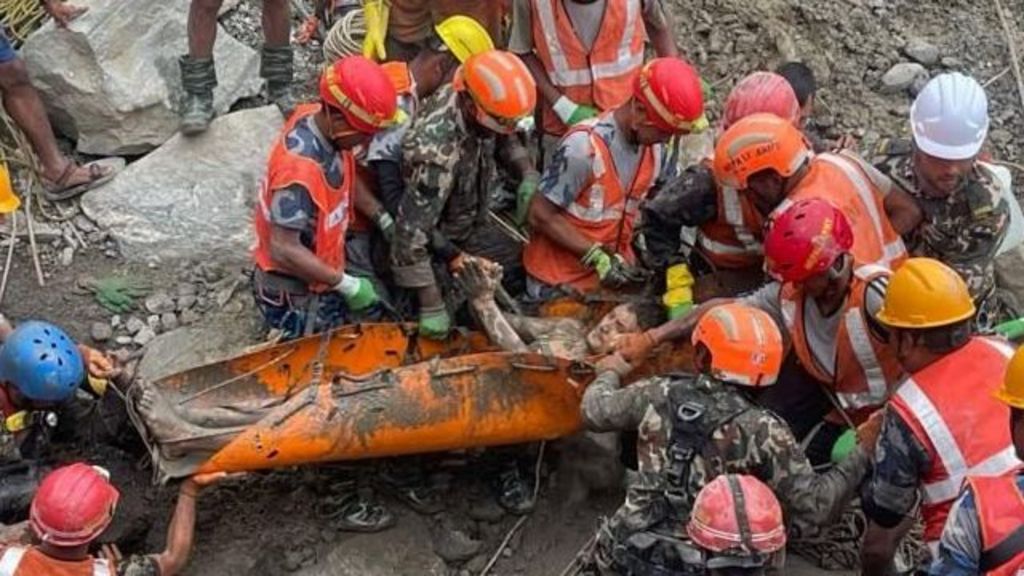
In a gripping, widely shared moment of rescue that has drawn global attention, emergency teams in Nepal have successfully extracted two trapped workers from a flooded hydropower tunnel, more than seven days after catastrophic flash floods swept through the Nepal-China border region. The disaster, which struck with little warning, buried the tunnel entrance under debris and cut off all contact with the workers inside, leaving rescue teams racing against time to reach the trapped men before supplies of oxygen and clean water ran out. Footage captured by rescue personnel on site shows the emotional moment the two workers emerged into open air, wrapped in emergency blankets after spending more than a week trapped in the dark, waterlogged underground passage. The flash flood, triggered by unusual heavy rainfall that swelled glacial meltwater in the Himalayan highlands, devastated remote border communities, destroying infrastructure and leaving dozens of people missing or dead in the immediate aftermath. The hydropower project, a joint development initiative between Nepali and Chinese investors, had been under construction in the remote mountainous region when the disaster hit, trapping dozens of construction workers inside the unfinished tunnel. While this successful rescue offers a rare moment of hope amid the tragedy, recovery teams continue to search for other workers still reported missing in the aftermath of the flood, with relief operations ongoing to support displaced local communities.
作者: admin
-
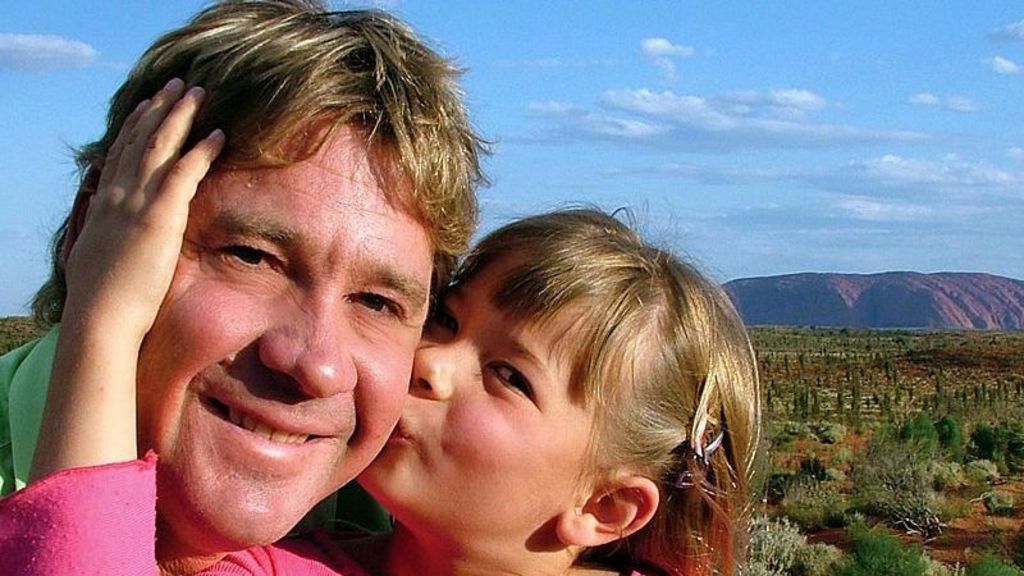
Steve Irwin’s family celebrates ‘superhero’ dad, 20 years after shock death
Twenty years after iconic wildlife conservationist Steve Irwin — known globally as the Crocodile Hunter — lost his life in a tragic accident at Australia’s Great Barrier Reef, his family is honoring his memory with heartfelt tributes that highlight the far-reaching impact he left behind. On September 4, 2006, the 44-year-old TV personality died after a stingray’s barb pierced his chest while he filmed an underwater documentary, shocking fans and conservation communities around the world.
Now 28, Bindi Irwin, Steve’s oldest child who was just 8 years old when he died, shared a moving public tribute on Instagram that has resonated with millions. She reflected on two decades of walking alongside grief, noting that for 20 years, she has stood with her family as the world joined them in mourning the loss of a man who changed how millions connected to wildlife.
“ I always thought that my dad’s legacy is wildlife conservation; it turns out, his legacy is love. For our planet and for each other,” she wrote in her post. Bindi opened up about the loss the family has carried: her mother Terri, Steve’s widow, lost the love of her life, while she and her younger brother Robert lost the best father they could have asked for. “Grief never truly leaves us; we walk alongside it every day,” she added.
Bindi also shared a sweet, touching detail about how her own 5-year-old daughter has built a connection with the grandfather she never got to meet. Every morning, the young girl watches Steve’s old documentaries, and already feels the warm, joyful love of the man she calls “grandpa crocodile” despite never having been held by him.
In the years since Steve’s death, the entire Irwin family has remained committed to carrying forward his life’s work, continuing to run Australia Zoo in Queensland, the wildlife sanctuary Steve and Terri built into a global hub for conservation and education. Bindi emphasized that her father’s influence will extend for generations, writing that his impact remains so profound that it deserves celebration, not just mourning. She closed her tribute by calling Steve her family’s guardian angel, and signing off with “I love you with my whole heart.”
Terri Irwin also joined in marking the 20th anniversary, sharing a vintage interview that revealed a little-known detail about Bindi’s name that many fans had not heard before. In the clip, the ever-enthusiastic Steve, dressed in his signature khaki, recalled the moment Bindi was born — calling it the most incredible wildlife encounter of his entire life. When he first held his newborn daughter, the inspiration for her name struck instantly. “I was flabbergasted and it was then that her name evolved. I’ve gone, ‘Bindi!’ after my favourite crocodile, Bindi,” he said in the interview, grinning widely.
22-year-old Robert Irwin, Steve’s son, also shared his own tribute, posting a throwback photo of baby Robert being held by his father, with a simple, powerful caption: “Your legacy is forever.” Most recently, Robert carried on a family tradition last November when he won the Mirrorball Trophy on the U.S. dance competition *Dancing with the Stars* — exactly a decade after his sister Bindi took home the same title.
-

Reckoning looms for golf carts that zip through Rome’s crowded historic center
ROME — Beneath the centuries-old grandeur of Rome’s iconic monuments and ancient ruins, a very modern travel phenomenon is stirring heated conflict: the tourist golf cart. What started as a novel way for visitors to zip through the Eternal City’s historic core has exploded in popularity, spurring city officials to launch a sweeping crackdown on the hundreds of unregulated vehicles currently outpacing local traffic laws.
Critics of the golf cart boom paint a bleak picture of vehicles running amok through narrow cobblestone streets, parking illegally in restricted zones, worsening already crippling congestion and exacerbating Rome’s long-running overtourism crisis. Local outlets have used inflammatory language to frame the trend, describing it as an “invasion” and claiming the historic center is being “held hostage by golf carts.”
But proponents of golf cart tours push back, arguing the small, electric vehicles are far quieter than large tourist vans and buses, take up less limited street space, and produce zero exhaust fumes that erode and stain the city’s irreplaceable historic landmarks. Tensions between golf cart operators and other road users have boiled over repeatedly, even drawing in frustrated local drivers. During an August ride-along conducted by The Associated Press, a confrontation erupted between an eight-seater van driver and a golf cart operator, with both shouting insults and gesturing angrily as they jostled for position on the narrow street — a clash that has become increasingly common.
Today, golf carts speed past outdoor cafes where visitors dine on spaghetti carbonara at checkered tablecloths, weave past souvenir stalls selling everything from hot priest calendars to branded “Ciao Bella!” tote bags. Most tours are tightly scheduled blitzes of Rome’s most popular hot spots, giving visitors just enough time to stop for a cappuccino or gelato between stops — until the vehicles run afoul of city authorities.
For tourists, the tours offer a convenient way to see Rome’s top attractions in just a few hours, leaving the rest of a short trip open for casual exploration. Ruth Sanderson, a 50-year-old traveler from Manchester, England, booked a golf cart tour as a birthday surprise for her husband during their first visit to Rome. Even on that tour, however, the operator parked illegally multiple times, including in a zone reserved exclusively for car-sharing vehicles near the Spanish Steps. “We don’t have designated parking spots for golf carts, so we park wherever we can, as legally as possible,” guide Martin Halili, who owns Wheel Tours, explained to the couple.
Long before golf carts rose in popularity, Rome’s historic center has struggled with chronic parking and congestion. A 2023 field survey conducted by the city found the historic core has only 4,300 public on-street parking spots — roughly one-quarter the number of cars owned by local residents alone. On an average day, an additional 50,000 vehicles enter the restricted area, leaving every spare cranny of curb space claimed by illegally parked cars, vans, Vespas, motorcycles and double-parked delivery trucks. For local residents already fed up with unending traffic, golf carts were the final straw.
Luigi la Licata, head of the Monti neighborhood association, told the AP that decades of over-authorization for multiple vehicle classes have already choked local streets, and unregulated golf carts are the most visible and recent addition to the chaos. “The golf cart is the most obvious one — and the latest — but there are many others,” he said.
Data from TripAdvisor confirms how rapidly the trend has grown: golf cart tour bookings this summer jumped 147% compared to 2024. Viator, TripAdvisor’s tour booking subsidiary, is the single largest source of bookings for these tours. Current estimates put the total number of tourist golf carts in Rome at roughly 500. One-fifth of those operators belong to Metur, an industry association founded last December to build dialogue with local residents and city officials.
Metur president Pascal van Duijnhoven acknowledges that overtourism is a serious challenge for Rome, and that the industry is not blameless. “Overtourism is a real problem, and we’re not denying it. And maybe we’re also part of it in a way. But if we’re part of it, then at least be part of it in a smart way,” van Duijnhoven said. “We believe, especially for Rome, that it’s a solution. And we really hope that people start looking at it like this. But we need a hand. We need some help from the authorities.”
Regulating the booming industry has proven far from straightforward for city leaders. Eugenio Patanè, Rome’s deputy mayor for sustainable mobility and transport, has been working to overhaul traffic rules citywide to cut congestion, not just for golf carts. In July, the city implemented a new rule requiring electric vehicles to pay to enter the historic center, aligning them with the existing fees for gasoline-powered cars — a policy shift that prioritizes cutting congestion over solely reducing emissions. Since the policy took effect, the number of authorized vehicles entering the center has dropped by roughly one-quarter to 350,000, and Patanè has set a goal of cutting daily entries in half long-term.
But reining in golf carts has hit multiple roadblocks. First, inconsistent technical classifications mean some carts fall under existing traffic regulations, while others are able to operate with no restrictions. Second, oversight of passenger transport and tourism licensing is currently controlled at the regional level, not by the city of Rome. Patanè has requested that the Lazio region transfer regulatory authority to the city, a move he expects to be finalized this month. Once the city gains control, Patanè plans to introduce new rules that will set fixed approved tour routes, cap the total number of golf carts allowed to operate, and create a licensing system to select authorized operators.
“Cities where this golf cart phenomenon is expanding truly have very few weapons,” Patanè said. “We will be able to regulate this phenomenon that has now become rampant and, in some cases, even worrisome.”
As the city waits for regulatory power to transfer, a reckoning is already underway for operators. Enforcement actions have already increased sharply, with operators facing inconsistent but often severe penalties. Van Duijnhoven told the AP that authorities stopped vehicles owned by Metur members 14 times in the second half of August alone, with document reviews lasting up to an hour. Unlicensed operators can face penalties including having their vehicles impounded for more than a month, or fines as high as 4,000 euros ($4,600) for unlicensed tour guiding.
During an AP visit to the area just one block from the Pantheon, reporters observed an Italian financial police officer stopping a golf cart carrying a family from Florida, spending a half-hour inspecting documents, copying down visitor ID information. Three nearby private hire vans, also parked illegally, received no enforcement action at all. Operators argue that existing private hire and taxi drivers, who see golf carts as a threat to their business, are behind the push for harsh enforcement.
Halili, the guide who led the Sanderson family’s tour, says established transport lobbies have “waged a war” against golf cart operators, filing repeated complaints and appeals to block their operations. “They have it in for golf carts,” he said.
-
Russia shifts tactics with round-the-clock attacks on Kyiv, disrupting daily life
For nearly two years of full-scale war in Ukraine, residents of Kyiv grew accustomed to a grim, predictable pattern of Russian aerial assaults: nearly all drone and missile strikes came under cover of darkness. Late evening alerts would pop up on Telegram monitoring channels, tracking incoming drone swarms, launched missiles and the activation of Ukrainian air defenses, and civilians would weigh the threat level to decide whether to hunker indoors or descend to metro station bomb shelters. Today, that grim predictability is gone.
Russia has rewritten its playbook for attacking the Ukrainian capital, deploying new fast-flying jet-powered drones to launch strikes around the clock. The long-held assumption that daylight hours bring safety for normal daily activity has been completely shattered. Over the past week, attacks have hit at all hours, compounding the long-standing terror of overnight strikes with the constant disruption of daytime assaults that has drained Kyiv residents emotionally and physically.
The constant wail of air-raid sirens has become an inescapable thread woven into the fabric of Kyiv’s daily routine. Alerts interrupt morning commutes, midday grocery runs, and children’s school classes. They have intruded on life’s most meaningful moments, from joyous wedding celebrations to somber funeral gatherings, and as always, they have left civilian casualties in their wake. The unrelenting stream of alerts has pushed many residents to their breaking point, with some now questioning how much longer they can remain in the capital.
The routine of daily disruption follows a familiar pattern: An alert triggers, Kyiv residents glance at their phone notifications or scan the sky for threats, and moments later, the distant thud of Ukrainian air defenses intercepting incoming drones echoes across the city. Plumes of smoke often rise from impact sites, and photos of destruction spread rapidly across local Telegram channels within minutes. An hour or less later, the next siren sounds.
For public-facing businesses across Kyiv, mandatory air-raid protocols require all customers and staff to evacuate to shelters immediately when an alert is issued, turning routine activities into chaotic cycles of interruption. A bank transaction is cut off mid-conversation; a shopping trip becomes a repeated loop of entering a store, evacuating, returning, and evacuating again.
Getting basic shopping done has turned into a nightmare for Volodymyr Bovsunovskyi, who recounted a recent trip to a local mall to buy new clothes for his nearly 4-year-old daughter. The family had only been inside for 20 minutes when an alert sounded, forcing them to rush outside, where they spotted smoke rising from a nearby impact site. They left without buying the clothes at all. “A lot has changed in the last seven days,” Bovsunovskyi said. Like many Kyiv residents, he has held out hope the attacks will slow, but the bombardment has continued unbroken, as Ukraine works to develop an effective defense against the new fast drones Russia is deploying.
Even intercity train travel, already strained by war, has faced far longer delays and disruption. Journeys that normally take a few hours now stretch on for much longer, and in some cases, trains have stopped mid-route along tracks, forcing passengers to walk for hours through grassy fields with their luggage as one alert follows another. Getting around the city itself carries the same uncertainty.
When Ukrainian authorities disrupt GPS signals to jam incoming Russian drones, ride-hailing apps become nearly unusable. A car that appears to be just minutes away can suddenly show up dozens of kilometers away, and an imminent pickup can suddenly shift to an estimated arrival time of thousands of minutes.
Even life’s most intimate and momentous occasions do not escape the disruption. One Kyiv couple moved forward with their wedding plans despite the constant sirens. When 38-year-old Iryna Baranova returned home from hair and makeup appointments Wednesday morning to finish getting ready, explosions rang out across the city. “We heard two explosions, the alarm ended, we got together and went to the registration ceremony,” Baranova said, clad in a white satin gown with strands of pearls around her neck. After the ceremony, she and her 40-year-old husband Evhen Mytsyk walked hand-in-hand through a local botanical garden. Mytsyk said the ongoing attacks did not dim the joy of their wedding day. “If you wake up in the morning, you have to make the most of that day, because there might not be another chance,” he said. “At a time like this, you appreciate life and the love of your family more, and you give love more openly yourself.”
In the same garden, Tetyana Shevchenko meditated in a small wooden gazebo modeled after a Buddhist prayer space, a practice she has kept for years to stay calm amid the constant air raids around her. “When the air raids first started, we couldn’t stand the sound at all. It was very loud, disturbing, depressing,” she said. “The body works in a way, it gets used to everything, including nighttime attacks, spending the night on the floor in the corridor, and insomnia.” Meditation also helps her navigate the slow, tedious process of bureaucratic work, which has grown even more difficult amid the frequent alerts. Shevchenko has been trying to obtain documents to recover state funds owed to her mother, who died last year. On a recent day, she waited in a long line for her appointment, only for an air-raid alert to sound just before her turn, forcing her to forfeit her spot and move to the back of the line to start the process over. “In this period of adjustments and grieving all of us are united, united in our suffering,” she said as another siren blared, followed moments later by a distant thud of an explosion.
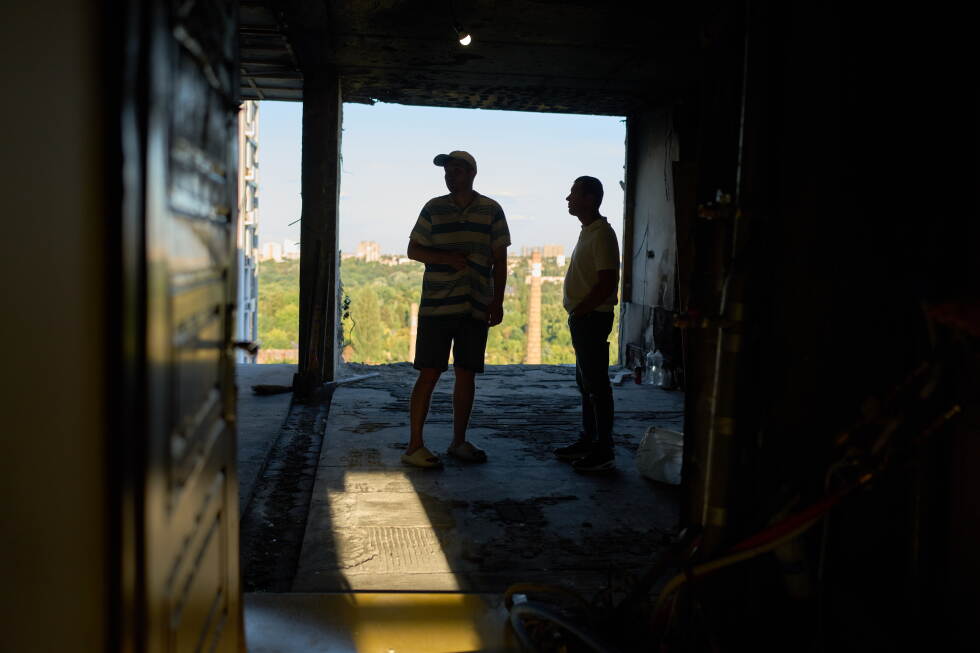
After a full week of unrelenting attacks, a growing number of Kyiv residents are now considering leaving the capital for safer, quieter parts of the country. Ivan Datsiv, an IT worker, was in his apartment in Kyiv’s historic Podil district when a Russian drone crashed through his floor on Tuesday, charring the walls and ceilings of his unit and completely destroying the adjacent apartment. Datsiv tries to joke about the damage, saying he had already been planning to repaint his walls anyway.
Alerts have become so frequent that he no longer sees the point of repeatedly trekking to a bomb shelter. At the current rate, he said, the only option would be to move into a basement full-time. “The alarms sound constantly,” he said. “You don’t even have time to go down and come back up. It’s just a waste of time running back and forth.” He is now actively planning to leave Kyiv. “I’m thinking of living in another city, somewhere quiet and without this danger,” he said. From the blown-out window of the destroyed apartment next door, the view looks down onto a playground and basketball court where children still play between alerts—until another siren sounds, and minutes later, the white zigzag trail of an intercepted drone stretches across the sky.
Bovsunovskyi is also considering leaving the capital temporarily, to give his pregnant wife and young daughter a chance to escape the constant stress and danger. The kindergarten his daughter attends moves all children to a shelter every time an alert sounds, and the alerts have grown so frequent that he now picks her up halfway through every day. “There is no stability,” he said.
-
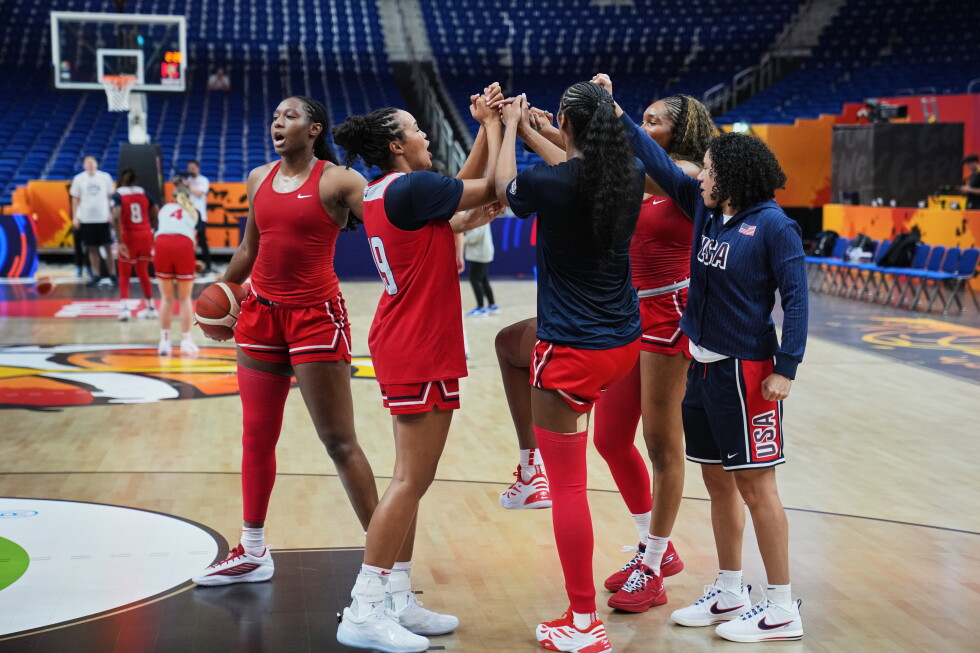
A 30-game win streak for US on the line at the FIBA women’s World Cup with France and others waiting
The 2026 FIBA Women’s World Cup is set to tip off this Friday in Berlin, bringing together 16 of the world’s top national women’s basketball teams for 10 days of elite competition that runs through September 13. Entering the tournament as the undisputed dynasty, the United States women’s national team is gunning for an unprecedented fifth consecutive World Cup championship, a feat that would further cement their status as the dominant force in international women’s basketball.
The U.S. enters the tournament riding a 30-game winning streak in FIBA World Cup play, a run that stretches all the way back to a 2006 semifinal loss to Russia. This year’s squad blends exciting young rookie talent and veteran championship experience in a unique mix that has basketball fans across the globe eager to see how the team performs. Making their senior World Cup debuts are NCAA standouts turned WNBA stars Caitlin Clark, Angel Reese, and Paige Bueckers, three of the most high-profile players in the women’s game today. Leading the team alongside the young core is veteran forward Breanna Stewart, one of the most decorated players in international basketball history, who already boasts three Olympic gold medals and three FIBA World Cup titles to her name.
While the U.S. remains the clear favorite to claim gold, multiple top-ranked nations are poised to challenge the American dynasty and end their decades-long winning streak. France, which narrowly lost to the U.S. by just a single point in the 2024 Paris Olympic gold medal game, enters the tournament hungry to avenge that near-miss and claim the first major global title in program history. Other legitimate contenders include Spain, Belgium, and China, the latter of which faced the U.S. in the 2022 World Cup final and pushed the Americans to a tight contest before falling.
This year’s tournament introduces an expanded format compared to the 2022 edition, which featured only 12 teams split across two groups. For 2026, 16 teams have been divided into four groups of four, with each group playing a full round-robin preliminary stage. Group winners earn an automatic bye to the quarterfinals, while the second and third-place finishers from each pool advance to a knockout qualification round, with the four winners of those matches filling out the quarterfinal bracket. All 36 tournament games will be hosted across two dedicated venues in Berlin, giving fans across Germany and the world a front-row seat to the action.
For viewers in the United States, every game of the tournament will be broadcast across TNT, truTV, and HBO Max, as part of the network’s multi-year media rights agreement with FIBA. To bolster studio coverage, TNT has brought on two former U.S. national team standouts, Tina Charles and Renee Montgomery, as game analysts. Charles, who helped Team USA claim three consecutive World Cup titles between 2010 and 2018, highlighted the unique pressure the American squad faces entering every major tournament.
“There’s definitely going to be challenges. You know, gold is earned. It’s not assumed,” Charles told the Associated Press in a pre-tournament interview. “When you put USA across your chest, there’s an expectation that you’re supposed to win, regardless of what your experience has been internationally. But I think people just don’t really understand how difficult that is. You’re playing the best players from around the world. You’re adjusting to different styles, you’re adjusting to the physicality of the game and how the referees will call these games, and everybody wants to be the team that beats you. You have that bullseye on your back.”
This year’s World Cup also marks a major step forward for FIBA’s investment in women’s international basketball, with the organization committing expanded resources to improve the player experience to match the standards of the men’s World Cup. For the first time in tournament history, every player from every participating team will be provided with a private hotel room, a change from past tournaments where players often shared accommodations. Additional upgrades include a dedicated on-site weightlifting facility and a private relaxation lounge for all teams. FIBA has also introduced a new financial assistance program to help member national federations prepare their squads for the tournament, a first for the women’s competition.
“We’re providing the same conditions as in the men’s World Cup,” FIBA Secretary General Andreas Zagklis told the Associated Press. “We are providing also for the first time financial assistance to our members to prepare their teams.”
With more than 50 current WNBA players competing in the tournament across all participating nations, the WNBA has paused its 2026 regular season from August 31 through September 16 to accommodate the event. This is the first time the FIBA Women’s World Cup has been scheduled during the WNBA regular season; past iterations were held after the conclusion of the WNBA Finals. The tournament will shift to a new late-November time slot when Japan hosts the 2030 edition of the event.
-
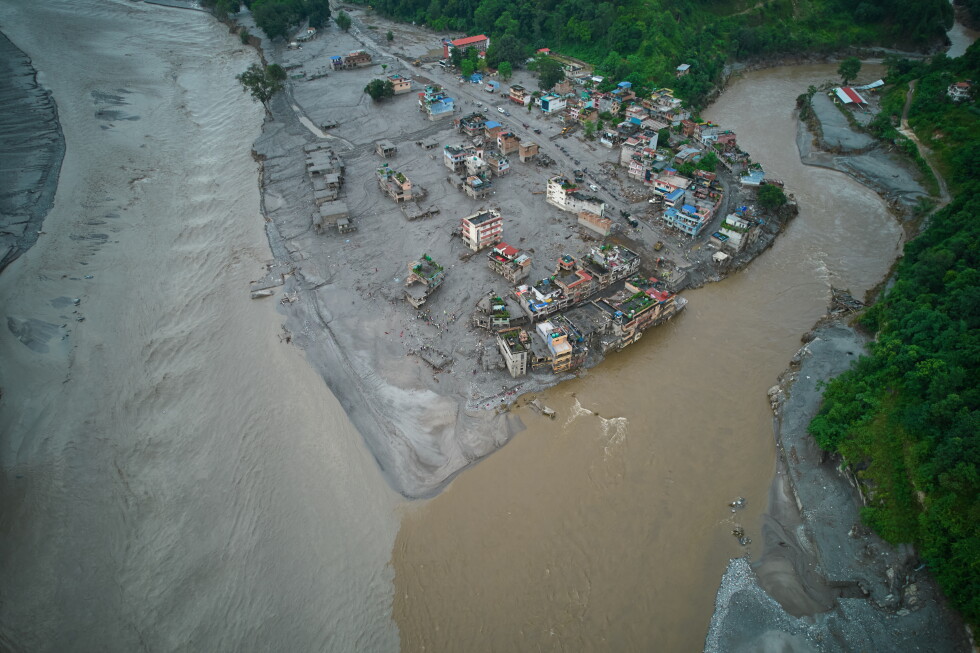
2 trapped workers rescued alive from a tunnel in Nepal, officials say
KATHMANDU, Nepal – In a striking breakthrough in Nepal’s massive multi-day search and rescue operation, rescue teams have extracted two construction workers alive from the collapsed Trishuli 3A hydropower tunnel, officials confirmed Friday. The dramatic rescue comes nine days after catastrophic flash floods swept through Nepal’s river valleys, triggered by a glacial collapse that sent torrents of water and debris cascading through downstream communities and work sites.
-

Asian benchmarks mostly rise after tech stocks lead rally on Wall Street
Following a broad, tech-driven rally on U.S. Wall Street overnight, most major Asian equity benchmarks kicked off Friday morning trading in positive territory, lifting regional investor sentiment across global markets.
Japan’s benchmark Nikkei 225 climbed 0.6% to 64,622.33 in early morning trading, while South Korea’s Kospi notched a steeper 0.9% gain to reach 6,635.67. Hong Kong’s Hang Seng Index outperformed regional peers, jumping 2.1% to 25,751.26, and China’s Shanghai Composite Index added a solid 0.8% to end the morning session at 3,973.27. Australia’s S&P/ASX 200 bucked the regional upward trend, dipping less than 0.1% to 9,011.80 in a muted performance.
The upward momentum spilled into Asian markets after all three major U.S. indexes closed higher on Thursday, driven by cooling 10-year Treasury bond yields and sharp gains for large-cap technology and communication services stocks. High valuations for these sectors give them outsize influence on overall market direction, and their rally pulled broad indexes higher across the board: the S&P 500 gained 1.1%, the Dow Jones Industrial Average rose 1.2%, and the tech-heavy Nasdaq Composite climbed 1.4% by closing bell.
Leading major tech names all posted solid gains. Microsoft rose 2.7%, Apple gained 1%, and Meta Platforms climbed 3%. Leading AI chipmaker Nvidia, whose high-performance processors remain the foundational hardware for cutting-edge artificial intelligence development, added 1.8% following confirmation of its planned $13 billion acquisition of AI platform Hugging Face. The deal will leave Hugging Face’s open-source platform model intact, according to reporting on the transaction. Communication services stocks also contributed heavily to the U.S. rally, extending the upward momentum driven by AI-focused growth expectations.
In energy markets, crude oil prices extended recent gains amid ongoing geopolitical tensions between the U.S. and Iran, which have entered a sixth month of open conflict that has intensified in recent weeks. Benchmark U.S. crude rose 65 cents to $91.95 per barrel, while international benchmark Brent crude climbed 47 cents to $95.95 per barrel. The ongoing conflict is widely cited as the core driver of recent energy price surges, as most global oil shipments from the Middle East pass through the Strait of Hormuz – a chokepoint critical to energy supplies for nations across the globe, including Japan, which imports nearly 100% of its crude oil demand. Tensions escalated further Thursday after Iran fired on Kuwait in retaliation for U.S. bombardments earlier that week, adding to supply uncertainty for global energy markets.
Bond markets saw continued easing of yields that have climbed steadily throughout 2026. The yield on the 10-year Treasury note, which is a key benchmark for mortgage rates and consumer lending across the U.S., fell to 4.77% from 4.79% at the close of Wednesday’s session. At the start of 2026, the 10-year yield sat at just 4.20%, reflecting steady upward movement through the year that has put pressure on equity valuations.
Shifting expectations around U.S. Federal Reserve interest rate policy also supported market gains this week. Many investors now interpret recent comments from Federal Reserve Governor Christopher Waller as a signal that the central bank is less likely to raise its benchmark short-term interest rate at its upcoming policy meeting in two weeks than previously projected. Waller noted that if next week’s incoming inflation data shows cooling price growth, he would support holding interest rates steady at the next meeting, while a hotter-than-expected inflation reading would lead him to back a rate hike.
Market participants are also closely watching the Bank of Japan, which will hold its next policy board meeting later this month. Many analysts expect the central bank to raise its benchmark interest rate, but uncertainty remains over the size of the potential increase. Japan has faced growing market pressure to raise rates to lift the value of the yen against the U.S. dollar, which has traded near multi-decade lows in recent sessions. In Friday currency trading, the U.S. dollar edged only slightly lower against the yen, falling from 155.84 yen to 155.78 yen. The euro held largely steady against the U.S. dollar, trading at $1.1633 compared to $1.1631 in the previous session.
-
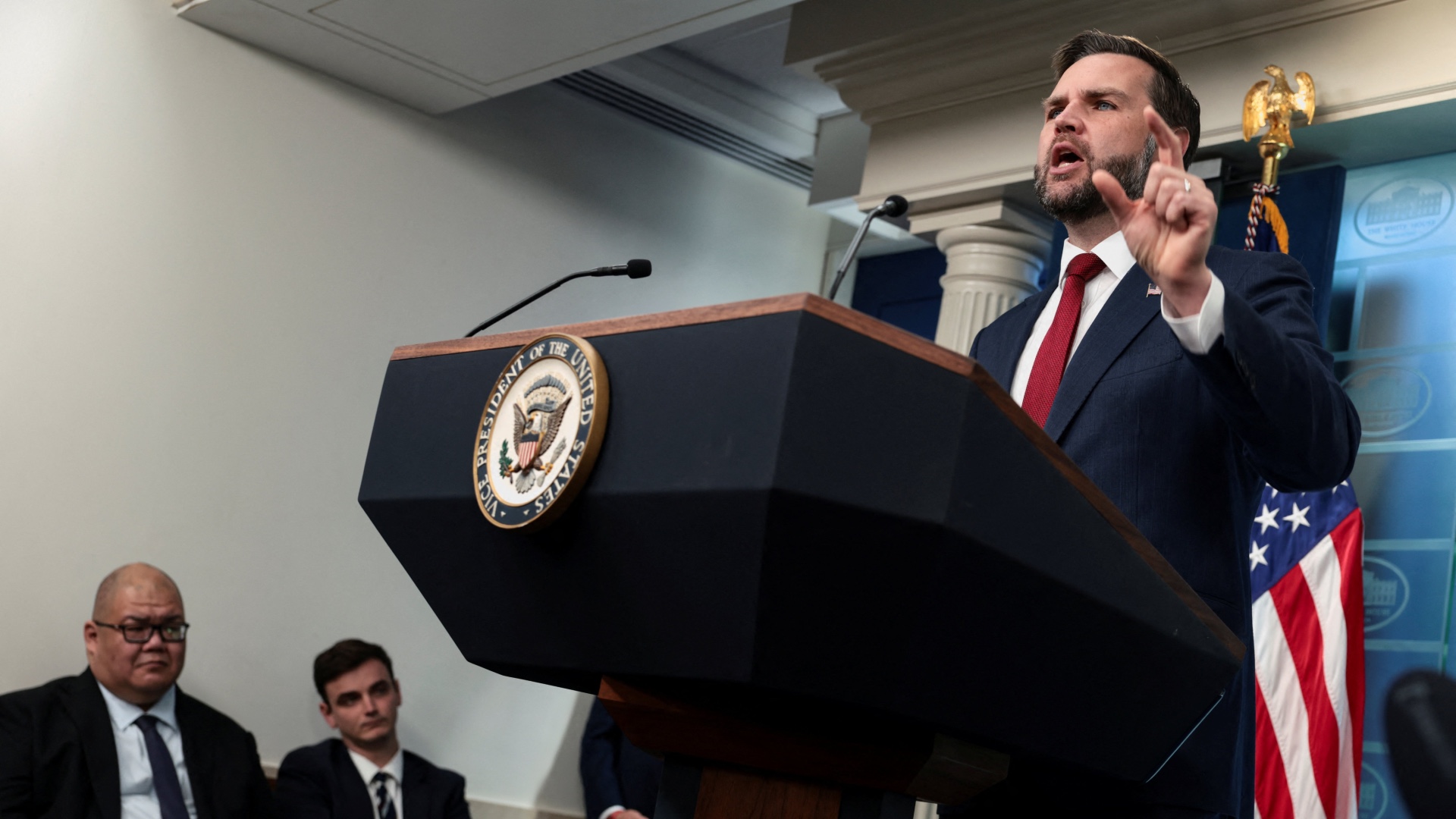
Vance: US investigating strike on Iran wedding ‘very fully’
In a White House press briefing Thursday, U.S. Vice President JD Vance confirmed that American authorities are conducting a full investigation into reports that a U.S. military strike hit a wedding gathering on Iran’s southern coast earlier this week, killing at least four civilians and wounding more than a dozen others. The incident marks one of the most severe escalations in tensions between Washington and Tehran since the two sides signed a memorandum of understanding in Islamabad just over two months ago.
Vance, who previously led U.S. negotiation teams with Iran in both Islamabad and Lucerne, told reporters he had received regular updates on the ongoing investigation, while casting doubt on initial reporting from Iranian state media. “Iranian state media has not been a reliable source of information about what has unfolded in this conflict to date, so I am extremely skeptical of their claims,” he said. The vice president emphasized that the U.S. military has a long-standing policy of avoiding civilian targets in combat operations. “We never have targeted civilians, and we never will. Unfortunately, accidents do happen in conflict. When our military makes an error, we conduct full reviews to improve our procedures going forward, which is why this investigation is proceeding thoroughly,” he added.
During the briefing, Vance implicitly confirmed that no active diplomatic channels currently exist between Washington and Tehran, when he did not push back against reporters’ framing of the issue as occurring amid a total diplomatic breakdown. He did, however, push back on characterizations of the current situation as an open war. “Major combat operations are not ongoing right now, and they have not been for quite some time,” he said. “I would not call this a war. There is no active, widespread shooting at this moment.”
Despite this framing, Vance spent much of the nearly hour-long briefing justifying the continued deployment of U.S. military power in the Strait of Hormuz, a critical global energy chokepoint where tensions have spiked sharply since late February. Since U.S. and Israeli operations against Iran began on February 28, Iran has implemented a blockade of vessels linked to the U.S. and Israel in the waterway, its most potent leverage in the current standoff. In response, the U.S. Navy imposed a counter-blockade in April.
“Just yesterday, we moved 15 million barrels of oil through the Strait of Hormuz, even as Iran continues to fire on commercial shipping,” Vance noted, questioning the global community’s lack of action. “What has any other country done to address this? Why is the United States the only nation willing and able to guarantee that global energy markets remain supplied?” Minutes later, he offered a blunt answer to his own question: “We are the only country in the world that can maintain control over this critical waterway. If we do not step up, no one else will.”
Vance offered a blunt message to Tehran: “Stop acting like crazy people.” His remarks came hours after Iranian First Vice President Mohammad Reza Aref warned that the alleged strike has forced Tehran to rewrite its security and defense calculations, and that Iran will launch an “asymmetrical, multi-layered” response to the attack. Iran has a history of targeting U.S. regional assets across the Gulf, including in Kuwait, the UAE, Bahrain, and Jordan. In a post on X Thursday, Aref issued a stark warning to the U.S. economy: “Americans should begin stockpiling gasoline and fuel. Dark months await the American economy.”
Outlining U.S. strategy moving forward, Vance said Washington faced two clear choices. “We could withdraw entirely from the region, which would leave the entire world far worse off, with no guaranteed access to global oil and gas supplies. Or we can accept that Iran will continue attacking shipping, and take whatever steps are necessary to prevent their actions from triggering a global energy crisis,” he said. Vance added that Gulf nations have explicitly told Washington that a full permanent withdrawal from U.S. military bases in the region – which have expanded dramatically since the 1991 Gulf War – would be a catastrophic outcome for regional security. Even so, the future of forces evacuated from these bases earlier this year remains unclear; 18 U.S. military personnel have been killed in operations since the current conflict began.
Speaking at a separate panel hosted by Democracy in the Arab World Now (Dawn) Thursday, former U.S. Defense Intelligence Agency officer Harrison Mann said he does not expect U.S. forces to ever return to the Gulf bases they vacated earlier this year, including installations in Bahrain, Qatar, Kuwait, and eastern Saudi Arabia. “This conflict has turned those bases into an even greater political liability for the ruling monarchies of the region,” Mann explained. He added that the U.S. could eventually consolidate its regional military posture in Israel – a shift that would bring its own risks, as Iran-aligned groups like Lebanon’s Hezbollah maintain rocket capabilities that can reach all of Israel.
Vance confirmed Thursday that the White House has no set timeline for de-escalation, a notable shift from earlier administration pledges that gasoline prices would drop significantly by the first week of September. That promise has yet to materialize. He added that the U.S. is not planning its strategy around an expectation that Iran will act responsibly or negotiate in good faith. “Our approach is to use all tools at our disposal to meet two core goals: first, eliminate the threat of an Iranian nuclear program, and second, guarantee that global energy markets remain adequately supplied,” he said.
At the Dawn panel, Center for International Policy senior non-resident fellow Negar Mortazavi explained that Iran has shifted its strategy after what it views as a misstep from an earlier ceasefire. In June 2025, after Israel launched an attack on Iran, Tehran agreed to a ceasefire within 12 days, a move Mortazavi said Iran now sees as overly hasty. “They accepted the ceasefire too quickly, which is why the conflict reignited for a third time this past February,” she said. “Now, their doctrine has shifted: they have adopted a far more offensive, aggressive posture.”
Mortazavi added that Iran has also drawn lessons from its past dealings with President Donald Trump. “Publicly and privately, Iranian officials say that when they back down to Trump, he only escalates further. But when they stand their ground and escalate in response, he backs off – and they have multiple examples of this dynamic,” she said.
One of the core tools the U.S. is deploying against Iran is an expanded package of sanctions, unveiled last week by Treasury Secretary Scott Bessent. Dubbed “Operation Economic Outcast,” the new sanctions regime aims to cut off all of Iran’s economic enablers and asphyxiate the Iranian economy, according to Bessent, who added that Trump has been holding conversations with global allies to secure their participation in the effort. The administration has not yet named which countries have agreed to join, nor released a timeline for full implementation.
When asked Thursday which countries have stepped up to support the sanctions beyond the UAE, Vance said a broad coalition has formed, even if many participants prefer to keep their involvement private. “Turkey, Azerbaijan, Saudi Arabia, Qatar, much of the Gulf Arab coalition – we have support from countries all across the world. Many just aren’t willing to say so publicly,” he said. On the question of China, Iran’s closest global ally that has long helped Tehran evade U.S.-led financial restrictions, Vance struck a far more conciliatory tone. “We have held a number of conversations with the Chinese, and frankly, they have been responsive to several of our requests,” he said. “Say what you will about China, but they do not shoot at commercial shipping to advance their interests in international disputes. In that regard, they have proven far more responsible.”
Vance’s remarks come ahead of a planned state visit to the U.S. by Chinese President Xi Jinping, scheduled for later this month.
-
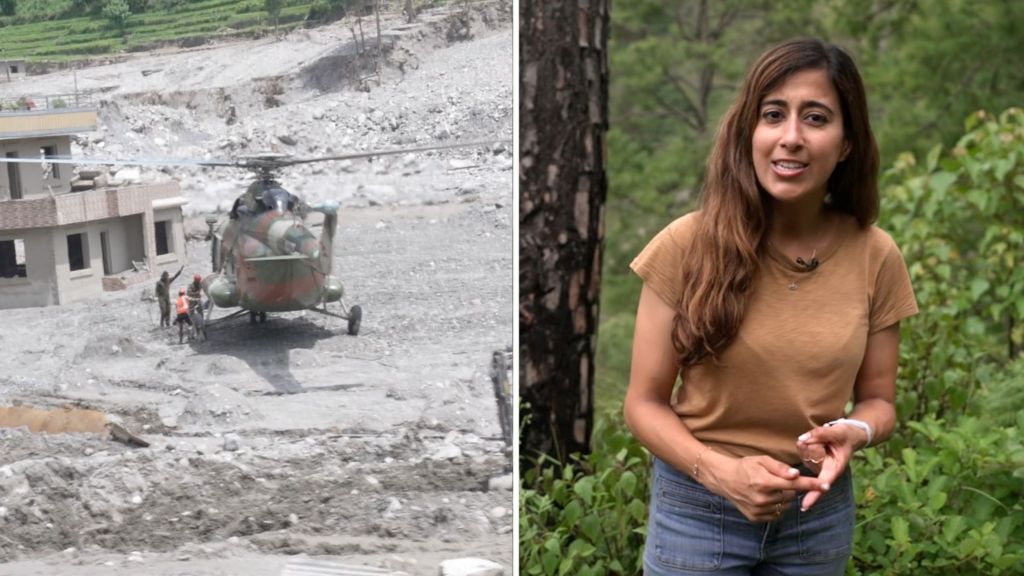
Nepal says it will need billions in funding to rebuild after flash floods
In the wake of devastating flash floods that swept through large swathes of Nepal, the Himalayan nation has announced it will need billions of dollars in international and domestic funding to launch comprehensive reconstruction efforts. BBC’s South Asia correspondent Azadeh Moshiri is currently on the ground reporting from the disaster zone, where government agencies and local rescue teams are just starting the painstaking work of clearing rubble and laying the groundwork for rebuilding.
The flash floods, which are often amplified by Nepal’s steep mountain terrain and erratic monsoon patterns that have grown more intense in recent years, left widespread destruction in their wake. Entire villages were washed away, critical infrastructure including roads, bridges, and water systems was destroyed, and thousands of residents were left displaced from their homes. As emergency response operations shift to longer-term recovery, Nepali authorities have outlined a daunting price tag for restoring communities and reinforcing the country’s disaster resilience.
Moshiri’s on-site reporting captures the scale of the challenge: entire neighborhoods still lie buried under mud and debris, while local communities wait for support to begin rebuilding their lives. International disaster relief organizations have already dispatched initial aid, but the government has stressed that multi-billion-dollar commitments will be necessary to not just rebuild what was lost, but to upgrade infrastructure to withstand future flood events, which are projected to become more frequent due to shifting climate patterns in the Hindu Kush Himalaya region.
-

Argentine leader says oil firms working off Falklands face sanctions
Decades after a brutal 1982 armed conflict that claimed nearly 1,000 lives, the long-running sovereignty dispute over the Falkland Islands (known as Las Malvinas to Argentina) has reignited, with Argentine President Javier Milei unveiling aggressive new steps to advance his country’s claim to the British overseas territory in the South Atlantic.
In a nationally televised address this week, Milei confirmed he would move forward with sanctions targeting international oil companies planning exploration work off the archipelago’s coast. His announcement centers on the Sea Lion oilfield, a massive untapped reserve holding an estimated 1.7 billion barrels of crude, where a British and an Israeli energy firm are scheduled to launch exploratory drilling in the coming months. Milei framed the upcoming project as a direct threat to Argentina’s territorial claims, warning that delaying action would give energy companies the permanent physical infrastructure to extract resources that Argentina asserts rightfully belong to the country.
“Winds of change are blowing across the globe that favor our claim to the Falklands,” Milei told the Argentine public, pointing to growing signals that the United States is prepared to revise its longstanding policy of neutrality in the decades-old dispute. The Argentine leader emphasized that former U.S. President Donald Trump has openly flagged the possibility of a U.S. position shift if the United Kingdom fails to meet its NATO defense spending commitments, and added that current U.S. officials are reassessing Washington’s historical stance on the sovereignty issue. “This is not empty rhetoric,” Milei said. “U.S. leaders understand that Argentina is a reliable partner and a valuable ally for the decades ahead. The Falklands are Argentinean — historically, legally, and irrefutably.”
Milei also used the address to announce plans to construct a new Argentine naval base in Tierra del Fuego, the southernmost province of Argentina, located just a short distance from the Falkland archipelago. While details of the proposed sanctions remain unclear, existing Argentine legislation already enables the government to impose restrictions on any company participating in unauthorized energy projects on the islands.
The sovereignty dispute stretches back more than 200 years, but erupted into open conflict in 1982, when Argentine military forces invaded the islands to stake a territorial claim. The UK deployed a naval task force that retook control of the archipelago after a 74-day conflict that left 255 British service members, three Falkland island residents, and 649 Argentine soldiers dead. In a 2013 referendum held on the islands, 99.8% of residents voted overwhelmingly to remain a British overseas territory, reaffirming their right to self-determination. The UK has repeatedly stood by that result, reiterating this week that Falkland islanders are British citizens with an unassailable right to determine their own political future. BBC News has reached out to the UK government for additional comment on Milei’s latest announcement.
Recent developments have introduced new uncertainty to the dispute, particularly shifting signals from the United States. In a GB News interview Thursday, Trump was asked whether the U.S. would intervene to support the UK in a potential future escalation of the dispute. The former president replied that the UK had “not been there to help me” during tensions between the U.S. and Iran, echoing his earlier warnings that a U.S. neutrality revision is on the table if the UK does not increase its defense spending. Just hours before Milei’s national address, a senior U.S. State Department official sparked further speculation by posting a photo of her meeting with Milei on social media with the caption: “Exciting things are happening in the Western Hemisphere.”
If exploration proceeds as planned at Sea Lion, production is on track to launch in 2028, marking the first large-scale commercial extraction of the archipelago’s offshore oil reserves — a development Milei warned would fundamentally change the territorial status quo if Argentina does not act quickly.