In a historic, high-security proceeding at El Salvador’s controversial Terrorism Confinement Center (CECOT) — the world’s largest mega-prison — hundreds of alleged members of the transnational criminal gang Mara Salvatrucha, better known as MS-13, appeared before the court this week to face charges of mass murder, torture and organized terror. On Thursday, Agence France-Presse reporters granted access to the restricted facility witnessed a stark scene: 220 defendants, all clad in matching white t-shirts and shorts, heads shaved, secured by chains, sat motionless and silent in orderly rows of plastic chairs arranged across CECOT’s main assembly hall. Hundreds of additional co-defendants joined the proceeding remotely from other blocks of the facility. Among those on trial are roughly 20 alleged high-ranking MS-13 leaders, including Borromeo Henriquez (known by the alias “The Little Devil of Hollywood”) and Carlos Tiberio Ramirez (“Snaider of Pasadena”), alongside dozens of mid-level gang lieutenants. Most defendants bore the gang’s signature tattoos across their faces, necks, hands and scalps, with some staring directly at visiting press as heavily armored security guards bearing riot shields formed a protective perimeter around the courtroom. Prosecutors allege the group collectively carried out more than 29,000 brutal killings across El Salvador over decades of gang rule. During Thursday’s testimony, graphic accounts of the gang’s violence played over the courtroom’s public address system. One witness recalled, “We burned her genitals and buttocks,” describing a targeted killing ordered by gang leadership. Additional testimony from two witnesses confirmed that MS-13 commanders continued to order murders from inside prison walls, even amid widespread state crackdowns. Prosecutors have directly linked the two top accused leaders to roughly 9,000 crimes, and the men showed no visible reaction as the chilling charges were read aloud. The mass trial is the centerpiece of Salvadoran President Nayib Bukele’s high-profile “war on gangs,” a sweeping security crackdown launched in 2022 that has seen more than 90,000 suspected gang members arrested under a prolonged state of emergency. Bukele, who has openly styled himself as the “world’s coolest dictator” in media appearances, has compared the CECOT mass trial to the Nuremberg Trials that prosecuted Nazi leadership after World War II. CECOT director Belarmino Garcia echoed the government’s framing, telling reporters, “These individuals caused mourning and pain to our society for many years.” A uniformed CECOT security agent, who spoke on condition of anonymity, added of the witness testimony: “It’s a horrifying account that makes your hair stand on end.” The Salvadoran government invited international journalists to observe the fourth day of proceedings, though access was tightly controlled under strict security protocols. For Bukele, the crackdown on gangs has proven politically transformative: supporters credit him with turning El Salvador from a nation once labeled the murder capital of the world into a safer country, and his hardline approach has become a template for right-wing political candidates across Latin America seeking to capitalize on widespread public anger over violent crime. Yet the mass trial and Bukele’s broader security campaign have faced sharp international criticism, particularly from human rights organizations that warn the sweeping dragnet of arrests has inevitably swept up thousands of innocent people, many of whom were detained for months before being cleared of any links to gangs. The process of mass trying hundreds of defendants at once has also raised alarms about due process violations. Controversy extends beyond El Salvador’s borders as well: Last year, former U.S. President Donald Trump authorized the transfer of 140 alleged Venezuelan gang members to be incarcerated at CECOT, a move that U.S. courts later ruled was unlawful. In 2021, U.S. authorities also leveled allegations that undermined Bukele’s carefully cultivated tough-on-crime image, claiming his administration held “covert negotiations” with MS-13 and other gangs, offering financial incentives in exchange for reduced gang violence and political support for Bukele’s ruling New Ideas party. The CECOT mega-prison, purpose-built to hold tens of thousands of suspected gang members, and the ongoing mass trial have become defining symbols of Bukele’s polarizing approach to public security, dividing supporters who hail his success in curbing violence from critics who warn the campaign is eroding democratic norms and civil liberties in the country.
作者: admin
-

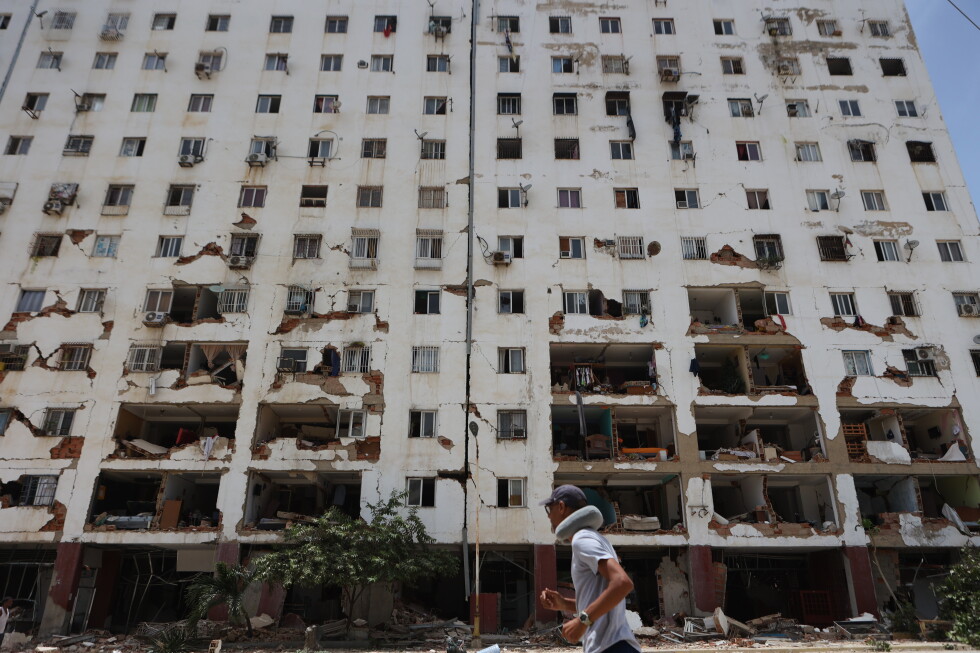
Soviet architecture vanishes as Central Asia drifts from Moscow
Thirty-five years after the collapse of the Soviet Union left the five Central Asian states independent, a quiet erasure of Soviet-era architectural and artistic heritage is accelerating across the region, driven by a growing ideological shift away from Moscow and state-led efforts to cement distinct national identities.
In Dushanbe, the capital of Tajikistan, one striking example of this trend sits on the facade of a soon-to-be-demolished apartment block: a massive mosaic honoring Soviet cosmonauts and engineers, celebrating the union’s mid-century scientific breakthroughs. Like thousands of other Soviet relics across Central Asia, the artwork is set to be destroyed to clear space for a luxury new residential development. Local resident Rakhmon Satiev told AFP he holds out hope the mosaic could be carefully removed and reinstalled at the new site, but that wish has little chance of being fulfilled.
Over the past decade, deliberate neglect and intentional demolition have gutted the region’s Soviet built heritage, from iconic architectural landmarks to public artworks including mosaics, frescoes, and monumental sculptures. “If a building is old and does not fit into the new city plan, it is torn down. The city is being rebuilt and renovated, and the past is vanishing,” Dzhamshed Dzhuraev, a prominent Tajik mosaic artist, explained in an interview with AFP. Behind his Dushanbe studio, a once-prominent monument to Soviet founder Vladimir Lenin stands hidden from public view, a relic of an era regional leaders now deem out of step with modern national narratives.
Following their 1991 independence, the five Central Asian former Soviet republics — Kazakhstan, Kyrgyzstan, Uzbekistan, Tajikistan, and Turkmenistan — have seen their urban landscapes transform into a disjointed mix of gleaming new high-rises, crumbling Soviet-era buildings, informal shanties, and half-finished construction projects. For preservation advocates, the rate of heritage loss is alarming. Altynai Kudaibergenova co-founded Artkana, one of the region’s few independent groups working to save Soviet-era architectural heritage in Kyrgyzstan. She says the number of destroyed monuments is “striking,” and warns that Bishkek, Kyrgyzstan’s capital, still holds dozens of magnificent examples of socialist-modernist architecture — a style that has grown popular with international tourists and design fans on social media — that are now at risk of demolition.
The widespread demolition is rooted in ideological change, as long-serving regional leaders have worked to position themselves as the founding fathers of new independent nations, prioritizing new symbols of national power over leftover markers of Soviet rule. Rarely do officials frame the campaign in explicit ideological terms, however. Even as the region balances enduring economic dependence on Russia with growing Chinese investment, government leaders cast the demolition drive as a practical, cost-effective measure. They argue that renovating aging Soviet-era structures is more expensive than building new developments from scratch, noting the region’s total population has grown to roughly 80 million, creating urgent demand for new housing.
In Dushanbe, where the mayor is the son of long-ruling president Emomali Rakhmon, the push for urban renewal has centered on replacing Soviet-era landmarks with symbols of the current government. Prominent Tajik sculptor Safarbek Kosimov told AFP that the city’s administration “is doing everything possible to make the buildings as beautiful and comfortable as he can,” adding that Soviet-era mosaics are simply “no longer necessary.” Portraits of the 73-year-old incumbent leader have already replaced many of the demolished Soviet artworks on public building facades across the capital.
Critics of the campaign say it erases important cultural history for private and political gain. “Most Soviet mosaics were designed to convey an ideological message, but their artistic value is also important,” preservation advocate Kudaibergenova said. “Unfortunately, businesses are rarely receptive to such considerations. Their main priority is selling square metres at a high price.” Multiple nonprofits and international monitoring organizations have documented widespread corruption and opaque collusion between government officials and real estate developers driving large-scale urban renewal projects across the region.
In Bishkek, local painter Erkinbek Bolzhurov is currently fighting to save the city’s historic House of Artists, which sits adjacent to the former national printing house — a structure that has already been reduced to nothing but its outer walls. “We want the city to develop, of course, but not at the expense of our memory,” he said. “Great artists worked inside these walls. That is what makes the building unique — it has a history.”
Across Central Asia, tight government control over public expression means authorities rarely consult local communities or preservation groups before approving demolition projects. Still, some artists hold out hope for a future shift in attitudes. Tajik mosaic artist Dzhuraev says he believes “the time will come” when public art like Soviet-era mosaics will again be valued as part of the region’s layered history. “Architects and urban planners should pay them more attention,” he said, adding that a revival of appreciation for this heritage is still possible.
-

China to send giant pandas to Atlanta again
BEIJING – Decades after the end of its first giant panda partnership with China, Zoo Atlanta is poised to welcome a new pair of the beloved endangered species, marking a fresh chapter in Sino-U.S. panda diplomacy even as broader bilateral relations remain strained. The announcement came Friday, just weeks before U.S. President Donald Trump’s widely anticipated official visit to Beijing for high-level talks with Chinese leadership.
The China Wildlife Conservation Association (CWCA) confirmed in an official statement that the two new arrivals — male Ping Ping and female Fu Shuang, both raised at the Chengdu Research Base of Giant Panda Breeding, China’s leading giant panda conservation facility — will launch a 10-year collaborative conservation program under a bilateral agreement signed between CWCA and Zoo Atlanta in 2024. While the exact departure date from China for the pandas has not yet been released, preparations on the U.S. side are moving forward at full speed.
According to the CWCA, American teams are currently completing final upgrades to the giant panda enclosures to ensure the new pair will have a comfortable, secure habitat, with Chinese conservation experts providing ongoing technical guidance throughout the renovation process.
Zoo Atlanta first shared the news of the upcoming arrival Thursday, expressing overwhelming enthusiasm for the new partnership. “We can’t wait to meet Ping Ping and Fu Shuang and to welcome our members, guests, city, and community back to the wonder and joy of giant pandas,” said Raymond B. King, the zoo’s president, noting the institution was deeply honored to be chosen as stewards for the new pair.
This new agreement comes after the conclusion of Zoo Atlanta’s original giant panda program in 2024. During that first cooperation period, the previous pair of pandas, Lun Lun and Yang Yang, successfully birthed seven cubs during their tenure in Atlanta. By October 2024, all seven cubs had been relocated to China, with the original adult pair and their two youngest offspring departing for their return that same month.
For more than half a century, China’s global giant panda loan and conservation partnership program has served as a core pillar of Chinese soft-power diplomacy, widely known as “panda diplomacy.” Giant pandas first became a symbol of unofficial Sino-U.S. friendship back in 1972, when Beijing gifted a pair of pandas to the National Zoo in Washington D.C. shortly after the normalization of bilateral relations. Today, even as geopolitical and trade tensions between the two powers remain high, conservation experts and officials frame the renewed panda partnerships as a rare area of shared cooperation. Both Washington’s National Zoo and San Diego Zoo received new giant pandas from China in 2024, signaling a broader restart to the program after previous panda pairs returned to China amid shifting bilateral dynamics.
The CWCA emphasized in its announcement that the new decade-long cooperation with Zoo Atlanta will advance critical joint work across multiple key conservation and scientific areas, including giant panda disease prevention and treatment, joint research, and academic exchanges between Chinese and American experts. Officials from both sides highlight that beyond its diplomatic significance, the program carries major global value for the long-term survival of giant pandas, a species that has rebounded from endangered status thanks to decades of cross-border conservation work.
-

Man, 45, charged after allegedly kicking at airline staff, biting passenger while being restrained on Perth-bound flight from Canberra
A chaotic mid-air incident that endangered the safety of passengers and crew on a domestic Australian flight from Canberra to Perth has led to criminal charges against a 45-year-old Queanbeyan resident, Blake Antrobus, Australian Federal Police (AFP) have confirmed.
The disruptive incident unfolded on 16 April, when Antrobus allegedly began engaging in aggressively disorderly conduct mid-flight: he shouted profanities, repeatedly ignored explicit safety directives issued by cabin crew, and physically kicked and shoved the seat positioned in front of him, which was occupied by a female passenger. When the woman asked him to cease the disturbance, his behavior escalated into open aggression.
After crew members reported the unruly conduct to the flight captain, authorization was granted to restrain Antrobus to prevent further harm to other people on board. During the restraint process, AFP allege that Antrobus kicked a senior cabin crew manager and bit the arm of a fellow passenger who was assisting in holding him down.
Following the aircraft’s landing, Antrobus was taken into custody. He faces three distinct criminal charges: one count of assaulting an aircraft crew member, one count of failing to adhere to a legally required safety instruction from cabin crew, and one count of engaging in offensive, disorderly conduct on an aircraft. He made his first appearance at Perth Magistrates Court the day after the incident, on 17 April, and returned for a brief further hearing this Friday.
In an official statement following the case, AFP Acting Superintendent Peter Brindal emphasized the serious risks that unruly, anti-social behavior poses to the entire aircraft cabin. “Being in the air does not give anyone a free pass from the law and consequences on the ground,” Brindal stated. He added that the AFP maintains close collaborative partnerships with Australian airlines to protect the safety of all domestic air travelers, and any individual accused of endangering that safety will be brought before the courts to answer for their actions.
-

India criticizes ‘poor taste’ Trump post against immigrants
A fresh diplomatic row has erupted between the United States and India after former President Donald Trump shared an incendiary social media post that branded India a “hellhole” and attacked Indian immigrants to the U.S. The controversy comes just weeks ahead of a planned official visit to New Delhi by U.S. Secretary of State Marco Rubio, whose trip was already framed as an effort to de-escalate recent bilateral tensions between the two long-time strategic partners.
The inflammatory post, shared by Trump late Wednesday, targets the long-standing U.S. constitutional principle of birthright citizenship, echoing decades of far-right anti-immigration rhetoric. Beyond attacking birthright citizenship, the post spread two false and harmful claims about Indian immigrants working in the U.S. technology sector: first, that they systematically refuse to hire white, American-born workers, and second, that they lack adequate English language proficiency. The post went on to generalize its attack, claiming that birthright citizenship allows immigrants to bring entire family chains into the U.S. from what it called “hellhole” countries including China and India.
India’s Ministry of External Affairs issued a swift and sharp rebuke of the comments on Thursday. Spokesperson Randhir Jaiswal dismissed the remarks as “obviously uninformed, inappropriate and in poor taste,” emphasizing that they do not align with the long-standing foundation of the India-U.S. relationship, which is built on mutual respect and overlapping strategic and economic interests.
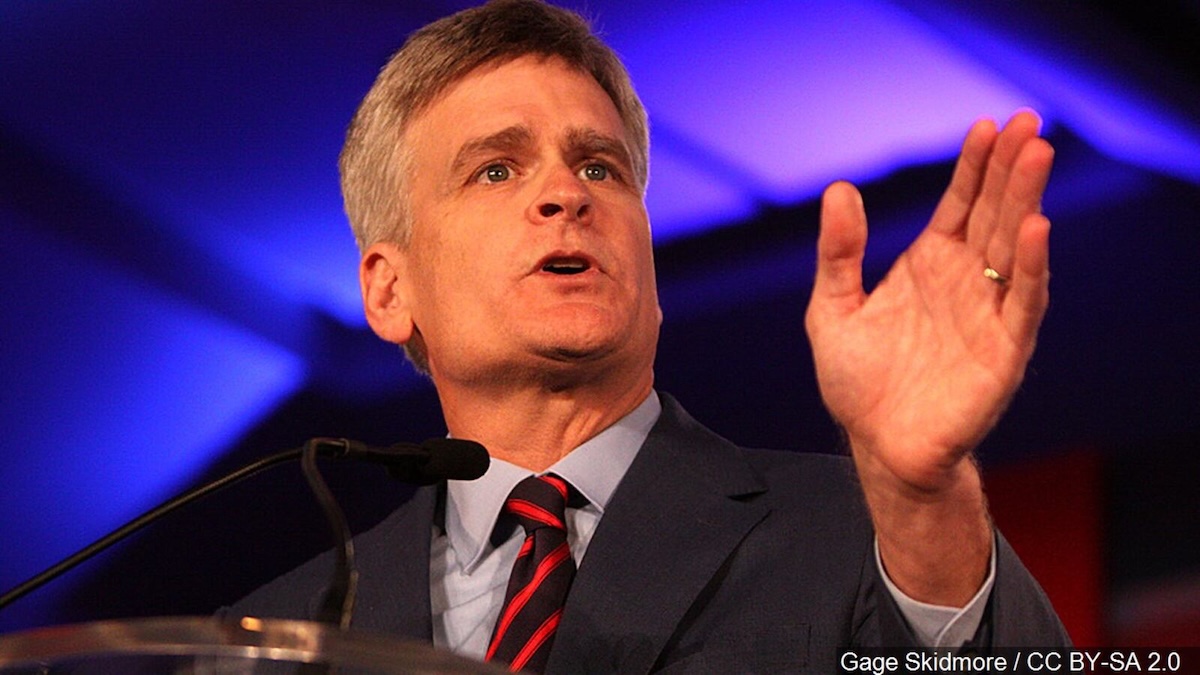
The post has also drawn widespread condemnation from American political and advocacy groups. Democratic Congressman Ami Bera, whose parents immigrated to the U.S. from India, called the comment “offensive, ignorant and beneath the dignity of the office” of the U.S. presidency. He added that Trump, who was born into immense wealth and privilege, has never experienced the daily struggles that shape the lives of millions of immigrant families across the United States.
The Hindu American Foundation, a leading advocacy group representing Indian-American communities, also issued a statement saying it was deeply disturbed by the “hateful, racist screed.” The organization noted on social media platform X that the president’s endorsement of such bigoted rhetoric fuels rising xenophobia and racism already at record levels in the U.S., putting Indian-American and other immigrant communities at direct risk of harm.
Cracking down on illegal and legal immigration has been a signature policy priority for Trump throughout his political career, and he has repeatedly targeted the H-1B temporary work visa program that is widely used by skilled Indian technology workers. This is not the first public friction between Trump and the Indian government: for months, Trump maintained steep punitive tariffs on Indian imports after taking offense to Prime Minister Narendra Modi’s muted response to his offer of mediation during a military conflict between India and Pakistan.
Trump’s confrontational approach to India marks a clear break from decades of policy pursued by successive U.S. administrations of both major political parties. For decades, U.S. policymakers have prioritized building cooperative bilateral ties with the world’s largest democracy, framing New Delhi as a key strategic counterweight to an increasingly assertive China in the Indo-Pacific region.
-

‘They can make a mess of us’: The worrying trend Storm must fix if they want to extend crazy streak against the Rabbitohs
For more than two decades, the Melbourne Storm have held an unbeatable record on their home turf against the South Sydney Rabbitohs, holding a flawless 20-0 win streak in matches played in Melbourne. But this Saturday, that historic run faces its most threatening test yet, as the NRL powerhouse confronts an internal issue that has derailed its 2026 season before it even hits the halfway mark: crippling 20-minute concentration lapses that have turned premiership contenders into table drifters.
No one knows the Storm’s identity better than club legend Cameron Smith, widely regarded as the greatest player in NRL history. Smith was the first to flag the worrying pattern that has brought the franchise its longest losing skid in 14 years. The Storm, who entered the 2026 season as one of the top favorites to lift the premiership trophy after back-to-back grand final appearances, have dropped five consecutive matches, leaving them clinging near the bottom of the ladder heading into the Anzac Day weekend clash.
The core issue is not consistent poor performance across full 80-minute matches, head coach Craig Bellamy acknowledges. Instead, the team repeatedly falls apart in short, concentrated stretches of play that cost them critical points and match results. This pattern has played out week after week: in the 2025 grand final rematch against the Brisbane Broncos, the Storm held a lead before conceding three tries in just 17 minutes to throw away the win. Against the North Queensland Cowboys, three tries went to the opposition in six devastating late minutes. Last week against Canberra, the Raiders crossed the line twice in quick succession in both halves to secure the win.
Injury woes have compounded the team’s focus problems, too. The Storm lost key stars Ryan Papenhuyzen, Nelson Asofa-Solomona and Jonah Pezet in the off-season, and long-term injuries to starting players Eli Katoa and Xavier Coates have gutted the team’s depth and consistency. It is a far cry from the opening two rounds of the season, when Melbourne exploded out of the gate to score 98 points and looked set to dominate the competition.
Bellamy echoed Smith’s assessment of the problem, saying the team’s failure to compete for a full 80 minutes is the root of its current slump. “We just seem to find ways of not playing for the full 80 minutes; we’re only playing for 50 or 60 minutes,” Bellamy said. “Cameron Smith made the point that you don’t win games in this competition by playing for 50 or 60 minutes, and that’s basically what we’ve been doing. We’re just picking a different time each week of (when to play) the 50 or 60 minutes.”
The coach emphasized that consistent full-game intensity is non-negotiable for turning the season around, even when the team is put under pressure. “It’s important that we get our jobs done for 80 minutes, and hopefully the team can get their jobs done for 80 minutes,” he said. “We just need to put that effort in that we’re putting in at other times and make sure we do it for 80 minutes. There are going to be stages in the game where your backs are against the wall and things are going to happen that put you on the back foot, but that’s when you’ve got to stiffen up, toughen up and get through that period. You’ll know at some stage that it’s going to end, but you’ve just got to keep turning up.”
The historic 20-0 home streak against South Sydney will get its biggest challenge on Saturday night, with the Rabbitohs poised to target Melbourne’s right defensive edge with their red-hot left attack. Star fullback Latrell Mitchell comes into the match fresh off a four-try haul against the St George Illawarra Dragons, while winger Alex Johnston holds an incredible personal record against the Storm, with 17 tries from just 15 career matches against the Melbourne side.
Bellamy said his defensive unit on the right edge is gearing up for the toughest test of the season so far, and acknowledged a lapse in focus against the Rabbitohs’ star pairing would be catastrophic. “I’d like to think that our right hand side will be up for it,” Bellamy said. “We know with Latrell and Alex how good a player they are and what they can do to you. If you don’t aim up, they can make a mess of us.”
For the Storm, this weekend’s clash is not just about protecting an almost unheard of long-term home winning streak. It is also a critical chance to fix the concentration issues that have derailed their season, and avoid a sixth straight loss that would put their once-certain finals hopes in serious jeopardy.
-

US soldier allegedly bet on Maduro operation using intel
The U.S. Department of Justice announced criminal charges Thursday against a 38-year-old active-duty Army soldier accused of exploiting classified access to a secret U.S. military operation to illegally profit hundreds of thousands of dollars via an online prediction betting platform.
Gannon Ken Van Dyke, a resident of Fayetteville, North Carolina, faces five felony counts stemming from his alleged bets on Polymarket, a popular crypto-based prediction market. Court documents allege Van Dyke, who participated in planning and executing the U.S. mission to capture former Venezuelan President Nicolas Maduro, placed wagers on two key outcomes: that U.S. forces would enter Caracas and that Maduro would be removed from power. When the operation launched on January 3, which resulted in Maduro and his wife Cilia Flores being arrested and transferred to New York to face federal drug trafficking charges, Van Dyke walked away with more than $400,000 in illicit winnings, prosecutors say.
Acting U.S. Attorney General Todd Blanche emphasized the gravity of the alleged misconduct in an official statement. “Our men and women in uniform are entrusted with classified information solely to carry out their national security missions,” Blanche said. “They are strictly prohibited from exploiting this highly sensitive data for personal financial gain.”
In a response to the charges, Polymarket officials confirmed they had proactively flagged the suspicious betting activity to the Department of Justice and fully cooperated with the ongoing investigation. “Insider trading has no place on Polymarket,” the company said in a statement. “Today’s arrest is proof the system works.”
The indictment against Van Dyke is not an isolated incident: it represents the latest confirmed case of insiders leveraging nonpublic information about the second Trump administration’s policy and military actions to profit from prediction market bets. Earlier this year, six unidentified Polymarket accounts netted a combined $1.2 million by correctly betting the U.S. would launch a military strike against Iran on February 28, the exact date open hostilities in the Middle East began. No arrests have been made in that case, and investigators have not uncovered any evidence linking President Donald Trump or senior White House staff to those transactions.
Speaking to reporters Thursday, Trump distanced himself from the unregulated prediction betting industry. “The whole world, unfortunately, has become somewhat of a casino… in Europe and every place, they’re doing these betting things,” Trump said. “I was never much in favor of it.”
The charges have reignited long-simmering accusations of systemic conflicts of interest plaguing Trump’s second term in office, particularly centered on connections between Trump’s family and Polymarket itself. Progressive Democratic Senator Bernie Sanders highlighted these concerns in a post Thursday on the social platform X, arguing that the Trump family has amassed $4 billion in unethical income during his time in office, calling the situation an “unprecedented kleptocracy.”
Previous incidents have already raised alarms about potential insider trading tied to the White House: in March, Trump posted on his Truth Social platform that talks with Iran were “very productive,” a statement that triggered a drop in global oil prices and a surge in equity markets. Market analysts calculated that traders who placed positioned in oil and stock futures in advance of the post earned tens of millions of dollars in profits. The Trump family has also earned hundreds of millions of dollars from cryptocurrency investments, a sector Trump has moved to deregulate since returning to office. Most notably, Trump’s eldest son, Donald Trump Jr., is a partner at private equity firm 1789 Capital, which made a multimillion-dollar investment in Polymarket in 2024. Following the investment, Polymarket named Trump Jr. as a company advisor.
If convicted on all five charges — one count of wire fraud, one count of unlawful monetary transaction, and three counts of violating the Commodity Exchange Act — Van Dyke faces a maximum sentence of 50 years in federal prison.
-

Countries to gather in Colombia for summit aimed at breaking fossil fuel reliance
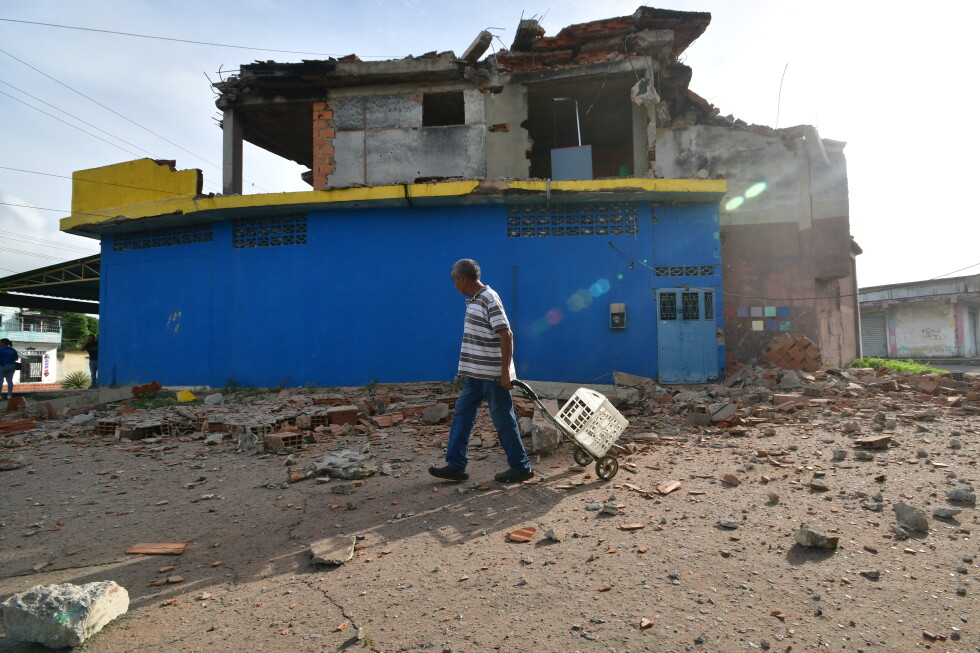
Against a backdrop of escalating geopolitical friction and volatile global energy markets, approximately 50 national governments are set to convene this week in Santa Marta, Colombia’s sunlit Caribbean coastal city, for a high-stakes summit focused on accelerating the global transition away from polluting fossil fuels. Running from April 24 to 29, the conference is co-hosted by the Colombian and Dutch governments, and will bring together a diverse cohort of participants: national cabinet ministers, regional and local government leaders, academic researchers, and civil society advocates. All attendees will center their discussions on how to wind down production and use of oil, gas, and coal while ensuring the global energy transition proceeds along a just, orderly, and equitable path, according to summit organizers.
This gathering emerges from growing frustration among climate-conscious governments and grassroots advocates that decades of formal United Nations climate negotiations have failed to directly confront fossil fuel production, the single largest driver of anthropogenic global warming. The Santa Marta summit was organized to advance this critical conversation outside the slow-moving framework of official multilateral talks.
Unlike binding formal UN climate agreements, the summit is not designed to deliver enforceable international commitments. Instead, organizers frame the gathering as a long-overdue space to open debate on a politically charged issue that has been sidelined in traditional climate negotiations for decades. “This is fundamentally a political space. We are opening a forum for discussion that simply does not exist in existing climate processes,” Colombia’s Minister of Environment Irene Vélez Torres told the Associated Press in a pre-summit interview. The core goal, officials say, is to draft a shared set of actionable policy proposals and build a broad coalition of nations willing to move faster than current international commitments to phase out fossil fuels.
Claudio Angelo, head of international policy at Brazil’s Observatorio do Clima think tank, notes that climate action has unfortunately slipped down the list of urgent priorities for many governments in recent years, amid competing global crises. Attendees will include major fossil fuel producing and consuming nations from across Europe, Latin America, Africa, and Asia. Notably, two of the world’s largest oil producers, the United States and Saudi Arabia, will not participate, a reality that underscores deep global divisions between nations pushing for an accelerated transition and economies deeply tied to fossil fuel extraction and export revenues.
Under the 2015 Paris Climate Agreement, member nations set their own voluntary national emissions reduction targets, with no enforceable international mechanism to compel countries to phase out fossil fuel production. The Santa Marta summit is part of a broader global push to shift climate diplomacy beyond incremental emissions target-setting and toward direct action to curb fossil fuel output, an issue that has split the international community for decades along political and economic lines. Climate advocates argue that new, bolder approaches are needed to close what they see as a dangerous gap in global climate governance.
A key proposal expected to dominate summit discussions is the creation of “fossil-free zones”: designated geographic areas where all new oil, gas, and coal extraction is permanently banned, with a focus on ecologically sensitive and biodiversity-rich regions. “Fossil-free zones turn global, abstract climate goals into concrete, on-the-ground decisions,” explained Andrés Gómez of the Fossil Fuel Treaty Initiative. Indigenous leaders, who have been central to shaping the summit agenda, are pushing attending governments to enshrine fossil-free zones as a core component of national energy transition plans.
“For Indigenous peoples, halting fossil fuel extraction is not only an existential climate imperative — it is essential to defending our ancestral territories, our self-governance systems, and our fundamental right to self-determination,” said Juan Carlos Jintiach, executive secretary of the Global Alliance of Territorial Communities, a coalition of Indigenous and local community groups representing millions of people across the world’s forest regions. Jintiach added that governments must move “from empty commitments to on-the-ground implementation” by embedding fossil-free zone policies into official national energy transition roadmaps. Analysis from environmental advocacy groups shows that existing oil and gas extraction concessions already overlap with millions of hectares of intact tropical forest and Indigenous-held territories, highlighting the massive scale of the challenge facing reformers.
The summit convenes at a moment of unprecedented global geopolitical uncertainty, including ongoing conflict in the Middle East that has disrupted global energy markets and threatened supply flows through the Strait of Hormuz, the strategic chokepoint through which roughly one-fifth of the world’s daily oil supply transits. The resulting energy price spikes have rippled far beyond energy markets, hitting household budgets worldwide. “Oil price volatility does not stay confined to energy trading floors — it moves straight into the daily lives of ordinary people,” said Mary Robinson, former Irish president and leading climate justice advocate who will attend the summit, during a pre-summit press briefing. “As always, the impacts hit the most vulnerable communities hardest, while big oil companies rake in record windfall profits,” she added.
Vélez argues that current global energy instability should speed up, rather than delay, the transition away from fossil fuels. “This crisis — and let’s call it what it is: the war in the Middle East has triggered a global crisis — in this context, I believe the global movement must double down on radicalizing the green agenda and accelerating the energy transition,” she said. Some energy analysts, however, warn that short-term energy supply shocks could push many nations to ramp up domestic fossil fuel production in the near term, even as they reaffirm long-term climate commitments. This dynamic highlights the persistent tension between national energy security goals and urgent climate action.
This tension is particularly acute in Latin America, where many national economies remain heavily dependent on oil, gas, and mining exports even as regional governments position themselves as global climate leaders. Colombia, one of Latin America’s top oil producers and home to roughly 6% of the world’s remaining Amazon rainforest, relies on crude exports for a large share of both government revenue and foreign exchange earnings. Despite this dependence, Colombian President Gustavo Petro’s administration has pledged to halt all new oil exploration and lead global calls for a coordinated phaseout of fossil fuels. “Economic and fiscal dependence on fossil fuels is a problem, and it is perhaps the single biggest challenge we face as we push for this transition,” Vélez acknowledged.
Financial constraints will also be a central topic of summit discussions. Many low- and middle-income developing nations carry high levels of public debt and have limited fiscal space, making large-scale investments in renewable energy infrastructure and just transition programs difficult to achieve. Civil society groups argue that without fundamental reforms to the global financial system, these constraints will continue to slow progress away from fossil fuels.
“Moving away from fossil fuels unquestionably requires a carefully planned economic and energy transition that accounts for national fiscal realities,” said Carola Mejía of the Latin American and Caribbean Network for Economic, Social and Climate Justice. Gabriella Bianchini, policy advisor for advocacy group Global Witness, says the stakes of the summit extend far beyond climate action alone. “As communities across the globe suffer the consequences of oil-driven conflict, it has never been clearer that the world needs to leave the fossil fuel era behind,” Bianchini said. “Santa Marta is a chance for governments and communities to grab the bull by the horns and take concrete action toward building a greener, more equitable, and more peaceful world.”
Bianchini added that while formal UN climate talks remain a critical part of global climate governance, they have repeatedly failed to deliver meaningful progress on curbing fossil fuel production. “Santa Marta represents a space for governments to advance the only plan we know will stave off the worst impacts of climate breakdown: a rapid and just transition away from fossil fuels,” she said. Observers note that the core test of the summit will be whether it can send a clear, unified political signal on an issue that has remained unresolved after decades of global climate talks. For Vélez, the gathering represents a potential turning point for global climate action. “If we step back, this conference is that turning point where, collectively, we decide to stand on the right side of history,” she said.
-

‘Raw and honest’: India climbers face obstacles in race to the top
In a display of jaw-dropping speed, Indian speed climber Deepu Mallesh can scale a vertical wall equivalent to the height of five full-sized city buses in just five seconds – a feat so quick it can easily slip past an untrained eye. Yet for Mallesh and dozens of other elite Indian climbers chasing international Olympic dreams, the biggest obstacle is not the steep rock face in front of them, but the systemic barriers that have left the sport largely unsupported in a cricket-mad nation.
Once a niche recreational activity, competitive climbing has exploded in grassroots popularity across India over the past decade. The Indian Mountaineering Foundation (IMF) reports that tens of thousands of people now participate in sport climbing regularly, with more than a dozen purpose-built commercial climbing gyms opening across the country since 2014. But while recreational participation has surged, the transition to a full-time professional career has remained out of reach for most talented athletes, held back by prohibitive costs, near-zero sponsorship access, and a complete lack of official government recognition.
Today, just 3,500 climbers compete at any level across India, and only around 60 athletes earn the chance to compete in international tournaments each year. Many promising climbers have been forced to walk away from the sport entirely due to financial pressure. For those who persist, like 28-year-old Mallesh, balancing elite training with basic survival is a constant juggle. Mallesh, who has already represented India in international competition and dreams of becoming the first Indian climber to qualify for the Olympic Games, works part-time as a climbing instructor to fund his training and competition goals for the 2028 Los Angeles Olympics.
“What I like most about climbing is how raw and honest it is. It’s just you, the wall and the clock,” Mallesh explained. Despite placing outside the medals at last month’s IFSC World Climbing Championships in China, Mallesh set a new Indian national record of 5.39 seconds in the men’s speed discipline, and earned a spot to compete at the 2025 Asian Games in Tokyo this autumn. Still, his journey has been marked by financial uncertainty. For years, Mallesh relied entirely on crowdfunding to cover international competition costs, raising roughly 1 million rupees ($10,500) two years ago to attend six global events. He has missed multiple competitions over his career simply because he could not raise enough money to cover travel and entry fees. “If I get proper funding and proper support I might see my career through till the Olympics. Otherwise I will have to find something else to do,” he said.
The financial burdens facing climbers are substantial even at the basic level. A single high-quality pair of climbing shoes and safety harness costs around 10,000 rupees ($106), and a chalk bag for improving grip costs an additional 5,000 rupees. Unlike regular athletic shoes, competition climbing shoes wear out quickly, lasting just three to six months with regular training – and most athletes carry a backup pair for competition events. Nineteen-year-old 2024 Asian climbing silver medalist Joga Purty is one of the rare lucky few: she holds a sponsorship from Indian conglomerate Tata, a lifeline that has allowed her to continue competing. “If I didn’t have this I also would be one of those who quit the sport,” Purty said.
Unlike most major sports in India, competitive climbing has not earned official government recognition or support under the National Sports Governance Act. IMF representative Keerthi Pais says the organisation is currently in active negotiations to secure this designation, a change that would open up access to government funding, training infrastructure, and development programs that could transform the sport’s trajectory in India. “This recognition will help them continue their climbing career,” Pais said. For Mallesh, official status would do far more than provide symbolic validation: “It directly impacts support, funding, infrastructure and sponsorship opportunities.” Pais added that government policy to reduce barriers for building new climbing gyms would also be transformative, calling the move “the game-changer” that would unlock widespread, sustainable growth for the sport.
Commercial gym operators have already stepped into the gap left by limited government support, acting as a catalyst for grassroots growth. Mumbai-based The Indian Bouldering Company owner Shaiv Gandhi says private facilities have driven rising public awareness and provided the specialized training infrastructure that emerging athletes need to develop their skills. His gym has even launched an internal talent scouting program that allows promising young climbers to train for free, putting the onus on facility owners to nurture the next generation of elite competitors. “We already have a programme where we have told our instructors to keep an eye out for budding talent… if anyone you think has potential, let them climb. It’s on me,” Gandhi said. Since 2002, Indian climbers have already claimed nearly 70 medals across international competitions, including top finishes at Asian youth championships, proving that with systemic support, Indian athletes could compete with the best in the world on the global stage.
-

Heavy weapons use in Iran war sparks concerns over US readiness in Taiwan: Report
A new report from The Wall Street Journal has brought urgent attention to a growing gap in U.S. military stockpiles, driven by extensive weapons expenditure in ongoing operations against Iran. Multiple senior U.S. officials have raised alarms that the heavy drawdown of munitions leaves America ill-prepared to execute its longstanding defense commitments to Taiwan in the event of a potential Chinese incursion in the near term. According to the report published Thursday, this munitions shortage would not only hinder U.S. military operations but also put American service members at substantially elevated risk if a conflict over Taiwan broke out in the near future.
The scale of depletion is significant: U.S. forces alone have expended between 1,500 and 2,000 air defense interceptors during strikes and defensive operations against Iran, alongside more than 1,000 Tomahawk cruise missiles, one of America’s primary long-range offensive weapons. What makes the shortage particularly pressing is the extended timeline to replenish these stockpiles: defense industry production chains currently require up to six years to replace the munitions already used in the Iran campaign. This production lag has forced senior U.S. national security officials to open discussions about revising existing operational plans for Taiwan’s defense, an issue that remains the top strategic priority for U.S. policymakers in the Indo-Pacific.
The ripple effects of this munitions shortage extend far beyond the Indo-Pacific, reshaping security dynamics across the Middle East. When the U.S.-Israeli campaign against Iran launched earlier this year in June 2025, regional U.S. allies including Gulf Cooperation Council states requested urgent resupplies of Patriot air defense interceptors to fend off retaliatory Iranian drone and missile strikes. However, the U.S. turned these requests down, as its own stockpiles were already drained supporting Israeli air defense operations during the opening phase of the war. As the conflict has dragged on, Iran has launched thousands of drones and missiles against Gulf states, with Bahrain, Kuwait, and the United Arab Emirates enduring the heaviest wave of attacks, and the U.S. has been unable to fill the growing security gap.
This vacuum created by U.S. stockpile shortages has been filled by an unexpected actor: Ukraine. On Thursday, Ukrainian President Volodymyr Zelensky confirmed that Kyiv has signed new security agreements with Saudi Arabia, the United Arab Emirates, and Qatar focused specifically on countering Iranian drone threats. Ukraine has first-hand experience countering the same Iranian-origin drones that Russia has deployed extensively against Ukrainian targets throughout the full-scale invasion, and has developed lower-cost anti-drone technologies that outperform more expensive American systems like the Patriot in this specific niche, making it an attractive alternative partner for Gulf states.
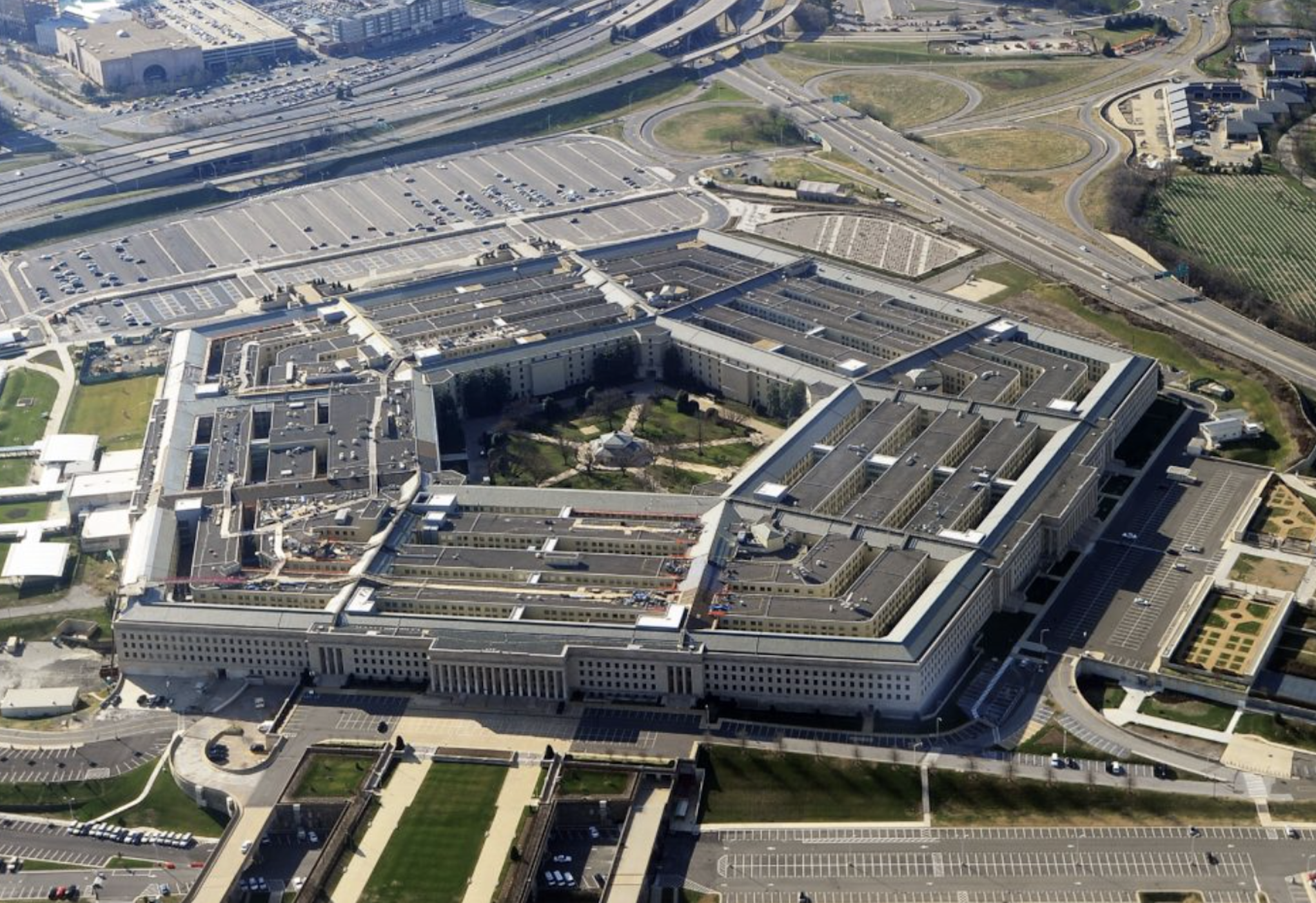
The strategic ramifications of this depletion are already shifting the global balance of power. The Trump administration has acknowledged the need to ramp up domestic defense production, and the Pentagon unveiled its new 10-year $1.5 trillion defense budget proposal this week – the largest in U.S. history – designed to expand production capacity and rebuild stockpiles. Even so, many independent defense analysts argue that the ongoing Iran war has already handed China a major strategic advantage. By draining U.S. conventional arsenal and drawing American strategic attention and resources back to the Middle East, the conflict has strengthened China’s diplomatic and military influence across the globe.
Recent reports have further highlighted this shifting dynamic. Following the June 2025 Iran war, Middle East Eye documented that China completed sales of air defense systems to Iran, and later followed up with deliveries of unmanned aerial vehicles. The New York Times added to these reports Saturday, confirming that U.S. intelligence assessments indicate China may have also provided man-portable shoulder-fired surface-to-air missiles to the Iranian military. These developments mark a significant deepening of military ties between Beijing and Tehran, a shift that would have been far less likely if the U.S. had not been distracted and depleated by its own operations in the region.