作者: admin

  • US Congress members visit Denmark as Trump’s pressure on Greenland rises

    US Congress members visit Denmark as Trump’s pressure on Greenland rises

    A bipartisan congressional delegation from the United States has arrived in Denmark amidst escalating tensions over President Donald Trump’s persistent efforts to acquire Greenland. The 11-member group, comprising both Senate and House representatives, is scheduled to meet with Danish Prime Minister Mette Frederiksen and Greenlandic leader Jens-Frederik Nielsen in a demonstration of diplomatic solidarity.

    This diplomatic mission follows unsuccessful high-level discussions in Washington aimed at discouraging President Trump from pursuing his controversial territorial ambitions. The president has repeatedly asserted Greenland’s strategic importance to US national security, claiming Denmark lacks adequate defense capabilities against potential Russian or Chinese aggression in the Arctic region.

    Despite Greenland’s sparse population, the territory possesses substantial natural resources and occupies a geostrategic position between North America and the Arctic, making it invaluable for missile detection systems and regional surveillance operations. The United States already maintains approximately 100 permanent military personnel at its Pituffik base, operating under existing bilateral agreements that permit unlimited troop deployments.

    President Trump has escalated the situation by not only renewing purchase offers—previously rejected by both Danish and Greenlandic authorities—but also openly contemplating military seizure of the territory. These suggestions have prompted Denmark to issue stark warnings about potential consequences for NATO’s integrity, noting the alliance has never confronted scenarios involving armed conflict between member states.

    European NATO members have mobilized in support of Denmark, with multiple nations including France, Germany, Sweden, Norway, Finland, the Netherlands, and the United Kingdom deploying reconnaissance forces to Greenland. French President Emmanuel Macron has pledged additional land, air, and naval assets to reinforce regional security cooperation.

    The congressional delegation, led by Senator Chris Coons, includes both Democratic and Republican members, reflecting rare bipartisan concern over the administration’s approach. While most delegates oppose Trump’s proposals, legislative efforts have emerged from both sides—with some lawmakers seeking to prevent military action while others have proposed bills supporting annexation.

  • South Korean visitor praises Ningxia’s spicy street food

    South Korean visitor praises Ningxia’s spicy street food

    A South Korean social media influencer’s enthusiastic endorsement of a regional Chinese street food has ignited cross-cultural culinary excitement. Kim Jun-hyeok, a former international student at Ningxia University, recently revisited Yinchuan where he discovered lahuhu, a distinctive noodle dish from Northwest China’s Ningxia Hui Autonomous Region.

    His spontaneous reaction to the vibrant red broth at a roadside stall was captured on video and subsequently went viral across multiple platforms. Initially anticipating overwhelming spiciness, Kim expressed surprise at the dish’s complex flavor profile. “The visual intensity suggests extreme heat, but the actual experience is remarkably balanced,” he observed during the tasting. “The chili delivers aromatic warmth rather than pure burning sensation, creating a genuinely comforting culinary experience.”

    Lahuhu represents a unique chapter in China’s street food history, originating in the 1980s as mala chuan (spicy skewers) before evolving into its current form. The dish features a thick, paste-like broth crafted from finely milled chili peppers blended with toasted sesame and wheat flour. Ingredients including chewy wheat gluten noodles and thinly sliced potatoes are simmered directly in the rich sauce.

    The dish’s culinary signature lies in its distinct jiao characteristic—a Chinese gastronomic term describing the lightly toasted, smoky aroma achieved through precision-frying of chili powder in oil. This technique creates depth and warmth without excessive heat.

    Kim’s culinary journey through Ningxia continues beyond this discovery, with the influencer noting his growing appreciation for the region’s noodle traditions. He plans to further explore local cuisine while sharing his gastronomic adventures with his online audience, potentially paving the way for cross-cultural culinary exchange between China and South Korea.

  • Galactic Energy completes sixth sea-based launch of Ceres 1 rocket

    Galactic Energy completes sixth sea-based launch of Ceres 1 rocket

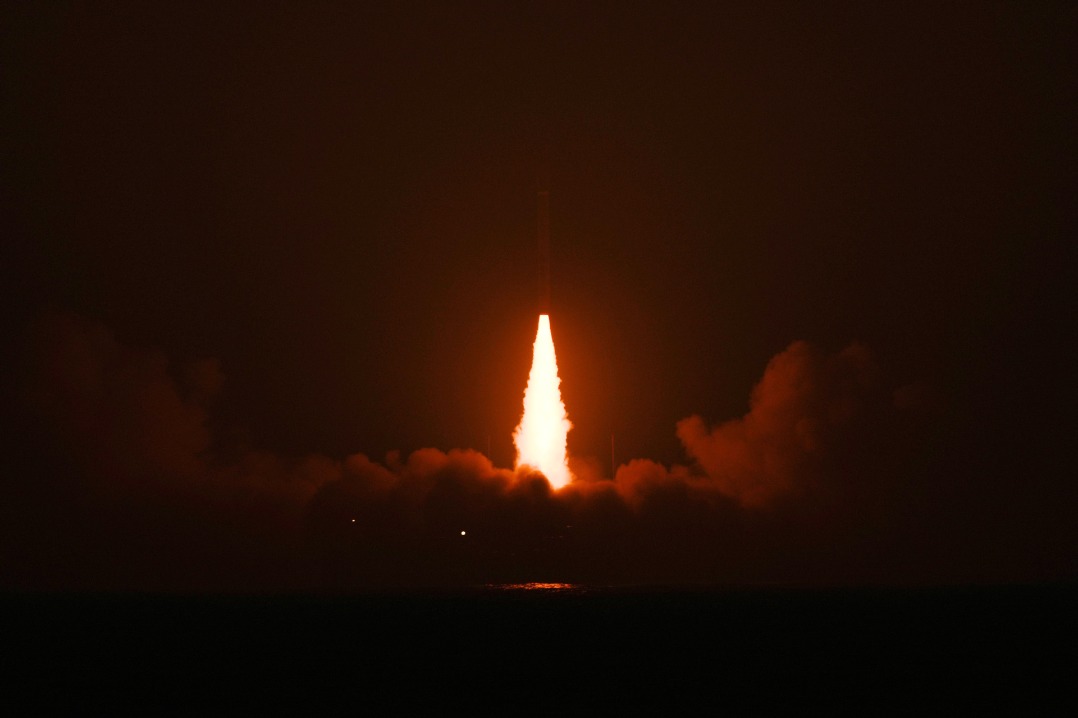
    Beijing-based commercial aerospace enterprise Galactic Energy has achieved another milestone with the successful sixth maritime deployment of its Ceres 1 carrier rocket. The launch occurred at 4:10 AM local time on January 16, 2026, from a mobile platform stationed in the Yellow Sea near Shandong Province.

    The mission successfully delivered four additional satellites into low-Earth orbit at an altitude of approximately 850 kilometers, expanding the Tianqi constellation operated by Beijing Guodian Gaoke. This latest deployment brings the constellation’s total to 41 satellites, achieving comprehensive global coverage for Internet of Things (IoT) data collection applications.

    The Tianqi network supports critical operations across multiple sectors including sustainable forestry, precision agriculture, ecological tourism, renewable power generation, and environmental monitoring systems. The constellation’s expanded capabilities will enhance real-time data transmission for IoT devices operating in remote locations worldwide.

    Since its inaugural flight in November 2020 from the Jiuquan Satellite Launch Center, the Ceres 1 rocket has established an impressive track record. The solid-propellant vehicle stands 20 meters tall with a 1.4-meter diameter, capable of delivering payloads up to 300 kilograms to sun-synchronous orbits or 350 kilograms to lower Earth orbits.

    With this most recent accomplishment, Galactic Energy’s launch vehicle has now completed 23 missions with 21 successful deployments, collectively placing 89 commercial satellites into orbit. This achievement reinforces China’s growing private space sector and demonstrates increasing reliability in commercial launch capabilities.

  • UAE weather: Temperatures to drop, dusty day expected

    UAE weather: Temperatures to drop, dusty day expected

    Meteorological authorities in the United Arab Emirates have issued weather advisories indicating significant atmospheric changes across the nation. The National Centre of Meteorology (NCM) forecasts a substantial temperature decline accompanied by dusty conditions throughout Friday, January 16, 2026.

    Weather patterns will feature partly cloudy skies with low cloud formations expected particularly along coastal and northern regions. The most notable development involves a dramatic temperature differential, with readings anticipated to range from a brisk 7°C in interior areas to a moderate 25°C in other parts of the country.

    Moderate to fresh northwesterly winds will prevail, occasionally strengthening with speeds reaching 60 km/hr. These conditions will generate blowing dust and sand, significantly reducing horizontal visibility across affected regions. Maritime conditions will be particularly challenging, with very rough seas forecast for the Arabian Gulf and rough conditions in the Oman Sea.

    Major urban centers will experience varied temperature ranges: Dubai anticipates highs of 23°C dipping to 20°C, Abu Dhabi expects similar maximum temperatures with a slightly warmer minimum of 23°C, while Sharjah will see peaks of 22°C cooling to 18°C overnight.

    The NCM emphasizes that this weather shift marks the beginning of a cooler period as the weekend approaches, advising residents to prepare for changing conditions and reduced visibility, particularly in open and desert areas.

  • China’s giant radio telescope observations unravel origin of cosmic enigmatic flashes

    China’s giant radio telescope observations unravel origin of cosmic enigmatic flashes

    An international research consortium spearheaded by Chinese astronomers has achieved a groundbreaking discovery in astrophysics, utilizing China’s monumental Five-hundred-meter Aperture Spherical radio Telescope (FAST) to decipher the origins of cosmic fast radio bursts (FRBs). The team from the Purple Mountain Observatory of the Chinese Academy of Sciences has gathered compelling evidence indicating these mysterious celestial phenomena originate from binary star systems, according to research published in the prestigious journal Science.

    Located in Guizhou Province’s rugged karst landscape, FAST—the world’s largest single-dish radio telescope—has provided unprecedented observational data enabling scientists to analyze FRB patterns with remarkable precision. These millisecond-duration cosmic flashes, which have baffled astronomers since their discovery in 2007, release more energy than our sun emits in three days.

    The research demonstrates that at least a subset of FRBs emanate from interacting binary systems where a neutron star orbits another celestial body. This configuration creates the extreme conditions necessary to generate these powerful electromagnetic emissions that travel billions of light-years across the universe.

    This discovery marks a significant advancement in high-energy astrophysics and showcases China’s growing capabilities in cutting-edge space research. The findings provide crucial insights into the extreme environments that produce FRBs, potentially revolutionizing our understanding of stellar evolution and cosmic phenomena. The international collaboration, leveraging FAST’s superior sensitivity, opens new pathways for decoding one of astronomy’s most persistent mysteries.

  • China and Canada announce tariffs relief after a high-stakes meeting between Carney and Xi

    China and Canada announce tariffs relief after a high-stakes meeting between Carney and Xi

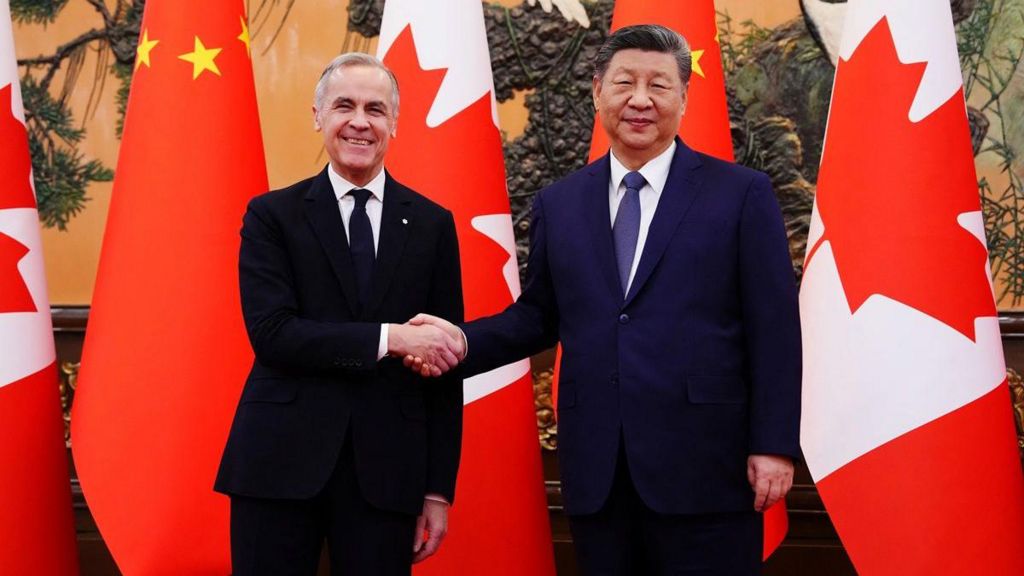
    In a historic diplomatic breakthrough, Chinese President Xi Jinping and Canadian Prime Minister Mark Carney have announced a comprehensive tariff reduction agreement, signaling a dramatic thaw in bilateral relations during the first Canadian leadership visit to Beijing in nearly a decade. The landmark deal, finalized during intensive negotiations at the Great Hall of the People, will see China slash tariffs on Canadian canola oil from 85% to 15% effective March 1st, while Canada will apply most-favored-nation rates of 6.1% on Chinese electric vehicles.

    This economic détente represents a significant reversal from years of escalating trade tensions that began in 2018 with the arrest of Huawei executive Meng Wanzhou and China’s subsequent detention of two Canadian citizens. The relationship further deteriorated in 2024 when Canada imposed 100% tariffs on Chinese EVs following similar U.S. measures, prompting Beijing to retaliate with tariffs exceeding $2 billion on Canadian agricultural products.

    Prime Minister Carney characterized the negotiations as “realistic and respectful” while emphasizing that Canada maintained clear “red lines” regarding human rights concerns, election interference allegations, and the need for diplomatic “guardrails.” The Canadian leader acknowledged the fundamentally different political systems between the nations but advocated for direct dialogue rather than “megaphone diplomacy.”

    Analysts view this diplomatic reset as part of Canada’s broader strategy to diversify trade relationships amid uncertainty in U.S.-Canada relations following the reinstatement of Trump-era tariffs. The agreement potentially opens doors for increased Chinese investment in Canada while positioning Beijing as a stable alternative trading partner on the global stage.

    The reconciliation has already inspired similar diplomatic movements, with South Korean, Irish, and expected British and German leaders scheduling Beijing visits. As Carney noted, this reorientation reflects how “the world has changed dramatically” and how nations are recalibrating relationships in response to evolving global power dynamics.

  • More direct flights seen to increase exchanges

    More direct flights seen to increase exchanges

    The recent restoration of direct flight connectivity between India and China is generating substantial economic momentum, creating fresh pathways for bilateral trade and commercial cooperation. This development comes after a prolonged five-year hiatus that had severely constrained business interactions between the two Asian giants.

    Entrepreneur Praveen Suthar’s experience exemplifies the transformative impact of renewed air links. For years, Suthar had postponed establishing a portable house manufacturing facility in Udaipur, Rajasthan, due to transportation challenges. The October resumption of direct flights between Kolkata and Guangzhou finally enabled his 12-day sourcing mission to China, resulting in a fully approved manufacturing plant that will employ approximately 400 local workers.

    “We maintain significant dependence on China for high-tech raw materials that remain consistently cost-effective,” stated Suthar, who also chairs the Federation of Rajasthan Trade and Industry. The direct flight service has transformed previously cumbersome travel into viable business operations.

    The aviation restoration includes multiple routes: IndiGo’s Kolkata-Guangzhou service (resumed October 26), China Eastern Airlines’ daily Delhi-Shanghai connection (launched January 2), and anticipated reinstatements of Kolkata-Kunming and Mumbai-Shanghai routes according to Chinese embassy statements.

    Business advocates highlight the psychological significance of these developments. Santosh Pai, a cross-border business advisor and scholar at New Delhi’s Institute of Chinese Studies, observed: “Direct flights carry enormous signaling effect. Companies from both nations that had suspended plans are now proactively accelerating trade activities. Chinese firms have recommenced exploratory visits to India while Indian businesses are formulating new strategies.”

    The timing proves particularly fortuitous as Indian exporters seek alternatives to challenging market conditions. With United States tariffs imposing 50 percent duties on various Indian goods, exporters are actively diversifying toward Chinese markets. Jagdish Kumar, an Indian seafood exporter, noted the strategic shift: “American tariffs have severely impacted export viability, making Chinese market alternatives increasingly attractive.”

    Early indicators suggest this diversification is already underway. India’s seafood exports to China have surged 9 percent year-over-year, according to Gibinkumar T.R., secretary of India’s Marine Products Export Development Authority. This trend is expected to accelerate amid ongoing trade tensions.

    Ramachander Poodipeddi, public affairs lead for a Chinese multinational in India, emphasized the operational benefits: “Enhanced connectivity enables more sincere business engagement with greater commitment.”

    Ajay Sahai, director-general of the Federation of Indian Export Organisations, projected broader implications: “Increased flight connectivity will stimulate business interactions that benefit both nations and potentially strengthen the global economic landscape in coming weeks.”

    The aviation restoration aligns with diplomatic developments, including the December 12 bilateral agreement to enhance institutional dialogue, manage differences, and strengthen multilateral coordination—particularly regarding Global South interests.

  • Julio Iglesias denies sexual abuse allegations, calling them ‘absolutely untrue’

    Julio Iglesias denies sexual abuse allegations, calling them ‘absolutely untrue’

    Grammy-winning music icon Julio Iglesias has publicly refuted sexual assault allegations brought forward by two former employees, characterizing the accusations as fundamentally untrue. The 82-year-old recording artist issued an emotional denial via Instagram on Friday following media reports detailing alleged misconduct.

    Spanish media outlets elDiario.es and Univision Noticias jointly published an investigative report on January 13th alleging that Iglesias had committed sexual and physical assaults against staff members at his Caribbean residences in the Dominican Republic and Bahamas during 2021. According to the publications, the incidents occurred between January and October of that year.

    The judicial process gained momentum when Spain’s National Court confirmed receipt of formal allegations against Iglesias on January 5th. This specialized tribunal holds jurisdiction over crimes allegedly committed by Spanish citizens abroad, potentially bringing the case before Madrid-based justices.

    In his social media statement, Iglesias expressed profound sorrow over the allegations: “With deep sorrow, I respond to the accusations made by two people who previously worked at my home. I deny having abused, coerced or disrespected any woman. These accusations are absolutely false and cause me great sadness.” The artist further noted his shock at encountering such malice late in his career while vowing to defend his dignity against what he termed a serious affront.

    The Spanish superstar, whose career has spanned six decades and generated over 300 million record sales across multiple languages, received an outpouring of support from fans worldwide. Iglesias acknowledged these messages of encouragement in his public response.

    Spanish prosecutors have confirmed they are currently examining the allegations to determine whether formal proceedings should be initiated. The case development marks a significant moment for the music legend who previously received Grammy recognition for Best Latin Pop Performance and a Lifetime Achievement Award from the recording academy.

  • Myanmar tells ICJ Rohingya genocide claims ‘unsubstantiated’

    Myanmar tells ICJ Rohingya genocide claims ‘unsubstantiated’

    Myanmar has formally rejected accusations of genocide against its Rohingya minority at the International Court of Justice (ICJ), labeling the claims as “unsubstantiated” and defending its 2017 military operations as necessary counter-terrorism measures. The case, initiated by The Gambia under the 1948 UN Genocide Convention, represents a critical legal challenge to Myanmar’s actions in Rakhine State.

    Ko Ko Hlaing, a minister in Myanmar’s presidential office, addressed the UN’s highest court in The Hague, arguing that the case must be decided on “proven facts” rather than emotional allegations. He asserted that Myanmar’s armed forces, the Tatmadaw, conducted “clearance operations” in response to coordinated attacks by Rohingya insurgents that killed security personnel, justifying the military response as legitimate national defense.

    The proceedings come after The Gambia’s legal team presented extensive evidence alleging systematic atrocities, including mass rape, indiscriminate killings, and torture, claiming these actions demonstrated “genocidal intent” against the Rohingya population. Approximately 1.17 million Rohingya refugees now reside in overcrowded camps in Bangladesh’s Cox’s Bazar district after fleeing the violence.

    While Myanmar expressed commitment to repatriating refugees from Bangladesh, the ICJ’s final ruling may take years. Although the court lacks enforcement mechanisms, a finding against Myanmar would carry significant political consequences and potentially establish legal precedents affecting other international cases, including those against Israel in Gaza.

    Parallel investigations into alleged Rohingya persecution are underway at the International Criminal Court and in Argentina under universal jurisdiction principles. The ICJ hearings conclude on January 29, after which judges will review victim testimony in closed sessions before deliberating on this landmark international law case.

  • New UAE age cut-offs: What it means for schools that start in April

    New UAE age cut-offs: What it means for schools that start in April

    The United Arab Emirates’ recently implemented age cut-off adjustment for school admissions has created distinct pathways for different educational systems operating within the country. While the revised policy permits children born between September and December to commence pre-kindergarten earlier beginning the 2026-27 academic year, this change exclusively benefits institutions following the September intake calendar.

    Indian curriculum schools, which constitute a significant portion of the UAE’s educational landscape, remain unaffected by these modifications. These institutions continue to operate according to their traditional April-March academic calendar, maintaining their longstanding March 31 age cut-off date. This continuity ensures that children born after this threshold will still enroll in the subsequent academic year, preserving the established admission framework.

    Educational authorities emphasize that this consistency is strategically intentional. Indian schools in the UAE mirror admission regulations prevalent in India, and any alteration to the cut-off system could potentially disrupt grade placement protocols, board examination requirements, and student transfers—particularly for families frequently moving between the two nations.

    Meena Menon, Primary Section Supervisor at Global Indian International School (GIIS), clarified that while the new policy offers flexibility for international curriculum schools, “nothing changes for them” regarding Indian curriculum institutions. This stability provides parents with clarity, consistency, and smoother educational transitions, enabling confident academic planning despite broader systemic evolution.

    For inter-school transfers, whether international or curriculum-based, placement decisions will continue to rely on the last successfully completed grade, with institutions following approved equivalency and assessment procedures to maintain educational continuity.

    Education leaders have welcomed the policy’s child-centered approach while acknowledging the practical necessities of maintaining parallel systems. Dr. Sharafudean Thanikatt, Principal of Crescent English High School, described the broader change as “a positive move toward child-centred education” that could reduce stress for both children and parents with appropriate early years support.

    Springdales School Dubai Principal David Jones noted that while the revision offers “welcome relief” for September-born children in international systems, Indian schools continue to provide parental guidance regarding long-term implications for senior board examinations where Indian age norms remain applicable.