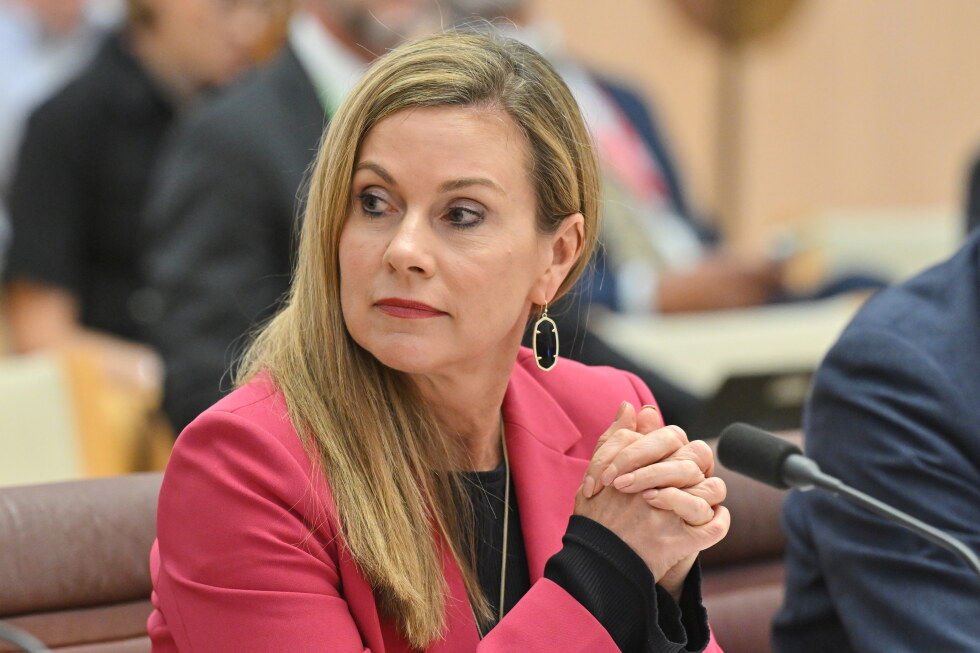
MELBOURNE, Australia – Australia’s trailblazing ban on social media accounts for children under 16, a policy that has become a global benchmark for child online safety regulation, has been thrown into political gridlock after opposition and minor party senators joined forces to delay proposed enforcement reforms. Prime Minister Anthony Albanese has issued a fierce condemnation of the decision, warning the eight-week Senate inquiry will give big tech platforms time to erase critical evidence that could be used to hold non-compliant services accountable. The world-first under-16 ban came into full force this past December, after Australia’s Parliament passed the foundational legislation with broad bipartisan backing in 2024, giving 10 major platforms including Meta-owned Facebook and Instagram, Google’s YouTube, Snapchat and TikTok more than 12 months to adjust their systems to exclude underage users. The center-left Labor government this week tabled amendments to strengthen the powers of the country’s top online safety regulator, eSafety Commissioner Julie Inman Grant, who oversees implementation of the ban. Currently, Inman Grant can only request operational information from platforms about their compliance efforts. The proposed changes would expand her authority to compel the handover of internal documents and data, as well as grant her the power to seek information from third parties such as age verification technology providers to independently verify platforms’ claims about how they block underage users. The amendments also would double the maximum fine for repeated non-compliance from AU$49.5 million to AU$99 million (US$68 million), a major increase intended to incentivize meaningful action. But on Thursday, the conservative Liberal opposition and the minor Greens party joined to refer the draft legislation to an eight-month parliamentary inquiry – a move that stalled immediate consideration. The Labor government holds a majority in the lower house of Parliament but lacks control of the Senate, allowing the cross-party alliance to derail the reforms. Speaking to public broadcaster the Australian Broadcasting Corporation, Albanese called the delay “outrageous”, noting the eSafety Commissioner has explicitly warned the pause will enable platforms to delete documentation of their compliance shortcomings. If the bill had passed immediately, Albanese explained, the regulator could have launched formal information requests right away, opening the door to fines and legal action against platforms that fail to meet their obligations. Critics of the amendments have raised differing objections to the government’s plan. Greens Senator David Shoebridge, a longstanding opponent of the full under-16 ban, questioned the logic of doubling a maximum fine that has never once been issued since the original law passed. “Doubling penalties that they’ve never used doesn’t seem to me to be a meaningful measure,” Shoebridge told Sky News Australia. “Is that really going to be the thing that keeps kids safe online?” For their part, the Liberal opposition argues the amendments do not go far enough to fix the flawed original legislation. Opposition communications spokesperson Senator Sarah Henderson called the existing ban a “failing, half-baked law” that was rushed through Parliament, poorly designed and badly implemented. “We will interrogate this bill properly and, frankly, I think the amendments before the Parliament need to be tougher,” Henderson said. The policy’s flaws have already become apparent in official data. When the ban first took effect in December, the government initially reported that more than 5 million underage accounts had been removed, deactivated or restricted. But a progress update from eSafety in March revealed that seven out of 10 children who held accounts on major platforms on the day the ban came into force still remain active on Facebook, Instagram, Snapchat and TikTok. By April, Inman Grant confirmed she was actively considering legal action against those four platforms plus YouTube for failing to take reasonable steps to exclude underage users, noting she had only been satisfied with compliance progress from the other five platforms covered by the ban: X, Kick, Reddit, Threads and Twitch. Communications Minister Anika Wells confirmed this week that monthly updates from eSafety since March have shown no meaningful improvement in compliance from the major platforms caught non-compliant. The standoff in Canberra carries global implications: governments around the world that have either implemented or are planning similar age restrictions on social media for minors have been closely watching Australia’s experiment to judge its effectiveness and work out potential regulatory adjustments.
作者: admin
-

China’s housing market free-falls as buyers wait for floor prices
China’s residential real estate market has extended its downward trajectory through the first half of 2026, held back by widespread buyer hesitation that stems from widespread expectations of further price declines. With both transaction volumes and average values continuing to drop, market analysts see almost no evidence that a near-term turnaround is on the horizon.
New data published Wednesday by the China Index Academy offers a clear snapshot of the current downturn: across 100 major Chinese cities, secondary-market residential prices fell 0.42% month-over-month in June, pushing the national average to 12,639 yuan (approximately US$1,750) per square meter. Price drops were far more common than gains, with 88 of the 100 tracked cities recording lower values and just 12 seeing minor increases.
The slump in the resale market cuts across all city tiers. Year-over-year data for June shows first-tier city prices fell by 6.95%, while second-tier centers fared worse with an 8.21% annual drop. Smaller third- and fourth-tier cities, which have shouldered heavy oversupply for years, recorded a 7.48% year-over-year decline.
Among China’s 10 largest cities, Nanjing and Wuhan saw the steepest annual drops, with resale prices falling 11.45% and 10.89% respectively. Beijing, Tianjin, Guangzhou and Chongqing all recorded declines between 8% and 10%, while Hangzhou, Shanghai, Chengdu and Shenzhen saw drops ranging from 5% to 8%. Shenzhen outperformed its peer major cities, posting the smallest annual decline at 5.27%.
Market commentators across China broadly agree that first-half data confirms the downward trend has not yet hit bottom, with most predicting further price drops through the second half of 2026. One Henan-based columnist, writing under the pen name Qingjin Wenwang, highlighted the stark shift in negotiating power between sellers and potential buyers over just a few months.
“A friend of mine began house-hunting for marriage in late 2025. Back then, sellers were confident and refused to budge on asking prices,” he shared. “By June 2026, when he returned to the same district to view comparable properties, most sellers had softened their stance and were constantly pressing him to sign a deal as soon as possible.”
Even with more flexible sellers, the columnist noted that the experience left his friend more cautious than ever: the visible shift in market conditions only reinforced his fear that prices would continue to fall even after he completed a purchase, leaving him with an underwater asset.
Citing earlier data from the National Bureau of Statistics (NBS), Qingjin Wenwang outlined four core factors that continue to block a sustainable market recovery: First, prices have not yet stabilized: in May, only 16 out of 70 major cities recorded month-over-month new home price gains, and just 10 saw resale price increases, with declines accelerating in smaller third-tier markets. Second, buyer demand remains muted: new home sales dropped 10.8% year-over-year by floor area and 13.5% by value through the first five months of 2026, with millions of households delaying purchases indefinitely. Third, developer activity continues to contract: real estate investment fell 16.2% year-over-year between January and May, new construction starts dropped 22.6%, and project completions declined 23.4%. Fourth, confidence in the resale market has deteriorated sharply, with market price benchmarks shifting lower across most cities, and cautious buyer psychology takes significant time to reverse once it sets in.
Official NBS data from June 16 reinforces this grim outlook: across 70 major cities, only four recorded year-over-year new home price increases in the first five months of 2026. No city recorded year-over-year resale price gains over the same period, with most cities seeing annual declines between 5% and 8%.
A Guangdong-based property columnist noted in a Wednesday analysis that China’s property market has undergone a dramatic structural shift since 2021, when new home sales peaked at 1.79 billion square meters. Sales have declined every year since that peak, falling below 1 billion square meters in 2025. In dozens of cities across the country, prices have fallen more than 40% from their 2021 peak, with some markets dropping more than 50% – a contraction that qualifies as severe by any global standard, he emphasized.
He outlined three long-term structural drivers behind the ongoing downturn that cannot be addressed with short-term stimulus: first, China’s population entered negative growth in 2022 and has continued to shrink, a trend that international experience shows is extremely difficult to reverse, and one that will keep long-term housing demand muted. Second, the era of rapid urbanization that drove decades of explosive housing demand has largely drawn to a close, after decades of mass rural-to-urban migration pushed prices steadily higher. Third, after decades of rapid construction, overall national housing supply is no longer scarce, with only a small number of major cities and prime urban districts facing tight supply.
In late April, a wave of viral online commentary drew widespread public attention to a startling trend: after adjusting for inflation and currency depreciation, four years of continuous declines have pushed inflation-adjusted national home prices back to levels last seen around 2006. The claims drew on data compiled by the Bank for International Settlements (BIS) and sparked fierce debate across Chinese social media about the true health of the property sector.
The Federal Reserve Bank of St. Louis visualized BIS data to track China’s home prices against a 2010 baseline index of 100. A first chart tracking nominal residential prices shows China’s index climbing from 78 in 2006 to a peak of 145.9 in 2021, before sliding back to 114 in the first quarter of 2026. When adjusted for inflation and currency depreciation, however, the picture is far more stark: the index rose from 88.5 in 2006 to a peak of 113 in 2021, then fell to 85.1 in Q1 2026, putting real home prices lower than they were two decades ago.
This adjustment works the same way as the distinction between nominal and real GDP growth: stripping out the impact of price changes to show the actual change in asset value.
Not all analysts agree that the national average data applies uniformly across the country. Jiangsu-based commentator Duanwei Liwen pointed out that top-tier markets remain far more resilient than smaller urban centers. “Home prices in Beijing, Shanghai and Shenzhen are still extremely high, and there is no sign they have returned to 2006 levels,” she noted. “You cannot use a single national average to describe the situation in every Chinese city.”
Duanwei added that while first-tier cities have held their value far better, most of the downward pressure is concentrated in third- and fourth-tier cities, where real prices have indeed fallen back to levels not seen in a decade or more. She emphasized that the real value of the BIS data is as a warning to buyers who try to time the market and bet that prices have hit bottom.
“Over the past few years, many people have already fallen into this trap,” she said. “They see a small price pullback and assume the floor has been reached, or they see a minor policy easing and conclude a rebound is coming. Then prices keep falling, and they are stuck with assets they cannot sell.”
A writer for Beijing-based financial outlet Sina Finance pushed back on the inflation-adjusted framing, arguing that nominal prices are far more relevant for most household buyers, since household incomes and everyday living costs are not adjusted for inflation. Using the BIS nominal price index, he noted, it is undeniable that national average prices have returned to 2016 levels.
Any reliable forecast for future price trends, he added, must weigh a full range of interconnected factors, including demographic shifts, rental yields, income inequality, and the evolving balance between housing supply and buyer demand.
-

The far-right Alternative for Germany is buoyant as it eyes a slice of power in regional elections
As Germany’s far-right Alternative for Germany (AfD) gathers for its national leadership convention this weekend in the eastern city of Erfurt, the nationalist party is entering one of its most politically consequential moments in modern German history. Riding a wave of deep public discontent with the country’s unpopular ruling coalition, which has struggled to deliver economic reform after years of stagnation, the AfD is positioning itself to seize its first state-level governorship in regional elections this fall, a breakthrough that would upend decades of post-World War II political norms in the country.
Buoyed by rising poll numbers that have pushed the party into first place nationally, the convention’s central order of business is consolidating party unity by extending the leadership terms of co-chairs Alice Weidel and Tino Chrupalla, who have helmed the party for four years. This gathering comes on the heels of a historic 2024 national election performance, where the AfD secured the strongest result for any far-right German party since 1945, taking second place nationally to become the country’s official largest opposition party. It has long dominated the political landscape of Germany’s formerly communist eastern states, where it is now on the cusp of unprecedented electoral gains.
Weidel has framed the 2026 national election as a “year of destiny” for the AfD, and the party has set an ambitious target of winning 40% or more of the vote in the September 6 Saxony-Anhalt state election. A result that strong would put the party within reach of an absolute majority, or allow it to lure defectors from mainstream parties to install its first state governor. Two weeks later, a second regional election in Mecklenburg-Western Pomerania also leaves the AfD optimistic for additional gains.
Political analysts note that the AfD is already knocking on the door of formal executive power. In 2023, the party won its first county administration leadership post in Thuringia, the state that hosts Erfurt, though no further local executive wins have followed as mainstream parties have rallied to block additional gains. Winning control of a full state government would mark a far more transformative milestone: Germany’s 16 regional governments hold extensive autonomy over key policy areas including public education and domestic security.
Critics have raised urgent alarms over the prospect of AfD rule in Saxony-Anhalt, warning that the party could move to replace large numbers of non-partisan civil servants with ideological loyalists, putting sensitive confidential information at risk of leaking to far-right networks or even the Russian government. “An AfD interior minister would be a security risk,” Gregor Maier, Thuringia’s center-left interior minister, told public broadcaster ARD. The party has pushed back forcefully against these concerns, arguing that it will demonstrate more effective governance than the long-dominant mainstream parties, which it claims are failing German voters. “We will prove that we can do it better, and that is exactly what the old parties are afraid of,” Chrupalla stated at a recent Berlin rally.
Still, even outside observers predict major internal hurdles if the party does win power. Albrecht von Lucke, a leading German political analyst and editor of *Blätter für deutsche und internationale Politik*, warned that governing successfully would pose a “huge challenge” for the AfD, marked by likely internal factional conflict. “A lot speaks for this not succeeding,” von Lucke noted.
The AfD’s rising political fortunes have been directly fueled by the deep unpopularity of Chancellor Friedrich Merz’s national coalition government, which took office 14 months ago on promises to revitalize Germany’s sluggish, stagnant economy – the largest in Europe. The coalition has embarked on a series of potentially painful structural reforms, but has yet to convince voters that its policies will deliver tangible improvements, leaving a wide opening for populist opposition.
Merz has pleaded for public patience, arguing that meaningful reform takes time. “It is unrealistic always just to lament decline, mope and wait for a big bang,” he told a recent industry gathering. “There isn’t going to be one. We are in a reform process … and we are moving forward in this process. We want to show that solutions are possible from the political center of this country, that we also recognize the problems correctly.”
Beyond its signature anti-migration platform that drove its initial rise in the mid-2010s, the AfD has refined its strategy to capitalize on widespread discontent across a range of policy issues. The party has aligned broadly with the policy approach of the former Trump administration in the U.S., has criticized ongoing conflict in Iran, and has repeatedly called for the lifting of Western sanctions on Russia while opposing all Western weapons deliveries to Ukraine. Chrupalla has criticized Merz’s hardline approach to Moscow, arguing “[Merz] thinks he has to escalate against Russia, like in the Cold War. He should be building bridges.”
The AfD remains a deeply polarizing force in German politics, and its Erfurt convention is expected to draw tens of thousands of counter-protesters this weekend. All mainstream German parties maintain a strict “firewall” policy, refusing to enter any formal coalition or cooperate with the AfD at any level of government.
The party is also locked in a long-running legal battle with Germany’s domestic intelligence agency, the Federal Office for the Protection of the Constitution (BfV). The BfV designated the AfD as a proven right-wing extremist organization in 2024, but suspended the official classification after the party filed a legal challenge. In February 2025, a Cologne court ruled that the agency could not use the designation while it reviews the AfD’s lawsuit in full.
A 2025 BfV report released earlier this week reaffirmed the agency’s assessment, finding no evidence that the party has softened its controversial ideological stances. “Many statements by the AfD and its representatives reflect an understanding of the nation that is based on ethnicity and ancestry and contradicts the understanding of the nation enshrined in Germany’s constitution,” the report stated. It specifically highlighted the party’s calls for “remigration” of millions of people living in Germany and repeated promotion of the far-right “great replacement” conspiracy theory that claims native Germans are being systematically replaced by non-European migrants.
The AfD continues to reject all accusations of extremism, arguing that the intelligence agency has been politically weaponized by mainstream parties to target the opposition. While some anti-far-right activists have called for the AfD to be formally banned nationwide, Germany’s supreme court has set an extremely high legal bar for banning political parties, and many opponents of the AfD warn that a failed ban attempt would only hand the party a major political victory. Merz and his center-right bloc have argued that the most effective response to the AfD’s rise is for the sitting government to deliver tangible improvements to the lives of ordinary German voters, rather than pursuing a legal ban.
-

Robotic elephants draw crowds and controversy in some of India’s Hindu temples
In a sun-dappled backyard workshop in Chalakudy, a small town in India’s Kerala state, mechanical engineer Prasanth Prakashan crafts life-size robotic elephants that mirror the core traits of their living, breathing counterparts. The animatronic creations, built from fiberglass, iron and molded rubber, can flap their ears, swish their tails and spray water from their trunks. While they cannot yet walk, Prakashan says that capability is already in development, and the machines already serve a radical new purpose: replacing captive live elephants in Hindu temple rituals and festivals across southern India.
Elephants hold profound sacred meaning across multiple faiths across South Asia. In Hinduism, they are revered as physical manifestations of the divine. Buddhism honors them as symbols of patience, wisdom and enlightenment. In Kerala, the heart of India’s temple elephant culture, processions featuring decorated live elephants are major cultural and tourist draws. The annual Pooram parade at Thrissur Vadakkunnathan temple showcases roughly 100 elaborately caparisoned elephants, while the iconic Guruvayur Sree Krishna Temple maintains a herd of nearly 50 captive elephants, hosts annual elephant races, and has turned iconic temple elephants into national celebrities. One legendary elephant, Guruvayur Keshavan who died in 1976, is memorialized with a life-size statue and has been the subject of a feature film and television series, while another popular modern elephant, Thechikkottukavu Ramachandran, boasts more than 150,000 Facebook followers. This cultural reverence extends beyond Hinduism: Christian and Muslim festivals in Kerala also regularly include elephant parades.
But behind this cultural prestige lies a grim reality of animal welfare abuse and public safety risk. Captive temple elephants in Kerala are almost exclusively adult males, which enter musth — a periodic hormonal state marked by a 60-fold surge in testosterone that triggers extreme aggression. For decades, captive elephants have been routinely abused: chained for hours, beaten into submission, separated from their wild herds, and forced to endure blistering heat, deafening fireworks and crushing crowds during multi-day festivals. In 2024 alone, nine people were killed in elephant rampages at Kerala temple events, a statistic that underscores the dangers of the status quo.
To address this crisis, animal welfare organizations including PETA India have launched an initiative to replace live captive elephants with custom-built animatronic versions. The organization, which has already donated roughly 40 robotic elephants to small and medium-sized temples at a cost of $6,000 per unit, first connected with Prakashan in 2023 after a video of his robotic elephant creations for a Dubai festival went viral. Working alongside a small team of artists and technicians, Prakashan has refined his design: starting with a rigid fiberglass frame, artisans mold flexible rubber skin that replicates every wrinkle and visible vein of a real elephant, with electric motors powering the animatronic movements of the head, eyes, ears, tail and trunk. The full build process takes just 15 days per elephant. Prakashan acknowledges a robotic creation can never fully replicate a live elephant, noting, “You can’t create an original elephant just as you cannot duplicate a human. But we try to capture the majestic animal’s essence as much as we can.”
For smaller Kerala temples, the robotic innovation has been a welcome change. At the Irinjadapilly Sree Krishna Temple, which received the first Prakashan-built robotic elephant in 2023, head priest Rajkumar Namboothiri says the animatronic version allows children to interact freely with the ceremonial elephant — something that would never be safe with a captive live animal. He also notes that ancient ritual texts do not require live elephants for ceremonies, arguing the tradition of using live elephants emerged only a few centuries ago when elephants were part of royal processions. For temple administrators, robotic elephants eliminate the risk of fatal attacks and the steep cost of caring for and insuring a live elephant. “With a robotic elephant, we don’t have that fear. That’s a big relief,” said K.I. Purushottaman, president of the Cheekamundi Sri Mahavishnu Temple in Thrissur. Even many devotees support a nuanced approach: while large, famous temples can maintain the tradition of live elephants, smaller community temples can adopt robotic alternatives that are more feasible and ethical.
Not everyone supports the shift, however. Traditionalists and elephant owners, many of whom earn significant income renting out live elephants for festivals, argue that live elephants are an irreplaceable part of sacred tradition. “If you don’t believe elephants are sacred, what’s the point of a robotic elephant in a temple?” asked K. Mahesh, an elephant owner who has rented his animal out for 25 years, calling his elephant a beloved member of his family. Some temple administrators have publicly rejected robotic elephants for rituals, and artists involved in building the animatronics report being shunned at temple festivals.
Wildlife experts say the resistance to robotic elephants is less about spiritual tradition and more about profit from religious tourism. “Sadly, there’s a lot of money to be made with elephants. It’s not about spirituality or even tradition. It’s religious tourism,” said P.S. Easa, a Kerala-based wildlife biologist who helped draft the state’s captive elephant protection regulations. While regulations have cut India’s captive elephant population nearly in half since 2010, enforcement remains weak, and around 400 captive elephants still remain in Kerala. Easa is skeptical that robotic elephants will achieve widespread acceptance in his lifetime, noting that centuries-old tradition changes slowly — but he holds out hope that as the technology improves, particularly when robotic elephants gain the ability to walk in processions, attitudes may shift. For creators like Nambiat, the robotic elephant project is not an attack on tradition, but an effort to preserve elephants for future generations: “If we don’t stop treating elephants like commodities, future generations won’t have them.”
-

A push to identify bodies as deaths multiply in Venezuela after twin earthquakes
On Venezuela’s battered northern Caribbean coast, the coastal state of La Guaira is still reeling from the devastating aftermath of two powerful back-to-back earthquakes that struck on June 24. With the confirmed death toll already climbing past 2,200 and thousands more still unaccounted for, overwhelmed local authorities and grieving families are locked in a desperate race against time to identify victims before mass burials become unavoidable.
The scale of destruction has left even experienced medical and forensic workers unprepared for the scope of loss. For Rosa López, a veteran nurse, nothing could have readied her for the harrowing scene she encountered while helping her daughter track down her missing son-in-law, 25-year-old José Antonio Toledo. As she walked through areas hit by the quakes, she was forced to step around rows of victims’ bodies left exposed under the unforgiving tropical sun, many wrapped only in worn sheets or blankets, their identities still unknown.
Toledo had been working as a security guard in a collapsed building when the tremors hit. Rescuers recovered his body quickly, but overcrowded local hospitals turned the family away, forcing repeated transfers that ultimately left his body held in an open parking lot alongside dozens of other unclaimed victims. A forensic doctor finally helped the family locate him days after the disaster, but a new barrier emerged: the family could not cover the $450 funeral home fee required to claim the body. In a last-minute twist, the mayor’s office offered a free plot at a local cemetery just before midnight, requiring the grieving pair to rush up the cemetery’s hilly terrain within an hour to secure the spot. They buried Toledo that night, saving him from the mass grave that many fear will be the final resting place for hundreds of unclaimed victims. “He was an exemplary person, a boy who liked helping people,” López said of her son-in-law.
For forensic teams working around the clock to process victims, the challenge is unprecedented. Joel Mirabal, a 45-year-old forensic technician who has worked seven straight days since the quakes struck, estimates that only 60 to 70 percent of recovered bodies can be matched to a family member or neighbor willing and able to identify them. With many bodies severely damaged by collapsed debris, identification relies on small, personal markers: a distinct tattoo, a lifelong scar, a piece of familiar clothing. “They don’t look even 10% like what they were in real life,” Mirabal said of the victims.
Unidentified bodies are transferred to a makeshift processing center at the La Guaira seaport, where private companies have donated large refrigerated containers to slow decomposition. Even with that support, the steady flow of newly recovered bodies has outstripped storage capacity, and Mirabal says mass graves are now all but inevitable. “The collapse is massive, and the bodies are buried under many layers of debris,” he explained. Forensic teams anticipate it will take up to three months to recover all the remains trapped in rubble, with thousands of local civilians leading teams to sites where bodies have been spotted. Mirabal, a professional dog trainer who previously worked with the government on drug and missing person searches, says the constant exposure to grief has taken a heavy toll. He finds quiet comfort in his 12 pet dogs waiting for him at home after each 12-hour shift. “It’s not easy at all to witness the suffering and tragedy of your fellow human beings,” he said.
Across the state, families still wait in long lines for a chance to identify their loved ones. Over the weekend, dozens of bodies recovered from flattened buildings were brought to a government health facility in La Guaira, left in a sweltering open parking lot for family members to view. At one point, more than 200 bodies were held in that makeshift staging area. On a recent Thursday, grieving relatives lined up outside the seaport morgue, their cars and funeral home vehicles stretching for blocks down the coastal road.
Among them was Robert Rodríguez, who sat dejected on a concrete block waiting for his daughter to identify the body of her husband, Rafael Alvarado. Alvarado had been working at the deli counter of a local grocery store when the building collapsed around him. The family recovered his body from the rubble on Wednesday, and it was transferred to the seaport morgue the next day. “I saw his shoes and knew it was him,” Rodríguez said, as tears soaked through his blue face mask. He had warned his daughter to prepare for the worst before she entered the morgue. The family plans to cremate Alvarado and scatter his ashes on Isla de Margarita, his beloved hometown island.
-

Embolo, Ndoye score and Switzerland moves on at the World Cup with a 2-0 win over Algeria
VANCOUVER, British Columbia – A clinical 2-0 victory over Algeria on Thursday night has carried Switzerland through to the World Cup’s knockout stage, with first-half striker Breel Embolo and second-half winger Dan Ndoye securing the decisive goals to set up a round-of-16 clash next Tuesday. The Swiss will face the winner of Friday’s Group H decider between Colombia and Ghana, with their next knockout fixture set to be hosted right here in Vancouver.
Thursday’s result marks the fourth consecutive World Cup where Switzerland has advanced to the round of 16, a consistent run that hides a long-standing knockout-stage drought for the European side. The Swiss have not claimed a win in a knockout round fixture since the 1938 tournament held in France, though they did win a placement playoff in 1954 to punch their ticket to the quarterfinals. In their past three 32-team World Cup appearances, Switzerland reached the round of 16 each time but failed to progress any further, a monkey they will be eager to throw off next week.
For Algeria, the defeat brings an early end to their first World Cup return since 2014. The North African side had broken a 10-year tournament drought to qualify for this year’s expanded 48-team field, and eight years ago they advanced to the knockout round before falling to eventual tournament champion Germany.
The match unfolded with a surprising early momentum shift: Algeria controlled possession and created the majority of dangerous chances in the opening 10 minutes, but were caught out on a rapid Swiss counterattack. 20-year-old wing back Johan Manzambi broke free down the right flank, delivering a pinpoint low cross into the six-yard box that left Embolo with a simple tap-in to open the scoring. The finish marked Embolo’s 26th international goal, and the striker celebrated the opening tally with a sliding knee celebration in front of the traveling Swiss fan section.
Less than 60 seconds into the second half, Switzerland doubled their advantage to put the game out of reach. Ndoye collected a loose clearance just outside the 18-yard box and hit a blistering full-volley that diving Algeria goalkeeper Luca Zidane could not reach, even with a full extension. The shot rocketed into the top corner, securing what would prove to be the final margin of victory.
Switzerland came close to adding a third goal in the 81st minute, when Fabian Rieder found himself unmarked in front of an open goal for another tap-in. The midfielder’s effort skidded just wide of the far post, keeping the final scoreline 2-0.
In a side note, FIFA President Gianni Infantino was in attendance for the fixture, his second match of the day after earlier watching Spain face off against Austria in Inglewood, California.
Algeria secured their knockout stage spot earlier in the group stage as one of the tournament’s third-place qualifiers, coming out of a dramatic 3-3 draw with Austria last Saturday in Kansas City. The result sent both Algeria and Austria through to the knockout round, while eliminating Iran from contention. 35-year-old Algeria captain Riyad Mahrez proved pivotal in that draw, notching two goals to keep his side’s tournament hopes alive.
For Switzerland, Thursday’s win follows a dramatic 2-1 victory over co-host Canada just one day earlier. Goals from Rubén Vargas and Manzambi spoiled Canada’s bid to become the first co-host to reach the knockout round on home soil, and instead earned the Swiss a return trip to Vancouver for their round-of-16 fixture. The side also benefited from a rare seven-day break after their final group stage match, which allowed the squad to return to their pre-tournament training base in San Diego to recover and prepare for knockout play.
Manzambi has emerged as the breakout star of Switzerland’s tournament so far, with Thursday’s assist marking his fourth goal contribution of the competition – two goals and two assists overall. The young winger began the tournament coming off the bench as an impact substitute, but has earned a starting spot in the side’s last two consecutive matches after a string of standout performances.
The fixture also carried a subplot of a homecoming for Algeria head coach Vladimir Petkovic, who managed the Swiss national team from 2014 to 2021. During his tenure, Petkovic led Switzerland to the knockout stage of the 2018 World Cup and guided the side to a historic quarterfinal run at the 2020 European Championships.
-

Huge VAR call prolongs Ronaldo’s last dance but ends Modric’s
The 2026 FIFA World Cup knockout stage delivered one of the most dramatic and debated finishes in tournament history on Wednesday, as a last-gasp VAR ruling eliminated Croatia in cruel fashion and sent Portugal through to the quarter-finals. What unfolded over 90-plus minutes at Toronto Stadium packed in every element of high-stakes football: last-minute goals, offside disputes, generational career milestones and a technology-driven controversy that has reignited debate over the role of VAR in the modern game.
Portugal entered the match as marginal favorites, but the first half was largely underwhelming until Croatia broke the deadlock early in the second half through veteran winger Ivan Perisic. What followed was a chaotic second half that shifted momentum repeatedly. Portugal captain Cristiano Ronaldo, appearing in his sixth World Cup, had a stunning equalizer ruled out by a tight offside call before converting a controversial penalty to level the score at 1-1. The strike marked Ronaldo’s first ever knockout-stage goal at a World Cup, a milestone that added extra narrative to a night already thick with subplots.
Ronaldo was substituted in the 81st minute, leaving a dejected figure on the bench, but his evening was far from over. Portugal substitute Goncalo Ramos netted a go-ahead goal in the fourth minute of stoppage time, putting Portugal up 2-1 and prompting Ronaldo to sprint onto the pitch to celebrate with his teammates. With seconds remaining, and extra time seeming inevitable, Croatia thought they had forced an additional 30 minutes when defender Josko Gvardiol tapped home from close range in the 13th minute of stoppage time. Croatian players erupted in wild celebration, while Ronaldo sat stunned on the Portuguese bench.
That celebration was cut short when VAR intervened. Premier League official Jarred Gillett, the video assistant referee for the match, called for a full offside check, centered on whether Croatian forward Igor Matanovic had made contact with the ball in the build-up to Gvardiol’s finish. If Matanovic had touched the ball, he was in an offside position and the goal would be ruled out; if no contact was made, the goal would stand. Referee Espen Eskas reviewed multiple replay angles, which looked visually inconclusive, but a Snickometer-style ball-tracking technology, adapted from cricket and integrated with a microchip in the official Adidas Trionda match ball, detected a faint touch. The goal was disallowed, drawing immediate fury from the Croatian camp and fans in attendance.
Angry Croatian supporters threw plastic bottles onto the pitch in protest, as the final whistle blew moments later, ending the Balkan nation’s World Cup campaign. The result also brings a close to what is almost certainly the final World Cup appearance for Croatian legend Luka Modric, the 40-year-old Real Madrid midfielder who made his tournament debut in 2006. Modric, who hit the 200-cap milestone for his country earlier in the tournament, was consoled by his former Real Madrid teammate Ronaldo after the final whistle, ending an era for one of the game’s most decorated midfielders.
Post-match reactions highlighted the deep divide over the controversial call. Croatian manager Zlatko Dalic launched a scathing attack on officiating and the impact of VAR on the sport. “I will not comment much about it but I will say the refereeing was very bad,” Dalic told reporters. “No fouls, no set-pieces on our side which should have been but that’s no reason to talk about the defeat. It was very bad refereeing. You were able to see to what extent emotions had been killed, and altogether all these decisions take you back and actually take the joy out of football. VAR kills emotions, it kills everything within you. We have gone too far with VAR.”
Portuguese manager Roberto Martinez defended the call, pointing to the precision of the in-ball sensor technology. “It’s a shame one of the two teams had to lose,” Martinez said. “But there is no bad decision or lucky decision. It was a clear moment. The balls now have a chip and the sensor shows the ball was touched.”
Pundits and former players were split on the ruling. Former England defender Matt Upson, commentating for BBC Radio 5 Live, said he remained unconvinced of a touch after reviewing multiple angles. “From what I can see, I don’t see any change in direction of the ball. What the telling thing is, is the spin on the ball doesn’t change and it looks like Matanovic has touched that ball but it’s interesting that they’re saying beyond any reasonable doubt he has. I can’t quite see that,” Upson said. Former Premier League assistant referee Darren Cann, however, backed the decision, saying the Snickometer technology “100% proves that he touched it with the flick-on.”
For Ronaldo, the result keeps his World Cup dream alive, just days after his sister labeled the tournament his “last dance”. The Portuguese captain had played every minute of his side’s tournament up to the knockout clash, and his substitution has reignited debate over whether he should retain his starting spot for the quarter-finals. Former England forward Theo Walcott backed Martinez’s call to withdraw Ronaldo, saying: “I think it was the right decision in the end, it really was.”
Tributes poured in for Modric after the match, with former Brazil midfielder Lucas Leiva calling the result a harsh end to an iconic career. “It is very harsh for Croatia to go out like this, for Luka Modric, probably his last game in the World Cup,” Leiva told BBC Sport. “A legend of the game. I think he has shown for 20-odd years how good he is. You feel sad for him, but he has had a great career. He took Croatia to the highest level in the World Cup. A great player.”
-

Steam railway that travels through the Swiss Alps celebrates its 100th anniversary
Nestled among Switzerland’s most dramatic high-Alpine landscapes, a beloved piece of railway history is preparing to mark a major milestone this weekend, as hundreds of train lovers and travel enthusiasts gather to celebrate 100 years of continuous connection along the iconic Furka Pass route.
Perched 2,431 meters above sea level, the Furka Pass ranks among Switzerland’s highest mountain crossings, gaining global pop culture fame as the backdrop for a heart-pounding car chase in the 1964 James Bond classic *Goldfinger*. But long before Sean Connery’s 007 navigated the pass’s famous hairpin turns, a steam locomotive made the first full continuous crossing of the steep, winding alpine corridor on July 3, 1926. That historic run established a critical permanent rail link between the central Swiss cantons of Uri and Valais, serving regional communities and travelers for more than five decades.
The original route’s operational era came to a close in the early 1980s, when a new base tunnel built under the Alps diverted all regular rail traffic and left the high mountain tracks abandoned. It would have fallen into complete disrepair if not for a large community of dedicated volunteers, who affectionately call themselves the railway’s “pioneers.” Over thousands of collective hours, these enthusiasts worked to restore, repair, and maintain the original tracks and vintage rolling stock, reviving the line to operate exactly as it did a century earlier.
The first section of the restored route opened as a heritage railway in 1992, and the full 18-kilometer stretch between Realp and Oberwald was finally completed and opened to passenger service in 2010. Today, the vintage steam trains run exclusively as a seasonal tourist attraction, operating only during summer months. Visitors can step into restored heritage carriages for a slow journey through some of the Alps’ most breathtaking scenery, past glacial rivers, wild alpine meadows, and lush green pastures that still hold patches of lingering snow from the winter months.
Unlike modern railway operations, every role along the Furka heritage line is filled by volunteer enthusiasts, who say mastering the art of operating a century-old steam locomotive requires far more than technical training. “It’s something like a living machine, so you have to get kind of the feeling for it,” explained Bernhard Lang, a veteran volunteer driver. “To feel how it behaves, how it moves, how it smells, how it sounds.”
For the youngest members of the volunteer team, the project offers a rare, tangible connection to early 20th-century engineering. “You hear every sound, you hear if everything is right,” said Jacob Kallert, a 21-year-old German transport engineering student and the line’s youngest train manager. “You can pretty much feel how it was then and how it is now.”
Volunteers say the project has a way of winning over anyone who spends time on the line. “We say, in German, that everyone who works here has the ‘Furka Virus, the Furka disease,’” joked volunteer Sergio Rovelli. “Once you come here, you like it, and you stay.”
Tickets for the scenic 2-and-a-half-hour one-way journey start at 46 Swiss francs, equal to roughly $56.82. Centennial anniversary celebrations kicked off Friday and will run through the weekend, giving visitors the chance to mark the milestone while riding the historic locomotives through the Alps.
-

World shares are mixed after Dow hits a new record, as some AI shares bounce back
BANGKOK – Global equity markets ended a volatile trading session with mixed results on Friday, one day after the Dow Jones Industrial Average notched a fresh all-time high, as divergent performance across artificial intelligence-linked stocks kept indexes across the world split between gains and losses.
U.S. markets will remain closed Friday in observance of the Independence Day public holiday. Ahead of the long weekend, S&P 500 futures edged 0.3% higher, while Dow futures slipped 0.2% heading into the holiday break.
In European afternoon trading, benchmark indexes delivered uneven results: Germany’s DAX gained 0.4% to close at 25,667.73, while France’s CAC 40 slipped a modest 0.1% to 8,471.19. The UK’s FTSE 100 declined 0.4% to settle at 10,613.55.
Across Asian markets, most indexes rebounded after two straight days of tech-driven selloffs. South Korea’s Kospi staged a dramatic 5.8% recovery to 8,088.34, just one day after plummeting nearly 8% in a broad tech selloff. Samsung Electronics, the nation’s largest listed company and a leading global memory chip manufacturer, jumped 8.2%, while smaller rival SK Hynix surged 10.9% as investors bought the dip following the previous session’s sharp losses.
Japan’s Nikkei 225 also advanced, climbing 1.5% to 69,744.07. Leading chip equipment manufacturer Tokyo Electron gained 0.4%, while memory chip producer Kioxia jumped 9.2% on the day. Hong Kong’s Hang Seng index added 1.3% to reach 23,350.03, and China’s Shanghai Composite gained a modest 0.4% to close at 4,043.64. Taiwan’s Taiex edged up 0.1%, India’s Sensex rose 0.4%, and Australia’s S&P/ASX 200 gained 1.4% to finish at 8,844.40.
“Asian stocks found some footing after two bruising tech-led sessions, with the Korean market once again showing how quickly a stretched rubber band can snap back when everyone leans the same way,” Stephen Innes, managing director at SPI Asset Management, noted in a market commentary Friday.
The mixed global performance follows a divergent trading session on Wall Street Thursday, when the Dow Jones Industrial Average climbed 1.1% to a new record closing high of 52,900.07, with seven out of 10 stocks across the S&P 500 registering gains. Even with broad upward momentum across most sectors, the S&P 500 finished little changed, edging up less than 0.1% to close at 7,483.24, while the Nasdaq composite dropped 0.8% to 25,382.67, dragged down by steep losses across high-flying AI and chip stocks.
Market momentum received a partial boost from a new U.S. jobs report showing employers added 57,000 new positions in June. While the hiring gain indicates ongoing resilience in the world’s largest economy, the total fell short of economists’ consensus forecast of 100,000 new jobs and marked a slowdown from May’s faster hiring pace.
The weaker-than-expected hiring data has reduced expectations that the Federal Reserve will need to implement multiple interest rate hikes through 2024 to cool persistent inflation. Inflation pressures have already eased slightly as oil prices have pulled back below levels seen during the height of geopolitical tensions linked to the Iran war, which earlier drove crude prices higher. Lower rates are broadly positive for equities, as they cut borrowing costs for households and businesses and support higher valuations for stocks and other financial assets.
Beyond chip stocks, crypto-linked equities rallied after Bitcoin pulled back from near its 2024 low on Thursday to post roughly 2% gains that day, with another 0.9% increase early Friday. Trading platform Robinhood Markets gained 3.8%, and crypto exchange operator Coinbase Global added 3.9% for the session.
The recent selloff in major chip stocks stems from growing investor concerns that valuations for AI-linked semiconductor companies have grown overstretched during the multi-month AI boom. Investors have begun questioning whether massive current spending on new chip production and AI data centers will deliver the level of profit and productivity growth that market bulls have projected. On Thursday, leading U.S. chip stocks extended losses: Micron Technology erased early gains to close 5.5% lower, a day after a 10.6% plunge. AI chip leader Nvidia fell 1.4%, and semiconductor equipment maker Lam Research sank 10.2%. Because Nvidia has a market capitalization of nearly $4.7 trillion, its price movements carry more weight on the S&P 500 than any other single stock, amplifying the impact of its declines on the broader index.
In commodity trading early Friday, Brent crude, the global benchmark for oil, slipped less than 0.1% to $71.76 per barrel, while U.S. West Texas Intermediate crude fell 0.2% to $68.48 per barrel. In currency markets, the U.S. dollar inched up to 161.14 Japanese yen from 161.11 yen in the prior session, while the euro appreciated slightly to $1.1451 from $1.1431.
-

Indonesians fight a German cement giant over a mine and factory project
A landmark legal complaint brought by Indigenous communities and activists in Indonesia against one of the world’s largest cement manufacturers is paving the way for a new era of corporate accountability, as global South communities leverage European regulations to hold multinational firms liable for environmental and human rights harm.
The case, filed against Germany’s Heidelberg Materials, marks the first time Indonesia’s communities have invoked Germany’s groundbreaking Supply Chain Due Diligence Act, a regulation that requires large European companies to audit and address human rights and environmental risks across their entire global supply chains. At the center of the dispute is a proposed limestone mine and integrated cement factory that the firm’s local Indonesian subsidiary PT Indocement Tunggal Prakarsa plans to develop in Central Java’s ecologically sensitive Kendeng Mountains.
For Indigenous Samin communities that have called the Kendeng range home for generations, the project represents an existential threat. The mountains are a rare karst ecosystem that functions as a critical natural carbon sink and supplies regional groundwater reserves. Activists and complainants warn that open-pit mining would irreversible damage the unique landscape, destroy agricultural land relied on by local communities, and displace Indigenous populations that have sustained their livelihoods on this land for centuries.
“If the project moves forward, we will face an ecological catastrophe, mass impoverishment, and widespread violations of our basic human rights,” said Bambang Sutikyo, one of the 10 individual complainants backing the case. Gunretno, a Samin community leader and plaintiff who uses only one name, emphasized that the fight extends beyond local land rights. “As global citizens, we share a collective responsibility to protect our only shared planet when any form of environmental destruction is at stake,” he said.
In response to the allegations, Katharina Plonsker, Heidelberg Materials’ senior sustainability communications manager, noted that local stakeholders were given opportunities to raise concerns during the project’s permitting phase, and that community feedback was incorporated into project planning. “No final decision on the implementation of the project has been taken,” Plonsker confirmed in a statement.
Supported by local legal advocacy groups including the Semarang Legal Aid Institute and transnational non-profits such as Inclusive Development and Watch Indonesia, the complaint is being submitted to the German Federal Office for Economic Affairs and Export Control. Legal analysts say this case is far more than a local environmental dispute: it is a test case that will shape future regulatory and legal frameworks across the European Union, as multiple member states move to implement their own mandatory supply chain regulations aligned with Germany’s model by 2028.
“This current wave of complaints is exceptionally significant, because outcomes from these early cases will guide how other EU nations structure their own legislation,” explained Annabell Brüggemann, a legal expert with the Berlin-based European Center for Constitutional and Human Rights. Resistance to extractive projects in the Kendeng Mountains is not new, but the ability to bring claims under German domestic law marks a major shift in how global communities can challenge corporate activity.
The Indonesian case is part of a rapidly growing trend of transnational climate and corporate accountability litigation emerging across Asia and the Global South. In recent years, affected communities across Cambodia, Pakistan, the Philippines, and other regions have launched similar legal action against major European firms including energy giant Shell and apparel brand Adidas. In 2023, Indonesian fishers from Pari Island filed a climate complaint against Swiss cement manufacturer Holcim, which is currently appealing a Swiss court decision to allow the case to proceed. Just last year, nearly 70 survivors of Super Typhoon Rai in the Philippines brought a claim against Shell, arguing the company’s historical greenhouse gas emissions amplified the storm’s destructive impact, while 40 Pakistani farmers filed a joint complaint against Heidelberg Materials and German energy firm RWE over the companies’ role in worsening the 2022 Pakistan floods that killed more than 1,700 people.
For multinational European companies that have long operated in Asian markets with less stringent environmental regulations, this growing wave of litigation introduces new material financial and reputational risks, said Jameela Joy Reyes, a climate governance researcher at the London-based Grantham Research Institute on Climate Change and the Environment. “The transboundary nature of these cases is a groundbreaking development, and we can expect to see far more of these claims in the coming years,” Reyes noted. “These cases are pushing a larger global conversation about climate reparations, and accountability for corporations that have profited for decades from extracting resources from Global South nations.”
Laurie Parsons, a researcher at Royal Holloway, University of London and author of *Carbon Colonialism*, said Germany’s supply chain law has already transformed the landscape for communities affected by corporate activity worldwide. “It has not only created new legal pathways; it has shifted the mindset of both companies and governments about what accountability for global corporate activity can look like,” Parsons said. Brüggemann added that the Indonesian case makes clear the growing demand for corporate accountability globally. “This case demonstrates how strong the movement for corporate accountability is, and how urgent the need for regulation of the globalized economy has become,” she said.
As of 2024, the Grantham Research Institute tracks nearly 3,000 climate-related legal cases across 60 countries, with at least 226 new cases filed in the first half of this year alone, reflecting a steady upward trend in transnational climate litigation.