
Residents of the Crimean Peninsula are navigating a devastating, rapidly deteriorating situation in the wake of sustained military strikes carried out by Ukrainian forces, according to on-the-ground accounts from local communities. As the long-running conflict between Ukraine and Russia continues to escalate beyond previously established front lines, the strategically located peninsula has emerged as a key focal point for Kyiv’s military operations, turning daily life for its civilian population into a struggle for survival.
作者: admin
-

India orders Meta to remove ads promoting child sexual abuse
A high-stakes regulatory clash has emerged between India’s federal government and tech giant Meta after an independent journalistic investigation uncovered paid advertisements promoting child sexual abuse material running across Instagram for users based in India. A senior official from India’s Ministry of Electronics and Information Technology confirmed that authorities have issued a formal, stern notice to Meta, demanding the immediate removal of all ads and public content that enables access to or promotes child sexual exploitative material on the platform.
The regulatory action comes just days after the BBC’s investigative unit BBC Eye published findings from an undercover probe into content moderation gaps on Instagram. Reporters created a new anonymous Instagram account in India to test platform algorithms, after observing that sexually inappropriate content was being pushed to users even without active searches for such material. After the account followed just 10 accounts linked to explicit content, the platform began serving paid adult pornography ads to the alias within six days. Within a further short period, the account was also served paid promotions for child sexual abuse material, with several of these ads directing users to private Telegram channels where the illegal content was sold for profit.
Along with ordering the immediate takedown of all violating content, the Indian government has given Meta a seven-day deadline to provide a full formal explanation for how these illegal paid advertisements were able to evade the platform’s content moderation systems and reach users. Neither government officials nor Meta have publicly confirmed whether the regulatory notice was issued directly in response to the BBC’s published investigation, but the timing of the action follows the probe’s release closely.
In a public statement responding to the government notice and the underlying investigation, a Meta spokesperson reaffirmed that the company maintains a strict zero-tolerance policy for any content that promotes or shares child sexual abuse material, including commercial advertisements. The company noted that it leverages cutting-edge artificial intelligence systems to proactively identify and remove violating content and bad actors from its platforms, which serve more than 3.5 billion global users monthly. Meta’s representative framed the fight against child exploitation as an ongoing, constant battle, noting that bad actors continuously adapt their tactics to evade automated detection systems.
The company also pushed back on suggestions that it allows harmful content to remain on its platforms to generate advertising revenue, calling any claim that it knowingly serves child sexual abuse ads to users categorically inaccurate. Meta has repeatedly emphasized that it prioritizes user safety, particularly the protection of minors, over any potential commercial gains from problematic content.
-

As East Africa’s oceans change, coastal women build new livelihoods
Along the sunbaked Indian Ocean coastline of East Africa, generations of small-scale fishing communities have built their lives around the sea. But today, rapidly warming waters, rampant overfishing, and illegal industrial fishing operations have pushed traditional livelihoods to the breaking point, forcing coastal residents — and women in particular — to reimagine their relationship with the ocean through conservation-led enterprises that offer both hope and stability.
In Malindi, a coastal town northeast of Kenya’s major port Mombasa, 54-year-old Nuru Mohamed is putting the final touches on her new beachside restaurant, where fishing nets hang as rustic decor while her daughter sweeps away construction sand. For most of her life, Mohamed was one of the region’s rare female artisanal fishers, but she has faced declining catches, stolen boats, and unfair competition from large-scale industrial trawlers that operate illegally in nearshore waters. A nearby Chinese-owned fish processing facility stands as a stark reminder of how the local industry has shifted beyond the reach of small-scale operators. “I can’t compete with that kind of power or scale,” she says. “I fought to remain a fisherwoman. But I think it’s a fight I can no longer win.” For Mohamed and the women working with her on the restaurant, the new business is more than just a construction project — it is a lifeline. “For us women, this is hope,” she says. “It will help support many families that have depended on the ocean for decades.”
This shift is not an isolated case. Across East Africa’s entire coastal belt, communities are turning to tourism, mangrove and seagrass restoration, and other conservation-focused ventures to build sustainable incomes as traditional fishing becomes increasingly unviable. In Kenya, women have turned restored mangrove forests into income streams through beekeeping and ecotourism; in Tanzania’s Zanzibar archipelago, fishing communities run locally managed coral reef protected areas to reverse ecosystem damage; in Mozambique, seagrass restoration projects create jobs while reviving critical marine habitats. Far from abandoning the ocean that has sustained their families for generations, these initiatives redefine resilience as restoring the marine ecosystem while building long-term livelihoods that work with, not against, the ocean’s natural health.
Ten kilometers from Mohamed’s restaurant, where the Sabaki River flows into the Indian Ocean, Beatrice Mwanyiro manages both a mangrove nursery and a community restaurant, run by a 30-member women’s self-help group called ReSea that receives funding from the Canadian government. “We have to adapt to the changing times,” Mwanyiro says. “The number of fish coming into the shallow waters are falling every year. Without another source of income, we won’t be able to feed our families.”
Critical coastal ecosystems — mangroves, coral reefs, seagrass meadows, and nearshore fisheries — provide far more than food: they buffer coastlines from destructive storm surges, support biodiversity, and store massive amounts of carbon that help slow global climate change. Yet these habitats are increasingly threatened by warming oceans, plastic pollution, habitat destruction, and overfishing. In Lamu, Kenya’s UNESCO World Heritage coastal site, veteran fishery leader Mohamed Somo notes that where boats once brought in up to 100 kilograms of fish per trip, today catches often top out at less than 30 kilograms. While Kenyan law restricts industrial trawlers to operating at least 5 nautical miles offshore, Somo says many vessels flout the rules, moving into shallow, nearshore waters where small-scale fishers work overnight to strip the remaining fish stocks. “By morning, there’s very little left for us,” he says.
This crisis is not unique to Kenya. The United Nations Food and Agriculture Organization estimates that illegal, unreported, and unregulated fishing costs the global economy roughly $23 billion annually, while threatening marine biodiversity and the food security of billions of people who rely on fish as their primary source of protein.
As coastal communities fight to survive, growing pressure has pushed ocean conservation higher up the global political agenda. Conservation leaders emphasize that the communities that depend on the ocean are also its most effective protectors, particularly when women lead local efforts. “Communities that depend on the ocean are also its best stewards,” says Andreane Martel, ReSea’s project director. “When local people, especially women, lead conservation, they protect biodiversity while creating more resilient and inclusive livelihoods.”
Jerry Mang’ena, co-founder and executive director of Tanzania-based conservation group Action for Ocean, which restores mangrove habitats along the country’s coast, echoes this view. “Coastal communities are on the frontlines of climate change and declining ocean health, but they are also among the strongest drivers of resilience,” he says. “Supporting sustainable livelihoods, from aquaculture and eco-tourism to ecosystem restoration, helps families adapt while reducing pressure on the ocean. If we’re serious about protecting our seas, we must invest in the people who have cared for them for generations.”
At the recent Our Ocean Conference held in Mombasa, conservation groups called on African governments to quickly ratify the landmark UN Biodiversity Beyond National Jurisdiction (BBNJ) Agreement, also known as the High Seas Treaty. The global pact, which entered into force in January this year, establishes frameworks to create marine protected areas in international waters and ensure equitable sharing of marine genetic resources. As of April, 145 countries have signed the agreement, and 81 have fully ratified it. For small-scale fishers like Mohamed, the outcome of global ratification efforts could reshape their future, reducing the pressure of unregulated fishing on nearshore stocks and creating more stable conditions for their new conservation-led livelihoods.
“The BBNJ Agreement gives African governments a historic opportunity to protect the high seas and safeguard the future of our fisheries,” says Aliou Ba, oceans campaign lead at Greenpeace Africa. “But protecting the ocean also means confronting illegal, unreported and unregulated fishing that is stripping African waters of marine life and robbing coastal communities of food and income. Governments cannot afford to delay.”
This reporting on climate and environment by The Associated Press is supported by funding from multiple private foundations, with AP retaining full editorial control over all content.
-
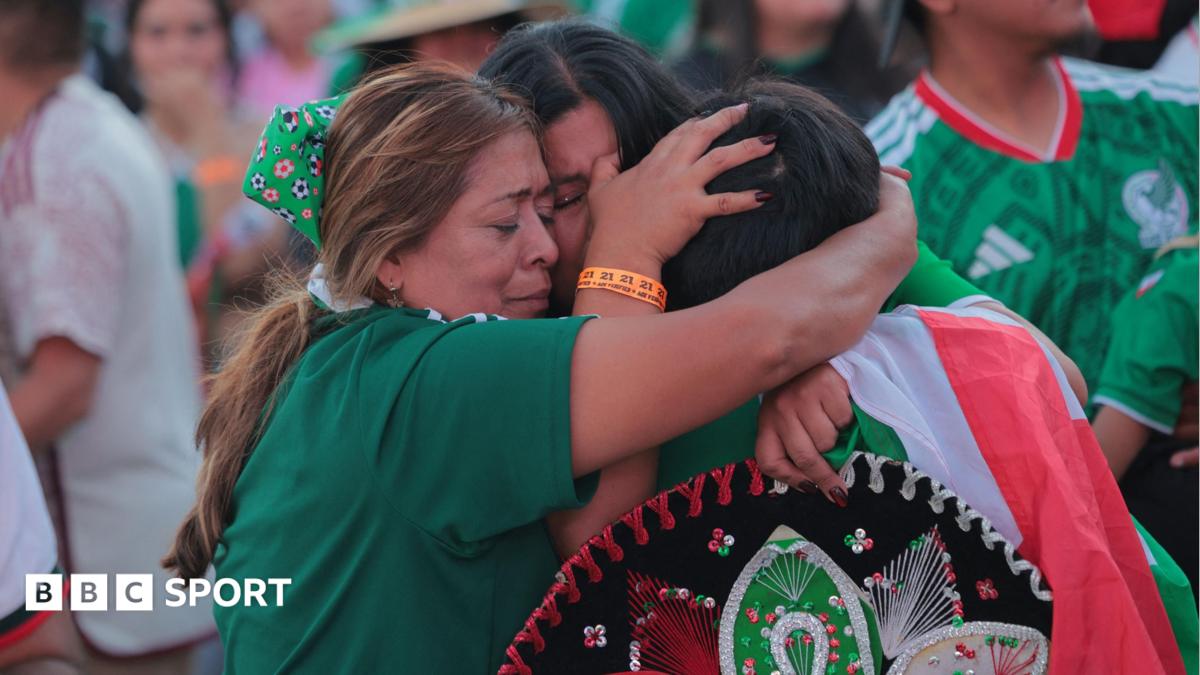
How Mexico’s World Cup run brought joy after a year of fear
When the final whistle blew on Mexico’s 2026 FIFA World Cup campaign at the Round of 16, a 3-2 thriller against England that sent El Tri packing, despair did not take over a packed Santa Ana bistro in Orange County, California. Instead, the crowd rose to their feet: some waved vibrant green Mexican flags, others sang through their disappointment, and soon the room swelled with the beloved folk anthem *Cielito Lindo*, its iconic lyric “Canta y no llores” (Sing, don’t cry) hanging in the air.
Louie Leyla, a Mexican-American who has called California home since 1990, summed up the collective mood: “This is sad. But we’re going to keep rooting for our people, no matter what.”
While England’s victory ended Mexico’s tournament in Arizona’s Azteca Stadium – a match that broke Mexico’s 15-match World Cup streak of going into halftime without conceding, after the Three Lions netted two first-half goals – for the tight-knit Mexican-American community of Southern California, the run was far from a failure. This region hosts one of the largest concentrations of Mexican diaspora outside of Mexico itself, and for weeks, the World Cup became far more than a series of football matches: it was a community unifying triumph that exceeded every expectation.
“It’s a loss,” said local resident Alicia Rojas. “But it’s a win for our community in Santa Ana.” Nearby, Cynthia Rebolledo smiled as she gestured to her young son, decked from head to toe in Mexico’s national green, white and red. “He keeps asking if we’re still going to the parade. He thought we won. He’s been rooting for Mexico – and for his community.”
As trumpets blared and fans danced between tables, holding their flags high, long-time local observer Leigh Slater put the moment in perspective. “Football is like life. You lose, you win. But what we’ve seen throughout this World Cup is the unbreakable spirit of immigrants in this country.”
Throughout the 2026 tournament, co-hosted by the U.S. alongside Mexico and Canada, Mexican supporters emerged as some of the most visible, passionate fans across the country. Stadiums from coast to coast were awash in bright green El Tri jerseys, echoing with chants and the roar of thousands of voices – and nowhere was that energy more palpable than in Orange County’s Santa Ana, the historic cultural heart of Southern California’s Latino community.
The current joy and collective gathering stand in stark contrast to the tension that gripped these same neighborhoods just 12 months prior. In June last year, at the height of a wave of ICE immigration raids, Latino communities across the region stayed indoors, public spaces emptied out, local businesses lost nearly all their customers, and residents avoided large public gatherings out of fear. National Guard vehicles were stationed just blocks from local businesses, and the only activity on downtown Santa Ana’s usually busy streets came from immigration rights protests.
“What a difference a year makes,” noted Los Angeles Times columnist Gustavo Arellano, speaking over the roar of maracas, horns and crowd chants in the packed bistro. “They were occupying the same streets that a year earlier were completely, completely and utterly dead. This was June last year. That was really the height of this. These streets were empty unless you were protesting.”
For Arellano, the sudden shift from fear to unbridled public celebration is nothing short of emotional release. “Fast forward a year later… this is catharsis – for Mexicans especially, but for Latinos in general.”
Mexico’s status as a 2026 World Cup co-host, paired with the team’s successful run to the knockout stage, created a rare opening for the community: a chance to celebrate their cultural identity openly, after a year marked by anxiety and uncertainty around immigration enforcement. Supporters who had hidden their cultural ties in public just months earlier were now singing the Mexican national anthem at packed, family-friendly fan zones, waving flags and wearing their team’s colors with pride. For many of these Mexican-Americans, expressing their Mexican identity has never been incompatible with their American identity – a far cry from the 1990s, when Mexican football fans were frequently labeled “unpatriotic” for displaying Mexican flags amid a wave of anti-immigration political rhetoric.
“The expression of these fan bases has gotten bigger as America has gotten more diverse,” Arellano observed. Like millions of fans, he had held out hope that Mexico could pull off a shocking upset against England. “The cynic in me says this is what always happens to Mexico. We’re good, but we just can never truly compete against the elite of the world. But you know what? We never give up. So I’m proud of what they did. We didn’t give up until the very, very end. England was just a superior team.”
As the United States marks its 250th anniversary, a moment defined by renewed national debate over immigration and identity, the 2026 World Cup has laid bare a different, more diverse reality of modern American life. Diaspora communities across the country turned out in droves not just for Mexico, but for dozens of other nations: Scotland, Argentina, Colombia, Ecuador, Morocco, Egypt and more, revealing an America where millions of people maintain deep, proud cultural ties to two homes.
For Mexican-Americans in Southern California and beyond, that dual identity was the real story of this tournament. At a moment of intense difficulty for Latino communities across the country, the 2026 World Cup gave them something they had been missing for a long time: “an opportunity to express joy,” Arellano said.
-
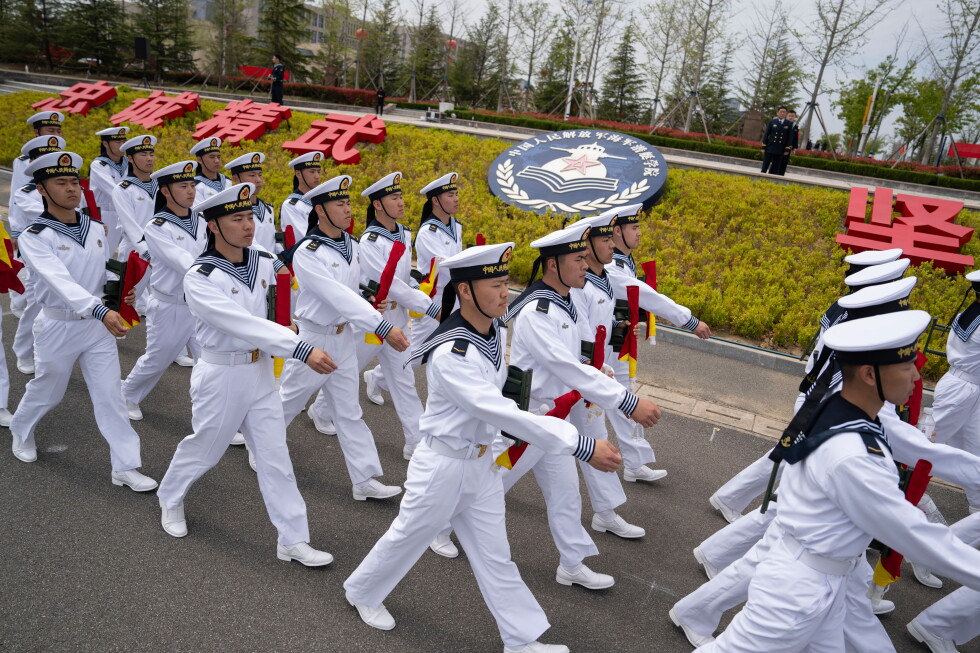
China test-launches a ballistic missile in the South Pacific and raises regional concerns
In a move that has ignited diplomatic tension across the Pacific region, China’s People’s Liberation Army Navy completed a successful test launch of a long-range ballistic missile on Monday, fired from a nuclear-powered submarine in the South Pacific. The official Xinhua News Agency, whose report was later republished by China’s Ministry of Defense, confirmed the launch occurred at 12:01 p.m. local time and carried an inert dummy warhead.
This 2024 test marks only the second such Chinese intercontinental ballistic missile trial in the Pacific in more than four decades. China’s last comparable launch in international Pacific waters took place two years ago, which itself was the first such exercise since 1980. Chinese authorities have framed the test as a standard component of annual routine military training, emphasizing that the activity fully complies with international law and established global practice, and was not targeted at any specific nation or entity. Military analysts note the test follows a template long used by the United States for regular testing of its own ballistic missile arsenal, and interpret the exercise as a public demonstration of China’s expanding status as a global military superpower.
The test has drawn sharp condemnation and concern from three Indo-Pacific nations: Australia, Japan, and New Zealand. The test was conducted within the boundaries of the South Pacific Nuclear Free Zone, a region established under the 1986 Treaty of Rarotonga that bans all nuclear weapons testing and deployment across the area. China ratified the treaty’s protocols in 1987, committing not to conduct nuclear tests within the zone or threaten the use of nuclear weapons against zone signatories with territory in the region.
New Zealand’s Foreign Minister Winston Peters told the Associated Press that Wellington only received advance notification of the planned test hours before launch, despite longstanding regional opposition to such military activity in the zone. “It appears that despite our long-standing concerns about this type of activity, China carried out the test within hours of informing us,” Peters said.
Notably, the missile test coincided with the same day that Australia and Fiji signed a new mutual defense pact, an agreement widely framed as a move to counter growing Chinese geopolitical influence in the Pacific region. Speaking from Fiji following the test, Australian Foreign Minister Penny Wong stated that Canberra had made its position clear to Beijing: “Australia has been clear with China that we regard this as destabilizing to the region.”
Japan also joined the criticism, with officials voicing deep unease over China’s expanding military footprint and lack of operational transparency in the region. Japan’s Defense Ministry issued a formal statement calling on Beijing to reconsider its missile testing practices to avoid scenarios where projectiles could fly over Japanese territory or create other unneeded security risks. Chief Cabinet Secretary Minoru Kihara added that “China’s military activities, combined with its lack of transparency, has become a grave concern for Japan and the international society,” pointing to Beijing’s increased military activity around Japanese borders and sustained growth in military spending.
Beijing pushed back against the criticism on the same day, urging regional powers to avoid misreading the exercise. “We hope that the relevant countries will avoid overinterpretation,” a Chinese Ministry of Foreign Affairs spokesperson said. China maintains an official “no first use” nuclear weapons policy, but has prioritized modernization of its nuclear arsenal and military technology as a core pillar of its long-term PLA upgrade strategy.
Current data from the Nuclear Threat Initiative, a Washington-based nonpartisan think tank, shows China operates a fleet of six ballistic missile-armed submarines alongside 59 nuclear-powered attack submarines. In a 2025 report to U.S. Congress on Chinese military capabilities, the Pentagon estimated that China held a stockpile of roughly 600 operational nuclear warheads in 2024, and projected that the PLA is on schedule to deploy more than 1,000 operational nuclear warheads by 2030.
The reporting was led by Graham-McLay from Wellington, New Zealand, with additional contributions from Associated Press correspondents Mari Yamaguchi in Tokyo and E. Eduardo Castillo in Bangkok.
-

What to know: Le Pen’s possible stand-in as presidential candidate is no carbon copy
PARIS (AP) — As France waits for a key appeals court ruling on Tuesday that could derail Marine Le Pen’s fourth — and most competitive — bid for the country’s presidency, the far-right National Rally party already has a potential successor lined up: 30-year-old party president Jordan Bardella, who has spent years stepping out of his mentor’s shadow to carve out his own political identity. Yet for all his alignment with Le Pen’s core populist agenda, Bardella is far from a carbon copy of the leader who came closer than any other far-right candidate to winning the French presidency in 2022. The most consequential difference, analysts agree, is that he does not carry the Le Pen name — a legacy that has haunted Marine Le Pen throughout her decades-long political career.
The Le Pen name is deeply polarizing for much of the French electorate, especially left-leaning voters. Marine Le Pen inherited the party, originally founded as the National Front in 1972, from her father Jean-Marie Le Pen, whose virulent far-right rhetoric, repeated criminal convictions for hate speech, and well-documented Holocaust denial made the name anathema to huge swathes of public opinion. After decades of working to detoxify the party’s image — a process that included renaming it the National Rally in 2018, expelling Jean-Marie Le Pen from the party, and walking back divisive policies like France’s withdrawal from the European Union and a return to the franc — Marine Le Pen handed the day-to-day party leadership to Bardella in 2022. Today, the National Rally holds the largest number of seats in the National Assembly, France’s lower parliament, a testament to its steadily growing popularity over the past decade.
On core policy, the ideological gap between Le Pen and Bardella is narrow. As party president, Bardella has remained a fierce advocate for the National Rally’s flagship anti-immigration platform, arguing that France is being overwhelmed by migration primarily from African nations, and that many native French citizens no longer recognize the country they once loved. Where the two diverge is in policy emphasis and voter outreach: Le Pen has long centered her messaging on working-class voters, focusing on pocketbook issues like purchasing power and supporting state intervention in the economy, while Bardella has adopted a more pro-business tone designed to win over entrepreneurs and wealthy conservative voters.
For political analysts, the absence of the Le Pen name is Bardella’s biggest strategic advantage if he is thrust into the presidential race next year. Constitutionally, incumbent two-term President Emmanuel Macron cannot run for re-election, so the 2027 race is already wide open. Luc Rouban, a senior researcher at Sciences Po in Paris who specializes in French far-right politics, notes that a Bardella candidacy would symbolically mark a clean break from the toxic legacy of Jean-Marie Le Pen and the old National Front. That legacy has been a persistent vulnerability for Marine Le Pen, with critics and historians constantly highlighting her father’s ties to World War II Nazi collaborators and his long record of hate speech. As the first National Rally leader from outside the Le Pen family, that historical baggage is far less likely to attach to Bardella on the campaign trail. “Jean-Marie Le Pen’s legacy is a very heavy burden to carry,” Rouban explained. “If you move beyond the Le Pen family, you’re entering different territory.”
Bardella also brings a key asset that the 57-year-old Le Pen cannot match: youth and digital fluency. Le Pen herself has highlighted the pair’s complementary strengths, saying recently, “We are complementary. I have a certain experience, but Jordan has an absolutely incredible dynamism; he has the strength and energy of his youth.” Bardella has leveraged that youth to build a far larger social media following than his mentor: he has nearly double Le Pen’s Instagram follower count, and his 2.3 million TikTok followers outpace Le Pen’s 1.5 million. That digital presence puts him in a stronger position to mobilize Generation Z voters, a demographic that has increasingly disengage from national electoral politics over the last two decades. France’s national statistics agency data shows that only 17% of 18 to 29-year-olds cast ballots in all rounds of the 2022 presidential election, when Macron defeated Le Pen for a second time, down from 31% in 2002.
Yet Bardella’s youth also comes with a clear drawback: a relative lack of political experience compared to Le Pen, who was born into politics and has been running for office for more than 30 years. Born into a political family, Le Pen joined the old National Front as a teenager, earned a law degree, and first ran for legislative office at just 24 years old in 1993. While Bardella has served as a lawmaker in the European Parliament, he has never led a national campaign, and some analysts warn that his thin resume could turn off older, more traditionally minded voters. Critics and some political observers even speculate that Bardella could falter under the intense pressure of his first presidential campaign.
Still, Victor Mallet, author of *Far-Right France: Le Pen, Bardella and the Future of Europe*, warns that ruling out Bardella based on experience alone is a mistake. He points to former U.S. President Donald Trump as a parallel, noting that many political experts dismissed Trump’s chances of victory because of his lack of prior governing experience — a miscalculation that has echoes in the current conversation about Bardella. “A lot of people thought the same thing about Donald Trump,” Mallet said. “They thought, you know, this guy has no experience of government, his policies don’t make any sense, and he was elected twice.”
Associated Press journalists Sylvie Corbet and Jeffrey Schaeffer in Paris contributed to this report.
-
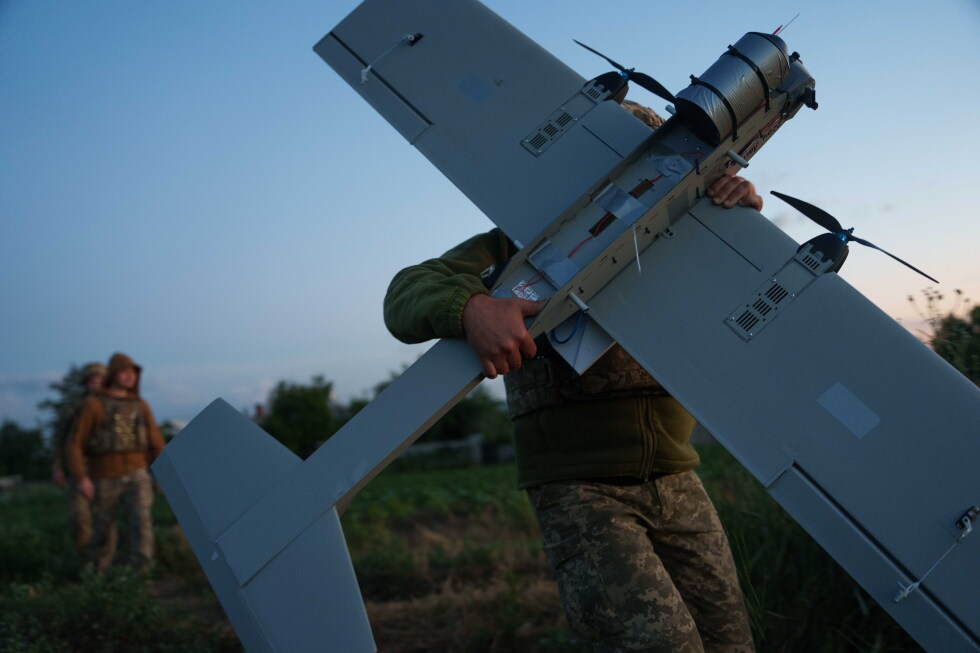
Ukrainian midrange drones reshape the battlefield by targeting Russian supply lines
Deep in a basement command post in Ukraine’s northeastern Kharkiv region, a team of elite Ukrainian drone pilots lean in toward glowing computer screens, their eyes tracing grainy black-and-white thermal footage streamed from unmanned aircraft flying hundreds of kilometers deep inside Russian-occupied territory. This is the front line of a new, rapidly evolving aerial campaign that has upended long-standing battlefield dynamics, centered on a fleet of fixed-wing midrange drones built to choke off Russian military supply routes.
The mission is straightforward, explains Kat, commander of Ukraine’s elite K-2 drone brigade, one of the units leading the effort. By severing Russian logistics chains, the unit leaves frontline Russian infantry without critical provisions: no food, no ammunition, no night vision goggles, no communications batteries — nothing. That steady attrition, Kat says, gradually wears down Russian forces across every sector of the front.
Until earlier this year, a 15- to 125-mile corridor stretching behind Russian lines lay largely beyond Ukraine’s effective strike range. Short-range frontline drones lacked the capacity to reach targets deep enough, while long-range unmanned assets were reserved for high-value strategic targets hundreds of kilometers from the front. In that gap, Russian troops and supply convoys moved with relative impunity. That changed with the widespread deployment of midrange drones integrated with SpaceX’s Starlink satellite communications, a technological shift that has turned Russia’s once-secure logistical rear into an active, high-pressure combat zone.
The operation operates out of unassuming, easy-to-conceal locations: a nondescript office serves as the K-2 unit’s nerve center, a local carpenter’s workshop doubles as a drone assembly facility, and quiet village homes double as concealed launch sites. Inside the K-2 command workspace, workstations are cluttered with coffee mugs, energy drink cans and e-cigarettes, and pilots in casual civilian clothes sit under harsh fluorescent lights, their focus locked on screens displaying target lists and satellite maps, a scene that resembles a late-night office work session more than a military combat center.
In May alone, the K-2 unit launched 800 midrange drones from this base, with 650 of those strikes hitting their intended targets. After a separate advance team catapults drones into the sky from launch sites more than 200 kilometers from the command post, control transfers to the Kharkiv-based pilots, who fly the aircraft for up to four hours, reaching targets more than 100 kilometers behind Russian front lines. For many pilots, the work carries a personal weight: some displaced from their hometowns by the 2022 Russian invasion now fly over familiar streets, scanning childhood neighborhoods and old landmarks for hidden Russian troops and ammunition depots.
The unit fosters friendly competition between its 10 drone crews, with a whiteboard tracking successful strikes; the current record stands at 17 consecutive successful hits. For 20-year-old top pilot Pharaon, the work is a natural extension of the competitive video games he grew up playing. “When I was a kid, I used to go to computer clubs where we played Counter-Strike over a local network,” he explained. “The competition here is pretty much the same. It’s about who can kill more enemy troops or take out the biggest target.”
Ukraine’s breakthrough in this campaign traces back to an earlier technological shift: SpaceX cutting off unauthorized Starlink access for Russian forces earlier this year, disrupting Moscow’s own drone operations and communications while giving Kyiv a critical edge. That advantage let Ukraine upgrade its midrange drones to evade detection, resist electronic jamming and strike far more accurately, as Russia scrambled to catch up. “The blocking of Starlink for Russian forces was one of the most significant battlefield developments of the year,” said Rob Lee, senior fellow in the Foreign Policy Research Institute’s Eurasia Program. The success of Ukraine’s current midrange campaign is a direct outcome of that shift.
Where just a few months ago only two out of 10 drone sorties succeeded, that ratio is now flipped, with eight out of 10 strikes hitting their mark, Pharaon said. The K-2 unit primarily operates the Dart, a low-cost midrange drone built from polystyrene, wood and 3D-printed parts, designed to target Russian logistics convoys. Larger models like the Hornet carry heavier payloads capable of striking bridges and other critical logistical infrastructure. Before every launch, crews inspect every component, with special attention paid to the Starlink communications module that keeps the drone connected to operators throughout its mission. Once checked, drones are moved to concealed launch sites near the front for takeoff.
Russian forces were caught off guard when the midrange campaign escalated three months ago, and they are still playing catch-up to counter the threat. Moscow has deployed mobile fire interception groups, additional anti-aircraft units and electronic warfare systems targeting Starlink, but analysts say coordination gaps between Russian units and the element of surprise have kept Ukraine one step ahead. Russia’s ability to intercept drones is hampered by poor inter-unit information sharing: even if one sector identifies an incoming drone, that information often does not reach neighboring sectors fast enough to mount an effective defense.
Ukraine’s campaign targets the key highway arteries connecting occupied southern Ukrainian cities including Mariupol, Berdyansk and Melitopol to the illegally annexed Crimean Peninsula, the main supply routes for Russian forces fighting in southern and eastern Ukraine. Ukrainian military officials report that sustained strikes have forced Russia to shift to slower, far less efficient resupply routes, making the critical land corridor linking mainland Russia to Crimea too dangerous for regular large-scale movement of fuel, ammunition and reinforcements. So far, Russian countermeasures including electronic warfare against Starlink have had limited effectiveness, Lee noted, though Moscow’s larger military establishment means it can absorb heavier losses as it adapts.
Samuel Bendett, a researcher at the Center for Naval Analyses, explained that the midrange drone campaign has successfully kept constant pressure on Russian supply lines, leaving some frontline sectors undersupplied and making the overall battlefield situation more manageable for Ukrainian forces. “The question is whether Ukraine can keep this pressure up over the next few weeks and months,” Bendett said, noting that Russia will eventually adapt its tactics to counter the threat.
-

Rebounds for AI stocks help support Wall Street and keep the market mixed
On a quiet post-Independence Day trading session on Monday, Wall Street found its main benchmark propped up by a sudden rebound in artificial intelligence stocks, even as most equities across the market traded in negative territory. As of 9:35 a.m. Eastern Time, the S&P 500 notched a 0.5% gain, while the tech-heavy Nasdaq Composite outpaced broader markets with a 1.1% rise, driven by renewed buying interest in AI-focused firms. By contrast, the Dow Jones Industrial Average bucked the trend of the leading indexes, sliding 160 points, or 0.3%, amid broad losses for non-tech sectors.
The recent bounce for AI stocks comes on the heels of weeks of extreme volatility, sparked by growing investor anxiety that valuations for the sector have outrun fundamentals after months of a AI-fueled price rally. Market participants have increasingly questioned whether the massive flood of capital flowing into AI chip manufacturing, data center construction, and generative AI development will ultimately deliver the outsized productivity gains and profit growth needed to justify current valuations.
Broadcom led the upward momentum among large-cap AI names on Monday, climbing 5.3% to recoup steep losses from the end of last week. The semiconductor giant had dropped more than 2% on both Wednesday and Thursday before markets closed for the Fourth of July holiday. Memory chip maker Micron Technology also gained ground, rising 4.2% as investors dipped back into AI hardware plays.
Later this week, the global investor appetite for AI assets will face a major stress test, when South Korean memory chip producer SK Hynix launches its $28 billion U.S. initial public offering (IPO), set to list on the Nasdaq. The offering would rank as one of the largest U.S. IPOs in history, trailing only SpaceX’s $75 billion IPO that launched last month. SK Hynix’s Seoul-listed shares have already tripled in value this year on the back of the global AI boom, driven by surging demand for high-bandwidth memory chips critical for running generative AI models. But like other AI stocks, the firm has seen sharp volatility in recent weeks, including a single-day 14.6% drop last Thursday.
SpaceX, which owns AI venture xAI, has also seen volatile trading following its high-profile IPO. The company’s stock rose 1.2% in its last trading session ahead of its scheduled addition to the Nasdaq 100, the index tracking the largest non-financial companies listed on the Nasdaq. The inclusion will require index-tracking funds such as the popular QQQ exchange-traded fund to purchase billions of dollars worth of SpaceX stock to align their holdings with the updated index, providing automatic near-term support for its share price.
Outside of large-cap AI hardware, smaller AI-focused firms also got a boost on Monday. Cryptocurrency miner-turned-high-performance computing firm TeraWulf jumped 12.5% after announcing that AI developer Anthropic had signed a 20-year agreement to use the company’s under-construction data center in Kentucky. TeraWulf projects the deal will generate roughly $19 billion in cumulative revenue over the two-decade term, marking a major milestone in the firm’s transition away from Bitcoin mining toward AI infrastructure services.
Beyond equities, the oil market saw muted movement after OPEC+ announced Sunday that seven of its member nations would collectively expand oil production by 188,000 barrels per day starting in August. This marks the fifth consecutive month the bloc has agreed to raise output. International benchmark Brent crude edged up just 0.1% to $72.22 per barrel, a level near where prices traded before the U.S.-Israeli strike on Iran in late February sent oil prices spiking.
In bond markets, U.S. Treasury yields edged slightly lower, with the 10-year Treasury yield dipping to 4.48%, down one basis point from its closing level last Thursday. A new economic report released Monday showed that growth in U.S. service sectors, including recreation and finance, came in roughly in line with economist expectations. The Institute for Supply Management survey also noted that some businesses reported falling fuel prices for gasoline and diesel, helping ease ongoing inflationary pressures across the economy.
Global markets mostly traded lower on Monday, with modest declines recorded across most European and Asian benchmark indexes. Hong Kong’s Hang Seng Index was a rare outlier, climbing 1.1% to buck the regional downward trend.
AP Business Writers Yuri Kageyama and Matt Ott contributed to this reporting.
-
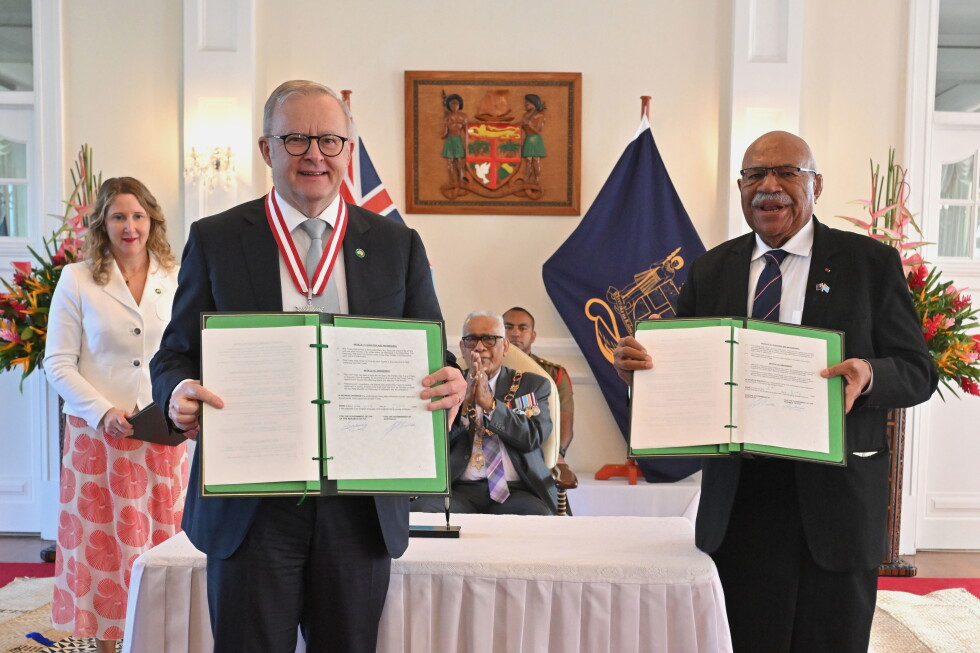
Australia and Fiji seal a new mutual defense pact in a push to counter China in the Pacific
In a significant development reshaping geopolitical dynamics in the South Pacific, Australia and Fiji have formalized two landmark bilateral agreements, marking the second major diplomatic breakthrough for Australian Prime Minister Anthony Albanese’s administration in its efforts to counter growing Chinese influence across the region within a 12-month period.
The signing ceremony took place in Fiji’s capital city of Suva, where Albanese and Fijian Prime Minister Sitiveni Rabuka put pen to paper on the historic Ocean of Peace Alliance — Fiji’s first ever binding mutual defense treaty, and Australia’s fourth such defense agreement globally. The two leaders also signed the Vuvale Partnership, an economic cooperation treaty that commits Australia to injecting more than 1 billion Australian dollars, equivalent to roughly $693 million, into Fiji’s economy over the next decade.
Addressing reporters following the signing, Albanese emphasized the core commitment enshrined in the defense pact: “The Ocean of Peace Alliance introduces a mutual defense obligation, and there is no higher obligation than to come to each other’s aid at a time of need.”
Rabuka, for his part, downplayed expectations of harsh pushback from Beijing over the new agreements. He stressed that the pacts do not undermine either nation’s existing diplomatic and economic ties with China. “I do not expect China to have any severe pushback on either government. And I believe that they will welcome the understanding that is between Australia and Fiji,” Rabuka told journalists. “It does not threaten Fiji’s relationship with China nor Australia’s relationship with China.”
The new agreements are built on three foundational pillars: deepened security collaboration, closer economic integration, and stronger people-to-people connections between the two nations. Rabuka framed the pacts as a clear statement of shared purpose amid growing global instability: “This is a clear affirmation of Australia’s sustained commitment to the stability, resilience and prosperity of the Blue Pacific region at a time of global uncertainty. These treaties reflect our shared understanding of the evolving and interconnected challenges that are facing our region.”
The flurry of new security agreements across the South Pacific comes in response to a 2022 secretive security deal between China and the Solomon Islands, a pact that sparked widespread international concern over the potential for China to establish a permanent naval presence in the region. Since that deal was reached, Australia has moved aggressively to solidify its position as the preferred security partner for Pacific island nations.
Following his visit to Fiji, Albanese is scheduled to travel to the Solomon Islands on Tuesday to hold talks with new Prime Minister Matthew Wale, whose administration announced last month that it would conduct a full review of the 2022 security agreement with China. The two governments have already agreed to open new negotiations on a bilateral security pact between Canberra and Honiara.
Later this week, Albanese will host the leaders of Papua New Guinea and Tonga in the Australian city of Brisbane. Wednesday will mark the official entry into force of Australia’s bilateral defense treaty with Papua New Guinea, signed last year as Canberra’s third major defense pact.
The flurry of diplomatic activity follows just one week after Australia and Vanuatu signed a long-delayed bilateral security and economic agreement, the Nakamal Agreement, which includes provisions intended to block China from establishing a military outpost on Vanuatu’s territory. The deal was finalized nine months after the Vanuatuan government rejected an earlier draft, over concerns that the original text would limit the island nation’s ability to attract critical infrastructure investment from global sources. Following the signing of the Nakamal Agreement, China publicly expressed concern that the pact was specifically designed to counter Beijing’s growing influence in the region.
-

Another Philippine senator arrested on allegations of large-scale plunder
MANILA, Philippines — A second Philippine senator has been taken into custody on non-bailable plunder charges, marking the latest high-profile detention of a top legislator in a sweeping corruption crackdown that has unfolded over the past month and shaken the country’s political landscape.
Seventy-one-year-old Sen. Rodante Marcoleta, a veteran lawyer who has repeatedly denied all allegations against him, was taken into police custody Monday at the Sandiganbayan, the country’s specialized anti-graft court, located in Quezon City, a Manila suburb. Marcoleta appeared at the court alongside his legal team, where he intended to challenge the charges filed against him and request a delay to his arrest warrant.
Following the court’s ruling to approve the arrest order, Marcoleta told waiting reporters outside the courtroom that all parties must abide by judicial process. “Let’s respect that,” he said, before being escorted away by law enforcement officers. Under Philippine law, plunder charges do not qualify defendants for bail, meaning Marcoleta will remain in custody throughout his trial.
The arrest comes days after the country’s Office of the Ombudsman, the independent anti-corruption prosecutorial body, formally filed the plunder charge against the senator. Prosecutors allege Marcoleta received roughly 75 million Philippine pesos, equivalent to $1.2 million, in unreported campaign contributions from three political supporters. The funds were never disclosed on the mandatory asset declaration forms that all public officials are required to file under Philippine law.
Marcoleta is a prominent member of the Iglesia ni Cristo (Church of Christ), a powerful influential religious organization known for its ability to mobilize mass demonstrations. In a show of force ahead of the arrest, the group organized a three-day rally drawing more than 15,000 members at a key democracy monument along Manila’s busiest arterial highway. The demonstration snarled rush-hour traffic across the capital region for days, creating widespread disruption. The protest was large enough to prompt President Ferdinand Marcos Jr. to cancel two scheduled official outings on Tuesday, citing security concerns related to the demonstration.
Marcoleta’s arrest comes just over a month after another high-profile detention: his political ally, Sen. Jinggoy Estrada, was also arrested and detained on a non-bailable plunder charge last month. Estrada, 63, stands accused of accepting more than 570 million pesos ($9.3 million) in kickbacks from a government flood-control infrastructure project. The allegations against him were brought forward by a former public works department engineer, which Estrada has vehemently denied.
Both Marcoleta and Estrada are long-time political allies of former Philippine President Rodrigo Duterte and his daughter, Vice President Sara Duterte. Their detentions come as the Philippine Senate, acting as an impeachment court, prepared to convene Monday to begin the impeachment trial of Sara Duterte. The impeachment case was forwarded to the Senate in May after an overwhelming majority vote in the House of Representatives approved moving the case forward. Sara Duterte has denied all allegations against her, which include charges of amassing undeclared personal wealth and making public threats to assassinate President Marcos Jr.
The string of legal actions against Duterte-aligned politicians does not end with the two detained senators. A third Duterte loyalist, former national police chief and current Sen. Ronald dela Rosa, has remained in hiding since the International Criminal Court issued an arrest warrant for his role in the former president’s brutal anti-drug crackdown. Dela Rosa is named as a co-perpetrator alongside Duterte in the mass killings of mostly low-income suspected drug users and dealers that took place during the crackdown, which Dela Rosa oversaw as national police chief. Duterte himself was arrested last year on the ICC’s orders and extradited to the Netherlands, where he is scheduled to stand trial starting November 30 on charges of crimes against humanity.