作者: admin

  • World Cup to get cash boost as FIFA unveils red card crackdown

    World Cup to get cash boost as FIFA unveils red card crackdown

    Ahead of its 2025 Congress in Vancouver, global football governing body FIFA has announced two major updates for the 2026 World Cup: a historic increase in financial distributions to participating teams and sweeping new rule changes designed to crack down on unsportsmanlike conduct, including aggressive anti-racism measures.

    Following widespread pushback from FIFA member associations, who warned that soaring travel, tax, and operational costs would leave many national teams out of pocket for competing in the expanded 48-team tournament co-hosted by Mexico, Canada and the United States, FIFA has raised total financial distributions from the $727 million figure announced last December to $871 million. The cash boost includes direct increases to key payments: every qualified team will now receive $2.5 million for preparation costs, up from the previous $1.5 million allocation, while the qualification bonus has been raised from $9 million to $10 million. Additional funding will go toward covering team delegation expenses, and participating squads will also receive expanded ticket allocations for their staff and supporters.

    In a statement accompanying the announcement, FIFA President Gianni Infantino highlighted that the increased payout is made possible by the organization’s current unprecedented financial stability. With the current four-year World Cup cycle projected to generate roughly $13 billion in revenue — a record high for the tournament — Infantino emphasized that the cash injection is a clear example of how FIFA reinvests its resources directly back into the global football ecosystem. This latest increase follows a 50 percent jump in total prize money from the 2022 Qatar World Cup, marking the largest year-over-year increase in tournament payout history. Even with the new funding for teams, FIFA continues to face criticism over exorbitant public ticket prices for fans, as well as sharp hikes in public transport costs imposed by local host authorities in parts of the United States.

    Alongside the financial boost, FIFA confirmed a series of new law changes that will take effect at the 2026 tournament, which kicks off June 11 in Mexico City. The most high-profile change introduces red card sanctions for players who cover their mouths during confrontations with opponents, a rule change crafted directly to address hidden racist abuse that has plagued the sport in recent years.

    The new policy comes in response to a high-profile controversy during a February 2025 Champions League match, where Benfica winger Gianluca Prestianni was accused of repeatedly using a racial slur against Real Madrid star Vinicius Junior while covering his mouth to avoid being detected by broadcast microphones and match officials. Though Prestianni denied the racial abuse allegation, he ultimately received a six-match ban (three suspended) for homophobic conduct arising from the incident. The new rule gives competition organizers discretion to issue a direct red card for any mouth covering during confrontational interactions between players.

    Two additional major rule changes are also being rolled out: players who leave the pitch in protest of a referee’s decision will now receive an automatic red card, and any team that causes a match to be abandoned will forfeit the result automatically. This update follows the 2025 Africa Cup of Nations final controversy, where Senegal’s players, coaching staff, and support personnel walked off the pitch in Rabat after Morocco was awarded a late stoppage-time penalty. Senegal went on to win the match 1-0 in extra time, but Confederation of African Football (CAF) stripped them of the title in a shocking ruling last month. The new FIFA rule is designed to eliminate similar disruptive incidents at the World Cup.

    Finally, FIFA has adjusted yellow card sanction rules to avoid punishing star players with unnecessary suspensions for key knockout matches. Going forward, all single yellow cards accumulated during the group stage will be cleared after the round concludes, and a second clearing of accumulated single yellows will happen after the quarter-finals. The adjustment ensures that players cannot be suspended for the final or semi-final stages of the tournament based on minor bookings picked up in earlier rounds of the competition.

  • ‘I’ve got a plane’: Pauline Hanson gifted private plane amid Rineheart criticism

    ‘I’ve got a plane’: Pauline Hanson gifted private plane amid Rineheart criticism

    Australia’s controversial One Nation leader Pauline Hanson has announced she will now travel via a privately donated Cirrus G7 aircraft, valued at up to $2 million, after a coalition of high-profile donors pooled contributions to gift the plane to the party ahead of the 2028 federal election. In an exuberant social media post shared Wednesday, Hanson confirmed the full donation of the single-engine aircraft, highlighting that the new asset will let her expand outreach to regional communities across Australia. “Yes it was donated. Yes I’m super happy. Yes it’s fast. Yes it’s amazing. Yes it means I can visit more regional towns across the country more often,” Hanson wrote in the post, describing the sleek Cirrus G7 aircraft as “sexy” in subsequent remarks. The $2 million plane was funded through three blocks of major contributions: a $1 million “investment” from Melbourne-based stockbrokers Angus and Sarah Aitken, who Hanson called “patriotic Australians”, followed by $500,000 donations each from former Northern Territory chief minister Adam Giles and prominent geologist and climate sceptic Ian Plimer. Both Giles and Plimer are currently employed by billionaire mining magnate Gina Rinehart, a long-time backer of conservative and climate-skeptic political causes in Australia. Hanson made clear the donated plane is a critical boost to One Nation’s campaign preparations ahead of the 2028 federal poll. “Their faith and investment in One Nation is an enormous help towards our next federal campaign and I can’t thank them enough,” she said, adding that the party still needs to raise additional funds before the December donation cutoff to challenge what she labelled the ruling “uni-party” establishment. The announcement comes after Hanson faced widespread public criticism and journalistic scrutiny over her previous use of Rinehart’s private jet. British-Australian newspaper The Guardian previously reported that Hanson failed to declare five private flights on Rinehart’s jet over a six-month period, a violation of federal political disclosure rules. In her Wednesday announcement, Hanson leaned into the tension with the publication, joking, “Yes it’s going to annoy the Guardian”. She also added a characteristically provocative line about the new aircraft, saying she would not be conducting a Welcome to Country ceremony every time the plane lands at a regional airport. The donation renews debates over large-scale private funding of Australian political parties, particularly from high-net-worth donors with strong ideological positions on climate and resource development policy.

  • Canada’s spring budget projects economy to grow and deficit to fall

    Canada’s spring budget projects economy to grow and deficit to fall

    Canada’s federal fiscal position has delivered a surprise upside, with Prime Minister Mark Carney announcing a far narrower deficit than initial projections, fueled by a sharp rally in global oil prices and unexpected economic resilience that has held firm amid growing trade pressures and worldwide geopolitical upheaval.

    New data released in the government’s spring economic update shows the national debt is currently roughly 14 percent below the figures forecast in earlier fiscal planning. In the previous autumn budget, Ottawa had projected a deficit of C$78.3 billion (equivalent to $57.2 billion USD or £43.4 billion GBP) for the 2025-26 fiscal year. The better-than-expected numbers land just 24 hours after the federal government unveiled plans for Canada’s first-ever sovereign wealth fund, earmarked for investments in domestic infrastructure and other national projects.

    Ahead of the release of the spring fiscal update, Carney previewed that positive results were coming, framing his administration as a prudent steward of public finances. “We were determined to get spending down with a lot of very… difficult decisions,” the prime minister told reporters on Monday. The unexpected fiscal savings have cleared room for billions in new public spending, including programs to train thousands of skilled workers and seed capital for the new sovereign wealth fund, dubbed the Canada Strong Fund.

    The landmark fund will allocate capital to key domestic sectors including energy, infrastructure, mining, agriculture and technology, with an upfront government contribution of C$25 billion. It will also open direct investment opportunities to ordinary Canadian citizens who have disposable savings to allocate. Despite the encouraging near-term fiscal results, the update issued a clear warning that Canada cannot escape long-term financial headwinds stemming from proposed U.S. tariffs and escalating geopolitical instability linked to the ongoing conflict between the U.S., Israel and Iran.

    “The economy is expected to continue growing, but the outlook is subject to heightened global uncertainty, including ongoing trade tensions and geopolitical risks,” the official fiscal document noted. Canada holds the world’s third-largest proven oil reserves, with oil and gas accounting for its largest export category, so the recent run-up in global crude prices has been a major tailwind for government revenue and overall economic performance.

    The spring update also incorporates two previously announced relief measures for households grappling with cost-of-living increases: a temporary fuel tax cut rolled out earlier this month by the Carney administration, and a one-time grocery rebate targeted at low-income Canadian households. Fiscal projections included in the update show Canada will remain in deficit over the next five years, with the shortfall projected to stabilize around C$50 billion annually by 2031.

    Canada’s fiscal trajectory has long been a central point of attack for the Conservative Party, the country’s official parliamentary opposition. Ahead of Tuesday’s update, Conservative leader Pierre Poilievre repeated his calls for Carney to implement deep spending cuts and balance the federal budget. Poilievre has argued that soaring national debt is the root cause of Canada’s ongoing affordability crisis.

    “He’s putting the nation’s spending on the credit card, and he’s forcing families to put their personal spending on their personal credit cards to pay for his high cost of living,” Poilievre told reporters on Sunday, doubling down on his criticism of the government’s fiscal management.

  • Energy giant Woodside sees revenue jump despite production fall amid cyclone

    Energy giant Woodside sees revenue jump despite production fall amid cyclone

    Against a backdrop of escalating global geopolitical turmoil and local operational disruptions, Australia’s biggest energy producer Woodside Energy has defied market expectations to deliver a surprising uptick in revenue for the March quarter, new corporate disclosures show.

    In its mandatory filing to the Australian Securities Exchange (ASX) this week, Woodside reported that operating revenue for the three months ending March 31 climbed 7% quarter-over-quarter to hit US$3.26 billion (equivalent to AU$4.54 billion). The company’s average selling price for its full product portfolio — including natural gas, liquid oil, and ammonia — jumped 11% to US$63 per barrel of oil equivalent, or AU$87.67.

    This quarterly gain follows a US$3.035 billion (AU$4.22 billion) revenue result in the final quarter of 2023, though the latest figure still comes in slightly below the US$3.315 billion (AU$4.61 billion) revenue Woodside recorded in the same period a year earlier.

    The impressive price growth driven by international market shifts was partially offset by an 8% drop in overall production during the quarter, caused by severe operational shutdowns triggered by Tropical Cyclone Narelle that hit Woodside’s Western Australian upstream assets. Even with the production decline, markets reacted positively to the earnings release almost immediately: Woodside’s share price rose 1.64% in immediate after-announcement trading to settle at AU$32.93 per share.

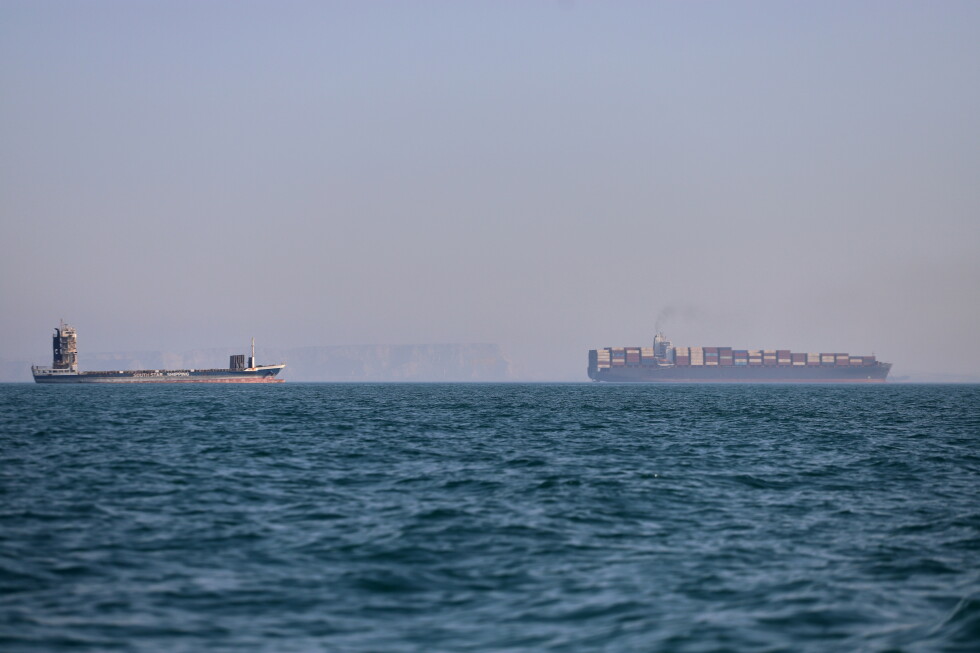
    The price surge that boosted Woodside’s top line traces directly to escalating conflict between the United States and Iran, which disrupted traffic through the Strait of Hormuz — the narrow 50-kilometer maritime chokepoint that links the Persian Gulf to the Arabian Sea. Before the outbreak of recent hostilities, nearly 20% of the world’s total oil and liquefied natural gas (LNG) supplies passed through the strategic waterway. When conflict halted commercial traffic and raised widespread fears of widespread supply shortages across Asian and European markets, global crude and LNG prices spiked sharply.

    Woodside chief executive Liz Westcott framed the quarterly result as a modest but solid portfolio performance shaped directly by the market upheaval from the Middle East conflict. She noted that additional gains from current elevated spot prices will flow through to future quarterly results for the company’s LNG segment, due to the structure of its tagged contract pricing that links contract prices to delayed spot market benchmarks.

    Westcott confirmed that the Middle East conflict has not caused any disruptions to Woodside’s own global trading operations, with all the company’s scheduled shipping movements continuing to operate according to plan. She also expanded on the impact of the Western Australian cyclone, crediting the company’s emergency response team for protecting staff, physical assets, and the surrounding environment during the mandatory shutdown and subsequent restoration of production activities.

    Looking ahead, Westcott said Woodside will sharpen its focus on organizational efficiency and enhanced capital management, seeking to strike a careful balance between funding ongoing growth projects and delivering solid returns to shareholders. “Cost discipline is essential to sustained shareholder value creation,” she said. “We are commencing a structured review of our business to streamline decision making, reduce complexity and improve accountability.”

  • AI fakes of accused US press gala gunman flood social media

    AI fakes of accused US press gala gunman flood social media

    In the wake of Saturday’s assassination attempt against former President Donald Trump at Washington D.C.’s White House Correspondents’ Association gala, the digital sphere has been flooded with low-effort AI-generated forgeries falsely linking accused suspect Cole Tomas Allen to dozens of high-profile public figures, laying bare the growing threat of unregulated “AI slop” spreading across major social platforms.

    When gunfire erupted on a floor above the event’s main ballroom after the 31-year-old California native tried to sprint past security, Trump and other senior administration officials were immediately evacuated. Within hours of authorities publicly identifying Allen as the suspect, doctored AI images began circulating rapidly on Facebook, depicting the accused alongside A-list celebrities, world leaders, and media personalities, with baseless claims that he had worked for them as a driver, personal assistant, or production crew member.

    An investigative inquiry by AFP found that more than 50 public figures have been falsely tied to Allen through these forgeries. The list ranges from Hollywood stars Tom Hanks and Sydney Sweeney to chart-topping musicians Chris Brown and Taylor Swift. Even political figures including former U.S. President Barack Obama and Canadian opposition leader Pierre Poilievre, NBC News anchor Savannah Guthrie, and Pope Leo XIV have been incorrectly implicated in the fabricated posts. A separate wave of false content has also claimed Allen was employed by more than 40 professional and collegiate sports teams, with AI-generated images showing him wearing team apparel from leagues across the NFL, NHL, NBA, WNBA, and NASCAR. Meta, the parent company of Facebook, has not issued any immediate response to AFP’s request for comment on the spread of the fakes.

    Experts say most of these fake images are built from a single legitimate photograph of Allen: a picture from a December 2024 tutoring company post naming him “teacher of the month.” Unlike the early days of generative AI, which required large volumes of existing reference material of a subject to create convincing fakes, today’s tools can produce believable forgeries from just one source image.

    “Two years ago, you probably wouldn’t have been able to make those images of him, because we could only really make compelling fakes of celebrities who had a large digital footprint from which the AI systems had been trained,” explained Hany Farid, a computer science researcher at the University of California, Berkeley and chief science officer at cybersecurity firm GetReal Security. “Now, all I need is a single image of you.”

    Independent journalist Aaron Parnas, whose own likeness was incorrectly added to AI posts falsely claiming Allen worked for him, publicly pleaded on Facebook for users to report what he called “completely fake” content, warning that the spread of these forgeries is “extremely dangerous.”

    Digital literacy researcher Mike Caulfield noted that the template-driven, mass-produced nature of the fakes mirrors the clickbait output of traditional low-quality content farms, only accelerated by generative AI capabilities. “This looks a lot like the same content farm behavior, just with AI,” he told AFP.

    Recent advances in generative AI have dramatically lowered the barrier to creating convincing visual fakes, reducing common telltale errors such as distorted hands or mismatched proportions that once made forgeries easy to spot. “AI makes it trivially easy to take existing photos and change their clothes, environment, or to swap out someone else’s face,” said Jen Golbeck, a professor at the University of Maryland’s College of Information. “As soon as someone gets an idea, they can make it a visual reality.” Where manual photo editing would have allowed bad actors to create only a handful of fakes years ago, modern AI can generate hundreds of forgeries in a matter of hours, leading to the mass spread seen in the Allen case.

    This outbreak of AI disinformation is not an isolated incident: researchers have documented identical waves of fake content following other major breaking news events in recent months, including the reported U.S. capture of Venezuelan leader Nicolas Maduro in January and the assassination of conservative commentator Charlie Kirk in 2024. Experts warn that these mass-produced fakes are intentionally designed to drive viral engagement, and social media algorithms are primed to amplify them, creating significant profit for the bad actors who produce them.

    Farid cautioned that the problem is unlikely to abate as AI tools become more accessible. “Every time there’s a world event, we are just flooded with this kind of nonsense. I don’t think that’s going away,” he said. Researchers also warn that the constant flood of AI-generated disinformation risks desensitizing social media users, who may grow fatigued of constant fact-checking and ultimately become unable to distinguish verified information from harmful forgeries.

  • LIV Golf postpones New Orleans event

    LIV Golf postpones New Orleans event

    In a recent announcement made public on Tuesday, Saudi-backed LIV Golf confirmed it is delaying its planned June championship event in New Orleans, shifting the tournament to a later date in the fall. The LIV Golf Louisiana tournament was originally slated to take place from June 25 to 28 at Bayou Oaks, located within New Orleans’ City Park. The venue had already received $2 million in state-funded infrastructure upgrades specifically to accommodate the professional golf series.

    LIV Golf Louisiana representatives noted in an official statement that the decision to reschedule was made in close coordination with Louisiana Governor Jeff Landry and the state’s Economic Development department. “This shift allows us to avoid the peak summer heat and the crowded global sports calendar while ensuring the course is in the championship condition our fans and players expect,” the statement read.

    A major overlapping event factored into the scheduling call: the 2026 FIFA World Cup, which will be co-hosted by the United States, Mexico and Canada across June and July, creating a packed global sports landscape that would have drawn audience and infrastructure attention away from the golf tournament.

    “We’re grateful for the continued partnership and flexibility of the state of Louisiana as we work together to deliver a world-class debut this fall,” the statement added. “We look forward to sharing finalized dates in the near future.”

    Governor Landry confirmed that the state had already disbursed $1.2 million in incentive funding to LIV Golf as part of the hosting agreement, and the series has committed to returning the funds ahead of the rescheduled event. “We appreciate LIV’s good-faith efforts and look forward to maintaining our partnership as we continue conversations around an event later this year,” Landry said.

    The postponement comes amid growing uncertainty around LIV Golf’s long-term operations. Saudi Arabia’s Public Investment Fund, the primary backer of the breakaway golf series, recently announced it is revising its investment portfolio, leaving LIV’s future funding unclear as organizers actively seek new outside investors.

    For the 2025 season, LIV Golf’s next scheduled event – and the only tournament set to take place in the United States before August – will run from May 7 to 10 at Trump National Golf Club in the Washington D.C. suburbs.

  • Under Trump, record numbers say personal finances getting worse

    Under Trump, record numbers say personal finances getting worse

    Just 12 months after former President Donald Trump claimed the United States was on the cusp of an economic “golden age,” new polling data reveals American households hold the most pessimistic views of personal finances recorded in a quarter-century.

    Gallup published its national survey Tuesday, which found 55% of U.S. adults report their personal financial situations are deteriorating. That figure tops all previous readings stretching back to 1999, outpacing prior peaks of economic anxiety: 49% of Americans said their finances were worsening at the start of the 2008 Great Recession, while 50% held the same negative view in early 2020 as COVID-19 shut down the global economy, and again in 2023 when post-pandemic inflation hit its highest point in decades.

    In its analysis of the poll results, Gallup noted that cost of living concerns remain the top financial stressor for American families, with worries about everyday expenses dwarfing all other economic issues. “When combined with the long-lasting impact of persistent inflation that emerged during and after the pandemic, public perceptions of personal finance and future economic outlook remain extremely guarded,” the organization added.

    The survey collected responses between April 1 and April 15, but economic pressures on consumers have only intensified in the weeks since data collection wrapped up. On April 15, Brent crude oil futures traded at roughly $95 per barrel; in the following weeks, global prices spiked past $111 per barrel. Data from the American Automobile Association (AAA) shows the national average retail price of gasoline has also climbed from $4.02 per gallon to $4.17 per gallon over the past seven days.

    This sharp oil price surge was triggered by an unprovoked military conflict between the United States and Iran that began in March, initiated under Trump’s order. In response to the U.S. attack, Iran closed the Strait of Hormuz, a critical global shipping chokepoint that carries roughly a fifth of the world’s daily oil supply, to most commercial traffic.

    Beyond energy market disruptions, the closure of the strait has created critical fertilizer shortages ahead of the Northern Hemisphere’s spring planting season. Agriculture experts have issued warnings that a full-blown global food crisis could unfold if the Strait of Hormuz does not reopen to commercial traffic in the very near future. That risk is amplified by climate scientists’ projections of an upcoming “super El Niño,” a large-scale climate pattern that would bring below-average rainfall to key agricultural regions across the globe, further suppressing crop yields.

    While American households grapple with soaring energy and grocery costs, a faction of congressional Republican lawmakers led by Sen. Lindsey Graham (R-SC) has publicly pushed a plan to use U.S. taxpayer dollars to cover the $400 million cost of a luxury new ballroom Trump has ordered built at the White House complex.

    Hours after Graham unveiled his proposal, Rep. Riley Moore (R-WV) appeared on Fox Business to reiterate support for the project, dismissing cross-partisan criticism. “You would think this town would be tired of Donald Trump being right all the time,” Moore said. “This president has always had the ability to see around corners and make decisions that are best for the country or his business. We need to have that ballroom built. God bless the president for doing it.”

    Sarah Longwell, a veteran Republican pollster who left the GOP over opposition to Trump, pointed to aggregated polling compiled by data analyst Nate Silver that shows nearly 69% of Americans disapprove of Trump’s handling of the cost of living crisis. She slammed the taxpayer-funded ballroom proposal as wildly disconnected from the priorities of ordinary American voters, writing sarcastically: “You know what’ll turn these numbers around? A taxpayer-funded ballroom.”

    Graham held a press conference alongside fellow Republican Sens. Katie Britt (R-AL) and Eric Schmitt (R-MO) late Monday to announce their plan to expedite legislation to the full Senate that would allocate public funds for the new ballroom, which they frame as a national security necessity. Their push comes two days after an armed individual carrying multiple guns and knives attempted to breach the venue of the annual White House Correspondents Association (WHCA) dinner, exchanging gunfire with Secret Service agents before being taken into custody. Hours after being evacuated from the scene, Trump immediately cited the incident as proof the new ballroom was necessary, claiming future WHCA dinners could be held on secure White House grounds instead of the Washington Hilton, the event’s home for decades. It remains unclear whether the WHCA would ever agree to move its annual dinner to the White House.

    Trump has pushed for the construction of the ballroom for months, ordering preliminary demolition work to begin last year while promising the entire project would be paid for through private donations from major government contractors including Amazon, Lockheed Martin, and Google. That original plan drew widespread criticism over the significant conflicts of interest it would create, as the donating companies rely on federal government contracts for billions in annual revenue.

    Construction was temporarily halted after a federal district court ruled the project required formal congressional approval to move forward. However, a federal appeals court issued a ruling earlier this month allowing construction to resume while it reviews the lower court’s decision. The U.S. Department of Justice also filed a motion late Monday asking district judge Richard Leon to dissolve his original injunction blocking the project. Political observers noted the motion’s language closely matches the informal, confrontational style Trump regularly uses in his personal social media posts. The filing opens by dismissing the National Trust for Historic Preservation, the nonprofit that brought the lawsuit against the project, as a “FAKE” organization, and adds: “They suffer from Trump Derangement Syndrome, commonly referred to as TDS.”

    Graham told reporters Monday the $400 million for the ballroom would be drawn from existing taxpayer revenue collected through national park entry fees and customs duties, while the private donations Trump previously raised would be allocated to extras like custom fine china for the venue. Despite polling showing Trump’s national approval rating stood at just 40% in March, Graham claimed the American public would back the proposal. “If you don’t think $400 million of taxpayer money is a good investment to create a secure facility at the White House, then I disagree. I bet you 90% of Americans would love to have a better facility,” Graham said.

    Rep. Pramila Jayapal (D-WA) pushed back sharply on Graham’s claim, arguing the proposal is completely out of step with what most Americans need from their elected leaders. “Nope. Ninety percent of Americans would love to have affordable healthcare, housing, and childcare. Or lower gas prices. Or lower grocery prices. Not a frigging illegally constructed ballroom,” Jayapal responded.

    Graham defended the project by noting the ballroom would sit above national security-focused military infrastructure that would allow the president to host events on White House grounds without traveling off-site, eliminating security risks associated with presidential travel. Critics of the plan have questioned the need for a new luxury ballroom, pointing to multiple existing event spaces at the White House that already meet presidential security requirements.

  • War deepens generational rift inside Iranian-American households

    War deepens generational rift inside Iranian-American households

    While a fragile ceasefire between the United States and Iran has paused open military hostilities, the fragile peace has done little to mend deep, often painful divisions that have torn through the Iranian-American diaspora community. What outsiders see as explosive clashes on social media and competing street protests—one side cheering US-Israeli airstrikes on Iran, the other condemning them—masks the most wrenching friction that plays out far from public view: inside family homes, across dinner tables, where differing visions for Iran’s future have pitted loved ones against one another.

  • Trump’s face to feature on commemorative US passports

    Trump’s face to feature on commemorative US passports

    The White House has officially confirmed a controversial new commemorative initiative: a limited run of United States passports featuring a portrait of sitting President Donald Trump, timed to coincide with the 250th anniversary of the signing of the Declaration of Independence this July. The plan was first broken by Fox News, before administration representatives verified details to multiple major international outlets.

    According to a senior anonymous administration official speaking to the BBC, the special design will be offered to any American citizen who submits a new passport application once the rollout begins. The limited-edition documents will only be issued through the Washington Passport Agency, and will remain available only while stock lasts. A pre-release rendering published by the US State Department shows Trump’s portrait framed by the full text of the Declaration of Independence and imagery of the American flag, with the president’s signature rendered in gold ink on the document.

    A White House spokesperson framed the new passport design as a contribution to national semiquincentennial celebrations, saying: “President Trump’s new patriotic passport design provides yet another great way Americans can join in the spectacular celebrations for America’s 250th birthday. Between the UFC250 Fight, the Great American State Fair, Freedom250 Grand Prix, and this new passport celebrating our freedom, President Trump continues to proudly lead a renewal of national pride and patriotism during our historic semiquincentennial celebration.”

    Standard-issue US passports currently feature curated depictions of key national historical moments, such as the 1969 Apollo Moon landing, alongside iconic American symbols like the Statue of Liberty. As of press time, it remains unclear whether applicants will have the option to request a standard non-commemorative passport instead of the special edition when applying through the Washington agency.

    This commemorative passport is the latest in a series of administration moves to tie Trump’s name and likeness to official government assets and national anniversary initiatives. The US Mint recently unveiled plans for a 250th anniversary commemorative gold coin that also features Trump’s image, and the president is on track to make history as the first sitting US president to have his signature added to official American banknotes.

    Other recent high-profile changes have drawn significant public and political backlash. In a move that drew condemnation from the Kennedy family, the board of the Kennedy Center for the Performing Arts voted to rebrand the venue the Trump-Kennedy Center to honor the current sitting president. Earlier in April, the White House revealed plans for a gold-accented 76-meter monumental arch in downtown Washington DC, dubbed the “Arc de Trump”. A federal oversight panel granted preliminary approval for the structure despite overwhelming negative public comment and fierce opposition from historic preservation groups.

    Trump has also altered the iconic White House itself, ordering the demolition of the building’s original East Wing to make way for a new presidential ballroom as part of a major renovation project. The National Trust for Historic Preservation has since filed a lawsuit against the White House over the project, alleging that construction work commenced before the administration submitted formal plans for review to the National Capital Planning Commission, violating federal historic preservation rules.

  • A record-breaking semi-final – the antidote to modern football?

    A record-breaking semi-final – the antidote to modern football?

    The world of football rarely serves up a contest that redefines why millions fall in love with the beautiful game, but Paris Saint-Germain and Bayern Munich delivered exactly that in a record-breaking 5-4 Champions League semi-final first leg at Parc des Princes that will be talked about for generations.

    This nine-goal spectacle marked the highest-scoring Champions League semi-final since Eintracht Frankfurt’s 6-3 win over Rangers in the 1959-60 European Cup, and made history as the first major European semi-final where both sides hit the back of the net at least four times. It is also only the second Champions League knockout match ever to see such a glut of goals, following Chelsea and Liverpool’s iconic 4-4 quarter-final draw in 2008-09. Even more remarkably, this clash pitted the two highest-scoring teams of the 2025-26 campaign against each other, with both having already notched more than 40 goals across the tournament before kick-off – a first in the competition’s history.

    Even before the first whistle blew, the stage was set for something special. Both sets of supporters unveiled towering pre-match tifos: PSG’s carried the bold slogan “the conquest of Europe”, while Bayern’s banner urged their players to “give everything” – a promise both teams delivered on in chaotic, thrilling fashion. In a breathless first half that left pundits and fans stunned, the two sides traded goals blow for blow, putting five on the scoreboard by the break. Harry Kane opened the scoring from the penalty spot, only for Khvicha Kvaratskhelia to level with a clinical finish. Joao Neves’ glancing header put Bayern ahead once more, before a moment of individual magic from Michael Olise restored parity. A controversial late first-half penalty, awarded after Alphonso Davies was judged to have handled an Ousmane Dembele cross, saw Dembele convert calmly to put PSG 3-2 up at half-time. Though the decision was widely debated, it was ultimately overshadowed by what former England captain Alan Shearer called one of the greatest halves of football he had ever witnessed. “I can’t stop smiling at how open and bonkers this game is,” Shearer said on Amazon Prime. “It’s one of the greatest games I’ve ever been to. Two teams that believe in their own ability to outscore their opponent.”

    The chaos did not let up after the restart. Kvaratskhelia and Dembele both found the net again to push PSG to a seemingly unassailable 5-2 lead, leaving many to assume the tie was all but settled ahead of next week’s return leg in Munich. But Bayern Munich, champions of Germany and hungry for their first Champions League title since 2020, refused to crumble. A late fightback led by goals from Dayot Upamecano and Brahim Diaz cut PSG’s lead to a single goal, silencing the home crowd and keeping the tie very much alive. The final result leaves PSG with a slim advantage heading to the Allianz Arena next week, but Bayern’s comeback has set up a tense decider for a place in the Budapest final.

    For PSG manager Luis Enrique, the match was the most exciting of his 15-year coaching career. “It was amazing. I think it was the best match I have ever managed as a coach,” he said post-match. “It had amazing rhythm, trying to play offensive football, trying to show our quality. I think everybody had fun watching the match. I’m happy because we won. OK, we are not happy as a coach when you concede four goals, but I’m happy because we won.”

    Bayern boss Vincent Kompany acknowledged his side’s defensive fragility but praised their attacking courage, saying: “We suffered but we were dangerous. Five goals away from home in the Champions League normally means you’re out but the chances we had, made us believe. I’ve seen a lot of good defending today but the game is such fine margins, you either go full into the battles, or retreat fully. The in-between doesn’t work against that level of players.”

    The result has sparked debate among pundits over the quality of defending on show. While Kane praised his side’s defensive effort despite Bayern conceding five goals – the first time they have done that in the Champions League since 1994-95 – former England forward Wayne Rooney pushed back on that claim. “I love Harry Kane but there is no way he can be praising his defenders. The defending from both teams was really bad, I think he is being modest there.”

    Beyond the immediate drama, the match served as a refreshing counterpoint to a Champions League campaign that has seen set-piece goals, deep defensive blocks and pragmatic low-scoring football dominate. Where most 2025-26 ties have prioritized defensive organization over attacking adventure, PSG and Bayern threw that playbook out to deliver the kind of end-to-end attacking football that captivates neutral fans. It is a style that is unlikely to be replicated in the week’s second semi-final between Arsenal and Atletico Madrid, however. Both sides have built their campaigns on defensive resilience, with Arsenal racking up a league-leading number of clean sheets this season. Former AC Milan and Real Madrid midfielder Clarence Seedorf noted that the London side’s solid defensive foundation could be the key to their progression. “If there is a team that could bring it home, it could be them,” he said.

    Fans can catch full highlights of this historic clash from 22:00 Wednesday on BBC iPlayer, the BBC Sport website and app, with a special Champions League Match of the Day airing on BBC One from 22:40 to 00:00 Wednesday.